

Innovations-Beauftragter des BMBF informiert sich über Grünen Wasserstoff bei SHS

Der Innovationsbeauftragte „Grüner Wasserstoff“ des Bundesministeriums für Bildung und Forschung (BMBF), Dr. Stefan Kaufmann (im Bild 2. v. l.), besuchte gemeinsam mit Ammar Alkassar, Bevollmächtigter des Saarlandes für Innovation und Strategie (Staatskanzlei des Saarlandes), und Markus Uhl, Mitglied des Bundestages, den Standort Dillingen, um sich über die nächsten wichtigen Schritte der saarländischen Stahlpartner auf dem Weg zu einer CO2-neutralen Stahlproduktion zu informieren.
Begrüßt wurde die Delegation von Jonathan Weber, Chief Operating Officer von Dillinger und Saarstahl: „Wir freuen uns, dass Sie sich hier vor Ort ein Bild von der hohen Innovationskraft der saarländischen Stahlpartner Saarstahl und Dillinger machen, die den bevorstehenden Transformationsprozess hin zur Produktion von grünem Stahl technisch möglich macht.“
Im Mittelpunkt einer gemeinsamen Diskussionsrunde standen die bevorstehende Transformation der Stahlindustrie und die damit verbundenen Herausforderungen. „Dillinger und Saarstahl treiben die technische Transformation hin zur Produktion von grünem Stahl konsequent voran. Wir wollen Stahl CO2-neutral produzieren und damit unseren Beitrag zum Klimaschutz leisten“, so Jonathan Weber. „Wir haben einen Plan, wie wir dieses Ziel erreichen. Um grünen Stahl produzieren zu können, braucht die Stahlindustrie jetzt Investitionssicherheit und verbindliche Rahmenbedingungen um den Transformationsprozess umzusetzen. Dafür benötigen wir an unseren Standorten eine ausreichende Menge an grünem Strom und grünem Wasserstoff zu bezahlbaren Preisen.“
Ein weiteres Kernthema des Besuches war das Verbundprojekt IPCEI Hydrogen, für das Dillinger und Saarstahl gemeinsam mit den Projektpartnern STEAG, Siemens Energy, Creos und Saarbahn eine IPCEI-Förderung des Bundes anstreben.
Ziel des gemeinsamen grenzüberschreitenden Wasserstoffprojektes ist es im Verbund eine grüne Wasserstoffwirtschaft im Saarland, in Frankreich und in Luxemburg aufzubauen. Die unterschiedlichen Teilprojekte stoßen gemeinsam einen nachhaltigen Transformationsprozess in Industrie und Mobilitätssektor an. Die emissionsfreien Technologien, die damit entstehen, treiben den Strukturwandel in der Grenzregion voran. Hierbei übernehmen die saarländischen Stahlunternehmen Dillinger und Saarstahl mit dem Leuchtturmprojekt „H2Syngas“ als industrieller Abnehmer eine Schlüsselrolle im strategischen Aufbau.
Weitere Informationen hierzu auch unter www.dillinger.de oder www.saarstahl.de .
Über Dillinger und Saarstahl
Dillinger ist weltweit führender Hersteller von Grobblechen aus Stahl für den Stahlbau, Maschinenbau, Offshore-, Offshore-Windkraft- und Linepipebereich. Saarstahl ist weltweit führender Hersteller von Draht und Stab für die Automobilindustrie, die Bauindustrie und den Allgemeinen Maschinenbau. Dillinger und Saarstahl gehören zur SHS – Stahl-Holding-Saar. Unter dem Dach der SHS-Gruppe sind rund 13.000 Mitarbeiterinnen und Mitarbeiter beschäftigt.
Quelle: SHS – Stahl-Holding-Saar GmbH & Co. KGaA
Vorschaubild: SHS – Stahl-Holding-Saar/Foto: Uwe Braun /
Das Foto zeigt v.l.n.r. : Jonathan Weber (COO Dillinger und Saarstahl), Dr. Stefan Kaufmann (BMFT), Markus Uhl (Mitglied des Bundestages) und Ammar Alkassar (Bevollmächtigter des Saarlandes für Innovation und Strategie, Staatskanzlei des Saarlandes)“
28.05.2021 von Angelika Albrecht

EU imposes provisional India, Indonesia stainless CRC duties
The EU has imposed provisional anti-dumping duties of 13.6-34.6% on imports of stainless steel cold-rolled flat products originating in India and Indonesia.
This follows the conclusion of the European Commission’s investigation initiated last August after a complaint lodged by European steelmakers’ association Eurofer (see Kallanish passim).
The measures cover products under HS codes 7219 31 00, 7219 32 10, 7219 32 90, 7219 33 10, 7219 33 90, 7219 34 10, 7219 34 90, 7219 35 10, 7219 35 90, 7219 90 20, 7219 90 80, 7220 20 21, 7220 20 29, 7220 20 41, 7220 20 49, 7220 20 81, 7220 20 89, 7220 90 20 and 7220 90 80.
The Commission found that EU consumption of said products in the investigation period (IP) of 1 July 2019 to 30 June 2020 was 3.21 million tonnes versus 3.44mt in full-year 2019 and 3.72mt in 2018. Imports were 198,016t in the IP versus 178,098t in 2019 and 155,377t in 2018.
Production was 3.11mt in IP, 3.38mt in 2019 and 3.64mt in 2018; production capacity was 4.57m t/year in IP, 4.53m t/y in 2019 and 4.52m t/y in 2018; and capacity utilisation was 68% in IP, 75% in 2019 and 81% in 2018.

Local industry sales were 2.33mt in IP, 2.53mt in 2019 and 2.71mt in 2018.
“It is expected that the imposition of provisional anti-dumping duties will restore fair trading conditions on the Union market, end the price suppression and enable the Union industry to cover their increasing costs of production and improve their financial situation despite lost sales due to a shrinking market,” the Commission says.
“Notwithstanding potential anti-dumping measures the Commission provisionally concluded that there will remain a healthy level of competition in the Union given that there are 13 Union producers of the product under investigation, some of them not taking part in the complaint,” the Commission adds. Furthermore, imports from third countries still account for more than 20% of the market, meaning the potential negative impacts indicated by the importers are not likely to occur, it concludes.

Brazil export-oriented slab prices rise, offers hit the $1,000 mark
Brazilian export-oriented slab prices rose $7.50/mt on the week ending May 28, with suppliers making their highest offers at $1,000/mt FOB to the US for August shipments.
S&P Global Platts assessed Brazilian steel slab prices at $972.50/mt FOB Brazilian ports, based on a range of $965-$980/mt FOB. Last week prices were at $950-$980/mt FOB.
“Demand is so high with hot-rolled coil prices going up, futures market going up and a hard quota with volume available. We continue to give priority to the US,” said a producer source. “We started this week offering to the US at $1,000/mt FOB.”
Another source confirmed a tradable value of $980/mt FOB. “But, there have been no deals above that yet… I haven’t heard anything concrete about $1,000/mt FOB yet. This value is just a target that market participants want to reach,” the source added.
A third source said current values are nearing those seen in the 2008 financial crisis, citing inflated finished steel prices in the US contributing to the slab price climb.
According to a supplier, offers to other regions would be at $970-$980/mt FOB. “But as a second option,” he added.
— Priscilla Antunes

Iron ore rebounds, scrap lags
Seaborne iron ore price rebounded on Thursday on the back of a sharp recovery in futures prices. Scrap is also stabilising after the sharp declines of the last week.
The Kallanish KORE 62% Fe index gained $1.66/t to $195.45/dry metric tonne cfr Qingdao. The Kallanish KORE 65% Fe index recovered $1.74/t to $228.08/dmt cfr, but the KORE 58% Fe index slipped $0.88/t to $170.94/dmt cfr.
On the Dalian Commodity Exchange September iron ore settled down CNY 14/t to CNY 1,021/t ($158.77/t), while on the Singapore Exchange June 62% Fe futures settled up $10.64/t at $183.04/t. The same contract for 65% Fe and 58% Fe futures settled up $11.09/t at $214.12/t, and down $2.23/t at $157.73/t respectively.
In Tangshan, billet prices gained CNY 30/t to CNY 4,730/t. Scrap prices meanwhile are stabilising more slowly. 6mm+ heavy scrap slipped CNY 9/t to CNY 3,463/t delivered to the Yangtze River Delta
Amid all the speculative volatility in prices, fundamentals have been partly forgotten. China Iron and Steel Association (CISA) data this week showed however that steel output saw its first decline in months in mid-May. Average daily crude steel output at CISA members fell 1.59% from early May to 2.38 million tonnes/day. That was still 14.4% higher year-on-year however.

EU to extend safeguards for one year: sources
EU safeguard measures are expected to be extended for one year from the beginning of July, Kallanish learns from sources in the market.
The European Commission is yet to publish a proposal on the future of the measures. Sources in Europe, though, report that local steel associations are communicating that a decision is close.
According to rumours, the measures could be extended for a period of one year with an increase of tax-free quotas of 5% compared to the current volumes.
An extension of measures would be welcomed by steelmakers in Europe, but a decision to extend them only for one year could create further uncertainty in the market, among buyers and suppliers alike.
“An extension until mid-2022 would only mean re-creating the current scenario of uncertainty in 12 months,” a steel processor says. “Imports need to be ordered many months in advance and the uncertainty over the measures is hurting the possibility to make long-term plans.”
Emanuele Norsa Italy
Sentiment changes among EU coil importers
European traders and coil importers have noted a sudden sentiment shift during the last week. This comes after Chinese prices moved down and while the market awaits more clarity over a possible new tax on Chinese hot rolled coil exports, which could be imposed as soon as June or July.
One trader says official import offers from large suppliers have not changed much in Europe, but mills are now more actively trying to close deals, before prices potentially move down. From South Korea and Japan, HRC offers are reported at €1,060-1,070/tonne (1,293-1,305) cfr southern Europe.
“We have seen a change in mood from suppliers, now much keener in selling than during the last months,” a source tells Kallanish. “Buyers have not really changed their attitude as they still need to secure volumes due to the shortage in the domestic market.”
Two market observers report hearing traders selling short positions this week in the EU market, at as low as €950/t cfr from Asia for HRC. This would indicate they expect the market to move down rapidly in the coming weeks.
The imposition of an export tax on Chinese HRC would also have a direct impact on other coil products, such as hot-dip galvanized coil. One trader notes, for example, that Vietnamese HDG continues to be the most competitive for European buyers, but a sudden change in Chinese HRC supply could create problems for future deliveries.
Emanuele Norsa Italy
ING leads banking industry group to decarbonize steel sector
Banks led by ING and including Citi, Goldman Sachs, Societe Generale, Standard Chartered and UniCredit have formed a working group to help decarbonize the steel sector and achieve net-zero steelmaking by 2050.
The banks are all major lenders to the steel industry, ING said in a May 27 statement. The banks’ Steel Climate-Aligned Finance Working Group will define common standards for measuring progress on climate targets, proactively supporting the steel sector’s decarbonization.
“Many industries have low-carbon technologies, but the steel sector, which emits roughly 7% of global energy emissions and is heavily dependent on coal, currently lacks commercially viable alternatives,” ING said. “Since the sector is so carbon intensive, there are expectations that financial institutions should support its decarbonization, but so far financial institutions lack the practical tools to do this effectively.”
Senior representatives from each bank’s metals and mining teams will work to draft a climate-aligned finance agreement for the sector, including the scope, emissions pathways, methodologies and governance structure, ING said. The draft will align with other initiatives as much as possible, and help set global best practices on climate for financial institutions that facilitate steelmaking.
“The challenge for the steel sector to decarbonize is significant, with alternative technology paths unproven and not yet commercialised,” said Arnout van Heukelem, global head of Metals, Mining and Fertilizers at ING, in the statement.
Current steel production in Europe is heavily reliant on coking coal, met coke and iron ore as raw materials, along with metallics and scrap, where global trade financing, shipping and risk management forms a crucial part of the steel industry. Investments supporting the sectors, including low-carbon projects in steel and raw materials processing and logistics, have increased demand for capital and debates around public sector support.
“The agreement will be modelled after the Poseidon Principles, the first sector-specific climate-aligned finance agreement for maritime shipping,” ING said.
“The Poseidon Principles were launched in July 2019 with 11 banking signatories representing $100 billion — or 20% — of senior shipping debt and have since more than doubled to 24 signatories representing $175 billion as of March 2021. Developed through unprecedented multi-stakeholder collaboration between major shipping lenders, industrial corporates, and experts, the Poseidon Principles set the stage for a similar framework in other sectors, such as steel.”
The six banks aim to get more banks to join in the final climate-alignment agreement, which will be released at the 26th UN Climate Change Conference of the Parties, or COP26, in November 2021, it said. The working group falls under the umbrella of the recently launched Net Zero Steel Initiative, which is part of the broader Mission Possible Platform, it added.
— Hector Forster
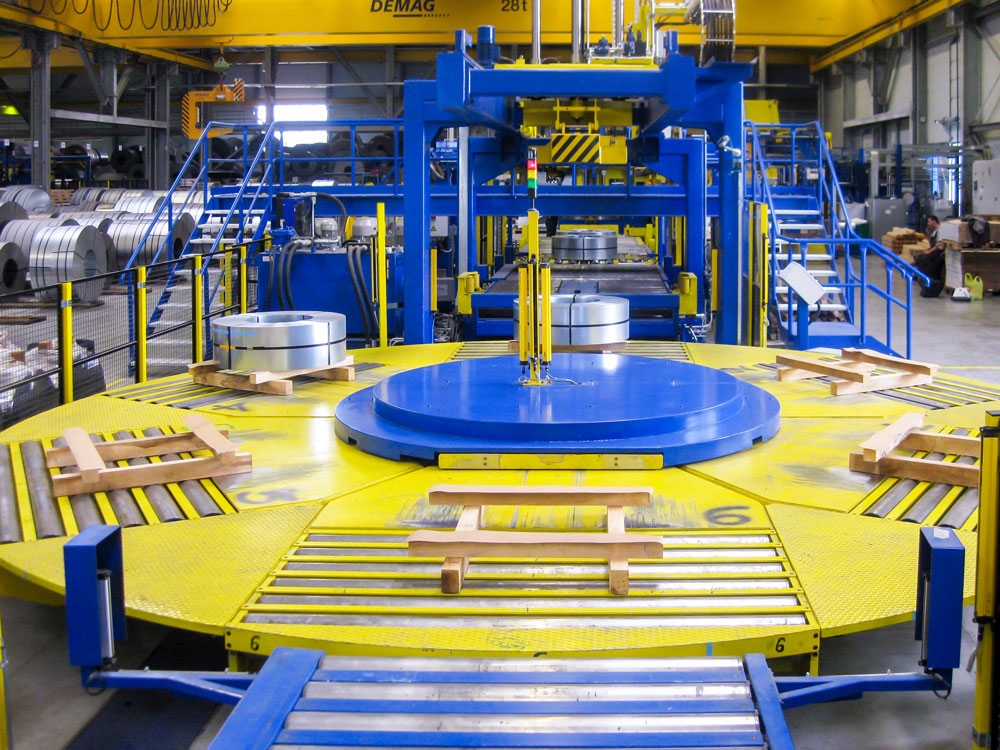
Flat steel inventories in Germany fall further, continue at historic low
Flat steel stocks at German stockholders dropped further in April, continuing on a historical low, resulting from a persistent shortage in the market, according to data from the German steel stockholder association BDS.
Average flat steel stocks in April fell 1.9% month on month to 1.03 million mt. according to the data obtained by S&P Global Platts May 27. Stocks were also down 16% year on year.
Sales volumes in April fell 15% month on month to 546,483 mt, but they rose 41.1% year on year, reflecting the near standstill of the market last year when pandemic-related restrictions were first put in place.
Contrary to flat steel, average long steel stocks in April grew marginally by 0.5% month on month and 1.9% year on year to 819,929 mt. Average sales, however, fell 11.3% month on month to 290,778 mt. In comparison to April 2020, sales grew 3%.
According to Platts monthly German steel sentiment survey published earlier this month, market participants expect further declines in stock levels, with an index of 28 – 50 denotes stability – as stockholders scramble for material, particularly flat steel, with the industry unable to restock in large volumes.
Hot-rolled coil prices have continued to hit new all-time highs since March as a result of the shortage. Platts daily HRC assessment EXW Ruhr stood at Eur1132.50/mt May 26.
European mills continue to have long order backlogs and sources say there are no significant capacity increases planned that could ease the shortage in short or medium term.
— Laura Varriale
Revista InfoAcero Mayo 2021
En el siguiente enlace pueden acceder a la edición de Mayo de nuestra revista: INFOACERO MAYO 2021
A continuación destacamos algunos de sus contenidos:
- Opinión – D. Javier Ucar– Junta Directiva de la UAHE.
- Evolución del Índice de Precios de Productos Siderúrgicos – UAHE
- Formación UAHE: “ 2ª edición del curso Finanzas para no financieros”.
- Conferencias organizadas por UAHE– “ Inteligencia artificial, una oportunidad en tu negocio” y “Perspectivas en el sector siderúrgico, la opinión de los expertos”
- Siderurgia: Previsiones sectores consumidores de acero 2021-2022 -Eurofer

Green steel needs industry standards: TK Steel Europe CEO
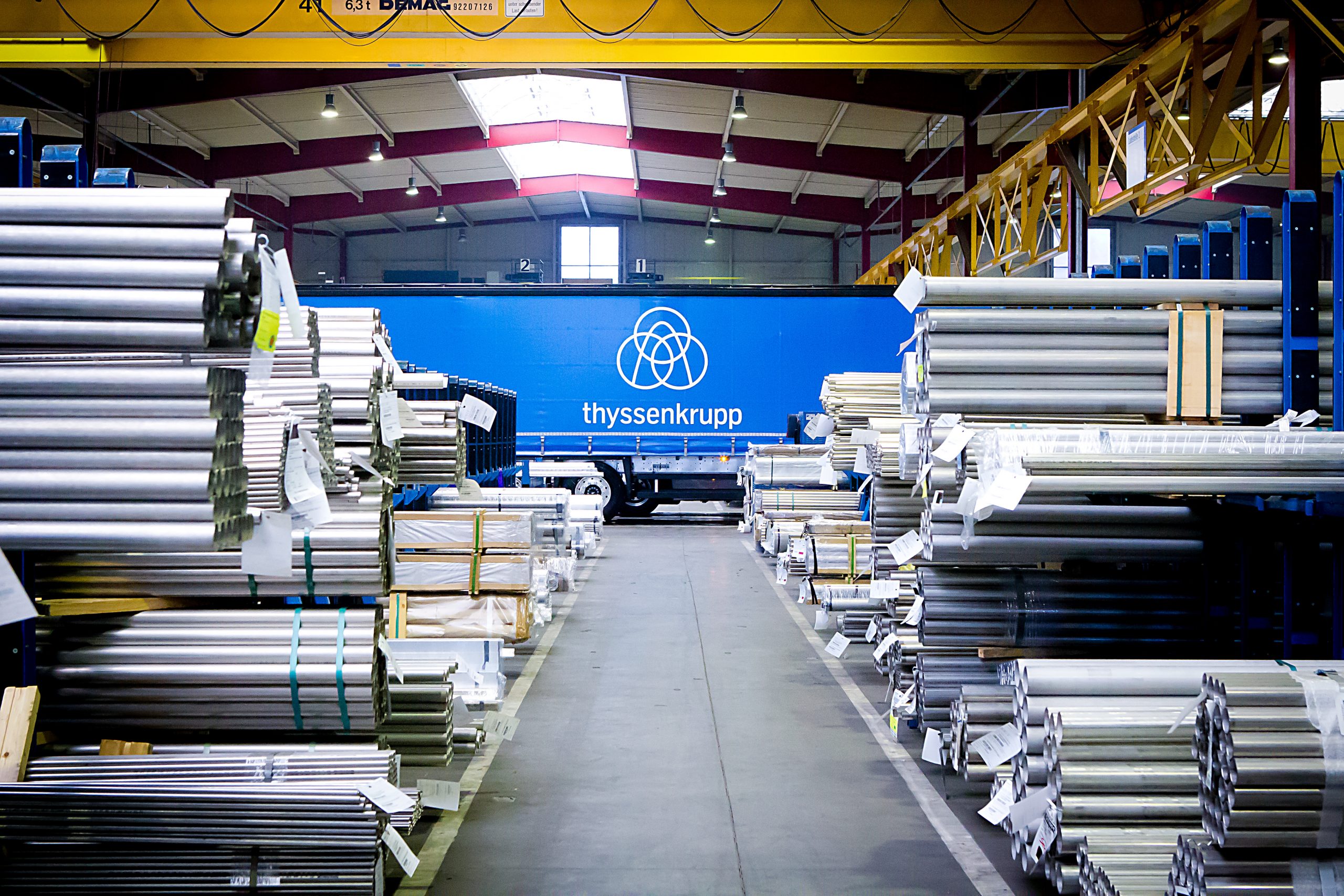
Green steel needs an industry-wide definition to identify what can be considered as low-carbon steel, chairman of the executive board of Thyssenkrupp Steel Europe, Bernhard Osburg, said May 26.
At a streamed event organized by Thyssenkrupp where the company unveiled a five-point plan to achieve a transformation of steel to carbon neutrality and discussed with local politicians, Osburg said that a “label” for green steel is missing and that the industry needs it before the green steel market is fully established.
“No one is able to say what green steel is. Customers need to know what they actually buy,” Osburg said.
Thyssenkrupp plans to produce 3 million mt of green steel by 2030 to curb CO2 emissions by 30%. To achieve this, the company has to invest Eur2 billion during uncertain times and a “not yet existent market for green steel.”
“From a mere business strategy point of view, we should not start the transformation under the current circumstances,” said Osburg in a press release sent ahead of the event.
“With every tonne of hydrogen that is used in steel production, we avoid 26 tonnes of CO2. But our investment cycles are long. 2030 basically means for us tomorrow, that’s why we need to start now,” he said.
Five-point call
Thyssenkrupp made a five-point call for a successful transformation to green steel. These include fair competition laws that prevent non-EU countries to “swamp” the European market with low social and environmental standards; the continuity of free CO2 certificates in the European Trading Scheme; more funding for industries that will have to undergo the transformation; a similar incentive scheme as with electric vehicles to create competitive prices of green steel; and support for buyers of green steel with quotas and standards.
Heiko Reese, trade union representative at IG Metall, said that the funding from the government would also provide job security.
Osburg said these points need to be addressed during the current government term to ensure they can be achieved. Germany will have federal elections in September.
The German government accelerated its commitment to become climate neutral by five years earlier in May and aims to achieve the goal by 2045, which puts industries such as steel in a difficult position, Thyssenkrupp said.
Thyssenkrupp is planning to replace some coal-based fuel with hydrogen and plans to integrate the direct reduction process into the existing metallurgical network in Duisburg. Among other projects, the company also plans to raise scrap usage in existing blast furnace production.
— Laura Varriale