

Klöckner appoints heads of Germany and SSC Becker
Steel distribution group Klöckner & Co has appointed new top management at two of its German subsidiaries, Kallanish learns.
The group’s Germany unit, Klöckner & Co Deutschland, will have Bernhard Weiss as its new chief executive, effective 1 June. He assumes the role in addition to his position as the group’s ceo Europe. He succeeds Sven Koepchen, who will be moving into a cross-functional role for the expansion of the higher value-added business in Europe.
At Becker Stahl-Service, Germany’s largest steel service centre for strip and sheet products, Francois-David Martino will become new ceo, effective 21 June. Martino served in numerous leadership positions at companies including thyssenkrupp, Siemens and ZF Friedrichshafen, and most recently held the office of president & ceo China at Danieli.
He will focus on expanding the product and processing portfolio as well as technical expertise in manufacturing. Furthermore, Christina Kolbeck has been named Becker’s new chief financial officer, in addition to her role as cfo of Klöckner & Co Deutschland. Becker has an annual capacity of around 1 million tonnes, employs some 500 people and generated sales of around €600 million ($732m) in fiscal-year 2020.
Christian Koehl Germany

Italian merchant bar increases again, export demand strong
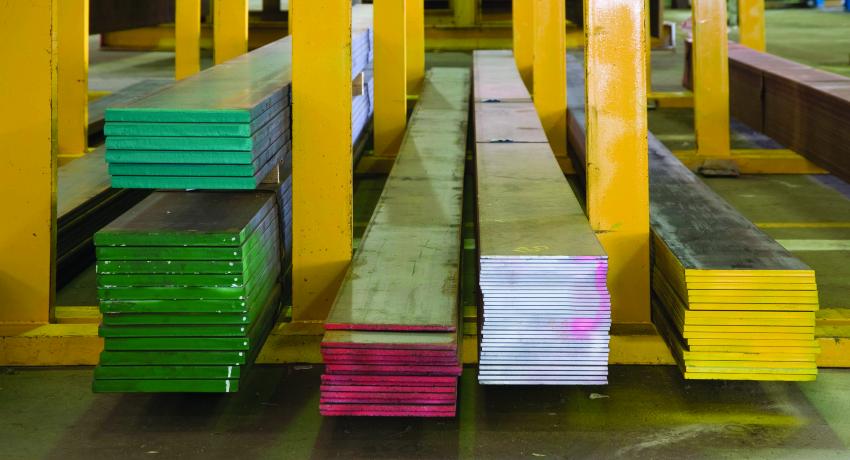
Italian merchant bar values are increasing again, by €40/tonne ($48) compared to last week, sources tell Kallanish. As expected, values are now at €470/t base ex-works for June, in line with increasing scrap prices, and contracts are also gradually increasing.
Sellers and buyers expect more increases in June, with the rising trend of Italian long product prices expected to continue.
Including €420 size extras, contracts for merchant bar are now at €820-870/t ex-works, €20/t more compared to last week. Buyers are paying between €400-450/t base ex-works for the cheapest merchant bar grade.
Meanwhile, the main Spanish mills also have full order books, and opened and closed sales several times in May. They are said to be about to announce prices hikes for June.
Italian and Spanish mills are currently exporting between 70% and 80% of their output as demand, particularly from Easter European countries, remains strong.
Italian sections producers are also said to be mulling a €20/t increase in June, pushing prices for the first category of beams to €500/t base ex-works, sources say.
Natalia Capra France

MEPs call for EU scrap export ban
A large number of European members of parliament (MEP) have signed a letter calling for the EU to stop exports of steel scrap, Kallanish notes.
The letter was prepared by Italian MEP Massimilani Salini and signed by 70 MEPs in total. Italian EAF-based steelmakers are among the most concerned about the availability of ferrous scrap going forward.
“Ferrous scrap is a valuable resource for the EU steel industry that helps reduce the use of primary raw materials and has a reduction potential of the CO2 emissions of the steelmaking process of 1.4-5 tonnes of CO2, depending on the quality and the process,” the letter explains.
“Ferrous scrap is an important element for starting down the de-carbonisation path and making the sector even more circular,” it continues. “However, exports of ferrous scrap from the EU27 have increased from 9 million tonnes in 2015 to more than 15mt in 2019. This has resulted in major detrimental climate and environmental consequences in destination countries, and globally, that would have been avoided if the same volumes had been recycled in the EU. This trend has to be reversed.”
The MEPs point out European waste ends up in countries with environmental, labour and safety requirements that are much lower than EU standards, resulting in much higher greenhouse gas emissions. Therefore, a further control on exports from the EU should be in place.
“Exports of secondary raw materials should only be allowed when the country of destination can demonstrate that it has implemented equivalent standards on environment (emissions control and waste management), climate (ambitous climate targets and specific instruments for cutting GHGs) and human health (including workforce rights and safety),” the letter concludes.
The possibility of new legislation curbing exports of scrap from Europe has been mentioned on various occasions in recent months by officials and industry leaders. A clear strategy in that direction is yet to be formulated, however.
Emanuele Norsa Italy
Grüner Stahl als Chance für das Ruhrgebiet
Fünf Kernforderungen an die Politik für eine erfolgreiche Transformation stehen im Fokus
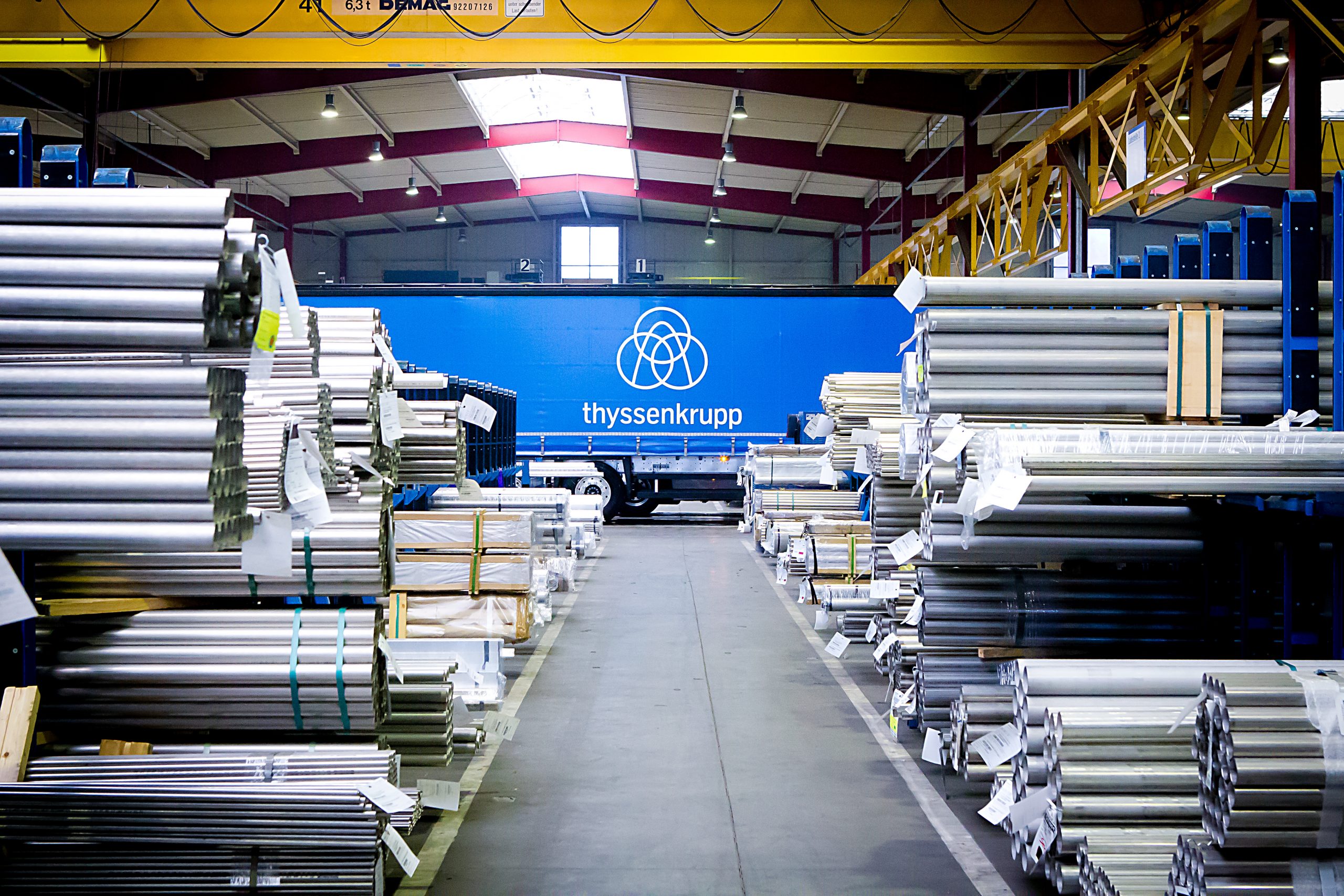
Anfang Mai hat die Bundesregierung die deutschen Klimaziele deutlich verschärft. Bis 2045 ist nun vollständige Klimaneutralität vorgegeben, fünf Jahre früher als geplant und fünf Jahre früher als in der EU. Die Verkürzung des Zeitrahmens stellt die Industrie vor große Herausforderungen. Gleichzeitig liegen in einem schnellen Umstieg auf grünen Stahl erhebliche Chancen für den Wirtschaftsstandort Ruhrgebiet, für Wertschöpfung und soziale Sicherheit. thyssenkrupp Steel ist bereit, einen signifikanten Beitrag zur Nutzung dieser Chancen und zum Erreichen der Klimaziele zu leisten. Das Unternehmen hat ein klares Konzept zur Dekarbonisierung der Stahlherstellung vorgelegt. Nun gilt es, die notwendigen Rahmenbedingungen zu schaffen, um die Umsetzung zu ermöglichen. Deswegen geht das Unternehmen in den direkten Austausch mit Politik und IG Metall darüber, worauf es jetzt ankommt, um keine Zeit zu verlieren. Mit Gastgeber Bernhard Osburg, Sprecher des Vorstands von thyssenkrupp Steel, diskutieren: Bärbel Bas (SPD), Marie-Luise Dött (CDU), Mona Neubaur (Bündnis 90/Die Grünen), Bernd Reuther (FDP), Christian Leye (DIE LINKE) und Heiko Reese, Stahl-Experte der IG Metall. Die Diskussion ist heute ab 17:00 über die Website von thyssenkrupp Steel oder diesen Link zu erreichen.
Kein Erkenntnis- aber ein Umsetzungsproblem
„Wir können und wollen einen massiven Beitrag zum Klimaschutz leisten. Aber wir brauchen jetzt die richtigen Maßnahmen und Instrumente zur Begleitung der neuen Klimaschutzgesetzgebung. Wir haben jetzt die historische Chance, durch eine intelligent geförderte Transformation echte Fortschritte beim Klimaschutz zu machen und gleichzeitig im Wettbewerb um grüne Technologien vorne zu bleiben, kommentiert Bernhard Osburg, Stahlchef von thyssenkrupp Steel.
Um unmittelbar Tempo aufzunehmen, schlägt Osburg vor, noch in dieser Legislaturperiode im Rahmen des von Wirtschaftsminister Altmaier vorgeschlagenen Transformationsdialogs mit konkreten Maßnahmen zu starten. „Wir brauchen jetzt die Sicherheit, dass die Politik unseren Transformationspfad verlässlich und konkret über die nächsten Jahre begleitet. Aus Plänen müssen Fakten werden.“
Klimaschutz im Stahl am effektivsten
Deutschlands größter Stahlhersteller plant bereits 2030 drei Millionen Tonnen grünen Stahl zu produzieren und so 30 Prozent der anfallenden CO2Emissionen einzusparen. Dazu sind Investitionen von rund 2 Milliarden Euro nötig – bei einem bislang unklaren regulatorischen Umfeld und einem noch nicht existierenden Markt für grüne Stahlprodukte. „Aus rein betriebswirtschaftlicher Sicht dürften wir die Transformation unter den gegenwärtigen Bedingungen nicht starten“, erläutert Osburg. „Aber die Bekämpfung des Klimawandels ist mehr als das: es ist eine gesamtgesellschaftliche Aufgabe. Deshalb ist der derzeitige breite Konsens, das Thema anzugehen, viel wert. Wir müssen das Zeitfenster nutzen und beweisen, dass praktischer industrieller Klimaschutz funktioniert“, so Osburg. „Und wir haben im Stahl einen enormen Hebel zur Hand. Eine Tonne Wasserstoff, die in der Stahlproduktion eingesetzt wird, vermeidet 26 Tonnen CO2. Verglichen mit diesem Effekt sind die Investitionen zum Bau der dafür notwendigen Anlagen überschaubar. Aber unsere Investitionszyklen sind lang. 2030 heißt für uns im Grunde morgen. Daher müssen wir jetzt starten.“
Fünf Kernforderungen als Voraussetzung für eine erfolgreiche Transformation
thyssenkrupp sieht fünf zentrale Felder, auf denen unmittelbarer Handlungsbedarf besteht:
- Faire Wettbewerbsregeln, damit nicht weiterhin hochsubventionierter Stahl aus Drittstaaten mit niedrigen Sozial- und Umweltstandards den Europäischen Markt überflutet;
- Die Stärkung von „Carbon Leakage“-Maßnahmen: Die Freizuteilung von CO2 -Zertifikaten im EU-Emissionshandel muss ohne Reduzierung erhalten bleiben. Sonst drohen Mittelabflüsse im mittleren dreistelligen Millionenbereich bis zu einer Milliarde Euro. Liquidität, die dann für die Transformation fehlt;
- Die Schaffung eines Transformationsfonds. Ein solcher Fonds sollte alle Industriebranchen umfassen, die vor einer grundlegenden Transformation stehen. Noch in dieser Legislaturperiode sollten dazu die notwendigen Voraussetzungen geschaffen werden;
- Die Sicherung der Wettbewerbsfähigkeit von grünem Stahl durch Etablierung eines entsprechenden Marktes – vergleichbar mit der Förderung für Elektroautos. Notwendig sind wettbewerbsfähige Preise;
- Stärkung der Nachfrageseite nach grünem Stahl: Nötig sind verbindliche Quoten und Standards für betroffene Branchen und Produkte.
Bernhard Osburg: „Bei vielen Themen haben wir mit der Politik einen guten Diskussionsstand erreicht, oder die Maßnahmen sind reif zur Umsetzung. Daher sollten wir nun gemeinsam dafür sorgen, dass gerade vor dem Hintergrund der verschärften Klimaschutzgesetzgebung Bewegung in die Transformation kommt.“
Quelle: thyssenkrupp Steel Europe AG / Foto: fotolia
26.05.2021 von Hubert Hunscheidt
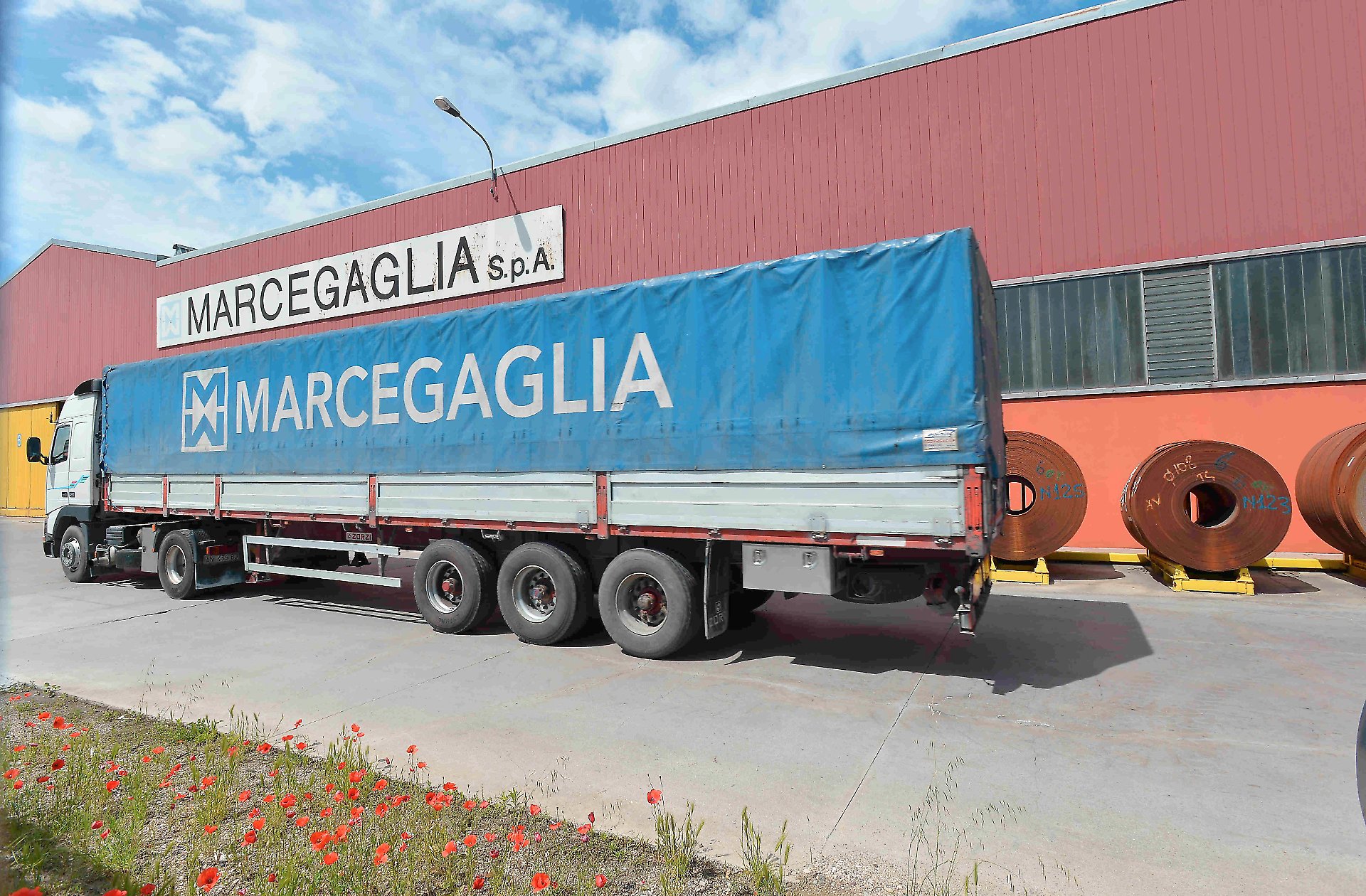
Marcegaglia beteiligt sich an erstem “grünen” Stahlwerk in Schweden
Die exklusive “Null-Emissions”-Anlage, die nur mit grünem Wasserstoff betrieben wird, baut das schwedische Stahlunternehmen H2 Green Steel (H2GS) mit finanziellen Beiträgen einiger wichtiger Investoren und internationaler Konzerne, die sich den fortschrittlichsten Technologien für ökologische Nachhaltigkeit und Industrie 4.0 verschrieben haben.
Unter diesen Investoren wird Marcegaglia nicht nur als Finanzpartner, sondern auch als strategischer Industriepartner sowohl in der Produktion als auch im Handel an der Initiative teilnehmen.
Der innovative Stahlbaukomplex H2GS, der 2024 in Betrieb genommen wird und die Ökokompatibilitätsziele der EU für 2050 vorwegnimmt, wird zunächst 2,5 Millionen Tonnen grünen Stahls pro Jahr produzieren, mit einem Ziel von 5 Millionen Tonnen bis 2030.
H2GS wird seine Anlage mit grünem Wasserstoff betanken, der nur lokale erneuerbare Energiequellen (wie Wind- und Wasserkraft) und hochwertiges Eisenerz von dem der schwedische Boden-Cluster nutzt.
Die Marcegaglia-Gruppe
Die Marcegaglia-Gruppe ist in Italien und im Ausland mit 50 Gesellschaften und über c.a 6.500 Mitarbeitern (Stand 2012) in der metall- und stahlverarbeitenden Industrie und einer Reihe an diversen Produktionsbereichen tätig. Der Konzern steht unter der Führung der Familie Marcegaglia und erwirtschaftete 2012 einen Umsatz von 4,2 Milliarden Euro.
Quelle: Marcegaglia

Liberty nears Huta Czestochowa acquisition completion despite woes
Liberty Steel says it has fulfilled its commitment to the Polish administrative court to acquire plate mill Huta Czestochowa (HCz), despite the steelmaking group’s widely publicised financial woes.
Liberty Steel won the tender for the sale of HCz in January after being the only bidder (see Kallanish passim). The mill’s acquisition is “the next step in strengthening LIBERTY’s ambitions to be a major GREENSTEEL producer in Central and Eastern Europe”, a Liberty Steel spokesperson says.
Liberty is focusing on increasing output of low-carbon “greensteel” heavy plate at HCz to serve major infrastructure projects due to be started shortly under the Polish government’s post-pandemic recovery plan. The plant is sourcing slab feedstock from Liberty Ostrava in neighbouring Czech Republic and scrap feedstock through Liberty’s established commercial network in Europe.
The addition of HCz to the group will provide synergies for Ostrava, including improving the operational stability of its blast furnace operation, and increasing the availability and reducing the price of scrap that Ostrava requires.
HCz, previously owned by Industrial Union of Donbas, has a 700,000 tonnes/year electric arc furnace and 1.2 million t/y heavy plate capacity.
Liberty’s financial troubles, precipitated by the collapse in March of major lender Greensill Capital, are forcing the group to make divestments to stay in operation. Last week it announced it will sell its UK plants in Stocksbridge, Brinsworth and West Bromwich. In France it is under pressure from the government to financially guarantee the future of its French facilities, Ascoval and Hayange, while unions are urging the sale of its La Magona unit in Italy.
Liberty meanwhile came under fire last month from the Czech government and unions for selling Ostrava’s excess carbon emissions allowances to sister company Liberty Galati in Romania. It has since used the proceeds to pay employees a bonus, with the remainder to be used for investment projects.
Adam Smith Germany

Eurofer welcomes stainless anti-dumping duties, eyes anti-subsidy measures
The EU’s imposition of provisional anti-dumping duties on stainless steel cold-rolled flat products imports from India and Indonesia is an “important first move”, with anti-subsidy measures expected to follow, says European steelmakers’ association Eurofer.
The EU has imposed duties of 13.6-34.6% on these products, following the conclusion of the European Commission’s investigation initiated last August after a complaint lodged by Eurofer (see separate story).
“We welcome that the European Commission has confirmed imports of stainless steel from India and Indonesia were sold at dumped prices and caused significant injury to the EU stainless steel industry,” Eurofer director general Axel Eggert says in a note sent to Kallanish. “These provisional anti-dumping duties are an important first step in rolling back the effects of dumping of stainless steel on the EU market. We also expect anti-subsidy measures to eventually come into play.”
The provisional findings of the EU’s anti-subsidy probe into Indian and Indonesian stainless CR flats are expected by end-2021.
Producers in both countries have been benefiting from major distortions in the cost of raw material inputs for their stainless steel production, according to Eurofer. These are the result of measures implemented by their respective governments to unfairly support their export-oriented industries, it adds.
“The impact of these already major raw material distortions is expected to become even more acute in the coming years,” Eggert observes.
Adam Smith Germany

Thyssenkrupp asks policymakers for energy transition fund
In a public discussion with German politicians, thyssenkrupp explained the challenges the steel industry is facing to become carbon-neutral, and worded the framework required to facilitate a transition.
Germany’s largest steel producer plans to produce 3 million tonnes/year of green steel as early as 2030 and thus cut CO2 emissions by 30%. This will require investments of around €2 billion ($2.4 billion) in a regulatory environment that is as yet unclear and a market for green steel products that does not yet exist, the company notes.
“From a purely business perspective, we should not start the transformation under the current conditions,” Kallanish hears from thyssenkrupp Steel chief executive Bernhard Osburg. “But combating climate change is more than that: it is a task for society as a whole.”
Among other things, the group proposes the creation of a transformation fund, which should include all industrial sectors facing fundamental transformation in the interest of reducing emissions.
It also admonishes the strengthening of “carbon leakage” measures and reduction in free allocation of EU carbon emissions certificates. Furthermore, it demands a level playing field of competitiveness for green steel by establishing a corresponding market – comparable to the promotion of electric cars. This would involve binding quotas and standards to support the use of green steel.
“Investment cycles are long. 2030 is basically tomorrow. So, we need to start now,” Osburg said at the discussion.
Christian Koehl Germany
German government subsidises major hydrogen projects
The German economy and transportation ministries revealed on Friday the country’s hydrogen projects that will be eligible for funding as part of the Important Projects of Common European Interests (IPCEI) initiative.
In total, the government is allocating €8 billion ($9.8 billion) for a total of 62 projects nationwide, which include those by the main steelmakers, thyssenkrupp, ArcelorMittal, Salzgitter and Dillinger/Saarstahl, Kallanish learns.
“We very much welcome the German government’s decision to support our innovative projects … in Bremen, Eisenhüttenstadt and Hamburg,” says ArcelorMittal Europe chief executive Geert Van Poelvoorde.
With the implementation of the three projects the company can save more than six million tonnes of CO2 annually by 2030, ArcelorMittal says. The projects are now entering the next stage of the so-called “match making” process at European level, it adds.
However, the company notes that start-up financing of production costs will be necessary until the new technologies become economically self-carrying. Along similar lines, German steel federation WV Stahl has welcomed the news, but also mentions the issue of how to make green steel competitive on the market. “We especially need to address the question of how to create a viable business model, in view of the much higher production costs,” it says.
Christian Koehl Germany
Grüner Stahl mit Wasserstoff
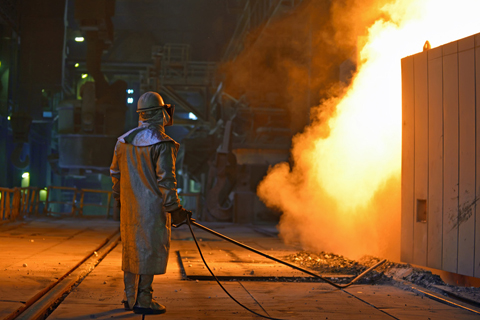
Ein wichtiger Schritt auf ArcelorMittals Weg zu klimaneutralem Stahl: Die Bundesregierung hat bekanntgegeben, die Transformationsstrategie von ArcelorMittal Germany für die Standorte Bremen, Eisenhüttenstadt und Hamburg im Rahmen des Programms „Important Projects of Common European Interest (IPCEI)“ fördern zu wollen. Das haben Bundeswirtschaftsminister Peter Altmaier und Bundesverkehrsminister Andreas Scheuer in einer gemeinsamen Pressekonferenz erklärt. Die geplanten Transformationsprojekte werden auch dazu beitragen, im ArcelorMittal-Werk Duisburg klimaneutrale Produktion zu ermöglichen.
Mit der Umsetzung der drei Projekte kann das Unternehmen bis 2030 bereits mehr als sechs Millionen Tonnen CO2 jährlich einsparen, rund 55 Prozent der geplanten CO2-Einsparungen der Stahlindustrie in Deutschland im Rahmen des IPCEI-Programms. Nun gehen die Projekte in die nächste Stufe des sogenannten „Match Making“-Prozesses auf europäischer Ebene. Mit einer finalen Entscheidung zur Förderung und Umsetzung ist bis Anfang 2022 zu rechnen.
„Wir begrüßen den Entschluss der Bundesregierung sehr, unsere innovativen Projekte zu unterstützen. Als Technologieführer für klimaneutrale Stahlherstellung leisten wir mit unseren Vorhaben in Bremen, Eisenhüttenstadt und Hamburg einen wichtigen Beitrag dazu, die CO2-Emissionen in unseren deutschen Werken bereits vor 2030 deutlich zu senken. Die Förderung unserer wasserstoffbasierten Verfahren zur Produktion von klimaneutralem Stahl ist dabei entscheidend. Im nächsten Schritt benötigen wir die Genehmigung der EU, damit die Investitionen getätigt werden können. Darüber hinaus wird eine Anschubfinanzierung der Produktionskosten notwendig sein, bis die neuen Technologien wirtschaftlich selbsttragend sind. Daran arbeiten wir gemeinsam mit den Ländern in der EU, in denen wir tätig sind“, kommentiert Geert Van Poelvoorde, CEO ArcelorMittal Europe.
ArcelorMittal plant europaweit die innovative Direktreduktion von Eisenerz (Direct Reduction of Iron, kurz DRI) und den Einsatz von Smart-Carbon-Technologien, um Stahl klimaneutral zu produzieren. In Deutschland fokussiert ArcelorMittal auf die innovative Direktreduktion von Eisenerz mit Wasserstoff. Dazu ist die Errichtung von Direktreduktionsanlagen und Elektrolichtbogenöfen notwendig, ebenso der Aufbau von Elektrolysekapazitäten und einer funktionierenden Wasserstoffinfrastruktur. Damit grüner Wasserstoff künftig in ausreichenden Mengen und zu wettbewerbsfähigen Preisen vorhanden ist, beteiligt ArcelorMittal sich im Rahmen des IPCEI-Verfahrens auch am Aufbau von regionalen Wasserstoffnetzen. Zu den Beteiligungen zählen unter anderen der Hamburger Wasserstoffverbund wie das norddeutsche Wasserstoffprojekt “Clean Hydrogen Coastline”.
28.05.2021 von Dagmar Dieterle