

Stockists support UK mill efforts to extend import safeguards
NASS, the UK steel distributors and service centers association, is calling on the UK government to extend safeguards beyond their current June 2021 expiry date. The move comes just a week after UK steel producers asked for the same.
According to a spokesman from NASS, UK safeguard measures are essential to the UK steel market, particularly while the US, EU and other countries maintain their own tariffs and import quotas.
“Without these measures the UK would be exposed to trade diversion and potentially uncontrolled import surges with the resulting detrimental impact on market prices, which would of course have a very likely negative impact on the value of steel sitting in stock,” he said.
The UK government is expected to determine whether to maintain the safeguard by June, but it is understood no specific date has been decided yet. For the UK safeguards, the Trade Remedies Investigation Directorate (TRID) will make an independent determination which then goes to the Department for International Trade where the trade secretary will either accept or reject it.
For the EU safeguards the decision will be made by the European Commission and will likely be finalized after the UK, as it is expected in July. TRID did not comment on this when reached by S&P Global Platts.
Steel prices in Europe and the UK are at their highest historical levels.
The NASS spokesman said UK steel distributors and service centers have had a profitable 12 months and “stocks are at reasonable levels and imports continue to complement UK manufactured steel products in servicing key UK steel-consuming markets.”
Last week, as reported, UK Steel, the association of UK steel producers, called for keeping steel import quotas in place because of the continued problem of overcapacity and increased use of import restrictions around the world.
— Annalisa Villa

Galvanized sheet supply squeeze, short imports leave EU buyers stranded
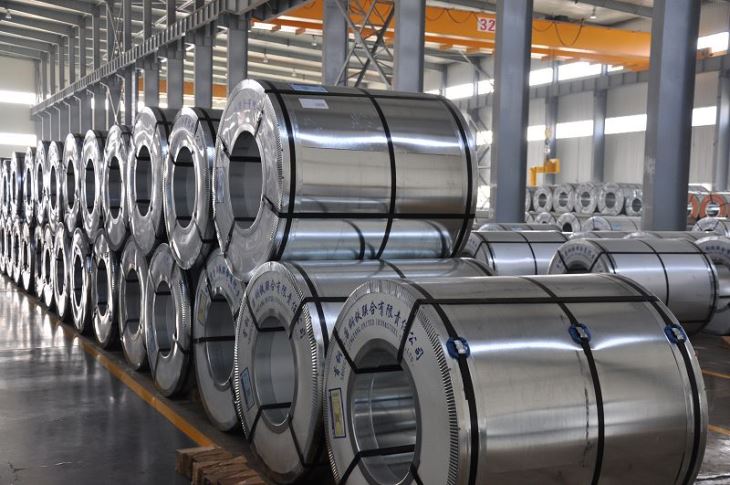
The supply of hot-dip galvanized steel in Europe is at critical levels with many mills severely delayed on orders or simply unable to offer. As producers prioritize demand from the automotive sector, other players without the assurance of contracts have been caught short and unable to accommodate the needs of their customers.
With back-to-back buying for some the only viable option to stay afloat, the market has looked to import for additional support, sources told S&P Global Platts.
Since the start of the first quarter, North European hot-dipped galvanized prices have risen Eur440/mt and in the South, prices have increased by Eur640/mt.
The shortage of semiconductors and chips has also influenced the supply chain, causing further delays from mills, sources have said. With no tangible material to back up such exorbitant increases, sources have said price increases initiated by market-leading mill ArcelorMittal are purely theoretical, so long as the steel giant does not offer HDG material.
The supply shortage in Europe has been a central fixture in the market for most of 2020-2021, mostly a product of stoppages due to the first and second lockdowns across the continent which coincided with a gradual slowdown in automotive production, as well as maintenance and weather delays. On top of this, mills are striving to keep prices buoyant after years of less than desirable margins, with a slow post-lockdown ramp-up fueling the supply tightness.
Mills including Voestalpine were set to be out of the market for the remainder of this year, according to a company source, with some mills now heard to be offering for 2021. As a result, European sellers are uncertain of workable prices, and the availability from imports is very sporadic.
One Benelux service center source said domestic mills were in no hurry to offer for this reason, with lead times from imports at October-December and foreign sellers more likely to sell anywhere else other than Europe.
“Non-European mills are taking their time to check the prices in the EU. They will send priority to the highest bidder, and the US market is positioned a bit higher than in Europe,” the source said. “We don’t see interesting import offers for HRC, and HDG offers are much more difficult to find. There are small deals of HDG, and EU mills don’t offer prompt deliveries. Import offers are not available for HDG.”
A Benelux-based trader cited an import deal at Eur1230/mt CFR Antwerp, with demand from his customers mostly geared toward inquiring about availability of HDG and CRC material.
Following the removal of the tax rebate on steel exports in China, a second Benelux-based service center source said China was now minimizing exports of HDG and CRC, and this was having an adverse effect on neighboring market prices.
“If we have less export from China, it’ll be a chain effect, Indian producers are already increasing their prices to the EU,” the source said.
According to data from the European Commission, India’s quota balance is still plentiful at 79% remaining, or 160,922 mt left of its 204,712 mt total May 12. China’s allocation was still relatively available standing at 83,151 mt, or 54% of its quota balance left.
The data also showed the “non-country specific” quota now stands at 91,437 mt, or 73% left.
In Q4, named countries that have exhausted their own allocations are permitted to utilize the “non-country specific” available balance.
For material falling under category 4a – material mostly used for non-automotive applications – the “non-country specific” quota balance currently sat at 548,902 mt, or 77% still available for import.
South Korea’s quota allowance for category 4a was on its way down, standing at 4,712 mt or 14% still available for import as of May 12, with India at a very critical 4,230 mt, or 7% allowance remaining. The UK’s balance, meanwhile, was still mostly untouched, with 78% of their 4a allocation left.
Over the last several weeks, sources have noted a gradual softening in demand from the automotive sector, likely attributable to a slowdown in their restocking efforts.
“I am concerned about the automotive demand,” the same service center source said. “I don’t see too many people in Belgium rushing to buy cars, most people hesitate whether to buy petrol or electric vehicles, and the sales don’t reflect the demand. [The demand] is contradictory; if they slowed down their forecast I wouldn’t be surprised.”
— Amanda Flint
Slovak finance minister in US to discuss decarbonizing Kosice mill
Slovakia’s finance minister and deputy prime minister, Igor Matovic, is holding talks with US Steel Corporation’s CEO David Burritt and other company executives in Pittsburgh over the future of the US Steel Kosice plant in Eastern Slovakia and investments needed to improve the plant’s carbon emissions performance.
Matovic said on his twitter account that two days of talks during a working visit to the US at the invitation of US Steel Corporation are aimed at making US Steel Kosice “an ecological as well as an economic leader in Eastern Europe.”
The Kosice plant is the largest integrated steel plant in Central Europe with crude steel production capacity of 4.5 million mt/year.
“Talks will focus on the transition to a low carbon economy, cuts in greenhouse gas emissions and Slovakia’s renewal and resilience plan,” the Slovak finance ministry said in a May 12 statement, referring to the European Commission plan to help fund the relaunch and transformation of European Union economies in the wake of the coronavirus pandemic. The finance ministry is responsible for Slovakia’s version of the renewal plan.
The ministry said that the Slovak renewal and resilience plan has earmarked Eur363 million ($439 million) for modernization of Slovak industry aimed at reducing carbon emissions with funding possible for the best available technology. The Kosice steel plant can seek to use EU funds for cutting carbon emissions, the statement said. Industry accounts for 41% of all Slovak carbon emissions, the highest proportion in all the EU, it added.
US Steel Corporation announced April 21 that it aims to achieve carbon neutrality partly by making greater use of electric arc furnaces in its steel production. The group previously announced a target to reduce its global carbon emissions by 20% by 2030.
US Steel Kosice spokesman Jan Baca said that the minister’s visit to the US, together with a delegation from the Slovakia government, is a step forward in the country’s commitment to decarbonization. “US Steel and government officials are exploring practical ways to decarbonize our operations in Slovakia. We appreciate any opportunity to further explore partnering with the government to advance solutions that help us advance our 2050 net neutral carbon goal.”
— Chris Johnstone
Scrap exceeds $500 in Turkey
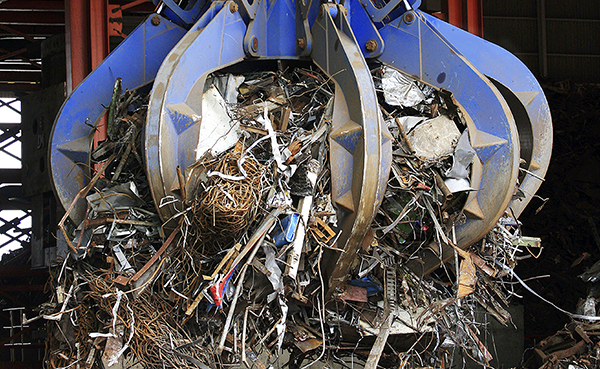
Turkish mills have been forced to pay above $500/tonne cfr for scrap despite trying to keep their imported scrap buying prices below this threshold, Kallanish notes.
A long steel producer in western Turkey has concluded a scrap booking from the UK that consists of 18,000 tonnes of shredded at $519/t cfr and 6,000t of HMS 1&2 80:20 at $499/t cfr Turkey. Shipment is in the second half of June.
Although HMS 1&2 80:20 appears at $499/t cfr in this booking, the unusual $20/t premium over shredded indicates that HMS 1&2 80:20 is actually valued at above $500/t cfr.
The historical difference between these two grades is $5/t. There have been occasions when it has widened to up to $15/t, when shredded supply is tight and demand is strong. The $20/t spread is even higher than the typical differential between HMS 1&2 80:20 and P&S grade scrap, which is $10/t.
Turkish mills’ current demand for shredded scrap is seen to be strong. These traditional price spreads are expected to vary due to imbalances in supply and demand.


EU, UK largely exhaust second-quarter hollow sections quotas
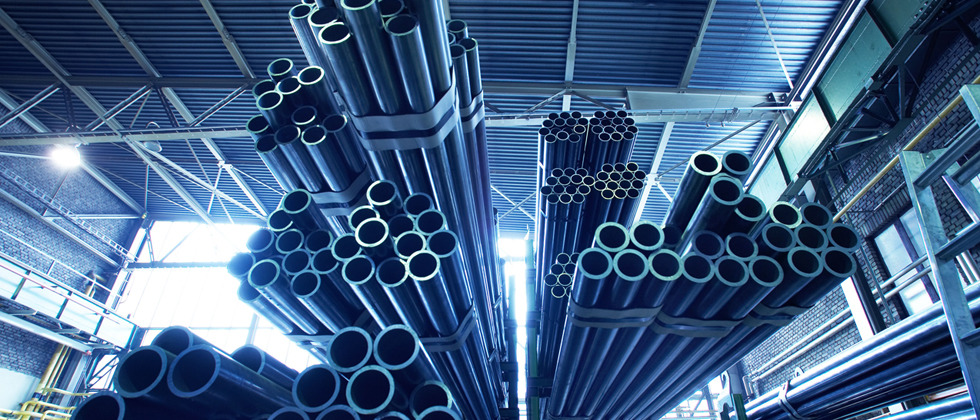
Second-quarter safeguard quotas for hollow sections have largely been used up in both the EU and the UK, Kallanish learns from official data.
EU tariff-free safeguard quotas for hollow sections imports have been filled for most provenances, including Belarus, Russia, Turkey and Ukraine. The “other countries” quota has been exhausted, and currently quotas remain available only from Switzerland and North Macedonia.
The overall tariff-free hollow sections allocation is of slightly above 200,000 tonnes per quarter.
Similar pressure on hollow sections users is visible in the UK where Turkish-origin as well as “other countries” quotas have been fully used. UK importers can now only clear volumes of hollow sections arriving from within the EU.
The safeguard quota system is set to remain in place until at least the end of June. An extension is yet to be announced by either the EU or UK authorities.
Emanuele Norsa Italy
Thyssenkrupp sees some slowdown of strong market
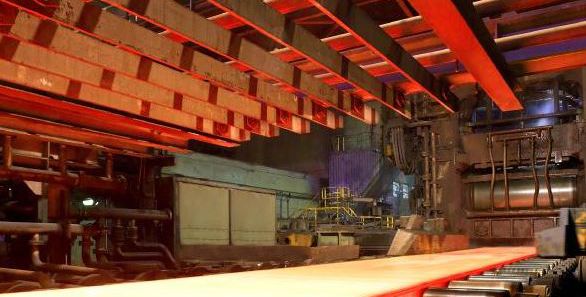
After two quarters of increasing sales and orders in its first fiscal half-year through March 2021, thyssenkrupp remains upbeat for the overall economy this year, but sees the momentum throttled currently.
The share of the automotive industry is relatively high for the group’s steel sales, with more than half of output sold on long-term contracts. Hence, it does feel repercussions of production breaks at carmakers due to the global shortage of semiconductors, “but also due to other logistic issues”, group chief financial officer Klaus Keysberg said during a conference call. Demand will remain high in the long run, “but for these reasons our expectations for the current quarter are more modest”, Kallanish heard him say.
In the March quarter, order intake and revenue at tk Steel Europe were up 13% to €2.4 billion ($2.9 billion) and 8% to €2.2 billion respectively from the prior year. As a result of catch-up effects, above all from the automotive industry, and strong demand from restocking, particularly at steel processors, business continued to pick up.
Adjusted Ebit improved significantly, to €47 million, after a loss of €181m a year earlier, due to higher capacity utilisation, improved product mix, positive price trends as well as restructuring measures.
At distribution division tk Materials Services, order intake increased by 9% to €3.1 billion in the March quarter, while revenue was down slightly by 3% to €2.9 billion, due to shortage of supply. At €126m, adjusted Ebit came up from a loss of €29m. Key factors here were the increase in finished and stainless steel prices caused by the materials shortage. Tk also points at its ongoing network optimisation: since 2019, the segment has reduced the number of logistics sites by 39, including five in the reporting quarter.
Christian Koehl Germany
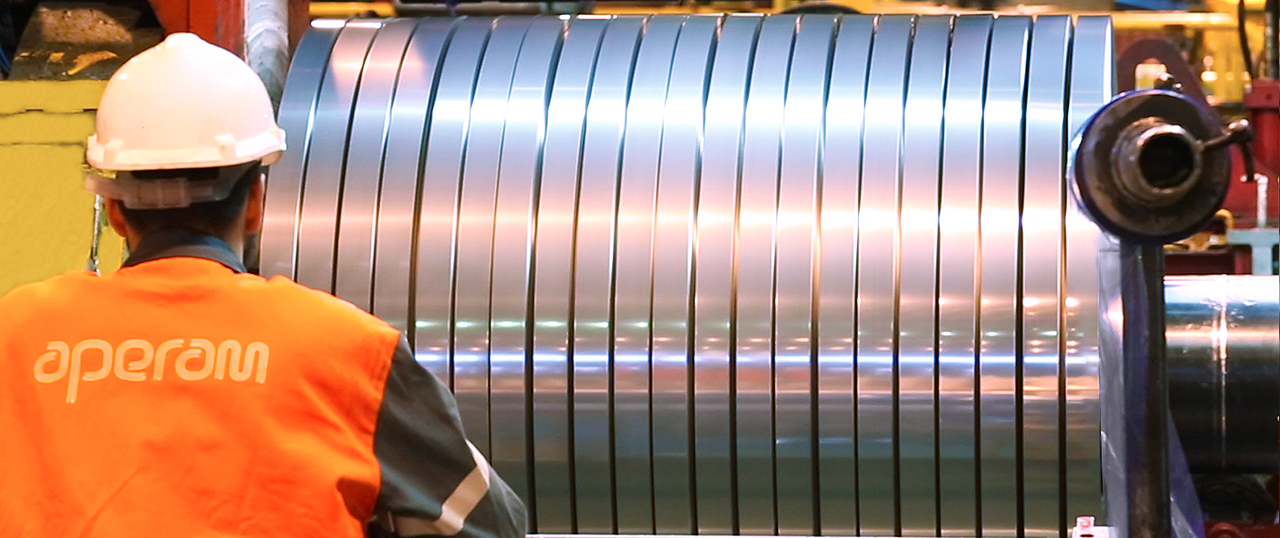
Aperam foresees strong second-quarter volumes and prices
Aperam forecasts strong second-quarter volumes and higher prices after registering in Q1 its best-ever quarter thanks to record sales and prices in Europe, Kallanish learns from the company’s Q1 report.
“In Brazil our flexible multi-product business set a new earnings record due to strong demand, paired with higher prices and a strong mix,” the report says.
Steel shipments stood at 493,000 tonnes in Q1, up 14% compared to 431,000t in Q4 2020. In Q1 2020 steel shipments were 430,000 t, Kallanish notes.
The company is to invest in revamping the long product rolling mill at its Imphy facility in central France, as well as the restart of the AOD converter in Genk, Belgium, which was idled in 2019. “Both projects, together with the planned specialties centre in Gueugnon, will further contribute to the reorientation of our product portfolio towards specialties,” Aperam says.
The Stainless and Electrical Steel division had sales of €977 million ($1,188m) in Q1, up 26% year-on-year. Steel shipments were 483,000t, an increase of 12% on Q1 2020. Average selling prices for the division increased by 14% compared to the previous quarter. “Profitability was supported by higher volumes and prices and a low double-digit inventory valuation gain in Europe and a record adjusted Ebitda in Brazil due to higher prices and a stronger mix,” Aperam observes.
The Alloys and Specialties division also registered a 21% increase in sales compared to last year and high selling prices.
In total, Aperam’s Q1 sales increased by 28% to €1,177m, compared to €916m in Q4 2020 and €1,049m in Q1 2020. Ebitda stood at €175m in Q1, compared to €70m in Q1 2020.
Aperam is expanding upstream into the recycling business with the acquisition of stainless scrap company ELG (see Kallanish 11 May).
Natalia Capra France
Thyssenkrupp to maintain supply despite summer overhaul: cfo
Despite a shortage of steel on the market, thyssenkrupp Steel is sticking to its plan for a reline of one blast furnace, which means an outage from July to September.
To bridge this period, the company is providing inventories, Klaus Keysberg, chief financial officer of parent thyssenkrupp AG, said during a quarterly earnings call. Asked about the company’s ability to deliver, Keysberg told Kallanish that orders of volumes in the four-digit tonnage range for delivery in the final quarter of the year should still be possible.
After two failed run-ups for a merger of its steel division, thyssenkrupp is now pushing the independence of the unit, and possibly a stand-alone spin-off. Recent attempts of going together with Tata Steel and Liberty Steel did not work out. With the latter partner especially, “price-related as well as structural questions never made real progress”, Keysberg said.
He pointed at the ambitious plans for a big conversion of technology at tk Steel’s works in Duisburg, which involves the construction of direct reduced iron plants. He underlined that the steel industry will need much financial support from governments for the transformation to “green” steel.
In Italy, the group is currently talking to “several candidates” for a sale of its stainless steel company Acciai Speciali Terni. In Germany, it is preparing the spin-off of a sheet piling services unit.
Keysberg also said that thyssenkrupp has not lifted steel exports, for example to the USA to benefit from the higher price levels there. In the past two reporting quarters, “European customers and OEMs had the priority to be served”, especially since their call-ups for volumes had risen. Currently, these have slowed down somewhat due to production brakes at carmakers (see separate story).
Christian Koehl Germany

EU traders book Chinese CRC despite rebate risk
European traders are continuing to look for import options and have even made some bookings of Chinese cold rolled coil in recent weeks, to secure volumes for clients suffering from scarce availability in Europe.
According to market participants surveyed by Kallanish, Chinese CRC was ordered last week, after which offer prices have gone up further, making it no longer competitive.
The CRC ordered is understood to be of 1mm thickness, to be shipped in August and expected to arrive in October in southern Europe. The price is reported to be €950/t ($1,156) cfr southern Europe, with an anti-dumping duty of 20.5% to be added.
At the end of April China confirmed the cancellation of 13% rebate rates for most steel exports, but spared CRC from this change. Nevertheless, further changes to rebates can still happen, according to market analysts in China. “We have decided to take the risk of the potential 13% rebate change,” a trader ordering Chinese CRC confirms. “We shall see – if this happens, we would make a loss on the trade.”
Meanwhile, hot rolled coil offers from importers are reported to be scarce this week as India is not in the market and Turkish mills are preparing for the Eid holiday. Even with the latest duties confirmed for Turkish HRC, offers could be in line with the latest European domestic quotes – €1,000-1,100/t cfr including duties. But the latest spike in scrap prices is set to push Turkish offers up further.
Emanuele Norsa Italy
No steel spinoff this year: Thyssenkrupp CFO
German Thyssenkrupp’s steel unit has seen further improvements on robust demand and higher prices and will not be spun off this year, CFO Klaus Keysberg said May 11.
The company said the main driver for steel was its main customer group, the automotive industry, though demand was somewhat tainted by components and logistics issues in the automotive supply chain.
“There is muted dynamic. We know about the stoppages at Ford and others. We do not believe call-off figures will be the same as before,” Keysberg said at a press call for Thyssenkrupp’s Q2 results (January-March). “OEMs cannot produce as much as they can sell, but we believe the volumes will be taken up eventually.”
Restructuring of steel
In terms of the expected spin-off of the steel unit following several attempts to find an external partner or buyer, Keysberg said there would be no timeline for it but it would not happen this year. “There is no time pressure,” he said.
The sale of Italian stainless steelmaker AS Terni was ongoing and Thyssenkrupp said it would be in talks with several interested parties. Italian re-roller Marcegaglia said in April it would be “firmly” interested in acquiring Terni.
Thyssenkrupp has already cut 5,400 jobs out of the planned 12,000 job reductions across the units and does not currently anticipate the need for more.
Thyssenkkrupp will keep the plan to reline one of its blast furnaces from July and will be pre-produce and purchase material for the approximately half year the blast furnace will be taken offline.
Market participants said they expected the reline and pre-production to intensify the steel shortage gripping the European market.
Steel unit Q2 performance
Keysberg said that due to the primary focus on contract business rather than spot, the effect of rapid steel price rises in the European steel market will be factored in with a time lag. The current all-time high in iron ore will also have to be factored into coming contract negotiations, he said.
“We have seen over the past weeks that iron ore is extremely high, which means it will effect margins and that we will be discussing this with OEMS,” Keysberg said.
According to analysis by S&P Global Platts, April’s HRC-raw materials spread at Eur632/mt ($765/mt), up from, from Eur477/mt in March, was the highest since at least April 2016 when the spreads were first tracked by Platts. A break-even for mills is estimated at Eur250/mt.
Keysberg hinted that higher production costs of green steel will have to be passed on to customers. He said there was no financial incentive for sustainability in the supply chain and for the auto industry to purchase green steel.
Crude steel production increased 5.7% year on year to 2.2 million mt at the integrated steelworks in the company’s financial Q2, largely stable quarter on quarter. Thyssenkrupp’s semis producer HKM saw an output increase of 5.6% to 756,000 mt, a quarter-on-quarter uptick of 1.7%.
Shipments of cold-rolled slightly decreased from 1.8 million mt in Q2 last year to 1.7 million mt Q2 this year, but saw a 6.3% increase quarter on quarter. Hot-rolled shipments grew from 122,000 mt Q2 last year to 129,000 mt this year, recording a 5.7% increase compared with the first quarter of the year.
At the material services unit, which includes the company’s steel distribution, sales were down by 3% year on year mainly due to materials shortages in the warehousing and distribution business. The unit did record higher sales only in Eastern Europe and at the European service centers.
For the current fiscal year Thyssenkrupp expects further continuing economic recovery, “albeit with subdued momentum”, the company said.
As a result of expected improvements Thyssenkrupp expects an adjusted EBIT to increase significantly towards a positive result in the “mid three-digit million euro range”. The previous forecast predicted break-even.
— Laura Varriale