

Spanish stainless group Acerinox bullish on H2 volumes
Spanish stainless steel group Acerinox said May 11 it is optimistic about the second half of 2021 with 80% more volume on its order books than March 2020 and 40% more than March 2019.
The company cited good demand from all stainless steel consuming sectors, while healthy orders for alloys, means its German-based VDM subsidiary should also recover from June, it said.
Acerinox said inventories are being rebuilt along the supply chain consumer sectors such as autos, food processing and domestic goods boosting demand and lifting margins.
In the first quarter, Acerinox produced 650,000 mt of melt shop output, up 9% year on year and up 8% form Q4 2020.
Its cold rolled output was flat year on year at 394,000 mt, but up 7% from Q4.
Its long product output was 63,000 mt, up 11% year on year and up 19% quarter on quarter.
The company said demand for its flat product increased both in the US and Europe, although export competition was still high in the latter. Its Asian business, however, remains impacted by latent overcapacity, it said.
In 2020, 46% of its volume was in the US market, 38% in Europe, 11% in Asia and 4% in Africa.
Acerinox operates manufacturing facilities in Kentucky, in the US, which has around 35% share of the US’ stainless and high performance steel market, while in Europe its market share is around 26% through plants in Spain and Germany.
Its other operations are in South Africa where it owns 76% of Columbus Stainless and Malaysia where it owns 98% of Bahru Stainless cold rolling shop.
— Gianluca Baratti

ArcelorMittal Germany acquires bright steel producer
ArcelorMittal has expanded its presence in Germany by acquiring bright steel bar maker Dortmunder Blankstahl located in the Ruhr area, ArcelorMittal Germany said May 10.
The plant produces drawn bright steel rounds, squares or hexagonal products, tool steel and wire on nine drawing lines. The total production area is 70,000 sq m. The plant mainly caters to the automotive industry.
The company will be integrated into the ArcelorMittal Group as ArcelorMittal Dortmund.
ArcelorMittal Germany is Germany’s second biggest steel producer after Thyssenkrupp Steel and has four main production sites in the country, producing 8 million mt of crude steel per year.
These include two integrated flat steel production sites in Bremen and Eisenhuttenstadt as well as two long steel production sites in Hamburg and Duisburg. In addition, the group maintains ArcelorMittal Construction in Sandersdorf, a production site for sandwich panels.
ArcelorMittal said in its Q1 results statement May 6 that strong automotive demand is expected to drive apparent steel consumption in Europe, forecast to grow within a range 7.5%-9.5% in 2021.
— Laura Varriale
CSN sells 50% of Usiminas shareholding
Brazilian steelmaker Companhia Siderúrgica Nacional (CSN) says it has divested almost 50% of its preferred shares in fellow steel producer Usiminas.
Before the transaction, CSN held 20.29% of the preference stock following its acquisition in 2011. The company also has a 15.19% stake in the voting shares of Usiminas, Kallanish notes.
On 7 May, CSN sold 56,000,000 preferred shares issued by Usiminas, reducing its participation, directly and indirectly, to 10.07% of the preferred shares.
“The company will evaluate strategic alternatives for the allocation of financial resources from this sale,” CSN says in a stock exchange filing. No further information was disclosed by the steelmaker.
Nevertheless, according to sources from the Brazilian stock exchange, the transaction was worth BRL 1.3 billion ($248.7 million). CSN has pledged not to sell the rest of the preferred shares for a period of 45 days. After that period, a new divestment is expected to take place, suggest local media reports.
Todor Kirkov Bulgaria

Ore rally to continue before stabilising: Fitch Solutions
Fitch Solutions says the iron ore price rally has further room to run in the coming months – supported by global demand recovery and lagging supply – before stabilising in the second half of 2021. Its 62% Fe cfr China iron ore forecast for 2021 and 2022 has thus been revised up to $160/tonne and $130/t respectively.
The firm says iron ore prices will likely grind lower during H2 as supply improves and demand growth slows. China’s V-shaped economic recovery and major stimulus plan will start to produce consolidation towards H2, especially as summer – April-July – usually marks peak seasonal activity for the construction sector.
“We expect the demand impact from [Chinese] stimulus to start wearing off from late 2021 as construction projects reach completion and the pipeline of further new projects lessens, with the Chinese Government focusing on tightening credit lines,” Fitch Solutions says in a report sent to Kallanish. With Chinese mills’ margins at record highs, they can currently accommodate such high iron ore prices. “However, we believe this will not remain sustainable for long, especially as demand for steel wanes and steel prices ease,” it adds.
“On the supply side, improving production growth from Brazil and Australia will help to loosen tight supplies on the seaborne market, though Vale will take longer to return to pre-Brumadinho dam collapse capacity levels,” Fitch Solutions observes.
Beyond 2021, iron ore prices will follow a multi-year downtrend, falling to $75/t in 2025 and $63/t in 2030, driven by a combination of weaker demand growth and stronger supply. The weaker demand will be driven by China, which will rein in fiscal spending from late 2021 and shift to less-steel-intensive infrastructure and services investment. It will also focus more on decarbonised steelmaking using electric arc furnaces, which will lower iron ore requirement.
China will also bring its steel production more in line with demand. Fitch Solutions forecasts its steel consumption to grow by 2.5% in 2021 and 2% in 2022, compared with 6.5% in 2020 and the 2017-2019 average annual growth of 10.3%.
Adam Smith Germany
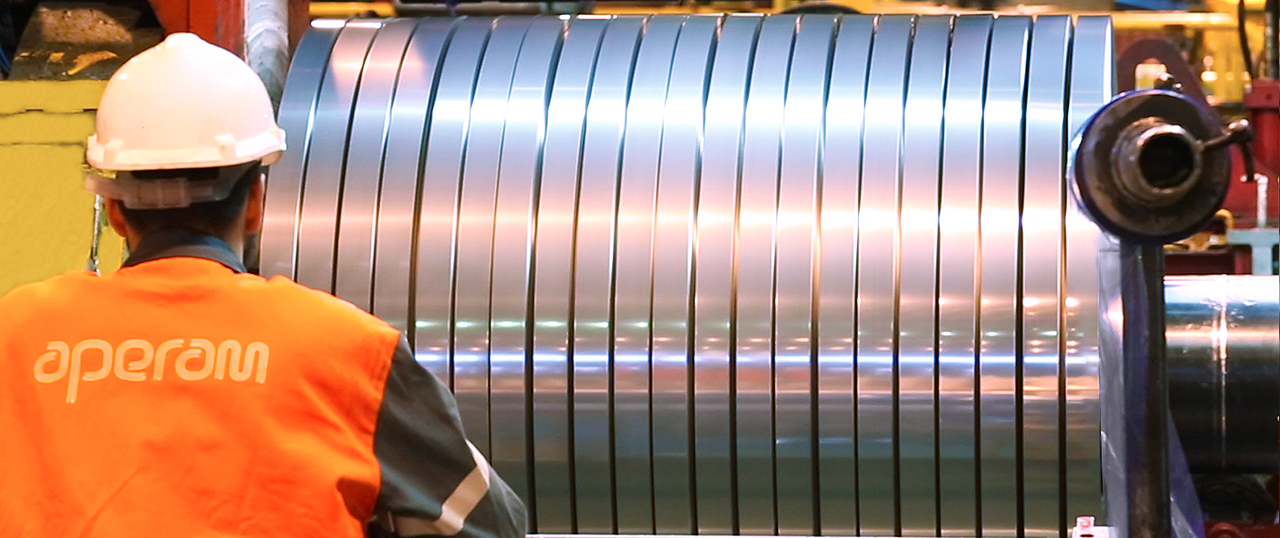
Aperam moves upstream with stainless scrap merchant acquisition
French stainless steel producer Aperam has signed a purchase agreement with Franz Haniel & Cie. to acquire stainless steel scrap company ELG. This will provide backward integration and optimise costs, Aperam says. The acquisition, with a total value of €357 million ($433m) including €30m equity, will be completed later in 2021.
ELG processes 1.3 million tonnes/year of stainless steel scrap and high-performance alloys. The company’s Ebitda last year was €55m.
“The transaction will enable Aperam to improve its input mix and to expand into the supply of raw materials. Total minimum synergies of €24m are expected within three years … It will also accelerate Aperam’s expansion into geographies and industries that are complementary to its current portfolio,” says Aperam ceo Timoteo Di Maulo.
ELG will be run as an independent entity and continue to supply its clients, Kallanish notes.
Natalia Capra France

European steel buyers flock to imports amid domestic shortage
As the European steel market finds itself in the midst of a crippling shortage, the incentive among stockholders and end-buyers to inquire about imports has increased over the last few months, with successive offers heard each week from South Korea, Taiwan and, most notably, India.
However, global supply tightness, a raging pandemic in India and the removal of the tax rebate in China have made it more challenging for European players to receive material from abroad, sources told S&P Global Platts.
As the domestic European market looks to wind down around the summer holidays, several sources said there would be more import offers into the region to make up for the shortfall in domestic supply — though keen buyers would need to be quick with their negotiations.
“There’s a lot of import material coming in [the summer], which will give some relief to the market. Everyone knows that it’s coming, so it’s basically sold out before it’s even arrived,” a Nordic buyer said. “We have a few months until the next delivery arrives again, so by end of June-July we’ll have some relief from the steel [shortage], but prices will still be high.”
HRC European import prices were heard at Eur990/mt into CIF Antwerp and CRC import prices at Eur1,200/mt CIF Antwerp.
Further to this, a European service center source said import prices were between Eur1,150-1,200/mt to “any European harbor.”
On the viability of import material from India, an Italian service center said he did not receive any offers from sellers because of the rampant coronavirus pandemic in the country.
“India is very important for Europe,” the same source said. “Usually we buy 25% from imports, but we would like to increase. We are hoping to get some good news about the safeguards. We need softer regulations.”
HRC import quotas
Options for imports of hot-rolled coil material from Russia and Serbia for the April-June quota are still available, with remaining quota allowances at 48% and 58% left, respectively, and South Korea’s quota allocation ample at 84%. Meanwhile, India’s quota balance is now exhausted and considered critical with just 950 mt left, European Commission data showed May 10.
Once a quota balance dips below 10%, importers are obliged to deposit with customs authorities a 25% bank guarantee to cover any potential duty liability.
The data also showed the “non-country specific” quota stands practically unused at around 2.74 million mt left, or 98%, with 769,002 mt awaiting allocation at European ports.
In the fourth quarter of a year, named countries that have exhausted their own allocations are permitted to utilize the “non-country specific” available balance.
CRC import quotas
In the Italian market, the same service center source cited a deal for Eur1,175/mt for cold-rolled coil from the Far East May 10.
“We need cold-rolled coil from imports because in Italy we have no availability, and also because it is difficult to succeed in buying volumes from North European mills,” the service center source said.
For cold-rolled coil imports, Ukraine’s quota balance is now exhausted, with most other countries’ balances fairly plentiful. India’s quota for April-June was still available with 89% left and Brazil’s allocation practically unused at 99%, or 131,987 mt.
South Korea’s quota balance was also still ample at 78% and Serbia’s stood at 32,616 mt, or 66% left.
Lastly, the removal of the tax rebate on Chinese material was also putting a damper on the possibility of more imports throughout June-August, coupled with the Chinese transition from net exporter to importer.
“The Chinese don’t want to export material. They want to import, so it’s a big change,” the service center source said. “In the past it was the reverse, so we can imagine in the next month it’ll be an important impact on the market. When they move in China, the whole world moves with it.”
— Amanda Flint
Tata withdraws plan to sell Southeast Asia subsidiaries
Tata Steel has adjusted the status of its subsidiaries in Thailand and Singapore from “held for sale” to “continuing operations” in its March-quarter earnings statement. This indicates the Indian steelmaker will not divest the units and is a show of confidence in the Southeast Asian steel market.
This move is due to the improvement in business performance in Southeast Asia since early 2019, Kallanish notes. Operating profit at Tata’s Southeast Asia business increased by 105% on-quarter to INR 2.95 billion ($40.27 million) in the fourth quarter of fiscal 2021, which ended March 2021.
Tata Thailand (TSTH) said last week it will focus on local market sales because Thailand’s national infrastructure investment and the Thailand-China high-speed rail project will stimulate domestic steel demand. TSTH chief executive Rajiv Mangal said: “Last year, steel consumption in Thailand reached 16.48 million tonnes and this year we are seeing positive signs that will drive steel demand.”
The company had earlier predicted that Thai infrastructure projects would result in steel consumption increasing to 18-18.5mt in 2021.
Tata Steel’s Singapore steel plant, NatSteel, meanwhile produces rebar, wire rod, cut-and-bend rebar, pre-cages and steel couplers.
By Kallanish Team
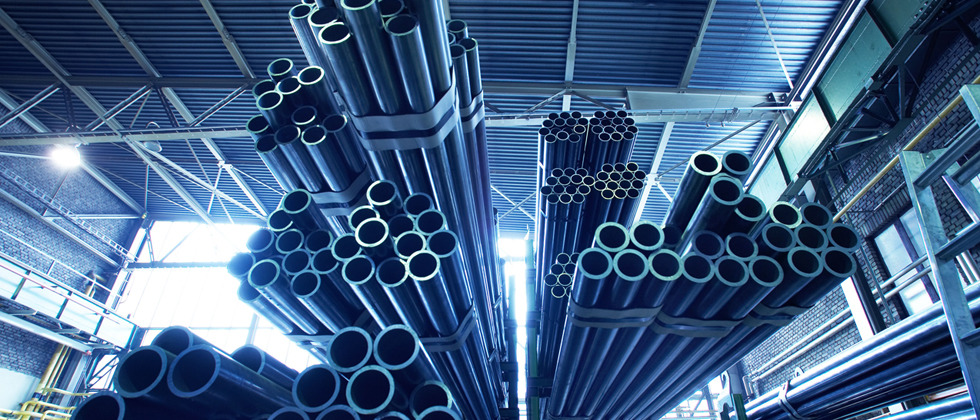
GCC set to impose definitive safeguard duties
The Gulf Cooperation Council’s permanent committee has recommended the imposition of definitive safeguard duties for three years on various steel products, following the trade defence authority’s probe concluded in February. The first year would see a duty of 16% imposed on the cif value of imports, followed by 15.2% in the second year and 14.44% in the third year.
The GCC’s ministerial committee must now decide whether the duties will come into force. They would not apply to certain countries designated as developing, including Hungary, Egypt and Pakistan. They also do not apply to EFTA countries that have bilateral agreements with the GCC, although supply from these countries represents less than 1% of overall imports.
In July 2020 the GCC-Bureau of Technical Secretariat for Anti Injurious Practices in International Trade (GCC-TSAIP) made a preliminary determination that an increase in imports has caused serious injury to the bloc’s steel industry. No preliminary duties were imposed. In February 2021 it recommended definitive steel safeguard measures are imposed and excluded a number of products from the probe, including hot and cold rolled coil, as well as plate (see Kallanish passim).
“There are currently sufficient production capacities in the GCC countries to meet Gulf demand, and thus users or customers will not be affected by imposing preventive measures,” the GCC Secretariat General says in a report. “If the final measures are not imposed, the prices and market share of the Gulf industry will decline further in favour of increasing imports at low prices … The aim of imposing these measures is not to prevent imports at all, but rather to correct the situation of the Gulf market, and create fair competitive conditions.”
Local production can currently cover 108% of the local market’s requirement for these products, and the industry would be able to meet 189% if it fully utilised its capacity, the report states.
Imports of the subject products into the GCC reached 2.06 million tonnes in July 2018-June 2019 versus 2.17mt in full-year 2018, 2.23mt in 2017, 2.29mt in 2016, 2.52mt in 2015 and 1.97mt in 2014.
Imports of flat products under investigation reached 595,340t in July 2018-June 2019 versus 618,600t in 2014, but increased by 61% in relation to local production. Longs imports were 696,530t in July 2018-June 2019 versus 665,600t in 2014 but increased 25% in relation to production. Tube imports were 770,970t in July 2018-June 2019 versus 689,570t in 2014 and increased 9% in relation to domestic output.
Domestic production of all products under investigation fell in July 2018-June 2019 to 79.8% of the 2014 level, with capacity utilisation down to 74.6%. Flats were most affected, seeing output and utilisation down to 59.7% and 54.9% respectively of 2014 levels.
GCC industry share in local market sales fell to 94% of 2014 levels in July 2018-June 2019, while imports’ share rose to 128.8%. Based on this criteria, local tube mills were most affected, with GCC industry share in sales falling to 87%, while imports’ share rose to 111%.
Adam Smith Germany
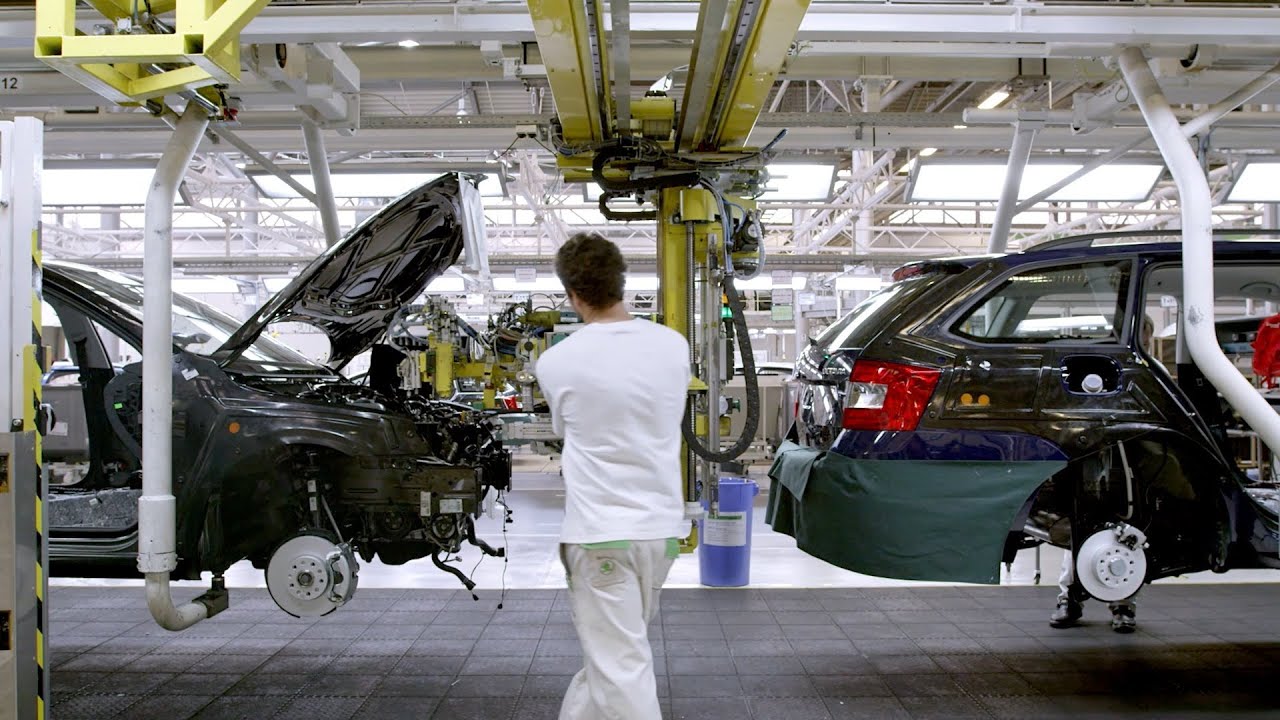
Semiconductor shortages hurt first-half automotive output: Oxford Economics
Persisting global semiconductor shortages will further hurt the global automotive industry and could disrupt the output of millions of cars, according to Oxford Economics.
“The list of major global industrial players reporting shortages is growing every day and its impact on production is becoming visible,” the agency observes. “According to our estimates, due to this factor, the total world car production in the first half of the year may decrease by two million units.”
At the moment, chipmakers expect a complete solution to the problem no earlier than 2022, although it was previously thought that tech companies would be able to solve supply problems by end-2021, it adds.
The situation was further exacerbated by snowstorms in Texas, as large chip manufacturers located there had to stop or reduce their production, and by a fire at Japanese semiconductor producer Renesas.
This affected a number of global carmakers in Japan, the US and Europe, given Renesas is the second-largest producer globally of car microcontroller unit chips. The shortage is also disrupting automotive production in Russia.
In general, Oxford Economics does not view the shortage of chips as a serious problem for the global economy. Rather, it is largely the result of high demand, reflecting the active state of the industrial sector.
Carmakers are now not only resorting to cutting production, but also simplifying components to use a minimum of chips, it adds.
Earlier, German carmaker Volkswagen predicted more disruptions at its production sites. Technology company Intel meanwhile said it expects it will take a couple of years to make the significant investments to meet the growing global chip demand (see Kallanish passim).
Svetoslav Abrossimov Bulgaria
Italian fight for coils continues, HDG, CRC jump
Italian hot-dipped galvanised and cold rolled coil are increasing in contracts again, by as much as €100/tonne ($120) compared to the start of May. Hot rolled coil is meanwhile rising €30/t as tight supply persists, market participants tell Kallanish.
Domestic HRC contracts now start at €1,000/t base ex-works and go up to €1,030/t. While large buyers are purchasing indexed material at lower prices, producers have allocated most of their output until October and keep opening sales for limited tonnages and for a limited period of time.
Purchases on the import market are not frequent as Italy’s traditional suppliers such as India and Turkey are also quoting high prices. They open brief “sales windows” for a few hours while rapidly selling their spot allocations and then closing again.
A source says import offers may sometimes lag behind domestic increases and spot deals can be fetched for a time at competitive prices, “but all available material disappears in a matter of hours”, he concludes.
Meanwhile, CRC and HDG producers are also opening sales punctually for a limited time to sell material for spot contracts. Both products are being reported in Italy at €1,200-1,220/t ex-works, Kallanish hears. Ten days ago, HDG was sold in Italy at €1,100-1,120/t base ex-works.
Lead times stretch to October for HRC, CRC and HDG, but late deliveries are being reported.
Natalia Capra France