


‘Blunt’ scrap export restrictions ruled out, says Eurofer
European steelmakers’ association Eurofer says “blunt” trade measures to restrict scrap exports from Europe are not on the table, but a review is ongoing at EU level on how to address scrap trade.
Karl Tachelet, director of international relations and external affairs at Eurofer, notes the European Commission considers export restrictions taboo, in general. A straight forward export ban is therefore not on the agenda.
Nevertheless, Tachelet says a review is taking place, particularly as scrap remains the most important raw material sourced domestically in Europe. The main concern being discussed is related to how scrap should be considered; if it is indeed waste, then further regulations should be implemented.
In recent months many in the steel sector have pointed to the possibility of Europe limiting scrap exports. Some steelmakers are lobbying for this, but formal changes to the current situation are still to be announced.
In 2019 Europe exported a record level of some 21.8 million tonnes of scrap, while imports during the same year reached 2.8mt, Kallanish notes.
Emanuele Norsa Italy

CIS pig iron market continues its lull
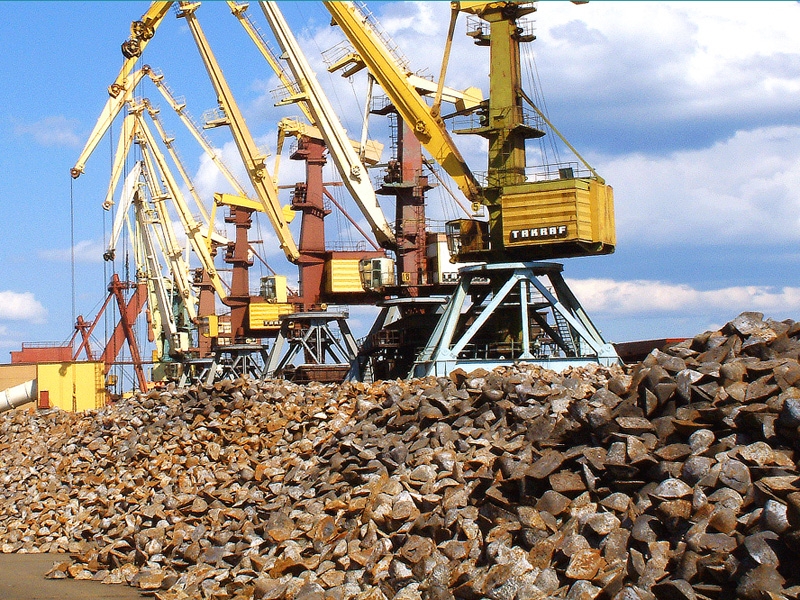
Sleepy CIS merchant pig iron trade has stirred up with just one sale in the past week, when a trader sold a very long position to a buyer in Latin America, Kallanish notes.
A 30,000-tonne cargo was contracted by a Peruvian buyer for June loading, at $550/tonne fob Black Sea. The lower-than-apparently-workable price level reflects the length of the position, which was taken in January, according to market participants. The renewed rise in freight rates is also likely to have contributed to the gross deal value, they add.
Although CIS suppliers are currently absent from the market due to holidays, offer indications remain at last week’s wide range of around $570-630/t fob, depending on volume, destination and quality. In the absence of bids, offers to the US are perceived at around $590-610/t cfr, while Mediterranean buyers are facing around $600/t cfr as a tradeable price for regular basic pig iron (BPI).
With domestic US scrap increases at a maximum of around $20/t for obsolete grades, there is expected to be ongoing resistance to book CIS material at the offered levels. The US was not heard to have booked any pig iron in the past week, and the situation is only likely to change if competition for purchases, for example from China, increases.
The prospect of China entering the market imminently is thin, however, despite iron ore exceeding $200/t cfr on Thursday and prices for other products moving up, but it is not completely ruled out.
CIS suppliers are aware of this, and, considering the iron ore dynamic and the country’s direction to continue reducing hot-end production, are likely to stick to their offers for now. “When China enters the market, it sweeps pretty much all there is to buy,” one participant observes. Thus far, India is offering to China and the US, at around $550-560/t fob, up around $10/t on last week, but the pandemic resurgence is clouding sales opportunities, amid non-delivery concerns, traders note.
CIS availability may also become an issue considering roaring domestic steel trade in Russia. The pig iron not used in steel production to satisfy continuously strong demand for semi-finished, flat and now long steel in domestic and export markets, can be offered on short lead times at attractive prices.
Meanwhile, Brazil appears to be sticking to offers at $570-580/t fob, and looking at a wider geographical pool of buyers, to include the eastern hemisphere. Mediterranean buyers are understood to be exploring Brazilian supply, sources note, so sales may be expected in the coming week.
Iron ore explodes over $200/t
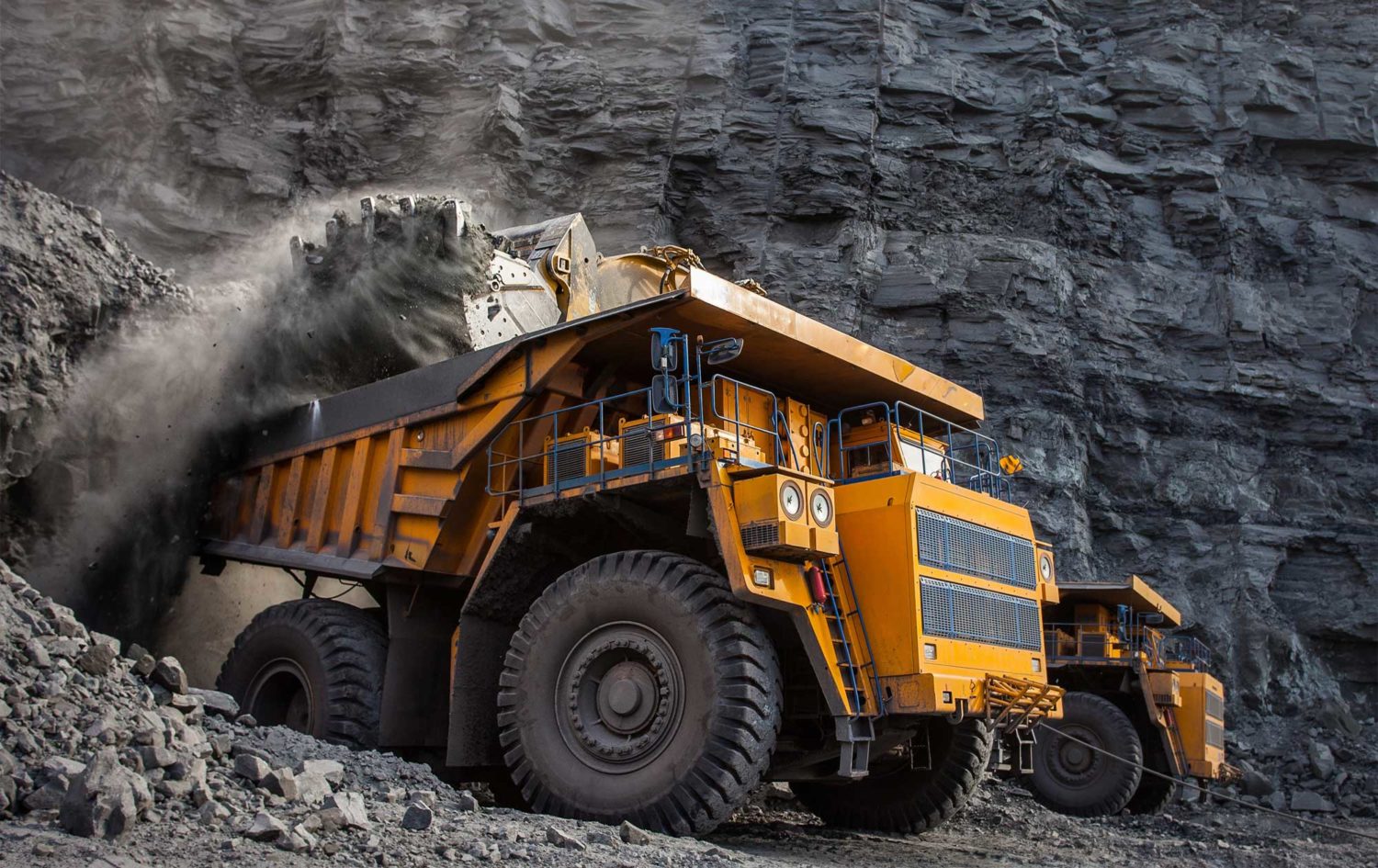
Seaborne iron ore prices drove furiously higher on Thursday as China returned from its holiday and immediately picked a fight with Australia.
The Kallanish KORE 62% Fe index leapt $12.03/t higher to $202.26/dry metric tonne cfr Qingdao. The KORE 65% Fe index jumped $11.74/t to $236.22/dmt cfr, but the KORE 58% Fe index slumped $7.49/t to $171.93/dmt cfr as markets sharply readjusted. 190,000 tonnes of PB Fines sold at a floating price.
On the Dalian Commodity Exchange September iron ore settled up CNY 44.5/t from before the holiday at CNY 1,153/t ($178.04/t), while on the Singapore Exchange June 62% Fe futures settled up $8.53/t at $195.47/t. The same contracts for 65% Fe and 58% Fe futures settled up $7.28/t at $229.70/t, and down $11.16/t at $162.36/t respectively. In Tangshan, billet prices gained CNY 60/t to CNY 5,120/t.
On Thursday, markets were tipped into a frenzy by China’s decision to indefinitely suspend work on the China-Australia Strategic Economic Dialogue. The direct impact of the move is minimal, but it sent a message that China intends to take a firm stance in its disputes with Australia. Coal imports from Australia are already blocked, and look set to remain blocked for the foreseeable future.
Now traders are talking about how far China may be willing to go on iron ore. Unlike coal, China cannot continue to produce steel as normal without Australian iron ore. This had been assumed to mean that China would hold off any action, as the costs would be shared more or less equally.
A ban would not be feasible, but measures to increase the cost of trade would be possible, if China is willing to bear a greater cost in order to punish Australia. Even a minor move could have an impact on steel production, and in a tight global steel market this would push prices even higher, supporting iron ore prices even while reducing demand.
The dramatic moves on Thursday have also been born of uncertainty and speculation, however. It remains entirely feasible that China takes a different direction and shies away from triggering higher inflation. If the warning shot across Australia’s bows is indeed just a warning, then markets could easily be disappointed. Whatever happens, prices are likely to remain highly volatile in the near future.
EU steel orders not yet back to pre-pandemic levels: Eurofer
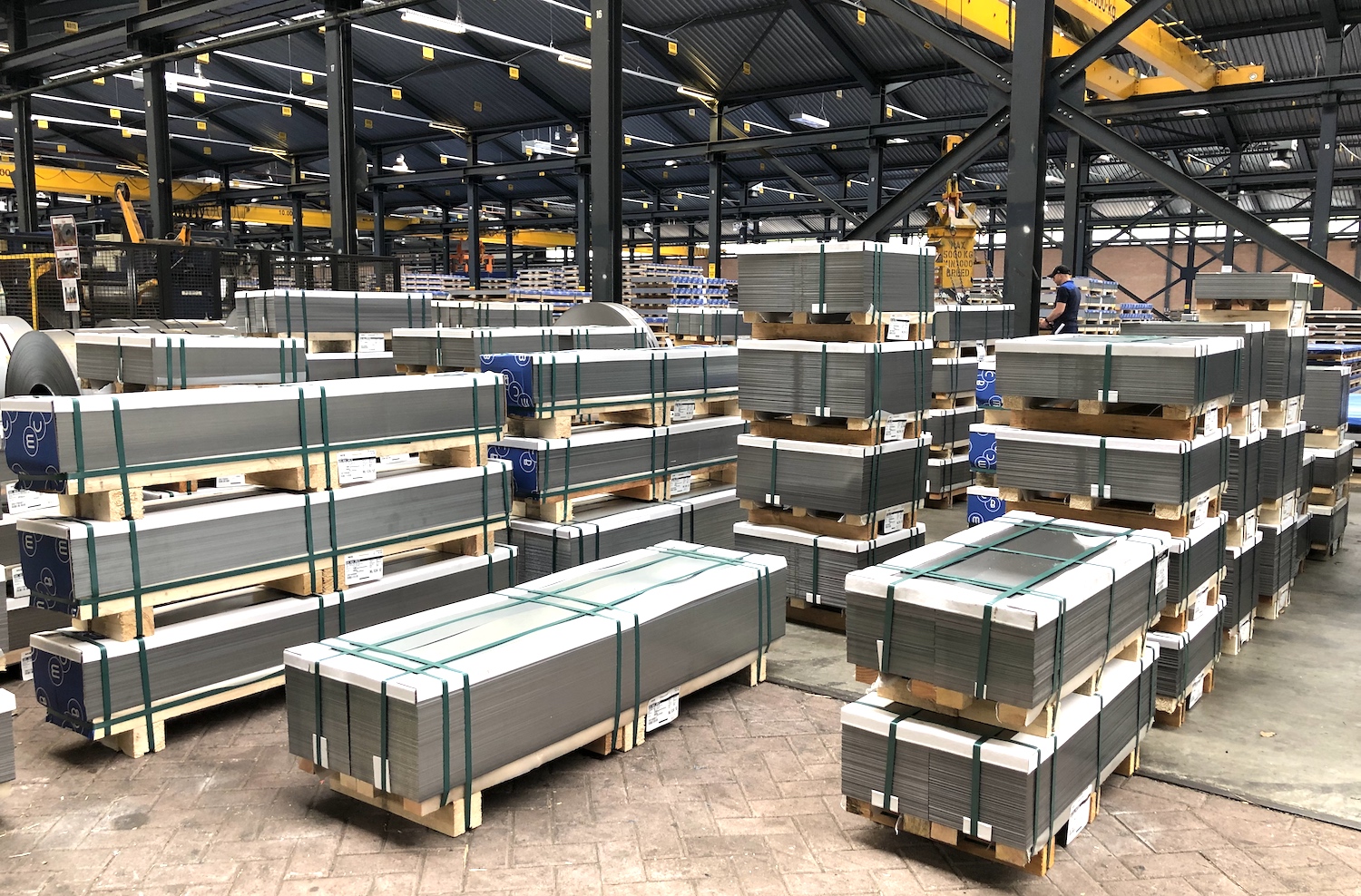
Steel orders in the EU are not yet back to pre-pandemic levels, except in the automotive sector, where the rebound has been strong, European Steel Association market analysis director Alessandro Sciamarelli said May 6.
This is despite an industry-driven rebound in orders in Q3 and Q4 2020 and again in Q1 2021, the Eurofer official said.
“Steel consumption [in the EU] is still at low levels in historic terms,” Sciamarelli said in a webinar presentation. “Apparent steel consumption has been falling since early 2019, well before the pandemic, reflecting a negative trend in steel demand, a manufacturing downturn and destocking.”
An expected increase in 11.7% in apparent consumption in EU this year won’t offset the declines of -5.3% in 2019 and -11% in 2020, he said.
Real steel consumption – the use of steel in sectors’ production processes – in the EU dropped by -10.4% in 2020 from 2019 levels due to the impact of the pandemic and is set to rebound by 7.7% in 2021 and gain a further 4% in 2022, Eurofer said in a 2020-21 market outlook report. Q4 2020 consumption volumes were 36.3 million mt.
Construction output is expected to rebound in 2021 (+5%) and in 2022 (+4%), after falls of -4.6% in 2020 and 3.3% in 2019, Eurofer reported.
Automotive output is expected to rebound in 2021 (+15.9%), followed by more moderate growth in 2022 (+4.2%), according to data from Eurofer members. Automotive output fell (-19.8%) over full-year 2020, having fallen in 2019 (-5%), the report said.
Activity in the mechanical engineering sector is expected to rebound in 2021 (+8%) and continue in 2022 (+3.6%). In 2020, the mechanical engineering sector fell (-11.7%), having been stable in 2019 (-0.9%), Eurofer reported.
Imports: Still high market share
Steel imports into the EU from third countries fell last year in tonnage terms in tandem with lower demand, slumping 18% to around 23 million mt after sliding 12% in 2019. However, despite falling demand in Europe, and the use of trade policies, the market share of imports in the EU has not decreased in historical terms, Sciamarelli said. This is particularly so for flat products, which took a 22.3% market share in Q3 2020, while long products took a 9.1% market share.
In part this is because steel production in the EU has never recovered from its 30% drop in 2009, at the time of the global economic crisis, which was followed by a 12.1% drop in 2020, he said.
Conditions for safeguards seen persisting
Eurofer’s director international trade and external relations director, Karl Tachelet, claimed in a presentation that “multiple EU steel antidumping duties didn’t revert the trend of surging steel imports into the EU [in the period] before the EU system of safeguards and US Section 232 was introduced.”
Between 2012 and 2018, EU steel imports more than doubled (+112%) while exports fell 26%, according to Eurofer’s data. Therefore, “the basic conditions for continuation of the safeguards are still there,” Tachelet argued.
The current system of import safeguards and quotas is due to expire June 30. The merits or otherwise of their extension are being investigated by the European Commission, with EU producers generally in favor of their continuation, and consumers generally against.
Current tightness of certain products in the European market — recently propelling prices of products including hot-rolled coil to their highest-ever level — are not the result of the current quota system but rather of “temporary shortages in a supply chain disrupted by pandemic,” Sciamarelli claimed.
Persistent and worsening global steel overcapacity helps make the steel safeguard “a critical factor of stability in a volatile market,” Tachelet said. While according to the OECD, global steel overcapacity was estimated at around 650 million mt in 2020, with about half located in China, there are also “upcoming excess capacity regions” including Iran — where there is “massive” new capacity coming on stream — Indonesia, Vietnam, India, Korea, Brazil, Russia and in Turkey, where there is currently investment in two new blast furnaces, he said.
In comparison, the EU permanently closed 22 million mt -25 million mt of capacity between 2009 and 2019, including 3 million mt in 2019, according to Eurofer.
“We will see more dramatic situations in future,” Tachelet warned.
— Diana Kinch


US manufacturers ask Biden to end steel, aluminum tariffs
A group of over 300 US manufacturing companies sent a letter to President Joe Biden May 6 requesting an immediate end to the Section 232 steel and aluminum tariffs originally implemented in 2018 under former President Donald Trump.
“Manufacturers in the US currently face historic shortages of readily available and globally priced steel and aluminum products at a time when the country is relying on our sector to help drive the economy and overcome the unprecedented challenges caused by the COVID-19 pandemic,” the group said in the letter.
“Without termination of the tariffs, this situation will worsen if Washington moves forward with an infrastructure bill to invest in America, as these projects will create more strain on domestic steel and aluminum supplies, causing delays in construction and risking manufacturing jobs.”
Though the Bureau of Labor Statistics has estimated the creation of 4,800 US steel industry jobs since 2018, the group of manufacturers said the jobs are not all directly attributable to the tariffs, and 6.2 million American manufacturing jobs in steel- and aluminum-using industries are now at risk.
“It is businesses manufacturing in America such as ours who pay the tariffs on imports, and it is our businesses and employees who suffer when our product cannot compete with overseas manufacturers because the US is an island of high steel and aluminum prices,” the letter further stated.
The Coalition of American Metal Manufacturers and Users, one of the industry organizations that organized the letter, said tariffs are hampering US companies from success in the post-pandemic era.
“The tariff-driven drag on manufacturing companies across the US threatens to limit their ability to participate in a post-COVID economic revitalization, stifling their prospects for growth and limiting the upside for the families and communities across America that are sustained by the sector,” CAMMU said in a separate statement.
— Nick Lazzaro

Turkish HRC remains strong, mills selling September rollings
Turkish hot-rolled coil prices remained strong ahead of the five-day Ramadan holiday break starting May 12, as mills are taking orders for September rollings.
Although ongoing rises in Chinese and EU markets are interpreted as a signal for further hikes after Ramadan by some market participants, especially by some producers, some of market participants are expecting prices to reach a balance in the coming weeks in line with the normalization in EU and the US markets with the ease of pandemic due to successful vaccination.
Turkey, however, continued to try to prevent the rise in COVID-19 cases with a lockdown until the end of the Ramadan holiday, May 17, amid some vaccine availability problems.
Turkish producers have been offering HRC to the domestic market at $1,060-$1,080/mt ex-works for September rollings, depending on producer and tonnage, while mills’ CRC offers stood at around $1,340-$1,360 mt ex-works, S&P Global Platts learned from industry sources.
An executive of a Turkish HRC mill told Platts May 6 that their HRC offers were at $1,070/mt both to the domestic and export markets for September rollings, same as last week, adding that demand remained strong.
Saying that they have received HRC offers at $1,070/mt ex-works from domestic producers and at $1,030-1,035/mt CFR from CIS suppliers, a Turkish pipe producer executive said he heard a major Turkish HRC producer sold 50,000 mt of HRC to the domestic market at $1,065/mt ex-works for September rolling this week.
“Domestic producers are saying that as they have been receiving strong demand from export markets and Turkish re-rollers, they are expecting prices to rise further after the Ramadan holiday,” the manager noted.
Confirming that Turkish HRC producer offers remained strong as high as $1,080/mt ex-works, a manager of a Turkish cold-rolled coil producer said demand for coated coil also remained strong in export markets, while domestic demand remained limited.
“We have bought some HRC tonnages both from domestic and export suppliers, as prices didn’t show any softening signs. So, we are obliged to reflect these rises to our coated coil list prices,” the manager said, adding that their 0:50 mm thick CRC offer price is currently at $1,360/mt ex-works, higher than their 0.50 mm HDG offer price, which is currently at $1,330/mt ex-works, due to high demand for CRC, amid availability issues.
A service center manager told Platts April 28 that he is expecting prices to reach a balance in June, as EU and US markets are rapidly normalizing, which could ease availability issues. “I have talked with one of my colleagues in Italy this week. He is also expecting availability issues to ease in the coming weeks and prices to reach a balance,” he said, adding that price stabilization will also support domestic market recovery.
The manager noted that he heard a Turkish producer sold a significant HRC tonnage at $1,055/mt ex-works at the beginning of the week.
— Cenk Can
Ryerson increases profits, predicts price jump in Q2
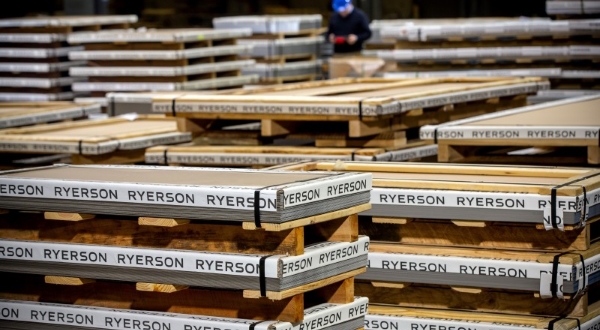
US service centre chain Ryerson increased its profits on-year in the first quarter despite a still-challenging market environment, Kallanish learns from the company’s Q1 review.
Ryerson earned $25.3 million during the quarter on sales of $1.15 billion, up from earnings of $16.4m on sales of $1.01 billion in Q1 2020.
Average pricing rose in the same time period by 18.4%, while volumes dropped by 4.1%.
“Despite ongoing risks and challenges presented by the Covid-19 pandemic, Ryerson is harvesting the benefits of its improved operating model while further strengthening its balance sheet with opportunities to accelerate debt reduction in firm sight,” says ceo Eddie Lehner.
The company expects business conditions for distribution to continue to improve in Q2.
“At this point in the second quarter, demand fundamentals have continued to improve while supply-side constraints remain, resulting in price durability in all three of Ryerson’s primary commodities,” the company says, anticipating Q2 revenues of $1.32-1.34 billion.
That revenue growth will be fuelled by a 1-3% growth in shipments and a whopping 12-14% sequential increase in pricing, the company notes.
Dan Hilliard USA
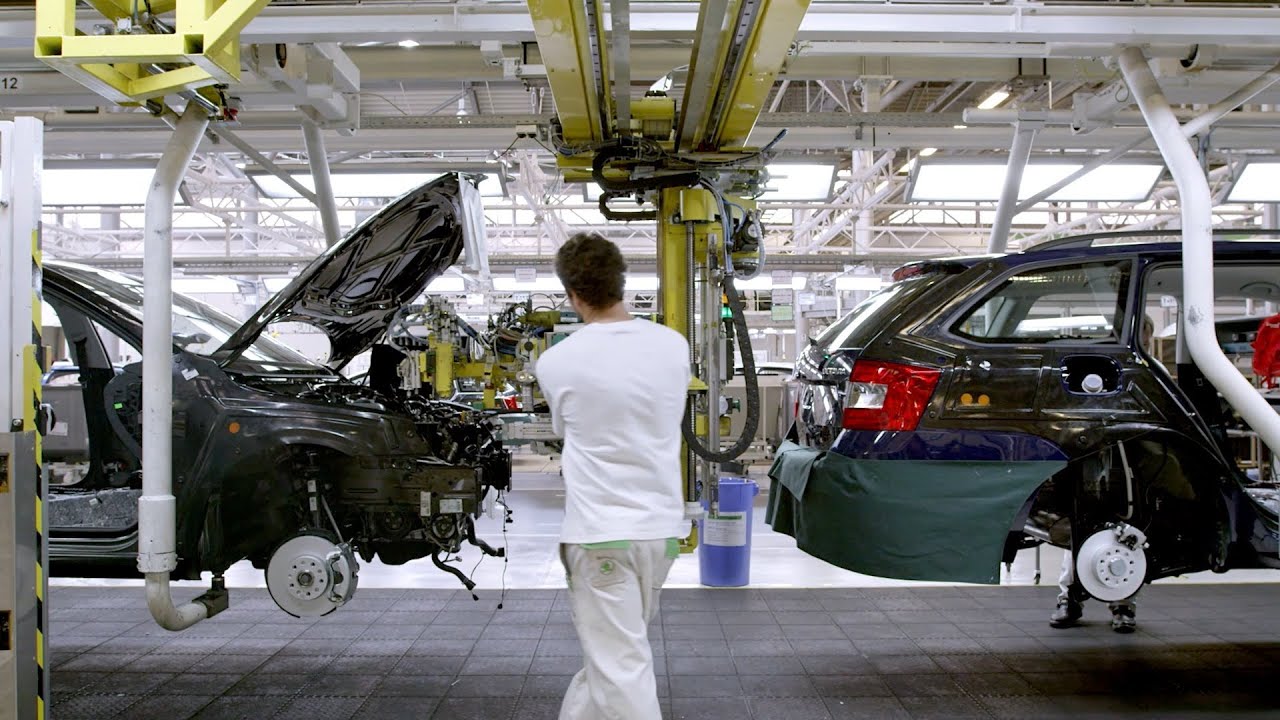
Spain wants to remain EU’s second-largest auto producer
Spain is putting mobility and the automotive industry in the centre of its economic recovery plan, according to the country’s industry secretary Raul Blanco.
“We have a clear goal. We want Spain to remain the EU’s second-largest car producer in 2030, 2040 and 2050, regardless of the technology,” he said earlier this week.
His comments echoes those of industry minister Maroto Reyes, noting that the government is committed to lead the future of the sector with more sustainable, digital, connected and safe mobility. She was the first one to announce plans for Spain to host its first battery cell gigafactory, in a partnership between the government and Volkswagen, Seat and Iberdrola, Kallanish notes.
Blanco said Spain has earmarked €13 billion ($15.68 billion) in spending through 2023 to promote EV take-up, improve charging infrastructure and build the battery plant. Another €70 billion is expected in EU funding, with the government pushing for the acceleration of electrification of the auto industry.
Spain faces intense competition from Germany and France, Europe’s No. 1 and No. 3 biggest auto markets.
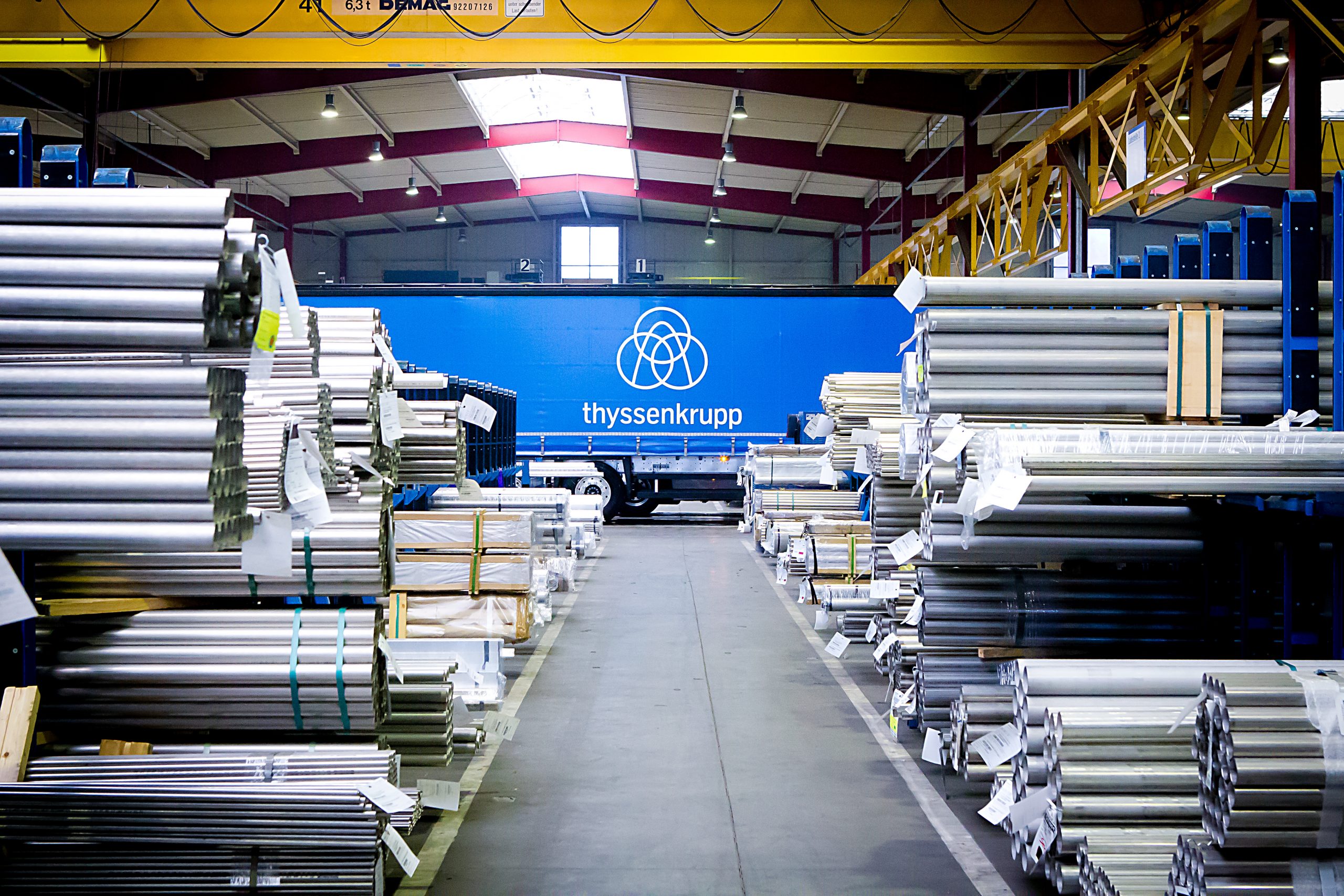
Thyssenkrupp Mannheim starts offering narrow stainless strip
Thyssenkrupp Materials Processing, the service centre unit of distribution group thyssenkrupp Materials Services, is opening a new narrow strip centre for stainless steel at its Mannheim site.
It is investing a total of €5 million ($6m) in expanding its range of services in response to increasing demand for additional services in this product area, Kallanish hears from the company. Following the completion of construction work at Mannheim’s Rheinauhafen harbour, the first stainless steel strip will roll off the precision slitting line this week.
The facility is able to produce up to 25km of long strip, in addition to individual rings. A similar service for carbon steel is offered at tk Materials Processing sites in Willich and Dabrowa Gornicza, Poland. It is made possible by the connected coiling of packs, in which several narrow strips are welded together, the company explains.
In future, the new stainless steel narrow strip centre will increasingly serve small-batch requirements such as sampling and spare parts, it notes. The new production line, supplied by Georg, makes a thickness range from 0.4-4mm, and widths of 8-650mm, at a speed of up to 400 meters per minute.
In six European countries, tk Materials Processing supplies around 2 million tonnes of custom-tailored products annually, steel as well as nonferrous metals.
Christian Koehl Germany
Essar to re-enter steel in Indian joint venture
The Andhra Pradesh government has picked Essar Group to be the new joint venture partner for the prospective YSR Steel plant in Kadapa, according to Indian press reports. This comes after authorities dropped previous pick Liberty Steel due to its renowned financial troubles.
The move would represent Essar Group’s return to the steel business after it was forced to relinquish its circa 10 million tonnes/year capacity flat steelmaking operation to ArcelorMittal following protracted bankruptcy proceedings (see Kallanish passim). Essar representatives did not respond to a request from Kallanish for comment on Wednesday.
The prospective plant will eventually have a 3 million tonnes/year capacity of steel. Authorities have proposed the joint venture will commission 1m t/y of capacity in the first stage by March 2024. The joint venture partner was to be required to hold at least 51% of the new plant’s subscribed and paid-up equity share capital.
YSR has already agreed to procure 5m t/y of iron ore feedstock from NMDC, but the JV partner would be allowed to source from elsewhere if beneficial to the plant.
Adam Smith Germany