


EU importers pay safeguard duties for Indian HRC
EU importers have been paying safeguard duties on Indian hot rolled coil cleared at customs since the end of last week after quotas were quickly exhausted.
Traders confirm the first safeguard duties were paid by importers clearing material on 23 April. That day, the average quota paid was 8%. Since then, any new HRC from India cleared until end of June will face a 25% duty.
“Most buyers with material waiting to be cleared are now doing it slowly, only selecting the material they need urgently,” a trader tells Kallanish. If new quotas are confirmed from the beginning of July, it is likely they will be completely used during the first days of the month.
“We need to keep in mind, nevertheless, that Indian HRC currently at docks in Europe was ordered in January, mainly, meaning even a 25% duty will make them competitive with today’s new offers from domestic mills and importers,” the trader adds.
Currently, new Indian-origin offers are not competitive, similarly to Turkish HRC prices, which are also levied with anti-dumping duties. Some offers of HRC from Asia have been reported this week at €900-920/t ($1,090-1,114) cif Europe, Kallanish understands, but delivery would be at the end of the third quarter.
Emanuele Norsa Italy

ArcelorMittal continues EU coil offer increases
ArcelorMittal has informed customers this week of yet another new offer increase for coil in the European market, Kallanish learns from sources.
Hot rolled coil is now being offered at €1,020/t ($1,236) ex-works base in northern Europe, while cold rolled and hot-dip galvanized coil offers are also increasing, to €1,200/t ex-works base.
The previous offer increase was announced only a week ago. Demand remains well above supply and buyers are forced to accept price hikes to secure enough feedstock. Coil users are suffering due to long delivery times from European mills and a scarcity of import options in the market (see related article).
Emanuele Norsa Italy

Saarstahl, Dillinger syngas-hydrogen pilot plant to operate by mid-year
German steelmakers Dillinger and Saarstahl will start operating a syngas-hydrogen-based pilot plant by mid-year in cooperation with engineering company Paul Wurth in a move that could cut carbon emissions by 12%, the two sister companies said April 29.
The pilot plant currently in construction will use gas produced in the coke oven of the steelmakers’ Rogesa subsidiary and convert it to syngas, enriched with hydrogen and then used as a reducing agent for the reduction of iron ores. The syngas will then be injected into the blast furnace, which should lead to a “significant reduction in coke consumption and thus to a reduction in carbon emissions.”
“The use of process gases for metallurgical purposes makes it possible to cut carbon emissions by up to 12%,” said Karl-Ulrich Kohler, chairman of the management board of Dillinger and Saarstahl. “By using hydrogen, we can further improve and actually nearly double the potential reduction of carbon. The creation of an adequate energy infrastructure is a precondition for this.”
Once the pilot plant is operational, the next project phases will be developing the process to semi-industrial and later to industrial scale with support from public funding with the aim to produce large quantities of synthesis and inject them into a blast furnace.
The project “H2Syngas” is part of a cross-border hydrogen project in the Saar region.
In a report this week, the Energy Transitions Commission said it identified the steel industry as an area where hydrogen application is likely to develop over the longer term “as the relevant application technologies develop and capital assets are replaced.” By 2050, hydrogen could account for 50% of the final energy demand in the steel sector, it said.
The report, Making the Hydrogen Economy Possible, said that, in the shorter term, hydrogen could be co-fired with coal in blast furnaces.
“Using hydrogen as the reduction agent rather than coking coal may increase steel prices by 40%,” it said, but added that the “green consumer premium” would be much less significant in finished products, adding less than 1% to the cost of a vehicle built with 1 mt of steel.
In addition, the ETC highlighted that constraints on the location of hydrogen production facilities could lead to changes in optimal locations for steel plants. Industrial clusters around a set of linked hydrogen infrastructure would be one such model, the commission said.
— Laura Varriale, James Burgess

Strong demand, prices support Erdemir’s sales and profit
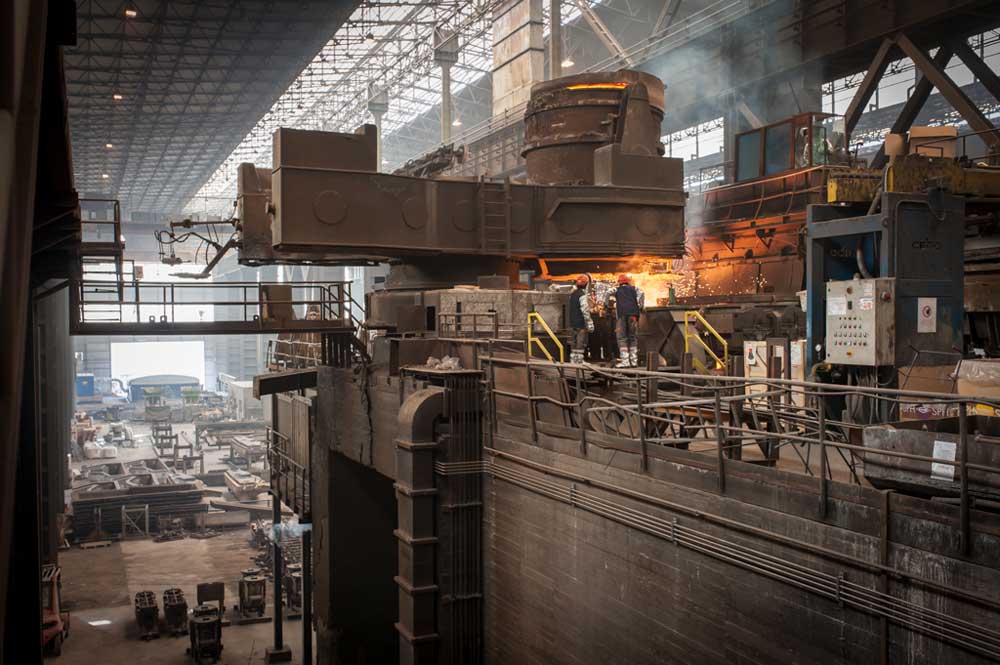
Globally strong demand and prices supported the output and sales of Turkey’s largest integrated steelmaker, Erdemir, in the first quarter, while the company’s profit soared.
Erdemir sold 1.81 million mt of flat products in Q1, up from 1.66 million mt sold in Q1 2020.
While the group’s flats sales to the domestic market were up by 9% in the period to 1.6 million mt, its total long product sales to the domestic market fell 23% on the year to 205,000 mt. Erdemir Group exported 213,000 mt of steel in Q1.
The group’s crude steel output totaled 2.31 million mt in January-March, up 3% on year. The group produced 889,000 mt of crude steel at its Eregli steelworks in Q1, down 6% year on year, while its larger Iskenderun works (Isdemir) produced 1.42 million mt, up by 8% on year.
The group’s Q1 revenue reached Lira 10.5 billion ($1.3 billion), up 64% on year, while the company’s income totaled Lira 2.62 billion, up from Lira 300 million registered in the same period the previous year.
The company’s Eregli steelworks produces hot-rolled, cold-rolled and galvanized coils, plate and tinplate, while Isdemir produces billet, wire rod and hot-rolled coils with a total crude steel production capacity of 9.1 million mt/year.
— Cenk Can
No end of US and European steel shortage in sight: Klöckner CEO
An end of the steel shortage that is gripping Europe and the US is impossible to predict, while upward price movement continues in both regions, Gisbert Rühl, CEO of German steel distributor Klöckner told S&P Global Platts April 29.
“Price rises are not stopping, though the acceleration speed is toning down. Supply chains are empty, this is boosting prices,” outgoing CEO Rühl said during the company’s Q1 results call. Rühl will be replaced by ex-Thyssenkrupp CFO and ex-Thyssenkrupp Steel CEO Guido Kerkhoff in May.
Platts’ daily assessment for hot-rolled coil EXW Ruhr, stood at Eur990/mt April 28, the highest level recorded. The previous all-time high at Eur800/mt from June 2008 had been broken earlier in March.
“At the moment the demand excess will continue. The feeling is that mills are cautiously trying to balance supply,” said Rühl, adding that not all production capacity in US and Europe that has been taken out when the pandemic hit has been taken back online, confirming that lead times are now into Q4.
Klöckner expects steel demand to increase 5-10% in the US and Europe, though the US is likely to be at the top end of the range while European demand is likely to lag behind the US. Kerkhoff said that impending infrastructure projects will boost demand, in particular residential housing. Demand from the manufacturing and engineering markets, predominantly export-driven in Europe, is set to increase as well in both regions. Automotive demand is on a path of recovery, said Kerkhoff, though it is still behind pre-pandemic levels.
In its Q1 report, Klöckner said it recorded its strongest financial quarter in 12 years. Due to the upward price movement the company saw an increase in sales by 5.3% year on year to Eur1.5 billion in Q1, despite a drop in shipments of 5.7% on year to 1.29 million mt. Operating income (EBITDA) stood at Eur130 million, up from Eur21 million in Q1 last year.
For the rest of the year, Klöckner expects a “considerable” increase in sales and “slight” increase in shipments.
— Laura Varriale

Webinar: Opportunities in energy effiency sector in Argentina and Brazil

Low Carbon and Circular Economy Business Action (LCBA) in Latam is a business platform funded by the European Union.
The program is seeking to connect European tech providers working in Energy Efficiency, Circular Economy and Low Carbon sectors with business opportunities in Argentina, Brazil, Chile and Colombia.
In order to learn more about the program we invite you to check their website or join their coming webinar “Opportunities in Energy Efficiency in Argentina and Brazil”.
In order to access the selection of business opportunities identified by the Program in Latam please access the LCBA networking platform here and apply, the first Call for Expression of Interest is now open until the 24th of May.
Registrations

Northwest European plate stockists hit by second wave
The go-stop-go pattern of plate prices on their way up has brought many northwestern European distributors out of step, and they could be in for dire straits, market observers believe.
Plate prices started their rise with a considerable delay after coil in November and until year-end. The first two months of 2021 saw relative stability before another hefty surge kicked off, which by now has brought commodity grades (S235 as well as S355) to €1,000/tonne ex-works ($1,207/t) and possibly higher.
“The stockholders had waited pretty long. We then had the big hype in late 2020 when they were busy refilling, but then they were just as busy with selling profitably. But they did not expect another price wave, and certainly not the height it would reach,” a manager at a plate mill describes the situation to Kallanish. “Now they are facing elevated prices, very long lead times, their brief profits are being eaten up, and when the market drops at some point, they will be sitting on expensive purchases. This means they must act very cautiously these days.”
A buyer at a big stockholder agrees, noting: “We must be profitable now, to have a cushion when the price falls back down, which could easily mean by €400/t, and that could break the neck of many small enterprises.” Hence, his company has lifted sales in line with mill prices, not only for the sake of profit but also to discourage panic purchases.
Given the supply shortage at mills, which currently don’t take orders or give prices for the fourth quarter, many stockholders have restocking problems, which means a blessing for his company.
“We have a broad range, and we see many new customers come in for grades that they do not get elsewhere at the moment. In normal times, we sell 350-400 tonnes per day; now it is easily 600 to 700,” he says.
Christian Koehl Germany

Italy’s ArcelorMittal Taranto steelworks restarts blast furnace
ArcelorMittal’s Italian subsidiary is to restart blast furnace No 4. at the Taranto steelworks in June, a company representative tells Kallanish.
Acciaierie d’Italia, the new joint venture between ArcelorMittal and the state-owned Invitalia, is boosting output amidst concerns over the current short supply of coils. This month ArcelorMittal has received the first €400 million ($483m) of new equity from Invitalia. The €400m investment from Italian authorities has been the object of a dispute between the two companies due to Invitalia’s failure to meet the payment deadline (see Kallanish 15 April).
At the moment the steelmaker formerly known as Ilva is not quoting for hot rolled coils. The representative says that BF No. 4 will add a daily 15,000 tonnes of crude steel output.
In February the company restarted blast furnace No. 2. In June the Taranto steelworks will be again producing with three blast furnaces (BF no. 1, 2, 4). Meltshop no.1 and BF no.4 were idled in March for maintenance works, Kallanish notes.
ArcelorMittal last year signed a binding agreement with Invitalia to form a 50-50 public-private partnership to operate the Taranto steelworks (see Kallanish passim).
Natalia Capra France

High coke prices push up profits
Due to rising coke prices over an extended period, some coking companies have achieved substantial profit growth in the first quarter. Prices still remain at high levels.
Shanxi Coking Group made CNY 451 million ($69.6m) in net profit in Q1, up 350% year-on-year, Kallanish notes. “In the short term, the supply of coke remains tight, and the price of coke shows a stable and strong trend, which has a good support for the company’s performance,” it notes.
Meijin Energy in Shanxi predicts that its net profit in Q1 was CNY 550-750m, returning to profits losses in the same period last year due to higher production and high coke prices.
September 2021 coke futures fell back after touching a high on 8 January, but then increased again rapidly since late March. It closed at CNY 2,683/tonne ($414/t) on Wednesday, approaching this year’s high of CNY 2,759/t.
Recently, inventories at coking companies have declined steadily amid strong demand. Some coking companies have reported bing unable to meet customers’ demand. The high operation rate of steel mills is expected to support the short-term prices of coke.
By Kallanish Team
India’s Q1 steel exports rise 26% on year as EU demand grows
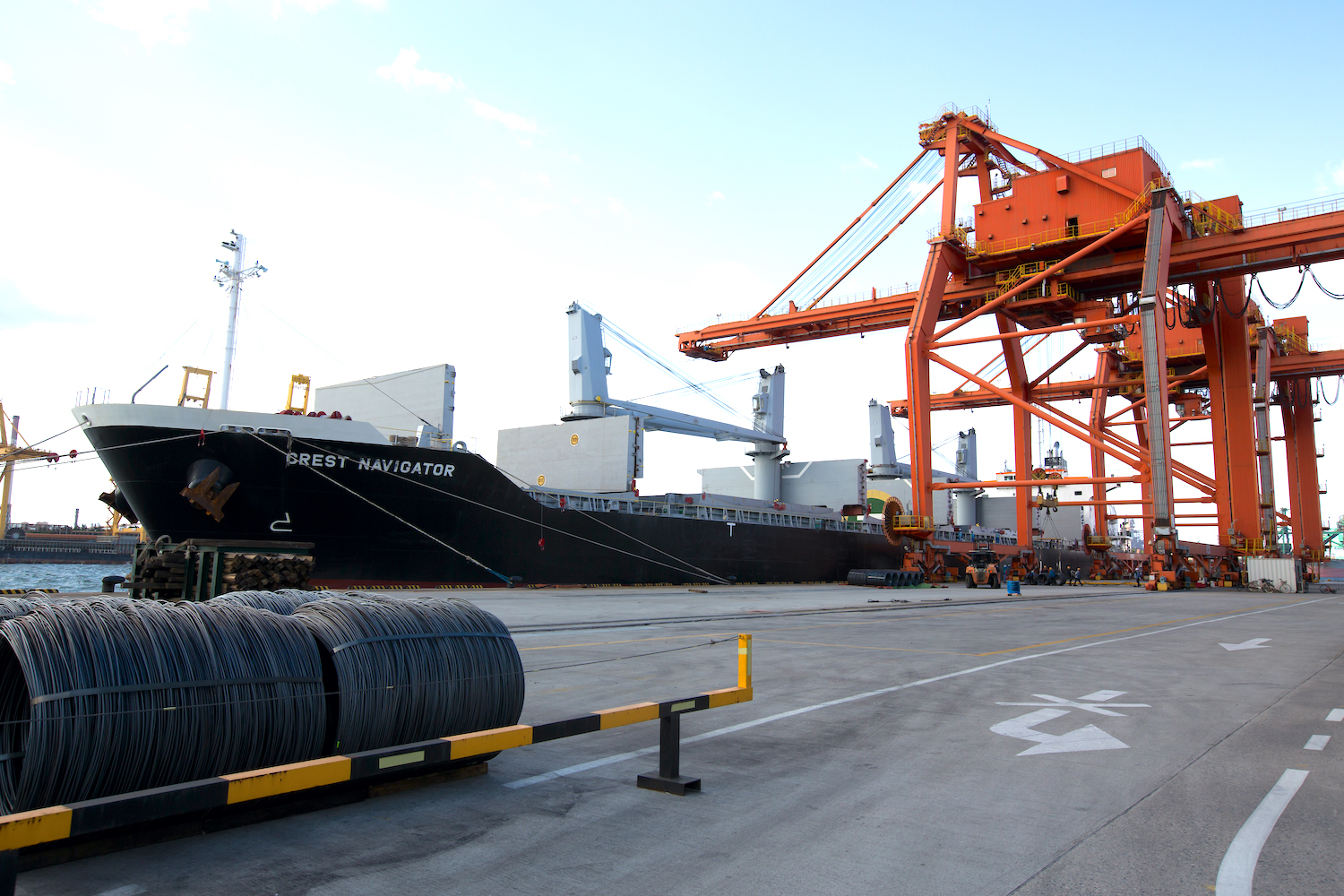
India’s finished steel exports for January to March rose by 26% year on year to about 2.47 million mt, supported by higher exports to Europe, S&P Global Platts’ calculations showed based on data from the country’s Joint Plant Committee.
The increase in first quarter was backed by a surge in exports for March, which jumped more than 2.2 times to 1.29 million mt.
The share of March exports to Belgium, Italy, Spain and Hong Kong showed annual increases while shipments to Nepal, the UAE and Vietnam posted falls, according to the Ministry of Steel.
Italy led the destinations with a 22% share of the March exports, up from 12% the year before, while Belgium had a 16% share versus 4% while Spain rose to 5% from 1%. Hong Kong’s share of the March shipments expanded to 10% from less than 1% in March 2020.
The bulk of the March exports were made up of hot-rolled coil, which amounted to 676,200 mt, more than double against March 2020.
Overall, HRC exports in Q1 were 1.19 million mt, up 18.9% from Q1 2020 due to higher prices and demand in the EU.
Platts Metals Trade Review showed that so far in 2021, India had largely switched its “swing supply” focus to Europe. Northern European HRC prices were around $65/mt higher than Indian domestic HRC prices in early January. As of April 12, they were $300/mt higher. India has already exceeded its EU quota by around 40,000 mt this year but hopes the steel will be allowed in quickly given the coil shortage in Europe.
With the Q1 2021 data summed up, India was a net steel exporter for its fiscal year 2020-21 (April-March) with exports at 10.78 million mt, up 29.1% from the previous fiscal year 2019-20, while imports totaled 4.75 million mt, down 29.8% year on year.
For fiscal 2020-2021, HRC was the most exported steel product at 6.65 million mt, itself up by 38% from the year before.
Maintenance, oxygen plans to affect Q2 output
Domestic prices in India could rise in Q2 as JSW Steel, Tata Steel and the Steel Authority of India Ltd., or SAIL, are expected to conduct planned maintenance programs, thereby lowering production.
Also, due to spikes in COVID-19 cases, local steelmakers were asked by the government to increase their production of liquid medical oxygen to meet a shortfall of the gas at hospitals.
Daily COVID-19 infections still exceed 300,000 cases as the country recorded 323,144 confirmed cases on April 27, a day after it posted 352,991 fresh cases, which broke its own global record for a fifth day running.
The steelmakers have increased their supply of liquid medical oxygen to more than 3,000 mt/day this week from an average of between 1,500 mt/day and 1,700 mt/day last week, the ministry said April 26.
As a result of the request, the Bhilai steel plant operated by SAIL, has been temporarily shut to boost its LMO production. The plant has a production capacity of about 3.15 million mt/year, of which 950,000 mt/year is steel plate.
Likewise, JSW Steel has reduced steel production as “saving lives is more important than producing steel and production can suffer for as long as the country is in need of any resource available with the company,” its chairman and managing director Sajjan Jindal said April 28. “JSW is already supplying maximum possible Liquid Oxygen from its plants and is one the biggest suppliers of medical oxygen in the country today.”
“Total LMO supplies during April 2021 is expected to be over 20,000 tonnes. JSW Steel is committed to augment the supply of liquid oxygen further in these critical times to save lives even by lowering the production of steel at its steel plants. We are leaving no stone unturned to push the supply of liquid oxygen to 1,000 tonnes per day in the interest of our nation,” the company told Platts on April 28.
— Clement Choo