


European stainless coil seen increasing again, demand high
Stainless steel coil prices in Europe are seen increasing again, possibly by a further €100/tonne ($120), in the coming weeks. This is on account of extremely tight supply and spiking nickel prices that should push up alloy surcharges in May, market participants tell Kallanish.
The news of the cancellation of Chinese tax rebates has caused an “earthquake” in the global market for stainless steel coil, sources say. Other Asian countries together with China are cancelling negotiations for stainless coils with western buyers. One producer in Indonesia is said to be mulling a $200/t increase for coil.
The reduced offer volume from Asia adds to expected new European safeguard measures on Indian and Indonesian stainless cold rolled coil, leaving Western buyers grappling with short supply. “CRC, at the moment, is impossible to find,” a source comments.
The main European mills are quoting stainless hot and cold rolled coil for October and November. Prices have increased by a further €50/t on average compared to the beginning of April. CRC now starts at €2,800/t and may reach €2,850/t delivered, while HRC is at €2,650-2,700/t delivered depending on tonnage, sources say. Given the lack of CRC availability, values are expected to reach €2,900/t delivered in May.
Despite supply issues, the entire value chain is enjoying high margins and “an explosion” in demand for flat products, particularly sheets, sources observe. Deliveries for flat re-rolled products span to the first quarter of 2022. Demand is less significant for stainless tubes, although prices are also increasing by €100 in May, sources say.
Natalia Capra France

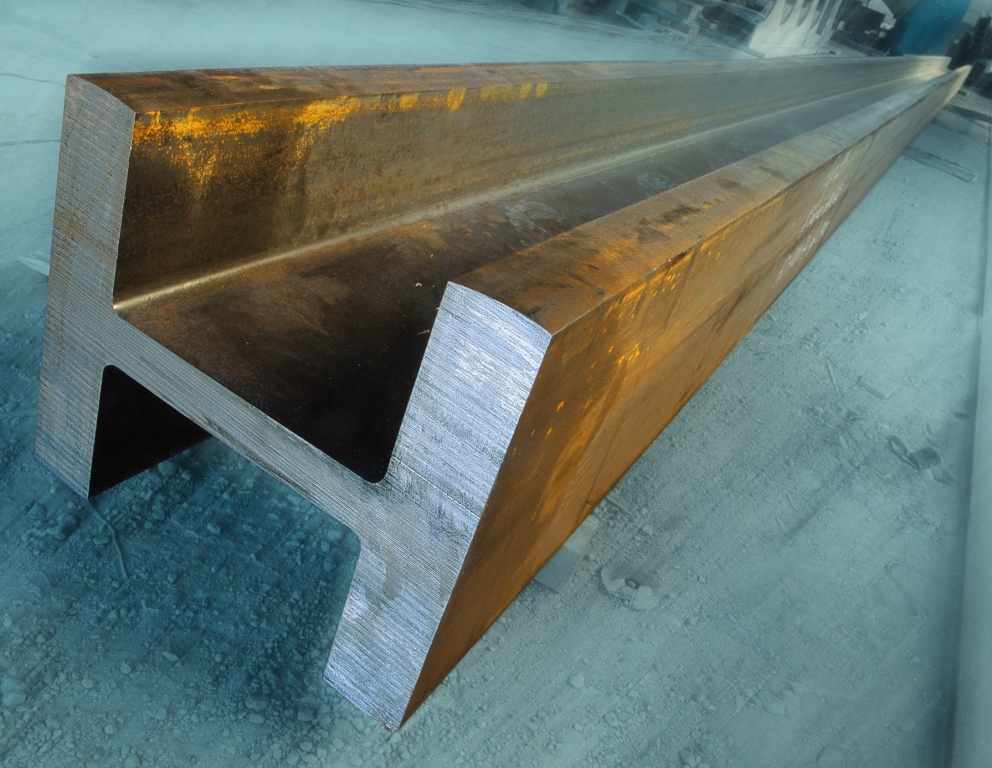
H-Beam prices rise for 6th month in SE Asia on high raw material costs
Wide-flanged H-beam import prices into Southeast Asia rose for the sixth consecutive month in April as raw material prices globally remained high, market sources said.
S&P Global Platts assessed the April price of wide-flanged S275JR H-beams up $70/mt month on month at $840/mt CFR Southeast Asia April 30.
Offers late in the month were in the range of $840-$890/mt CFR Singapore, up from $790/mt at end March.
Thai-origin beams were offered more competitively, in the range of $840-$850/mt CFR, while South Korean-origin beams were seen offered at $860-$890/mt.
Tradable levels were cited at $840-$850/mt CFR Singapore April 30, with little room for price negotiation with mills.
“If a buyer wants it, they would have to agree to the price pretty much within the day,” a Singapore-based stockist said. “Mills are not eager to sell, and they are just offering some volumes for the sake of maintaining relations. I don’t think they are in bargaining mode at this time when their sales are so good.”
Buyers and traders across the region said offers were increasingly for shorter validity periods, with a Singapore trader noting offers were being refreshed within one or two days.
China-origin beams remained far less competitive for buyers in Southeast Asia as offers surged to $830-$900/mt on an FOB basis for SS400 grades.
Platts wide-flanged S275JR H-beam assessment has surged $292/mt or 53.2% since November.
— Samuel Chin

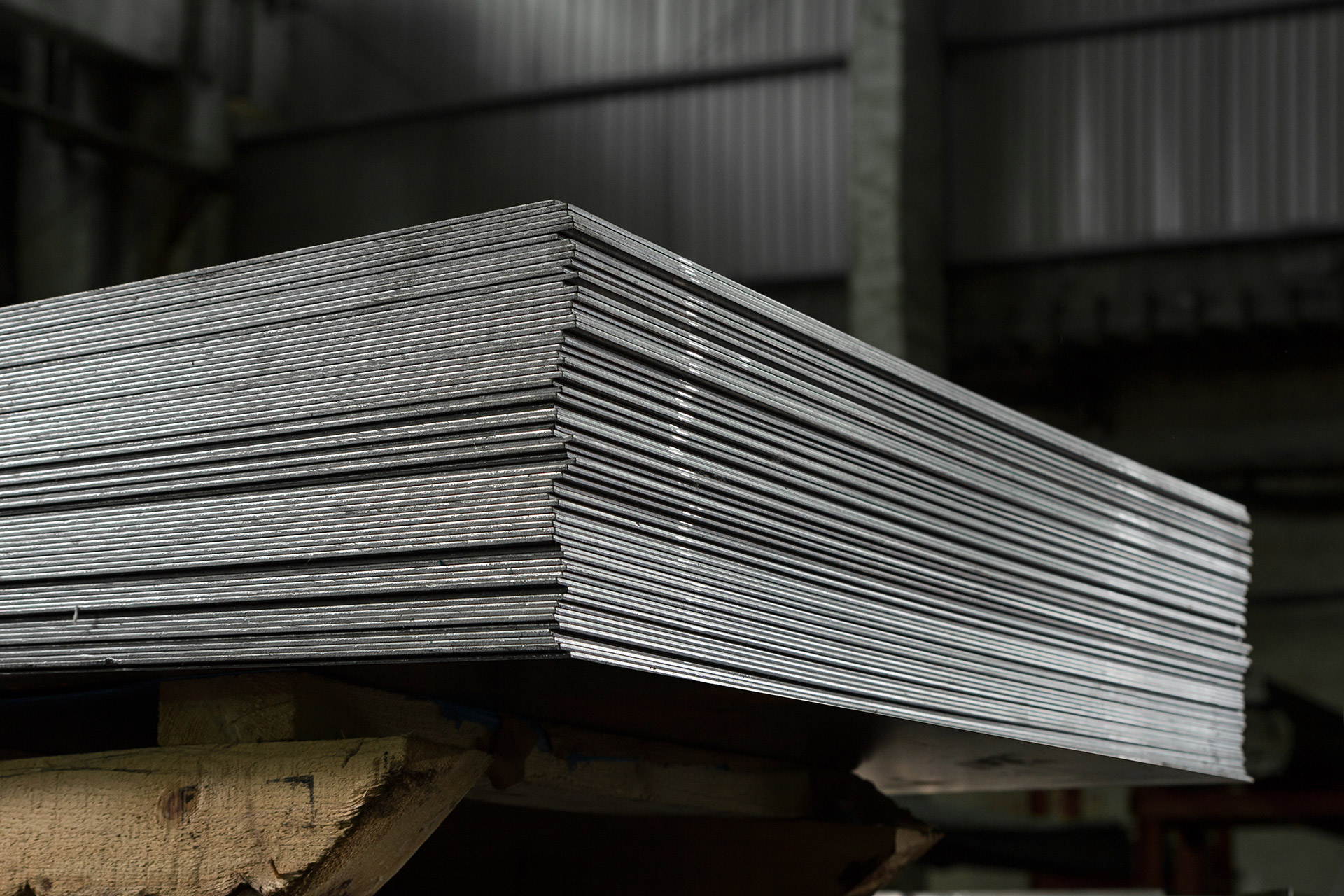
Large German plate stockholders seeking prompt Italian material
European plate prices were heard higher April 30 with offers transitioning to Eur1000/mt ex-works Ruhr. Meanwhile, Italian producers are relishing the lack of competition from German mills with long lead times (earliest November), versus a more prompt May delivery from Italian re-rollers, sources told S&P Global Platts.
A Benelux service center source said availability was much better on plate than it was for coils, with a further uptrend in prices expected as merchant bars and beams enjoy additional increases.
“At this moment, availability is acceptable,” the service center source said, with demand from end-users heard to be improving compared to the consistent demand seen from distributors/stockholders as re-stocking efforts continue.
Few offers were heard from Dillinger, whose lead times were heard for November, said a German distributor, with Salzgitter heard to be offering Eur1000/mt DAP Germany.
“It has much to do with slabs. These integrated mills either sell slabs at very high prices on the world market or they give slabs for production of CRC/HDG downstream where they earn more money than plate,” the distributor said. “It’s making a shortage for re-rollers to get any slabs.”
An Italian mill source said slab prices were expected to increase further next month, and this was adding further bullish support to Italian plate prices.
“Eur950/mt ex-works is more than enough to cover new increases [on slabs]. We need to land between Eur900-950/mt ex-works Italy,” the same source said.
Adding to the lucrative situation in Italy, a second Italian mill source said big German stockholders were now keen for Italian lead times.
“They’re looking closely for material before their summer closures. We [Italy] can still deliver for late May,” the source said. “[For] new production for late-May delivery we cannot go below Eur950/mt ex-works Italy.”
— Amanda Flint

Durch Digitalisierung die Performance im Stahl- und Metallhandel steigern
In Zusammenarbeit mit dem SSHV wird Valentin Kaltenbach, CEO der KALTENBACH.SOLUTIONS GmbH, als einer von mehreren geladenen Referenten Live-Vorträge unter dem übergeordneten Motto Performance-Steigerung im Stahl- und Metallhandel durch Digitalisierung halten. Mitglieder des Schweizerischen Stahl- und Haustechnikhandelsverbandes sowie interessierte Nichtmitglieder haben ab sofort die Möglichkeit, sich kostenlos für die Online-Veranstaltungen anzumelden, um am 27.5., 10.6. und am 24.6. Neues über digitale Trends zum Nutzen der Branche in Krisenzeiten zu erfahren.
Der SSHV ist ein wichtiger Partner der Metall-, Elektro- und Maschinenindustrie sowie der Bauwirtschaft. Seine Mitglieder, die Stahl- und Haustechnikhändler in der Schweiz, beraten ihre Kunden umfassend bei der Wahl geeigneter Werkstoffe und Produkte. Außerdem übernehmen sie die Beschaffung, die Veredelung, die Lagerhaltung und den Transport – von der innovativen Haustechnik bis hin zu maßgefertigten Stahlprodukten.
Valentin Kaltenbach, CEO der KATLENBACH.SOLUTIONS, ist als Referent am 10. Juni mit dem Thema Performance in der Anarbeitung um +30 % steigern live dabei.
Im Online-Workshop vom 27. Mai geht es um die Automatisierung und Digitalisierung von Maschinen im Bereich der Anarbeitung . Die zweite Session am 10. Juni beschäftigt sich mit der digitalen Transformation in den Workshop-Prozessen und der Intralogistik. Abschließend informiert der dritte Workshop am 24. Juni über die digitale Transformation in Office-Prozessen und an Schnittstellen . Die geplanten Online-Workshops finden jeweils in der Zeit von 15.00 bis 17.00 Uhr statt.
Eine Teilnahme ist sowohl für Mitglieder des SSHV als auch für Nichtmitglieder kostenfrei. Weitere Informationen zur Anmeldung und zum Programm können hier abgerufen werden.
Quelle und Foto: KALTENBACH.SOLUTIONS GmbH
28.04.2021 von Hubert Hunscheidt

UK must act urgently to address critical materials access
The UK urgently needs to develop policy responses to the critical materials challenge post-Brexit, according to a report by the University of Birmingham.
Britain’s exit from the European Union brings both challenges and opportunities to different industries, and the critical materials sector is no different, Kallanish learns. Researchers, investors and industry experts believe the government needs to create a single body responsible for developing a strategy on technology-critical metals, enabling effective inter-departmental collaboration at government level.
This entity should then be in close contact with the EU, because “the UK has part of the supply chain, and the EU the other part,” explains Allan Walton, professor of Critical and Magnetic Materials at the School of Metallurgy and Materials and co-director of the Birmingham Centre for Strategic Elements and Critical Materials.
Yet, the UK government should also seek opportunities to diversify its access to primary resources through resource diplomacy, which could be part of any new trade negotiations. Countries like Australia, Japan, the US, India and Greenland are a few countries the British should be aiming to work with, according to member of parliament Alexander Stafford.
Actively attracting and supporting large-scale strategic private investments for supply chain development should also be part of the government’s goals. The University of Birmingham report notes the UK could become an international refining centre for specific technology-critical metals by 2025.
The report lists a total of 12 recommendations to secure these metals and materials of the future. With limited natural resources, the country needs to act quickly to ensure access to these crucial resources if it’s serious about building an electric vehicle supply chain. A national strategy is the first step to be taken, experts argue.
The government should also foment research in areas such as refining, separation, sensing, automated sorting and re-processing of critical metals, the report says. Efficient processing routes for selected materials to reduce the environmental burden of production, reduce waste and improve performance could give the UK a competitive advantage in terms of cost, it adds.
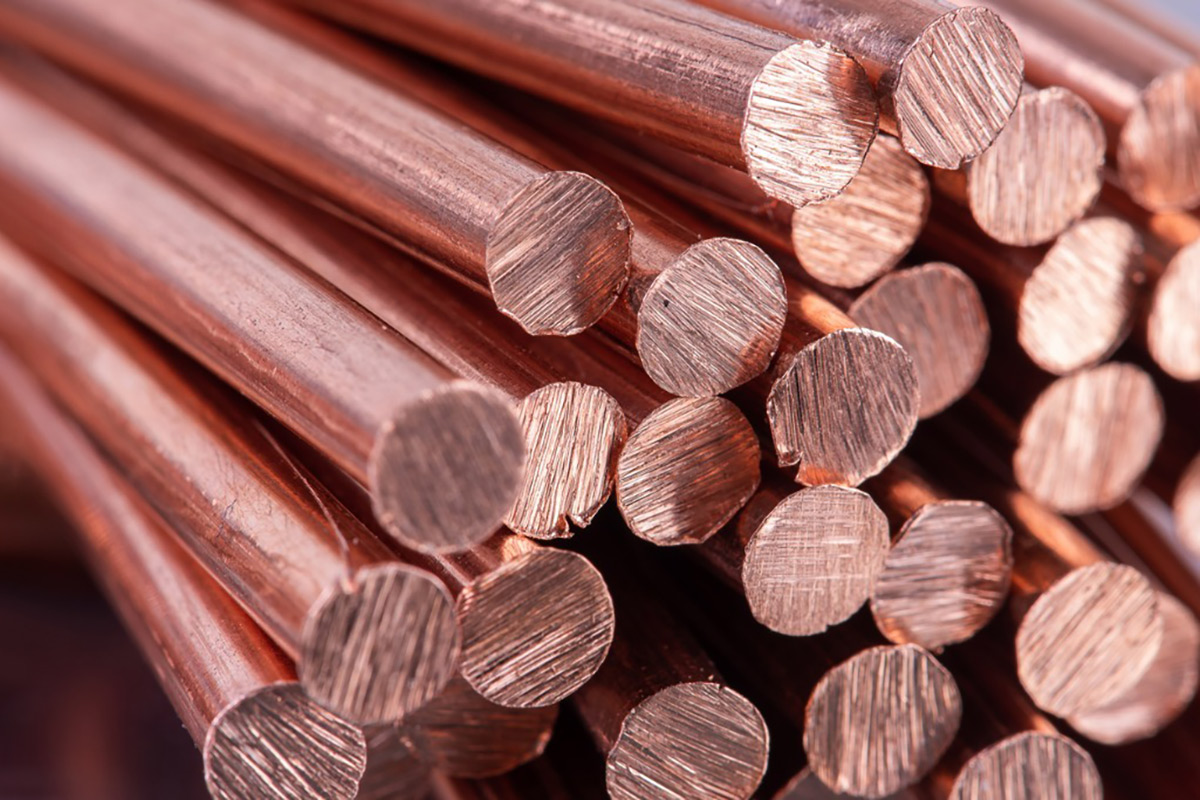
Critical materials include copper, nickel, lithium, cobalt and rare earth elements.
Iron ore declines, scrap faces short supply
Seaborne iron ore prices continued to fall, as steel mills slowed their purchases before the Labour Day holiday.
The Kallanish KORE 62% Fe index fell $1.04/tonne to $186/dry metric tonne cfr Qingdao. The Kallanish KORE 65% Fe index slipped $0.71/t to $220.22/dmt cfr, but the KORE 58% Fe index inched $1.86/t higher to $170.16/dmt cfr. A cargo of 80,000 tonnes of JMBF fines for June shipment sold at floating prices.
On the Dalian Commodity Exchange September iron ore settled down CNY 5.5/t at CNY 1,130.5/t ($174.66/t), while on the Singapore Exchange May 62% Fe futures settled higher by $0.25/t at $187.70/t. The same contract for 65% Fe and 58% Fe futures settled at $223.32/t and $178.15/t, up $0.66/t and $8.08/t respectively.
Following China’s adjustment to import and export tariffs, the market expects a decline in crude steel production that will affect iron ore demand. However, in the short term, steel mills’ profits are supported by high steel prices, and steel mills are more enthusiastic about production, which also supports iron ore.
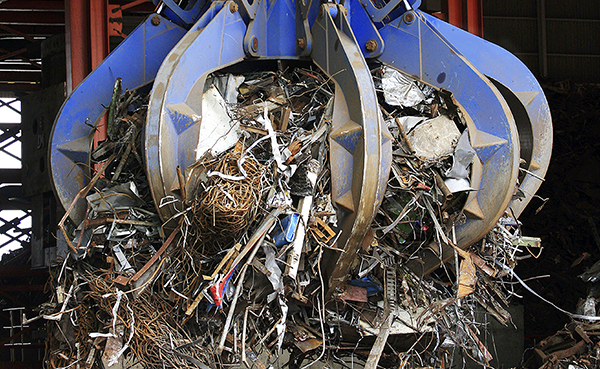
The short supply has caused China’s scrap prices to continue to rise. Variety 6mm+ heavy scrap delivered to mills in the Yangtze River Delta region inched CNY 13/t higher on Wednesday to CNY 3,556/t. In Tangshan, billet prices increased by CNY 10/t at CNY 4,990/t.
By Kallanish Team
Klöckner reports strong earnings, expects rising prices
Steel distribution group Klöckner & Co has made a strong start to 2021 with its best quarterly earnings in over 12 years.
As a result of an exceptionally strong positive price trend, sales increased despite a pandemic-driven fall in shipments, rising by 5.3% on-year in the first quarter to €1.5 billion ($1.8 billion). The operating income (Ebitda) of €130 million – versus €21m last year – before material special effects was at the upper end of the guidance range, which had been given at €110-130m.
Klöckner sees the overall economic situation and demand for steel increasingly recovering, which is why it forecasts an Ebitda range of €130-160m for the second quarter. At a press conference call, outgoing chief executive Gisbert Rühl said he expects steel prices to continue their journey upwards, but at a slower pace than in the preceding weeks. He added that the surge of recent months and weeks turned out even stronger in the USA than in Europe. The group has a strong representation in both regions.
Regarding lead times from mills, he told Kallanish that the fourth quarter is now the period for deliveries from current orders to arrive. “This is certainly unusually long,” he noted. Rühl added that Klöckner & Co, thanks to its operating strategy of “smart working capital”, has in recent months suffered only slightly from supply shortages. “We did not deplete our inventories towards year-end as many do, because we expected a time of shortage coming, so we maintained our delivery capability,” he said.
Christian Koehl Germany
Italian equipment-maker Fimi expands in US
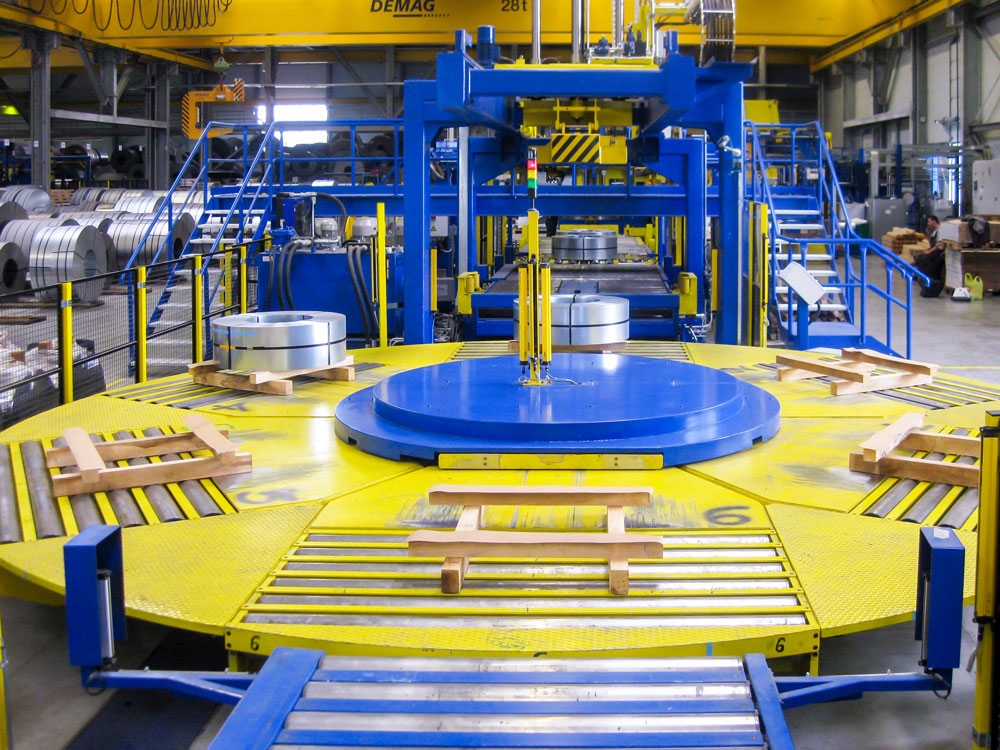
Italian equipment maker Fimi Group is partnering with US-based Janus Automation with the aim of gaining market share in the North American market, Kallanish learns from a Fimi representative.
“The partnership with Janus gives us the possibility of guarantee a customer presence in the area in terms of service and customer care for those who already own Fimi equipment or intend to purchase it,” the representative comments. “Customer support is and will always be a top priority of our mission.” He adds that Janus Automation is already meeting major US players and promoting the Italian group.
The equipment maker is also pursuing its strategy to reach markets such as Germany and Switzerland, as well as the CIS region.
Headquartered in Pittsburgh, Janus Automation is an expert in steel automation equipment and industrial IT systems. It has six facilities in the US, Mexico, Argentina, and Brazil.
Fimi Group represents five companies, Fimi, Sacma, Selema, Adda fer and Svm, involved in designing and manufacturing coil processing systems in a wide range of materials such as high-strength steel, stainless steel and pre-painted steel.
Natalia Capra France

Marcegaglia to issue new price list
Italian re-roller Marcegaglia is launching a new tube price list effective from next week, Kallanish learns from the company.
Consecutive hot rolled coil feedstock price increases have forced the re-roller to change its price list for the third time in four months. The change will be a technicality involving relative discounts as the general structure of the new price list will remain mostly similar to the old one.
Distributors use a lower Marcegaglia discount to include their margins and costs in their own sales. Kallanish understands that discounts in Italy are currently at 15-16 points; therefore, distributors are not able to sell at the levels of the previous Marcegaglia price list and cannot retain their margins. The new list will increase the level of discount to allow distributors to use the re-rollers’ price list.
Welded tube sales prices are rapidly rising in all European countries following the steep increases in HRC. Other re-rollers are also coming up with new price lists due to the rapidly decreasing discounts. Welded tube discounts are now at the level of 15-16 points in all European countries. Each point of discount is currently equal to €13/tonne ($16/t).
HRC prices have reached an average level in Europe of €1,000/tonne base ex-works. Prices for welded tubes in all European countries are expected to rise again next week, sources say.
Natalia Capra France

Pig iron prices continue rising, trade sparse
Merchant pig iron trading activity in the Black Sea export market was focussed narrowly on the Mediterranean and wider European markets in the past week, with limited trading volumes.
The past week has brought no US trade to either CIS or Brazilian suppliers, as US buyers continue to reject offer indications. These remained flat on-week from CIS suppliers, but increased quite considerably from Brazil.
Brazilian suppliers were heard indicating offers at $575-590/tonne fob in the past week, with some sources reckoning one sale took place at $620-630/t cfr. This could however not be confirmed at the time Kallanish went to press.
CIS suppliers’ offer indications were up to a rather wide $600-630/t cfr, but no trade was possible as US buyers look set to continue waiting with purchasing until after the domestic May scrap price settlement. As this is expected to be upwards from current levels, market sources foresee some CIS offers being finally accepted.
Meanwhile, small lots of CIS pig iron continued to be traded to Europe and Turkey at $590-595/t cfr, and $620/t cfr for semi-nodular material. Current levels of demand have supported a $10-15/t price rise on-week.
China’s plans to reduce exports of finished steel and increase imports of semi-finished steel and metallic products suggest there could be another surge in demand from China, eventually, but this is not expected imminently. Most likely, this demand will come, if at all, towards the fourth quarter, when restrictions are likely to intensify, sources say.
As prices continue to rise, the volume of formula-based long-term contracts outside the spot market has also increased, as buyers and sellers aspire to manage volatility. This trend may also intensify in the coming year, as volatility is unlikely to subside, and will depend a lot on China’s metallics buying.