


EU imposes definitive anti-dumping duties on Turkish HRC
The European Commission (EC) has decided to impose definitive anti-dumping duties of 4.7%-7.3% on imports of hot-rolled coil from Turkey.
According to an EC document dated April 23, major Turkish HRC producer Colakoglu is subject to the highest definitive duty of 7.3%, while Turkey’s largest integrated steel producer, Oyak Maden Metalurji Group (Erdemir and Isdemir), has a duty rate of 4.9%.
Habas has the lowest duty at 4.7%, while Borcelik and Agir Haddecilik will face a duty of 5.6%. All other Turkish companies will have a definitive duty of 7.3%.
“The Commission informed all interested parties of the essential facts and considerations on the basis of which it intended to impose a definitive anti-dumping duty on imports of certain hot-rolled flat products of iron, non-alloy or other alloy steel originating in Turkey,” the EC said, adding that all parties were granted a period within which they could make comments on the final disclosure.
The EC launched the investigation in mid-May 2020 following a request by European steelmakers group Eurofer. The EC then announced on Jan. 7, 2021 that it had imposed provisional anti-dumping duties of 4.8%-7.6%.
The EU is Turkey’s main HRC export market and the final duty decision could limit further Turkish mills’ exports, which were already negatively effected by EU trade barriers.
The EC is investigating to determine whether the current system of EU steel import safeguards should continue after its expiry on June 30.
Although Turkish steel producers suspended their countervailing duty reviews following the EC’s April 7 decision to officially terminate the CVD investigation on HRC imports from Turkey, the country may respond to the EU’s latest anti-dumping move with countermeasures.
Turkey officially started a dumping investigation against hot-rolled coil imports from the EU region and South Korea with a presidential decree published in the country’s official gazette Jan. 9.
— Cenk Can

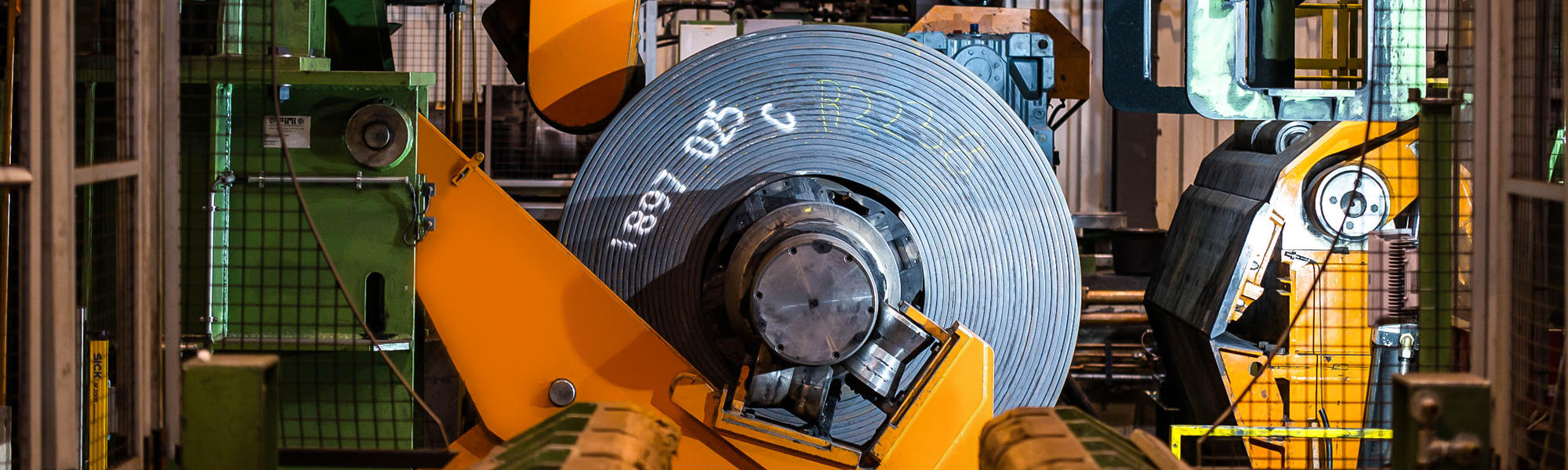
European HRC buyers face difficulty due to credit limits, prices theoretical
European HRC prices were heard higher in the market April 26 as mills aim to reach the Eur1,000/mt level announced by ArcelorMittal, though players have said most prices that are discussed are purely theoretical, with further increases now said to be futile due to the limited availability of domestic steel, sources told S&P Global Platts.
According to one European mill source, Q3 orderbooks were heard to have been filled, with some customers now asking for Q4 allocations.
The mill source cited offers at Eur1,115/mt for HDG and said HRC was between Eur970-980/mt ex-works RUhr.
“It’s useless to announce another increase, the price is hiking up anyway,” the mill source said. “The fact is, when customer needs material, he will pay whatever.”
The market was watching the Chinese steel economy closely, as China is now importing more than it is exporting for its own home production.
“As long as China does not export, the world market will not have enough and [high] prices will remain.”
A German mill source said HRC prices were at Eur1,000/mt ex-works Ruhr minimum and were heard to be offering at Eur1,050/mt ex-works Ruhr.
Lead times were heard for September-October for HRC and as late as November-December for HDG.
“The third quarter will be the worst quarter, less material will come in and now end-users have recognized that there isn’t enough material and prices will not go down,” the mill source said. “If you don’t get material from local suppliers, you go to imports. People buying higher than domestic, but its a question availability.”
In the Italian market an Italy-based trader said buyers were having problems paying for steel, with credit limits not matching the rising prices in the market.
“Customers now having to pay cash in advance,” the trader said.
— Amanda Flint
Revista InfoAcero Abril 2021
En el siguiente enlace pueden acceder a la edición de Abril de nuestra revista: INFOACERO ABRIL 2021
A continuación destacamos algunos de sus contenidos:
- Opinión – D. Rafael González– Junta Directiva de la UAHE.
- Evolución del Índice de Precios de Productos Siderúrgicos – UAHE
- Formación UAHE: “Gestión del Riesgo de Crédito Comercial”, “Claves para abordar el Plan de Igualdad”
- Nuevo Ciclo de Conferencias UAHE– “Perspectivas en el sector siderúrgico, la opinión de los expertos.”
- Siderurgia: Perspectivas del Sector del Acero a corto plazo- WorldSteel Association.


February EU stock level indexes below last year
At the end of February the EUROMETAL stock level indexes for both flats steel service centres and multi-product proximity distributors stood below last year’s level. Despite the high prices of steel products, there is still no sign of overstocking in the supply chain.
EU SSC at the end of February had on average stocks for 63 days of shipments, down 3 days compared with the end of February 2020, Kallanish notes.
For proximity and multi-product distributors the decline in stocks was even more accentuated. By the end of February stock volumes stood at the equivalent of 66 days of shipments, down 4 days compared with the same month in 2020.
Emanuele Norsa Italy


Pesmel joins EUROMETAL as Associate Member
Pesmel Corporation become associate member of EUROMETAL as of May 2021.

Pesmel is a Finland based integrated solution provider of automated logistics, storing and packing systems for the metals, pulp and paper and tire manufacturing industries globally. Specialist in innovative material flow solutions, Pesmel helps industrial customers to rethink and renew their logistic chain. Their focus is on improving the efficiency of their customers’ material flows throughout. Over forty years in existence they today are the favoured partner for many leading industrial companies around the world.
Pesmel high-performance solution for metal industry is based on the unique Material Flow How® concept with following components:
- AS/RS complete with in-feed and out-feed systems
- Automated packing of coils and flat products complete with conveying logistics
- All control software inclusive of the WMS
Pesmel’s solutions require in-depth knowledge in material flow optimization, design, engineering, automation, machine building and software development. The combination of advanced software capabilities, inhouse engineering and material flow know-how sets Pesmel apart from its competitors.
Pesmel’s Material Flow How® concept interconnects, automates and streamlines material functions, enabling the plant to operate efficiently as one logistic entity. The high-performance systems are tailored, based on the customer’s processes and requirements.
With the Material Flow How® concept integrated to the production processes the customer can achieve total efficiency with shortened lead times, full traceability and accurate sorting and loading of products. The concepts not only optimize internal logistics but also make the external logistics chain more efficient.
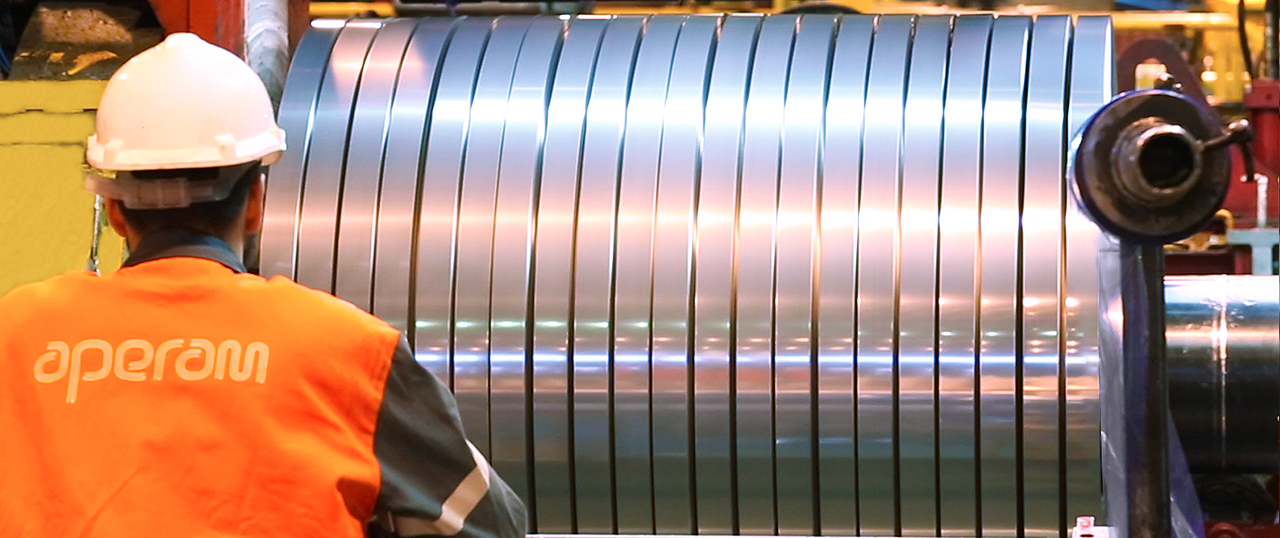
Aperam decreases May alloy surcharges
French stainless producer Aperam has decreased May alloy surcharges for its austenitic range of flat stainless steels for Europe by €50/tonne ($60) on average compared to last month, Kallanish learns from the company.
The surcharge for grade 304 (1.4301) has gone down from €1,822/t in April to €1,777/t effective from 1 May. For grade 316 it has gone from €2,607/t in April to €2,520/t in May. Grade 309S, a heat-resistant stainless steel used in high-temperature applications, has decreased from €2,452/t in April to €2,388/t next month. The surcharge for the most popular ferritic grade, 409, has risen slightly however from €690/t to €698/t, the company reveals.
Nickel prices for cash buyers have been see-sawing in recent months. Offers for cash buyers were at $16,526/t on 23 March and reached $16,150/t on 23 April, Kallanish notes.
Natalia Capra France

247TailorSteel projects a further site in Germany
247TailorSteel, a strip processing centre group with operations in the Netherlands and Germany, is expanding its activities in Germany further, Kallanish has learned.
The new production facility will be built in Langenau between Stuttgart and Munich, and will initially have a capacity of 4 laser machines, 3 tube laser machines and 4 bending machines. The 15,000 m2 facility is to be built on a site of over 36,000 m2 and will eventually employ 200 people. Further machinery will be installed in phases in Langenau, bringing the total capacity up to 12 laser machines, 10 tube laser machines and 12 bending machines. Construction is scheduled to start in the second half of 2021; the factory will be fully operational in the autumn of 2022.
A few months ago, 247TailorSteel opened a new facility in Hilden close to Düsseldorf. That factory is now up and running, serving customers in North Rhine-Westphalia and the surrounding regions. Langenau will be the third German site of 247TailorSteel, which is based in Varsseveld in the Netherlands, with German sites in Oyten near Bremen, and the relatively new facility in Hilden. On a total working area of 36,000 m2, the company so far operates 37 laser cutting machines and 20 edging presses.
Christian Koehl Germany
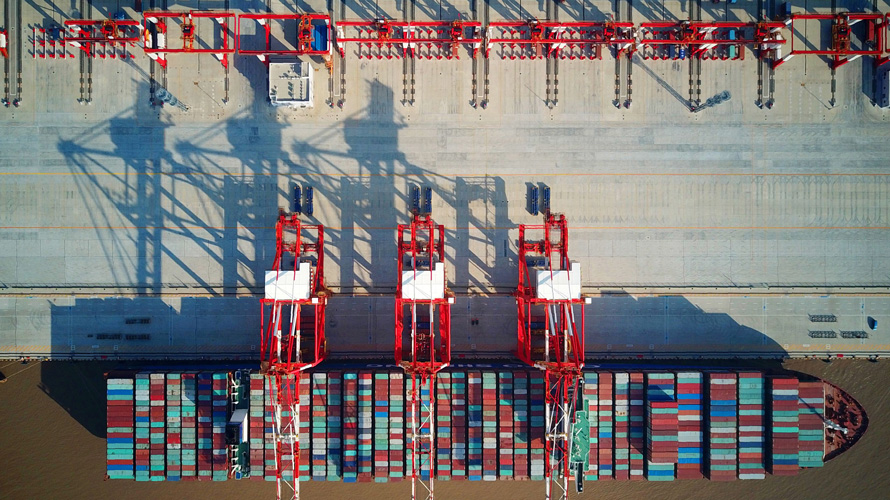
EU, US demand to continue positive trend: Eramet
Global carbon steel demand could be supported by the continued growth in Europe and the United States registered over the past month. However, China’s new CO2 emissions reduction targets may slow steel production this year while output should increase in other Asian economies, French miner Eramet says in its first quarter financial report. It also confirms its manganese production target of 7 million tonnes in 2021 at its Moanda mine.
The alloys market in Europe is registering a short supply situation and a rebound in sales volumes and prices, the report adds. In Q1 global production of carbon steel slightly went down by 0.5% compared to Q4 2020 but increased 7.2% year-on-year reaching 484mt. While Chinese output showed a solid increase of 13% on Q1 2020 European and North American output fell 0.4% and 7% respectively.
“The ramp-up in steelmakers’ production capacities in these two regions is still not able to meet the rebound in demand.” Eramet comments.
The company’s first quarter 2021 turnover saw an 8% y-o-y growth reaching €838m ($1.013 billion), Kallanish notes.
Eramet’s ore production increased in Q1 by 17% y-o-y to more than 1.5mt at the company’s Comilog site in Gabon driven by ore prices rise and sales volumes growth. Manganese BU sales also increased by 8% to €389m in the first quarter while manganese alloy sales slightly decreased in Q1 2021.
In Europe manganese alloys prices increased in Q1 2021 due to a supply shortage. This is forecast to positively reflect in Eramet’s Q2 turnover.
Meanwhile, Eramet has noticed an increase in ore consumption of 9% y-o-y in Q1 2021.
“Global supply of manganese ore adjusted with robust growth of 18% over the period, supported by growth in volumes in Gabon, the return of production in Ghana and reduced price pressure on marginal producers (compared to low levels of production in Q1 2020, particularly considering ore production cuts in South Africa). Supply/demand is nearly balanced, and ore inventories in Chinese ports declined to 6.8mt at end-March 2021 (equivalent to less than 12 weeks of consumption).” The report says.
In Q1 Eramet reports 11% y-o-y growth in transported manganese ore volumes. Sales were reported to have increased 21% to more than 1.2mt and manganese alloy production rose to 194,000t.
Natalia Capra France
Iron ore, scrap surge in China
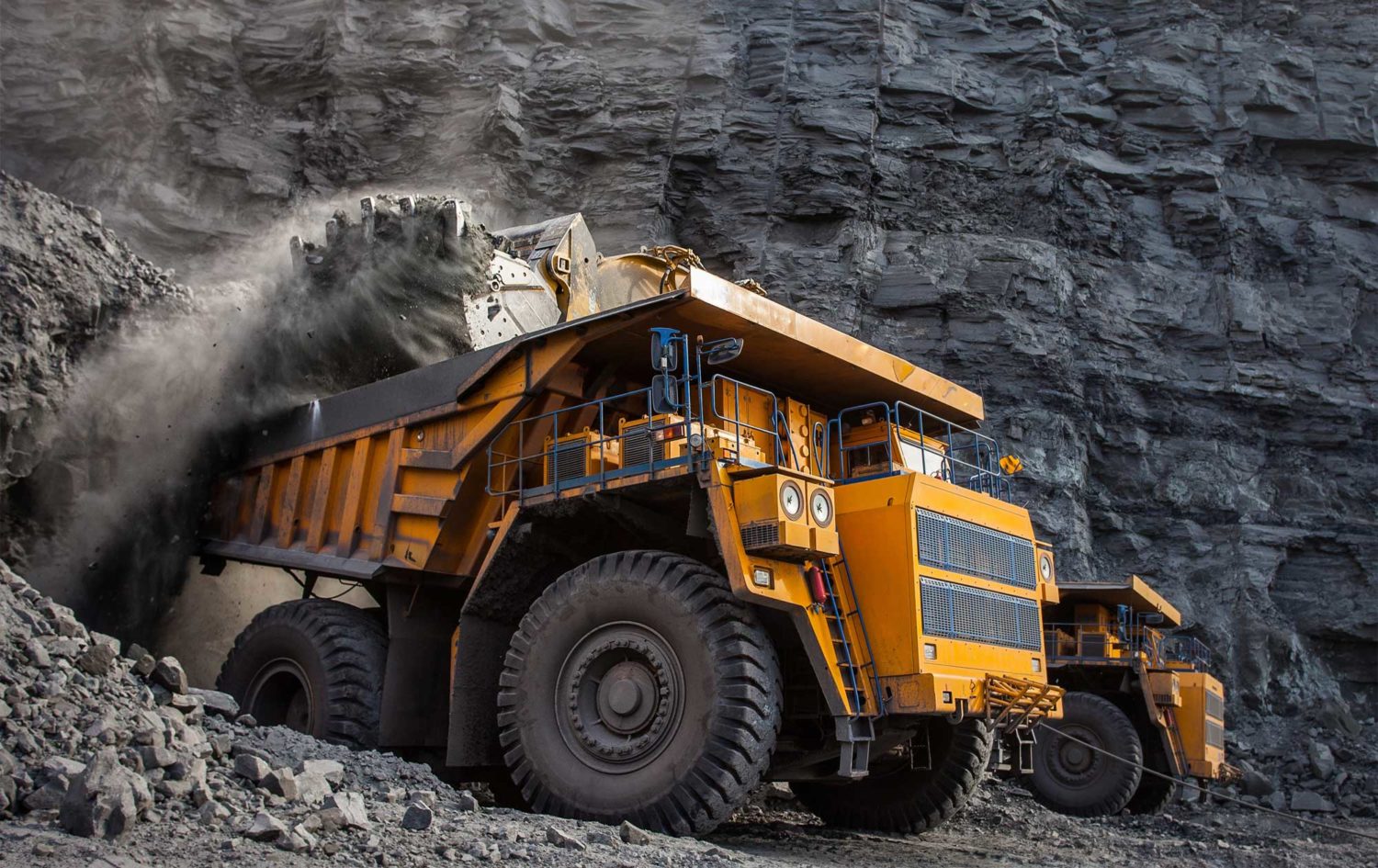
Seaborne iron ore prices and Chinese scrap prices have both surged. Restocking drove iron ore to a new record high, while Chinese mills have also hiked their scrap purchasing prices.
The Kallanish KORE 62% Fe index increased $4.61/t to $186.19/dry metric tonne cfr Qingdao. The Kallanish KORE 65% Fe index gained $5.13/t to $219.72/dmt cfr, and the KORE 58% Fe index leapt $9.67/t to $164.17/dmt cfr. All were at record highs. A total of 170,000t of Brazilian Blend sold at $194.4/t with a laycan in 21-30 May.
On the Dalian Commodity Exchange, September iron ore settled up CNY 40/t from Friday at CNY 1,137/t ($175.07/t), while on the Singapore Exchange May 62% Fe futures settled up $6.47/t at $187.53/t. The same contract for 65% Fe and 58% Fe futures settled up $6.62/t at $222.50/t, and up $10.58/t at $167.08/t respectively.
Chinese scrap prices have also increased sharply. Variety 6mm+ heavy scrap delivered to mills in the Yangtze River Delta region hit CNY 3,532/t on Monday, up CNY 41/t from Friday. Almost every mill in the region, including Shagang, has increased its purchasing prices by CNY 30-50/t over since Friday. In Tangshan, billet prices were flat on Monday at CNY 4,980/t, after increasing CNY 30/t over the weekend.
In the short term iron ore is being pushed higher by mill restocking ahead of the 1-5 May Labour Day holiday. Restrictions in Tangshan did little to interrupt this, as they only apply for two days. Chinese brokerage Horizon Insights meanwhile expects prics supported into May on the back of lower arrivals at ports. It says China’s iron ore market could be in deficit by 3.8 million tonnes in May, leading to a decline in port stocks.
La SNCI au chevet de Liberty Steel à Dudelange
L’avenir de Liberty Steel et de son site de production à Dudelange s’inscrit toujours en pointillé suite aux déboires de Greensill. Le ministre de l’Économie, Franz Fayot, a tenté de rassurer et a missionné la SNCI pour étudier des éventuelles solutions de sauvetage.
Interpellé par Dan Biancalana (LSAP), député et bourgmestre de Dudelange, quant à la situation délicate de Liberty Steel à la suite de la faillite de Greensill , Franz Fayot (LSAP), ministre de l’Économie, s’est voulu rassurant. «La situation est prise au sérieux», a lancé le ministre socialiste, qui a expliqué à la Chambre des députés que ses équipes étaient occupées à travailler sur ce sujet complexe. «Nous avons des contacts intensifs avec le groupe GFG Alliance», a encore indiqué le ministre.
Pour rappel, en mars dernier, Liberty Steel se voit durement touché par la faillite de Greensill . Cette fintech londonienne spécialisée dans le financement à court terme des entreprises était la principale créancière du groupe Liberty Steel. À partir de là, les sites de Liège et de Dudelange ont également été impactés avec la suspension des approvisionnements des usines par ArcelorMittal. Liberty Steel et ArcelorMittal ont en effet par le passé signé un contrat pour permettre au site de Dudelange de continuer de produire l’Usibor, un produit acier développé par ArcelorMittal.
Trois priorités bien définies
Les problèmes financiers de Liberty Steel ont induit de l’incertitude quant à la survie des sites de production, dont celui de Dudelange, où travaillent un peu moins de 300 personnes. «Le dossier est bien plus complexe qu’une simple faillite d’un site industriel luxembourgeois. Cela relève de la finance au niveau international», a encore souligné Franz Fayot devant les députés.
Le ministre a ensuite assuré avoir trois priorités dans ce dossier, à savoir l’emploi, le maintien de l’activité sidérurgique à Dudelange et faire de l’industrie de l’acier au Luxembourg une activité stable et rentable.
Sans entrer dans les détails, Franz Fayot a indiqué que si ce dossier «évolue quotidiennement», il n’écartait aucune piste pour trouver une solution. La Société nationale de crédit et d’investissement (SNCI) a d’ailleurs été missionnée pour étudier la faisabilité des diverses hypothèses envisagées par les équipes du ministère. «La SNCI dispose de l’expertise nécessaire pour cela», a expliqué Franz Fayot.
Aucun détail n’a filtré quant aux différents scenarii envisagés. Qui devront évidemment respecter les prescrits légaux en vigueur au niveau international.
Écrit par Jeremy Zabatta
