

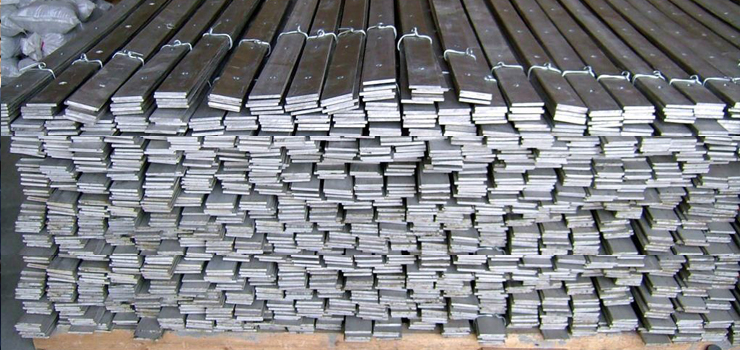
Southern European merchant bar to increase again
Italian merchant bar is seen increasing in new May contracts as producers are expected to raise prices again on the back of strong demand from other European markets.
Due to Liberty Steel’s financial troubles, European customers are not buying from its Ostrava mill, thereby taking large tonnages out of the European market. Like last month, Eastern European buyers are focusing on Italian and Spanish producers. Spanish producer Celsa has halted sales and is expected to also increase its prices this week.
In Italy, this would be the second price hike for merchant bar this month. Asking prices were already pushed up to €290/tonne ($349) base ex-works ten days ago. Italian producers are seen pushing their values to well over the level of €300/t base ex-works, Kallanish learns from market participants.
This week, transactions in Italy gained €10/t on average compared to last week. Contracts are at €250-260/t base ex-works. Including size extras, a workable price is €670-680/t base ex-works, sources suggest.
While southern European producers are enjoying high demand on the export market, domestic demand remains subdued as Italian distributors refuse to stock up at current prices. Purchases are only back-to-back and merchant bar stocks in Italy remain low. Margins for distributors are not always profitable.
March was a record month for merchant bar sales, agents say, adding that activity, particularly in the north, remains high this month.
Natalia Capra France

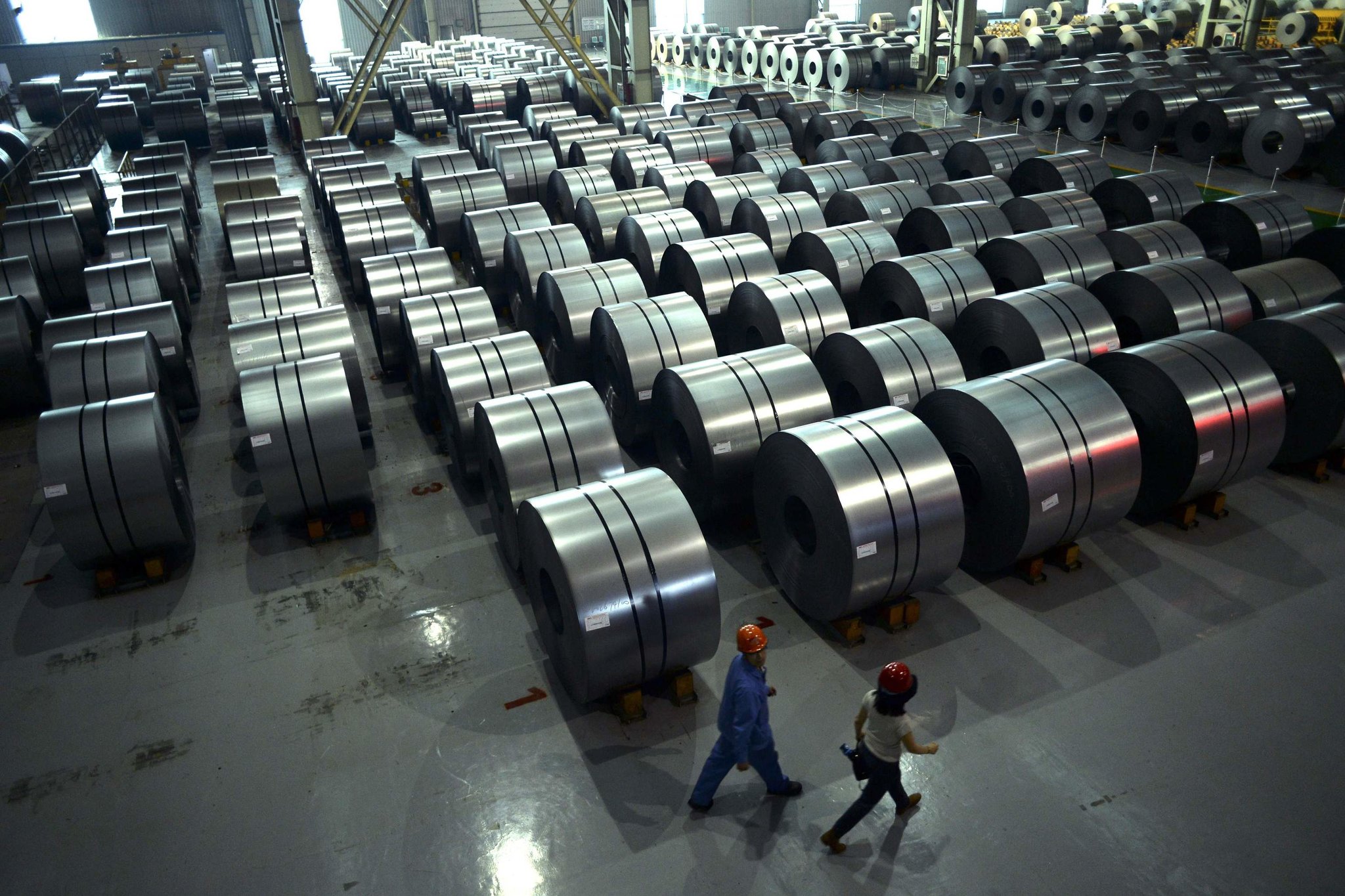
Brazil flat steel distributors’ March shipments up 22.7% on year
Shipments by Brazilian independent flat steel distributors and service centers in March increased 22.7% year on year to 325,400 mt, recent data from Inda, the national flat products distributors association, showed April 20. Shipments were up 4.2% on month.
Shipments of hot-rolled coils totaled 189,300 mt in March, up 40.9% on year, while zinc-coated flat steel sales volume totaled 63,400 mt, a fall of 11%.
Domestic purchases from mills in March were up 24.8% year on year to 340,100 mt, according to Inda.
Month on month, domestic purchases grew 5.6%.
Flat product inventories in the Brazilian distribution network reached 711,200 mt at the end of March, down 16% on year, while the inventory-turnover average closed March at 2.2 months of supply. Historical average levels are around three months.
However, Brazilian distributors may downsize inventories level target to about 2.5 months, said the group president Carlos Loureiro. “After the price hikes, distributors may decrease their inventories levels to not compromise their cash flow,” said.
According to Loureiro, flat steel prices accumulated increase of 35% this year.
Flat steel imports in March by distributors totaled 140,443 mt, up 139.8% year on year.
— Jose Guerra

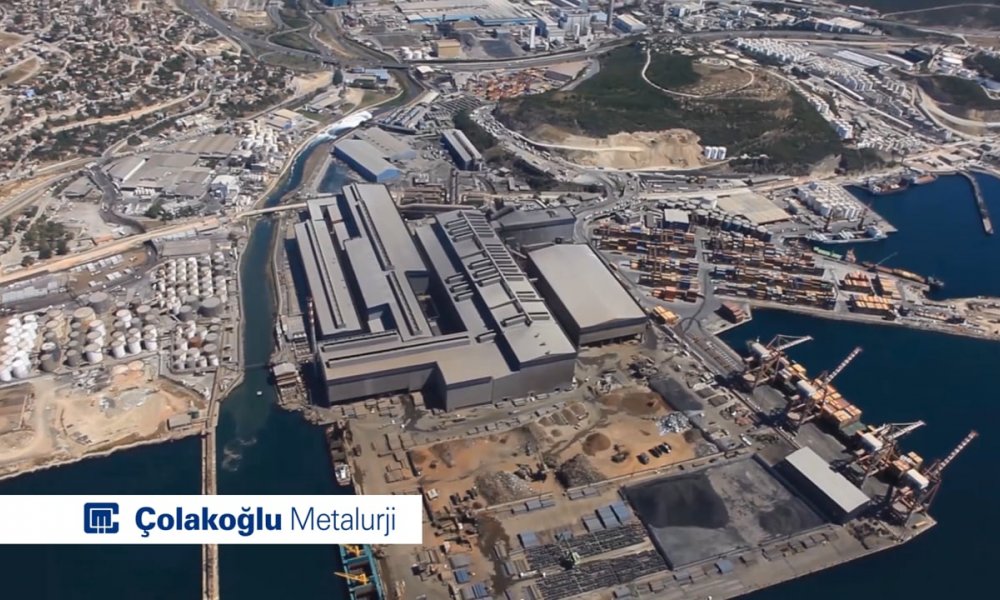
Colakoglu postpones May maintenance in a tight market
One of Turkey’s largest steel producers, Colakoglu, which was planning to pause output in May for maintenance work, has postponed its plans to meet its customers’ demand in a tight market, Ugur Dalbeler, CEO of the company, told Platts April 20.
“We have decided to postpone the maintenance to not leave our customers in a difficult situation while a material shortage is dominating the market,” Dalbeler said.
Turkish mills’ hot-rolled coil offer prices for August rollings have been rising continuously amid availability issues, higher HRC pricing globally and strong export demand. Mills’ HRC offers reached as high as $1,070-$1,100/mt ex-works in recent days, while their export offers reached $1,050/mt FOB and above.
Colakoglu has decided to raise its HRC output capacity by 50% with a new annealing furnace investment.
The company’s HRC production capacity will reach 4.5-5.0 million mt with this investment as of the second quarter of 2022.
The company will also soon start to produce special steel steel grades at world’s largest VOD (vacuum oxygen decarburization) plant. Colakoglu will be able to produce special steels like IF grades, ULC grades and stainless steels at this plant.
Colakoglu is one of Turkey’s largest steel producers, with bar output capacity of 1 million mt/year and current HRC production capacity of 3 million mt/year.
— Cenk Can
Iron ore surges as fears ease
Seaborne iron ore prices jumped to new highs on Monday as feared production restrictions were not announced. Scrap prices meanwhile have remained steady and markets for both steel and raw materials remain supported by strong demand.
The Kallanish KORE 62% Fe index gained $3.53/t to $178.15/dry metric tonne cfr Qingdao, a new record high. The KORE 65% Fe index leapt $7.07/t higher to $213.66/dmt cfr, and the KORE 58% Fe index increased $4.60/t to $156.07/dmt cfr. 170,000t of PB fines sold at $177.55/t with a laycan in 10-19 May, while 70,000t of Carajas fines, shipped on 12 April, sold at $216.3/t. 80,000t of Newman Lump also sold at a floating price.
On the Dalian Commodity Exchange September iron ore settled up CNY 10.5/t at CNY 1,062/t ($163.21/t), while on the Singapore Exchange May 62% Fe futures settled up $4.09/t at $176.32/t. The same contract for 65% Fe and 58% Fe futures meanwhile settled up $4.09/t at $211.04/t, and up $0.32/t at $154.51/t respectively.
Iron ore prices have been supported by the fact that production restrictions have not spread as feared. Lat week, traders had expected restrictions to be announced in Handan’s Wu’an but these did not materialise. Blast furnace output is in fact expected to increase as mills are completing maintenance periods.
In Tangshan, billet prices dropped CNY 20/t to CNY 4,940/t on Monday, after remaining flat over the weekend. Chinese scrap prices meanwhile have remained steady. 6mm+ heavy scrap delivered to mills in the Yangtze River Delta was assessed unchanged from Friday at CNY 3,455/t.
Italian steel output skyrockets in March
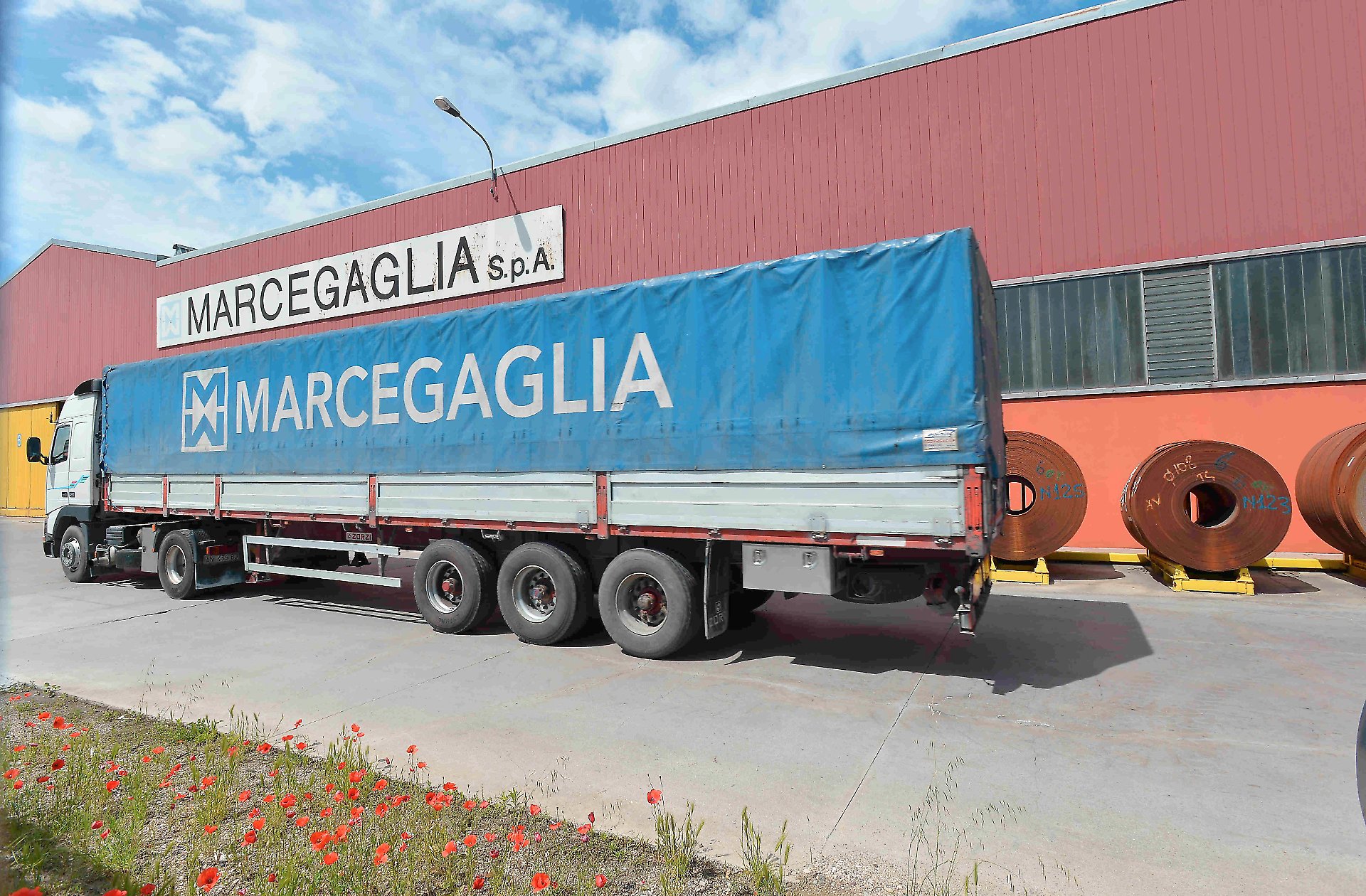
After ticking up in the first two months of the year, crude steel output in Italy skyrocketed in March according to data issued by local steelmakers association Federacciai.
Last month crude production increased by a staggering 68.8% year-on-year to 2.3 million tonnes, Kallanish notes. Output also increased significantly in the first quarter by 18.9% to 6.2mt.
According to a source close to the association, this is the result of increased demand for both flats and long products as Italian steel activity rebounds in line with the country’s post-pandemic recovery.
In full-year 2020 Italian crude steel production was 20.4mt, down 11.9% compared to 2019. Last year long product output fell by 9.5% to 11.1mt. Flats production fell by 15.9% to 9.5mt, Federacciai says.
Natalia Capra France
ArcelorMittal Construction adds panels maker in Sweden
ArcelorMittal Construction Sweden has completed the acquisition of a panel production line, Kallanish learns from the parent group.
The line, based in Kungshamn, produces mineral wool panels for steel buildings, and adds to the existing profile production lines in ArcelorMittal Construction’s Swedish business. It was bought from Llentab, a manufacturer and contractor for steel buildings, and will be ArcelorMittal’s first panel production manufacturing capability in Scandinavia.
“We will continue to invest in the business here in Kungshamn and hope to create more job opportunities in the area,” ArcelorMittal Construction Scandinavia ceo Van Hoa Nguyen says. Production in Kungshamn will be run in close cooperation with Llentab, he adds. “We welcome ArcelorMittal as a ‘neighbour’ here in Kungshamn and look forward to continued cooperation with them,” saysStefan Eklund, ceo of Llentab Group.
ArcelorMittal Construction creates innovative building systems for a broad range of buildings and has a presence in 15 countries and around 2,000 employees.
Christian Koehl Germany
EC confirms duties on tubes from Belarus, China and Russia
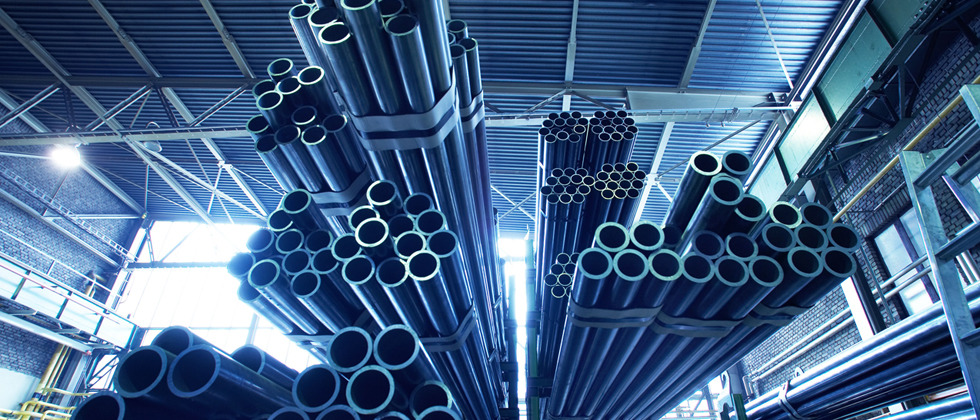
The European Commission has confirmed anti-dumping measures on imports of certain welded pipe products from Belarus, China and Russia for a further period of five years.
The subject products are welded tubes and pipes of iron or non-alloy steel of circular cross-section and external diameter up to 168.3mm, Kallanish notes. This excludes line pipes and casing and tubing pipes like those used in oil and gas exploration, and precision pipes with attached fittings used in civil aircrafts for gas conducting.
The EU imposed a definitive anti-dumping duty on imports of certain welded pipe from Belarus, China and Russia on 26 January 2015. It terminated proceedings against Ukraine-origin imports as a result of an investigation. Chinese pipe imports became subject to a 90.6% anti-dumping duty, Belarussian to 38.1% and Russian to 20.5%, except for OMK and TMK with a 10.1% and 16.8% duty respectively.
The review was requested back at the end of 2019 by the EU’s welded steel tubes industry defence committee. The investigation started in January 2020 and now the final verdict has been published in the official gazette.
Emanuele Norsa Italy
ArcelorMittal raising EU longs offers by €30/t
ArcelorMittal has started this week announcing to its European clients the intention to raise offers for all commodity grade long products by €30/tonne ($36.12/t).
The move was triggered by good demand in the market, low stocks across the supply chain and persistent high raw material costs.
It is understood the increases will be applied to all new monthly agreements for commodity grade products. Longer term contracts for higher specifications are also moving up, but at a different pace.
According to Kallanish rebar European indexes, both in Northern Europe and Italy this year’s peak level was reached at the end of January, after a six months rally started in July 2020. Lately prices have recovered somewhat their strenght, but volatility has been less than in Q4 2020.
Emanuele Norsa Italy
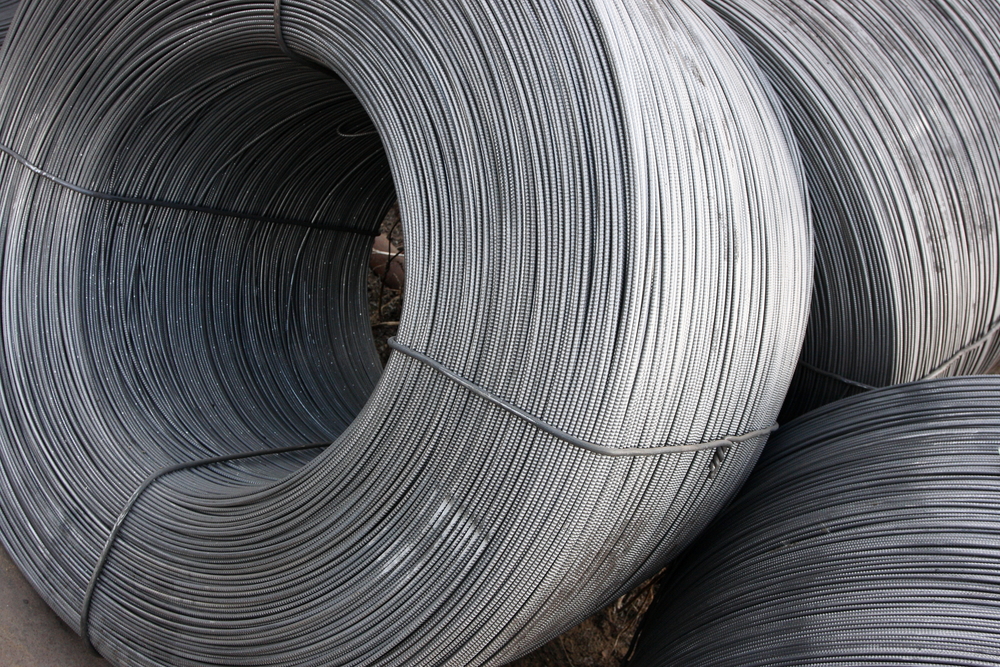
Weekly US steel mill capability utilization rises to 78%
US raw steel capability utilization increased the week ended April 17, rising to 78% from 77.6% the previous week, the American Iron and Steel Institute reported April 19.
Production increased by 0.5% to 1.77 million st during the week ending April 17, up from 1.761 million st the previous week, according to the data.
Last week’s production was up 42.7% compared to the same week a year earlier, when capability utilization was at 55.4% and production totaled 1.24 million st.
Adjusted year-to-date production through April 17 totaled 26.703 million st, with a capability utilization rate of 77.1%. The total is 0.1% higher than the 26.665 million st produced during the same period last year, when the utilization rate was 73.7%.
Last week’s production totaled 164,000 st in the Northeast, 603,000 st in the Great Lakes region, 183,000 st in the Midwest, 747,000 st in the Southern district and 73,000 st in the Western region.
The tonnage data is estimated, compiled from weekly production data provided by 50% of domestic producers combined with monthly production data for the remainder.
— Ingrid Lexova
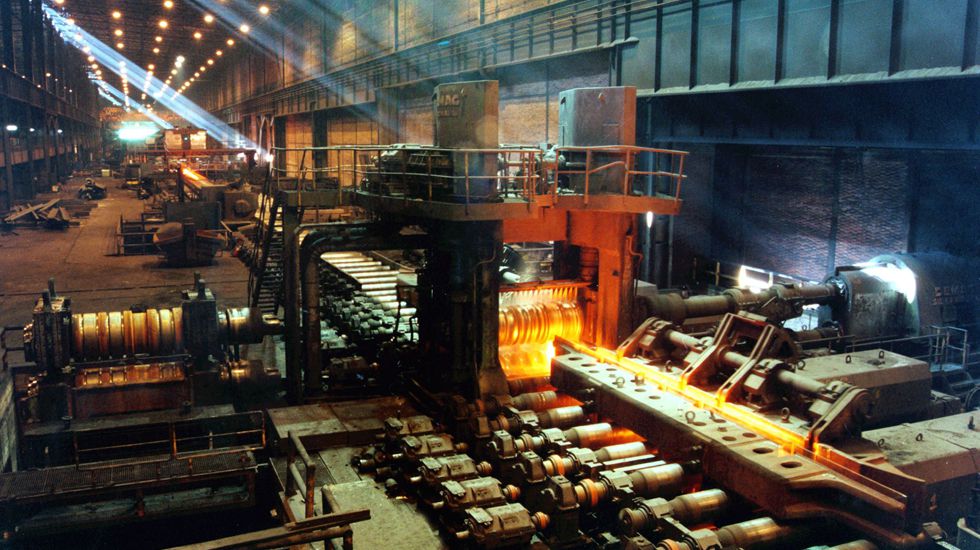
Gerdau to expand specialty steels capacity in Brazil
Gerdau will expand its specialty steel operations in Brazil during 2021 and 2022 through investments of Real 1 billion ($180 million), betting mainly on the automotive industry, it said April 19.
The allocations will be made in the three units that the steelmaker maintains in the country: Charqueadas, in the southern Rio Grande do Sul state, Mogi das Cruzes and Pindamonhangaba units, both in the southeastern Sao Paulo state.
Mogi das Cruzes will have its meltshop reactivated, after being idled since March 2019. It will operate with annual capacity of 180,000 mt of steel that will be rolled in Pindamonhangaba.
The largest share of investments will go to Pindamonhangaba for a new continuous caster. The new equipment is slated to be operational in August of 2022.
Last year, the steelmaker produced 661,000 mt of specialty steel in Brazil. The estimate for this year is 880,000 mt, which may reach 1 million mt when the plant is at full capacity.
In total, Gerdau’s specialty steel division produced 1.42 million mt in 2020, including its units in the US.
Despite the current low utilization of the 5 million mt/year installed capacity of car manufacturers in Brazil, which is currently at about 40%, Gerdau remains confident about the sector, but is also betting on improvements in the machinery, equipment and wind power segments. Currently, the automotive sector represents 70% of Gerdau’s sales of specialty steels.
— Adriana Carvalho