

Developing economy demand to recover strongly: worldsteel
Developing economies, excluding China, suffered more from the Covid-19 pandemic in 2020, but steel demand is expected to show a relatively quick rebound in 2021 and 2022, worldsteel says in its April short-range outlook (SRO).
Finished steel demand in developing economies will increase 10.2% on-year in 2021 to 478.2 million tonnes, following a 7.8% decline in 2020 to 433.8mt, the association says. “India, the Middle East and North Africa, and most Latin American countries suffered the most with inadequate medical capacity, a collapse in tourism, commodity prices, and insufficient fiscal support,” it explains.
However, benefitting from the global economic recovery and with renewed government infrastructure initiatives, steel demand in developing economies is expected to rebound in 2021 and then by a further 5.2% next year.
India’s steel demand will also increase this year to 106mt, up by 19.8% on-year, after it fell 13.7% to 88.5mt in 2020. The growth-oriented government agenda will drive India’s steel demand up, while private investment will take longer to recover, the association observes.
Steel demand in Russia is expected to be more in 2021 by 3% on-year to 43.8mt, following last year’s decline by 2.3% to 42.5mt. The country suffered less than other regions thanks to government measures that supported construction activities. “Russian companies are more oriented to the domestic market for now, but we expect that will change in the foreseeable future and export volumes will increase,” worldsteel director general Edwin Basson told Kallanish during the SRO presentation on Thursday.
In the MENA region, steel demand suffered from the cancellation of construction projects and a fall in oil prices, but the rebound of oil prices helped demand to recover towards the end of 2020. MENA demand this year will be 66mt, up by 6.1% on-year, after the decline by 9.5% in 2020 to 62.2mt. It is expected to recover with the resumption of infrastructure investments.
Latin American economies were severely hit by the pandemic, but in 2021 steel demand will reach 42.7mt, up 10.6% on-year, following the 7.9% decline to 38.6mt in 2020. Mexico’s steel demand was hard hit by reduced auto production and investment. However, the fast recovery in the automotive sector and a strong US economy will increase steel demand in 2021 by 7.5% to 23.4mt, after it was down 11.8% in 2020 to 21.7mt, worldsteel observes.
Svetoslav Abrossimov Bulgaria

Russel, Marubeni consolidate Canadian energy tubular businesses
North American service centre chain Russel Metals and Marubeni-Itochu Tubulars America plan to merge their Canadian energy tubulars businesses, Kallanish learns from a company statement.
Triumph Tubular & Supply and Hallmark Tubulars – the Canadian energy tube businesses of Russel and Marubeni, respectively – will be merged into a new joint venture dubbed TriMark Tubulars.
Russel notes that the energy tubulars market has changed markedly in past years “…as a result of a challenging energy market as well as the disintermediation of distributors by certain direct-to-market manufacturers,” the company says. “As a result, this combination will create a business that has the necessary economies of scale, including a diverse product offering and business platform to efficiently and effectively serve its customers.”
While not directly named, the statement seems to be a reference to Tenaris’ Rig Direct program, which effectively sidesteps distribution in favour of selling directly to end-users.
Russel’s asset contribution to the 50:50 joint venture will be about $111 million. For that, it will receive $79m in cash, $32m in shares, and the aforementioned 50% interest.
“Over the past nine months, we have been strategically focused on both rationalising the operations and reducing the capital deployed in our OCTG/line pipe businesses,” says Russel ceo John Reid. “This transaction provides an opportunity to substantially repatriate capital for deployment in other value enhancing opportunities, but also retain an ongoing interest and participate in the future success of the combined business.”
Dan Hilliard USA
Prices could retreat this year: Schneider
Once steel prices retreat from their current upward trend, the drop for flat products in Europe could amount to between €150 and €270/tonne ($180-323), potentially even €300, according to a German steel consultant.
The steeper drop would bring coil prices back in line to a more realistic spread between raw materials costs and sale prices, as it has been on average over a long-term observation. However, such a drop is unlikely, and the correction should be closer to the lower value, says Andreas Schneider of Stahlmarkt Consult. He believes in any case that prices will keep inching up for a while longer, and not come down before the second half of 2021, he said at the “Digibrunch” webinar organised by e-commerce platform Xom.
Iron ore prices saw a huge surge until the end of last year and have not moved much since, while steel product prices have continued their rigorous surge, decoupled from raw materials prices.
Schneider also observes that order intake at mills peaked in the fourth quarter of 2020, but since then there has been no further leap or boom. “This tells us that there are shortages on the supply side, and that prices are overheated,” Kallanish heard him say at the webinar on Thursday.
For long products, the drop potential is smaller, at between €50 and €100/t, and mostly linked to scrap prices, “and the problem here is that scrap prices themselves are hard to grasp”, Schneider commented. He believes that over the following years scrap prices will gain strength in principle. As main reasons he cites the trend for decarbonisation and EAF-based steelmaking, as well as scrap resource nationalism. In the near term though, Schneider expects further oscillation of scrap prices this year.
Christian Koehl Germany
Feedstock sourcing issues hit Liberty Liege, Dudelange production
Concerns have grown in recent weeks over the situation at Liberty Steel’s coil rolling mills in Liege and Dudelange, in Belgium and Luxembourg respectively. The company confirms to Kallanish that the units are not working at full capacity due to the situation created by the collapse of major lender Greensill.
Trade union sources say the rolling mills are operating below their full capacity due to feedstock delays. In Belgium, for example, sources reported operations at 40% of capacity, while in Luxembourg unions note that visibility is very short as deliveries are agreed weekly. This is happening while demand for coils remains strong in Europe, while shortages of material persist.
“Liberty Liege Dudelange has faced some issues with its main supplier of HRC which has impacted its ability to operate at full capacity, even though the market is strong,” a Liberty Steel spokesperson says. “The business is undertaking significant self-help measures to reduce stocks, matching stock to costumer orders and working with costumers to achieve terms that will bring cash earlier.”
The business is also working to identify a sustainable solution and, when necessary, making use of public-funded temporary unemployment schemes. According to local press in Liege, Liberty Steel has also asked local authorities to look into finding a partner or investor for the mill.
Liberty Steel has four galv lines in Belgium and Luxembourg, with a combined capacity of some 1.5 million tonnes/year. Other lines include two electro-galvanising lines and a line for packaging material.
Emanuele Norsa Italy
Weather, outages cause German production dips: market observers
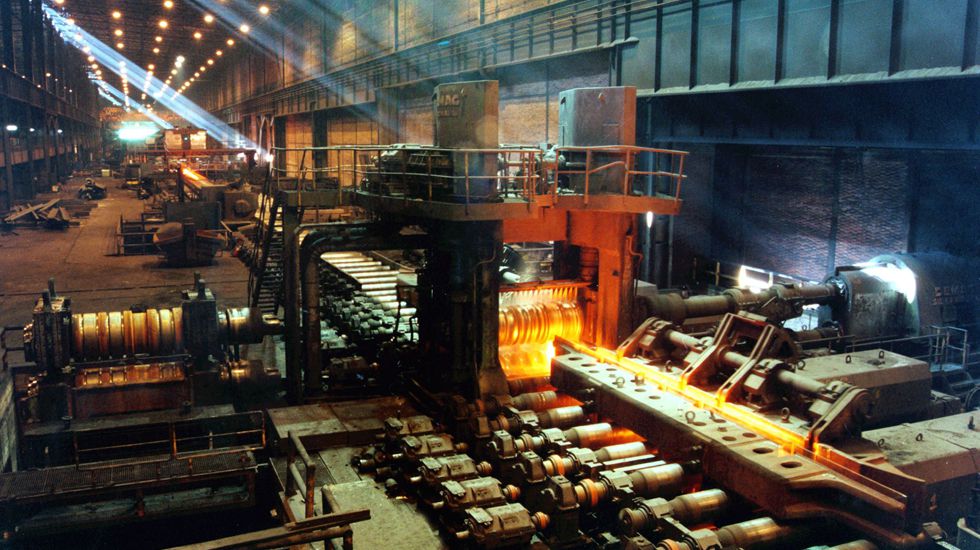
The low output of crude steel at German mills since the beginning of the year amid robust demand for material continues to be debated by market participants.
Production figures recovered after last summer, but since November’s 3.4 million tonnes have not risen, and in February saw a notable dip to 3.1mt.
The most common explanation from mills was the period of cold weather in February. Although lasting for not much more than one week, it interrupted transport routes and logistics facilities, mills like thyssenkrupp and Salzgitter said then. Although it did not impair the actual production facilities, these were not left totally unaffected. According to one market observer, some 100,000 tonnes were lost because of the snow chaos.
He also says mills had to cope with technical issues that added up to throttle production. None of them were major cases, “but a ladle furnace here or a hot-rolling line there, down for two to three days – you won’t catch up on that when you mean to rev production up high”, he tells Kallanish. He concedes these may be excuses by mills that want to keep production slightly short to support higher pricing. “But in many cases I do trust that they did have the problems they reported,” he adds.
In other cases, mills played down and denied technical impairments. At one mill, the compact strip casting line was down for several weeks, according to a big buyer. But the mill denies this is true. It nevertheless previously informed its customers that the switch to an aggressive operation mode to feed the surging orders put major strain on the performance of its facilities, “and even caused some major troubles.”
In another case, one rebar mill was reported by various sources to have ramp-up issues following a modernisation, but when asked by Kallanish dismissed the allegations.
Steel federation WV Stahl has described recent months as “a steel market prone to disruption”. But a spokesman of a processor’s federation says this wording is erroneous. “This sounds weird for customers that are yearning for steel,” he says, and finds that “steel production prone to disruption”, hits the point better.
He does not exclude that shortcomings in production were welcome for the mills to some extent. “At the end of the day, we cannot tell what share of the production gap came by force, and what share came by design,” he explains.
Christian Koehl Germany
Magona grapples with financing issues despite firm orders
The Liberty Steel Magona coil re-rolling plant in Piombino is enjoying strong demand and full order books, sources close to the company tell Kallanish. Keeping the plant running however has become challenging due to the lack of banks’ written guarantees.
No banks in Italy are said to be willing to work with Magona at present or to provide guarantees. Sales and purchases are currently implemented on an upfront cash payment basis. The company is now working with weekly visibility. The main issue however remains feedstock procurement, as suppliers of hot rolled coil are said to be asking for bank guarantees even in case of upfront cash payments.
The only reason keeping Magona “alive”, sources say, is the current drastic coil shortage and the skyrocketing value of hot-dip galvanised coil, which is quickly approaching €1,100/tonne ($1,315) base ex-works in transactions.
One source believes Magona is destined to be idled unless its owner finds a solution to obtain a “serious and large written guarantee” from local banks.
Magona has a capacity of 600,000 tonnes/year. It counts one pickling line, two rolling mills, two galvanising lines and one coating line. One more galvanising line was idled in 2010. With a substantial investment on this line, the company could reach a capacity of 900,000 t/y, sources observe.
“From an operational point of view, the plant is running as normal benefiting from its successful improvement plans over the last 18 months and the recovery of market conditions,” a Liberty spokesperson says. “The management team at Liberty Magona have successfully undertaken significant self-help measures to speed up cash flow and temporarily reduce working capital, including reducing cash-absorbing stocks, through matching stock to customer orders; working with customers to achieve trading terms that will bring in cash earlier, and working with suppliers to achieve greater flexibility over payment terms.”
Natalia Capra France

ArcelorMittal begins Ilva deconsolidation after government takes stake
ArcelorMittal has received €400 million ($478m) of new equity from Invitalia, the state company that is investing in the Italian steelmaker formerly known as Ilva. ArcelorMittal’s Italian subsidiary, AM investCo, has therefore given Invitalia a 38% shareholding and joint control over the company.
AM InvestCo, now co-owner of the former Ilva, is being re-named Acciaierie d’Italia Holding, and its main operating subsidiary ArcelorMittal Italia will be renamed Acciaierie d’Italia, the company says in a note sent to Kallanish.
Acciaierie d’Italia Holding will become an independent entity without financial reliance on ArcelorMittal, which will now “deconsolidate the assets and liabilities (including the remaining lease and purchase liability) of Acciaierie d’Italia Holding (formerly AM InvestCo Italy) from its consolidated statement of financial position and will account its interest in the company under the equity method”, the note explains.
The €400m investment from Italian authorities has been the object of a dispute between the two companies due to Invitalia’s failure to meet the payment deadline. ArcelorMittal signed last year a binding agreement with Invitalia to form a 50-50 public-private partnership to operate the Taranto steelworks. At the time, Invitalia agreed to invest in ArcelorMittal’s Taranto operating subsidiary, AM InvestCo, in two tranches. The first investment of €400m was to be made by 5 February 2021.
Now that the Italian government has made the first payment, the 50-50 public-private partnership has become official, Kallanish notes.
A €680m second equity payment by Invitalia is scheduled for May 2022. However, if certain conditions are not respected, the capital invested in Ilva by Acciaierie d’Italia Holding, or ArcelorMittal, will be returned and the company “will not be required to complete the purchase”, ArcelorMittal reveals.
The conditions in question involve “the amendment of the existing environmental plan to account for changes in the new industrial plan; the lifting of all criminal seizures on the Taranto plant; and the absence of restrictive measures – in the context of criminal proceedings where Ilva is a defendant – being imposed against Acciaierie d’Italia Holding or its subsidiaries,” ArcelorMittal explains.
If all conditions are fulfilled, in May 2022 Invitalia’s shareholding in Acciaierie d’Italia will increase to 60%, and ArcelorMittal will invest up to €70m to keep a 40% shareholding.
Natalia Capra France
ArcelorMittal to invest $1 billion to upgrade steel output in Ukraine
ArcelorMittal will invest $1 billion during the next three years to make steel production at its Ukrainian subsidiary environmentally friendly, the company said April 14.
The announcement came shortly after a meeting between Ukrainian President Volodymyr Zelenskiy and ArcelorMittal board chairman Lakshmi Mittal.
ArcelorMittal, the largest foreign investor in the Ukrainian economy, owns the country’s largest steel producer, known as ArcelorMittal Kryviy Rih.
“The ArcelorMittal corporation will invest $1 billion in environmental modernization and production development in Kryviy Rih,” the company said after the meeting. “The ‘steel billion’ is aimed at reducing production impact on environment, steady enterprise development, reuse of resources and processing of industrial waste.”
The modernization program will run during the next three years and will be completed by the end of 2023, the Zelenskiy said in a separate statement.
“Investments in the Ukrainian economy and the environment are a positive signal for all investors,” Zelenskiy said in the statement, adding that Ukrainian authorities will provide “comprehensive support” to investors.
ArcelorMittal Kryviy Rih reduced output of steel by 12.1% on the year to 4.7 million mt in 2020, down from 5.3 million mt produced in 2019, according to the company, which said 2020 was an “unprecedentedly difficult year” due to the coronavirus pandemic.
Meanwhile, the company’s extraction of iron ore rose 4.5% on the year to 25.6 million mt in 2020, up from 24.5 million mt in 2019. Iron ore concentrate output increased 8.3% to 10.7 million mt, while production of sinter fell 7.9% to 9 million mt.
Production of coke fell 5.3% to 2.6 million mt from 2.8 million mt, the company said.
ArcelorMittal Kryviy Rih, based in the Dnipropetrovsk region, is the largest steel and mining company of Ukraine, producing about 20% of national steel output.
— Alexander Bor
ArcelorMittal Italia renamed Acciaierie d’Italia Holding
Italian agency Invitalia has injected Eur400 million ($480 million) of new equity into ArcelorMittal subsidiary AM InvestCo Italy, bringing the renaming of the subsidiary and its main operating unit.
AM InvestCo Italy will be called Acciaierie d’Italia Holding, and its main operating subsidiary, ArcelorMittal Italia, will be Acciaierie d’Italia.
The largest European steel producer said April 14 that an investment agreement with Invitalia, Italy’s agency for investment promotion and enterprise development, has been completed, forming a public-private partnership between the parties.
The long-waited recapitalization will help start its planned investments toward greener production and secure its future path. ArcelorMittal agreed to the government equity payment in December, and it was originally expected to take place by Feb. 5.
As previously reported, Invitalia will make a second equity injection of up to Eur680 million to fund the completion of the purchase of the former Ilva’s business, which is expected by May 2022, with Invitalia’s share increasing to 60% and ArcelorMittal investing up to Eur70 million to retain a 40% share and joint control.
Payment delayed
Italy is under a “technical government” led by former European Central Bank President Mario Draghi. On Feb. 13, the Lecce regional administrative court said ArcelorMittal had to shut all hot-end operations within 60 days at its Taranto plant to curb emissions. ArcelorMittal appealed this decision to the Italian State Council, with a final hearing on the issue due May 13. All these issues led to a delay in the payment.
Because of the uncertainty surrounding the company, the new government was not willing to recapitalize the company, but then because of the importance of the sector decided to put the former Ilva’s future at the top of its agenda and decided not to wait for the May 13 hearing, sources said.
Following injection of the fresh capital announced April 14, Invitalia will have a 38% share and equal voting rights, with joint control over the company.
According to sources, Draghi asked Italian executive Franco Bernabè to be the president of the board over government quotas, in a clear sign that the future of the largest Italian mill is a priority. Bernabè is considered one of the top Italian managers and has led key Italian groups such as Eni and Telecom.
Second only to Germany
Italy is the second-largest European steel producer after Germany. Last year, according to Federacciai, the Italian steel association, the country produced around 20 million mt of crude steel. According to a government document, the Italian steel industry produces revenues of Eur60-70 billion a year. Italy has two large flat producers. One is ArcelorMittal Italia, with an installed crude steel capacity of 9 million-10 million mt a year, and the other is Arvedi, with about 5 million mt of crude steel capacity.
According to unions, at the moment ArcelorMittal Italia is working with only two blast furnaces: Nos. 1 and 2. No. 4 stopped recently because of refurbishment work. Each blast furnace has a design capacity of 1.8-1.9 million mt/year of crude steel, but they are not working at capacity. The former Ilva steel works has five blast furnaces at its Taranto site. Blast furnace No. 5, the largest in Europe with a production capacity of around 3.5 million mt/year, was idled in 2015. Blast furnace No. 3 has a capacity of about 2 million mt/year of crude steel but was idled in 1994 and is to be dismantled.
Highest prices ever
Italian and European steel prices are at their highest level ever because of increased demand and low supply. Buyers told S&P Global Platts on April 14 that it is difficult to find material, and most of the companies don’t even quote. Platts’ assessments show that, since the beginning of this year, South EU HRC prices have gone up by about Eur240/mt EXW Italy.
On April 14, the Italian Parliament’s upper house, the Senato, discussed and approved a motion for the Italian government to put forward a strategic plan for the steel industry, in a move that underlined the sector’s importance to the country.
The document, which won a majority of votes and has been seen by Platts, commits the government to support the launch of a common industrial policy for the steel sector in Europe and to sustain technological reconversion processes.
Among the key points was a request to consider the extension to the steel sector of the “golden power,” the right of the Italian state to intervene in a company that is considered strategic.
— Annalisa Villa
Dutch service centre Hebels add multi-purpose cutting line
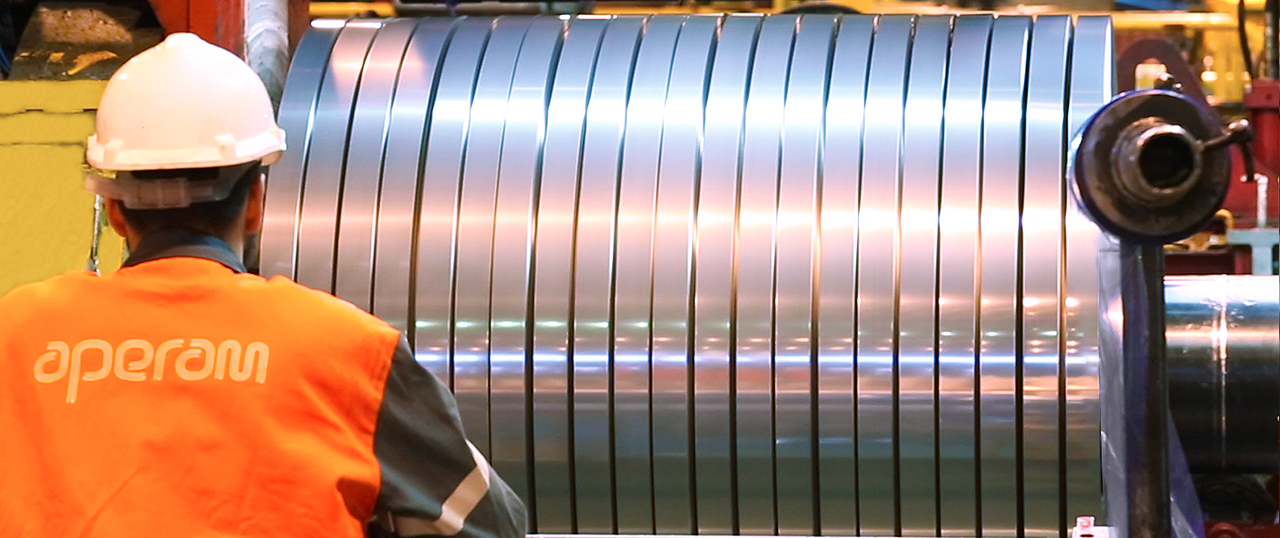
Hebels Steel Service in Oosterhout is expecting the arrival this week of a cutting line for coil in thicknesses up to 10mm, Kallanish learns from the Dutch company.
Hebels describes it as “a monster of a machine” with a length of 70 metres and a total weight of around 600 tonnes. Cement lorries have been driving back and forth in recent months to pour a gigantic foundation, Hebels notes.
The line is considered something like a hybrid because it is able to cut cold as well as hot rolled coil, pickled as well as untreated material. This is unusual because the scale of unpickled material leaves dirt on the machinery.
The line, built by German engineering company Georg, features extra self-cleaning equipment for this purpose. It handles coils of up to 34t with a width of 2,000mm, to cut sheet lengths of up to 8 metres.
The device is a transfer from German service centre Knappstein in Lennestadt, a unit of Carl Spaeter group, where it was installed since 2012. The erection at Oosterhout will take until July, Hebels says. The SSC has been supplying products to the Dutch, Belgian and German steel processing industry since 2004. “Because growing is all about foresight, the management sees plenty of opportunities and is now making an investment of millions to help the company move forward,” it says.
Christian Koehl Germany