


ArcelorMittal delivers stronger EU profit, lower production
ArcelorMittal’s global steel output remained largely steady, whilst production in Europe saw a slight decline. Yet Europe showed improved financial results, including a skyrocketing Ebitda, the steelmaker says in its second-quarter results monitored by Kallanish.
The striking figure emerging from the report is the steelmaker’s European Ebitda, which surged 69.7% to $627 million in Q2, up from $370m in the first quarter and from $462m in Q2 2024. The improvement reflects a stronger price-cost spread, slightly offset by reduced shipment volumes.
ArcelorMittal’s global crude steel output edged upward year-on-year to 29.2 million tonnes in the first half of 2025, from 29.1mt in H1 2024. Quarterly production remained broadly stable, easing slightly from 14.8mt in Q1 to 14.4mt in Q2 2025. On-year, Q2 output declined moderately from 14.7mt. In Europe, production in the recent quarter fell compared with the previous quarter, primarily due to the planned reline of the Dunkirk’s blast furnace no. 4, which was restarted in mid-July. In the first six months of the year, crude output in Europe stood at 15.5mt, slightly down from 15.6mt in the same period last year. In the second quarter output reached 7.5mt, down from the 7.9mt achieved in the first quarter and from 8,041t of Q2 2024.
“Sales in 2Q 2025 increased by 6.0% to $7.7 billion as compared to $7.2 billion in 1Q 2025, primarily due to a 11.0% increase in average steel selling prices offset in part by a 3.0% decline in steel shipment volumes which was impacted by apparent demand. 2Q 2025 steel shipments were 1.4% lower year-on-year, reflecting a 6% decline in long product shipments whilst flat product shipments were stable,” the reports states.
European sales in the first half reached $14.87 billion, reflecting a y-o-y decrease from $15.66 billion in H1 2024. Ebitda soared in H1 to $997m from $805m in the same period last year. Steel shipment in the six-month period increased slightly on-year to 14.833t from 14.643t the previous year.
According to the report, in Europe demand is holding up relatively well, with apparent flat product consumption forecast to grow 0.5-1.5% in 2025, thanks to limited tariff impacts and easing interest rates. Despite short-term headwinds such as seasonally weaker demand and subdued manufacturing activity, European inventories remain relatively low. In the medium term, Europe may see notable improvement supported by trade policy, the Carbon Border Adjustment Mechanism (CBAM), and increased public investment in infrastructure and defence.
The group’s first-half sales stood at $30.72 billion, compared with $32.53 billion in H1 2024. H1 Ebitda stood at $ 3.44 billion, declining from $ 3.82 billion in H1 last year (see separate article).
Natalia Capra France


ArcelorMittal’s Q2 crude steel output down 2% YOY on lower European production
ArcelorMittal’s crude steel production in the second quarter declined 2% year over year to 14.4 million mt from 14.7 million mt due to lower output from its Brazilian and European operations, the Luxembourg-based steelmaker said July 31.
The company’s Q2 output from Europe fell 6.4% to 7.53 million mt while that from Brazil dipped to 3.54 million mt from 3.58 million mt.
The lower European production was “primarily due to the planned reline of Dunkirk BF4 [blast furnace No 4], which restarted mid-July 2025,” ArcelorMittal said. The Dunkirk BF has a capacity of 3 million mt/year.
ArcelorMittal’s North American operations produced 2.03 million mt of crude steel in Q2, up 11.6% from 1.82 million mt the previous year.
When summed up, crude steel production in H1 was at 29.2 million mt, slightly up 0.3% from 29.1 million mt in H1 2024.
“Sales for 1H 2025 decreased by 5.6% to $30.7 billion as compared with $32.5 billion for 1H 2024, primarily due to 7.5% lower average steel selling prices,” ArcelorMittal said.
“Due to ongoing tariff headwinds, economic activity remains subdued; no restocking has been observed as customers maintain a ‘wait and see’ approach.”
Due to the US tariffs, “flat product apparent steel consumption (ASC) is now forecast to decline slightly in 2025 within the range of -2.0% to 0% (as compared to growth of 1.0% to 3.0% forecast at the beginning of the year). Section 232 tariffs have also increased costs and negatively impacted the supply/demand balance in Canada and Mexico markets.”
Although the EU and the US reached an agreement July 27 for a single tariff of 15% on a vast majority of EU exports into the US, steel and aluminum duties remain at 50%.
Luxembourg government moves to acquire insolvent ex-Liberty Dudelange plant
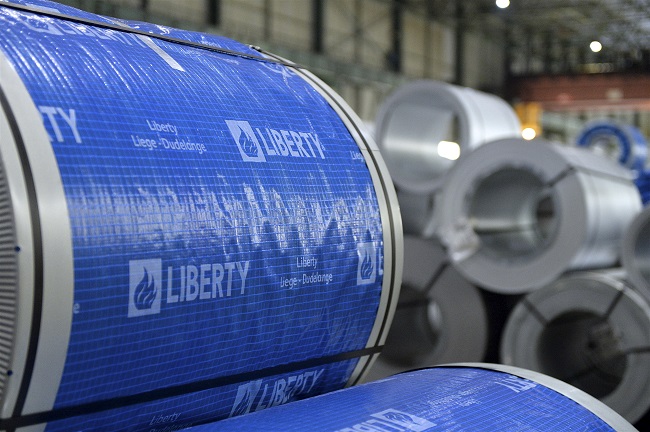
“In the context of the bankruptcy of Liberty Steel Dudelange, the Government Council has decided to submit an offer to the trustee to acquire the site,” the Ministry of Economy said in a press release.
“After almost three years of inactivity, the site can be redeveloped in a way that maximizes the use of available space and finally gives it a new purpose to contribute to economic development,” the ministry added.
In 2019, Liberty Steel acquired the Dudelange site, along with several other European steel assets, from ArcelorMittal. Almost all of those acquisitions have faced insolvency or closure in recent years.
The plant in Dudelange is capable of producing around 1 million tonnes per year of galvanized products from both electro-galvanizing and hot-dipped galvanizing lines, according to Fastmarkets’ information. There are two hot-dipped galvanizing lines with combined capacity for 620,000 tpy and two electro galvanizing lines with combined capacity for 360,000 tpy, according to Liberty Steel’s website.
There are 185 workers employed at the Dudelange plant, which lies in the south of Luxembourg, which itself is between France, Belgium and Germany.
The asset was part of Liberty Steel Belgium, along with Liberty Liège, which comprises the Flémalle and Tilleur production sites in Belgium, each producing cold-rolled coil, hot-dipped galvanized coil and tinplate.
In December 2024, the Dudelange plant was declared insolvent and a receiver was appointed, while the Belgian assets entered a process of liquidation.
Liberty Steel’s attempts to organize a reacquisition faltered. Then, in February this year, Turkey’s Tosyali Steel submitted an offer for the potential acquisition of the Dudelange plant, but Fastmarkets understands that the deal did not progress beyond that initial stage.
“If this offer is accepted, the Ministry of Economy will develop the land with a view to developing new industrial activities and promoting the creation of high-value jobs. The government will also examine the possibility of dedicating part of the site to defense-related projects,” the Ministry of Economy said.
Because no other potential buyer has emerged, industry sources familiar with the matter said that the chances were high that the Dudelange site would be nationalized.
Galvanized coil is mainly used in the automotive and construction industries. But these products are also used in the military industry, mainly for their corrosion resistance and durability in extreme conditions. Applications include structural elements, vehicle components and essential parts such as chains and anchors for landing craft.

ArcelorMittal to acquire Liberty’s Belgian steel assets
Leading steelmaker ArcelorMittal’s offer for galvanised steel production lines in near Liège, Belgium, has been accepted by trustees managing the distribution of assets for Liberty Galati’s Belgian operations, following its declaration of bankruptcy back in April.
The agreement, signed today, authorises ArcelorMittal Belgium to take over all facilities at Liberty’s Flémalle plant, including hot-dip galvanising line Galva 5, repair lines, and the water treatment plant.
“The galvanising line in Flémalle will allow us to expand our ability to manufacture a high added-value product for our automotive and construction customers across Europe,” said CEO of ArcelorMittal Belgium, Frederik Van de Velde. “We look forward to working with the skilled team in Flémalle and to restoring the plant to operating at a world-class level.”
ArcelorMittal expects to finalise its acquisition in the coming weeks, and will complete approximately nine months of maintenance and investment work to restore the line as production at the site has been inactive for a prolonged period.
ArcelorMittal originally owned the Flémalle assets, but sold the plant – and many of its other European assets – to Liberty to satisfy the European Commission’s competition concerns connected to its 2018 acquisition of Italy’s Ilva, and its Taranto steelworks.
In the meantime, ArcelorMittal has been supplying steel to Flémalle during Liberty’s tenure, and is said to have been a substantial creditor of Liberty Belgium prior to its bankruptcy. ArcelorMittal has since exited its stake in Ilva – renamed Acciaierie d’Italia – effectively bringing much of the last seven years of M&A full-circle.
Liberty’s other assets are suffering from financial challenges across Europe: its Dudelange site in Luxembourg declared bankruptcy in late 2024, and attempts to find a buyer faltered back in May after Turkish steel group Tosyali Holdings withdrew from the deal, citing European safeguard amendments.
In the UK, Liberty Special Steels is also facing liquidation or sale, with its recent winding up petition adjourned for eight weeks to 16 July, in order to finalise a potential deal with a “third party purchaser.”
Benjamin Steven Journalist, Steel

ArcelorMittal will focus on EAF only “when commercially viable”
The move includes cancelling associated subsidies from German government totalling €1.3 billion that were tied to a June 2025 construction commence timeline.
“Since the contract with the German government for €1.3 billion in funding stipulated that construction work on the project would begin by June 2025, ArcelorMittal was required to officially notify the government that it could not continue with the investments due to the market situation and the lack of economic viability of CO2-reduced steel production,” the company said.
“We appreciate the funding from the German government and the state of Bremen, as well as the support from the state of Brandenburg, for this project. But even with the financial support, the economic viability of this transition is not sufficiently ensured, which highlights the scale of the challenge,” ArcelorMittal Europe’s chief executive Geert Van Poelvoorde said.
“The European steel industry is currently under unprecedented pressure to maintain its competitiveness and, even without the additional costs required for decarbonization, imports are a major problem,” Van Poelvoorde said. “We need a 15% cap on flat product imports, which represents a reduction of about 50% compared with current levels.
“Once this is achieved, the industry will also be in a much better position to drive investments in decarbonization,” he added.
Instead of building DRI modules and by focusing on the EAFs in Bremen and Eisenhüttenstadt, ArcelorMittal hopes to be “prepared when production with electric-arc furnaces becomes economically viable.”
The company also said that green hydrogen is not yet a viable energy source and natural gas-based DRI production is not competitive as a transitional solution.
It said that using hydrogen with existing DRI modules in Europe would currently be too expensive to be competitive, with hydrogen prices currently around €5-8 ($5-8) per kg. And a trade source in Northern Europe said the price of hydrogen should be “around €2.50-3.00 per kg to make it commercially viable for steelmaking.”
Another source said €3.00 per kg was just a breakeven price for hydrogen and “to make any profit, it would need to be below that level.”
Around 140,000-150,000 tonnes per year of hydrogen would be required to fuel a single 2 million tpy DRI module, a mill source told Fastmarkets.
“Before you even get to hydrogen you can’t make DRI in Europe with natural gas [because] even with natural gas the costs are prohibitive,” a source said.
In November 2024, ArcelorMittal put several green project investments in Europe on hold due to unfavorable market circumstances.
The company warned in November 2024 that it “could not make final investment decisions on the construction of new DRI-EAF plants in Europe because the political, energy, and market conditions had not developed in the hoped-for direction,” ArcelorMittal said.
At the time, the company said it would explore a phased approach to decarbonization in Europe, starting with the construction of EAFs and in May 2025 ArcelorMittal confirmed plans to build EAFs in France at Dunkirk.
ArcelorMittal said it remains dedicated to enhancing the carbon footprint of its facilities. However, as announced in April, it is becoming increasingly unlikely that the company will meet its 2030 CO2 reduction targets. This reflects a broader trend, as the energy transition is clearly advancing more slowly than anticipated across all sectors.

Market brief
The European steel market is still struggling with slow demand from all key steel-using sectors amid high imports, despite the trade measures put in place, according to sources.
Earlier this year, the European steel industry association, Eurofer, downgraded its outlook for apparent steel consumption across the EU for 2025.
According to Eurofer’s latest report, published on June 5, apparent consumption was expected to shrink by 0.9% to 128 million tonnes in 2025, compared with 129 million tonnes in 2024. This was a downward revision from the previous forecast in early-February of a slight recovery.
Carbon steel imports to the EU in 2024 totaled 26.36 million tonnes, up by 6.4% compared with 24.78 million tonnes in 2023, Eurofer data shows, and in the first quarter of 2025, steel imports to the block totalled 6.2 million tonnes.
Sources estimated that imports share in domestic steel consumption in Europe was around 30% in 2024.
Prices for HRC in Europe started to increase at the beginning of the year due to a pick-up in apparent demand, but the upward trend only continued until early-May, after which prices started to decline.
In April, Fastmarkets’ steel HRC index, domestic, exw Northern Europe averaged €652.74 per tonne. Since then, the average monthly price of HRC has been sliding, with the daily index reaching €590.00 per tonne on June 19 – its lowest level since January 31, 2025.
Short-term expectations on green steel remain quite pessimistic amid a lack of real demand and mounting import pressures, sources told Fastmarkets.

ArcelorMittal agrees to sell Zenica steel mill
ArcelorMittal has signed a deal to sell its operations in Bosnia and Herzegovina to Bosnian Pavgord Group on 20 June for an undisclosed sum, the steelmaker said.
The operations sold include ArcelorMittal Zenica integrated steel mill and ArcelorMittal Prijedor, an iron ore mining business.
Under the agreements ArcelorMittal’s shares in Zenica and Prijedor will be sold to Pavgord Group, and all employees’ jobs are transferred to the new owner.
The deal is expected to be finalised in the third quarter of 2025, subject to merger control clearance and the fulfilment of all conditions precedent.
ArcelorMittal Zenica is a blast furnace (BF)-based long steel producer with an annual capacity of almost 1 million tonnes.
In Northwest Europe, domestic rebar prices have been heard in the range of EUR615-635/t as negotiable against offers between EUR630-640/t delivered. McCloskey sees rebar prices as stable on the basis of reported indications, at EUR625/t delivered Northwest Europe.
This week, ArcelorMittal’s European segment has notified the German government of its decision to indefinitely suspend its decarbonisation projects in Bremen and Eisenhüttenstadt, with state financing for the projects contingent on commencement by June.
Maria Tanatar, Associate Director, Steel and Green Steel

ArcelorMittal Belgium faces Steelanol challenges amid regulatory constraints
The €215 million ($248m) industrial-scale carbon capture and utilisation (CCU) Steelanol facility operated by ArcelorMittal in Ghent, Belgium, may face a shutdown. The steelmaker warns that the plant is not profitable due to current EU regulations.
ArcelorMittal, however, assures that it will continue its dialogue with policymakers at the Flemish, national, and European levels in pursuit of viable solutions to the challenges facing its operations. The steelmaker’s CO2 reduction roadmap in Belgium is anchored on energy efficiency, greater circularity through scrap use and electrification, and the deployment of smart carbon technologies. Key initiatives include carbon-to-ethanol conversion, and carbon storage.
ArcelorMittal Belgium’s largest investment to date is the Steelanol plant, approved in 2017. The project reflects the company’s view that a combination of technologies is essential to achieve CO2 reduction targets. The plant produces ethanol for both the chemical and fuel markets, but despite securing a sustainability certificate for chemical-sector supply in mid-2024, certification for fuel use remains pending, the company warns.
In Gent, blast furnace B operates with a mix of fossil coal and biocoal from the Torero plant. Part of the BF gas is processed by Steelanol. The two key objectives are to produce bioethanol in line with biocoal use and reduce recycled fuel tied to fossil coal use. However, EU rules adopted after the plant’s approval result in far lower recognised bioethanol volumes than initially planned.
“To have ethanol recognised as recycled fuel, we must demonstrate that its CO2 footprint is at least 70% lower than an external fossil reference. This calculation must include the electricity no longer produced (Steelanol uses part of the gas to make ethanol, which is no longer available for Engie’s power plant). Because Steelanol is connected to the Belgian electricity grid (which still has a relatively high CO₂ footprint), we do not meet this target. If Steelanol were connected to the French grid (which has a low CO₂ footprint due to many nuclear plants), we would meet the target. ArcelorMittal Belgium expected that the CO₂ savings from Steelanol could be deducted from the total emissions of our cluster. According to new regulations, this is only allowed if the CO₂ is stored for a very long period (centuries). Use in fuels does not count, as the CO₂ is eventually released during combustion. Yet, Steelanol does reduce total CO₂ emissions because our ethanol replaces fossil fuels. Even for ethanol sold to the chemical sector, we are not allowed to deduct the CO₂ emissions. The difficulties in getting ethanol recognised as biofuel (when using biochar), as recycled fuel (when using fossil coal), and the fact that we cannot count the CO₂ savings from Steelanol, make it very difficult to make the project profitable—despite its great potential,” the steelmaker explains in a note obtained by Kallanish.
Last year Steelanol increased its ethanol production to a level that allows large-scale shipping via barge. ArcelorMittal’s partner LanzaTech acquired the first barge shipment last year, with the ethanol in transit for purification and subsequent sale to LanzaTech’s CarbonSmart customers.
In partnership with LanzaTech, Primetals and ERM, ArcelorMittal designed the Steelanol unit, the first of its kind in Europe, to capture carbon-rich waste gases from steelmaking. They are biologically converted into advanced ethanol through LanzaTech’s bio-based process. The ethanol produced has the potential to be marketed directly to fuel sectors or undergo additional purification or conversion for application in various consumer goods, including clothing and packaging solutions (see Kallanish passim).
Natalia Capra France
ArcelorMittal cancels DRI-EAF decarbonisation investment in Germany
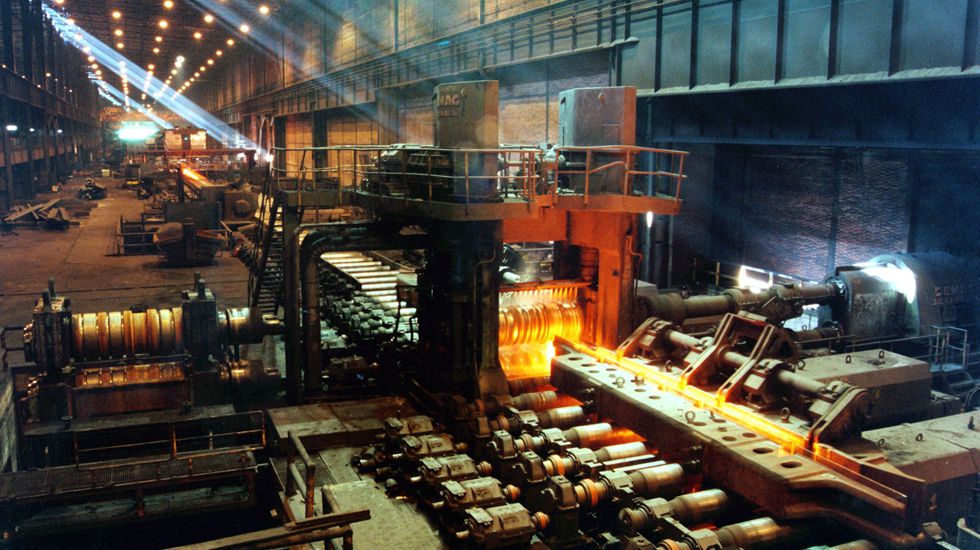
ArcelorMittal has suspended its planned €1.3 billion ($1.5 billion) direct reduced iron and electric arc furnace investments aimed at decarbonising its German operations in Bremen and Eisenhüttenstadt.
The decision marks a significant shift in the group’s decarbonisation roadmap for these sites, where DRI-EAF technology was intended to replace traditional blast furnaces, Kallanish notes.
Under the agreement between ArcelorMittal and the German government, which included state financial support, construction of the DRI-EAF facilities at Bremen and Eisenhüttenstadt was scheduled to commence by June 2025.
“ArcelorMittal Germany has been obliged to formally notify the government that it cannot proceed with these investments, given the realities of the market and the economics of low-carbon emissions steelmaking,” the steelmaker says.
It is unlikely to meet its 2030 carbon emissions target amid slower-than-expected progress in the energy transition, including delays in green hydrogen becoming viable and the lack of competitiveness of natural gas-based DRI.
“Full implementation of existing NDCs by 2030 would only cut emissions by up to 10% from 2019 levels, far short of the 28% needed for 2°C and 42% for 1.5°C. Meanwhile, the European steel market is under unprecedented pressure, with weak demand and high levels of imports.” the note states.
ArcelorMittal is calling on the European Commission to take action on several key challenges impacting its decarbonisation strategy and market competitiveness.
The company points to rising steel imports amid weak EU demand and the need for effective support from tools like the Carbon Border Adjustment Mechanism. It also noted the high cost of electricity, which is critical as the shift from blast furnace to EAF increases reliance on gas and power rather than coal. Electricity prices in Germany are currently too high compared to other countries in Europe.
“We appreciate the financing offered by the federal government of Germany and the state of Bremen as well as the support of the state of Brandenburg for this project. But even with the financial support, the business case for moving ahead with this transformation is not strong enough, which shows the scale of the challenge,” says Geert van Poelvoorde, ceo of ArcelorMittal Europe.
“As it stands, the European steel industry is under unprecedented pressure to remain viable, and that is without the additional costs required to decarbonise,” he adds.
He remains concerned the EC’s Steel and Metals Action Plan may not go far enough or happen quickly enough.
The high levels of imports are a major concern – we need imports for flat products to be limited to 15% – which means a reduction of around 50% compared with what we are seeing today,” he warns.
ArcelorMittal is also halting decarbonisation investments in France and Belgium. However, it has confirmed its €1.2 billion commitment for its first EAF in Dunkirk, where energy prices are comparatively moderate (see Kallanish passim). In Gent the steelmaker is considering closing its Steelanol plant.
Natalia Capra France
ArcelorMittal Poland calls for decarbonisation support
ArcelorMittal Poland has called for support in its decarbonisation efforts as it says mills cannot bear the additional costs in challenging market conditions, the company told McCloskey on 13 June.
Decarbonisation requires installation of new equipment and implementation of new technologies to meet the EU’s CO2 emission targets. And the transition needs to be done under strain of a challenging market, which already has some additional costs that non-EU steelmakers do not face, including the EU Emission Trading System (ETS). In addition, energy costs in Europe are the highest in the world, ArcelorMittal said.
The EU aims to achieve a 55% reduction in emissions by 2030, and to become carbon-neutral by 2050.
The EU market has been under pressure from the rapid rise of competitive steel imports: “Imports from outside the EU, where production costs are significantly lower, already satisfy almost 30% of apparent steel consumption in Europe,” the company said.
The statement has been confirmed by market participants who cited low import offers for hot-rolled coil as one of the driving forces behind the domestic price drop.
“Against this backdrop, no steel producer can bear the costs of the transition to low carbon-emissions steelmaking alone,” ArcelorMittal Poland said.
The steelmaker also calls for a reduction of energy costs and effective mechanism to prevent carbon leakage.
“We are glad that the European Commission has taken into account the majority of the steel industry’s requests in the Steel and Metals Action Plan. Now, it will be crucial to implement these measures quickly,” the producer said.
The European Commission unveiled its official European Steel and Metals Action Plan on 19 March.
ArcelorMittal Poland has spent over 1 billion zlotys (around $270 million) on projects aimed at reducing its environmental impact and increasing energy efficiency, including blast furnace overhaul. For additional details on steel decarbonisation initiatives in Europe, please see McCloskey’s European Green Steel Profile.
ArcelorMittal’s Dąbrowa Górnicza plant is one of several producers of 120-metre long rail used in high-speed rail.
Maria Tanatar
ArcelorMittal committed to restarting French decarbonization plan following EU measures
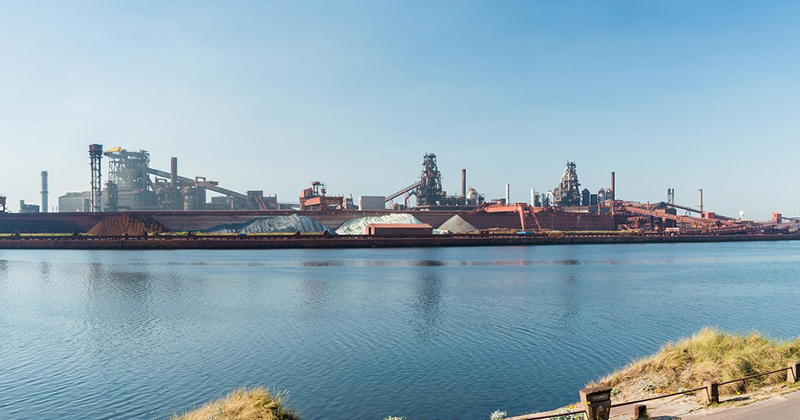
ArcelorMittal said May 15 that it remains committed to decarbonizing its French operations and is working closely with the government as it looks to resume its plans later in the year.
Europe’s largest steelmaker said the European Commission’s Steel and Metal Action Plan, announced in March 2025, “provides optimism that the European Commission will implement efficient trade defense and carbon border adjustment mechanisms (CBAM) soon after that.”
With the European steel sector experiencing its deepest crisis since the financial crisis of 2009, the company had recently decided to postpone the implementation of its decarbonization projects in Europe.
“The revised steel safeguard measures that entered into effect on April 1, are a first step in the right direction. The European steel industry now requires effective limitation of imports at 15% of market demand as well as an effective CBAM that notably prevents resource shuffling. That would restore a level playing field on the European steel market,” ArcelorMittal said.
The company said it is confident of being able to restart its decarbonization plan after the summer and, in particular, to invest in the first electric arc furnace (EAF) at Dunkirk, an investment estimated at around Eur1.2 billion ($1.07 billion).
This investment is part of a Eur2 billion larger investment in France: Eur254 million already for Dunkirk and Eur53 million for its site at Fos, plus the Eur500 million investment in a new electric steel production unit under construction in Mardyck, which is set to be completed by the end of this year.
In February 2022, ArcelorMittal said that it would be transitioning its Dunkirk plant away from the BF-BOF production route. The company announced plans to build an EAF and a 2.5 million mt/year DRI plant in Dunkirk with the aim of starting up the new equipment by 2027 and phasing out the old by 2030, but then in 2024 backtracked on these projects.
At the moment ArcelorMittal’s Dunkirk site is carrying out works at the iron ore sintering line, blast furnace 4 and one of the steel mill’s converters.
Platts, part of S&P Global Commodity Insights, assessed Northwest European carbon-accounted hot-rolled coil at Eur695/mt ex-works Ruhr on May 14, stable day over day.