


Northwestern Europe coil market stays slow
Coil buyers in northwestern Europe confirm that ArcelorMittal this month launched another attempt to increase coil prices, but they do not expect that they will cause a leap forward on the market.
Essentially, steelmakers are trying to bring the price for hot-rolled coil over the mark of €600/t ($628) ex-works. They do achieve it at times, Kallanish hears, but prices below that for transactions still occur in Germany and Benelux. Scandinavian prices tend to be clearly above that level.
ArcelorMittal now asks for €20-30/t more for delivery in the second quarter, nominally aiming towards €650/t. Similar moves are heard from other mills, with one German mill asking for even €50/t more, according to a trader who says he has not replied with a bid on that yet.
One Swiss-based trader says he does not see much potential for new prices to pass through, citing high stocks at service centres and some capacities reopening in Italy and eastern Europe.
“Our customers are very reserved with buying, which is frustrating for the mills as they cannot make long-term plans,” a French-based trader concurs.
A German buyer finds that prices are definitely strengthening, largely because of potential EU measures against imports. But still, “demand is not growing much, so price increases will not be dramatic,” he comments. “It remains to be seen how the mood on the market is developing, especially in Germany after the elections, and if measures against imports are successful. Then we might be able to tell if there is headroom for more price hikes – or if we fall back into a grey stagnation.”
Christian Koehl Germany
EU industry cautious over rebound, awaits policy rescue
Big European steel industry names have offered a glimmer of hope for the demand outlook in recent days, but tempered expectations for 2025, Kallanish notes. In any case, the industry’s health will depend heavily on anticipated European Commission measures.
ArcelorMittal said it expects higher apparent demand on-year in 2025 amid low inventory levels, especially in Europe. The group’s expectation of restocking throughout 2024 did not materialise, however. Chief executive Aditya Mittal also cautioned that EU measures to support industry will be critical this year. The European Commission is due to publish its Clean Industrial Deal later in February. A specific action plan for the steel industry is also eagerly being awaited.
European steelmakers’ association Eurofer said the Commission initiatives “will determine the future of the EU steel industry”.
ArcelorMittal’s European operations saw sales and Ebitda drop 5% and 18% respectively on-year in 2024 to $29.95 billion and $1.62 billion, despite a 4% rise in steel shipments to 28.66 million tonnes, driven by flat products.
Eurofer said EU apparent steel demand should recover 2.2% in 2025 but only provided the industrial outlook improves and global tensions ease. This is also down from its forecast in October of a 3.8% rebound this year. The firm steadily revised down its 2024 demand growth projection throughout last year.
Economic uncertainty will continue to take its toll in the coming quarters despite monetary easing by the European Central Bank, it added. Energy prices, weak manufacturing and geopolitical tensions continue to weigh on activity.
US Steel, which owns the major flat steelworks in Kosice, said it expects slightly improved results in Europe in the first quarter, but pressure will remain from challenging pricing and demand conditions.
Tata Steel, which owns the IJmuiden and Port Talbot steelworks, pointed out that despite the European Central Bank reducing interest rates significantly, concerns persist about inflation and energy costs in Europe.
Adam Smith Poland

Policies to accelerate steel decarbonization in Europe ‘critical’ in 2025: ArcelorMittal CEO
“Looking to the year ahead, while [steel] inventory levels are low and apparent demand is expected to improve, our industry continues to be characterized by global overcapacity, and we are supportive of policy to address this in our markets,” ArcelorMittal chief executive officer Aditya Mittal said in a Thursday press release accompanying the company’s fourth-quarter financial results.
“Further action is particularly necessary in Europe, which was impacted by increased imports in 2024, further adding to the pressures on European manufacturing. It is critical that we see progress in 2025 both in providing necessary emergency relief and creating a policy environment that incentivizes the investment required to accelerate decarbonization in Europe,” Mittal added.
In 2025, green steel growth is largely expected to be driven by stricter environmental regulations, increasing pressure from consumers and investors for sustainable products, and the EU’s commitment to achieving carbon neutrality, Fastmarkets reported.
ArcelorMittal provided an update on its decarbonization plans in Europe last November, pointing out that the unfavorable economic situation in Europe and uncertainty around environmental policies slow the transition to green steelmaking.
As a result, the company’s decarbonization investments in Europe are progressing at a slower pace than initially envisioned, ArcelorMittal said.
ArcelorMittal has made significant progress in decarbonizing its operations and remains committed to its green steelmaking goals, the company said in the Thursday release.
For instance, since 2018, ArcelorMittal’s absolute emissions (Scope 1 and 2) have decreased by about 50%, primarily due to footprint and portfolio optimization of some of its most carbon-intensive capacities, the release said.
In addition, electric-arc furnaces (EAFs) comprise 25% of the company’s global production, up from 19% in 2018, ArcelorMittal chief executive officer Aditya Mittal said in the release.
Since 2018, the company has invested $1 billion in decarbonization projects globally. These projects include the decarbonization of steelmaking operations in Gijón and Sestao in Spain, as well as launching ArcelorMittal’s green steel brand XCarb for recycled and renewably produced low-carbon-emission steel.
XCarb sales increased from 0.2 million tonnes in 2023 to 0.4 million tonnes in 2024, the company said.
The market for steel with reduced carbon emissions is still evolving in Europe, and sources expect more uptake of “green steel” across supply chains once environmental regulations — such as the CBAM — are implemented.
ArcelorMittal’s current decarbonization investments are focused on ramping up production of high-quality low-carbon flat products in Sestao and the new EAF construction in Gijón.
Notably, by 2026, flat steel production is targeted to reach 1.6 million tonnes per year at the plant in Sestao, where ArcelorMittal runs two EAFs. After ramp-up is completed, much of Sestao’s portfolio will be XCarb-brand low-carbon-emission steel.
According to market sources, HRC from Sestao has a carbon footprint of 580 kg of CO2 per 1 tonne of steel under Scope 1, 2 and upstream Scope 3.
Fastmarkets’ latest weekly assessment of the green steel domestic, flat-rolled, differential to HRC index, exw Northern Europe was €100-200 per tonne on January 30, stable since December 12.
Fastmarkets’ methodology defines European green steel as “steel produced with Scope 1, 2 & 3 emissions at a maximum of 0.8 tonne of CO2 per tonne of steel.”

Julia Bolotova in Brussels contributed to this report.

ArcelorMittal reduces shipments, expects elusive restocking in 2025
ArcelorMittal expects higher apparent demand on-year in 2025, with restocking activity to supplement real demand improvement amid low inventory levels, especially in Europe. This comes after the firm’s shipments and revenue dropped in 2024, despite improving in the fourth quarter, Kallanish notes.
The group expressed a similar expectation at the same time last year, but restocking ultimately failed to materialise in 2024 (see Kallanish passim).
Q4 steel shipments and crude steel production each rose 2% on-year to 13.5 million tonnes and 14mt respectively. Revenue grew 1% to $14.7 billion, while net loss narrowed 87% and Ebitda grew 14% to $390 million and $1.65 billion respectively.
Steel shipments in 2024 fell, but only by 2% on-year, to 54.3mt, with crude steel production flat at 57.9mt. Revenue fell 9% to $62.4 billion and Ebitda was down 19% to $7.05 billion. However, net income surged 46% to $1.34 billion. The previous year’s earnings were impacted by the disposal of the Kazakhstan operations and impairment of the firm’s investment in the Acciaierie d’Italia joint venture.
Despite the anticipated demand improvement, global overcapacity remains an issue. “Further action is particularly necessary in Europe, which was impacted by increased imports in 2024, further adding to the pressures on European manufacturing. It is critical that we see progress in 2025 both in providing necessary emergency relief and creating a policy environment that incentivises the investment required to accelerate decarbonisation in Europe,” says ArcelorMittal chief executive Aditya Mittal.
Although 2024 was beset by economic challenges, ArcelorMittal’s $130/tonne Ebitda was still higher than the five-year-average pre-Covid. The firm is focused on tapping demand in the Brazil, India and US markets. Electric arc furnaces now comprise 25% of its global production, up from 19% in 2018.
The company expects world ex-China apparent steel consumption to grow by 2.5-3.5% on-year in 2025, with Europe and US flat products consumption to rise 0-2% and 1-3% respectively.
Adam Smith Poland

ArcelorMittal increases European coil prices
ArcelorMittal is set to raise coil prices by €30/tonne ($20.8-31.2) in Europe, effective for deliveries in April, according to market sources.
Lead times at the steelmaker’s facilities in Europe have now been extended to April, as order books for the first quarter are reported to be full. Current asking prices for hot rolled coil in the new allocations are positioned at €660/t base delivered. Sources indicate that prices for hot-dipped galvanised coil are rising to €780/t base delivered.
Import restrictions in the EU are driving customers to source material domestically within Europe. Demand in some European countries is said to be improving, according to some sources, Kallanish hears.
Amid the ongoing review of EU steel safeguard measures, Eurofer has provided recommendations to the European Commission on making the measures more restrictive. The association is proposing reducing tariff-rate quota volumes to reflect declining EU steel demand and raising the safeguard duty to 32-41%. It also wants to cap quotas for other product categories at 15%, as was done last year for HRC and wire rod.
Natalia Capra France

European sites at risk of closure, according to former EUROMETAL President
“All European steel plants are at risk” of closure by 2025 if nothing is done to protect the European steel industry, ArcelorMittal France chairman Alain Le Grix de la Salle told a parliamentary hearing in Paris on Wednesday.
“The steel industry in Europe is in crisis… I cannot today make the slightest commitment… The sites, as they are, are all at risk in Europe, and therefore in France too,” declared the head of the company before the French National Assembly’s economic affairs committee, in response to an MP who asked him if he could make a commitment that no other ArcelorMittal plant would be closed in France by 2025.
“The steel industry in Europe, and therefore in France, has entered a major and serious crisis. Global overcapacity is a structural phenomenon that is here to stay. These overcapacities currently represent 550m to 600m tonnes of annual production, i.e., four to five times Europe’s production,” he told Agence France Presse. “China alone exported 100m to 120m tonnes last year. That’s the equivalent of all European consumption,” he added.
“The United States is doing everything it can to protect its industry. That leaves Europe. Steel travels. We are not against imports. We are asking that they be limited and that they not have a devastating effect on our industries, as is currently the case. We are asking for fair conditions of competition, particularly with regard to the cost of CO2,” he added. “If Europe does not decide to protect its market from unfair competition, whole swathes of our industry will disappear in the very near future. This is not doom and gloom, it is, unfortunately, pure and simple reality.”
“The list of major restructurings and closures in Europe is growing,” he warned, citing in particular the German group Thyssenkrupp, ArcelorMittal’s competitor, which plans to cut “11,000 jobs by 2030, i.e., 40% of its workforce.” ArcelorMittal suspended its decarbonisation investment plans in Europe at the end of 2024.

ArcelorMittal increases longs prices in Europe
ArcelorMittal is increasing its prices for long products throughout Europe by €25/tonne ($25.6/t), Kallanish hears from market sources.
The decision was driven by rising energy costs, which are making current longs prices unsustainable. The steelmaker is implementing a price hike across all commodity grade long products, which encompasses rebar, mesh, sections, and both low- and high-carbon wire rod. This is effective immediately for all new orders.
Energy costs are projected to continue rising, significantly affecting the profitability of European mills. Energy tariff increases have been substantial since October 2024. In Germany, power prices have surged by up to 41% compared to October, while gas prices across Europe saw an average increase of 22%. Gas and electricity forward prices are also high. According to the Dutch TTF gas index, prices went up from €40/MWh on 18 October to €48.2/MWh on 13 January.
In numerous European markets, several steelmakers are raising prices of wire rod, sections, and rebar. The market, however, remains sluggish, with transactions primarily occurring only for low tonnages. Market participants are being prudent in light of the uncertain conditions in the construction industry, especially within France and Germany.
Despite the general market weakness, a large northern EU steelmaker sees “surprisingly improved demand” for some longs, particularly sections. This is alongside an increase in enquiries for rebar.
Natalia Capra France
ArcelorMittal resumes Gijón steelworks, longs production
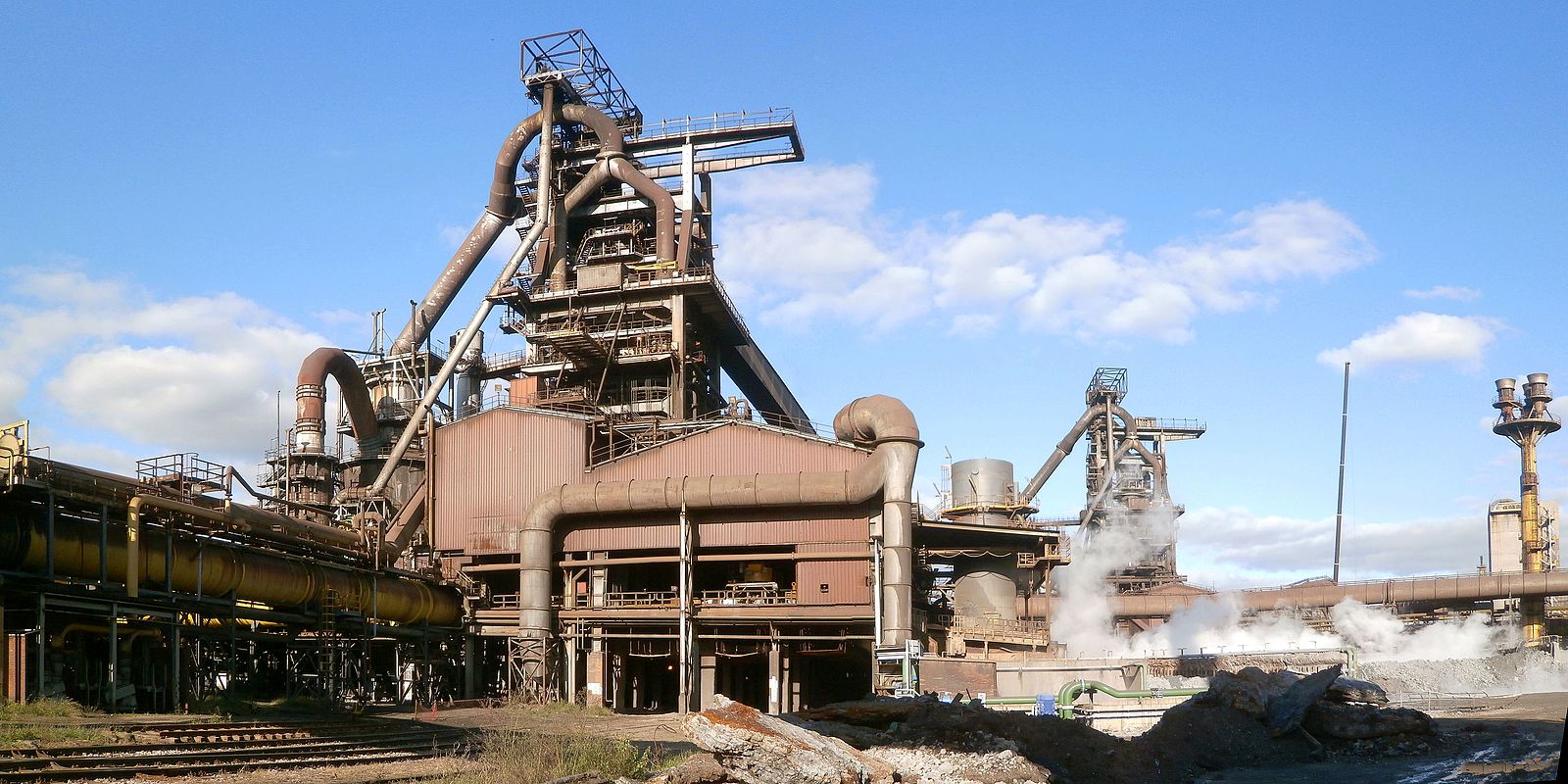
ArcelorMittal resumed operations at its Spanish steel mills on Tuesday, Kallanish notes. The facilities, including the Gijón steelworks and long steel production units, were temporarily halted in mid-December due to weak demand and increased competition from low-priced imports.
“All facilities are now operational,” an ArcelorMittal spokesperson confirms. No specific production or capacity utilisation rates have been disclosed. “We are continuously assessing market conditions and adapting to the ongoing challenges posed by low demand,” the spokesperson adds.
The temporary closure primarily affected the wire rod plant and rail mill division.
Last week, ArcelorMittal reached an agreement with Spain’s largest trade unions to implement a new Temporary Employment Regulation Scheme (ERTE) for 2025. This measure is designed to provide flexibility in addressing production adjustments or temporary stoppages, ensuring stability amid persistent uncertainty in steel demand.
Todor Kirkov Bulgaria

ArcelorMittal Bytom service centre eyes renewables self sufficiency
ArcelorMittal is installing a 1 MW solar power plant at its Bytom service centre in Poland that will power the site’s processing lines, administrative building and other equipment in its entirety.
The firm forecasts that in the summer, around 90% of the solar energy generated will go to captive use. The new plant should be commissioned in mid-2025.
“It must be remembered that renewable energy is necessary for decarbonisation, while steel is an important construction material necessary for the production of renewable energy infrastructure,” ArcelorMittal SSC Poland chief executive Rafal Nawrat says in a note sent to Kallanish. “For example, 80-90% of the mass of a wind turbine material is steel and iron, similarly in the case of photovoltaic [PV] panels and transmission networks.”
In constructing the solar plant, supplier Quanta Energy will use ArcelorMittal “Magnelis” coated sheet, which is ideal for PV installations, Nawrat adds. This will be processed at the Bytom site before use.
“The construction of a photovoltaic farm for the leader of the steel industry is proof that renewable energy sources are not only a response to environmental challenges, but also a key element in building long-term competitiveness,” says Quanta Energy ceo Piotr Grzybczak. “We are proud that our solar and wind solutions … not only reduce the operating costs of our customers, but also strengthen their position as responsible leaders setting directions for sustainable development in their industries.”
Adam Smith Poland
ArcelorMittal to close two more French distribution centres
ArcelorMittal’s Distributions Solutions France confirms to Kallanish the permanent closure of two additional distribution hubs located in Strasbourg and Valence, eastern France.
The steelmaker has communicated to its employees and labour unions a strategy to restructure and reorganise its operations in light of the ongoing crisis.
“The difficult economic climate in the steel markets is weighing on its customers’ sectors of activity, particularly in local distribution for building, mechanical engineering, and general industry. This translates into a significant and lasting drop in volumes, of around 19% between 2019 and 2024, which is affecting the company’s results,” an ArcelorMittal Distributions Solutions France note explains.
The firm plans to redeploy the Valence and Strasbourg sites’ activities to neighbouring branches. The move could cut up to 28 jobs on the one hand, and create 15 on the other. Management is continuing the information-consultation process with employee representatives, with the next meeting scheduled for Wednesday.
ArcelorMittal’s French service centre division – CSE – announced last month the closure of the Reims and Denain flat products service centres in northern France. Reims and Denain will lay off a total of 135 workers, including 113 in Reims, 21 in Denain and one in Ottmarsheim. However, the steelmaker reports the creation of 19 jobs at other sites as the closures of the two facilities will sustain activity at other production sites.
Meanwhile, the steelmaker is pausing decarbonisation investments at its Dunkirk facility in northern France due to the downturn in the global steel industry “We are operating in a difficult market, and there are a number of policy uncertainties that are impacting the industry. We need an effective Carbon Border Adjustment Mechanism, as well as more robust trade defence measures, to strengthen the business case,” a company spokesperson said last month.
Natalia Capra France
