


ArcelorMittal completes sale of Bosnian steel mill
ArcelorMittal completed the sale of its steel making operations in Bosnia and Herzegovina to Bosnia-based Pavgord Group on 30 October for an undisclosed sum, the steelmaker said.
The sale was originally announced in June 2025. Operations involved include ArcelorMittal Zenica, an integrated steel mill and ArcelorMittal Prijedor, an iron ore mining business.
ArcelorMittal Zenica is a blast furnace (BF)-based long steel producer with an annual capacity of almost 1 mt, making it the largest producer in the Balkans. The mill employs over 2,000 workers.
ArcelorMittal’s third quarter 2025 earnings call is scheduled for 6 November.
Alfie Shaw Senior Research Analyst


ArcelorMittal plans restart at Fos-sur-Mer in December after site incident
Following the October 8 fire incident at its Fos-sur-Mer facility in France, ArcelorMittal has confirmed that the immediate priority remains securing site operations, which is expected to be completed by the end of the week.
The company stated that it is working closely with local authorities and internal teams to ensure all safety and environmental protocols are met before any production activities resume.
Due to the incident, several operations have been temporarily modified. The blast furnace and steelworks remain shut down, while the urban chain has extended its scheduled maintenance shutdown. In the meantime, the coking plant continues operations using its own gas and the belt train, finishing, and logistics departments remain active to process and ship existing inventory.
ArcelorMittal’s site teams are currently dismantling and rebuilding damaged infrastructure. Based on current analysis and material supply timelines, the company aims to partially restart the steelworks in early December.
A full return to normal operations is still under review and will depend on repair progress and supply chain stability.
To reduce disruption, some orders have been transferred to other ArcelorMittal plants across Europe, and slabs are being sourced externally to cover end-of-year production needs.


ArcelorMittal announces two-step flat steel price rise across Europe amid shifting EU trade landscape
On Monday, ArcelorMittal announced a price increase of €20 per tonne for December-delivery hot-rolled coil, with new offers at €630 ($730) per tonne ex-works or delivered, depending on the region, compared with €610 per tonne ex-works or delivered for October/November delivery coil, several sources told Fastmarkets.
For December-delivery hot-dipped galvanized coil, offer prices were set at €730 per tonne ex-works or delivered.
And for January delivery HRC, the company was hoping to get €650 per tonne ex-works or delivered. For January-delivery HDG, the target offer was confirmed at €750 per tonne ex-works or delivered.
New offers have not been traded so far, but market sources noted that sentiment among other suppliers was becoming increasingly bullish, following the announcement of a new trade regime last week.
The European Commission unveiled on October 7 a proposal for sweeping reform of its steel import safeguards, suggesting cuts in tariff-free quotas by about 47% and imposing a steep 50% ad valorem duty on any volumes beyond the new threshold.
This move – and of course the introduction of the Carbon Border Adjustment Mechanism (CBAM) on January 1, 2026 – were expected to make importing steel “extremely challenging, and therefore greater reliance in domestic steel [operations] in the first quarter of 2026 was expected,” a distributor in Germany said.
In recent weeks, European HRC prices have been broadly stable, with stakeholders expecting more clarity about the new trade measures and CBAM, and postponing purchases.
It remained to be seen whether the new offers would be accepted by European buyers.
So far, tradable prices for HRC across Europe have remained far below ArcelorMittal’s target offers.
“At this stage, those levels [€630 per tonne and €650 per tonne] are not digestible. On top of that, other mills are still offering lower prices,” a steel service center in Germany said.
On October 13, sources estimated tradeable values for December-delivery coil at €580-590 per tonne ex-works in Northern Europe.
Fastmarkets’ most recent calculation of the daily steel hot-rolled coil index, domestic, exw Northern Europe, was €577.50 per tonne on October 10, unchanged from the day before.
The Northern European index was up by €2.50 per tonne week on week but down by €5.63 per tonne month on month.

ArcelorMittal shuts down Fos-sur-Mer blast furnace after major fire incident
In the early hours of October 8, a large-scale fire broke out at ArcelorMittal’s Fos-sur-Mer facility, one of France’s major integrated steel plants. The blaze started on two conveyor lines delivering raw materials to the steelmaking shop and quickly spread to surrounding structures, as reported by local media.
Internal fire brigades, assisted by local emergency services, battled the flames for several hours before fully extinguishing them. Although there were no casualties, the incident caused significant damage to both mechanical and electrical systems.
According to ArcelorMittal, the fire damaged the load-bearing structures of the conveyors and destroyed the electrical substation, forcing an immediate suspension of operations at blast furnace No. 2. The company stated that the unit will remain offline for at least two days, though the shutdown could extend depending on the results of a technical inspection. There has been no update on the condition of the blast furnace yet.
The steelmaking shop plays a central role in the Fos-sur-Mer production chain, providing slabs for downstream rolling and finishing lines. Without it, the entire plant’s production flow is disrupted. For now, the site is relying on existing slab reserves, but these are expected to run out quickly if repairs take longer than anticipated.
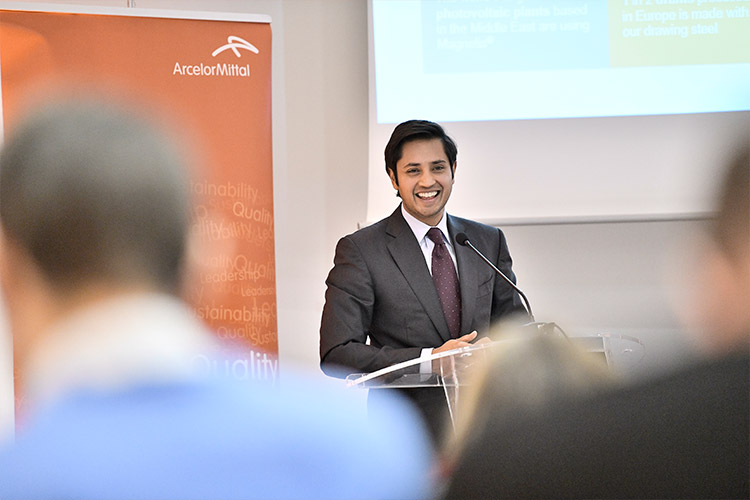
ArcelorMittal: EU’s proposal for stronger trade defense measures crucial for steel industry survival
Global steel giant ArcelorMittal has strongly endorsed the European Commission’s proposal to replace current EU safeguard measures with strengthened tariff quotas on steel imports. The company described the move as critical for the survival of Europe’s steel industry, which is facing mounting pressure from low-priced imports, shrinking demand, and weak economic conditions.
Commenting on the proposal, CEO Aditya Mittal said that he is sincerely relieved by the proposals that have been announced to support the European steel industry. He thanked the European Commission and the member states for understanding the criticality of the situation and acting appropriately and decisively. The European steel industry and manufacturing more broadly can have a much stronger future now and today marks a step in that direction, Mittal added.
Geert Van Poelvoorde, CEO of ArcelorMittal Europe, echoed these sentiments, noting that the proposal has brought a sense of relief across the European steel sector.
“ArcelorMittal and the European steel producers have been heard. Today, we can breathe a sigh of relief, with the European Commission’s announcement of the new, strengthened tariff quota proposal,” Van Poelvoorde stated, adding, “We thank the commissioners for the time and attention they have taken to understand the challenges facing our industry. We will continue to press for a swift introduction of the new tariff quota, in recognition of the severity of the challenges facing the steel industry in Europe.”

Link with CBAM and the Steel Action Plan
ArcelorMittal also stressed the importance of aligning trade defense instruments with climate policy, specifically the Carbon Border Adjustment Mechanism (CBAM), whose revised framework is expected by the end of 2025.
“We hope that the trade proposal unveiled today is an indication that our concerns will be reflected in the further measures to be announced in line with the Steel and Metals Action Plan,” Van Poelvoorde noted.
He said that his company believes that a strong tariff quota regime, combined with an effective CBAM, will be essential to restore a level playing field, curb market distortions, and support Europe’s steel competitiveness globally.

ArcelorMittal Luxembourg headquarters takes shape with XCarb
The construction of ArcelorMittal’s new headquarters in Luxembourg is gathering pace, with the building in Luxembourg City acting as a showcase for the brand, Kallanish hears.
The steelmaker says the construction site is the largest in Luxembourg and the Greater Region. The group announced in June 2023 that the first steel beam on the 21-storey building had been installed.
Now standing at more than eight storeys high, the building is scheduled to be ready in 2027. The building is also meant as a showcase for Steligence, which ArcelorMittal calls its proprietary design philosophy, combining sustainability, innovation and flexibility in construction at scale, comprising steel, glass and green spaces.
The building’s exoskeleton is being built with its low-emission steel brand, XCarb, which is made in Luxembourg with 100% recycled steel in an EAF, using 100% renewable energy. The XCarb recycled and renewably produced steel is produced in Differdange and Belval and fabricated in the Steligence Fabrication Centre.
Christian Koehl Germany


ArcelorMittal Sestao picks Danieli for new green steel upgrades in Spain
Spanish steelmaker ArcelorMittal Sestao, part of ArcelorMittal’s European operations, has launched a new phase in its decarbonization and capacity expansion program at its Vizcaya plant in Spain.
The company has entrusted Italy-based plantmaker Danieli with the supply of a state-of-the-art fume-treatment plant and a vacuum degasser, reinforcing its strategy to achieve zero-carbon emissions while enhancing productivity and product range.
Investment in green steel infrastructure
The new facilities form a core element of ArcelorMittal Sestao’s investment roadmap, targeting zero-carbon emissions and greater competitiveness in the European flat steel market. Both units are expected to become operational in August 2026, according to Danieli.
Fume-treatment plant to increase capacity
The fume-treatment plant installed by Danieli will serve the existing EAF No. 1, enabling full utilization of the two electric arc furnaces (EAFs). This upgrade will increase the plant’s productivity up to 1.6 million metric tons per year.
Vacuum degasser for high-quality flat products
Alongside the FTP, a new vacuum degasser (VD) station will be installed, equipped with mechanical dry vacuum pumps. This system will allow the production of ultra-clean steel, with precise chemical control and minimal nitrogen and hydrogen levels.
This step broadens ArcelorMittal Sestao’s steel grade portfolio, particularly in advanced flat products, catering to demanding applications in automotive, infrastructure, and clean technologies.

Stalprofil increases deliveries, foresees 2026 market recovery
Domestic demand boosted Polish steel distributor and gas pipeline contractor Stalprofil’s first-half-of-2025 deliveries, but increased costs ate into profit.
The firm’s consolidated revenue surged 60% on-year in H1 to PLN 1.18 billion ($314.7 million) but net profit slumped 43% to PLN 7m due to higher cost of goods sold and cost of materials. Domestic sales share in revenue rose 5 percentage points to 95.1% and exports share halved to 4.9%.
Exports were impacted by weak demand and falling steel prices in Europe, as well as the strong zloty against the euro.
“The announced expansion of infrastructure projects in the second half of 2025 should increase demand for steel, especially bars, pipes, sheets, and sections. However, only in 2026 will the steel market be able to count on a more noticeable demand impulse,” Stalprofil notes in its latest earnings report seen by Kallanish.
Steel products sales rose 25% on-year in H1 to 139,703 tonnes, with steel structures sales flat at 1,080t.
Pipe insulation sales, falling under the firm’s gas transmission network infrastructure segment, soared 180% to 1.18 million square metres. During this period, the group began implementing contracts signed in 2024 for the construction of gas pipelines.
Polish pipemaker Ferrum and ArcelorMittal were the group’s largest suppliers, while Ferrum was also its largest customer, followed by gas network operator Gaz-System.
Adam Smith Austria

ArcelorMittal to introduce its latest generation of electrical steels
ArcelorMittal has announced that its subsidiary ArcelorMittal Europe – Flat Products is set to showcase its latest generation of electrical steels and a brand-new tailor-made services package at Coiltech Italia 2025 on September 17-18 in Italy.
With e-mobility and industrial applications growing rapidly, ArcelorMittal is reinforcing its market leadership through product innovation, expanded capacity, and advanced customer support services.
ArcelorMittal will highlight its upgraded non-oriented electrical steels, notably its upgraded high polarization grades, self-bonding varnish coating solutions and its latest low-loss iCARe® 420Save grades. The next generation of iCARe 420Save grades is scheduled to come onstream in 2026, extending to 0.2 mm gauge and combining the lowest magnetic losses with high strength.
Charlotte Daugu, sales director of electrical steels, ArcelorMittal Europe – Flat Products, said, “The upcoming launch of our new electrical steels plant at Mardyck in France, alongside our existing Saint-Chély-d’Apcher facility, will significantly increase our electrical steels production capacity.” The new electrical steel lines at Mardyck will annually produce 170,000 mt of non-oriented electrical steel.

ArcelorMittal expands commitment to low-carbon steel with LESS membership across Europe
Global steel giant ArcelorMittal has announced that its subsidiaries in Belgium, France, Luxembourg, and Spain have joined the Low Emission Steel Standard (LESS), reinforcing the company’s leadership in producing low-carbon steel in Europe. ArcelorMittal Germany became a founding member of LESS in 2024.
What is LESS?
The Low Emission Steel Standard (LESS) is a voluntary initiative aimed at creating a credible and unified framework for labeling low-emission steel in the EU, and is already adopted by around 45 percent of European steelmakers. Although demand for low-carbon steel is increasing, most of the steel in Europe is still produced with conventional methods.
ArcelorMittal scales up XCarb® low-carbon steel
ArcelorMittal is currently Europe’s leading supplier of low-carbon steel through its XCarb® brand. In 2024, the company delivered 400,000 mt of XCarb® steel and expects that number to increase in 2025.
Policy support: EU’s Industrial Decarbonization Accelerator Act
The European Commission’s Steel and Metals Action Plan that was published in March this year has introduced mechanisms to support green steel markets. The upcoming Industrial Decarbonization Accelerator Act aims to stimulate demand for locally produced low carbon metals in public procurement and create lead markets to increase the use of low carbon steel in industries such as automotive and construction.
Challenges ahead: Insufficient policy and challenging market conditions
Despite its commitment, ArcelorMittal faces delays in its decarbonization projects due to insufficient policies and challenging market conditions. Current investments are focused on expanding electric arc furnace (EAF) capacity in Gijón and Sestao in Spain to increase XCarb® steel production.