


German car production seen rising slightly in 2025
Germany’s carmakers expect only a slight year-on-year increase in domestic passenger car production in 2025 – by 1% over 2024 – to 4.15 million units, Kallanish hears from national automotive association VDA.
The main reason for this is overall economic weakness, VDA notes. Foreign production of German brands is expected to increase by 2% to 9.7m cars globally.
With regard to electric cars, however, “we expect a positive development, after a production record was already reached last year,” says VDA chief economist Manuel Kallweit.
VDA forecasts domestic production of electric cars to increase by 24% in 2025, with battery-driven cars rising by 30%, and plug-in-hybrid cars by 2%. Overall, 1.7m electric cars are likely to be manufactured in Germany this year. The country will thus consolidate its position as the world’s second-largest production location for electric cars behind China, VDA underlines.
German passenger car production last year came to 4.1m units, about the same as in 2023. This meant a notable slowdown in the production rebound seen over the previous two years. In 2023, output from German plants had risen 18% year-on-year. In 2022, production increased 11% on-year, recovering gradually from the shortage of semiconductors that dominated 2021. However, compared to the pre-Covid year of 2019, 2023/24 output was still 12% lower, the association notes.
Christian Koehl Germany

Automotive suppliers consider OEM steel purchase pooling
German carmakers and automotive suppliers might have to reconsider their method of negotiating with steel mills over annual coil supply contracts.
Automotive tier suppliers often feel the most hard done by in the talks, in which mills on one side and OEMs on the other are the bigger and stronger opponents. In this triangle, tiers are traditionally the ones that end up paying higher prices to the mills for steel, but receiving lower prices from the OEMs for the steel component in the parts they supply (see separate story).
In comparison with last year’s relatively high prices, “the mills this time conceded €50-80/tonne [$52-83] lower prices,” says a manager at an automotive supplier. This figure was also heard from other sides. But in the negotiations for finished car parts, OEMs are heard entering the talks requesting a year-on-year reduction of €100/t or more for the steel component.
Tier supplier say they could withdraw from purchasing steel individually. Instead, all steel negotiations would be put in the hands of the OEMs in a practice called pooling-by-retail, with one valid price for all coil distributed among all players in the chain.
According to the manager, pooling in France accounts for 90% of all negotiations, but for far less than 50% in Germany. So far, German negotiators trusted their own expertise most, but the squeeze in recent years has made them increasingly willing to hand over that responsibility. After all, pooling itself is a cost factor for the OEMs, with the need for additional personnel in times when VW and Ford have announced staff cutbacks. “And mills do not like pooling much, because of the same reason,” he tells Kallanish.
“We want fairness from the OEMs, not better deals,” the tier manager emphasises. “We are the sausage in the sandwich,” he adds.
Christian Koehl Germany
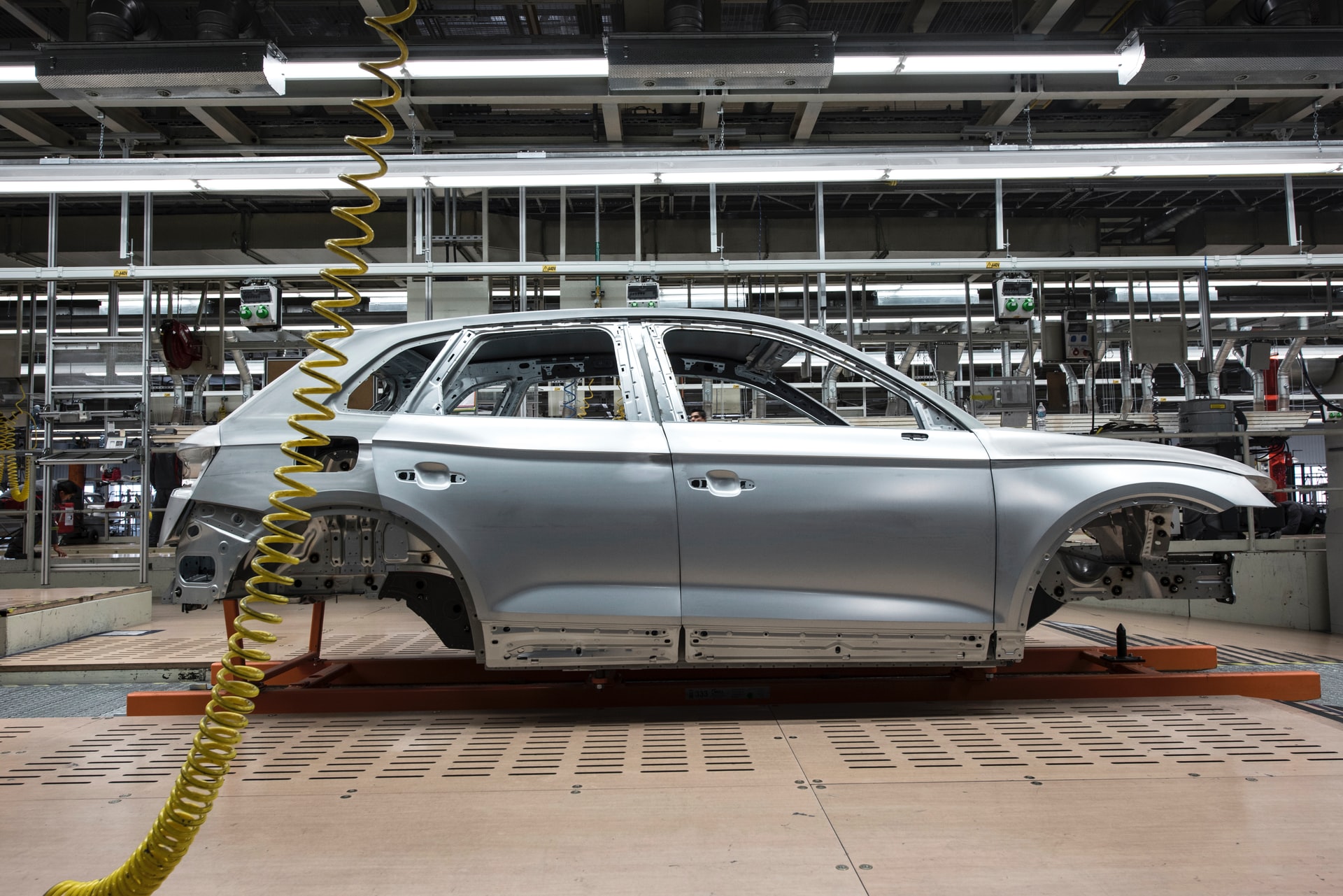
Automotive tier suppliers fret over steel cost squeeze
Automotive steel suppliers in northwestern Europe have reason for concern as they might again end up as losers in annual coil supply negotiations.
Most annual negotiations between steel mills and big buyers, often carmaker OEMs, have been completed.
Outstanding deals to be struck with tier suppliers further down the chain should ideally repeat the results of the deals with OEMs. “Steel should be a neutral cost factor between us [steel buyers] and the OEMs [their customers]; a 1:1 ratio would be the best case,” a manager at a tier supplier says. But this has not been the case in the last two years “and it is threatening our business”, he tells Kallanish.
A manager at one mill has already suggested that upcoming agreements on the tier level could result in somewhat higher prices than those struck earlier with the OEMs, as spot market prices climbed slightly in January. Mills might not be getting the €600/tonne plus ($622) they wanted for hot rolled coil, but a slow rise has been observed in deal prices, by €10-20, to above €570/t.
The annual contract deals so far appear to have resulted in a year-on-year reduction of €50-80/t from last year’s high level; some say the reduction has even been steeper, inching towards €100 year-on-year.
A lower y-on-y reduction – effectively meaning higher paid prices – would be bad news for the tier suppliers, who are already sufficiently concerned about their negotiations with the OEMs.
They are nevertheless receiving support from players not directly involved with OEMs. “It is unacceptable if mills concede less – y-o-y reduction – to the tiers than they did to the carmakers,” a buyer from a German service centre says. “If mills want fair deals, they should have bargained better prices with the OEMs, rather than trying to cash in on the tiers now.”
Christian Koehl Germany
Emission regulations, trade tensions challenge automotive sector
Emission regulations and growing trade tensions between China and the West, particularly in the electric vehicle (EV) market, will be major challenges for carmakers in 2025, says consultancy Gartner, Inc.
Software and electrification will remain the two main drivers of the automotive sector’s transformation, notes Gartner analyst Pedro Pacheco.
“For years, production overcapacity has been a challenge for several European and North American car factories, but the recent increase in import tariffs on Chinese EVs imposed by the US and the EU is likely to exacerbate this issue,” Gartner observes. “In response, Chinese automakers may set up factories in Europe and the US or in free-trade partners like Morocco or Turkey to maintain competitive pricing.”
According to Gartner, this situation will likely force several automotive factories with low utilisation to close or be sold to other automakers. “This will also create a domino effect, leading to the closure of supplier factories. This will redefine the car manufacturing map of the US and Europe, making low-cost countries the major hubs in the automotive production capacity and supply chain.”
The evolving political landscape in the US and EU is reopening the discussion on vehicle emission regulations, creating uncertainty for the automotive industry. As a result, some original equipment manufacturers (OEMs) may be reluctant to put EVs at the centre of their strategy, Kallanish notes.
Gartner estimates global EV (bus, car, van and heavy trucks) shipments will grow 17% in 2025. By 2030, it predicts that more than 50% of all vehicle models marketed by automakers will be EVs.
“Legacy OEMs have struggled to advance their in-house software capabilities,” the group observes. “As a result, many have made agreements with Chinese OEMs to acquire their vehicle electrical/electronic (E/E) architecture, thereby increasing their reliance on the software and hardware capabilities of Chinese EV makers.”

German car production ends 2024 flat on-year
German passenger production last year came to 4.1 million units, about the same as in 2023, German automotive association VDA reports. December alone, however, saw production drop by 10% compared with December 2023.
This means there was a notable slowdown in the rebound in production seen over the last two years. In 2023, output from German plants rose by 18% year-on-year. In 2022, production increased by 11% on-year, recovering gradually from the shortage of semiconductors that dominated 2021.
However, compared to the pre-Covid year of 2019, 2023/24 output was still 12% lower, the association notes.
In its latest report, VDA provides some detailed production data for electric vehicles until November 2024, broken down by drive type. They show that in November, more electric cars were produced in Germany than in any previous month. Output amounted to 155,700 electric cars, up 29% on-year.
At 120,500 units, more battery electric vehicles rolled off production lines in Germany in a single month than ever before, Kallanish hears. In addition, 35,200 plug-in hybrids (PHEs) were produced.
In total in the first 11 months of 2024, almost 1.3m electric cars were made in Germany. This is already more than in the whole of 2023, VDA notes.
Christian Koehl Germany
Turkey automaker Tofas pauses output for two weeks for maintenance
Major Turkish automaker, Tofas, a joint venture between Koc Holding and Stellantis, has announced two weeks of production stoppage as of Jan. 2.
“Due to the end-of-year stock taking and programmed maintenance activities, manufacturing activities at our Bursa factory will be suspended from Jan. 2 to Jan. 14,” the company said in a regulatory filing.
The plant would restart manufacturing operations from Jan. 15, Tofas said.
The producer previously announced Dec. 9 it laid off 13% of its workers after deciding in September to continue production with one shift after suspending production for more than a month from July 16 amid low demand.
Tofas has a vehicle production capacity of 450,000 units/year.
Turkey’s vehicle production declined 8.9% year over year to 1.36 million units over January-November 2024, while vehicle exports fell 1.2% to 1 million units, according to the latest Turkish Automotive Manufacturers’ Association data.
Platts, part of S&P Global Commodity Insights, assessed Turkish HRC at $565/mt ex-works Dec. 27, down 20% since the start of 2024.

Erste: European automotive suffers loses, Chinese industry booms
European automotive producers are losing out on the Chinese market, which is still crucial for their sales, according to Erste Group research.
In the past five years, the share of German brands in the Chinese market has decreased by 6 percentage points. “Earlier, for example, Volkswagen sold about a third of its global car production in China in 2023. Over the last ten years, passenger car production in Asia has increased by 33%, and in China even by 68%. By contrast, it has fallen by 11% in Europe and by 24% in Germany,” Erste notes in a report.
Moreover, Europe’s share of global passenger car production has fallen from 28% to 23%, while Asia’s has risen from 56% to 68% during 2012-2023, the document shows.
“The share of European passenger car production in total world production is falling, but European countries are still among the world’s major car manufacturers: Seven of the top-15 passenger car manufacturers are from Europe,” Erste Group notes. “Fortunately, Chinese companies have not yet established themselves in Europe. The most difficult situation today is in the German car industry. The point is that, in Germany, the unit labour costs in the automotive industry are two times higher than in Italy or Spain and three times higher than in the Czech Republic and other CEE countries.”
The most delicate situation is at Volkswagen, whose management plans to close up to three –of 10 – German factories, cut VW employee wages by 10% and conduct layoffs. The unions, on the other hand, want the carmaker to give pay rises, Kallanish notes.
According to the bank, one option is to move production to a cheaper foreign country. “This is already happening, as German production of passenger cars reached a peak before Covid-19 in 2016. It has been declining ever since. On the other hand, in countries like the Czech Republic and Slovakia, passenger car production has been rising,” the report observes.
Global motor vehicle production reached its all-time high in 2017, with 97 million motor vehicles produced worldwide, 70% of which were passenger cars, Erste Group says. Then came the pandemic and production fell by a quarter by 2020.
Production reached 93m units last year and was only 4% below the 2017 record.
Svetoslav Abrossimov Bulgaria


Worthington to acquire majority stake in Italy’s Sitem
Worthington Steel is acquiring a controlling interest in Italy’s Sitem SpA through subsidiary Tempel Steel Co, Kallanish learns.
In a statement, Worthington says it will own 52% of Sitem, a producer of automotive and industrial electric motor laminations and accessories.
Geoff Gilmore, Worthington Steel’s president and chief executive, explains that the Columbia, Ohio-based metals processor entered into the agreement to increase its exposure to the automotive market.
“This investment aligns with our strategic goal to grow our electrical steel lamination business and expand our customer reach. Sitem Group brings 50 years of experience and is one of the largest producers of electric motor laminations in Europe. The Worthington Steel and Sitem Group leadership teams bring valuable expertise and relationships to spearhead the expansion of our global automotive programs in the production of electric vehicles and hybrids,” states Gilmore.
“We are excited to partner with Worthington Steel,” adds Marco Bartoloni, ceo of Sitem Group. “This investment and partnership will enable us to better serve global automotive and industrial motor customers. Their philosophy aligns with our values and is a great fit for our employees.”
As the deal currently stands, Worthington is acquiring shares from Sitem Group’s existing shareholders and transaction is expected to close in early 2025, subject to the receipt of applicable regulatory approvals and customary closing conditions.
Latham & Watkins LLP served as legal counsel to Worthington Steel on the transaction. Sitem was advised by UniCredit as financial advisor, Antonello Marcucci as senior advisor and Bird & Bird as legal counsel.
Sitem Group operates six facilities across Europe: three in Italy, and one each in Switzerland, Slovakia and France.
Kristen DiLandro USA

Eurofer gives up on expectations for demand recovery in 2024
According to Eurofer’s latest report, demand is expected to shrink by 1.8% to 127 million tonnes in 2024. This is a downward revision from the previous forecast from end-July of a slight recovery by 1.4%.
At the beginning of the year, Eurofer predicted a recovery of apparent steel consumption in the EU by 5.6%, rising to 137 million tonnes in 2024. Since then, this has been the third time Eurofer has downgraded its forecasts.
“In 2024, due to poor developments in the industrial outlook and decreasing demand from steel-using sectors, particularly construction and automotive, apparent steel consumption is projected to experience another recession, albeit moderate,” Eurofer said, adding that a modest recovery is foreseen in 2025.
According to the association, apparent steel consumption in the EU in 2025 will increase by 3.8% to 132 million tonnes, still below the pre-pandemic volume of 145 million tonnes in 2019.
After a short-lived rebound of apparent steel demand in January-February 2024 related to restocking, activity in the European flat steel market has been deteriorating, with prices under pressure.
For example, in February, Fastmarkets’ steel hot-rolled coil index domestic, exw Northern Europe averaged €738.28 ($797.86) per tonne ex-works.
Since then, the average monthly HRC price has been decreasing gradually, and for September, it reached €567.22 per tonne. Similar levels were last recorded in November 2020, when the index averaged €530.72.
At the beginning of October, European mills tried to push prices up by increasing their offers.
But demand remained weak, and deals continued to be concluded at lower levels.
“Mills’ attempts for price increases were unsuccessful, but at least the HRC prices stopped dropping further,” a buyer source told Fastmarkets.
Industry sources commented that any hopes for a price rebound would be postponed to the first half of 2025. A potential positive impact on the domestic HRC price could be uncompetitive import offers combined with some output cuts in the local market, Fastmarkets understands.
End-user outlook
Automotive
Eurofer said that automotive output in the EU27 had previously increased by 8.3% overall in 2023, despite the overall subdued investment outlook.
“However, output levels have remained low in historical terms, far below the levels seen in 2018 and 2019,” Eurofer added.
The sector was expected to decline by 6.5% in 2024 (revised downward from a 3% decline in a previous outlook) and to increase by just 1.9% in 2025 (revised downward from a 2.3% growth).
According to Eurofer, the reasons for the negative trend were related to the protracted weakness of the manufacturing sector, overall EV standards uncertainty and lackluster consumer confidence.
“Demand is projected to remain weak until the macroeconomic picture and consumer disposable income substantially improve, given the rather unpredictable economic outlook and uncertain economic growth perspectives”, Eurofer said.
But according to the association, demand has shown some resilience against all the uncertainties around the implementation of EVs and preparing the ground for the ban of petrol cars by 2035.
Negotiations between steel mills and original equipment manufacturers (OEMs) in the automotive industry for HRC contracts for the first half of 2025 were still underway, and OEMs would likely seek substantially lower prices for the next year contracts, sources reported.
Notably, several sources told Fastmarkets that for the first half of 2025 contracts, OEMs were asking for discounts up to €200 per tonne, which were “unacceptable” from suppliers’ point of view.
For the second half of 2024, long-term contracts with automotive OEMs were closed at €730-750 per tonne — and even at €700 per tonne in some cases — in contrast with €800 per tonne in the first half of the year.
Construction
The largest steel-using sector — representing 35% of total steel consumption — construction consumption fell by 0.8% in 2023.
For 2024, Eurofer expected that construction activity would continue to decrease, falling by 1.3% rather than the previous prediction of a 1.4% decline.
The sector is expected to grow by 1.3% in 2025 (revised downward from 1.8%).
According to Eurofer, construction output has been under pressure since the third quarter of 2022.
“This is due to several factors, including rising construction material prices, labor shortages in some EU countries and increasing economic uncertainty. Most notably, higher interest rates in 2022 and 2023, driven by monetary policy tightening, have also played a key role,” Eurofer said.
All these factors impacted the sector negatively, especially the private non-residential sub-sector.
Fastmarkets’ price assessment for steel reinforcing bar (rebar), domestic, delivered Northern Europe averaged €635.63 per tonne at the midpoint in September, up slightly by €8.13 per tonne from a monthly average of €627.50 per tonne at the midpoint in August. But the assessment was sharply down from a monthly average of €589.38 per tonne at the midpoint in September 2023.


EU car registrations up 1,4% year on year, August down 18,3%
In August this year, new passenger car registrations in the EU decreased by 18.3 percent year on year to 643,637 units, according to the European association of car manufacturers ACEA.
In the given month, all four major markets, namely Germany. (-27.8%), France (-24.3%), Italy. (-13.4%) and Spain (-6.5%) posted declines.
In the first eight months of this year, new car registrations grew by 1.4 percent year on year to 7.2 million units.
Spain (+4.5%) and Italy (+3.8%) showed positive but modest performances. On the other hand, the French and the German markets saw their results stagnate (-0.5% and -0.3% respectively).