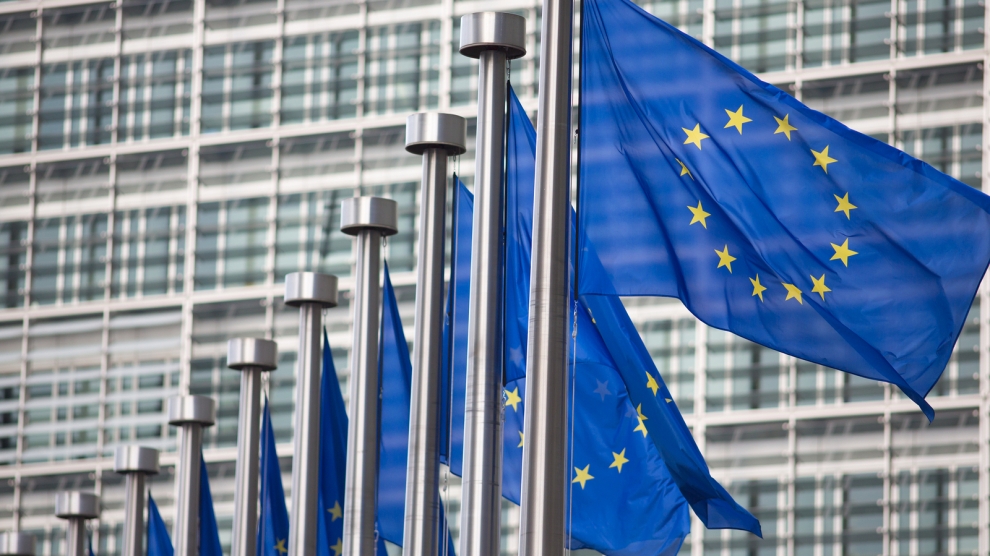
EU updates TARIC system to integrate CBAM ahead of full implementation in 2026
The European Commission has issued detailed guidance on the integration of the Carbon Border Adjustment Mechanism (CBAM) into the EU’s TARIC customs system, setting the operational foundations for the mechanism’s full entry into force on January 1, 2026.
The update introduces new certificates, revised import conditions and explanatory notes to ensure clarity for customs operators, while preparing EU systems for a shift from transitional reporting to full CBAM enforcement.
During the transitional period from October 1, 2023, to December 31, 2025, importers of CBAM goods have had to submit quarterly reports detailing embedded direct and indirect emissions, product quantities and carbon prices paid in the exporting country.
Until the end of 2025, measure type 775 appears in TARIC to indicate that imports fall under CBAM’s product scope. However, no certificates are required in this phase. Instead, footnote TM967 explains transitional reporting duties and clarifies temporary exemptions.
Mandatory certificate-based clearance for CBAM goods
From January 1, 2026, the system will change substantially. TARIC measure 775 will carry mandatory conditions that determine whether CBAM goods can legally be released into free circulation.
A set of certificates governs the admissibility of CBAM goods at customs. Certificate Y128 records the CBAM account number of the authorized declarant and is the basis for standard imports. Certificates Y134 and Y135 cover exemptions relating to special geographical territories or military-use goods, whereas Y136 verifies that electricity or hydrogen were produced in the continental shelf or exclusive economic zone of an EU member state. Certificate Y137 allows the 50-mt de minimis mass exemption to apply, while Y237 identifies goods produced in the EU and therefore excluded from CBAM obligations. Certificate Y238 is introduced for operators whose applications for CBAM declarant status are still under consideration, allowing importation until a decision is delivered. If none of these certificates apply, condition Y060 blocks the importation of CBAM goods.
Different rules for different CBAM product groups
Distinct operational rules for different CBAM product groups were also established. Cement, fertilizers, iron and steel, and aluminum are subject to both declarant-based and mass-threshold conditions, reflecting the new 50-mt annual de minimis exemption for each importer. Electricity and hydrogen are treated differently. These products cannot benefit from any mass-based exemption and are always fully subject to the CBAM requirements, meaning that only certificates related to authorized declarant status or other specific exemptions allow clearance.
New footnotes provide legal clarity and support enforcement
The updated TARIC introduces new explanatory footnotes to reinforce the customs architecture of CBAM.
Footnote CD01023 explains the conditions under which the de minimis mass exemption applies. Footnote CD01024 clarifies that CBAM does not apply to EU-origin goods, including processed goods re-imported under inward processing. Footnote CD01025 establishes temporary import arrangements for operators awaiting a decision on their declarant authorization application. In addition, TM967 is updated to clarify prohibited import situations and to reflect exemptions.


India HRC export activity remains curbed
Indian hot and cold rolled coil export activity to Europe continues to be weak amid the anti-dumping investigation and summer holidays in the EU, Kallanish learns from sources.
In Europe, no new India-origin HRC offers have been heard this week, for the third consecutive week. The last heard offers were at around $640-650/tonne cfr Antwerp, or $590-600/t fob India, for S235 grade, August/September shipment.
In August, the European Commission launched an anti-dumping probe against HRC from India, Egypt, Japan, and Vietnam. Turkey also issued dumping margins on India-origin HRC, at 11.65% for Tata Steel and at 18.26% for other mills.
Indian traders are unsure of when demand and trading activity will recover in the EU. Sources are not anticipating any EU buying to happen until the ongoing AD investigation is concluded.
Earlier, market sources had estimated activity in the EU may improve from September following the summer holiday lull.
According to the EU’s TARIC portal, India’s third-quarter EU safeguard quota balance stands at 66,926 tonnes as of 19 August, meaning 78% of the available quota is exhausted.
No new Indian-origin CRC offers to Europe were heard this week either. The last heard offers were at around $725-740/t cfr Antwerp, or $675-690/t fob India, for DC01 grade, August/September shipment, with offer prices negotiable.
In the South Asian market, no new India-origin offers to Nepal or Bangladesh were heard this week. Last week, offers to Nepal were heard at $565-575/t cfr delivered up to Raxaul Road/the Nepal border. Sources say Nepal buyers were postponing buying by 3-7 days amid falling prices. Chinese offer prices to Nepal were heard by two traders at as low as $450/t fob China.
In the African market, no new offers were heard this week, with traders noting payment issues were a challenge in the region. The most recent, limited offers, only applicable for select buyers, were reported at $580-590/t cfr Djibouti for end-August/September shipment, LC at sight, base commercial grades.
India continued to remain out of the Gulf Cooperation Council, Asia and other export markets, with no new offers heard this week.
Last week, several new trade cases were announced involving India. Malaysia launched an AD probe into Indian flat steel and some other origins. India also launched a HRC probe against Vietnam, following Vietnam’s starting of an investigation on India- and China- origin HRC.
Following the multiple AD probes, sources expect India will focus on its domestic market, and is unlikely to look towards exporting to international markets. A source adds that, even if India plans to return to the GCC market, it will be very difficult to compete since Chinese prices are very low.
Suhita Poddar India