


Navigation blocked on the Moselle: lock accident halts traffic until Spring
A cargo ship collided with a lock gate on the Moselle River, bringing river traffic to a standstill. Officials do not expect the situation to return to normal before spring.
The incident occurred at the Müden lock in Rhineland-Palatinate, Germany, when a cargo ship struck a lock gate that was not fully open. The collision caused extensive damage, ripping both leaves of the gate completely from their anchorage. The damaged gate and several associated components will need to be entirely replaced.
According to the Waterways and Shipping Authority (WSA) Moselle-Saar-Lahn, navigation on the Moselle will likely remain suspended until the end of March. Currently, about 70 vessels are stranded along the river and unable to proceed toward the Rhine.
While river traffic in Luxembourg remains unaffected, the blockade in Germany has imposed significant restrictions, forcing traffic into a single direction only.
The Moselle, a critical waterway traversing Saarland and Rhineland-Palatinate, serves as a vital artery for cargo transport. The prolonged closure is expected to have a significant impact on regional logistics and steel industries reliant on river shipping.
Authorities are working to assess and expedite the repairs, but the scale of the damage necessitates a lengthy process before operations can resume.
Source: lessentiel.lu

First long-term coil contracts struck in Europe
The traditional negotiations between big coil buyers and northwestern European mills have been rather subdued this year, but the first results have been obtained by Kallanish.
“Normally, the coil trade fair is the starting point of negotiations but, this time, the mills did not even give an offer,” says one participant who attended October’s Euroblech trade show in Hanover.
Some bids had already come in from buyers then, who were asking for a hefty €200/tonne ($212) reduction in comparison to the agreements struck one year ago. Against that, mills were later heard asking for a rollover, but that attempt has floundered. “Mills are not trying for that any more, certainly not in unison,” one well-connected observer says. “And for mills, a minus of €200 would break their necks,” another notes.
The slow motion of the talks this year became clear at thyssenkrupp’s annual results conference in November. A big share of the steelmaker’s output goes to carmakers and industries on long-term contracts. “They [the contract talks] are still outstanding,” a thyssenkrupp executive said during the 19 November conference. He made reference to “the beginning of the year”, suggesting deals would only be agreed in early 2025.
According to one observer, mills are currently gunning for a year-on-year reduction of €80/t and buyers for a €120/t cut. “ I think this might still drag for on a while,” he says.
One buyer concurs and says he only knew of one deal by hearsay. “Rumour has it that [one mill] signed for minus €90”, apparently with a player in the automotive industry. “That would not be too bad for mills, as long as the figure is not three digits,” he finds.
Another buyer claims his company has achieved exactly that in more than one deal signed, with a y-o-y reduction of €130 on average. The firm only agrees half-year contracts. Buyers that prefer full-year contracts might therefore have to make do with a lesser reduction.
Christian Koehl Germany


Eurofer, industriaALL call for Steel Summit, trade action
Eurofer and industriaALL have called on the European Commission to hold a “European Steel Summit” in January to discuss short-term emergency trade measures and a new “comprehensive EU trade initiative”.
Current EU trade defence instruments remain essential but are insufficient to tackle the spill-over of global steel overcapacity, the associations say in a joint letter to Commission President Ursula von der Leyen and new Executive Vice-President for Prosperity and Industrial Strategy Stéphane Séjourné.
Around 100 million tonnes of Chinese steel are flooding major markets at dumping prices, they continue. “However, the issue is bigger than only China”, they add, with South Asia, the Middle East, India, and Japan rerouting to the EU, depressing global steel prices, and endangering the survival of the steel sector and investments in the green transition.
“Import tariffication – taking into account WTO rules – is needed to tackle a double crisis, combining market-distorting export surges with extreme low prices,” the letter seen by Kallanish states.
The proposed summit should involve the steel social partners, Member States, and high-level officials from the EU institutions, with the aim of addressing the present crisis. It would be “instrumental” in preparing the announced “Steel and Metals Action Plan”, as well as other initiatives aiming to lower energy prices, secure the effectiveness of CBAM, access to raw materials, a Just Transition, and to boost investments, such as the Clean Industrial Deal, the associations note.
“The Summit would allow the leaders of industriAll Europe and EUROFER, trade union leaders and CEOs of EU steel companies the opportunity to provide you with a detailed update on the dramatic state of play in our sector and to exchange on recommendations contained in the social partners’ ‘Steel Action Plan’,” they conclude.
Adam Smith Poland

German Steel Summit in Berlin brings limited tangible result
At a “steel summit” held on short notice in Berlin on Monday, German chancellor Olaf Scholz pledged his government will seek to ensure competitive national energy prices and fair international trade.
The steel industry is of “geo-political importance” for the country and the industrial value-chain associated with steel, Scholz said. He suggested power grid fees be capped, and that the government will take over some of the costs for power transmission, Kallanish learns from a statement by the government. He added he will address the energy issue with the European Commission in Brussels, along with measures to guarantee fair international trade.
In a statement issued by steel association WV Stahl after the meeting, its president Gunnar Groebler warned that the suggested amount for grid cost subsidisation of €1.3 billion ($1.4 billion) will not insufficient. He also called for a European steel summit, to clearly communicate the interests of the European steel industry and to decide on protectionist measures to that effect. Eurofer issued a statement on Monday calling for the same.
Press reports prior to the meeting had suggested that Scholz proposed the state take a stake in the ailing thyssenkrupp. However, he only said he would not exclude any option, and did not reiterate that point at the summit.
The German opposition conservatives were later cited as playing down the meeting as a “show summit” to serve election campaigning. Germany’s governing coalition of Scholz’s Social Democrats (SPD), the Liberals (FDP), and the Green Party recently collapsed, with new elections to be held in February.
Participants of the summit included executives and works council chair people of thyssenkrupp Steel, Salzgitter, Stahl Holding Saar, ArcelorMittal, Georgsmarienhütte, Swiss Steel Deutschland, and of union IG Metall.
Christian Koehl Germany
Tenova, DMV to recover flared hydrogen in pipemaking
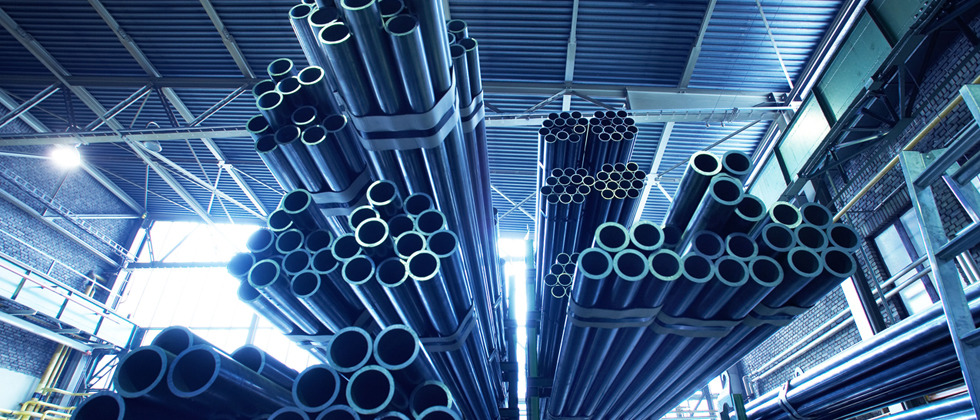
Tenova has established a consortium with DMV, along with other companies, to execute a project aimed at reducing the carbon footprint of the bright annealing process in stainless steel seamless and nickel alloy tube production.
DMV was previously known as Mannesmann Stainless Tubes and is now part of Cogne.
The so-called LIFE H2Reuse project, funded by the EU, focuses on decarbonisation via the recovery and reuse of hydrogen. Tenova initiated the project this summer, aiming to improve energy efficiency while also enhancing the efficiency of hydrogen burners, optimising resource utilisation, and decreasing operating expenses.
“This groundbreaking initiative seeks to develop innovative solutions for hydrogen recovery and reuse … In the bright annealing process, 100% hydrogen is used in high-temperature furnaces to produce high-performance tubes with superior surface quality, corrosion resistance, and durability,” Tenova says in note sent to Kallanish.
“Currently, hydrogen is flared after each production cycle, leading to significant waste. The Life H2Reuse project aims to address this issue by developing two innovative technical solutions: recovering the wasted hydrogen from the annealing process and reusing it as fuel in radiant tubes working 100% of hydrogen. This approach represents a market-first innovation, as the recovery of atmospheric gas for reuse in industrial processes is not yet commercially available,” the technology supplier adds.
Tenova will test the project on its roller hearth furnace plants to reduce their carbon footprint.
In July, pipemaker Tenaris started decarbonising its steelmaking process using hydrogen and launched a trial at its Dalmine mill in Bergamo, Italy. This was the result of a six-month partnership with Snam and Tenova. The company’s objective is to use on-site hydrogen production to power a newly developed burner by Tenova, which is fully compatible with 100% hydrogen.
Natalia Capra France

Kloeckner Kaufungen starts high-end laser cutter
Kloeckner Metals Germany’s warehouse in Kaufungen, near Kassel, has started operating a newly-installed laser-cutting machine, Kallanish learns from the company.
With a laser power of 30kW and a working space for parts of up to 2.5 x 6 metres, the machine figures as one of the biggest and most powerful of its kind, Kloeckner claims. It opens “an all-new dimension of highly efficient steel and metals processing,” it says in a press release. The company has long been emphasising its shift from mere distribution to value-added services.
The new installation is therefore “a stepping stone on our way to be a technology partner for our customers for high-value processing and services,” says Felix Schmitz, chief executive of Kloeckner Metals Germany.
The new machine not only cuts sheet and plate precisely along a line, but also allows for variation in depth and thickness. It replaces an existing machine with 15kW power.
Christian Koehl Germany

Window closing for green project financing: Mission Possible Partnership
The window for financing green transition projects is closing, posing the risk of construction delays and operational deadlines being missed, Kallanish learns from the recent Mission Possible Partnership (MPP) update of its global project tracker mapping.
These projects need to reach final investment decisions (FID) for commercial scale investments within the next two years, so that construction can start during 2025-2026 and be operational by 2030 to meet set emission targets.
“We have a two-year window of opportunity remaining to start construction of green production facilities for them to be up and running by 2030. There is no time to lose,” says Faustine Delasalle, chief executive of MPP.
For steel, the 2030 target is 70 near-zero emission primary steel plants. Currently only 9% of these have reached FID, according to the tracker, while 52 have been announced, leaving a pipeline gap of 12. During April to October, just five new projects were announced in the sector while one was cancelled.
This is well below the FIDs in the aluminium sector, which has the same target of 70 projects, with seven (57%) of the announced pipeline projects having passed FID, 33 plants in operation, and a pipeline gap of 17. However, it notes much of this progress is historic, with the majority of operating plants already running on hydropower for many years.
Only one-fifth of the 705 green industrial plants needed by 2030 across the heavy industry and transportation sectors are financed. Investment decisions for the planned projects are worth $1 trillion, with an estimated $155.6 billion investment needed to close the gap for steel.
The report notes policy interventions to embed green demand are key to increase momentum and convert these plans into financed plants. Stimulating transactions from buyers can unlock this supply and deliver dramatic emissions reductions.
“We have the projects to decarbonise our economies, but we’ve reached a stalemate between producers and buyers that cannot be broken, while buyers are not incentivised to purchase green products that still compete against cheaper, fossil fuel-derived products,” Delasalle adds.
The report also notes embodied carbon limits are set to trigger demand from industries such as construction, automotive and packaging, and are activating upstream investment.
On a regional basis, it sees Africa as a growing player in green steel with major decarbonisation projects emerging. Libya recently announced its first large-scale DRI steel project and Namibia has its first green iron kiln.
However, conventional fossil-based facilities are expanding in regions like Asia, where coal-based steel projects are on the rise. India leads this trend with high-emission steel production projects.
China leads in deployment of both high emissions and low-emissions steel production facilities globally, accounting for 10% of the total announced project pipeline across all industry sectors.
In September, China announced the aluminium, cement and steel industries will be added to its national carbon emissions trading market by year-end, with looming carbon tariffs on imported goods levied by Europe’s CBAM likely an influence on the acceleration of heavy industrial sectors in the country.
For steel, the first large-scale carbon capture project for blast furnace steelmaking is currently under development by Baotou Steel in China with a capacity of 0.5m t/y of CO2.
Carrie Bone UK

Low demand pushes European stainless steel prices down
Fastmarkets’ monthly price assessment for stainless steel, cold-rolled sheet, 2mm, grade 304, transaction domestic, delivered North Europe was €2,550-2,600 ($2,694-2,747) per tonne on Friday, down from €2,600-2,650 on November 1.
“I’ve never seen the market so slow,” one trader told Fastmarkets. “Usually, December is slow because people don’t want to buy material right before the end of the year, but I certainly didn’t expect liquidity to be so low.”
A second market source said, “I wanted to sell [material], but I couldn’t find a buyer. I hope demand will pick up in January.”
A third source said that the chances of demand rising in January 2025 are “considerable, but nothing is guaranteed.”
“Traditionally, January is a very active month compared with December, but given the current state of the market, we might be surprised,” the third source said.
The alloy surcharge for grade-304 material also fell month on month.
Fastmarkets’ monthly assessment for stainless steel, cold-rolled sheet, 2mm, grade 304 alloy surcharge, domestic, Europe was €2,015-2,064 per tonne on December 6, down by €50-62 per tonne from €2,077-2,114 per tonne on November 1.
On October 4, the monthly assessment was €1,963-2,023 per tonne, down by €28-36 from €1,999-2,051 per tonne on September 6.
