


European HRC prices hold at pre-holidays levels; mills report improved order books
Tradeable values were reported by buyers and sellers at €560-590 ($580-611) per tonne ex-works on Tuesday, depending on a supplier and lead times.
“There are no major changes in the market since the end of last year,” a buyer in Germany said.
Mill sources said that a pick-up in trading before the holiday closures has allowed them to improve their order books.
“A lot of customers booked [HRC] in December to secure lower prices,” a second buyer in Germany said.
“The market at least is still pretty dormant,” a mills source in Northern Europe said. “But booking levels are ok here; almost sold out for the first quarter[-delivery] coil,” the second buyer added.
But higher offers of €610-630 per tonne ex-works were not yet sealed in deals and most buyer sources deemed such levels unworkable.
“Too early to say if higher offers will be accepted, but so far market fundamentals are not favorable,” a steel service center source in Northern Europe said.
As a result, Fastmarkets calculated its daily steel hot-rolled coil index domestic, exw Northern Europe at €565.83 per tonne on Tuesday, unchanged day on day.
The index was also by €0.83 per tonne week on week and by €1.66 per tonne month on month.
Fastmarkets calculated its corresponding daily steel hot-rolled coil index domestic, exw Italy at €562.50 per tonne on Tuesday, unchanged compared with the previous calculation on Monday.
The index was also stable week on week, but up by €2.08 per tonne month on month.
The Italian market was also quiet on Tuesday, with no major changes reported.
“The market has just restarted after holidays; we expect more clarity [on prices] in the next days,” a third buyer source said.
Tradable values were estimated by buyers at €560-570 per tonne ex-works, depending on the supplier.
The market for imported coil was also quiet.
Two sources reported offers from India for March-shipment HRC at €540-550 per tonne CFR.
One buyer reported an offer from Turkey at €560 per tonne CFR, including the anti-dumping duty.
Buyers estimated tradeable values for imports at €520-530 per tonne CFR. No such offers, however, were reported on Tuesday.

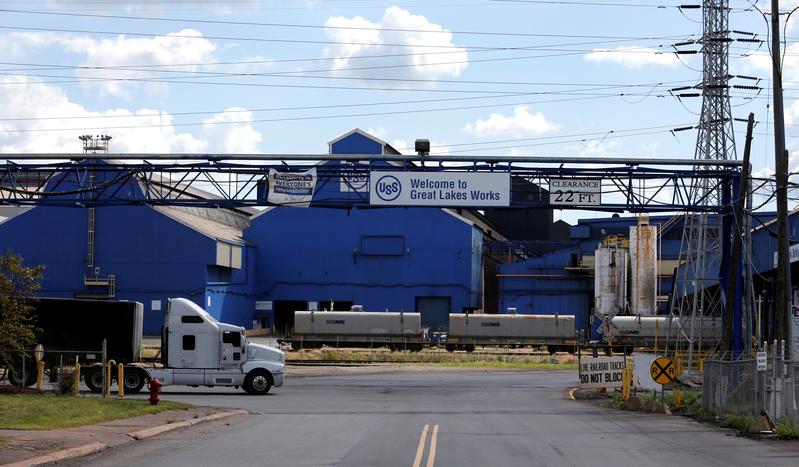
Nippon Steel’s bid to buy US Steel unlikely to be “resuscitated”: Cleveland-Cliffs CEO
“At the moment, the deal has been legally blocked, and I don’t see how this deal can be resuscitated,” the CEO said in an interview with Fox Business on Tuesday January 7.
President Biden issued an order on Friday January 3 prohibiting Nippon Steel’s acquisition of US Steel following lengthy reviews by the Committee for Foreign Investment in the United States (CFIUS), saying it would “place one of America’s largest steel producers under foreign control and create risk for our national security and our critical supply chains.”
When asked if Cleveland-Cliffs is now prepared to make a new bid for US Steel, Gonçalves said, “No, I’m not.”
Gonçalves reiterated that his original bid for US Steel, if successful, would not have been anti-competitive.
“There are several other [competing US steelmakers]. Nucor is bigger than Cliffs. Steel Dynamics is almost the same size as Cliffs. A lot of [imported] steel comes into this country. [And] aluminum can compete against steel. [But all that] doesn’t mean I need to buy US Steel,” the CEO said.
In August 2023, Cleveland-Cliffs bid an initial $35 per share for US Steel, or about $7.3 billion. Goncalves said that the bid was raised over the auction period to about $54 per share, or slightly lower than Nippon Steel’s $55-per-share bid, but it was still rejected.
Cleveland-Cliffs’ final bid would be close to $14.7 billion, an industry analyst told Fastmarkets. Nippon Steel’s bid was around $14.9 billion.
This might be the first public disclosure that Cleveland-Cliffs was the unknown bidder who offered $54 per share to buy US Steel in 2023, the analyst said.
US Steel and Nippon Steel did not immediately respond to a request for comment.
Nippon Steel and US Steel also separately sued Goncalves and United Steelworkers president David McCall, alleging racketeering and monopolistic conspiracies in trying to block the deal.
“I’ve never had so much time to prepare for a lawsuit, as I knew that was coming,” Goncalves said.
The CEO said three 90-day reviews by CFIUS had failed to produce a consensus on whether it posed a national security threat, leaving the matter up to President Biden to decide.
Goncalves also said that the prospects for US Steel and all other steelmakers are set to improve markedly during the Trump administration in ways that will make it even more difficult for Nippon Steel or any other potential foreign company to acquire US steelmakers.
“The situation has changed. The backdrop of the market changed. We have a new President coming to town, and tariffs are coming,” Goncalves said in the interview.
The CEO added that Senator Marco Rubio, nominated to be Secretary of State in the Trump administration, is a fierce critic of Nippon Steel’s bid for US Steel and foreign ownership of critical US industries.
Gonçalves also faulted Japan and China for creating “overcapacity” in steel production by producing more than they can consume and, thus, being motivated to export the excess production.
Separately, Cleveland-Cliffs’ $2.5 billion bid last July to acquire Canadian steelmaker Stelco was approved by shareholders and cleared antitrust review in October.

Jindal Steel acquires Czech Republic’s Vítkovice Steel
The acquisition received the green light from the Czech Republic’s Office for the Protection of Competition (ÚOHS) on December 20, 2024, with the change of ownership effective as of January 1 2025, according to documents seen by Fastmarkets.
“We are convinced that this will strengthen the company and the Czech steel industry. The new industrial owner will bring stabilization to the company and, above all, development in the form of investments in production technologies, sharing foreign know-how and moving towards ecologically produced low-emissions steel,” Radek Strouhal, CEO of Vitkovice steel, said in a press release.
Located in Ostrava, Vitkovice is Czech Republic’s sole producer of heavy steel plate, with capacity to produce 800,000 tonnes per year of the material. The company has operated as a re-roller since end-2015, procuring slabs from third parties in Russia, Asia, and the European Union.
Semis supply
Vitkovice has been relying mainly on imports of Russia-origin slabs, sources said, but it plans to procure more semis from its new owner moving forward.
“We plan to get slabs from Jindal in the next years,” a spokesperson for Vitkovice told Fastmarkets, adding that the facility currently has other suppliers.
The new owner has no immediate plans to install a new electric-arc furnace (EAF) and resuming internal slab production, Fastmarkets understands.
Vítkovice is Jindal Group’s first European acquisition. The parties had been negotiating since the spring of 2024, Fastmarkets reported.
Jindal International Group plans to invest up to €150 million ($155.4 million) in the development of the Ostrava facility in the coming years, mainly in the expansion of its capacity and the production of products with higher added value.
Vitkovic’s previous ownership turmoil
Vitkovice was owned by Russian company Evraz Plc until 2014.
Evraz Plc sold its Evraz Vitkovice Steel AS subsidiary to a group of Cyprus-registered private investment companies for $89 million in 2014.
The ownership of the mill became uncertain after that. Several sources told Fastmarkets at the time that the Cypriot companies were affiliated with Russia, notably VEB bank, and probably also Evraz.
In May 2022, the Czech Republic’s Financial Analytical Office blocked the assets of Vitkovice Steel after having recognized that, behind the Cypriot funds owning Vitkovice Steel, there were Russian owners.
This, however, was denied by the company.
“The company is not owned by Russian entities, it is owned by five multinational investment funds based in Cyprus and owned by people from the countries of the former Soviet Union, but not from Russia,” the Vitkovice’s spokesperson told Fastmarkets at the time.
The suspected ownership link to Russia, which the company repeatedly denied, was not confirmed, which led Czech authorities to close the investigation in July 2024, allowing the negotiations with Jindal to move forward.

Tata Steel UK starts decommissioning of equipment at Port Talbot
Tata Steel UK, a subsidiary of India-based steelmaker Tata Steel Limited, has announced that it has started to dismantle its Port Talbot plant, including the converters and supporting structures, in line with the transitioning of the plant to electric arc furnace-based steel production.
Some of the equipment is being renovated for use in the new production process.
The company is also investing in two new ladle metallurgy furnaces to enhance the quality of finished steel. These furnaces will enable the company to meet the most demanding product specifications and customer requirements, ensuring its competitiveness going forward.
In October last year, the company ordered an electric arc furnace (EAF) and other state-of-the art steelmaking equipment from Italy-based Tenova, a Techint Group company specialized in innovative solutions for the metals and mining industries, for the decarbonization of its Port Talbot plant, as SteelOrbis previously reported.


Goldman Sachs expects global GDP growth of 2.7 percent in 2025
According to media reports, the US-based investment banking company Goldman Sachs has outlined seven macroeconomic predictions for 2025.
Looking at these predictions, the company forecasts global real GDP growth of 2.7 percent for 2025, driven by loosening financial conditions. Goldman Sachs expects US GDP growth of 2.4 percent in 2025 with robust income growth and financial easing, while GDP growth in the euro area is projected to be at 0.8 percent, reflecting the pressure of trade policy uncertainties and ongoing structural challenges in the manufacturing industry amid high energy prices and pressure from China’s exports. On the other hand, the bank predicts GDP growth in China will decrease to 4.5 percent in 2025 as policy easing measures will not be able to balance weak domestic consumption, and also given the challenges faced by the real estate industry and the impact of higher US tariffs.
Meanwhile, Goldman Sachs expects the US Federal Reserve to implement three interest rate cuts in 2025, in March, June and September, bringing the terminal rate to 3.5-3.75 percent, while the European Central Bank is expected to bring the policy rate to 1.75 percent by July 2025. However, there are potential downside risks: the policy rate could face deeper and faster cuts if growth and inflation weaken further in the EU.
Lastly, the bank advises investors to closely monitor US policy changes and geopolitical developments such as the situation in the Middle East, the war between Russia and Ukraine and US-China relations.

UK government launches industry-backed steel council
The UK government has launched a steel council as part of its new strategy to support the struggling sector, Kallanish learns.
The council will be led by business secretary Jonathan Reynolds and chair of the Materials Processing Institute Jon Bolton. Its members include steel producers British Steel, Tata Steel, Liberty Steel, Celsa Steel and Marcegaglia. Also on board are the British Metals Recycling Association, and trade unions Community and GMB, in addition to other industry experts and ministers from the devolved nations.
The government says this demonstrates its partnership with the sector to revitalise UK steelmaking and secure economic growth.
The steel council will advise on the upcoming steel strategy, enable collaboration across the sector and its supply chains, and identify how to distribute the £2.5 billion ($3.13 billion) National Wealth Fund.
Jonathan Reynolds says: “The industry and steel communities have had enough of lurching from crisis to crisis – this government will take the action needed to place steel on a secure footing for the long term. Steel was a neglected industry in this country under the previous government.”
“A vibrant steel sector is crucial for economic growth and our national security, and by reflecting views from industry across the UK as we bring forward our Steel Strategy we’re delivering on the Plan for Change and boosting economic stability,” he adds.
Industry association UK Steel, which is also a member of the council, welcomed the move saying that “hope is on the horizon”. The steel strategy will serve as the blueprint for a revitalised and competitive steel industry in the UK, it adds.
It notes this requires competitive electricity prices, bold trade policies, addressing global overcapacity and strategic public procurement policies. Also needed is a robust CBAM, new policies on scrap and raw materials and investment in innovation.
Gareth Stace, director general of UK Steel, says: “The establishment of the steel council marks a defining moment for the future of steelmaking in Britain. The council represents a crucial step towards creating a comprehensive government steel strategy – one that lays the foundations for a sustainable and resilient industry.”
“This strategy is a once-in-a-generation opportunity to foster a competitive business environment that encourages long-term investment and ensures steelmaking remains at the heart of the UK economy,” he adds.
Carrie Bone UK

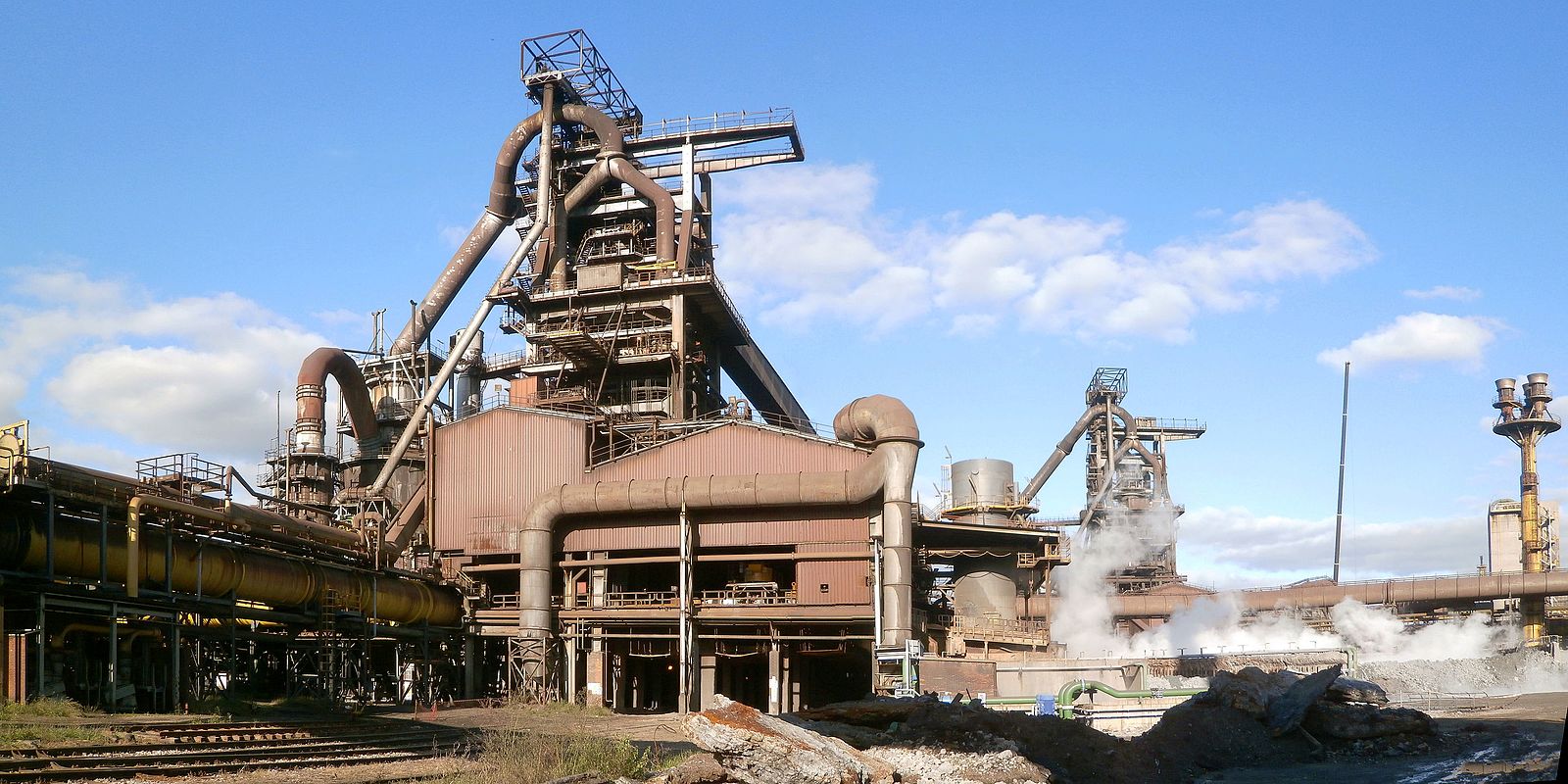
ArcelorMittal resumes Gijón steelworks, longs production
ArcelorMittal resumed operations at its Spanish steel mills on Tuesday, Kallanish notes. The facilities, including the Gijón steelworks and long steel production units, were temporarily halted in mid-December due to weak demand and increased competition from low-priced imports.
“All facilities are now operational,” an ArcelorMittal spokesperson confirms. No specific production or capacity utilisation rates have been disclosed. “We are continuously assessing market conditions and adapting to the ongoing challenges posed by low demand,” the spokesperson adds.
The temporary closure primarily affected the wire rod plant and rail mill division.
Last week, ArcelorMittal reached an agreement with Spain’s largest trade unions to implement a new Temporary Employment Regulation Scheme (ERTE) for 2025. This measure is designed to provide flexibility in addressing production adjustments or temporary stoppages, ensuring stability amid persistent uncertainty in steel demand.
Todor Kirkov Bulgaria
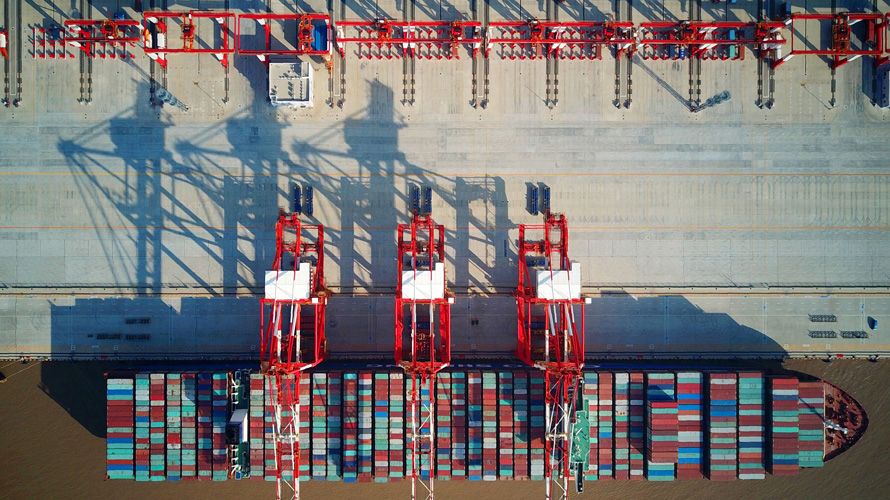
Vietnam, Japan, Taiwan quickly exhaust EU HRC quota
Vietnam, Japan, and Taiwan face immediate EU tariff-rate quota (TRQ) pressure as hot rolled coil orders from those origins are already oversubscribed for the first quarter by 9%, 56%, and 13%, respectively, as of 6 January.
This is against new EU allocations of 138,766 tonnes each for Q1, Kallanish notes from the EU customs portal.
Vietnam has allocated 150,920t out of a TRQ of 138,766t, exceeding its quota by 12,154t (9%).
Japan is showing significant oversubscription, overshooting the quota by 56%, with 216,131t awaiting allocation – exceeding its 138,766t TRQ by 77,365t.
Taiwan has allocated 157,444t, exceeding its 138,766t TRQ by 18,678t (13%).
Egypt, with a TRQ of 138,766t in the “other countries” category, has 86,617t of HRC submitted for allocation, leaving 52,149t or 38% of its quota remaining.
Meanwhile, Australia, Switzerland, the United States, Canada, and Libya retain 100% of their allocated quotas for Q1.
As a result, the “other countries” category shows rapid usage, with 611,112t, or 49% of the allocated Q1 quota awaiting allocation.
Countries with larger quotas exhibit minimal utilisation rates, with availability ranging between 87-99%. Collectively, 46,236t have been submitted for clearance, with South Korea accounting for the largest volume at 24,776t.
Overall, a total of 657,348t are pending allocation.
“A clear picture will be only shown by 10 January. It seems not all EU customs offices are working at the same speed for import clearing,” one trader notes.
| Origin | Quota 01.01 – 31.03.2025 | Awaiting allocation | Available TRQ | Avaliable TRQ % |
| Russia | – | – | – | – |
| Türkiye | 464,844 | 9,383 | 455,461 | 98 |
| India | 295,145 | 6,029 | 289,115 | 98 |
| South Korea | 184,310 | 24,776 | 159,534 | 87 |
| United Kingdom | 154,182 | 1,866 | 152,316 | 99 |
| Serbia | 163,621 | 4,183 | 159,438 | 97 |
| Other countries, inc | ||||
| Egypt | 138,766 | 86,617 | 52,149 | 38 |
| Vietnam | 138,766 | 150,920 | -2,154 | -9 |
| Japan | 138,766 | 216,131 | -77,365 | -56 |
| Taiwan | 138,766 | 157,444 | -18,678 | -13 |
| Australia | 138,766 | – | 138,766 | 100 |
| Switzerland | 138,766 | – | 138,766 | 100 |
| United States | 138,766 | – | 138,766 | 100 |
| Libya | 138,766 | – | 138,766 | 100 |
| Canada | 138,766 | – | 138,766 | 100 |
| Total other countries | 1,248,894 | 611,112 | 637,782 | 51 |
| Total | 2,510,995 | 657,348 | 1,853,647 | 74 |
Source: EU TARIC, as of 7 January. Calculated by Kallanish
Elina Virchenko UAE