


Stalprofil increases deliveries, foresees 2026 market recovery
Domestic demand boosted Polish steel distributor and gas pipeline contractor Stalprofil’s first-half-of-2025 deliveries, but increased costs ate into profit.
The firm’s consolidated revenue surged 60% on-year in H1 to PLN 1.18 billion ($314.7 million) but net profit slumped 43% to PLN 7m due to higher cost of goods sold and cost of materials. Domestic sales share in revenue rose 5 percentage points to 95.1% and exports share halved to 4.9%.
Exports were impacted by weak demand and falling steel prices in Europe, as well as the strong zloty against the euro.
“The announced expansion of infrastructure projects in the second half of 2025 should increase demand for steel, especially bars, pipes, sheets, and sections. However, only in 2026 will the steel market be able to count on a more noticeable demand impulse,” Stalprofil notes in its latest earnings report seen by Kallanish.
Steel products sales rose 25% on-year in H1 to 139,703 tonnes, with steel structures sales flat at 1,080t.
Pipe insulation sales, falling under the firm’s gas transmission network infrastructure segment, soared 180% to 1.18 million square metres. During this period, the group began implementing contracts signed in 2024 for the construction of gas pipelines.
Polish pipemaker Ferrum and ArcelorMittal were the group’s largest suppliers, while Ferrum was also its largest customer, followed by gas network operator Gaz-System.
Adam Smith Austria


Czech Republic approves of IROMET SICAV’s acquisition of Liberty Ostrava Assets
The Office for the Protection of Competition in the Czech Republic has issued its provisional approval of IROMET SICAV’s acquisition of selected assets from competitor Liberty Ostrava.
The decision, which remains subject to final confirmation, concluded that the merger would not significantly distort competition in the domestic market.
Under the agreement, IROMET SICAV will acquire several strategic assets from Liberty Ostrava, including a pipe mill, a flat products rolling mill, a long products rolling mill and a coking plant.
These facilities form part of Liberty Ostrava’s broader portfolio in steel production and downstream processing.
IROMET SICAV is part of a business group headed by PCTT LIMIT s.r.o. The group operates mainly through TENDON Reality s.r.o. and PCTT Reality s.r.o. in the field of real estate, apartments, and commercial rentals. Through VCL Group, AS, and its subsidiaries, the group provides engineering services and supplies for various industrial sectors.
Liberty Ostrava is a major Czech steel producer, specializing in pig iron and cast iron castings; profiles, beams, and steel bars; concrete reinforcement and mining steel products; hot rolled flat steel products; rolled wire and seamless small-diameter steel pipes and steel road barriers and commodity pipes.


Roba Metals becomes a member of EUROMETAL
Founded in 1937, Roba Metals has built a strong reputation in the supply and processing of steel, stainless steel, aluminium and non-ferrous materials as well as the recycling of aluminium.
With service centers in Belgium and The Netherlands, the 100% family-owned company delivers coils, sheets and slit strips all over Europe to a broad range of customers in a.o. the construction, manufacturing, general sheet processing and automotive industry.
What sets Roba apart is its active role throughout the entire supply chain – from sourcing and melting to processing and logistics. This integrated approach enables consistent management of availability, quality and sustainability. To support customers in their transition to low-carbon manufacturing, the company also offers a range of CO2-reduced products.
Roba’s service centers are equipped with state-of-the-art machinery, including cut-to-length lines, slitting lines, recoilers and grinding lines. Combined with the expertise of a dedicated team, it ensures a reliable and highly flexible service.
By investing in quality, continuity and long-term relations, Roba aims to be a trusted partner in metal.
Discover more: robametals.com

LESS awards first European green steel certifications
The first certifications for low-carbon steel awarded under the Low Emissions Steel Standard (LESS) were issued to European steelmakers on 17 September, representing welcome progress for the EU’s clean steel transition.
LESS – now under the remit of Brussels-based non-profit LESS AISBL – launched in 2024 and was originally developed by German Steel Association WV Stahl, designed in concert with German steel stakeholders and government authorities.
European steel companies Georgsmarienhütte, thyssenkrupp Steel Europe, Salzgitter Flachstahl, Peiner Träger, Salzgitter Mannesmann Grobblech, and Ilsenburger Grobblech are now authorised to label certified products with the LESS label (see table below) giving buyers greater certainty that relevant low-carbon steel purchases represent actual emissions reductions.
Sweden’s greenfield low-carbon steelmaker Stegra – currently constructing its hydrogen-fed direct-reduced iron to electric-arc furnace steel plant – joined LESS earlier in September, preceded by ArcelorMittal’s individual EU entities and Tata Steel Netherlands during the summer. LESS now claims to represent approximately 45% of European steel production.
LESS is considered by many in the market to be the leading candidate for establishment as a regulatory standardisation or norm for the EU’s decarbonised steel productions, backed by independent verification criteria. The European Commission is to propose an official definition of ‘green steel’ before the year’s end as per the European Steel and Metals Action Plan, with voluntary low-carbon labels for steel products to be incorporated into circular economy and public procurement guidance or mandates.
European Commission President Ursula von der Leyen confirmed that “Made in Europe” labelling criteria would also be introduced into European public procurement policy at a high-level meeting of German industrial leaders 18 September, potentially further strengthening demand for the EU’s low-carbon products if both domestic and sustainability boundaries are introduced into public procurement’s 14% share of EU GDP.
A regulatory green steel definition is important as a communicative mechanism to lead markets, ensuring that purchases of green steel are recognised in decarbonisation metrics and commitments.
The LESS standard operates using a ‘sliding scale’ approach across six categories (optimally “near-zero”, then Low Emissions: A-E) which aims to define green steel in a practical sense, giving greater weight to carbon reductions the lesser the constituent share of steel scrap. This is due to the inherent insufficiency in European – and global – scrap supply, with scrap only available to cover 45% of projected demand by 2050 under best case scenarios.
By accounting for the scrap share in a steel products make-up, Europe’s blast furnace-dominant steel industry is incentivised to make real emissions reductions and support the development of alternate low-carbon iron inputs. The most visible route for green iron production as a steelmaking input is hydrogen-based direct-reduced iron (DRI), adopted into many of EU steelmakers’ decarbonisation roadmaps for use in scheduled electric-arc furnace (EAF) renovation projects.
LESS does not discriminate by production route – measuring emissions at the hot-rolling stage – and so is understandably favoured by blast furnace producers, who celebrate the potential to draw revenue from and make visible their decarbonisation initiatives during their progression rather than postponing the realisation of green premia to their conclusion.
Scrap recyclers, and some electric-arc furnace producers are less enthused however, seeing incorporation of sliding scale mechanisms as threatening to their potential to secure low-carbon market share and associated with talk of scrap export controls, preferring carbon accounting on absolute metrics, especially as they already find it difficult to manifest a premium for material that has had a comparatively reduced carbon footprint historically.
However, the award of a ‘Low Emission: A’ rating to Peiner Träger, when producing via electric-arc furnace with green electricity should demonstrate that electric-arc producers are still able to achieve the highest low-carbon ratings in participation with the LESS framework.
LESS certifications, September issue
| Steelmaker | Product Group / Specific Steel Product | Certification Body | Process Route | Classification System | LESS Classification | Scrap Share | Validity Period |
|---|---|---|---|---|---|---|---|
| Georgsmarienhütte GmbH | Entire production (batch-specific basis) | DNV Business Assurance Germany GmbH | EAF-HR | Quality Steel | Low Emission: B, C, D | Batch-specific, random sample verification | Until 11.09.2026 |
| Ilsenburger Grobblech GmbH | Heavy plate, electric steel slabs, grid electricity | TÜV NORD CERT GmbH | EAF-HR | Quality Steel | Low Emission: E | 100% | Until 11.09.2026 |
| Heavy plate, electric steel slabs, green electricity | TÜV NORD CERT GmbH | EAF-HR | Quality Steel | Low Emission: B | 100% | Until 11.09.2026 | |
| Heavy plate, slabs from the blast furnace route | TÜV NORD CERT GmbH | BF-BOF-HR | Quality Steel | Low Emission: E | 20% | Until 11.09.2026 | |
| Peiner Träger GmbH | Beam and section steel, grid electricity | TÜV NORD CERT GmbH | EAF-HR | Structural and Reinforcing Steel | Low Emission: E | 100% | Until 11.09.2026 |
| Beam and section steel, 50% green electricity / 50% grid electricity | TÜV NORD CERT GmbH | EAF-HR | Structural and Reinforcing Steel | Low Emission: C | 100% | Until 11.09.2026 | |
| Beam and section steel, green electricity | TÜV NORD CERT GmbH | EAF-HR | Structural and Reinforcing Steel | Low Emission: A | 100% | Until 11.09.2026 | |
| Salzgitter Flachstahl GmbH | Hot strip, unpickled, blast furnace route | TÜV NORD CERT GmbH | BF-BOF-HR | Structural and Reinforcing Steel | Low Emission: E | 20% | Until 11.09.2026 |
| Hot strip, unpickled, electric arc furnace route, grid electricity | TÜV NORD CERT GmbH | EAF-HR | Structural and Reinforcing Steel | Low Emission: E | 100% | Until 11.09.2026 | |
| Hot strip, unpickled, electric furnace route, green electricity | TÜV NORD CERT GmbH | EAF-HR | Structural and Reinforcing Steel | Low Emission: B | 100% | Until 11.09.2026 | |
| Salzgitter Mannesmann Grobblech GmbH | Heavy plate, electric steel slabs, grid electricity | TÜV NORD CERT GmbH | EAF-HR | Quality Steel | Low Emission: E | 100% | Until 11.09.2026 |
| Heavy plate, electric steel slabs, green electricity (SALCOS®) | TÜV NORD CERT GmbH | EAF-HR | Quality Steel | Low Emission: B | 100% | Until 11.09.2026 | |
| Heavy plate, slabs from the blast furnace route | TÜV NORD CERT GmbH | BF-BOF-HR | Quality Steel | Low Emission: E | 20% | Until 11.09.2026 | |
| thyssenkrupp Steel Europe AG | Entire production (process route specific) | TÜV NORD CERT GmbH | BF-BOF-HR | Quality Steel | Low Emission: D | 13% | Until 11.09.2026 |
Benjamin Steven Journalist, Steel


EU starts anti-dumping case into CRC from 4 countries
The European Commission has initiated an anti-dumping investigation into imports of cold-rolled flat steel originating from India, Japan, Turkey, Vietnam and Taiwan, according to an entry in the Official Journal of the European Union dated 18 September.
The Commission also intends to instruct customs to start registration of the steel under investigation to allow retroactive introduction of definitive duties.
Earlier this month, McCloskey reported that the case into cold-rolled coil from India, Japan Vietnam and Taiwan, China as well as from Turkey was forthcoming.
The probe was started following a complaint lodged by the European steel association Eurofer on behalf of EU steelmakers on 4 August this year. Eurofer provided evidence that the imports in question had increased overall in absolute terms and in terms of market share and that the material sold harmed the EU steel industry.
The complainant also alleged that the raw materials in used in cold-rolled steel exports are subject to export duties and restrictions in the countries of origin, and since they account for more than 17% of total costs this indicated a market distortion. The raw materials in question are iron ore and steel scrap in India, and the same raw materials and coal in Vietnam.
The products subject to the investigation are currently classified under CN codes ex 7209 15 00, 7209 16 90, 7209 17 90, 7209 18 91, ex 7209 18 99, ex 7209 25 00, 7209 26 90, 7209 27 90, 7209 28 90, 7211 23 30, ex 7211 23 80, ex 7211 29 00, 7225 50 80, 7226 92 00 (TARIC codes 7209 15 00 90, 7209 18 99 90, 7209 25 00 90, 7211 23 80 19, 7211 23 80 95, 7211 23 80 99, 7211 29 00 19, 7211 29 00 99).
The EU authorities will make a definitive decision in the case no later than 14 months after the case was opened, and the provisional measures will be imposed no later than within seven months.
Maria Tanatar Associate Director, Steel and Green Steel
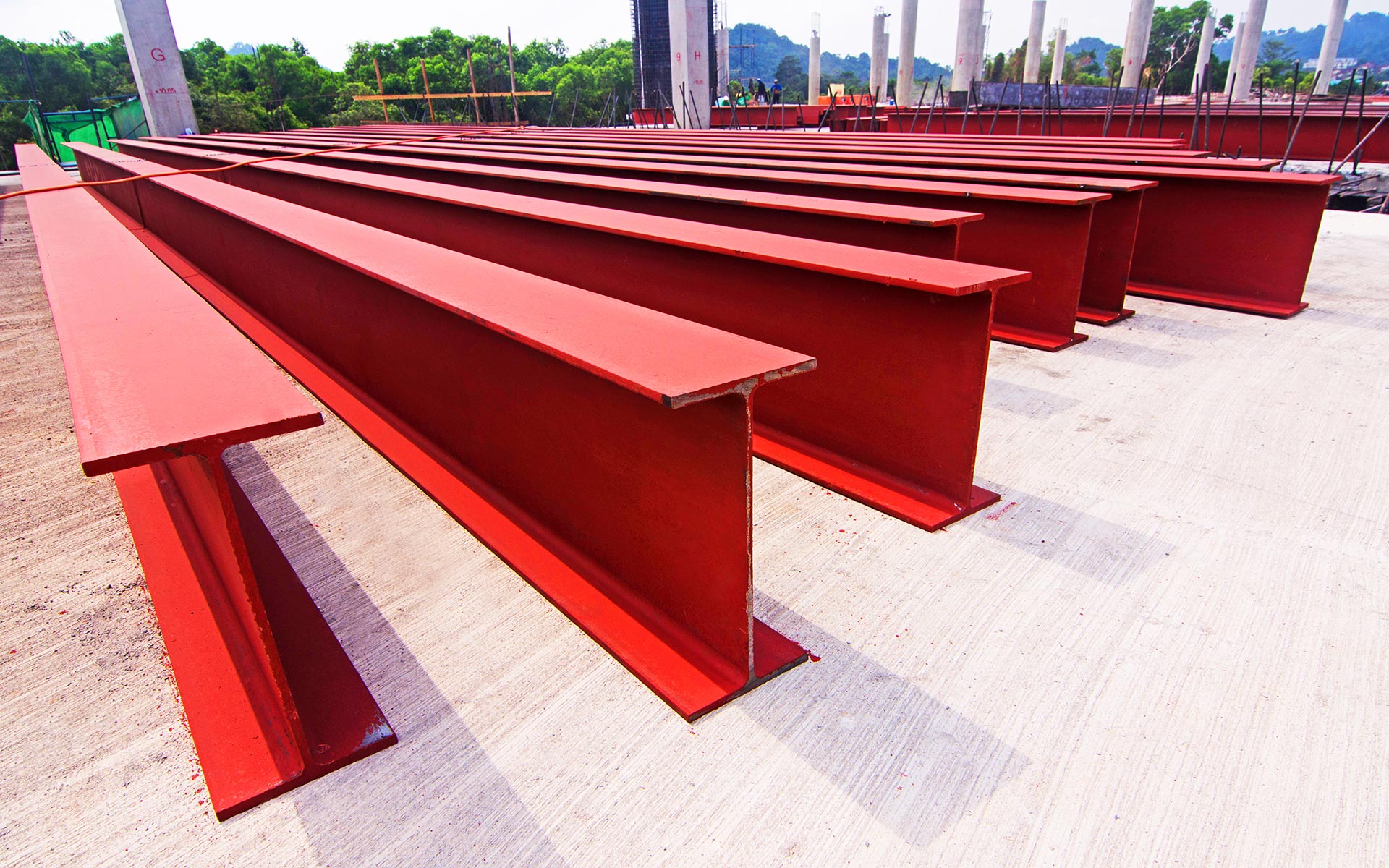
Steel beam prices in Europe fall on weak consumption, market cautious
Fastmarkets’ monthly price assessment for steel beams, domestic, delivered Northern Europe, was €730-760 ($865-900) per tonne on Wednesday, falling by €20 per tonne from €750-780 per tonne a month earlier.
Similarly, Fastmarkets’ monthly price assessment for steel beams, domestic, delivered Southern Europe, was €730-760 per tonne on Wednesday, down by €20 per tonne month on month from €750-780 per tonne.
Producers have been targeting higher market prices, trade sources said, but there was scepticism around the achievability of higher offers amid such weak demand.
Poor end-user consumption in the region’s construction sector has continued to weigh on appetite for bookings, and regulatory uncertainty was contributing to a cautious market mood, sources told Fastmarkets.
And, according to European steel industry association Eurofer, the outlook will remain bleak, with apparent demand expected to decline by 0.2% to 128 million tonnes this year.
Still, the association’s forecast was a little less pessimistic than previous expectations of a 0.9% decline in apparent consumption, voiced in June.
While Eurofer forecast a modest output increase in construction activity this year overall, significant growth in that sector was projected to return only in 2026.
Meanwhile, scrap prices in Turkey’s bellwether market fell in the month.
Fastmarkets’ calculation of its daily index for steel scrap, HMS 1&2 (80:20 mix), North Europe origin, cfr Turkey, was $329.10 per tonne on Wednesday, down by $11.56 per tonne compared with $340.66 per tonne on August 15.


European steel HRC market remains quiet, demand subdued
Workable prices for domestic HRC in Northern Europe were estimated in the range of €580-585 ($687-693) per tonne ex-works, but no sales were heard during the day.
Fastmarkets’ calculation of the daily steel hot-rolled coil index, domestic, exw Northern Europe, was €581.25 ($688.49) per tonne on Wednesday, down by €3.75 per tonne from €585.00 per tonne on September 16.
The Northern European index was down by €1.88 per tonne week on week but up by €12.08 per tonne month on month.
Trading was still limited, with buyers cautiously waiting for more clarity on the EU’s Carbon Border Adjustment Mechanism (CBAM) and for demand to pick up momentum.
According to one market source, mills were “still pushing for higher offers,” but the market will start to show “more movement” once regulations become clearer.
Prices for overseas coil also increased over the past week.
Fastmarkets’ weekly price assessment for steel hot-rolled coil, import, cfr main port Northern Europe, was €500-520 per tonne on Wednesday, narrowing upward from €490-520 per tonne the previous week.
In the Italian market, hot-rolled coil offers were heard around €570-580 per tonne ex-works, but no trades at those levels have been reported.
Buyer estimates of tradable prices were in the range of €550-570 per tonne ex-works.
Fastmarkets’ daily steel hot-rolled coil index, domestic, exw Italy, was €553.33 per tonne on Wednesday, down by €2.92 per tonne from €556.25 per tonne on Tuesday.
The Italian index was up by €4.83 per tonne week on week and by €15.83 per tonne month on month.
Meanwhile, offers of overseas HRC increased over the past week.
Offers from Turkey were heard around €530-540 per tonne CFR, including the EU anti-dumping duty, while offers from India were reported at €530 per tonne CFR.
Offers from Indonesia were also heard at €510-515 per tonne CFR.
Fastmarkets’ weekly price assessment for steel hot-rolled coil, import, cfr main port Southern Europe, was €510-530 per tonne, rising from €485-520 per tonne during the previous assessment period.

Deal to eliminate US tariffs on UK steel put on hold
The United Kingdom government has reportedly halted efforts to negotiate Section 232 tariffs down to zero, leaving the rate at 25% for US imports of UK steel. The UK is currently the only country with a 25% rate—all others are subject to a 50% tariff rate.
A proposed deal ahead of Donald Trump’s visit to the UK this week has been shelved indefinitely, as ministers who were set to finalize a new tariff rate said the deal would have only secured 0% tariffs for a minimal quota of steel shipments, which they said would prolong uncertainty in the UK steel industry.
Ministers are reportedly seeking a permanent guarantee that tariffs on British steel exports will not exceed 25%. In June, the US and UK signed a trade deal that reduced tariffs on auto and aerospace imports to the US, but a proposal to reduce steel tariffs down to zero was put on hold due to reported concerns about circumvention from other steel-producing countries.
Trump reportedly hinted at further tariff relief ahead of his arrival in the UK on 16 September: “We’ve made a deal, and it’s a great deal, and I’m into helping them,” he said to news outlets.
In response, a UK government spokesperson issued a statement that said Britain is “continuing to work closely with the US to deliver certainty for UK industry, protect skilled jobs and support economic growth.”
The director general of UK Steel, Gareth Stace, commented to news outlets that it is “disappointing” to not have a tariff-free quota level by now, noting that it is “even more imperative now that the UK government beefs up its own trade defenses to ensure UK steelmakers have a sustainable share of their own market. In these market conditions, the last country to protect their industry will be the first to lose it.”
Steel shipments to the US comprise around 6% of all UK steel exports. For the full-year 2024, imports of steel from the UK accounted for around 0.9% of total US steel imports. Year-to-date (as of July 2025), UK steel is around 0.8% of all US steel imports.

European long steel round-up: stable market
The Northwest European rebar market was stable in the week to 17 September, with Eurofer’s recent industry outlook report demonstrating increased localisation in the European market.
Price indications for the Northwest European market were reported stable or sideways, at EUR630-640/t delivered.
McCloskey’s market sources in other steel product markets regard the space as difficult to penetrate given difficult margins, a low consumer risk appetite, and poor sentiment for the infrastructure sector, limiting the potential for new entrants to the market or speculative moves from existing players.
While policy announcements supporting potential infrastructure demand momentum should instill optimism in the market, many are very negative about European governments’ capacity to actually realise these developments, keeping positive expectations in check.
These factors are compounding regionality and market fragmentation across the rebar market, as frequent construction project delays or cancellations can see rebar distributors stuck with unwanted stock.
Domestic mills are also chasing volumes wherever possible, limited in how far they can offer discounts for volumes due to scrap and energy cost lines and a prolonged depression of trading margins, and are instead looking down the value chain to find opportunities to access consumer demand directly.
Steel producer association Eurofer’s third quarter outlook gives some insight, describing a 49% decline in rebar exports in the second quarter of 2025.
Rebar imports also decreased by 24% during the same period, which reflects tightening margins and intensified response to the European safeguard system back in early Q2. That was when 20% caps were introduced for individual exporters under residual quotas, and quota liberalization rates cut.
Weekly European long steel markers
| EUR/t | Term | 17-Sep | Weekly change |
|---|---|---|---|
| Northwest Europe DEL rebar | DEL | 635.00 | 0.00 |
| Northwest Europe CFR rebar | CFR | 540.00 | 0.00 |
Benjamin Steven Journalist, Steel

Assofermet urges effective EU response to US tariffs
Italian steel trade association Assofermet is warning that new EU policies in response to tensions with the United States could severely disrupt supply chains and weaken Europe’s manufacturing sector.
“After months of negotiations, the agreement reached between the EU and the US has not resolved the issue of tariffs on steel and aluminium, which have remained at 50% since 4 June … This situation risks generating a massive relocation of exports to Europe, putting pressure on the EU market,” Assofermet says in a note sent to Kallanish.
The association is renewing its appeal to Italian and European authorities to ensure that any new measures remain balanced, proportionate, and effective, protecting not only European steel producers but also downstream users. At stake, the association stresses, is the competitiveness of the European industry and its ability to remain integrated within global trade flows.
The debate on steel is focused on the replacement of the current safeguard system, set to expire at the end of June 2026. The European Commission is to propose a new, allegedly more balanced, trade defence instrument. Assofermet is instead suggesting a mechanism based on annual and quarterly quotas, not tied to specific exporting countries. Such a framework would better balance the protection of Europe’s steel producers with the need to guarantee sufficient supply for EU manufacturing.
The association warns that excessive import restrictions could have “devastating effects” on the European industry, already under strain from high energy costs and the introduction of the Carbon Border Adjustment Mechanism (CBAM).
Earlier this week, the association urged the European Commission to rethink the protectionist and environmental policies currently under discussion, underlining the necessity to ensure a balance between environmental goals, industrial resilience, and the protection of Europe’s metals and steel value chain. Without such a balance, the association warned, the EU risks undermining the competitiveness and sustainability of its own manufacturing base.
Natalia Capra France