

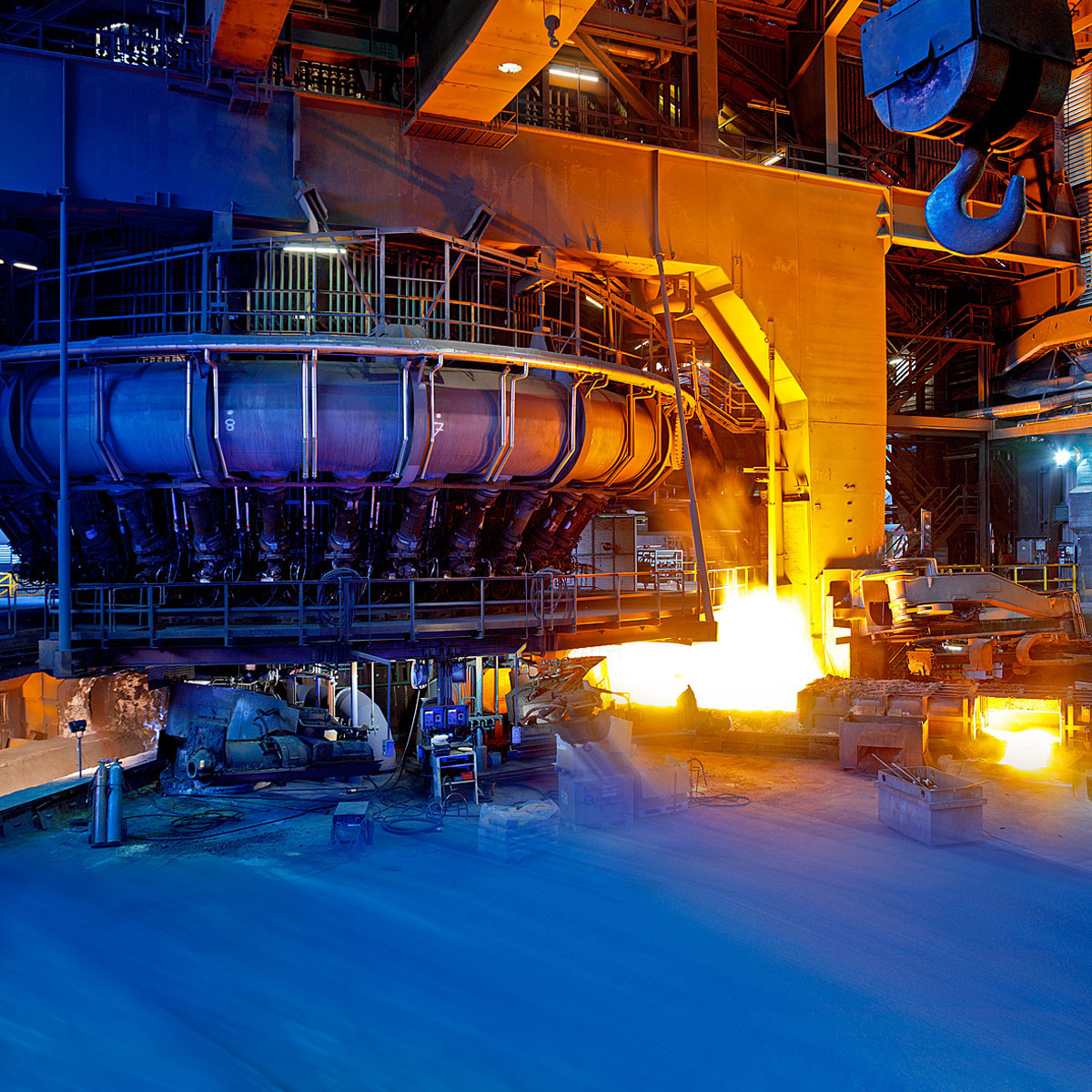
Voestalpine restarts second blast furnace at Donawitz
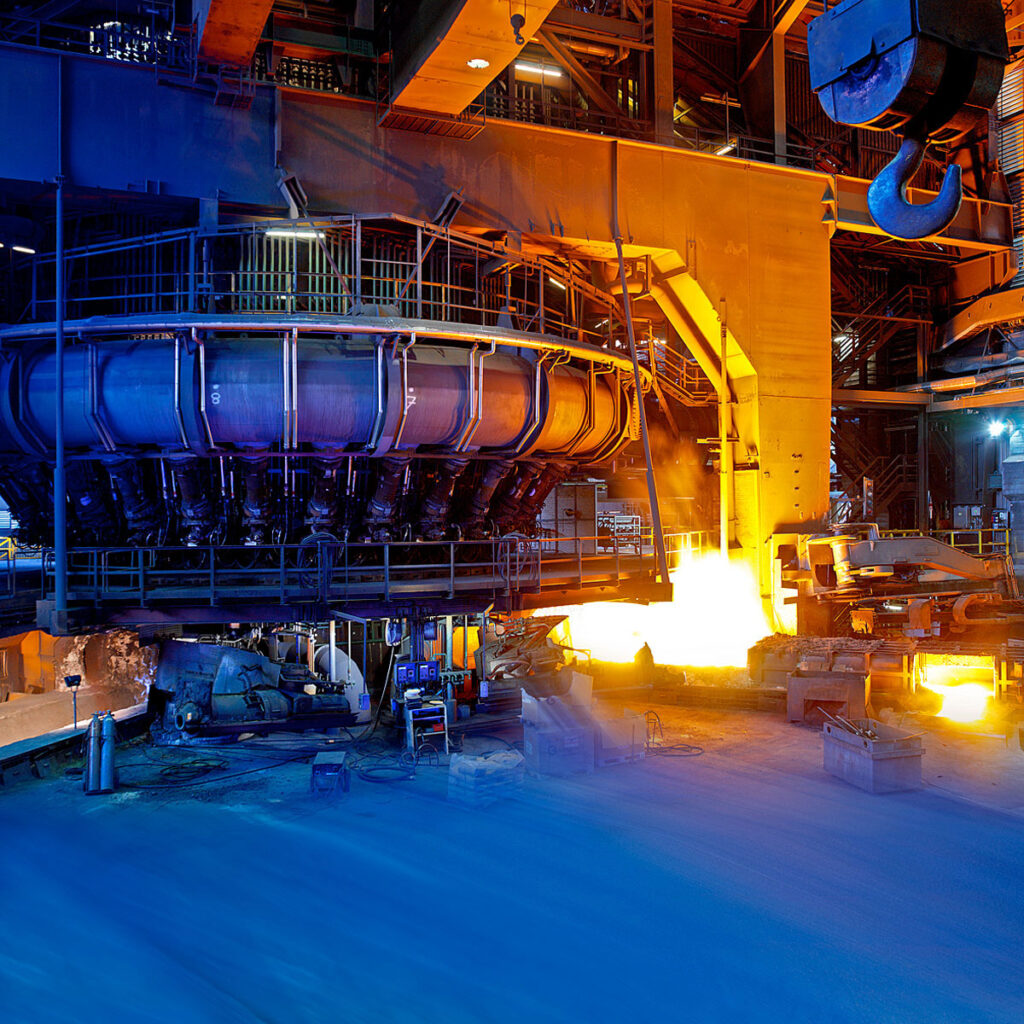
In response to the current level of orders in the long steel segment, voestalpine has decided to again operate two blast furnaces at its site in Donawitz, Austria.
One of the two furnaces, which has an annual pig iron production capacity of around 750,000 tonnes and underwent scheduled interim repairs last summer, has now been restarted, Kallanish learns from the company.
Donawitz belongs to voestalpine’s Metal Engineering Division and is among the small number of European mills that make long products through the oxygen converter route. Its portfolio covers special rails, high-quality wire rod, and extremely high load-bearing OCTG.
The performance of the company’s Railway Systems business unit has remained stable even during the economic crisis caused by the coronavirus, voestalpine notes. Now, the wire and seamless tube segments, both hit last year by the Covid-19-related slump in demand from the automotive, and oil and gas industries, are also showing slight improvement in capacity utilisation.
The current market situation is stimulating demand for feedstock in the division’s business segments, making it necessary to restart the second blast furnace in Donawitz, voestalpine says.
The two furnaces at the site have a joint annual capacity of around 1.5 million tonnes of pig iron. Following the restart, all five of voestalpine’s blast furnaces are now in operation, including those in Linz which have a total combined annual production capacity of around 5mt of pig iron.


Chinese buyers begin active scrap search in EU
Chinese buyers are becoming active in looking for scrap in various European countries, EU sources tell Kallanish. Traders are now actively contacting scrap merchants to purchase 5,000-7,000 tonnes of scrap.
This follows China’s first scrap import purchase after these imports were allowed from 1 January 2021 (see Kallanish 20 January). No contracts have yet been agreed in Europe, with buyers enquiring about material quality and availability. After understanding the grades and tonnages available they will move on the negotiation process, a source says.
Vessels from Italy, France and Spain are likely to be small in size, up to 7,000 tonnes. But Germany and Holland will be able to provide large vessels, gathering tonnages in northern Europe at no extra shipping cost, Kallanish is told.
Large Chinese companies are enquiring through traders to buy different types of scrap. They are willing to agree longer-term supply contracts if the first shipments go smoothly and if the seller is able to guarantee a constant flow of material, sources observe. Chinese buyers are looking to create long-term relationships with good suppliers but are said to be very choosy on grades, only asking for very high-quality material.

Turkey to become net flat steel exporter as HRC capacity rises
Turkey’s major steel producers and end users met with Riza Tuna Turagay, vice minister of the Turkish Trade Ministry, to discuss supply chain problems at a panel discussion held by the Istanbul Chamber of Industry on Jan. 20.
Ugur Dalbeler, CEO of steelmaker Colakoglu, who spoke at the conference, told S&P Global Platts Jan. 21 that Turkish steel producers have submitted their opinions to the panel about market shortages and a short-term rapid rise in prices.
“Due to the decline in Chinese HRC exports last year and the downfall in large steel producing countries output figures, the rapid rise in demand in the fourth quarter of the year couldn’t be met. For that reason steel prices rose globally. But this artificial rise is gradually stabilizing,” the CEO said.
Highlighting that Turkish hot-rolled coil capacity will rise to 23 million mt with new investments in 2022 from the current 18 million mt with new investments Dalbeler said: “Turkey will reach a net flat steel exporter position,” noting that Turkey has nine cold-rolled and coated coil mills with an installed capacity of 11 million mt.
Colakoglu is aiming to raise its hot-rolling mill capacity by around 50% to 4.5 million mt with a new annealing furnace, while an environmental impact assessment (EIA) process has also recently started for Tosyali Demir Celik’s, new 3.5 million mt HRC mill project, as Platts has reported.
“Turkey which was producing only one third of its total steel consumption 10 years ago, will start to produce more than its total steel consumption as of next year,” Dalbeler noted.
Drawing attention that although steel production in Turkey increased last year, steel imports into Turkey rose notably year on year, Dalbeler said: “Around 95% of steel imports into Turkey were made without a duty. For that reason we couldn’t say that there is an obstacle ahead of imports into Turkey,”
Dalbeler noted that Turkish mills are working hard to ease the provisional supply problems in the market in cooperation with the Turkish Ministry.
Some Turkish contractors demanded in mid-December that the country’s competition authority start an investigation of recent sharp increases in domestic rebar and cement prices, as reported.
— Cenk Can

German minister suggests quota for green steel
German economy minister Peter Altmaier has proposed a quota system to support the introduction of green steel on the market.
Speaking at the recent Energy Summit conference organised by business daily Handelsblatt, he said that all sides are prepared to take such a step. “For example, we may discuss with the automotive industry to use a certain percentage of green steel in their material for cars,” Altmaier was quoted in press reports as saying at the conference.
He pointed to the challenges posed by the political framework for such an endeavour. Germany cannot simply go ahead and make green steel, as ultimately nobody may buy it because it is priced 40% higher than conventional material, Altmaier warned. Other possible tools to promote green steel could be contracts-for-difference (CFDs), or the introduction of an international border adjustment system.
A source at thyssenkrupp Steel confirms to Kallanish that all such tools are currently under discussion, and that the political framework necessary to pave the way for green steel is the most pressuring issue. Tk Steel intends to start making direct reduced iron, but it may take another three years before the first tonne is produced. The most time-consuming factor here is not the technology but the political issues that need to be resolved, the source says.
ArcelorMittal France invests into electric car steel
ArcelorMittal France is investing €13 million ($15m) to install new equipment and modernise its site at Saint Chély d’Apcher. The company intends to develop a new generation of steel products for electric cars, Kallanish learns from the steelmaker.
The site produces high-grade electrical steel. Besides installing new equipment, part of the €13m investment will be used to modernise the reheating line that was installed in 2013 for an investment of €90m.
The Saint Chély d’Apcher site employs 250 workers and 250 contractors. It produces steel for electric and hybrid vehicles, and the energy and appliance sectors, selling to 150 clients worldwide. 75% of production is exported, of which 25% is sent to countries outside Europe, ArcelorMittal explains.

European HDG prices stable, OEMs expect correction
The European hot-dip galvanized sheet market saw stability over the week to Jan. 20, despite ongoing supply issues, with buyers struggling to purchase material and imports remaining unattractive, sources told S&P Global Platts.
The Platts TSI HDG index was assessed up Eur30/mt at Eur830/mt ex-works Ruhr Jan. 20, and in southern Europe, HDG was assessed stable at Eur820/mt ex-works Italy.
A Benelux-based trader said automotive demand in Germany was being reduced due to idled German processing plants.
HDG was heard to be less under pressure in Italy due to more production and the same trader said, “We are still booking HDG for Benelux, Germany and Spain.”
A German distributor source said material tightness and longer lead times were propping up prices, with deliveries not expected before August.
In Italy, the situation amongst some OEMs and distributors has intensified, with some OEMs refusing to accept large price increases.
“OEMs are confident that they’ll see a correction anyway, calling off huge quantities for immediate delivery,” an Italian distributor said. “They are trying to renegotiate these contracts because they declare they want a fixed price for 2021, because the current level is too high.”
The same source said industry in general has seen a great lack of material, and that supply levels tended to fluctuate by product.
“One day there is someone saying that the most lacking product is CRC and the next HDG, it fluctuates,” he said.
Although mills were able to produce HDG, most are still contending with huge delays and are unable to supply the quantities needed by customers.
There was little optimism that a major ramp up from mills would alter the supply situation in the near term.
— Amanda Flint
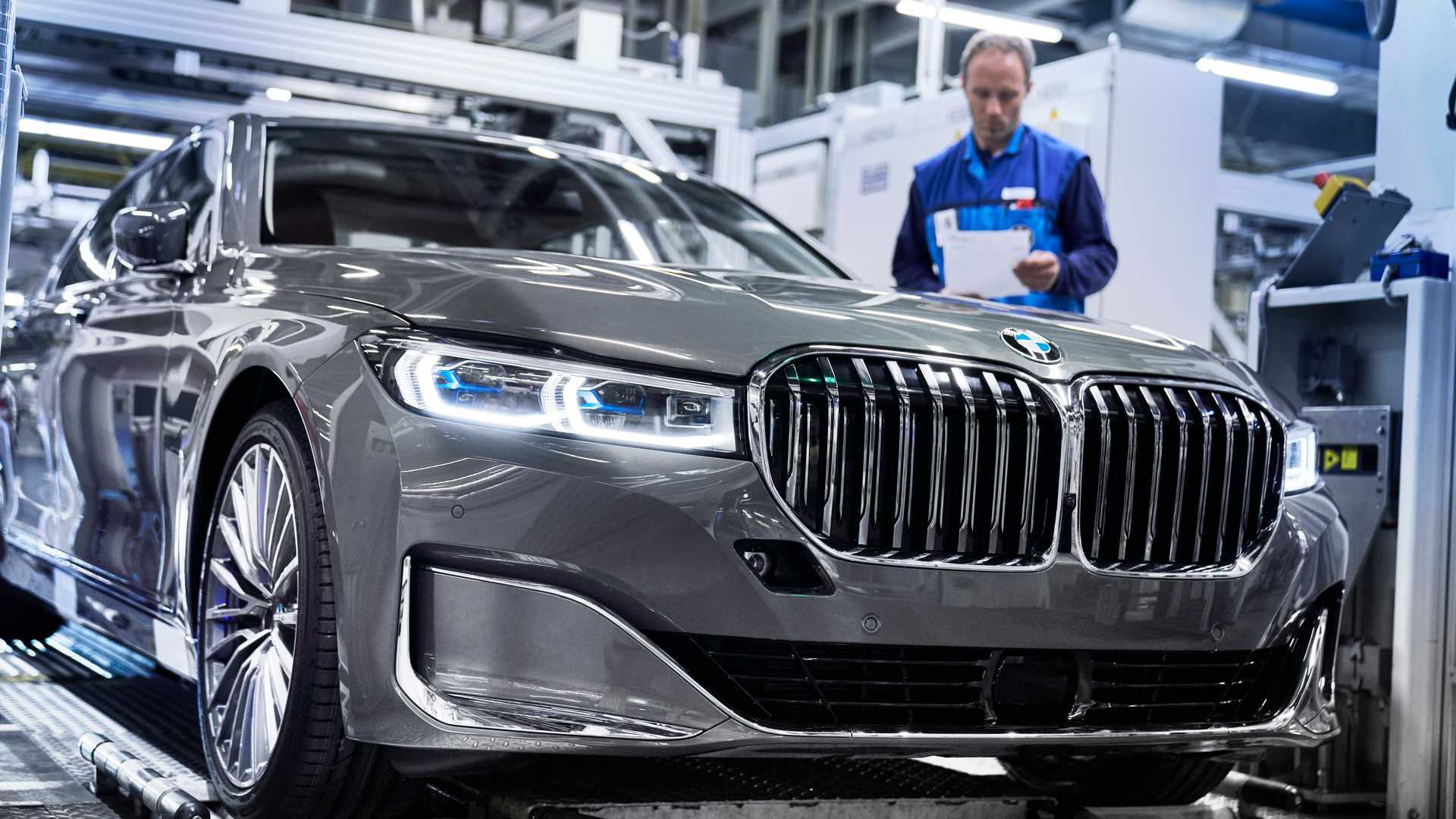
Are inventories the European market’s black hole?
While Light Vehicle inventory data are not publicly available in Europe, recent events have highlighted that stock movements are a critical component in understanding the likely evolution of build volumes.
In the aftermath of the Lehman Brothers crash in 2008, OEMs were immediately faced with collapsing market volumes. They responded by slashing output and made concerted efforts to reduce unplanned or unrequired inventories. But the scale of the crisis was such that European automakers could not act quickly enough. So much so, in fact, that by the close of 2008, they found themselves sitting on circa one million Light Vehicles – all of which were stuck in the supply chain and surplus to requirements.
More recently, with the outbreak of a global pandemic and the ensuing lockdowns, European OEMs saw days’ supply rocket to more than 100 days in the first quarter of 2020. Ideally, days’ supply should sit at around 60 days, meaning that the region was essentially overstocked by 40 days.

Moving into the second quarter of last year, however, European inventories plunged by one million units, to a supply of 60 days, thus restoring the status quo. This echoed the pattern seen in the wake of the Lehman Brothers collapse.
For the final quarter of 2020, we forecast European days’ supply at 67 days, but there is a risk that this estimate could prove to be overly optimistic, in light of the lockdown measures introduced across the region at the tail end of last year.
Indeed, maintaining firm inventory control emerged as a principal objective for every OEM across the sector.

It is worth noting that, in recent decades, we have seen exogenous shocks increase in both frequency and severity, as highlighted by the oil spikes of the 1970s, the collapse of the Soviet Union, the financial crisis of 2007-2008, and now the COVID-19 pandemic. Such shocks inevitably disrupt budget plans and inventory holdings throughout the industry.
As the table above illustrates, we have identified and filled this black hole. So, it is worth checking beneath the surface to pinpoint those OEMs that are under/overstocked.

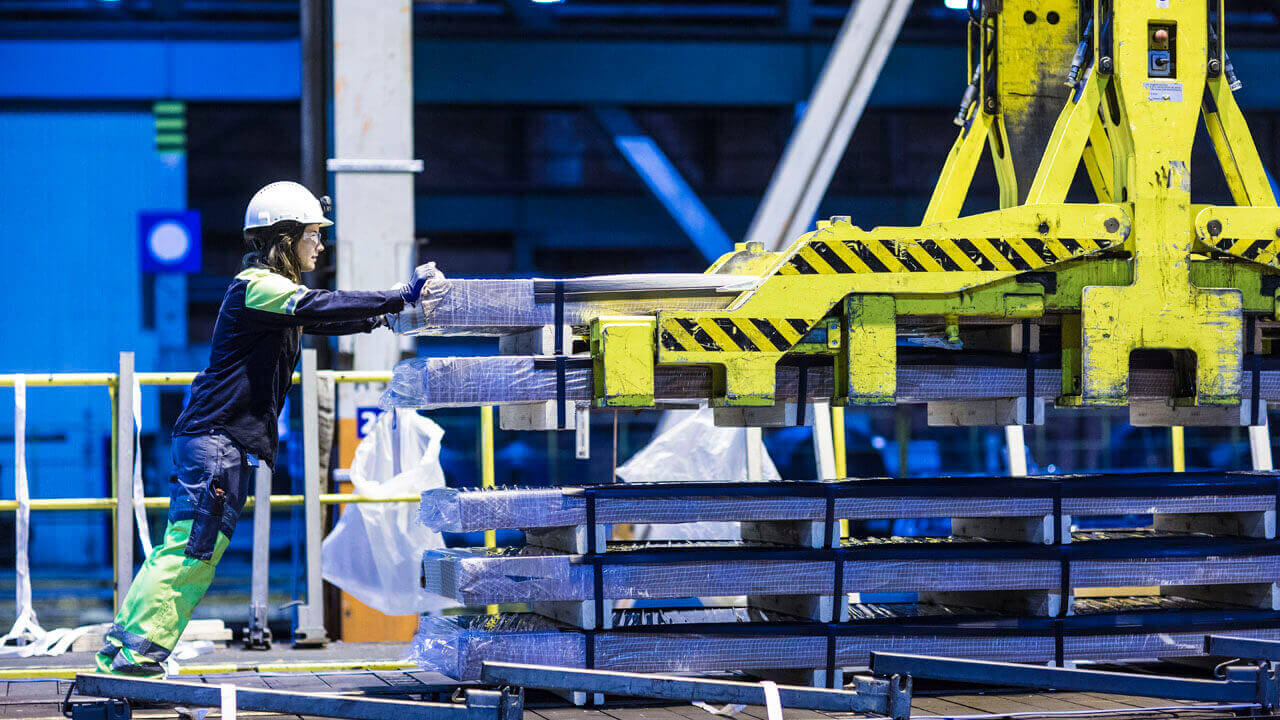
EU longs producer not expecting Turkish scrap impact
The European long products market is looking carefully at developments in Turkish scrap prices, but various large producers believe the sector is not preparing for price drops.
A source within one of Europe’s largest suppliers notes that a correction in scrap levels is normal after a rally of the size seen towards the end of last year. EU prices for finished long products are nevertheless not expected to correct in Q1, he adds.
“Fundamentals in the longs market are still good, mainly driven by demand; I don’t see why prices should drop,” the source tells Kallanish.
In some specific segments, such as wire rod, there is still a clear feeling of shortage of supply in the market, he continues. His company is registering two-digit-level-higher order books compared with January 2020, thereby confirming the good demand momentum in the sector.
“I can’t say that prices will continue their upward rally at the moment, of course, but what I can be sure of is that a downward correction for longs prices does not seem to be in sight,” he comments. EU import quotas for Turkish longs are not being filled as quickly as last year, confirming that Turkish mills are not massively enticed by the European market at present, he adds. These mills continue to have good order books filled by demand from other markets.
The first effects of the Turkish scrap price correction were seen this week in the Italian market, where prices dropped somewhat (see Kallanish passim). Nevertheless, domestic rebar and longs mills are still holding their prices firm.
EU coil distributors emerge from dry spell
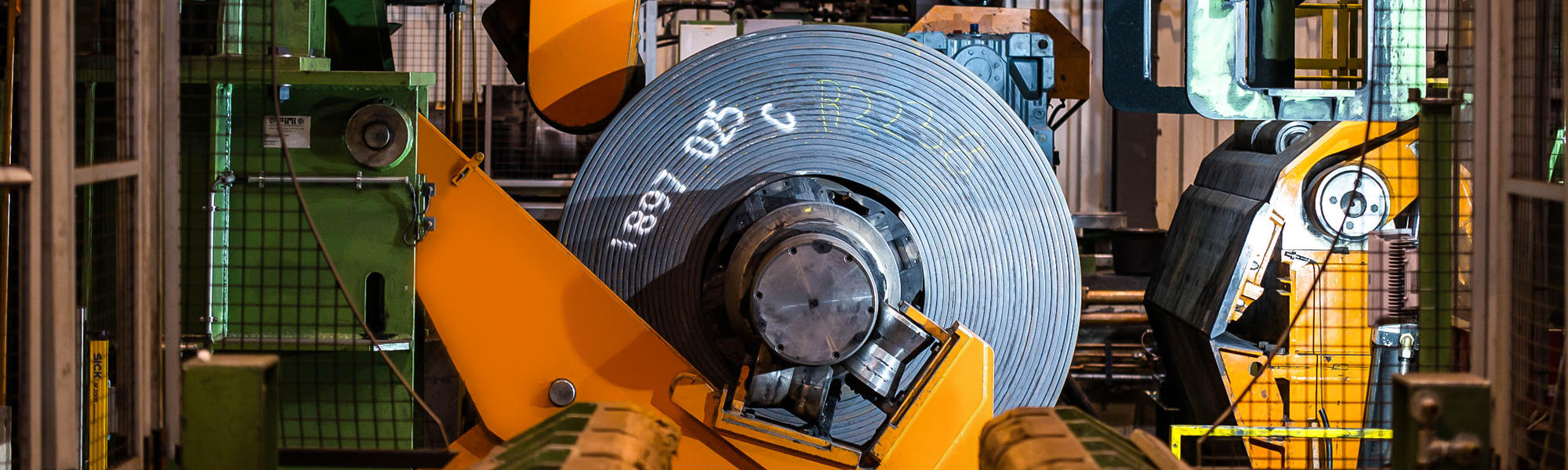
Northwest European coil buyers are in the process of re-stocking, and are receiving material as contracted despite fears mills would favour end users.
The supply shortage for coil products in northwest Europe since October has been especially painful for distributors and steel service centres (SSCs), which were last in line to be served by mills.
In times when they have limited volumes, mills prefer to sell directly to consumers, rather than to distributors, which add their own margins to the price, Kallanish hears from buyers on both sides. The beneficiaries of this game are often automotive suppliers and the actual OEMs, while inventories at distributors keeps depleting.
“I’ve seen halls in service centres where you could easily play football,” one source says of the empty stocks. “When demand came back, mills served the OEMs first, although in March it was the OEMs that had hurt the mills with their sudden stoppages of assembly lines and not taking in further material, while the blast furnaces still had to keep going,” another source observes.
In the meantime, most SSCs have signed deals with mills for supply in the first and second quarters, and, according to one buyer, deliveries are coming in as planned. “I was concerned that they [the mills] might hold back material in favour of customers who bought later at higher prices, but no, coils are coming in as contracted,” he says.
In November, when most quarterly contracts were struck, many buyers got away with contract prices of around €500/tonne ($607) for hot rolled and around €600 for cold rolled coil. Meanwhile, spot prices are now easily €200 higher in each category. And service centres are still in the process of refilling their inventories, which “…will last beyond February,” the buyer believes.

Critical UK steel import quota monitoring glitch remains unresolved

Technical issues continue to hinder the UK steel allocation online monitoring system, with the hollow sections quota now reportedly filled at 1,898 mt for the January-March period, according to a letter published by the UK tax department HMRC Jan. 19.
Since Jan. 6, the failed system has prevented traders from checking the quota balance for imports. Although buyers can still register quota claims for material, there is still no way of determining if a quota has been exhausted.
The delay has left UK importers dissatisfied with the new system, with many fearing that certain quota levels have already been exhausted in the first few days of Q1.
“Progress is being made on the IT issues with the quota allocation/monitoring systems,” the government letter said. “It is hoped to be resolved soon.”
The UK introduced steel import quotas Jan. 1 following the end of the transition period with the EU.
A UK-based trader said the technical faults would be an issue if the quota balance were to become breached, which it has with hollow sections.
“If all lumped together and it breaches, then everyone will have to pay duty pro-rata,” he said. “It would be disappointing if you registered it before it would have been breached and then have to pay duty because of their [HMRC’s] mistake. It makes it difficult for us traders and ultimately our customer base.”
— Amanda Flint