


Knauf Interfer completes consolidation, sells plate unit

German steel distribution group Knauf Interfer has spun off its subsidiary in Magdeburg to Otto Stahl GmbH, which belongs to Union Stahl, a chain specialising in plate processing and distribution.
With this sale, Knauf Interfer has completed its concentration process in favour of service centres focusing on cold-rolled strip and automotive blanks. In a matter of five years, it has divested its activites in long products and as a full-range supplier of tubes, which it says used to be the original core business of the group.
Furthermore, Kallanish learns that Dutch unit Interfer Staal Eindhoven has been renamed to Knauf Interfer Benelux. The unit earlier last year became the hub of all the group’s activities in Benelux, the United Kingdom, and Ireland.
Along with the new name, it has introduced new product groups like cold-rolled strip and slit strip. The group has also relocated ist German headquarters from Essen to Duisburg. Knauf Interfer in 2019 achieved a revenue of €690 million ($846m) with 1,400 employees in Europe.

AD duties on Turkish HRC take effect
This week provisional anti-dumping duties on imports of Turkish hot rolled coil become effective in the European Union, Kallanish learns from official documents.
As anticipated before the Christmas break, the Commission decided in favour of provisional measures. The investigation officially started in May 2020.
As a result duties of 4.8-7.6% will now be imposed to all HRC imports from Turkey, depending on the supplier. The lowest level of duties has been set for Habas material, while Colakoglu should have the highest duty. Erdemir faces a provisional duty of 5.4%.
As a result of provisional duties being applied, the registration process initiated in the fall of 2020 will be discontinued. A decision on whether to apply retroactive duties on the registered imported volumes in 2020 will be taken when the definitive measures will be announced by July 2021.

EU remains Turkey’s main HRC export market despite barriers
Although Turkish steel mills’ overall hot-rolled coil exports in January-November 2020 were 14.5% below last year at 2.71 million mt, due to the EU’s import quotas and anti-dumping and countervailing duty investigations, the EU region remained Turkish mills’ main HRC export destination last year.
Despite quotas and safeguard investigations, Italy remained Turkey’s largest HRC export market in January-November 2020 taking 826,800 mt. But this export figure was notably lower than the 973,300 mt exported to that country in the same period of 2019.
Spain remained Turkey’s second largest export destination in the first eleven months of 2020 at 318,300 mt, sharply lower than 530,000 mt exported in the same period the previous year.
Turkish mills’ HRC exports to Bulgaria rose by 15.5% year on year to 152,800 mt in January-November, while shipments to other European countries and the US remained notably low on year in that period, amid trade barriers and the pandemic.
Turkish mills managed to increase their HRC shipments to Egypt significantly in the 11-month period to 368,600 mt, up 62% on year, while Turkish mills’ HRC shipments to Iraq reached 120,200 mt, up 56% on year, the latest data showed.
As availability issues have impacted the market amid a significant demand surge in the last quarter of 2020, Turkish mills’ domestic and export HRC offer prices reached as high as $800/mt and above for April rollings in the last weeks of 2020, up more than $250/mt within two months.
Rising imported scrap costs, and higher steel pricing globally have also also supported mills’ higher HRC pricing.
Demand domestic and export markets and raw materials pricing are expected to determine Turkish mills HRC pricing strategy in the coming weeks.
A service center manager told Platts on Jan. 6 he heard a major Turkish HRC producer has begun to offer $15/mt lower than its previous list prices at $810-$815/mt ex-works.
A sales manager of the mill in question, however, didn’t confirm this information with Platts, saying prices remained stable but the market was quiet.
An executive of a Turkish pipe producer said they didn’t take any price offer from domestic mills this week, but the latest offer they recently received from a Russian mill was at $790/mt FOB.
— Cenk Can

EU imposes provisional anti-dumping duty on Turkish HRC
The European Commission (EC) announced on Jan. 7 it has imposed a provisional anti-dumping duty of 4.8%-7.6% on imports of hot-rolled coil from Turkey.
According to the EC document published at the Official Journal of the European Union on Jan. 7 seen by S&P Global Platts, major Turkish HRC producer Colakoglu is subject to the highest provisional duty of 7.6%, while Turkey’s largest integrated steel producer, Oyak Maden Metalurji Group (Erdemir and Isdemir), has a duty rate of 5.4%.
Habas has the lowest duty at 4.8%, while Borcelik and Agir Haddecilik will face a duty of 5.9%. All other Turkish companies will have a provisional duty of 7.6%.
According to the document, the products currently fall under CN codes: 7208 10 00, 7208 25 00, 7208 26 00, 7208 27 00, 7208 36 00, 7208 37 00, 7208 38 00, 7208 39 00, 7208 40 00, 7208 52 10, 7208 52 99, 7208 53 00, 7208 54 00, 7211 13 00, 7211 14 00, 7211 19 00, ex 7225 19 10 (TARIC code 7225 19 10 90), 7225 30 90, ex 7225 40 60 (TARIC code 7225 40 60 90), 7225 40 90, ex 7226 19 10 (TARIC code 7226 19 10 90), 7226 91 91 and 7226 91 99.
The provisional duties will enter into force on the day following that of its publication in the Official Journal of the European Union Jan. 7 and will be valid for a period of six months.
The EC launched an anti-dumping investigation into imports of certain hot-rolled flat products from Turkey in mid-May following a request by European steelmakers group Eurofer, and the EC informed Turkish mills on Dec. 17, 2020 about its intention to impose provisional anti-dumping duties on imports of certain Turkish hot-rolled flat products, as Platts has reported.
The EC said in November that imports of hot-rolled flat steel from Turkey would be subject to registration from Nov. 13 as part of its anti-dumping investigation, meaning retroactive duties also can be applied from this date.
The EU is Turkey’s main HRC export market and the duty decision could limit Turkish mills’ exports further, which were already negatively effected by the EU quotas.
Turkey is expected to answer the EU’s latest anti-dumping duty move by a countermeasure soon. The Turkish Trade Ministry informed involved parties the last week of 2020 that it has decided to start a dumping investigation of HRC imports from the EU region and South Korea, top Turkish industry executives told S&P Global Platts, as reported.
A Turkish industry executive told Platts on Jan. 6 that he recently confirmed with the Turkish Trade Ministry that a presidential decree about the HRC investigation in question will be published probably within the coming week following the completion of the legal procedures.
— Cenk Can


Ukrainian steel plants receive higher scrap tonnages
Steel plants in Ukraine were supplied with more scrap tonnages in December compared with the previous month, according to data from the Ukrainian association of secondary metals, UAVtormet.
The volume amounted to 288,600 tonnes, up by 33.1% on-year, Kallanish notes. However, January-December supplies fell by -3.9% on-year to 2.9 million tonnes.
The largest consumers in December were Metinvest and Dnieper Metallurgical Plant (DMK) each with 175,000t, Interpipe with 52,000t, and ArcelorMittal Kryvyi Rih with 20,500t.
Reserves of scrap at steel plants at the end of last month amounted to 170,175t, UAVtormet says.
“In the current conditions, metallurgists in Ukraine do not experience problems with scrap metal,” the association observes.
In 2019 Ukrainian imports of scrap exceeded exports for the first time, when exports shrunk eight-fold to 42,182t, and imports increased by 17.2% on-year to 49,934t (see Kallanish passim).
Ukrainian steelmakers took in around 3.1 million tonnes of ferrous scrap in 2019, -20% less than in 2018, despite a €58/tonne ($65/t) scrap export duty.

BMZ delivers automotive steel to Spain
Byelorussian Steel Works (BMZ) shipped its first batch of steel products in 2021 to Spain, the company says.
The batch of round bars intended for the automotive industry was sent to a consumer from the Basque region. In the first hours of the new year, rebar was also being shipped to Israel, it adds.
BMZ started its stable deliveries of rolled products to Spain just last year and in 2021 exports to this market will continue, the enterprise claims.
In 2020 BMZ shipped almost the same level of steel products compared to the same period of 2019.
Exports amounted to almost 2 million tonnes, shipped to 53 countries, Kallanish notes. In January-December, the company sold over 180,000t of rolled bars with diameters from 20mm to 160 mm, up by 125% on-year. The importers included Russia, Germany, Israel, Lithuania and Poland. Over 50% of all exports go to European markets.
“The continuous improvement of production technologies and product quality allows the plant to deal with even the most demanding customers, for example, world-class manufacturers of tires and automotive components,” BMZ says. “One of effectiveness indicators of the research work is the share of innovative products in the total shipment volume, which traditionally exceeds 20%.”
BMZ has 57 certificates of conformity for the production of various types of products, which allow it to supply products to most EU countries, as well as Israel, Russia, Ukraine and the US, the enterprise claims.
The company suffered financial losses from its EAF stoppage during August, precipitated by the social unrest seen in Belarus after the presidential election (see Kallanish passim).
BMZ increased crude steel production in the first half of the year to 1.25mt, up by 16% on-year.
German mechanical engineering reduces pace in Covid-19 lockdown
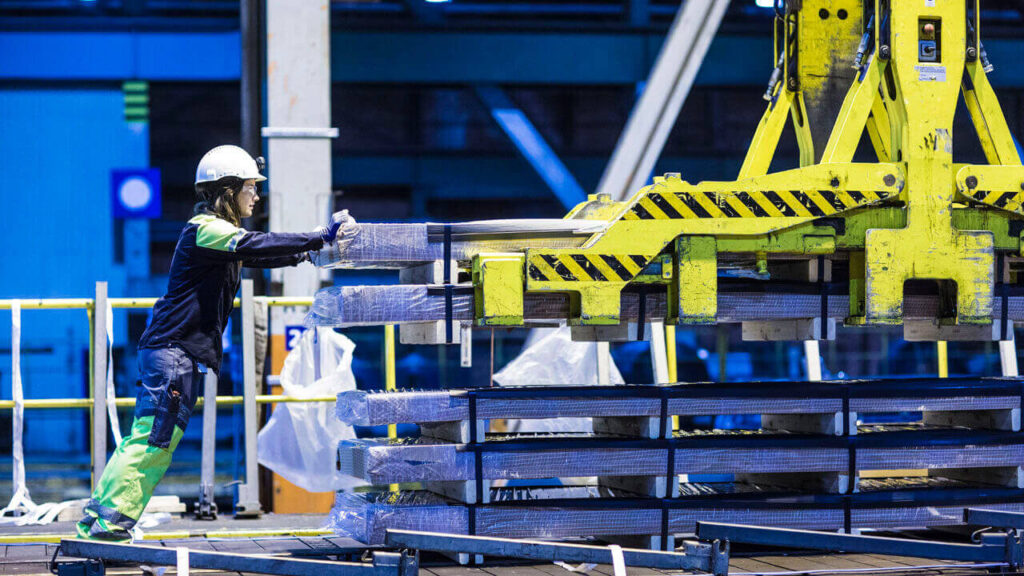
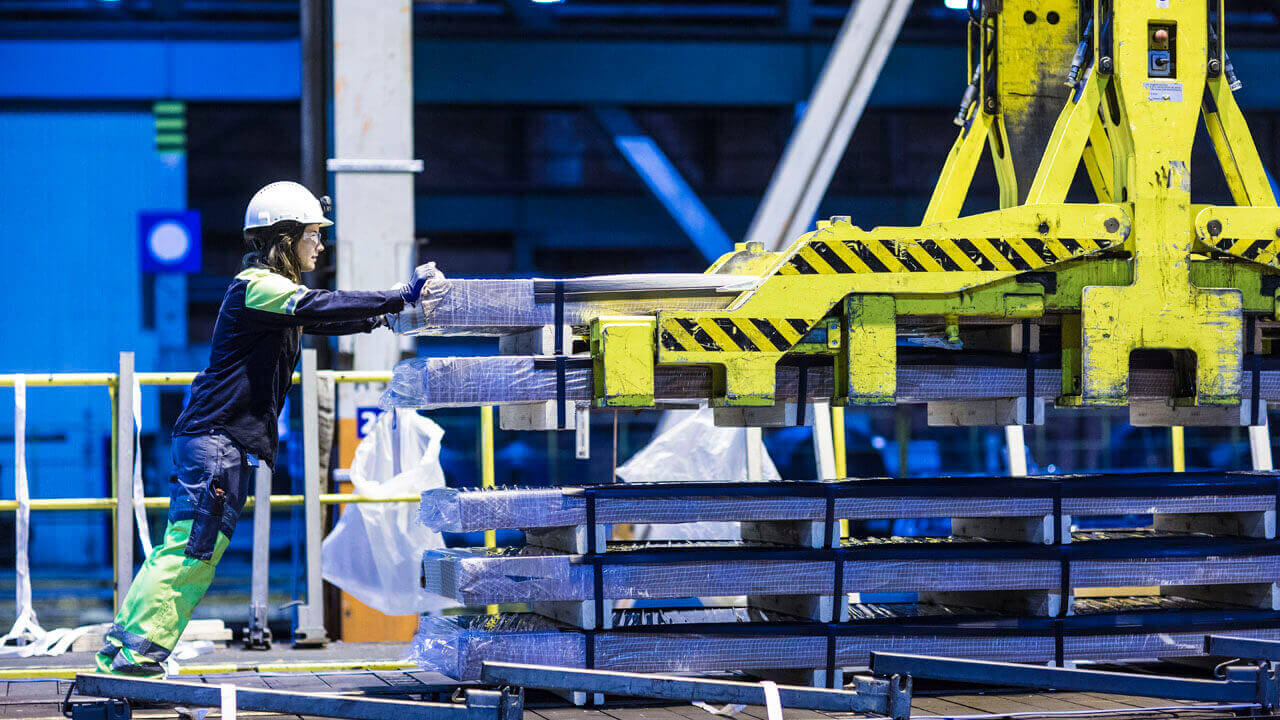
Given the stricter Covid-19 lockdown that was introduced in Germany in mid-December, and will probably run until the end of January, many mechanical engineering companies have extended their winter breaks.
This was the result of a flash survey amongst almost 800 member companies of industry assocition VDMA shortly before Christmas. About 77% of the companies surveyed planned a production break. For 35% of these, it will last longer than usual. Two-thirds of that group explicitly cite a reduction in the risk of contagion from Covid-19 as a reason for the extension. However, a lack of orders and low capacity utilisation also play a role in these decisions, VDMA notes
On average, business interruptions last 15 days, Kallanish understands. According to the VDMA survey, 80% of the companies surveyed have already extended the options for home office or are planning to do so.
“Everyone is called upon to do their part to break the wave of infection. This can only succeed through consistent action. Longer plant closures at the turn of the year are part of this,” VDMA president Karl Haeusgen says.
He says that the industry supports the decision by the government to carry out a lockdown, but notes that a general shutdown of manufacturing industries would have been wrong.
“With their hygiene concepts, the companies in the mechanical and plant engineering sector ensure that contacts in the operating facilities are reduced to a minimum,“ he says.

UK steel import quota monitoring not ready due to technical issues
The online monitoring system of UK steel quota allocation has been delayed due to “technical issues,” resulting in traders not being able to check the quota balance of imports, the UK tax office said Jan. 6.
Importers can still make quota claims for material but will not be able to know if a quota has been filled as the quota look-up section in the UK online tariffs page is not available yet.
The UK introduced steel import quotas Jan. 1 following the end of the transition period with the EU.
The delay has caused some irritation with UK buyers who fear quota levels have already been exhausted in the first few days of the year as it had been previously for some products when European steel safeguard quotas applied.
“Like other companies, we have box section entries we lodged on Jan. 1, which is a product likely to bust on day one, so very important they do not lump in the later entries,” said a UK trader.
He feared that if the quota for that product was exhausted the excess volumes would be pro-rated across all quota claims and a duty would need to be paid on the portion.
In a letter seen by S&P Global Platts, the UK tax office said: “The quota balances will not be updated and CHIEF (Customs Handling of Import and Export Freight) will continue to accept quota claims when the quotas may be exhausted.”
“If a quota claim is made but does not receive an allocation you will be contacted later by NIDAC (National Import Duties Adjustment Centre) to collect the duties due.”
— Laura Varriale, Amanda Flint
US 2020 auto sales slide 15%, but recovery stronger than expected

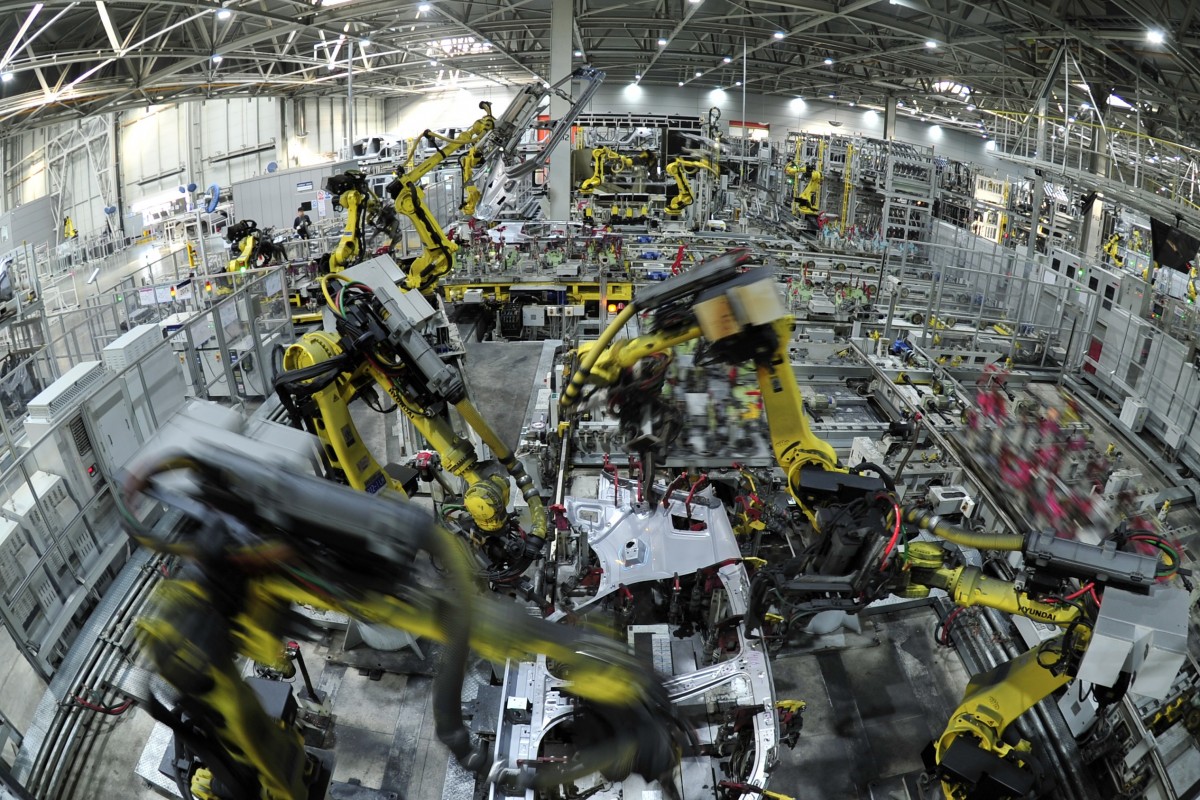
US new vehicle sales are forecast to have fallen about 15% year over year to 14.4 million units in full-year 2020, the lowest total since the beginning of the decade, but the industry’s performance finished the year stronger than anticipated, according to industry analysts.
Cox Automotive said strong December sales boosted the year’s final projection, according to a report Jan. 6.
“The final days of December appear to have been stronger than forecast, and a number of [automotive] OEMs have cited unexpected robust retail activity over the holidays,” said Charlie Chesbrough, Cox senior economist. “There was also no shortage of positive news in the last week of December, and that may have encouraged consumers and lifted sales – passage of the stimulus package, more certainty around the election outcome, coupled with a lot of vaccine news.”
Cox said sales in 2020 were similar to those in 2012 when the automotive market was recovering from the 2008 financial crisis.
Consultant JD Power. separately said new vehicle retail sales in December are projected to have reached 1.4 million units, rising 1% from December 2019 when adjusted for the number of selling days.
“Retail sales are up, transaction prices are at record levels and retailer profits are at all-time highs,” Thomas King, JD Power president of the data and analytics, said in a recent report. “This reinforces that manufacturers and retailers are succeeding in getting vehicles built, shipped and sold in alignment with resilient consumer demand.”
In its own report, automotive industry analyst Edmunds said there are still uncertainties to consider in 2021, but the market should continue to recover at a steady pace without the steep declines recorded in 2020.
“Even if we face another wave of retail shutdowns, the good news is that dealers are far better prepared now for selling virtually than ever before,” Edmunds’ executive director of insights Jessica Caldwell said. “The vaccines on the way should only help keep consumer confidence high.”
Edmunds said the projections put 2020 on track to be the lowest sales year for the automotive industry since 2011.
Both Edmunds and JD Power also projected 2020 sales of about 14.4 million units.
— Nick Lazzaro
Italian construction grows slowly
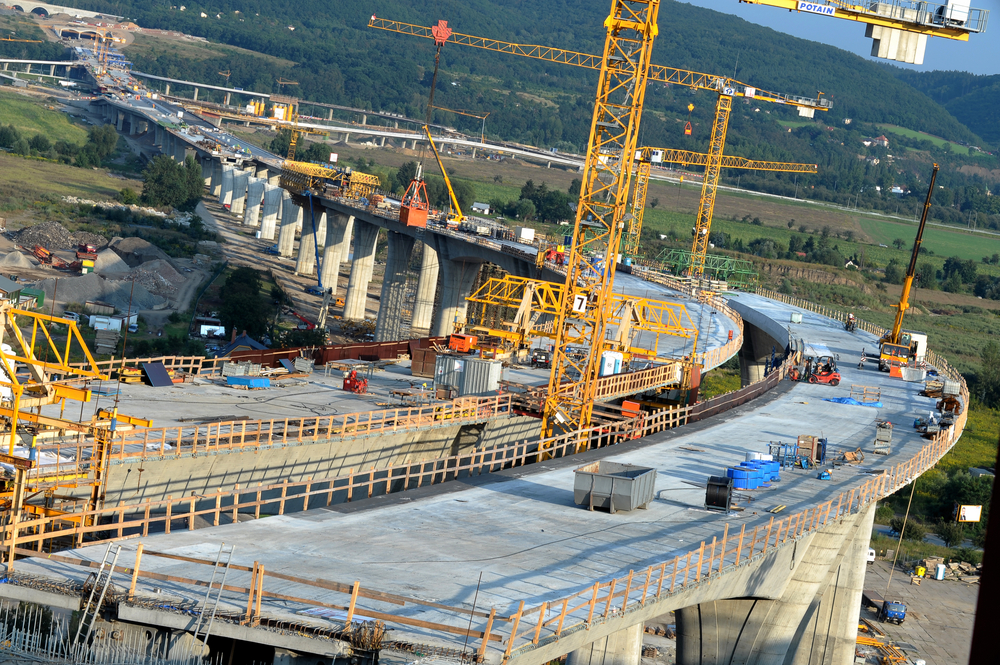
Italian construction sector output decreased in October 2020 by -1.8% on-month, according to a National Institute of Statistics (Istat) report monitored by Kallanish. However, in the year-on-year comparison construction output ticked up by 1.6%.
In August-October construction output also increased, by 13.6% compared with the previous three-month period. However, it decreased by -10.5% y-o-y in the ten months through October, Istat says.
Meanwhile, the country’s industrial production increased by 1.3% month-on-month in October and by 11.7% in August-October compared to the previous three months, Istat adds.