

Supply of thin plate gauges thinning in EU

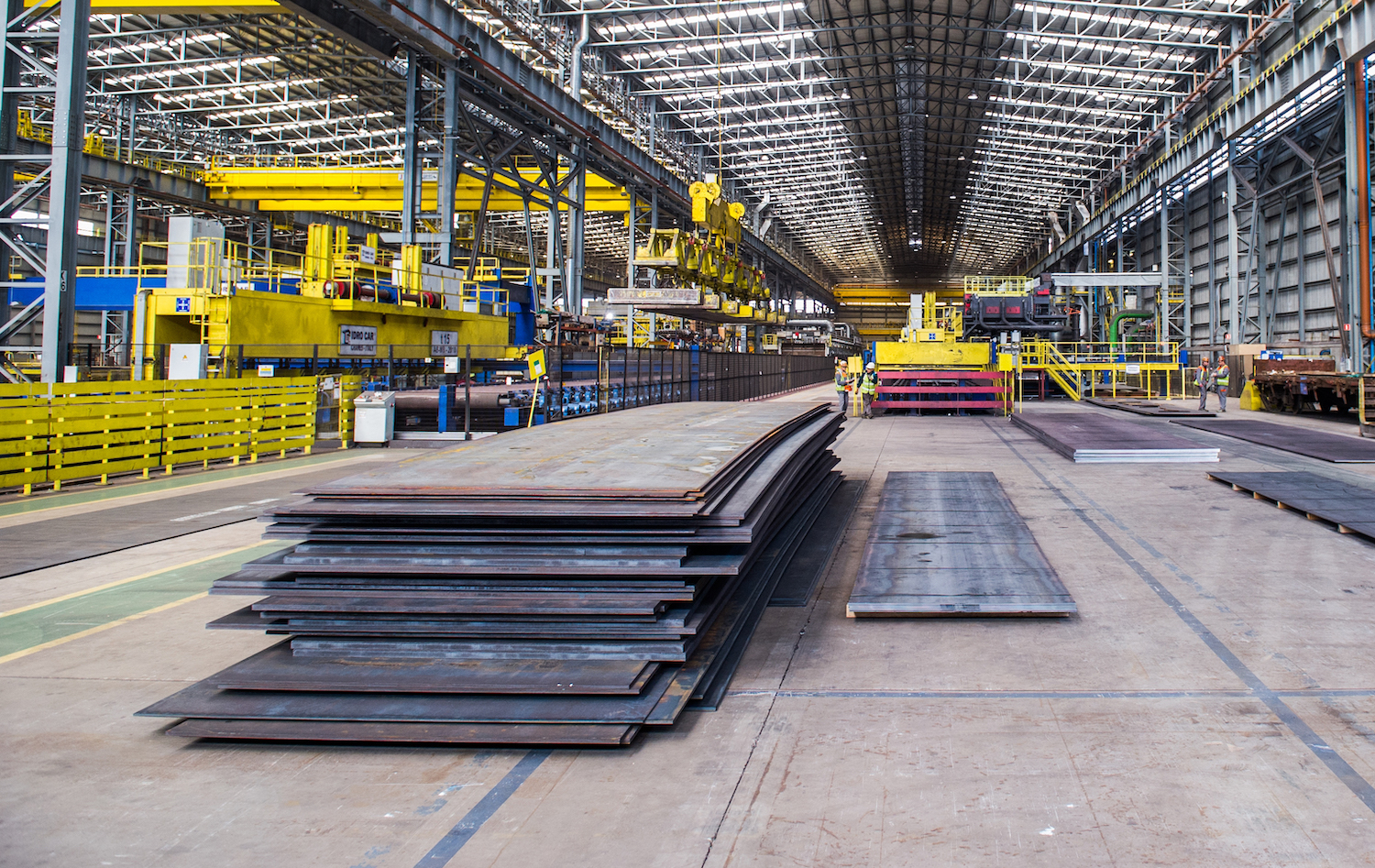
The surge in plate prices, which gained momentum only a few weeks ago, is more pronounced in thinner-gauged plate, Kallanish hears from market players. Given the shortage of slab and coil products, any product that could work as a substitute will be absorbed by the hungry market.
Normally, thing-gauge plate is not a popular segment for reversing mills because it takes more rolling steps to bring plate to 12mm or less. “Plate mills normally prefer to stay away from thin gauges, and offer them only in small lots, or not at all,” one manager explains. But now that strip from coil is hard to find, sheet buyers are increasingly going for thin plate as an alternative.
Plate players polled by Kallanish see the current price targeted by mills for standard grade S355 in standard thicknesses at around €650/tonne ($794) ex-works, “…and the mills will get it,” the manager believes.
With respect to thinner gauges, he says: “I just saw prices from Italy where thin gauges are between €50 and €100 higher than gauges of 20mm.” He cites further offers of 8mm fetching €40 more than 12mm, “…and the spread is even wider when you go for 6mm,” he adds.
He notes that sheet from coil is generally preferred, for economic and quality reasons. Not only is its production process cheaper, but its tolerances are also better. However, plate allows for forming in both directions, while strip processing works only lengthwise, the manager points out.

Russia to levy export duty on steel, scrap
Russian federal anti-monopoly service FAS suggests all exports of steel products should be liable for duties, not just ferrous scrap, as implemented by the economic development ministry earlier in December.
FAS is responding to the request by deputy prime minister for construction and development Marat Husnullin in connection with rising domestic steel product prices. This follows a petition from construction industry representatives.
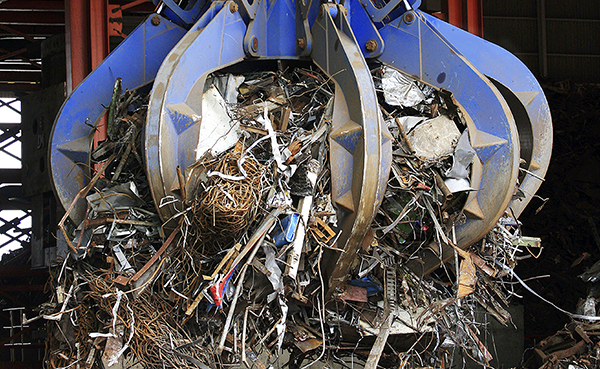
The ministry agreed to raise the existing 5% ferrous scrap export duty to 15% and the minimal fiscal value to €45/tonne ($55) from €15/t, for six months. This followed a request from the country’s Pipe Industry Development Foundation (FRTP), representing major Russian steelmakers. The hike is aimed at securing sufficient and appropriately priced feedstock supply for Russian mills (see Kallanish 21 December).
FAS argues Russia’s domestic steel industry is deeply enshrined in the global steel market, and is influenced by its trends directly. It describes Russian domestic steel prices gaining up to 30% in November and early December, with rebar prices rising 16% from end-October to early December, and flat products by 20%.
Despite this, local values do not exceed export prices, which grew even stronger in the same period, while domestic scrap prices have also gained 35% from the start of 2020, according to FRTP.
As a result, and a temporary differentiated regressive measure for the six-month duration of the scrap export duty, FAS proposes export duties for steel billet at 13% but not less than $73/t and 12% but not less than $78/t for rebar.
This is necessary in order to prevent possible reallocation of income from scrap procurement companies to steelmakers. This would be the case if the scrap export duty hike leads to a lowering of domestic scrap prices while steel export prices continue to rise or stay at current levels, its explains.
Market participants tell Kallanish the decision on scrap and rebar duty implementation has been made, and will apply from February. “Billet matters will be discussed in January,” a major producer’s representative says. All steelmakers and traders pointed out that the scrap and rebar export duty may indeed constrain exports and bring domestic prices down, leading to higher billet export availability. This could possibly result in countervailing measures from billet importing regions, as such action may be interpreted as a subsidy.
“Ultimately this long-fought-for scrap export restriction designed to support Russian steelmakers may act against them,” an industry insider says.
US HRC LME December, February contracts move higher

The London Metal Exchange’s US hot-rolled coil forward curve showed gains for the front-month and February contracts the week ended Dec. 24, while the remaining contracts moved lower over the week.
The December-January forward curve remained in contango with a spread of $65.50, down from $76.50 the week prior. While the remainder of the forward curve stayed in steep backwardation, the backwardation between the two- and three-month contracts softened to a spread of $8.50 as market sources expected HRC prices would plateau rather than drop precipitously in the first quarter.
Still, the spread between the three- and twelve-month contracts remained wide at $262.50, up from $244 the previous week.
The December contract moved $11 higher to $923/st, while the January contract decreased by $6.50 to $988.50/st. The February contract rose by $11 to $980/st, while the May contract fell by $18.50 to $857.50/st.
Both contracts on the further end of the curve moved lower, with the twelve-month contract decreasing by $2.50 to $717.50/st and the fifteen-month contract falling by $2.50 to $695/st.
The contract’s weekly trading volume saw a slight uptick the week ended Dec. 24, with the US hot-rolled coil contract trading 1,710 st on the LME that week. The weekly trading volume was up from 1,510 st in the week prior. Since its launch over 21 months ago, the contract has traded a total of 549,810 st.
The daily Platts TSI US HRC index moved $44.50 higher over the week and was assessed at $999.50/st on Dec. 24. Amid expectations of firm scrap pricing in January and persisting supply tightness, market sources anticipated mills would continue pushing HRC prices higher in the near term.
— Ingrid Lexova

Turkey’s HRC dumping probe to include imports from S Korea as well as EU: CEO
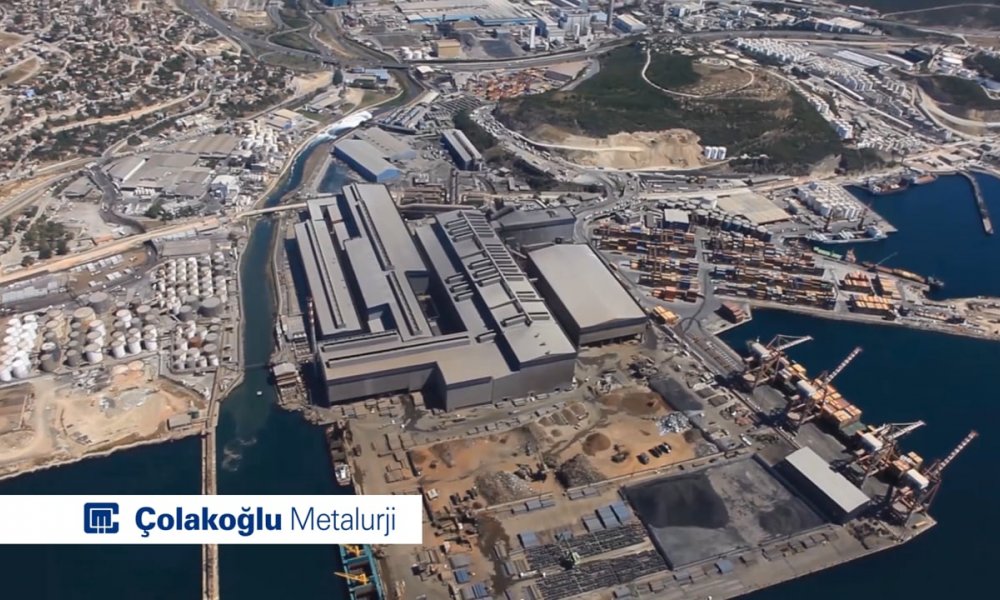
A dumping investigation by Turkey into imports of hot-rolled coil from the EU will also extend to South Korea, which increased its deliveries to Turkey significantly throughout 2020, according to Ugur Dalbeler, CEO of key Turkish steel producer Colakoglu.
Although no official announcement on the investigation has been made, two top Turkish steel industry executives told S&P Global Platts that the Trade Ministry had already informed the relevant parties, including the European Commission.
A decree relating to the investigation is expected to published in Turkey’s official gazette in the next few days following presidential approval.
“Following the review, our Trade Ministry has decided to open a dumping investigation and has made the necessary declaration to the EU,” Dalbeler, who is also vice chairman of the Turkish Steel Exporters’ Union (CIB) told Platts. “This investigation will also involve HRC imports from South Korea.”
The EC had no official comment.
The EC said Dec. 17 that it has decided to impose an antidumping duty of 4.8%-7.6% on imports of Turkish HRC. The duties will be imposed on a provisional basis on Jan. 14 and will be valid for six months, which is expected to limit exports to the region by Turkish mills. Definitive duties are scheduled to be set by July 13.
The Turkish Steel Producers Association (TCUD) has previously called upon the Turkish government to impose similar counter-measures on steel imports from the EU, arguing that quotas and trade investigations had already notably reduced exports of HRC by Turkish mills to the EU, their main export market, while imports from the EU remained strong.
Turkey imported around 1.3 million mt of HRC from the EU in the first 10 months of 2020, relatively unchanged year on year, while HRC imports from South Korea reached 262,000 mt over the same period, well above the 64,000 mt imported in the same period of 2019, according to Platts calculations based on the most recent data from the Turkish Statistical Institute.
— Cenk Can

European coils market quiet amid holiday slowdown
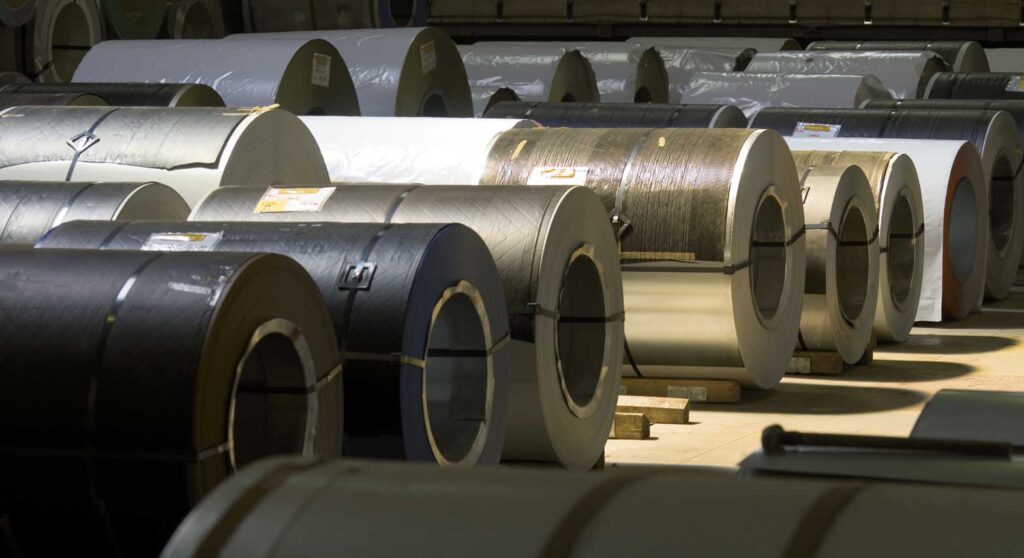
The European hot-rolled coil market was quiet Dec. 29 as many market participants paused trading between the Christmas holidays and the New Year, sources told S&P Global Platts.
A Benelux mill source said that the market would be “closed” and that activity is expected to restart Jan. 4, 2021. Another Benelux buyer confirmed that they had closed their business over the holiday season.
Sources said after the seasonal slowdown, activity is expected to come back strong in January as material tightness is expected to intensify the recent price hikes which led buyers scrambling for material. According to Platts data, European HRC prices are at a 9-year high.
— Laura Varriale

UK, Turkey sign preferential accord, seek ‘more ambitious’ trade deal
The formal signing Dec. 29 of a trade deal between Turkey and the UK was welcomed by representatives of Turkish industry and the UK steel and automotive sectors as ensuring the continuation of business between the two nations without additional tariffs from its introduction on Jan 1, 2021.
The deal is viewed as a stopgap to prevent negative consequences in the current GBP 18.6 billion ($25.1billion) annual trading relationship between the two nations from the UK’s exit from the EU. “Both countries have also committed to working towards a more ambitious free trade agreement in the future, which will go further than the existing deal and will be tailored to the UK economy,” the UK Department for International Trade (DIT) stated.
The deal secures existing preferential trade terms and tariffs for UK businesses that exported more than GBP 1 billion worth of machinery, and iron and steel exports worth GBP 575 million, to Turkey in 2019, ensuring the continued tariff-free flow of goods and protecting UK-Turkey supply chains in the automotive, manufacturing and steel sectors, according to the DIT.
The UK’s imports of textiles and white goods from Turkey are also covered by the accord.
Turkey and the EU have operated a customs union since 1995. This week’s end of the UK’s transition period for leaving the EU would have subjected about 75% of Turkish exports to UK to tariffs, causing losses of some $2.4 billion, had the new deal not been signed, Turkish trade minister Ruhsar Pekcan told official news agency AA following the signing in a ceremony with UK international trade secretary Liz Truss who was present on a videocall.
The UK automotive and steel sectors were highlighted as two areas most likely to benefit from uninterrupted trade flows between the nations. “The finalization of today’s trade deal with Turkey is welcome news for industry and manufacturing in particular,” said Stephen Phipson, CEO of Make UK, a manufacturers’ association whose members include steelmakers and automakers. “Securing preferential tariffs for UK businesses exporting to Turkey and ensuring the continued tariff free flow of goods is vital to protect UK-Turkey supply chains, supply chains which are critical to our automotive industry in particular.”
“It is also extremely helpful that both sides have also committed to work towards a more ambitious free trade agreement in the coming months which will deliver a welcome boost to the UK economy as it comes out of the current COVID crisis,” Phipson said in a statement.
Turkish steel sources said they hoped the accord would help correct an existing steel trade imbalance between the two nations. The UK is one of Turkey’s largest steel scrap suppliers and has recently seen its scrap exports to Turkey grow, while Turkey’s steel exports to the UK have dwindled.
Vehicle assembly in Turkey
Stuart Rowley, president, Ford of Europe, noted that car parts are exported from the UK to Turkey to assemble the Ford Transit range of vehicles, a third of which are then exported back to the UK. In 2019, UK car exports to Turkey were worth GBP 174 million.
“Given that Ford and Ford Otosan business constitutes more than 10% of the total trade volume between the UK and Turkey, this trade agreement is extremely significant for us and will help to secure jobs in both countries,” Rowley said in a statement.
Turkey eyes bilateral investments
Turkish minister Pekcan said the arrangement leaves no uncertainty in the trade structure between the two countries. “We are taking the first step towards further deepening our ties, while maintaining 25-year gains from the Customs Union,” she said.
“We reached a tariff-free agreement, as planned, which includes all industrial and agricultural goods,” the minister said.
Trade volume between the two countries was $15.1 billion in January-November, Pekcan said. In 2019, Turkey’s exports to the UK – its second-largest export market – stood at $11.3 billion, while imports totaled $5.6 billion. UK investments in Turkey amount to around $11.6 billion.
“I hope the deal will be reflected positively in bilateral investments,” Pekcan underlined.
— Diana Kinch and Cenk Can

UK-EU steel trade can proceed with preferential tariff treatment
Steel trade between the EU and UK can proceed on preferential duty rates from Jan. 1, 2021, avoiding customs duty if preference is claimed, according to a UK government update on its website Dec. 28.
To claim preferential duty, the product must originate in the EU or UK and be a classified good.
“To benefit from preferential tariffs when importing into the UK from the EU (or importing into the EU from the UK), the importer will be required to declare they hold proof that the goods comply with the rules of origin,” the UK government said.
The claim for preferential tariff treatment needs to be included in the customs import declaration for goods into the UK or exporter’s statement for goods sold into the EU traded on and after Jan. 1, 2021.
The UK and EU agreed a post-Brexit trade deal Dec. 24.
“It is important that with a deal in place the UK can start to build for the future with our European partners but there are many months of further hard work yet to come,” said Stephen Phipson, chief executive of the UK’s manufacturer’s organization Make UK.
“Even without the pandemic it would be stretching credibility to believe the companies that export hundreds of billions of pounds worth of goods each year could adapt to a fundamentally different trading model in just one working week,” he added.
The UK exported 2.5 million mt of steel to the EU in 2019, earning nearly GBP 1 billion, and 677,000 mt to the rest of the world, which earned GBP 300 million. UK crude steel production in 2019 amounted to 7.2 million mt, while UK steel consumption was 10.13 million mt.
— Laura Varriale
Aluminium in overdrive into 2021
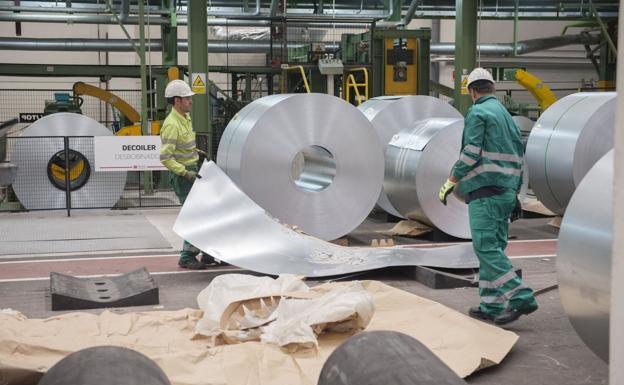
The European aluminium market has continued to heat up in December, rendering the positive outlook given by the industry a month ago somewhat undercooked, and meaning that prices and premiums will very likely be strongly supported through much of the first half of 2021.
The London Metal Exchange (LME) three-month aluminium price peaked at around $2,060/t earlier this month and has stayed at above $2,000/t. This compares to prices of around $1,800/t a year ago, which subsequently fell in the first quarter of this year even before Covid-19 struck international markets.
But that drop-off is not going to happen in 2021. Suppliers have done so much business for the first and second quarters that the market is certain to remain tight in the new year.
“It’s been very good for the first quarter. A lot of smelters are sold out and some have even sold out for the full year,” an analyst said.
Chinese demand has been the primary driver, as has been the case with many metals markets in recent months, with China’s appetite for imports pushing world markets higher. But in aluminium this is especially unusual, as China is almost always a net exporter, last turning net importer in 2009 during the fallout from the global financial crisis.
But China’s imports this year surpassed the 2009 total by October. Its net intake of primary aluminium and alloys reached 1.74mn t in the first 10 months of the year, compared with 1.43mn t in the whole of 2009.
“China is importing a lot of aluminium and it’s not just primary ingot. They’re in for everything,” a second analyst said. “There is a lot of demand for value-added products and that is indicative of strong physical demand.”
High industrial activity in China is a result of aggressive stimulus policies from the government as it looks to kick-start the economy following lockdown restrictions earlier this year. Those imports have affected the shipping industry, leading to rising costs on falling container space availability.
“There has been a lot of money pouring in from the government, and the policy of moving away from heavy industries has been put on hold,” the first analyst said. “It’s fiscal stimulus to the point of ensuring employment.”
In addition, strong orders from European consumers indicate a recovery in aluminium demand there, which is adding to the pressure from Chinese consumers. The assumption that pent-up demand from Covid lockdowns will be unleashed in the first half of next year is only going to push prices higher as manufacturers gear up in the new year.
More automotive plants are reopening in European and US markets, as well as in Japan, and this is reflected in high reported orders of aluminium slab for the first quarter, and in strength in packaging industries.
“The tightness has pushed LME prices near to $2,100/t. It’s unheard of for this time of year,” the first analyst said. “Auto producers have ordered a lot of slab for the first quarter and are looking for more. The first six months of next year could be very strong.”
Precarious position
But when asked to describe the situation in a word, many market participants might well pick “precarious”. Chinese stimulus spending will wane at some point, and when it does China will likely resume its role as a net exporter of aluminium.
Outside China, demand may have recovered going into the first quarter, but is not entirely back where it was. Expectations are for a 10-15pc drop from pre-Covid demand next year, while metal producers have not halted operations.
And automotive sales have begun to slip. Analyst reports in Germany show expectations of a fall in new registrations in early 2021, and not by insignificant amounts.
“Things are good for the time being, but there is concern over the medium term,” the second analyst said. “We should expect upward pressure on prices and premiums to continue because of container shortages and higher shipping costs. But once China stops funding so much activity, things could fall back.”
By Jethro Wookey


Zulieferer und Automobilhersteller bekommen keinen Stahl

Stahl – vor allem Flachstahl – ist Mangelware. Knapp 90 Prozent der Zulieferer haben Beschaffungsprobleme. Das zeigen erste Ergebnisse einer Blitzumfrage des Industrieverbandes Blechumformung (IBU) vor Weihnachten. Ein Auslöser ist die unterschiedliche Entwicklung von Stahlangebot und -nachfrage. Hinzu kommt, dass Einfuhrbeschränkungen das Ausweichen auf Stahl aus Drittländern erschweren. Der IBU ist alarmiert: „Dieser Versorgungsengpass gefährdet den Erholungsprozess bei Zulieferern und Automobilherstellern“, fürchtet Geschäftsführer Bernhard Jacobs. „Auf die Pandemiekrise folgt die Beschaffungskrise. Die Marktversorgung in Europa muss Vorrang haben vor Anti-Dumping-Maßnahmen und politisch motivierten Importbeschränkungen.“
Dramatische Versorgungslage bedroht Lieferfähigkeit
Die Beschaffungsprobleme betreffen sowohl planmäßig bestellte Mengen als auch Mehrbedarfe. Laut Umfrage haben 86 Prozent der Unternehmen Versorgungsprobleme beim Stahleinkauf über Servicecenter. Auf Platz zwei folgt der Direktbezug bei Stahlherstellern. Wobei auch die Servicecenter naturgemäß vom Hersteller abhängen. Beide Bezugsquellen konfrontieren verarbeitende Unternehmen zurzeit mit Lieferzeiten bis weit ins neue Jahr. Manche bieten Jahresverträge gar nicht mehr an. Als Folge befürchten laut IBU-Erhebung über 70 Prozent der Mitglieder Produktionsunterbrechungen im ersten Quartal 2021. 96 Prozent sehen durch die dramatische Versorgungslage ihre Lieferfähigkeit bedroht. „Teilweise müssen sie bereits jetzt Mengen reduzieren, weil das Vormaterial fehlt. Zusätzlicher Bedarf ist gar nicht oder nur unter größten Mühen zu decken“, unterstreicht Jacobs.
Hohe Preise
Parallel dazu erleben Einkäufer massive Preisaufschläge. Auch im Vertragsgeschäft ist die Rede von deutlichen Erhöhungen. Gut die Hälfte der Preisverhandlungen ist bereits gelaufen.
„Das hat niemand kommen sehen: Am Ende eines Stahljahres, das lange unter dem Vorzeichen einer großen Krise stand, zeigen die Märkte eine fulminante Aufwärtsbewegung. Stahl- und Rohstoffpreise haben inzwischen nicht nur das Vor-Corona-Niveau übertroffen, sondern langjährige oder sogar historische Höchststände erreicht“, registriert auch Andreas Schneider von Stahlmarkt Consult.
EU-Stahlangebot wächst langsamer als Nachfrage
Ein Grund: Das europäische Stahlangebot wächst langsamer als die Nachfrage. Dazu Andreas Schneider: „Kern der Entwicklung ist, dass die im Sommer vorherrschende Erwartung einer nur zögerlichen Erholung der Industrie und des Welthandels von der tatsächlichen Entwicklung überholt worden ist.“ Produzenten haben die Hochöfen nicht parallel zum Bedarfsanstieg hochgefahren.
Importprobleme verhindern Beschaffung aus Drittländern
Einfuhren aus Drittländern könnten dem Mangel entgegenwirken. Aber da wirken Barrieren – über 60 Prozent der Befragten sind der Meinung, dass geltende EU-Importbeschränkungen das Versorgungsproblem verstärken. Als Folge erwarten Experten für 2020 die schwächsten Einfuhrzahlen seit 2015. Aktuell steht die EU kurz davor, neue Zölle gegen Stahleinfuhren aus der Türkei zu verhängen. Diese gewollte Abschottung schützt europäische Stahlproduzenten und belastet wiederum die Stahlverarbeiter, die auf das Vormaterial angewiesen sind.
„Können es uns nicht leisten, Positivtrend zu gefährden“
Der IBU macht nun mit Nachdruck auf diese gravierenden Beschaffungsprobleme der Stahlverarbeiter aufmerksam. Und regt erneut an, Einfuhrbeschränkungen zu hinterfragen: „Unsere Mitglieder sehen gerade ein paar Lichtblicke. Wir können es uns jetzt nicht leisten, diesen Positivtrend durch einen Materialengpass zu gefährden.“
Quelle: Industrieverband Blechumformung / Foto: marketSTEEL
29.12.2020 von Hubert Hunscheidt

Turkey starts dumping investigation against HRC imports from EU
Turkish Trade Ministry informed the EC that it has started a dumping investigation against hot-rolled coil imports from the EU region, S&P Global Platts learned from a Turkish industry executive Dec. 25.
“Turkish Trade Ministry accepted our request in this regard and started a dumping investigation at the end of last week on imports of HRC to Turkey from the EU region, as a counter measure against EU’s imposition of trade barriers on Turkish steel,” the source said.
The EC announced Dec. 17 that it decided to impose an anti-dumping duty of 4.8%-7.6% on imports of Turkish HRC, as S&P Global Platts has reported. The duties will be imposed on a provisional basis on Jan. 14, 2021 and will be valid for six months. Definitive duties are scheduled to be set by July 13, 2021.
A spokesman for the EC had no immediate comment on the current situation when contacted by S&P Global Platts Dec 28.
After becoming a net HRC exporter in 2018, with the support of strong European demand, especially from southern Europe, Turkey’s HRC imports exceeded export volumes in 2019, as trade barriers restricted Turkish exports, especially to the EU following the introduction of tariff-rate quotas.
The latest anti-dumping duties are expected to further limit Turkish mills’ HRC exports to the EU, which already declined notably due to quotas.
Turkish steel producers have called upon the Turkish government to impose similar counter measures on steel imports from the EU and Turkey informed the World Trade Organization (WTO) in May that custom duties could be imposed on steel imports from the EU.
Turkish mills imported around 1.3 million mt of HRC from the EU region in the first ten months of 2020, relatively flat on year, according to Platts’ calculations from the latest Turkish Statistical Institute (TUIK) data.
— Cenk Can