


European scrap prices seen increasing significantly
New Italian scrap import contracts from other European countries are stable month-on-month, traders tell Kallanish.
Scrap import contracts are usually agreed between the tenth and 15th day of each month. This month Italian mills are paying €250/tonne ($296) delivered on average for the imported mixed grade new arising quality E8, in line with domestic E8. Some grades have remained stable compared to October, while the high-quality grades such as E8 increased by €10/t m-o-m, sources suggest.
Traders, however, are noticing a short scrap supply in Europe and a purchasing frenzy in Eastern European countries to meet the high level of rebar demand stemming from strong construction sector activity.
This, together with demand from Turkish buyers, is also creating tight supply. “Italian mills refuse any price increases, but some are finding themselves without material unless they make quick decisions and pay €10/tonne increases,” a trader comments. Import prices for lower-quality material, such as steel turnings or cheaper demolition grades, currently in strong demand, are also forecast to increase significantly next month on short supply.
This month, Eastern European countries such as Czech Republic and Poland have seen scrap increasing by €5-10/t in their domestic markets. Italy has seen a €5/t decrease month-on-month so far, while French and German scrap has remained stable or increased slightly.
For December, and considering fast-rising international values, sources forecast hikes of €15-20/t on the domestic markets in Italy, Germany, France and Eastern European countries. A similar increase is forecast to happen on import prices into Europe, Kallanish hears.


IndustriALL calls for new EU steel action plan
IndustriALL, the European association of trade unions, has issued a letter calling for the European Union to develop a new steel action plan, taking into account the Covid-19 pandemic.
European authorities previously approved a steel action plan in 2013. This touched on many important aspects including a level playing field and the supply of raw materials. “It certainly supported the recovery of the steel industry at the time,” IndustriALL says in a note seen by Kallanish. “However, European steel production is again in a very critical situation and we need a new European Steel Action Plan to tackle today’s challenges, paying special attention to the impact of Covid-19.”
Unions believe the centre of the new plan should be support for a “greener” and sustainable European steel industry. “Our key demands include the need to invest in European steel plants and the decarbonisation of the sector, ensuring fair international trade and implementing fair trade defence measures as well as ending global overcapacity. Crucially, the recovery of the European steel industry will depend on its workforce,” the association notes.
The call from IndustriALL comes at a crucial time for the sector, as many European governments are discussing potential support to key steelmakers.
Thyssenkrupp continues to seek buyer for plate mill
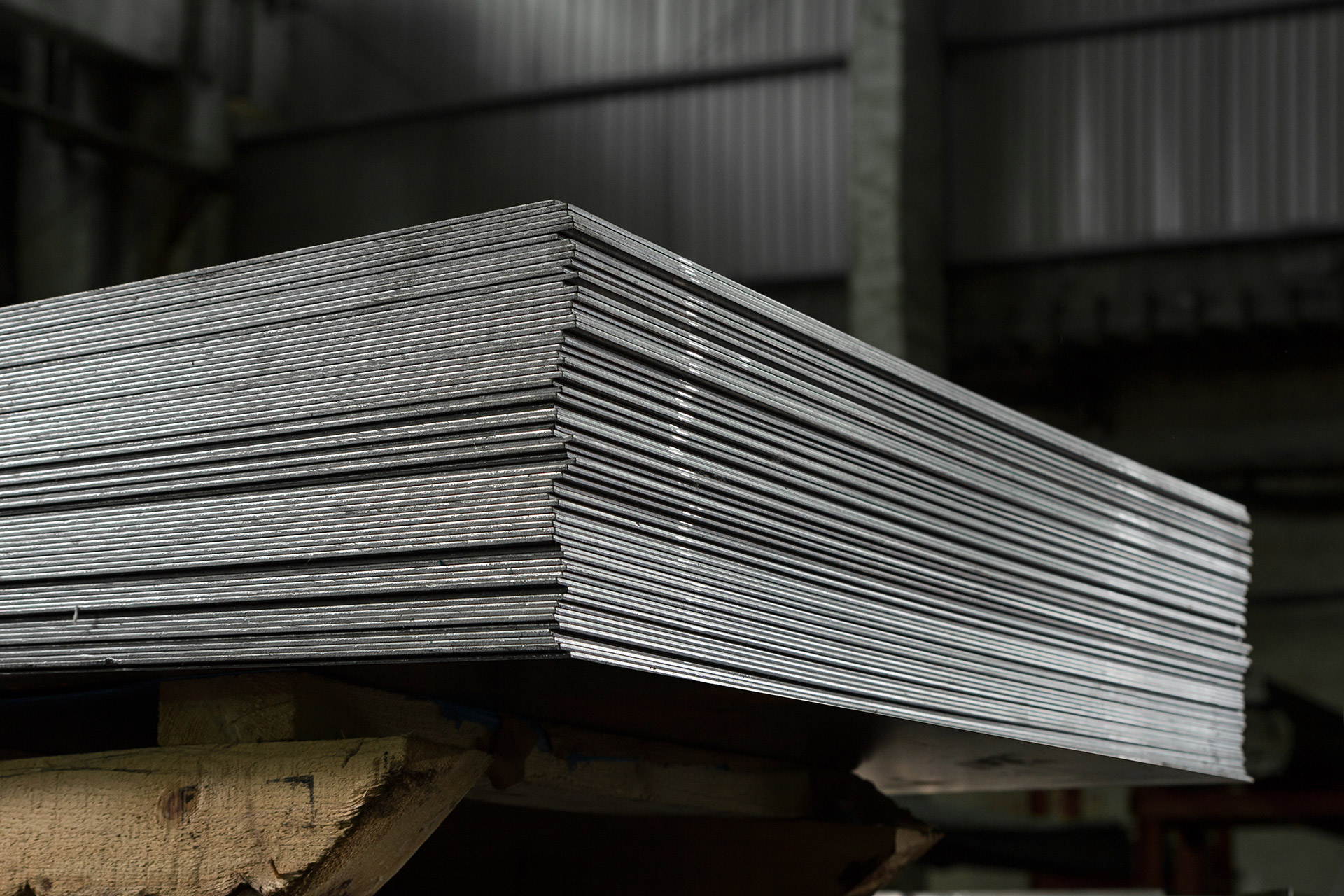
Thyssenkrupp has limited time left to find a potential buyer for its heavy plate plant, which is under threat of shutdown next year, the company’s executives told Kallanish during the group’s annual conference on Thursday. This comes after talks with various parties to sell the unit have so far failed.
“The sales process for the unit is ongoing and no decision has been made on whether or not to shut it; however, no buyer has been found so far which increases the risk of closure,” confirmed human resources chief Oliver Burkhard. The tender process will be closed on 31 December, he added.
Thyssenkrupp says there should be no layoffs if the plant is closed. Among other things, those workers affected are to be offered jobs at other tk plants.
Earlier this week, in response to rumours of the plate mill closure, Union IG Metall complained about a “…black day” for the steel industry in North Rhine-Westphalia (see Kallanish passim). “The Covid-19 situation broke the neck of the sales process, which was carried out with great care,” IG Metall NRW district manager Knut Giesler told local media. “The current situation shows how urgently state participation is needed for thyssenkrupp’s steel division.”
The heavy plate plant, which employs about 800 employees, was earmarked for sale or closure under an ongoing asset review by the company. The mill produces plate for the construction industry, shipbuilding and pipelines, among other applications.
Italian government confirms plan for majority Ilva stake
Italian economic development minister Stefano Patuanelli says the government will be a majority shareholder in former steelmaker Ilva, now ArcelorMittal Italia.
During televised question time at the Italian Chamber of Deputies, followed by Kallanish, Patuanelli said the government will be a significant presence. It will guarantee employment, a “greener” Ilva and the sustainability of the new industrial plan. He added that the government “…will not be a minority shareholder”.
According to local press reports, Italian authorities are willing to invest €1 billion ($1.18 billion) to relaunch the steelmaker.
Meanwhile, ArcelorMittal Italia has replaced its chief marketing officer, Carlo Malasomma, with Alessandro Faroni, a director under the former Riva ownership. It is also understood that ArcelorMittal is reorganising its commercial structure to shield the Italian unit from its other European activities (see Kallanish 10 November).
ArcelorMittal’s actions, along with the latest government declaration, are adding fuel to the rumours that ArcelorMittal may exit Ilva or keep a heavily reduced stake in the steelmaker.
The parties have until the end of November to reach a final agreement on the planned investment by Italian authorities. In the event an agreement is not reached, AM InvestCo, ArcelorMittal’s Italian entity, has a withdrawal right, subject to an agreed payment of €500 million.
Germany’s Thyssenkrupp shuts plate mill, keeps M&A options open until 2021
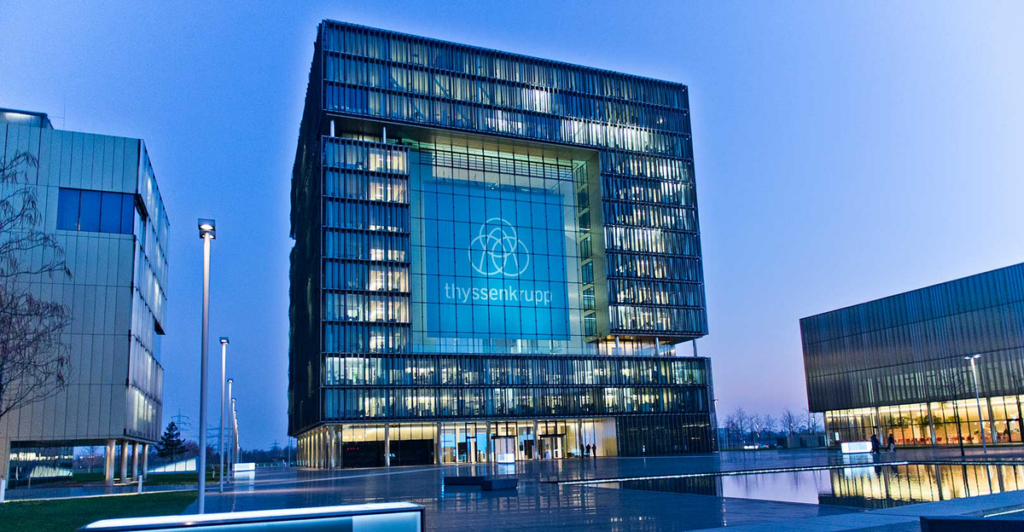
Germany’s Thyssenkrupp is looking to close its plate mill as it failed to find a buyer while still pursuing discussions with several other steel producers to find a buyer or partner for the struggling entire steel unit until deciding in March next year, the company said Nov. 19.
The company is also evaluating whether a “stand-alone” future strategy without a partner for the steel unit can work. The company also highlighted the transformation to green steel will need government funding and it would be in discussion with the state and federal governments.
Thyssenkrupp received a non-binding offer from Liberty Steel for its steel unit in October.
Additional job cuts, restructuring of steel
During the annual results press call Nov. 19, the company said it was not possible to find a buyer for its plate mill in Duisburg-Huettenheim until the deadline of Dec. 31, 2020 and is seeing a “high likelihood” to close the mill 2021, while the stainless steel plant AST in Italy has gathered undisclosed interest. Thyssenkrupp is further continuing with the profitability analysis of the Bochum plant.
There will be 7,400 further layoffs, of which 5,300 will be in Germany. The cuts will be across different parts of the company but in materials business especially. The job cuts add to the already 3,600 jobs axed, the company said on the call.
The current capacity utilization rate at the Thyssenkrupp steelworks have further increased from the previous rate of “just over 60%”, CFO Klaus Keysberg told S&P Global Platts during the call, adding he cannot comment on how much but highlighted the production is not back on full rate. Platts understands a full rate is usually 90-100% utilization.
Overall, the effects of the coronavirus pandemic were increasingly felt in the steel unit in the course of the third quarter at Thyssenkrupp. Full-year order intake and sales were down by 17% and 20%, respectively. Due to the “collapse” in shipments and the cost pressure from weak capacity utilization, adjusted EBIT showed a loss of Eur946 million compared with a profit of Eur31 million a year earlier.
Steel production, shipments up in Q4
Production of crude steel increased in Q4 to 1.8 million mt from 1.6 million mt in Q3, but the full-year fell 12.8% to 7.6 million mt. Crude steel production at semis producer HKM fell further in Q4 to 417,000 mt from 485,000 mt in Q3. The full year production stood at 2.3 million mt, down from last year’s 2.6 million mt.
Hot-rolled shipments increased in Q4 to 765,000 mt from 637,000 mt in Q3 on increased demand from the automotive industry. The full-year shipments of HR amounted to 3.1 million mt, down 18.1% on the year.
Cold-rolled shipments grew from 1.2 million mt in Q3 to 1.6 million mt Q4, seeing an overall 9.3% y-o-y drop to 6 million mt.
— Laura Varriale

Thyssenkrupp plate mill sale fails, faces closure: reports
Thyssenkrupp (tk) will imminently shut its heavy plate plant in Duisburg, according to German media reports. This comes after talks with various parties have so far not resulted in a buyer being found for the unit.
The steelmaker’s press office did not respond before deadline to Kallanish requests for comment.
“This increases the likelihood that the heavy plate division, as agreed in the collective agreement, can be closed by 30 September of 2021 at the latest,” a tk employee was quoted as saying by the German Press Agency.
In response, Union IG Metall complained about a “…black day” for the steel industry in North Rhine-Westphalia (NRW). “The Covid-19 situation broke the neck of the sales process, which was carried out with great care,” IG Metall NRW district manager Knut Giesler told local media. “The current situation shows how urgently state participation is needed for thyssenkrupp’s steel division.”
The heavy plate plant, which employs about 800 employees, was earmarked for sale or closure under an ongoing asset review by the company, which is scheduled to release full-year results on 19 November.
The mill produces sheet for the construction industry, shipbuilding and pipelines, among other applications.
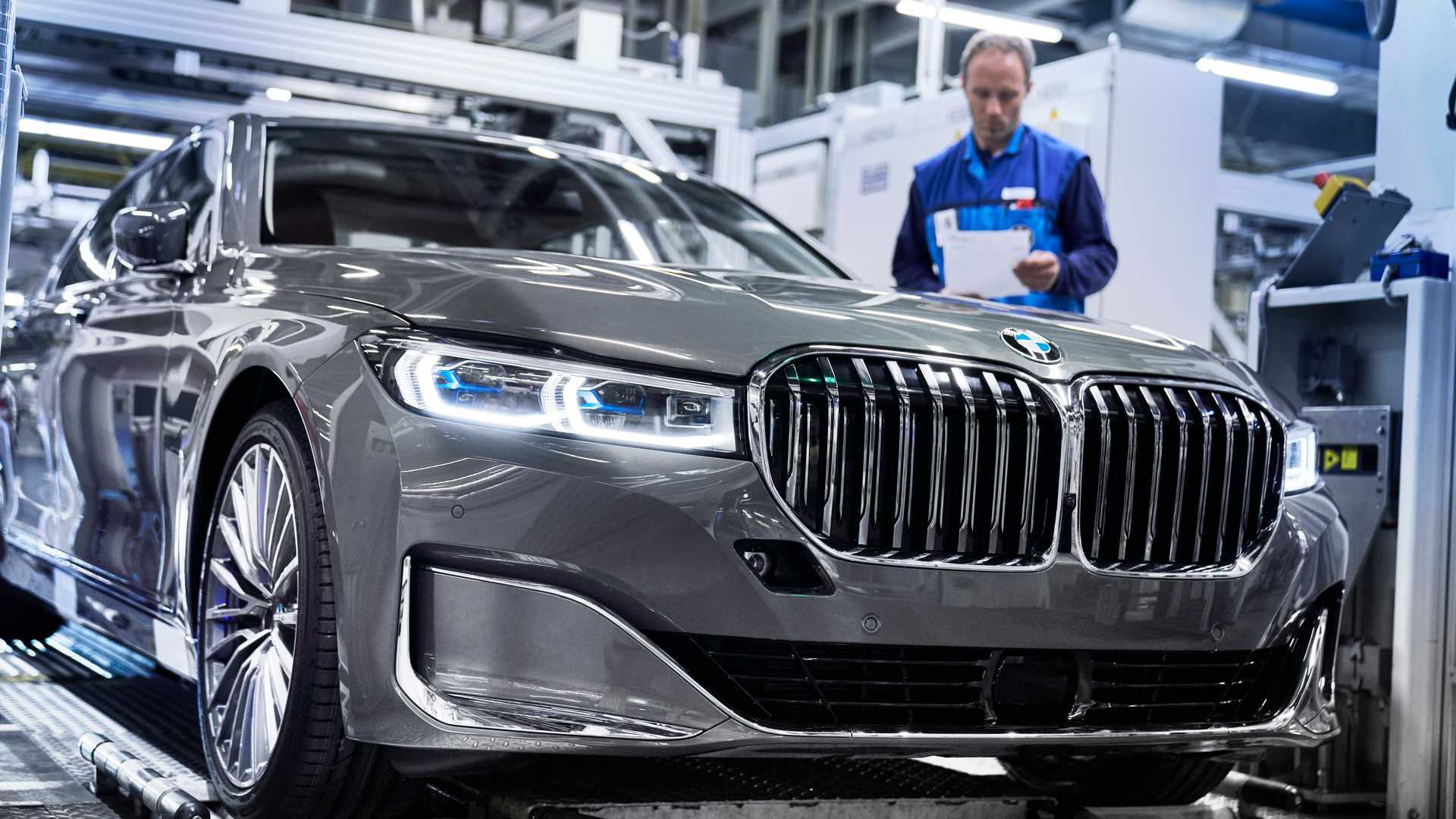
EU car registrations slip 7.8% in October as renewed coronavirus restrictions hit
Passenger car sales in the EU resumed their downward trend in October, as restrictions were reimposed by a number of governments due to a second wave of the coronavirus, the European Auto Manufacturers’ Association (ACEA) said Nov. 18.
The ACEA said registrations had fallen 7.8% year on year in October to 953,615 units, with the decline coming after the first increase of the year was recorded in September.
It noted that, with the exception of Ireland and Romania, losses were recorded in all EU markets, including the four major ones.
Demand dropped 21% in Spain to 74,228 units, 9.5% in France to 171,050 units and 3.6% in Germany to 274,303 units, while demand was relatively unchanged in Italy, with registrations down just 0.2% year on year to 156,978 units.
The October sales brought the total registrations in the EU for the first ten months of 2020 to 8 million units, down 27% year on year.
“Ten months into the year the impact of COVID-19 on car demand remains unprecedented,” ACEA said, adding that the January-October 2020 volume was over 2.9 million units lower compared to the same period in 2019.
In the top four markets, Spain saw the steepest drop of 37% year on year to 669,662 units, followed by Italy, where registrations fell 31% to 1.1 million units.
In France, sales were 27% lower to 1/3 million units, while in Germany, sales were at 2.3 million, down 23% year on year.
— Jacqueline Holman
Thyssenkrupp chief extols steel division, ponders German alliance
Thyssenkrupp chief executive Martina Merz has emphasised the high quality of the group’s steelmaking capability and has high hopes for the future of its distribution division, Materials Services.
“We believe in our steelmaking activities, in which we are the technology leader,” Merz says in an interview with daily Frankfurter Allgemeine Zeitung. Thyssenkrupp is currently in talks with Liberty Steel over a potential takeover of, or partnership for, its tk Steel Europe division. Merz considers the offer one possible option to enable a future for the division, which has been particularly hard hit by the coronavirus lockdown on carmakers in the spring.
She is also open to reviving the concept of a grouping of German steelmakers, which was considered in recent years under the name “Deutsche Stahl AG”. Salzgitter has however signalled its disapproval. Merz notes that she and Salzgitter chief Heinz Jörg Fuhrmann “…are not dancing together” in this respect, and that the government would also be a player in the game. “It will be more of a square dance,” she quips.
In contrast to its steelmaking division, which could be potentially divested, the group will cling on to Materials Services, Kallanish understands. For its distribution unit, Merz highlights the scalability of digital business models, and potential of expanding activities in America.
German recyclers want to keep scrap within EU
Germany’s steel scrap recyclers have expressed their desire to keep accrued scrap within the borders of the EU, and are seeking solutions for a circular economy at the European Commission level.
The EU produces more steel scrap than it recycles, with some 20 million tonnes/year exported. This essentially goes against the idea of avoiding transport in the interest of climate protection, says German steel recyclers federation BDSV.
In the first half of 2020, Germany’s exports of steel scrap totalled 3.84 million tonnes, which was -14.5% less on-year. The main target countries were the Netherlands, Italy, Belgium, Luxembourg and Turkey. It is likely that much of the volume sent to Belgium and the Netherlands eventually ended up in deep-sea markets like Turkey. Shipments to Italy and Luxembourg dropped significantly, Kallanish learns from BDSV statistics.
Imports of scrap into Germany totalled 1.54mt, down -17.1% on-year, and came mainly from Czech Republic, Poland, the Netherlands and France. Notable deviations from the first half of 2019 occurred with the Netherlands (-41.5%) and Poland (+10.7%).
In terms of prices, BDSV notes that fluctuations this year were comparably minor, with notations for new arisings sort 2/8 at between €196/tonne ($233) and €230/t. Meanwhile, 2019 had seen a range of between €170 and €256.
A BDSV sentiment poll shows that members this year have been more optimistic about business and more willing to invest and to hire staff than in 2019. Although more than half of the companies have operated on reduced hours, at least temporarily, after the outbreak of Covid-19, none had to close, and only 15% laid off personnel.
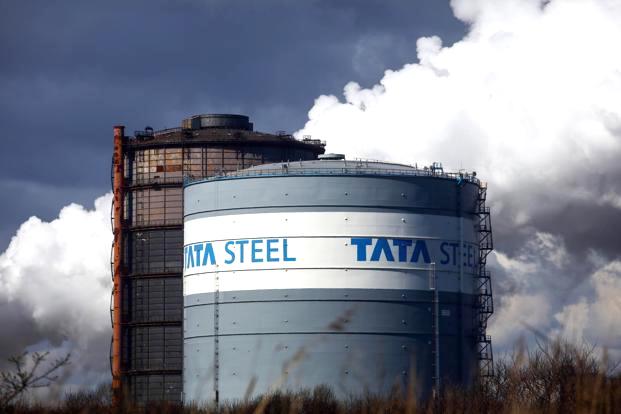
Tata eyes improved UK support, Netherlands due diligence
Tata Steel has asked the UK government for more “…substantive and permanent” options to secure the long-term future of Port Talbot’s operations, a spokesman for the steelmaking group confirms to Kallanish.
“The support we are looking for is a little more substantive and something more permanent, that will help us bring down cost of production and add value to the product mix,” Tata Steel chief executive TV Narendran told Moneycontrol on Tuesday. “Or, help us over a period of time in making a transition to a greener facility.”
A major point of the discussions is reported to be the possible replacement of the blast furnaces at Port Talbot with electric arc furnaces. However, there are questions over whether the cost of electricity in the UK will allow for competitive production.
The financial assistance Tata Steel UK already received from the government was to support the company’s working capital in order to ensure it continues operating in the immediate future, Narendran added.
“Post Brexit, we see that UK government will be keen to revive economic activity,” Narendran is quoted as saying by Livemint. “The UK has some high-end manufacturing locally and steel is an important part of the value chain. Over 50-60% of the steel used in the auto and construction industry in the UK is supplied by Port Talbot and we believe the government will support this business to keep the integrity of the value chain.”
Tata Steel chief financial officer Koushik Chatterjee, meanwhile, said the due diligence for the sale of Tata’s Netherlands unit to SSAB is expected to completed by end-December. Thereafter, the company will begin negotiations on the terms and commercial value of the transaction.
Concerns are mounting over the future of Tata Steel’s Port Talbot plant, given the Indian group has already decided to divest the more profitable, lower-cost Dutch half of its European operations.