


UK car production down 18.2% year-on-year in October: SMMT

UK car manufacturing output fell by 18.2% year on year in October, with 110,179 units leaving factory gates, according to figures issued Nov. 26 by the Society of Motor Manufacturers and Traders.
“October’s performance rounds off an extremely tough 10 months for UK car makers and suppliers, and production is now down 33.8% since January to 743,003 units,” SMMT said in a statement.
Last month’s figure represented 24,490 fewer cars made than in the same month in 2019, with the impact of coronavirus and fresh lockdowns at home and overseas subduing demand in many key markets, the group said.
For the first 10 months of the year, 379,308 fewer cars worth around GBP10.4 billion ($13.9 billion) were produced.
October’s decline was driven largely by falling exports, particularly to the EU and US, down 19.1% overall and equivalent to a loss of 21,569 vehicles, SMMT said. Shipments to the US fell by 26.0% year on year, while exports to the EU by were down 25.7%.
“Major Asian markets fared better, with exports to Japan and China up 57.1% and 9.7%, respectively, reflecting less stringent lockdown measures, but this was not enough to offset losses elsewhere,” SMMT said.
Production for the domestic market also fell, by 13.6% to 18,629 units, with 2,921 fewer cars made for buyers in the UK than a year earlier.
“These figures are yet more bad news for an industry battered by COVID, Brexit and, now, the unprecedented challenge of a complete shift to electrified vehicles in under a decade,” said Mike Hawes, SMMT’s chief executive, in a statement.
The UK government’s Nov. 25 spending review “recognized the need to invest in a green industrial revolution, but this must be at globally competitive levels and equal to the scale of ambition to keep this sector match fit,” he said.
“Above all,” Hawes said, “we must have a Brexit deal, one with zero tariffs, zero quotas and rules of origin that benefit existing products and the next generation of zero-emission cars, as well as a phase-in period that allows this transition to be ‘made in Britain.”
The UK’s transition period as it exits the European Union ends on Dec. 31, with no trade deal with the EU in place as yet.
Earlier this week, SMMT released figures suggesting that production losses could cost as much as GBP55.4 billion over the next five years if the UK automotive sector was forced to trade under World Trade Organization conditions over the long term. Even a so-called “bare-bones” trade deal with the EU would cost the industry around GBP14.1 billion, SMMT said.
“Industry bosses will be glad to wave goodbye to 2020. Yet the outlook for next year is uncertain as manufacturers seek to adapt to a new trading environment and wait to see if the threat from coronavirus and its effect on consumer demand begins to diminish,” Stuart Apperley, director and head of UK automotive at Lloyds Bank, said Nov. 26.
“Many will hope that the recent positive vaccine news, and anticipated rollout, will boost consumer sentiment and give people the confidence to make big-ticket purchases, such as a new car,” he added.
In the longer term, the UK government’s plan to take all petrol and diesel vehicles, except hybrids, off the roads by 2030 “confirms a clear direction of travel,” Apperley said.
“Many UK carmakers are well-placed to capitalize on the new rules, though others have work to do,” he said. “Either way it’s a huge incentive for the industry — and its supply chain — to invest in the technology and nudge customers towards choosing cleaner vehicles.”
— Andy Blamey

UK needs separate Turkish HRC anti-dumping probe: sources
The UK will not be able to apply any anti-dumping measures resulting from the European Commission’s current investigation into hot rolled coil imports from Turkey, Kallanish learns from sources. If the country wishes to impose similar barriers, it will need to start a brand-new investigation of its own into these imports.
The ongoing investigation at the European level is expected to result in provisional measures being announced in January 2021. Nevertheless, because these would be the first new measures applied after Brexit has been completed, they would not apply to the UK.
Last week, Yuriy Rudyuk from Van Bael & Bellis confirmed during a Eurometal event that the UK has the possibility to transfer existing EU anti-dumping measures for use after Brexit. New measures confirmed after Brexit, however, will not qualify for this transfer and new independent investigations will need to be opened in the UK.
It is not clear if the UK will move towards opening an investigation into Turkish HRC at this stage.
According to Eurofer data, this year Turkish-origin imports of HRC have been virtually non-existent in the UK. In 2019 these surpassed 60,000 tonnes, while back in 2017 the level stood at above 80,000t. Overall, UK HRC imports this year should be around 150,000t, having surpassed 250,000t back in 2014-2015.

EU carbon tax to cost Russian steelmakers $800m
Russian steel companies could lose up to $800 million/year from the introduction of a carbon tax in the EU, says Russian industry and trade deputy minister Viktor Evtukhov.
“The introduction of such a tax will affect about 13 million tonnes/year of Russian steel exports to the European Union,” Evtukhov said at the “Metals and Mining in Russia and the CIS 2020″ summit monitored by Kallanish. “The EU is generally one of the largest consumers of our steel – a total value of more than $7 billion. Accordingly, if there will be a tax of more than €60 per tonne, as is now being discussed, the loses will be about $780-800 million per year.”
Russian industry is actively modernising; the level of investment is growing each year, including in 2020 despite the pandemic and macroeconomic factors, the deputy minister observed.
Russian Union of Industrialists and Entrepreneurs (RSPP) president Alexander Shokhin said it is important for Russia that cross-border carbon regulation does not turn out to be an instrument of unfair competition, or a form of protectionism for European companies.
“In Russia, the main CO2 emitters are large companies that are members of RSPP,” Shokhin observed. “They are implementing measures to reduce emissions by hundreds of billions of rubbles, and 80% of our electricity is generated at power plants with low specific greenhouse gas emissions.”
The EU announced its intention to introduce a carbon border adjustment mechanism as part of the planned Green Deal. According to European officials, this will provide a fair playing field in the EU market for products produced according to high climatic standards with minimal CO2 emissions.
The final decision on the border tax is expected to be taken in mid-2021.
Global steel production recovery gains momentum in October
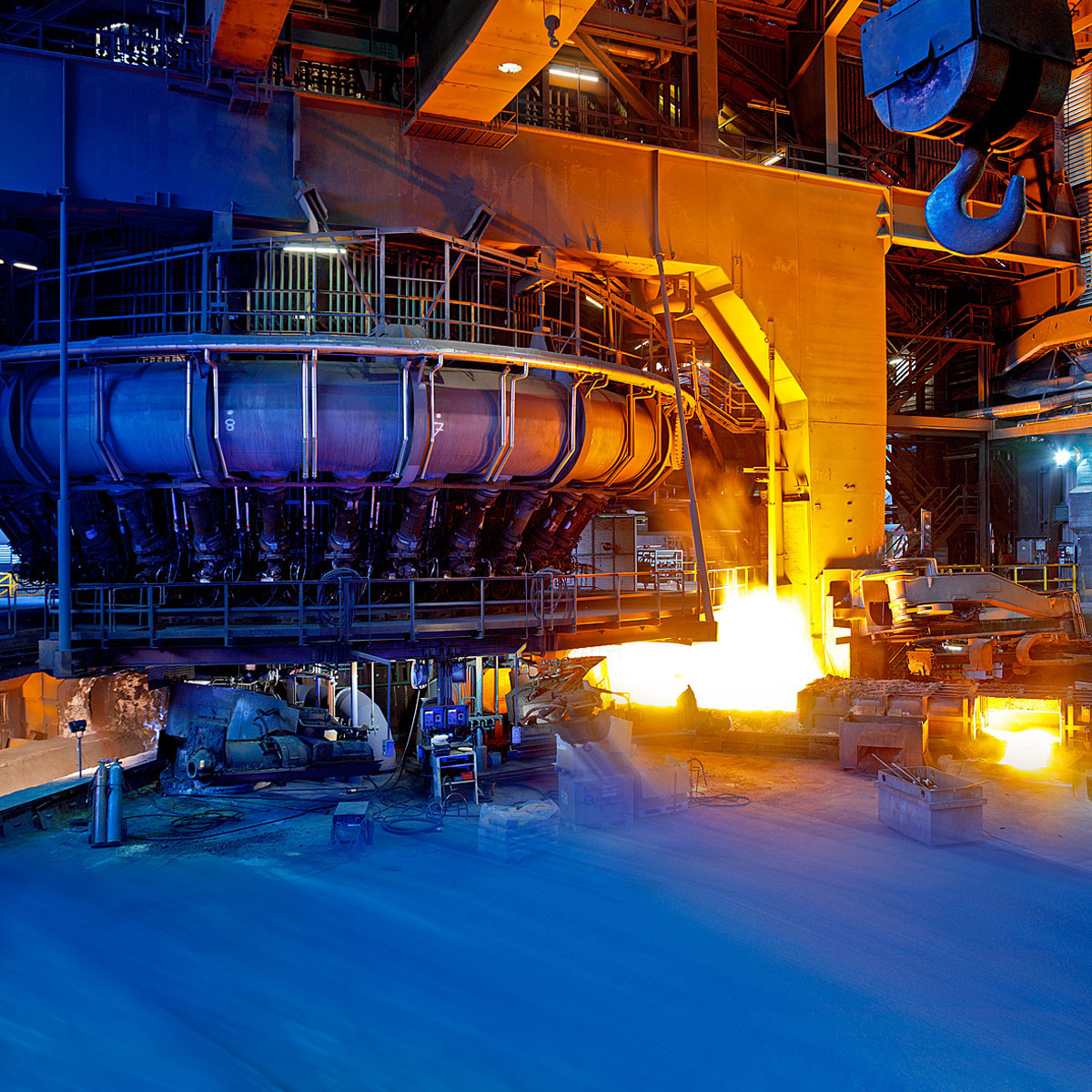
Crude steel production in the 64 countries reporting to the World Steel Association (worldsteel) rose 7% on-year in October to 161.89 million tonnes, gaining further momentum from growth in August and September, Kallanish notes.
Chinese output continued its relentless growth, rising 12.7% in October to 92.2mt. Indian output finally rebounded to pre-coronavirus levels, increasing 0.9% to 9.06mt. Japanese and South Korean production however dropped -11.7% and -1.8% respectively to 7.2mt and 5.86mt. Vietnamese output surged 112% to 3.37mt.
The EU28 saw output drop -5.6% in October to 12.61mt, despite output in Germany rising for the first time since the pandemic struck, by 3.1% to 3.42mt. Italian output however dropped -4.6% to 2.12mt. Output grew significantly in Czech Republic, Finland and Sweden.
Turkish output continued its recovery, rising 19.4% in October to 3.21mt.
US production slumped -15.3% to 6.14mt but Brazilian output grew again, by 3.5% to 2.78mt.
CIS production rose 4.7% to 8.39mt, with Russian output estimated to have risen 4.3% to 6.05mt and Ukrainian output increasing 5.9% to 1.65mt.
Global steel output in January-October nevertheless still dropped -2% on-year to 1.51 billion tonnes.
For antitrust reasons worldsteel no longer produces a monthly global capacity utilisation ratio. Information on capacity can be found on the OECD website, worldsteel says.
Japan’s Oct crude steel output rises for 4th month as demand recovery continues
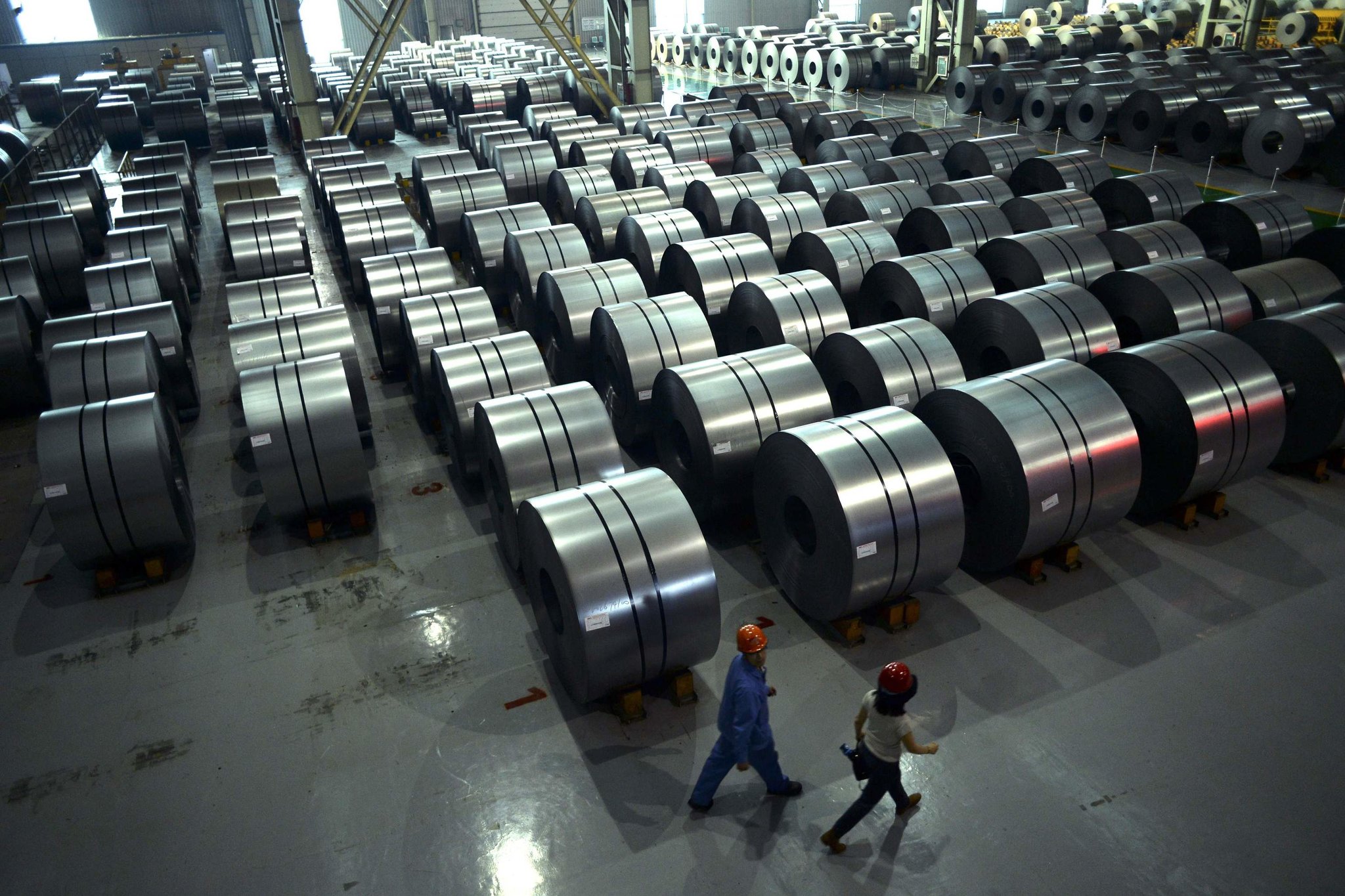
Japan’s crude steel production rose 11% month on month to 7.2 million mt in October, marking a fourth consecutive month of increase since hitting a year-to-date low in June, Japan Iron & Steel Federation data released Nov. 24 showed, as demand from the manufacturing sector continued to firm.
The total was still down 11.7% year on year, the data showed.
However output continued rising on a month-on-month basis as steelmakers increased in export sales and blast furnaces came back online after being idled due to the pandemic, market sources said.
Output from blast furnaces comprised 5.3 million mt of the total, up 11.5% from September and down 13.1% on year, and from electric-arc furnaces 1.9 million mt, up 9.6% from September and down 7.3% on year.
Japan’s manufacturing purchasing managers’ index or PMI published by au Jibun Bank rose to 48.7 in October from 47.7 in September, but remained in contraction for the 18th straight month, most recently impacted by the pandemic.
Crude output over January-October totaled 68.41 million mt, down 18.4% on year.
The uptick in crude steel production has boosted steelmakers’ demand for raw materials, although as most rely on long-term contracts for iron ore imports, demand for spot cargoes has seen little increase. The increasing production was instead lending support to ferrous scrap, which has seen prices continuing to rise in November.
JFE Steel restarted its 5,000 cu m No. 4 blast furnace at Fukuyama in October at the West Japan Works after it was idled at end June, while Nippon Steel plans to resume operations at two blast furnaces at Muroran and Kimitsu by end November, taking its total number of blast furnaces in operation to 11.
However, a fresh wave of coronavirus infections in Japan has raised concerns that production could again be impacted in coming weeks. Japan reported 2,168 new COVID-19 cases Nov. 22, the fifth straight day that new cases had exceeded 2,000.
— Clement Choo, Samuel Chin
ArcelorMittal, Italian government in partnership for a green Ilva
The agreement on ArcelorMittal Italia’s future, the largest Italian steel producer, is closed to be signed and it will relaunch the former Ilva, Giuseppe Conte, Italian Prime Minister said on Nov. 24 on a video call at the presentation of the Association for the development of South Italy, Svimez 2020 Report. This is seen as a confirmation that ArcelorMittal will remain a shareholder in the steelmaker.
“Just in these days we are defining the agreement with ArcelorMittal to complete the investment project in the name of a public-private partnership for the Ex Ilva of Taranto,” Giuseppe Conte said. “…we are offering an articulated plan to relaunch the Taranto site … in a marked direction of the energy transition.”
The declarations of Conte came just few hours after Italian national representative unions met with the CEO of ArcelorMittal Italia, Lucia Morselli. According to union sources, Morselli also confirmed that that they are close to finalize the agreement. “AM is likely to stay with the government that will enter in the company but we have no idea yet about the percentage, neither about the industrial plan. That is the reason we still want to call a strike,” an union source who was present during the meeting told S&P Global Platts.
Last week the Italian unions called two hours of strike on Nov. 25 to call for a responsible future of the Italy’s largest steel plant and to be included in the negotiation with ArcelorMittal.
At stake there are the jobs of around 10,700 workers at the plant, which is why it is so important for the Italian government to keep the company operational. ArcelorMittal agreed to buy Ilva in 2018 under a lease-and-purchase agreement for Eur1.8 billion and to invest another Eur2.4 billion to clean up and modernize the plant, which has been dogged by environmental issues. Following legal issues with the Italian state, ArcelorMittal in early March reached an accord with Italian authorities over the future of the former Ilva group, amending the existing lease and purchase agreement. The agreement left ArcelorMittal with the right to withdraw from its Ilva purchase by the end of November 2020, subject to the payment of a fine of Eur500 million. The lease-and-purchase agreement may extend until May 2022.
Invitalia, Italy’s agency for investment promotion and enterprise development, is the government arm that will be used to enter in the partnership. Last week, Invitalia’s spokesman, confirmed to Platts that Invitalia could take ownership of the former Ilva with “not a minority” stake and this would include modernizing both Blast Furnace 5, the largest in Europe, with a production capacity of around 3.5 million mt/year, and idled in 2015, and Blast Furnace 1, still in operation. In addition, two electric-arc furnaces would be introduced to the steel plant, to maintain a production capacity of 8 million mt per year, a move probably capable of maintaining current employment levels.
Industry sources said that as steel demand has slumped throughout Europe due to the pandemic and steel overcapacity is likely to continue to be a problem, it is unlikely that the Taranto works will be able to maintain a very high crude steel output for the foreseeable future. However, some sources with knowledge of the plant underscored the necessity for Taranto to operate at a rate of at least around 6 million mt/year to stay in the black.
ArcelorMittal Italia at the moment is casting around 7,300 mt/day of liquid steel, that is its lowest historical rate from just two out of its four blast furnaces.
Sources said that as ArcelorMittal has worked hard to achieve its $7 billion net debt target and is now prioritizing cash returns to shareholders, it is possible that the company wishes to keep Ilva out of its consolidated earnings in the new company.
ArcelorMittal declined to comment when contacted by Platts.
— Annalisa Villa
Rebar helps German stockists through the year
Germany’s stockholding distributors saw sales dip in the first nine months of the year, mainly for sheet, hot as well as cold rolled, according to their federation, BDS.
By contrast, sales of rebar surged year-on-year by a two-digit percentage, BDS chief economist Jörg Feger writes in his regular review of distributors’ activity. The weakness for sheet corresponds with the temporary stoppage at carmaking plants, while the flourishing rebar sales correspond with the continued boom in the country’s construction sector.
From January through September, distributors sold 7.76 million tonnes of steel, some -7% down on the first nine months of 2019, Kallanish calculates. March was still a peak month, with nearly 1 million tonnes sold, but April and May saw dips of -20% and -30% respectively. June and July brought a recovery, while August again was considered a weak month, at 815,000t.
This coincides with the trend of car production, which caught up in June/July but fell back in August, probably because of late summer holidays.
According to Feger, many customers in spring had ordered in excess of their actual demand so that their inventories were high when the lull came, and purchasing came to a halt. At the end of September, inventories at distributors stood at 2.10 million tonnes, -6% below the level of 30 September 2019.
ArcelorMittal seeks partner for Industeel
ArcelorMittal confirms to Kallanish that it has launched a process to potentially review the shareholder structure of its Industeel plate unit located in France and Belgium.
The company notes that a partnership could be taken into consideration, to further strengthen the business.
Last week the management of Industeel met with local trade unions and confirmed that professional figures were appointed to evaluate potential interested parties. Unions noted that a sale of the unit is also considered possible, but that any change would need to be first discussed with workers.
“Industeel specialises in the production of hot rolled, as well as forged, steel plate, ingots and formed pieces, with the largest dimensional range worldwide,” ArcelorMittal says. “Producing carbon, low alloy, stainless steels and nickel-based alloys, Industeel offers a complete range of steel grades for the most complex applications.”
Industeel encompasses six production facilities in France and Belgium “…with a long track record of metallurgical production, sector know-how and R&D innovation,” the firm adds.
Bekaert sees significant demand recovery
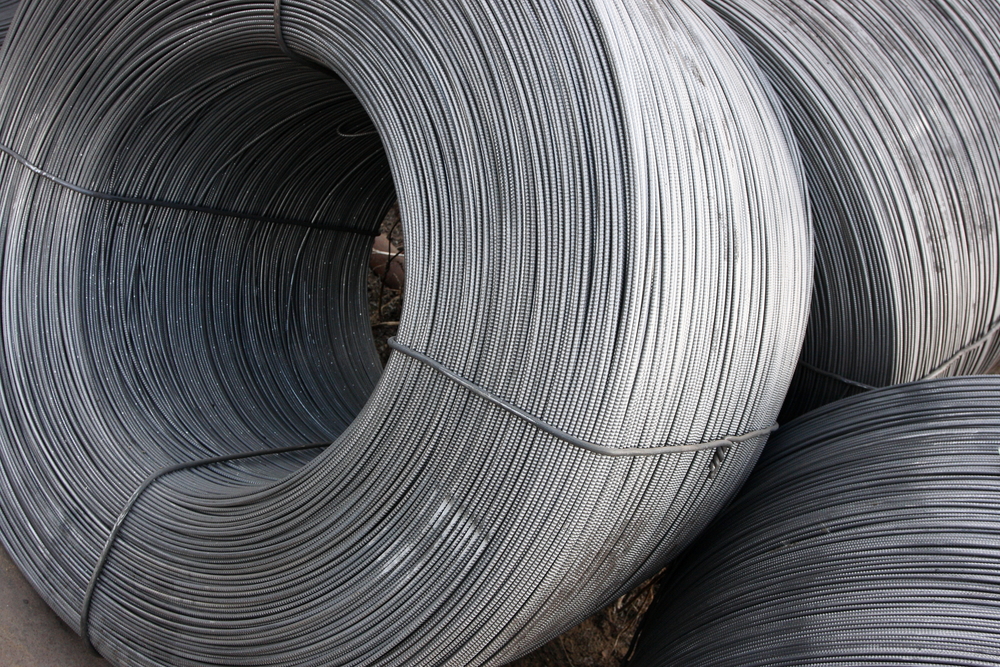
Belgian wire specialist Bekaert says it registered a recovery in demand, reaching a “…turning point” in most of its markets in the third quarter. Steel wire sales are expected to remain solid in Q4 despite the usual seasonality effects.
Demand from construction markets improved towards the end of Q3 but is projected to slow down by year-end, in line with seasonality, Kallanish learns from the company’s Q3 earnings report.
While the Covid-19 pandemic continues to create a high level of uncertainty, the company forecasts a step-up in performance in the second half of 2020 thanks to the recovery of demand.
The Steel Wire Solutions division registered continued good demand in Europe and pick-up in Latin America. In Q3 the business unit reported 2.8% organic growth, driven by higher volumes compared to the same quarter last year and a positive impact from passed-on wire rod price changes and other mix effects.
However, “…the turning point in the third quarter could not offset the significant contraction of the first half,” Bekaert says. The business unit reported a year-to-date sales decrease of -11.4% compared to the first nine months of 2019, driven by unfavourable currency movements and a -6.9% drop in volumes.
No major changes in demand conditions are expected for the Specialty Businesses division. The business unit reported a sales decrease of -7.3% in the first nine months, driven by the impact of the pandemic on demand. Combustion Technologies meanwhile picked up in Q3, while Sawing Wire activities remained limited. The company sees no major changes in business conditions in Q4, except for the usual seasonality.
Bekaert’s Q3 sales were up 24% from a weak second quarter. Consolidated sales for the first nine months were however -14% lower year-on-year at €2,755 million ($3.26 billion), due to the heavy impact of the Covid-19 pandemic.
German railway operator invests in cars for ArcelorMittal

DB Cargo, the freight train subsidiary of German railway operator Deutsche Bahn, will handle all material transport for ArcelorMittal Eisenhüttenstadt’s blast furnaces for the next ten years. The two companies have just signed a contract to that effect, Kallanish has learned.
DB Cargo highlights it will invest in dedicated logistics for the cooperation, covering the transport of ore, coke and limestone. It will procure 352 multifunctional double wagons with a total of 1,408 special containers until summer next year. Logistics provider Innofreight has designed them especially for the transport of these raw materials and optimised their loading volume, DB Cargo says.
“By using special container types optimised for the different properties of ore, coke and limestone, we can increase the net load per train by around 20%, which means we need significantly fewer trains,” says Sybille Klipstein, lead buyer rail at ArcelorMittal.
The partner company will also build two partially automated unloading facilities at the Eisenhüttenstadt plant, and will operate them itself. In total, up to 4.2 million tonnes/year of raw materials can then be transported, according to DB Cargo.