


ArcelorMittal Eisenhüttenstadt restarts BF, long-term future remains uncertain
Germany-based steelmaker ArcelorMittal Eisenhüttenstadt has restarted its blast furnace 5A following a recent operational disruption, restoring operations at the facility after production was interrupted at the end of September, according to media reports.
The disruption was reported in September after an operational irregularity was detected at the blast furnace, leading ArcelorMittal to partially halt production at the plant, as SteelOrbis previously reported. At the time, the company said its technical teams were working to stabilize operations and expected regular production to resume shortly.
However, questions remain over how long the blast furnace can continue operating. No definitive timeline for its continued operation or shutdown was provided.
Future production route remains unclear
Uncertainty over the blast furnace comes after ArcelorMittal decided in June 2025 not to proceed with its previously planned direct reduced iron and electric arc furnace-based decarbonization projects at its Bremen and Eisenhüttenstadt plants.
As a result, blast furnace 5A continues to play a central role in maintaining production at Eisenhüttenstadt, while the longer-term production route for the site remains unresolved. The Eisenhüttenstadt facility has an annual crude steel production capacity of approximately 2.5 million mt.
Author: SteelOrbis Editorial Team


France’s steel exports rise as imports ease in Jan-Aug 2026; metal output edges up in August
France’s basic steel product and ferroalloy exports increased by 2.3 percent year on year to €6.44 billion in January-August 2026, while imports declined by one percent to €5.92 billion, according to the French Ministry of Economy, Finance and Industry. These figures resulted in a trade surplus of €520 million for the period.
Trade in other steel product categories showed mixed trends. Steel pipe and tube exports fell by 5.6 percent to €796.36 million, while imports edged up by 0.3 percent to €1.33 billion. Exports of cold rolled steel bars rose by 6.1 percent to €307.88 million, whereas imports slipped by 0.9 percent to €335.02 million.
Cold rolled steel strip exports decreased by 5.3 percent to €407.16 million, with imports falling by 3.4 percent to €422.93 million. Cold drawn wire exports increased by 3.2 percent to €197.76 million, while imports declined by 4.8 percent to €301.79 million. Exports of metal structures and parts fell by one percent to €594.21 million, while imports dropped by 9.5 percent to €1.53 billion. All trade changes are compared with January-August 2025.
Meanwhile, France’s production of basic metals and fabricated metal products, excluding machinery and equipment, edged up by 0.1 percent month on month in August, following a 1.4 percent decline in July, according to the National Institute of Statistics and Economic Studies (INSEE).
Overall manufacturing output rose by 0.3 percent in August after falling by 0.8 percent in July. However, manufacturing output in June-August was down by 1.2 percent year on year and by 1.9 percent compared with the previous three-month period.
Among steel-consuming sectors, production of motor vehicles, trailers and semi-trailers declined by 3.4 percent month on month in August, reversing a 1.3 percent increase in July. Construction output rose by 0.7 percent after remaining stable in July, although output for June-August was down by 2.0 percent compared with the preceding three months.
Author: SteelOrbis Editorial Team

Swiss Steel’s cutbacks in Germany still undefined
The scale of the layoffs and capacity reduction that’ll take place at Swiss Steel is not yet known, despite announced intentions of further cutbacks.
The company underwent a wave of reductions and redundancies in late 2024 (see Kallanish passim), when the number of staff was brought down to under 7,000. According to ceo Frank Koch, the group has halved the number of employees over the years from 13,000 to 6,500 now.
This comes as Koch told Sonntagszeitung in an interview that further cutbacks are expected at the group’s German subsidiary, Deutsche Edelstahlwerke. That measure will minimise the group’s dependency on the automotive industry, he was quoted as saying.
With its upcoming measures, the loss-making group plans to return to operating profit by 2028, Koch said.
In a statement, Swiss Steel tells Kallanish that in the future the group “will have an altogether smaller and more focused set-up”.
The statement did not provide further details on the cutbacks. “As soon as the current considerations lead to tangible steps, we will communicate the process that will come,” the company says.


Italian coil prices tick up, uncertainty seen downstream
Italian coil prices are ticking up week on-week. Downstream, however, sheet and tube demand is still weak, with prices lagging behind.
Coil order intake also remains slow, with buyers yet to return to the market. Several buyers tell Kallanish they have sourced hot rolled, cold rolled and hot dip galvanized coil from imports. Import buying eased from mid-September when Asian mills raised their offers.
With stocks still sufficient, buyers are only taking small volumes from European mills to cover inventory gaps.
Kallanish assesses HRC Italy at €730/tonne ($822/t) ex-works. In September, service centres and re-rollers sourced material from various Asian producers and Turkey at €560-580/t cfr. In the second half of the month, Asian mills lifted prices, and some import deals are now heard at €675-700/t cfr.
Although imports have become more expensive, buyers continue to purchase to diversify supply and avoid relying solely on European mills.
A smaller service centre says it only buys imports on a ddp basis when available, and otherwise covers its limited needs from European producers. Very few traders now offer ddp, however, with most quoting cfr.
HDG import contracts are heard at €750-760/t cfr, excluding CBAM costs. Adding this would bring these prices close to current European levels, where HDG deals are at €840-860/t base delivered. A large service centre says it has to buy imported HDG because European supply is limited and it needs to restock.
The new price level for black hot-rolled coil in Italy and across Europe is €730-740/tonne, base delivered with offers at €750-790/t base. Demand is weak, but producers are uncompromising on prices for small and large customers alike. “Protected as they are, producers know that demand in Europe will recover and prices will keep rising,” a source comments.
Service centres are still making money at current sheet prices as they bought cheap Asian coil in the first half of the year. However, “downstream activity is very slow and sheets increases are lagging behind,” a service centre says.
“With increasing import prices we play it by ear. We bought a lot in August and September and we have stock to cover us at least until almost the end of the first quarter,” another service centre comments.
Demand for black hot-rolled sheet remains tepid. Payment delays are heard throughout the value chain. Prices are stable at €810-820/t delivered. “At €820/t you often lose orders,” an agent warns.

NW European coil buyers unfazed by possible shortages
Buyers remain broadly unalarmed by the potential output reductions at western European coil mills amid recent temporary stoppages.
Currently, it appears that alleged disruptions have been overcome according to official statements (see Kallanish 6 October 2026).
“They [the mills] seem to tell different things to different sides,” one German market observer believes. He notes that they do not want to let on about disruptions publicly, but to their buyers “they rather blow up small issues, to pretend that volumes could become scarce”.
Among buyers, though, “no one is really worried,” a Swiss-based trader notes. A manager of a Dutch processor concurs.
“There is still a lot of stock at service centres, and, we have enough contract volume with European mills, so no worries from my side,” he tells Kallanish. And, like many, he adds “I am more concerned about the low demand.”
A recent temporary blast furnace disruption at ArcelorMittal Eisenhüttenstadt, made public by the group, “would maybe affect automotive customers, but not us,” a buyer at an Austrian processor says. “The overall availability from the western mills is given,” he states.
The spot price of hot rolled coil is hovering around €740/tonne ex-works ($833/t), and views among buyers diverge as to whether mills will concede deals for €10/t less, or if they could bag €10/t more.
“Mills would like to go above the €750/t,” the Austrian sources says. Another buyer notes that mills do succeed in this when it comes quarterly contracts, where the level is €760/t for the first quarter 2027, he says.

Q4 2026 EU steel quotas exhausted across key steel product categories
Several of the EU’s steel safeguard quotas were exhausted on Oct. 6, following the opening of the fourth-quarter allocation period, amid continuing strong demand for imported steel despite the stricter trade measures introduced earlier this year.
Imports falling under category 1A, including hot-rolled coils (HRC), saw strong utilization following the start of the fourth quarter of 2026, with quotas for ‘Other Countries’ exhausted. Australia is depleted, and Indonesia’s quotas are nearly exhausted as well, with 1% remaining at 336.30 metric tons, while Turkey’s, also exhausted, has an indicative volume of 3,213.40 mt awaiting allocation, on top of the initial 160,573 mt quota.
Platts assessed imported HRC in Northern Europe at €595/metric ton CIF Antwerp and in Southern Europe at €590/mt CIF South Europe.
Quotas typically exhausted quickly under the previous trade measures. However, the revised measures introduced July 1, 2026, by the European Commission had far harsher stipulations, such as tighter quotas, a shared pool for Free Trade Agreements (FTA) countries, an additional first-come, first-served allocation, and 50% out-of-quota safeguard duties on any out-of-quota material.
For cold-rolled coils (CRC), the quota for ‘Other countries’ was fully allocated at 24,934 mt. Other origins had stronger availability, with the next most popular origin — South Korea — still holding 89.38% of its balance unallocated.
Attitudes towards CRC imports have remained largely cautious following the EC’s decision on anti-dumping duties on CRC on Aug. 6. Anti-dumping trade measures were applied to Japan, India, Vietnam, Taiwan and Turkey at varying rates, prompting some market participants to purchase domestically where possible.
As for hot-dipped galvanized steel (HDG) 4A, quotas for “Other countries” at 33,339 mt, Japan’s at 2,874 mt, Taiwan’s at 33,783 mt and Turkey’s at 68,925 mt were exhausted, while South Africa was close to reaching its limit at 3,150 mt with 1% remaining. HDG 4B quotas for China at 45,749 mt and Turkey at 26,020 mt were also fully used.
Plate quotas for “Other countries” at 18,830 mt, Turkey at 7,008 mt and India at 52,710 mt were depleted, as was Turkey’s rebar quota at 59,919 mt. For medium sections, quotas for “Other countries” at 7,174 mt, FTA partners at 5,150 mt, Turkey at 59,850 mt, and North Macedonia at 10,959 mt have also reached their limits.
UK steel safeguard refresh
The UK’s steel import quotas have also seen similar utilization levels following the quarterly refresh, although the safeguard measures, revised earlier this year, were significantly smaller than those in the EU. For category 1A, including HRC, India’s country-specific quota’s remaining balance sat at just 505 mt Oct. 6, out of a fourth-quarter balance of 8,364 mt, while the residual quota of 12,440 mt was completely exhausted over the same period. The EU’s country-specific quota remained largely untapped, with just 1,655 mt of material cleared.
For category 4 imports — including hot-dipped galvanized material — strong availability remains across all country-specific quotas, with India showing the largest allocated utilization rate at 58.7%.
Author: Panos Achilleos, Charles Thompson


European HRC suppliers push for higher prices; Southern buyers follow, resistance persists in the North
European hot-rolled coil suppliers continued to push for higher prices this week, with limited availability supporting prices in Southern Europe, while buyers in the North remained resistant to increases amid weaker demand and sufficient inventories.
A seller source confirmed that €740 ($829.27) per tonne ex-works was the key tradeable level in Northern Europe but added that transactions take place up to €760 per tonne ex-works.
A buyer source reported an indication of a tradeable level at €740 per tonne ex-works, adding that mills in the region target higher prices but slow demand is limiting the acceptance.
Fastmarkets’ daily steel hot-rolled coil index, domestic, exw Northern Europe, was calculated at €745 per tonne on Tuesday October 6, up by €3.12 per tonne from €741.88 per tonne on Monday October 5.
The index was down by €1.25 per tonne week on week and down by €3.75 per tonne month on month.
The Italian market was called “concerning” by one of the buyers, citing limited availability of the material in the market. Acciaierie d’Italia (ADI) is in the process of shutting down its blast furnace while Metinvest’s Ferriera Valsider has a significant backlog with only minor potential availability for December. This makes Arvedi the sole stable supplier in the Italian market.
A buyer source reported tradeable levels varying within the range of €740-745 per tonne ex-works on October 6.
Fastmarkets’ daily steel hot-rolled coil index, domestic, exw Italy, was calculated at €745 per tonne on Tuesday October 6, stable day on day.
The index was up by €2.5 per tonne week on week and by €22.29 per tonne month on month.
On the import side, Taiwanese material was heard available at around €765 per tonne DDP, while Japanese-origin offers came at around €760 per tonne DDP. Turkish hot-rolled coil (HRC) was reported offered at €560-580 per tonne CFR.

Bulgaria’s Stomana expands rebar output with Danieli order
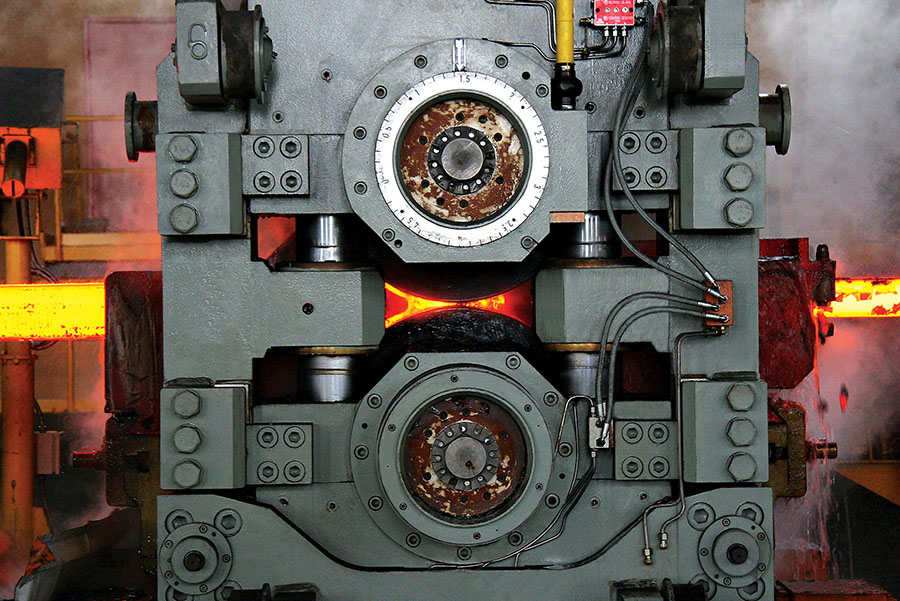
Bulgaria’s Stomana Industry, part of the Sidenor group, has awarded Danieli a contract to supply new rolling mill equipment for its site in Pernik, Kallanish notes.
According to the supplier, the project includes installation of new upstream equipment to feed a Danieli K-Spool line relocated from the Sovel micro mill in Greece, which will be commissioned during winter, as well as the replacement of the existing abrasive disk saw.
“With the integration of the former Sovel spooling line and the installation of the new saw, Stomana will expand its capability to serve growing demand for compact rebar coils and higher-quality SBQ products,” it adds.
The new rolling equipment will feed the relocated Danieli K-Spool line, enabling the production of compact rebars in coil weighing up to 3.6t and covering diameters from 8 to 20 mm.
Danieli’s scope of supply includes two preboxes, pinch rolls, a crop/chopping shear, an eight-pass finishing block complete with ring manipulator, and six water boxes with associated valve benches, lubrication and hydraulic systems.
The project is designed for thermomechanical rolling combined with Danieli Soft Quenching (SQ) technology — a patented, multistage controlled-cooling process that enhances metallurgical homogeneity, mechanical-property consistency, dimensional stability and production repeatability.
The new abrasive disk saw will replace the existing unit and will be used for cutting SBQ rounds from 20 to 130 mm diameter and lengths from 5 to 12.1 metres. Featuring an improved bar-locking system, a more powerful drive, extended disk life, faster disk changing time and easier access for maintenance, the new installation will support higher-quality and increased SBQ production.

Trasteel starts running Magona under lease
Steel trading and industrial group Trasteel has assumed control of Italian service centre Magona in Piombino, Tuscany, formerly owned by Liberty Steel, the company says.
The plant is now operated by Trasteel Magona, a new company established for the transaction, under a lease of Liberty Magona’s business unit. The lease started on 1 October and will remain in place run until no later than 31 December 2027. Afterward, Trasteel will assume full ownership of the business. Completion of the acquisition remains contingent on Liberty Magona’s restructuring. Liberty Magona has filed a restructuring plan with the Court of Florence that is awaiting approved.
The European Commission granted antitrust clearance on 29 September.
“With the start of the lease, Trasteel Magona will ensure the continuity of the plant’s operations, safeguarding approximately 500 jobs. Production will restart gradually, in line with a phased plan, with the objective of bringing the plant back to full operation and reaching a production capacity of over 500,000 tonnes/year by the end of 2027. Trasteel Magona will leverage the Group’s global sourcing, logistics and commercial platform to support continuity, reliability and quality of supply for the plant’s customers. The Piombino plant complements Trasteel’s Industrial Division, which comprises 13 companies in six countries and processes over 800,000t of steel products/year, including pipes, plates, coils and rebar,” Trasteel says in a note.
Workers have welcomed the development; a union source tells Kallanish. The new management promises a fresh start and a practical relaunch strategy, “different from Liberty’s void promises that brought us to almost bankruptcy. The problem now is integrating the market again, but we know the large company’s potential. In this last quarter we see a gradual restart of the production activity thanks to the incoming hot rolled coils with volumes that we believe will also gradually increase.”
Magona is returning to a market that has changed, the source adds. Coil prices are rising, European supply of hot dip galvanised and cold rolled coil is tight, and customers are increasingly expected to shift from imports back to European suppliers.

Italian distributors endure tough September amid weak demand
September was a difficult month for Italian distributors and service centres with low activity and margins coming under pressure. Welded tubes saw the most activity, while long product sales generally struggled.
One large distributor tells Kallanish that business held up despite the subdued market, thanks to its ability to meet customer needs and offer a level of service that mills cannot match.
“We are well stocked and can provide different measures and different products in one shipment,” he says.
Overall, the market has not properly restarted after the August break.
“Customers negotiate hard and manage to have good prices in this market,” another distributor says. An agent confirms that demand for tubes is better than for other long and flat products. However, he admits that even on tubes, sellers have to compromise on prices to secure sales.
For long products, multiple sources say they are starting to feel the end of post-Covid EU-funded infrastructure projects.
“On sections we’ve seen a clear slowdown in volumes since July,” a purchasing group says. An agent confirms this, although some work on beams still comes in every day.
Merchant bar mills keep pushing for increases, with offers at €390/tonne ($443/t) base. Prices remain at €350-360/t base delivered, excluding size extras.
Sections asking prices are between €850-860/t for the first category, but Spanish material is priced at least at €30-40/t less, making increased asking prices difficult to achieve.
Tube buyers are resisting the new price lists implemented by large tubemakers, causing confusion. Several buyers say they struggle in understanding the new price lists and have been buying from smaller re-rollers, with prices mostly stable compared to the beginning of September. Some say the level of discount remains stable compared to August at 40-43 points.
One source notes that in the current market the issue is not the price but volumes. He confirms that there is slightly better appetite for welded tubes but laments a general low apparent demand which mirrors the weak real demand.
The market is not seen improving in the near-term with the first quarter also likely to be weak amid elections in various countries. If volumes do not recover in the new year, mills will be forced to reduce capacity.
Additionally, all sources talk about lengthening payments.