


European domestic HRC prices increase slightly despite subdued market activity
Steel hot-rolled coil prices rose slightly in both Northern Europe and Italy on Thursday October 1, despite buyers resisting higher prices from mills, Fastmarkets heard.
“People have high stocks and are not accepting higher levels at the moment,” a source in Northern Europe said.
According to the source, import pressure is limited thanks to the Carbon Border Adjustment Mechanism (CBAM), giving mills more scope to raise prices. However, customers are not yet accepting higher offers from producers.
In Northern Europe, sources indicated tradable levels hovering at €740-750 ($839-850) per tonne ex-works, with reports of offers heard at €760 per tonne ex-works.
However, no reports of fresh trading activity were heard during the week.
Fastmarkets’ daily steel hot-rolled coil index domestic, exw Northern Europe was calculated at €748.33 per tonne on Thursday October 1, up by €1.45 per tonne from €746.88 per tonne on Wednesday September 30.
The index was up by €6.66 per tonne week on week and stable month on month.
Meanwhile, in Italy, trading activity also remained limited.
Indications of workable levels were heard at €740-750 per tonne ex-works, with no reports of new offers or trading activity from market sources.
Fastmarkets’ daily steel hot-rolled coil index domestic, exw Italy was calculated at €745 per tonne on Thursday October 1, up by €1.25 per tonne from €743.75 per tonne on Wednesday September 30.
The index was up by €7.5 per tonne week on week and by €32.5 per tonne month on month.

WTO establishes CBAM dispute panel at Russia’s request
The World Trade Organisation (WTO)’s Dispute Settlement Body (DSB) has established a panel at Russia’s second request to determine whether the EU’s CBAM and alleged ETS export subsidy are consistent with the bloc’s WTO commitments, Kallanish notes.
The EU had objected to Russia’s first request for a panel at a DSB meeting in July.
Russia says the CBAM package creates significant trade barriers for covered goods imported into the EU. Russia adds that the EU’s allocation of allowances to certain companies under the Emissions Trading System (ETS) amounts to an export subsidy intended to strengthen the competitiveness of certain domestic industries.
The EU has reiterated that the request “creates an extraordinary situation” whereby the international law compatibility of EU regulation is being assessed at the request of a member waging war against another member in violation of international law. The war is an “existential challenge” for the EU, it adds. As long as it continues, Russia “cannot expect to be able to rely on WTO rules for improved access for its exports” to the bloc, it notes.
The bloc nevertheless says it will participate in the panel proceedings, not because it finds Russia’s actions legitimate but “because of its firm support for the rules-based multilateral trading system”.
The EU is “confident that the Carbon Boder Adjustment Mechanism and free allocation under the European Union Emissions Trading System are WTO-compatible and has, therefore, a strong interest in ensuring an objective assessment of the matter by the panel, consistently with the DSU,” it notes.
The EU will only engage with the panel and not directly with the Russian Federation, it concludes.
Russia initially requested consultations with the EU on the matter in May 2025.
Author: Adam Smith

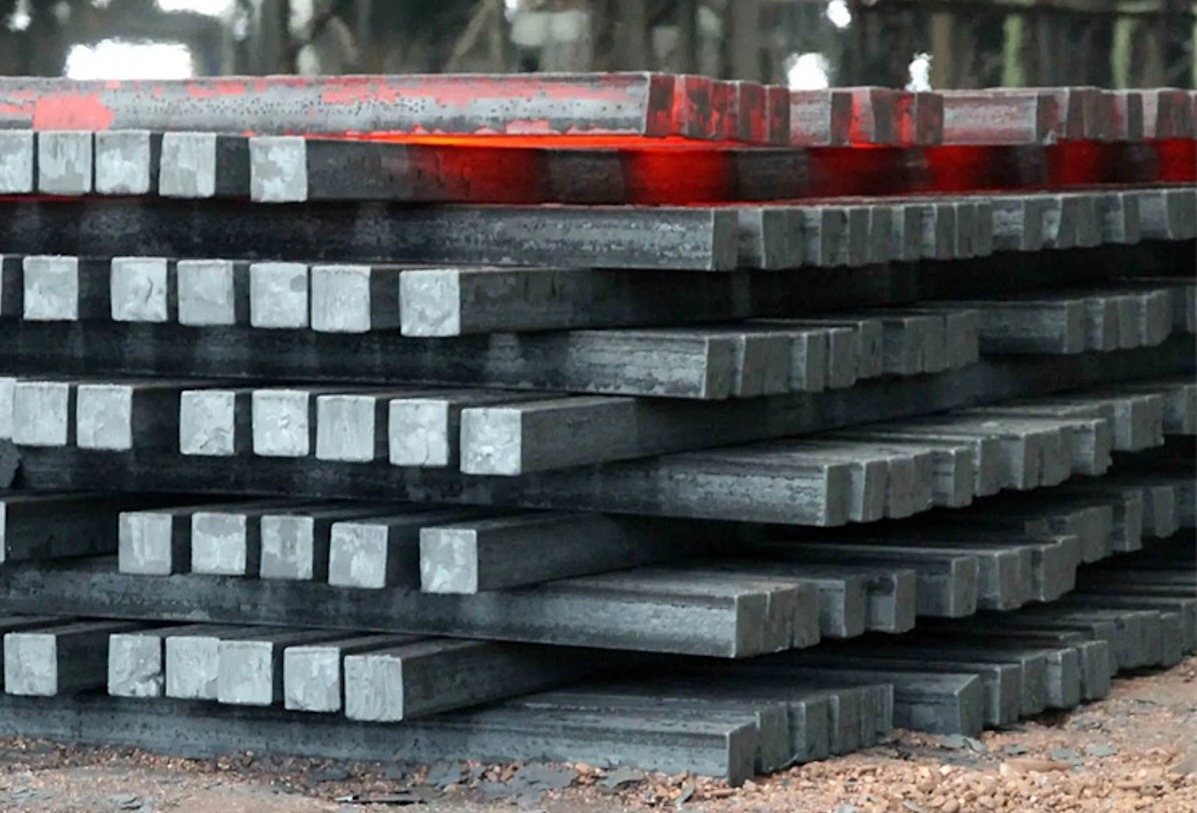
Nova Hut sources semis from Benteler
Nova Hut says it has received input materials from Germany’s Benteler Group in new dimensions at its medium section mill for operational testing.
The delivery is part of a growing cooperation with the steel and tube division of Benteler, Kallanish learns from an online post by the Czech steelmaker. It notes that it is testing various steel grades of the semi-finished products.
From Benteler’s mill in Lingen, Germany, Nova Hut has received square billets for the direct rolling of bars and smaller profiles, and blooms, which require a greater degree of formation, it says.
“In addition to our medium section mill’s standard portfolio, we will use these materials to produce OTB bars (threaded and anchor bars),” Nova Hut says. OTB bars are used in construction, geotechnics, tunnelling and mining.
In August, the steelmaker reported that it was sourcing billets from 7Steel Nordic, a division of Czech company Sev.en Global Investment.
Author: Christian Koehl

European Commission seeks feedback on the new EU Steel Regulation
The European Commission has launched a targeted consultation on the implementation and functioning of the new EU Steel Regulation, inviting stakeholders to share their experience of its early impact.
Regulation (EU) 2026/1384 establishes a tariff-rate quota system to protect the Union steel market from the negative trade-related effects of global overcapacity. Following the first quarter of application, the consultation will support the Commission’s ongoing monitoring and assessment of the Regulation’s impact across the steel value chain.
Steel producers and users, business associations, third-country governments, exporters and other interested stakeholders are invited to contribute.
EUROMETAL encourages steel distributors, traders and service centres to participate. Practical examples of how the Regulation affects material availability, purchasing decisions, costs, administrative requirements and customer supply will help ensure that the sector’s experience is reflected in the Commission’s assessment.
The deadline for submissions to the Commission is 11 October 2026 at 23:59 CEST.
Participate in the consultation: Monitoring the functioning of the new EU Steel Regulation
Members are also invited to share their responses or key observations with EUROMETAL at office@eurometal.net by 7 October 2026, so their input can be considered in EUROMETAL’s submission. Members should indicate any information that is confidential or should be used only in anonymised form.
German steel industry calls for continued budget support for grid charges

EU Melt and Pour documentation requirement for steel imports starts 1 October

Romania: longs prices edge up as transport costs add pressure despite limited demand
Romania’s longs market has taken on a slightly firmer tone this week, with some quotations moving higher despite no meaningful improvement in underlying demand.
Construction activity remains below earlier expectations and purchasing is still largely cautious, but the pressure on prices is increasingly coming from the cost side rather than from stronger consumption. Logistics have become a particular concern, as market participants report greater difficulty in securing trucks and a continued rise in transportation expenses. At the same time, a new tax introduced from October 1 for trucks above 3.5 mt is expected to increase road transport costs by around 7-8 percent, adding another cost element for suppliers and distributors. Buyers are therefore facing a market in which delivered prices are becoming more expensive even though demand itself is not providing much support, while tight liquidity and weaker purchasing power continue to limit the scope for purchases of larger volumes. As a result, the latest increase in longs prices is being viewed mainly as a reflection of higher logistics and operating costs rather than any clear recovery in market activity.
In the domestic market, retail rebar quotations have increased to around €615-625/mt ex-warehouse from €610-615/mt last week. Beltrame, meanwhile, has kept its rebar quotations unchanged at around €600-610/mt ex-works.
Wire rod retail prices have also moved higher, reaching approximately €640-650/mt ex-warehouse, compared with €635-640/mt last week.
Import activity remains selective rather than completely absent. Romanian buyers are still prepared to book material when competitive opportunities emerge from nearby markets, but there is little incentive to take larger positions at present, as a substantial part of the tonnage purchased during the summer is still available in stocks. Bulgarian rebar quotations have increased to around €650-660/mt CPT Romania from €640-660/mt CPT last week. No fresh Hungarian offers have been heard, while no new Italian quotations have emerged either, with the latest available rebar indication remaining at around €590/mt FCA, equivalent to approximately €655-665/mt delivered to Romania, based on freight of €65-75/mt. Moldovan suppliers continue to offer at broadly unchanged levels and are reported to have concluded some sales into Romania, with rebar at around €610-620/mt delivered and rebar in coils at approximately €645-655/mt delivered. Greek suppliers are offering rebar at around €640-650/mt FOB and wire rod at €660-670/mt FOB. With transportation to Romania estimated at approximately €20-25/mt, the corresponding delivered levels stand at around €660-675/mt for rebar and €680-695/mt for wire rod. Egyptian rebar quotations are currently at around $610-620/mt FOB, compared with $610-615/mt FOB last week, while wire rod is offered at around $620-630/mt FOB, versus $625-635/mt FOB previously. With freight estimated at $35-40/mt, these levels correspond to approximately €555-570/mt CFR Romania for rebar and €565-580/mt CFR for wire rod. Turkish rebar export quotations have, meanwhile, softened to around $615-630/mt FOB, from $620-635/mt FOB last week. Including freight of approximately $25-30/mt, the resulting level stands at around €550-570/mt CFR Romania, compared with approximately €555-570/mt CFR last week.
Author: SteelOrbis Editorial Team


Bulgarian longs prices show little movement as buying remains uneven
Bulgaria’s longs market has not seen any clear price direction in the current week, as only limited changes in quotations are accompanied by noticeably different demand conditions across the market.
Larger producers report that sales are still taking place at reasonable levels, with business neither particularly strong nor weak and some tonnages continuing to move at current prices. The situation appears softer among medium-sized suppliers, however, with several market participants saying that demand has been weakening gradually and is now showing little improvement compared with the subdued conditions seen in August. Against this uneven demand backdrop, sellers have had little room to adjust prices significantly, and current quotations remain close to last week’s levels despite some differences at the lower ends of the prevailing ranges. Attempts to move the market higher would therefore appear difficult to sustain for the time being, particularly while purchasing activity remains inconsistent across different segments of the market.
Domestic rebar prices are currently heard at around €635-650/mt CPT, compared with €630-650/mt CPT last week. Wire rod quotations are reported at approximately €665-680/mt CPT, versus €670-680/mt CPT a week earlier.
Import activity has remained particularly quiet this week, as sufficient stocks and adequate supply from domestic producers have reduced buyers’ need to seek additional tonnages from abroad. At the same time, no particularly aggressive offers are being heard from European or overseas suppliers, leaving both fresh bookings and firm import quotations scarce. From Greece, indicative rebar offers are heard at around €640-650/mt FOB, which would correspond to approximately €655-670/mt delivered to Bulgaria based on transportation costs of around €15-20/mt. Greek wire rod is meanwhile indicated at around €660-670/mt FOB, or approximately €675-690/mt delivered on the same basis. No notable new developments or fresh quotations have been heard from Italian suppliers this week. Egyptian rebar offers are currently reported at around $610-620/mt FOB. With freight estimated at approximately $30/mt, this would translate to around €565-575/mt CFR Bulgaria, compared with roughly €540-550/mt CFR last week. Egyptian wire rod is heard at around $620-630/mt FOB, equivalent to approximately €575-585/mt CFR Bulgaria including similar freight costs, versus around €560-575/mt CFR a week earlier. Turkish rebar offers are meanwhile indicated at around $615-630/mt FOB. Adding freight of approximately $25/mt, the resulting level would be around €565-580/mt CFR Bulgaria, broadly comparable with the €570-580/mt CFR range reported last week.
Author: SteelOrbis Editorial Team

EUROFER: EU steel demand to remain flat in 2026, with stronger recovery in 2027
According to the Economic and Steel Market Outlook 2026-2027/Q3 2026 Report from the Economic Committee of the European Steel Association (EUROFER), apparent steel consumption in the EU increased by 1.5 percent year on year in the first quarter of 2026 to 34.4 million mt.
Apparent steel consumption forecast revised downward for 2026
EUROFER expects the recovery to lose momentum. Reflecting market stabilization expectations and continued weakness in manufacturing demand due to disruptions in the Strait of Hormuz and other geopolitical issues, the association now forecasts apparent steel consumption to grow by only 0.1 percent in 2026 to 135 million mt, down from its previous forecast of 0.4 percent. Growth is then expected to strengthen to 2.3 percent in 2027, bringing consumption to 138 million mt. Even so, volumes are projected to remain around 7 million mt below pre-pandemic levels in 2019.
Meanwhile, real steel consumption increased by 1.6 percent year on year in the first quarter of 2026, following an 11.5 percent rise in the fourth quarter of 2025.
Production and capacity utilization remain weak
EU crude steel production fell to a record low of 125.8 million mt in 2025, down 2.9 percent year on year, and increased by 1.1 percent in May 2026. According to EUROFER, the weakness was due to lackluster demand from steel-using sectors and persistently higher energy and production costs compared to other major steel-producing regions. Capacity utilization rose to 67 percent in May 2026 from 65 percent in 2025, but remains low in historical terms.
Steel-using sectors to recover gradually
Demand from steel-using sectors, measured by the Steel Weighted Industrial Production (SWIP) index, is forecast to increase by 1.5 percent in 2026, following declines of 4.1 percent in 2024 and 0.1 percent in 2025. Construction, the EU’s largest steel-consuming sector, is expected to grow by 1.8 percent in 2026 and mechanical engineering by 1.9 percent, while automotive output is forecast to decline by a further 0.9 percent. In 2027, SWIP growth is expected to accelerate to 2.5 percent, driven by construction (up 2.9 percent), mechanical engineering (up 1.8 percent), and a rebound in automotive output (up 3.5 percent).
EU economy shows resilience despite geopolitical tensions
EUROFER noted that the EU economy has proved resilient despite tensions in the Middle East, though this has not yet translated into a meaningful industrial recovery. EU GDP grew by 1.2 percent year on year in the second quarter of 2026, up from 0.8 percent in the first quarter. In the same period, real GDP rose by 0.9 percent in Germany, 0.7 percent in France, 1 percent in Italy and 2.7 percent in Spain. EUROFER forecasts EU GDP growth of 1.1 percent in 2026 and 1.4 percent in 2027, while the IMF expects euro area GDP to grow by 0.9 percent and 1.2 percent, respectively.
Author: SteelOrbis Editorial Team

Stegra seeks additional capital, appoints new ceo
A review conducted by Stegra’s board of directors and external advisors has found that additional capital is required to complete the project, as the estimated costs of completing it are significantly higher than assumed in June, Kallanish hears.
The review comes after Wallenberg Investments took control of Stegra. The cost increases are mainly the result of substantial ramp-up costs following the prolonged scaling back of work earlier this year, as well as inflation, the owners say.
“When we took over, we said that we believed the financing would be sufficient, but that we could not rule out that more would be needed,” says Leif Johansson, chairman of the board. “We have a robust plan to complete the project and have identified greater opportunities for outsourcing and partnerships than we previously thought. If anything, our belief in Stegra is stronger today than when we came on board,” he adds.
Stegra’s statement adds that the board has initiated a dialogue with its largest shareholders which have expressed a positive view on taking part in the work to secure the capital required.
The board also announces the appointment of Håkan Buskhe as the new ceo of Stegra as of 1 November. Henrik Henriksson, who has led the company for most years since its inception in 2021, will remain with the company as an adviser.
“Henrik has built this company from an idea into one of Europe’s most important industrial projects. It is important that he continues to contribute with his knowledge and experience,” says Johansson.
“Håkan Buskhe has extensive experience of leading large industrial operations through transformation, and that is exactly the capability the company needs now,” they add.