


Assofermet Acciai: Italy’s steel sales down by up to 20% as low demand clouds Q4 outlook
The Italian steel market continues to show signs of weakness, despite the recovery in prices recorded in some segments. According to the market report issued by Assofermet Acciai on October 9, sales by carbon flat steel service centers are down by an average of 15 percent, with declines exceeding 20 percent in some cases. The outlook for the final quarter of 2026 remains uncertain, while market participants are expressing concerns about the impact of European trade and environmental policies on the competitiveness of the steel supply chain.
Carbon flat steel – September recovery quickly loses momentum
Following a rebound in activity in early September, characterized by relatively lively trading and stronger demand, the carbon flat steel market began showing signs of weakness again after the first ten days of the month, disappointing expectations of a possible turnaround in the final part of the year. The first week of October confirmed the negative trend and, according to Assofermet, there are currently no indications of a significant improvement during the remainder of the month. Concerns also extend to the entire fourth quarter, against a backdrop of persistently weak demand, international conflicts and complex economic and trade relations with the United States.
The association also draws attention to the consequences of the European Union’s environmental and protectionist policies. “The measures currently in place have a particularly significant impact on raw materials and basic steel products, without equivalent forms of protection being applied with the same effectiveness to semi-finished products and, above all, finished goods imported into the European Union,” the report states, adding, “This creates a clear risk of a loss of competitiveness for the entire European processing and distribution supply chain.”
Stainless steel – Volumes decline amid structurally weak demand
The stainless flat steel service center segment also recorded a negative September, with volumes significantly below those registered in the same month of 2025. Forecasts for October point to a further slowdown in activity.
According to Assofermet, the trend in actual demand is particularly concerning, as the contraction appears to be not only cyclical but also structural. Producers’ lead times remain very short, indicating limited order books despite restrictions on imports.
The sharp increase in energy costs is also weighing on the sector. Although inventories are lower than at the beginning of the year, they remain at average levels and do not indicate any particular supply-side pressure.
Stockholding and distribution – Prices recover, but volumes continue to decline
For the stockholder segment, Assofermet describes a situation in which prices and demand “continue to move independently”: producers are seeking to consolidate price increases, but demand remains insufficient to fully absorb them.
In the long steel segment, volumes are down compared to September 2025, while prices have gradually improved thanks to the cumulative increases recorded during the July-September quarter.
In the flat steel segment, sales value has also proved more resilient than volumes. Hot rolled coil (HRC) prices have consolidated above the levels reached during the summer, and autumn price increases are beginning to take shape, although they have not been accompanied by a convincing recovery in demand. Cold rolled coil (CRC) prices are following the HRC trend with the usual time lag.
The situation is more challenging in the hollow sections segment, where both sales volumes and value are declining.
In the stainless steel segment, meanwhile, tubular products are recording a sharp decline in both volumes and value, long products are showing a positive trend on both fronts, and flat products are benefiting from the return of alloy surcharges, with a recovery for 316 grade.
Outlook – Caution in the fourth quarter amid new EU requirements
The fourth quarter of 2026 has therefore begun with mixed signals. On the one hand, producers are seeking to consolidate autumn price increases; on the other, demand remains too weak to support a sustained market recovery.
An additional source of uncertainty is the mandatory melt and pour documentation requirement for imported products, which came into force on October 1. According to Assofermet, the new requirement imposes additional administrative burdens on market participants and could contribute to changes in sourcing patterns over the medium term.
Against this backdrop, the association emphasizes the need for a cautious approach while awaiting more concrete signs of a recovery in demand and greater clarity regarding the evolution of the European trade and regulatory framework.

European heavy plate round-up
Italian heavy plate prices increased in the week to 9 October, supported by restocking activity and rising slab costs.
Deals for s235jr/s275jr heavy plate in Italy have been reported at EUR745-755/t ex-works for bigger lots of material for fourth-quarter delivery. Some transactions for smaller volumes for delivery next year have already reached EUR770-780/t ex-works.
Restocking by distributors supported the price recovery. Re-rollers, traditionally reliant on imported slab, also face mounting costs due to exchange-rate fluctuations, energy costs and transportation costs.
Market participants reported that the lowest prices achievable for Asian slabs were $590/t CIF Italy.
In addition, slab imports that are customs-cleared in the first quarter of 2027 will be affected by the evolution of the CBAM framework, which will require importers to hold certificates covering at least 50% of their rolling emissions liability before the end of each quarter. As exporter emissions verification is inherently retroactive, CBAM rules demand that this rolling liability be assessed using either default values or values equivalent to those underlying the certificates surrendered in the prior year, where origin and CN codes match. As European re-rollers are not able to surrender any CBAM certificates until declarations are due in September 2027, this 50% requirement would fundamentally have to be assessed using higher default values.
While importers would be able to recover the cost of excess CBAM certificates purchased against default values if more competitive actual emissions values were successfully verified, the working capital burden would still be significant. As an example, the per-tonne default value cost of a 2027 Chinese slab import could reach EUR200/t at current EU carbon prices of around EUR80/t.
German steelmakers, in the meantime, continued to focus on long-term contracts and projects, limiting their presence in the spot market. Offers for s235jr-grade material were reported at EUR850-890/t ex-works Germany.
A Northwest European re-roller settled deals for s355jr plate within the region at EUR860/t delivered, compared with offers from competitors at EUR880-890/t delivered.
| Weekly European heavy plate, slab and green steel | |||||
| Unit | Term | 09-Oct-26 | Change | ||
| Weekly heavy plate | |||||
| Northwest Europe ex-works heavy plate | EUR/t | EX-WORKS | 860.00 | 0.00 | |
| Germany delivered heavy plate (Northwest Europe) | EUR/t | DEL | 860.00 | -20.00 | |
| Italy ex-works heavy plate | EUR/t | EX-WORKS | 750.00 | 5.00 | |
| Weekly steel slab | |||||
| Italy CFR slab | $/t | CFR | 590.00 | 5.00 | |
| Weekly green steel | |||||
| Green heavy plate premium (scopes 1-3 CO2 under 1t) | EUR/t | 25.00 | 0.00 | ||
| Source: McCloskey by OPIS. | © 2026 Dow Jones Energy Limited. | ||||
Author: Benjamin Steven

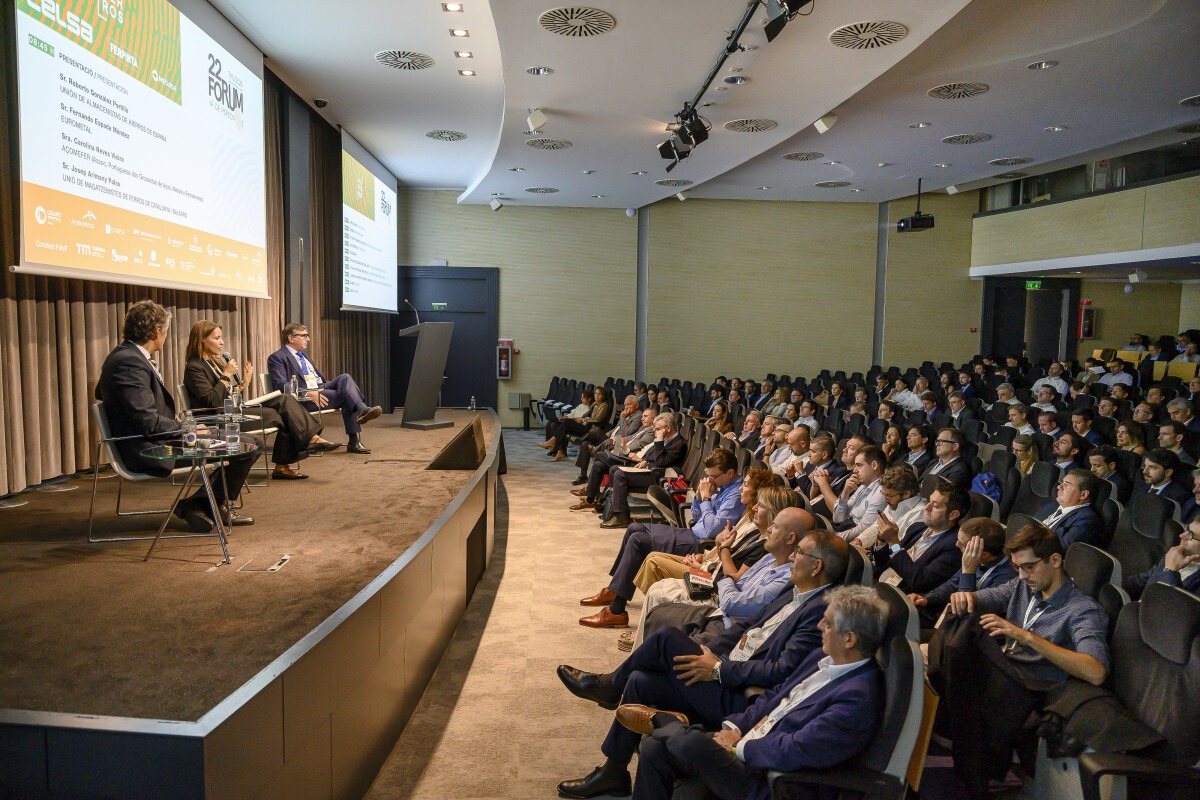
EUROMETAL participates in the 22nd steel distributors forum in Catalonia
EUROMETAL participated as a collaborating organisation in the 22nd Forum of the Unió de Magatzemistes de Ferros de Catalunya i Balears, held on 6–7 October 2026 under the theme “Va de Persones” (It’s about people).
EUROMETAL was represented by Fernando Espada, Vice-President of EUROMETAL, reinforcing the federation’s commitment to cooperation with national and regional steel distribution associations and to strengthening dialogue across the European steel value chain.
Organised by the Unió de Magatzemistes de Ferros de Catalunya i Balears, the annual forum brought together over 200 representatives of the steel distribution industry, steel producers, business leaders and sector experts to discuss the economic, geopolitical and industrial developments shaping the market.
The 2026 edition placed people at the centre of its discussions, highlighting the importance of leadership, innovation and human capital in an increasingly challenging business environment.
At a time when the European steel value chain faces significant structural and market challenges, opportunities for dialogue and cooperation remain essential to reinforcing the competitiveness and resilience of the sector.
More information: magferros.com
Dacia temporarily pauses production amid low consumer demand
Major Romanian carmaker Dacia plans to halt production for two days due to weak demand for cars from consumers, the company confirmed to Kallanish.
Activity at the plant in Mioveni will be stopped on 9 October and 12 October.
“We are forced to stop temporarily production amid poor order book, but we plan to restart production next Tuesday on 13 October,” a spokesperson tells Kallanish. “Currently the plant produces 1,060 cars per day.”
In the first eight months of the year, Dacia produced 169,000 cars at the Mioveni plant, compared to 185,000 in January-August 2025, according to Romanian Automobile Manufacturers Association (ACAROM) data.
In July, Dacia produced almost 26,000 units, while in August this fell to under 4,000 when production is stopped for more than 20 days for overhauls.
Earlier, the Renault Group announced that the latest Dacia models – Striker and the Spring electric vehicle will not be produced in Romania. The Striker will be produced in Turkey, and the new Spring will be assembled in Slovenia.
In August, Dacia and Ford temporarily shut down their factories in Romania amid the energy crisis during the summer amid the low levels of water at the Danube river.
Dacia, part of the Renault Group, remains one of the largest manufacturers of cars in Europe. It has an annual production capacity of approximately 300,000-350,000 vehicles. The Ford plant in Craiova produces cars and engines, with a design capacity of approximately 300,000 units/year.


Delayed UK EAF investments could miss demand window
Delaying investment into new electric arc furnace capacity in the UK could result in steelmakers missing out on demand for lower-emission steel, Kallanish learns from a new report.
Research by the Energy and Climate Intelligence Unit (ECIU) says the window for a managed transition is narrowing. It notes that new EAF capacity takes three to six years from investment decision to commissioning, meaning investment decisions taken in 2026-2027 determine competitive capability for 2028-2031.
This period is when demand for green steel is expected to surge from consuming sectors. The automotive sector will see its first wave of green steel targets, while the offshore wind procurement pipeline will be at peak volume, and the transmission and distribution build-out will accelerate.
Capacity commissioned after this window misses the demand surge it was designed to serve, the research suggests.
UK steel demand is projected to grow by 54% from 9.1 million tonnes in 2025 to 14mt in 2050, driven by construction, offshore wind, electric vehicles and grid infrastructure. Against an expected domestic production pipeline of approximately 6.7mt, this leaves a production shortfall of 7.3mt by 2050, which would require more than two Port Talbots’ worth of new EAF capacity and an additional 4.7 GW of energy capacity.
This represents a market opportunity of £93 billion ($122.8 billion) between 2025 and 2050 across sections, plates, strip and specialist steel that is currently being met by imports.
It notes that Tata Steel is building its 3.2mt EAF, alongside 7 Steel’s planned investment at its 1.2mt facility in Cardiff and the expansion of Marcegaglia’s Sheffield plant, in addition to the proposed transition of British Steel. These plants represent an investment pipeline that will shift the UK from 38% EAF share today to 75-85% once Port Talbot comes online, exceeding the current global average of approximately 30%.
The sunk cost trap works in both directions. Continued investment in ageing blast furnace infrastructure delays the transition, while inaction on new EAF investment forfeits the opportunity to displace imports. A change that will be progressively harder to displace once procurement chains have shifted.
ECIU says the UK’s confirmed transition trajectory makes it unlikely that any blast furnace will still be operating by 2035. For any operator already facing structural operating losses, the Emissions Trading System (ETS) cost escalation alone over a nine-year period makes the investment case for continued blast furnace operation increasingly difficult to justify on commercial grounds.
This switch is supported by projected demand growth, an available feedstock surplus, proven technology, and a grid decarbonisation trajectory that provides a structural emissions advantage over time.
Addressing electricity costs remains a precondition for the long-run viability of the post-transition industry, which has not been fully addressed. UK steel producers paid 27-38% more for electricity than competitors in Germany and France in 2025/26. Against France, the gap was almost 40%, costing the sector around £41 million in 2025/26 alone.
The study identifies risks including the tightening procurement window, the feedstock quality challenge, the electricity cost disadvantage, and the design weaknesses in the UK CBAM regime. Together, and given the compressed timescales involved, they constitute a material risk that the opportunity is ceded to imports by default rather than seized by design.
It warns that while the conditions for a successful transition exist, whether these are put in place in the available window is the central question for UK industrial policy over the next two to three years.
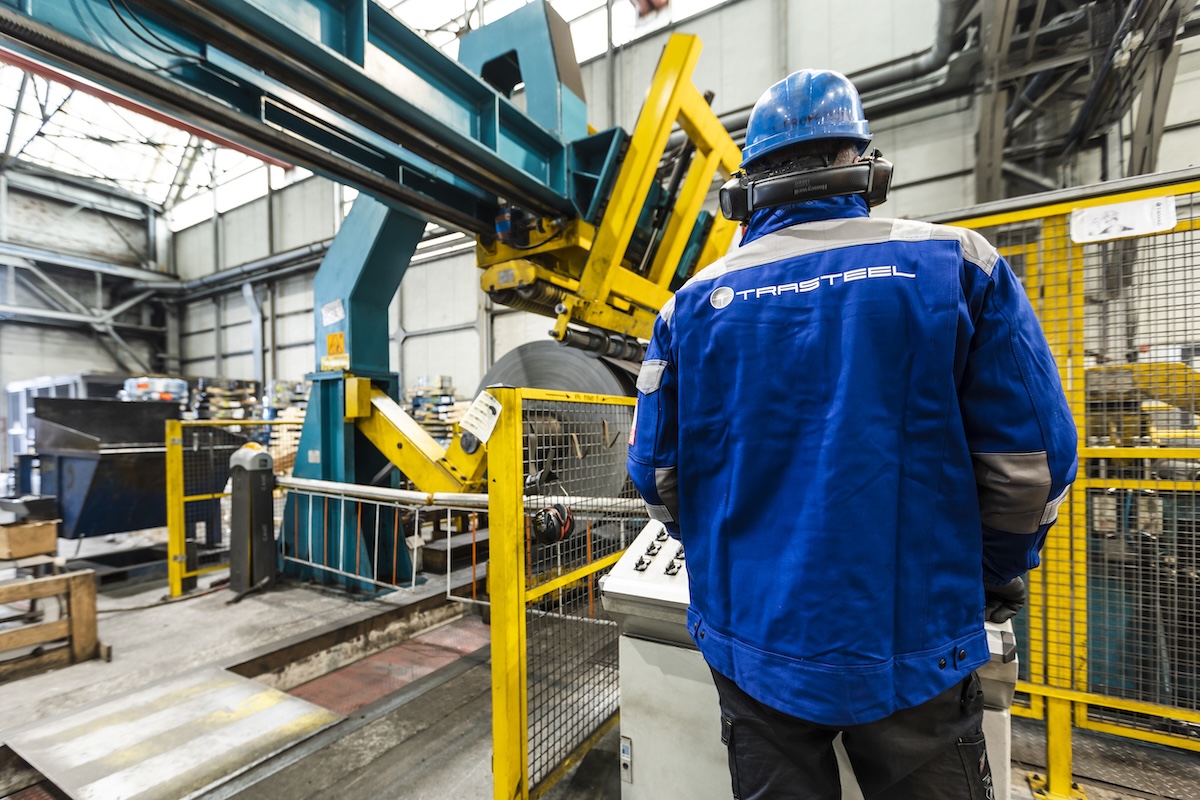
Trasteel acquires remaining 40% stake in BBC Alloys
Trasteel Holding announced on 7 October 2026 that its subsidiary, Trasteel International, had completed the acquisition of the remaining 40% stake in Italian ferroalloy company BBC Alloys from Metco. The transaction makes BBC Alloys a wholly owned subsidiary of the group.
The acquisition closed on 30 September 2026 for approximately €1.7 million. Trasteel had acquired a 60% controlling interest in BBC Alloys in June 2025.
Headquartered in Milan, BBC Alloys supplies steel mills and foundries in Italy and across Europe. Its activities include the trading, processing and distribution of standard and noble ferroalloys, as well as basic and minor metals. Its processing and logistics hub in Tortona provides crushing, screening, sizing, sieving and bagging services.
According to Trasteel, BBC Alloys has progressively joined the group’s procurement, logistics and financing platform since the initial acquisition.
BBC Alloys recorded revenue of €89 million in 2025, up 8.7% year on year, while trading volumes increased by 8.5%. Revenue reached €63.9 million in the first half of 2026, compared with €49.3 million a year earlier, based on unaudited management accounts.
BBC Alloys has been fully consolidated in Trasteel’s financial statements since June 2025. The latest transaction therefore eliminates the minority interest rather than adding these revenues to the group’s consolidated results for the first time.
Lorenzo Bagliano will continue as CEO of BBC Alloys and will also assume responsibility for the group’s ferroalloys activities. The company’s board will comprise Gianfranco Imperato as chairman, Bagliano as CEO and Federico Guiducci as director.

EU steel prices to rise as CBAM cost could reach €5B/y, says Trasteel CEO
The total cost of the EU’s Carbon Border Adjustment Mechanism for steel products could reach €5 billion/year and will be passed entirely on to consumers, Gianfranco Imperato, CEO of Trasteel, told Platts, part of S&P Global Energy, in an interview.
The burden on consumers is likely to be substantially higher because CBAM will inevitably trigger an increase in steel prices across the board, Imperato said. EU regulators appear encouraged by CBAM because they hope it will push companies to reduce emissions or move toward green steel.
“This may happen over time, but I do not expect it in the short term,” Imperato said. “For that investment to materialize, operators need to regain confidence in the future and a willingness to invest.”
Since the EU’s tighter safeguard measures and CBAM entered their latest phase, what changes have you seen in Trasteel’s sourcing mix?
Gianfranco Imperato: In the short term, the destination countries of our trading flows have not changed much, while the origins are being adapted to the available quotas. On the industrial side, our companies all have mainly regional businesses and are therefore largely doing what they did before, generally benefiting from a better pricing environment.
The only big difference compared to the past concerns the origin of our imported slabs. With Russian and Ukrainian supplies no longer available, we have increased our sourcing from the Far East.
How is China’s position in the European steel market changing, and what broader trade dynamics are you seeing?
Gianfranco Imperato: Europe remains our main destination market, and the key development of the last few years has been the sharp decrease in Chinese steel imports, replaced by imports of Chinese finished products — cars first of all — which shows the limits of the current measures for European industry and consumers.
In other regions — South America, the Gulf — the dynamics are somewhat different, but overall, we are seeing strong trade pressure, mainly against Chinese steel.
How are quota availability, CBAM exposure, and origin requirements affecting delivered prices for imported steel?
Gianfranco Imperato: In the short term, due to the extremely weak demand in Europe, prices have not yet been significantly affected, but I believe that soon, most of the impact of all these measures will be on prices, since the uncertain environment does not encourage companies and banks to invest in significant new production capacity.
Are Europe’s new trade measures causing genuine shortages, or are they primarily adding cost and uncertainty?
Gianfranco Imperato: The impact will be significant, especially in certain products — for instance, PPGI (pre-painted galvanized iron) — and the gap will be covered by increasing the current capacity utilization, but obviously not creating new capacity at least for a few years.
In this respect, our latest investment in “La Magona” is bringing back to the market an operator with around 500,000 metric tons/year of galvanized and PPGI capacity.
The main consequence will be an increase in prices, with an additional burden on the final consumers, while rebalancing investments into new capacity will require a much better outlook on consumption than today.
What will determine European buyers’ appetite for lower-carbon steel, and can producers pass the surcharge downstream?
Gianfranco Imperato: In a very noble but somehow “theoretical” way, European politics have been pushing very hard toward the green economy, but operators need to survive first, and therefore, the appetite for green steel will mainly depend on the possibility of operators imposing the relevant surcharge downstream.
I am personally critical of the heavy use of carbon taxes chosen by European regulators, rather than supporting companies with subsidies to change. Today, the approach seems to be penalizing rather than enabling.
Could lower-carbon producers in the Middle East and India become significant suppliers to Europe, particularly through DRI-based production?
Gianfranco Imperato: Everybody is now putting a lot of emphasis on DRI, without mentioning that the high-grade iron ore needed to produce it has been largely committed for years. DRI cannot be produced from just any type of iron ore. It is appealing to present it as an easy solution to steel industry emissions, but the reality is more complex.
Are tariffs, carbon costs, and origin controls turning steel into a permanently more regional market?
Gianfranco Imperato: Definitely. We are living, and not only in steel, in a post-globalization era — a world in which macro-regions face very different conditions. In this respect, there will be more regional players than global players in the downstream sector that we are in. At Trasteel, we decided a few years ago to be “multilocal” rather than “global” — to be deeply rooted in a selected number of countries rather than on the surface everywhere.
Trasteel is a global steel, energy, and metallurgical trading and industrial group supplying steel products, steelmaking raw materials, consumables, and related services.
This interview has been edited for length and clarity.
Author: Shivam Prakash

European steel market expects broadly unchanged fundamentals in October
Participants in the European steel market expect largely stable conditions in October, with modest price gains alongside broadly steady inventory and production levels, according to the latest Platts European Steel Sentiment Survey.
Price index
The overall price index for October was measured at 68.75 points, down from 87.50 points in September, indicating that participants expect prices to increase, but more slowly than they expected last month.
Trader, stockholder and service center sentiment on price was measured at 62.5 points, while producer sentiment stood at 75 points.
Despite support from European regulation and increased cost pressure, mills have struggled to consolidate higher price levels amid strong buyer resistance and weak underlying demand. Mills have remained firm on pricing, and prices have gradually increased, but persistent buyer resistance has dampened sentiment.
Platts, part of S&P Global Energy, last assessed domestic hot-rolled coil in Northern Europe on Oct. 6 at €745/metric ton, ex-works Ruhr, up €15/mt month over month.
Platts last assessed rebar in Northwest Europe on Sept. 30 at €665/mt, ex-works, unchanged month over month.
| Month | May 2026 | June 2026 | July 2026 | August 2026 | September 2026 | October 2026 |
| Index | 75 | 64.29 | 47.50 | 55 | 87.50 | 68.75 |
Source: S&P Global Energy
Production index
The overall production index was measured at 59.38 points, up from 52.50 points in September, indicating that surveyed participants expect production to increase slightly toward year-end.
Trader, stockholder and service center sentiment declined to 43.75 points, while producer sentiment increased to 75 points, suggesting that mills expect higher output even as downstream participants remain cautious.
| Month | May 2026 | June 2026 | July 2026 | August 2026 | September 2026 | October 2026 |
| Index | 47.50 | 57.14 | 50 | 15 | 52.50 | 59.38 |
Source: S&P Global Energy
Inventory index
The overall inventory index was measured at 40.63 points, up from 37.50 points in September, indicating that participants still expect inventories to decline, albeit at a slower rate.
This figure comprised readings of 56.25 points for traders, service centers and stockholders, and 25.00 points for producers.
The index suggests that participants expect stock levels to decline modestly as older imported material continues to be consumed by downstream buyers ahead of more recently purchased domestic material.
| Month | May 2026 | June 2026 | July 2026 | August 2026 | September 2026 | October 2026 |
| Index | 50.83 | 46.43 | 48.33 | 25 | 37.50 | 40.63 |
Source: S&P Global Energy
Author: Riley Waters

EU HRC prices remain stable, import buyers still cautious
Domestic hot rolled coil (HRC) prices in the EU have remained largely unchanged this week, with workable levels mainly at the lower end of mills’ offer ranges. Meanwhile, import activity has largely stalled amid uncertainty over quota availability and additional costs.
In northern Europe, domestic HRC prices have been reported at €740-760/mt ex-works, with some offers still reaching €770/mt ex-works, unchanged from last week. However, sources consider prices at the lower end of the range to be workable.
In Italy, offers have been heard at around €750/mt ex-works and above, while workable prices have remained within €740-750/mt ex-works, in line with previous transactions reported in the market. In Spain, workable HRC prices have been reported at €740-745/mt ex-works, unchanged from last week.
Meanwhile, import HRC offers have remained broadly unchanged or showing only a slight increase week on week at €635-670/mt CFR. The lower end corresponds to offers for ex-Turkey material at around $710/mt CFR, or approximately €635/mt CFR, duty paid, up by €10/mt week on week. Indicative offers for ex-Egypt HRC have been heard at $740-750/mt CFR, equivalent to around €660-670/mt CFR, the same as last week, while offers for ex-India coils have been reported at €650-670/mt CFR, according to sources. According to sources, although the most aggressive offers have disappeared from the market, market insiders do not consider the latest indicative offers to be workable. “Buyers’ price expectations remain closer to €600-620/mt CFR, with little fresh business reported,” a source said.
Import offers on DDP basis have been estimated at €760-780/mt. Offers for ex-Vietnam HRC have been heard at the lower end of this range, while material from Taiwan, South Korea and Japan has been offered at approximately €770-780/mt DDP. However, these remain offer indications, with little fresh import business reported. “There are no orders at the moment, but buyers may return if European mills raise their prices and imports become more attractive,” a market source told SteelOrbis.
“We expect some activity to resume next week following confirmation of FTA quota allocations, probably on October 13. For now, buyers remain cautious about committing to new bookings given uncertainty over the final cost of imported material,” a market insider told SteelOrbis.
According to sources, pressure on EU HRC import quotas for October-December 2026 remains high. In particular, according to the SteelOrbis EU quota tracking, Turkey’s country-specific HRC quota of 160,573 mt was exhausted on October 1. India’s quota has a remaining balance of 19,126 mt, against 23,628 mt awaiting allocation, meaning allocated volumes and pending requests together represent approximately 103 percent of its 149,318 mt quota. Meanwhile, pending requests under FTA-CSQ total 194,001 mt against an available volume of 120,920 mt, equivalent to around 160 percent of the quota, although allocation remains pending.
Looking ahead, some sources expect prices to move up from January amid concerns over quota availability for the first quarter of 2027. Substantial volumes from Turkey and India are reportedly to have been sold already for arrival in the first quarter, raising expectations that some importers will face out-of-quota duties.
$1 = €0.89
Author: SteelOrbis Editorial Team


European longs markets remain stable but pressure persists
The European longs steel market has remained largely stable in terms of prices this week, although sources have reported greater buying interest from end-users.
In the Italian rebar segment, mills’ price requests have remained stable in a range of €470-490/mt ex-works base (around €735-755/mt ex-works including regular extras), and producers are confident that these levels will hold. “Fortunately, our Italian customers understand that the increases are driven by our need to offset production costs, also because this is a situation we are all facing. Logistics costs are also weighing on the market,” one source stated.
Accordingly, incoming orders for Italian rebar producers are reported to be improving. Although some producers are planning to reduce or have already reduced production rates in October, the overall sentiment remains moderately optimistic.
However, other sources on the buyers’ side have stated that the average level in actual deals still stands at €460-465/mt ex-works base (€725-730/mt ex-works including regular extras), only reaching the lower end of producers’ requested range on limited occasions.
In the export segment, a source at an Italian mill stated that it has “fairly positive expectations” for the coming period, particularly regarding eastern European destinations, as the region is currently experiencing a shortage of material due to the inactivity of major Ukrainian plants affected by Russian attacks. Italian offers to eastern Europe have therefore been reported at €610-620/mt FCA, although this information has not been confirmed by the time of publication.
In the rest of Europe, prices are standing at significantly lower levels than in Italy. In Poland, for instance, rebar prices have been reported at €620-635/mt CPT, while drawing-quality wire rod prices stand at €675-690/mt delivered and mesh-quality wire rod prices are at €645-660/mt delivered. In Italy, the same prices have been reported at €675-685/mt delivered and €665-670/mt delivered, respectively.
According to one market participant, “The price gap between the Italian and German rebar markets is widening, as German suppliers are more reluctant to accept the requested increases.” According to the latest information obtained by SteelOrbis, German domestic rebar prices stand at €660-680/mt ex-works, while wire rod prices are estimated at the same levels as in the Polish market.
As for imports, offers from Turkey have been reported at €595-600/mt CFR for rebar and €600-610/mt CFR for wire rod, respectively down by €5/mt on the lower end of the range and stable week on week. In this scenario, the variation in the euro-dollar exchange rate – from 1.14 to 1.12 within one week – should also be taken into account. It should also be noted that, as of today, October 8, the EU import quotas for Turkish steel products for the final quarter of 2026 have been filled and exceeded for both rebar and wire rod (59,919 mt and 61,147 mt, respectively).
Author: SteelOrbis Editorial Team