


Severstal expands rebar range for northern Europe
Russian vertically-integrated steelmaker Severstal’s distribution arm, Severstal Distribution, has received quality certifications for its rebar compliant with Finnish, German, Swedish and Lithuanian standards, the company says.
The 10mm, 12mm, 16mm, 20mm, 25mm and 32mm rebar of steel grades K500B-T and B500B is compliant with European standards SFS1300, DIN488-1, SS212540 and LSTEN10080. This allows it to be stocked by large distributors in the EU with clients in these European countries. Severstal has thus been able to issue a universal quality certificate, which confirms the four country’s quality standards and significantly expands its usage geography in Europe, the firm says.
Severstal Distribution’s sales geography spans European, Russian, Ukrainian and Belarusian markets, also providing downstream services such as processing, logistics, and technical support. The segment clocked up sales of 2.3 million tonnes in 2018.
Severstal produced 12 million tonnes of flat and long products at its Russian assets in 2018, raising net profit 51.4% on-year to $2.1 billion.
Thyssenkrupp-Tata extend merger proposal date, Goss dismisses Brexit
Thyssenkrupp and Tata have been granted more time by the European Commission (EC) for the completion of their merger application.
“In the ongoing control proceedings, the deadline for the partners to submit a proposal to address the concerns expressed by the Commission is currently imminent,” thyssenkrupp says in a statement sent to Kallanish. In order to prepare this proposal, the partners have agreed, in dialogue with the Commission, to request an extension of 8 working days, they said without giving a date.
The original deadline set last year for the process was 19 March, but was dismissed in December as the procedure was stalled to meet inquiries from Brussels. “We remain confident that we will be able to close the transaction in the spring”, the statement reads. On its website, the EC cites a provisional deadline for the proposal of 13 May 2019, without it being clear if this Is the date before or after the extension was agreed.
On the day of the announcement, tk Steel ceo Andreas Gross spoke at the annual Zukunft Stahl conference organised by Handelsblatt/Euroforum in Düsseldorf. Goss has made few public appearances for years, and on Thursday he appeared to want to make up for lost time with some of his comments.
The merger will make him ceo of a company with mills in the UK, where he had studied and headed up Siemens UK for many years, with his family still living in the UK. “Thus, I can claim some judgement, which is unusual for a Bavarian,” he joked. He said that he has little empathy for Brexit. He remarked that “… the EU has a value at its core, which is more than being a free-trade zone. Whoever does not understand that will have to carry the public consequences.”

Insight: In no-deal Brexit, trade remedies could be reviewed
ISTA, the UK international steel trade association, confirmed that in
case of a no-deal Brexit it understands there will be no duties or no
quotas on steel products unless the remedies are already in place,
association chairman Brian Patterson told S&P Global Platts on
Wednesday.
A day earlier he met with the UK trade officials
seeking clarification following the guidance published by the UK
government last week.
Remedies such as the safeguard quotas and
anti-dumping measures that are now in place would be transitioned
until such time that they can be reviewed, according to the UK’s
specific needs and requirements by the UK’s new Trade Remedies
Authority (TRA).
While the Trade Bill, formally establishing
the TRA, completes all parliamentary stages and in the next few weeks
receives Royal Assent, the work of the TRA is in fact being undertaken
by the TRID (Trade Remedies Investigation Directorate).
In a
no-Brexit deal scenario, the UK’s intention is to transition all these
remedies already in place (safeguards quotas and antidumping measures)
until they can be reviewed by the TRA, but the legal basis, under the
WTO, for the transitioning is not clear to ISTA, which is seeking
clarification.
Wider trade issues in play
After Brexit, it is unclear how the European Commission will treat
quotas on steel introduced by the EC in response to the US 232 sanctions
as the quotas were established on the basis of 28 members (including
the UK) rather than 27. These safeguard quotas were put in place in
February and have a further two years to run, subject to periodic
reviews, the first being before July 1. The EC did not reply to Platts
on this matter when contacted.
ISTA on this point said that, in
co-operation with the association’s office, its new Dusseldorf Forum
was well placed to deal with the EC for the benefit of all its UK and
continental Europe members. ISTA Dusseldorf was set up one year ago and
has around 20 members across continental Europe including traders,
lawyers, stockholders and service centers.
“We have two
centers outside UK: one in Germany and one in Singapore, both key
international steel hubs, which, over and above the problems caused by
Brexit, are facing an increasingly protectionist world in which
consumer choice for quality and competitive steel offered by ISTA
members is threatened by new trade barriers. Our immediate attention,
however, is concentrated on issues relating to Brexit,” Paterson said.
In the case of a deal the situation is very clear instead as the status
quo will stay the same with the UK carrying on with all the EC
agreements on safeguards, quotas and anti-dumping measures.
If
the EU grants the UK an extension for the deal scenario the situation
will continue the same until the TRID makes its own regulations.
— Annalisa Villa
Klöckner promotes open e-commerce trading platform for steel
The so-called Xom website platform for steel launched by Klöckner & Co could be a rare example of an e-commerce venture which grows westward from a European base, according to Klöckner ceo Gisbert Rühl.
Xom is now operational in the USA, “… where there is indeed no similar open platform for steel,” Rühl tells Kallanish at the annual ‘Zukunft Stahl’ conference organised by Handelsblatt and Euroforum. “There are American platforms that are proprietary to service centres, for example, but none that are open to other parties,” he says. In contrast to iKlöckner, which is a website for Klöckner’s own distribution business, Xom invites other distribution firms onto the platform. It is now seeking venture capital investors, so that the German steel distribution group will eventually be a minority stakeholder.
The platform by now is active in 16 countries and, according to Rühl, has no similar competitor, either in America or in Europe. Last year, the Berlin-based Xom supported steel transactions worth €7 million ($8m). This year, the volume will already be passing €30 million, Rühl said. “In fragmented industries like ours, such platforms will only prevail if they are independent.”
When asked why Klöckner has launched such a venture, Rühl replies “… if we don’t do it, someone else will, and then we will have to link up with someone else’s platform. – As a distributor, you need to position yourself at an early stage so as to not to be disrupted.”
He notes that this type of operation is not to everyone’s taste, but it will be driven by the customers. “Nothing is more convenient than having access to many sources and producers on one channel,” he says.
Posco’s Turkish automotive centre posts record despite economy
Posco-Turkey Nilufer Processing Center (Posco-Tnpc) surpassed in February sales of 1 million tonnes since its commissioning in 2009. This came despite Turkey’s economic crisis and global trade protectionism, says the Turkey-based automotive steel service centre’s South Korean parent company, Posco.
Posco-Tnpc’s primary customers are top global automobile dealerships and manufacturers with joint ventures in Turkey, such as French carmaker Renault and Italy’s Fiat, Kallanish notes.
The service centre held a ceremony last month, reconfirming its “… full dedication to expanding the sales market in Turkey,” Posco says. “Posco-Tnpc’s achievement is especially meaningful as the company commemorates its tenth anniversary this year, as well as the economic turmoil the country has undergone.”
Posco continues: “The Turkish economy has suffered a severe downturn. Following the financial crisis last year, the Turkish lira devalued by more than 40%. Steel sales hit a significant roadblock due to the stringent trade protectionism pervasive worldwide – import-export to and from Turkey became all the more challenging.”
Posco-Tnpc is negating the crisis by boosting sales of WTP (World Top Premium) products and supporting overseas customers’ export business to Europe and the Middle East, Posco says. The service centre’s portfolio of automotive steel plate; plated, ultra corrosion-resistant “Posmac” steel sheet; and electric steel plate has helped secure profit despite the tough conditions, it adds.
Posco’s other European locations include Turkey-based cold rolled stainless steel plant Posco-Assan TST, Poland-based processing centre Posco-Pwpc, Italy-based Posco-Itpc, and Slovenian distribution centre Posco-Esdc.
EC safeguards limited damage from 2018 import boom: Unesid
Spain’s steel industry group Unesid said European safeguards aided in limiting damage amid a flood of imports during 2018, caused by the implementation of US tariffs.
“While the safeguards did not limit the amount of imports, they were intended to help avoid possible damage caused by their increase during unexpected circumstances,” the group said.
Spanish imports of steel jumped 9% to a 10-year high of 10.8 million mt in 2018 while exports from Spain fell 12% year on year to 8.5 million mt, Unesid said.
Unesid had lobbied the European Union last year to impose measures to buffer the region from the expected effect of the US Section 232 steel tariffs. During the second half of last year some Spanish steel companies had to trim production and adjust inventories as a result.
But the situation has settled in 2019, according to Spain’s Acerinox. The company said the EC safeguards have already impacted the current quarter, with estimated import volume already down 30% in January. Inventories were seen at normal levels at the end of February with the company expecting US inventories to reach normalcy by the end of Q1.
Acerinox said it expected full recovery of the market during Q2, while still recouping margins in Q1.
The largest jump in 2018 Spanish import volume came from Turkey, which shipped 1.0 million mt to the country, an increase of 52% over 2017, and from Taiwan – with a 79% increase in volume to 466,000 mt.
Overall volume was dominated by France (up 0.1% to 2.1 million mt), Italy (up 0.4% to 1.2 million mt) and Germany, (up 0.6% to 1.1 million mt).
By product type, 68% of the volume was in flat products, 12% in long products and 20% tubes and bars.
— Gianluca Baratti

Insight: UK’s ‘no-deal’ tariff cuts add to confusion Pt. 2

As reported yesterday, the UK government’s release of a list of zeroed or reduced metals import tariffs if “no-deal Brexit” takes place received negative or minimal reaction from the UK automotive and steel sectors.
A major concern was heightened confusion in sectors already grappling with many uncertainties about how and when the UK will leave the European Union.
Automakers — major users of steel and aluminum – were perhaps the most vociferous in opposition to the ‘no-deal’ measures, as were trade union sources. Japanese trade officials focused on the situation of Japanese automakers in the UK.
Mike Hawes, chief executive of UK automotive industry association SMMT said: “[The] announcement does not resolve the devastating effect a no-deal Brexit would have on the automotive industry. No policy on tariffs can come close to compensating for the disruption, cost and job losses that would result from no-deal. It’s staggering that we are in this position with only days until we are due to leave. Every day no-deal remains a possibility is another day companies pay the price in expensive contingency measures.”
Britain and Ireland’s largest union, Unite, said in a statement that government plans to slash tariffs to zero on key sectors such as steel in the event of a no-deal Brexit “would be an act of economic vandalism…threatening jobs and livelihoods. The UK’s steel industry has been pushed to the brink because of the dumping of cheap Chinese steel,” the union said.
One European trader questioned whether the tariffs move would lead to unfair competition.
“The information provided is the bare minimum needed to mitigate the full impact of no-deal, it has come far too late to allow businesses to be ready in just a few short weeks,” said Allie Renison, the Institute of Directors’ Head of Europe and Trade.
Japanese reaction
Japan’s
foreign minister Taro Kono highlighted the impact of Brexit
uncertainties on Japanese automakers in the UK in a press conference in
Tokyo Tuesday — before rejection of UK Prime Minister Theresa May’s
Brexit deal in parliament.
“The impact of Brexit without deals is major. Through official meetings and private meetings with the UK foreign minister, we have advised on the need for visibility and transparency [on post Brexit UK], repeatedly,” the Japanese minister said.
Japanese automakers Nissan Motor and Honda Motor have decided to curtail operations in the UK. “Japanese companies are making choices to avoid risks. And this will not bring positive results to the communities that have accepted the Japanese establishment,” Kono said.
Kono said that typically, trade disputes would be resolved through bilateral negotiations, or be settled on the basis of World Trade Organization rules after the UK’s withdrawal from the EU.
According to the no-deal Brexit list, tariffs on imports of base metals, excluding aluminum, will be reduced to 0% from 1.8%. Aluminum will be cut from 6.3% to 0%, with steel and iron dropping from 0.8% to 0%.
— Annalisa Villa, Diana Kinch, Ben Kilbey and Mayumi Watanabe
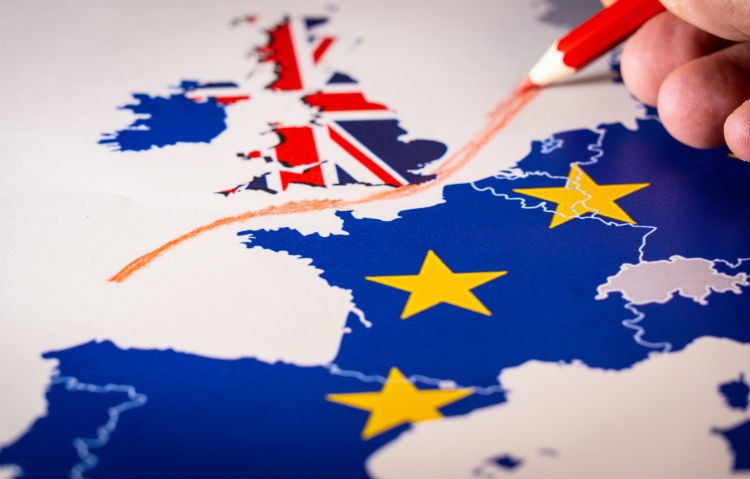
Insight: UK’s ‘no-deal’ import tariff cuts add to confusion

The UK government’s publication Wednesday of a list of zeroed or reduced import tariffs for steel and metals in the case of a no-deal Brexit — a bid to soften the blow of a no-deal scenario — gained negative or little reaction from the UK automotive and steel sectors, and a guarded reaction from European aluminum.
More than anything, the list — designed to be valid for a year and only in the case of a no-deal Brexit — has heightened confusion in sectors already grappling with many uncertainties about how and when the UK will leave the European Union.
According to the list, tariffs on imports of base metals, excluding aluminum, will be reduced to 0% from 1.8%. Aluminum will be cut from 6.3% to 0%, with steel and iron dropping from 0.8% to 0%.
In a statement, the Department of Business, Energy and Industrial Strategy said that the UK’s temporary tariff regime for a no-deal Brexit, is “designed to minimize costs to business and consumers while protecting vulnerable industries. The regime would be temporary, and the government would closely monitor the effects of the tariffs on the UK economy. It would apply for up to 12 months, while a full consultation and review on a permanent approach to tariffs is undertaken.”
Businesses would not pay customs duties on the majority of goods when importing into the UK if the UK leaves the EU without an agreement, the department said. Most-favored-nation tariffs will remain in place for all products that have a trade remedy in force and are due to be transitioned over in the event of a no-deal exit, it added.
Little change in steel
In
steel, the initial reaction was that not much has changed. UK Steel,
the trade association for the UK steel industry, did not publicly
comment on the issue, considering it does not impact directly or
substantially on the sector. Standard customs tariffs for steel products
(i.e. not antidumping duties) were already at zero, the association
pointed out, a position reiterated by London-based International Steel
Trade Association ISTA.
An ArcelorMittal spokesman said the percentage of group sales in the UK is very small so Brexit has minimal direct impact. Tata Steel Europe said “it would have little or no effect,” and Liberty House declined to comment.
Safeguard measures in doubt
The
UK government stated in late February that if it strikes a withdrawal
deal with the European Union, it will be able to enforce safeguards on
steel imports from third countries into the UK, in line with those
formally introduced by the European Commission in early February in
response to the US steel import tariff hikes under Section 232.
UK Steel, the trade association for the UK steel industry, said at the time it “warmly welcomed” this move, allowing 15 steel antidumping tariffs considered “crucial to UK steel producers’… future competitiveness” to be transitioned over for use by the UK.
However, a lawyer contacted by S&P Global Platts Wednesday clarified that these antidumping measures cannot be transposed to the UK in the case of a no-deal Brexit. “In case of no deal, any AD duties will have to be imposed from scratch following a formal investigation,” the lawyer said.
A spokesman for the European Steel Association Eurofer said: “The straight-up tariff isn’t a particularly large issue — the percentages are very small. The indirect effects on items produced with steel that do face a tariff, such as automobiles and parts that cross the border in existing supply chains, is likely to be much more of a challenge to predict and manage.”
In 2018, the value of imports of iron, steel, aluminum and other base metals into the UK totaled GBP3.5 billion, according to the UK Department of Trade. Of this, GBP1.49 billion was iron and steel, GBP1.4 billion was aluminum and aluminum products, and GBP606.14 million was base metals and base metal products.
(Tomorrow: downstream and foreign players weigh in)
— Annalisa Villa, Diana Kinch, Ben Kilbey and Mayumi Watanabe
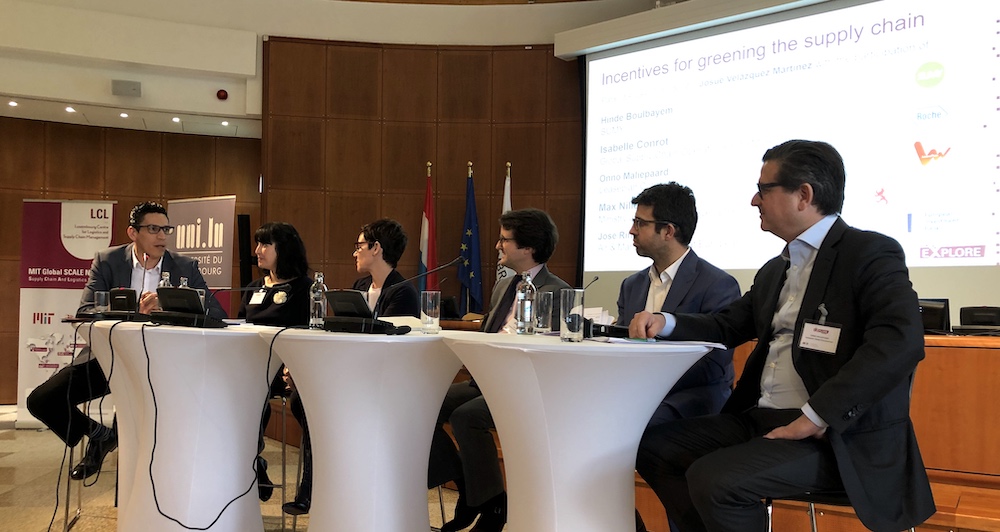
EUROMETAL at LCL eXplore conference
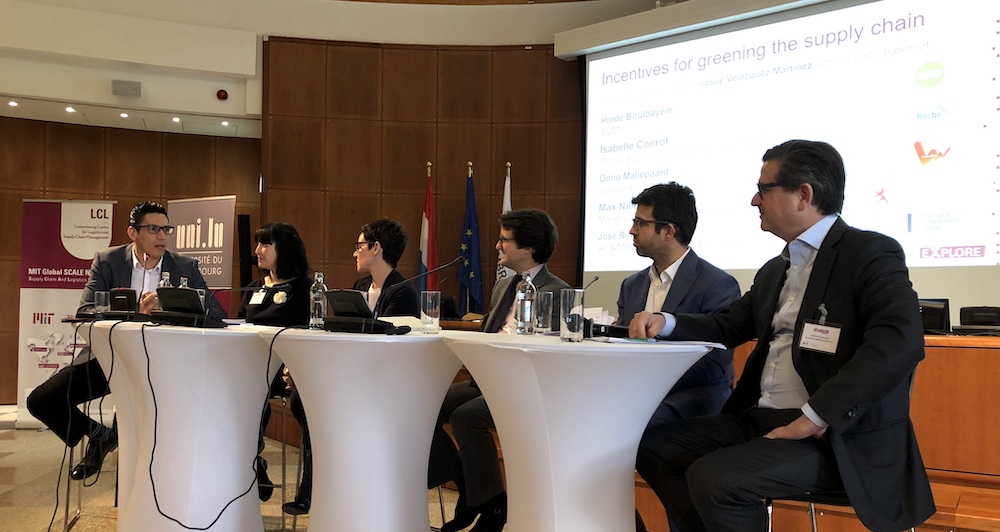
“Navigating the green supply chain”
The conference, organized by the Luxembourg Center for Logistics and Supply Chain Management (LCL) of the University of Luxembourg, highlighted some issues which are or will become of high strategic importance also for Steel Supply Chains.
EU Commission plans emission standards for Heavy Duty Vehicles (HDV)
It may be remembered, that EU Commission directives on battery certification and on fuel efficiency of tires are already steps to reduce emissions.
For HDV, EU Commission now plans to introduce a certification regulation to reduce CO2 outputs. This regulation would be introduced step-by-step.
The regulation would be based on output of gCO2 / tkm.
The output of CO2 would have to be reduced by -15 % up to 2025 and by -30% up to 2030, compared to the reference of the year 2019. The final target being to reduce CO2 output by -50 %.
The regulation would be accompanied by financial incentives in order to encourage Zero or Low Emission Vehicles fleets.
In case of infringements, heavy penalties would apply.
Sustainable Logistics
A speaker of MIT presented an optimization model regarding sustainable logistics.
Rising global urbanization and e-commerce are calling for sustainable logistics.
The optimization models are based on geospatial analysis and machine learning algorithms.
They are not only based on distance, but take into account topology, elevation, load weight and truck model.
A case study demonstrated the efficiency of such models.
MANAGING SUPPLY CHAIN RESILIENCE
A supply chain sub-sums many networks. Supply networks are endangered by various types of risks. Modelling these complex networks allows to investigate their structure and potentially identify risks.
In fact, the structure of supply networks impacts on supply network performance in risky circumstances, as can be seen today with the lot of uncertainties surrounding BREXIT.
To face supply chain disruptions, economic operators have to implement pro-active resilient supply networks to face such disruptions.
Usually supply network operators, know about risks and uncertainties of their immediate suppliers or customers, but mostly ignore the types of risks of their supplier’s suppliers or their customer’s customers.
The meeting was attended by about 100 participants: teachers, students, professionals.
Klöckner foresees increased demand in Europe and US
Steel distribution group Klöckner & Co mostly expects to see slight growth in real steel demand and shipments for 2019 for its key markets of Europe and the US, Kallanish hears from the company.
The German-based group anticipates revenues to even rise sharply on the back of investments in expansion and an expected higher overall steel price level than in the preceding year. Klöckner forecasts a slight increase in its operating income, even though a repeat of the previous year’s positive price effects in the US is not expected.
In its fiscal year 2018, Klöckner’s revenues rose 7.9% to €6.8 billion ($7.7 billion) largely because of higher prices. Operating income (Ebitda) improved by 3.4% to €227 million. Apart from the positive trend in prices over much of the year, it attributes the increase primarily to [… internal] optimisation measures. Net income was €69m, compared with a prior-year figure of €102m, which was boosted by one-off tax effects.
Klöckner highlights the independent industry platform XOM Materials, launched in Europe in February 2018, as a major step in its progress. Around 50 employees now work for the company at five locations. The platform is set to launch in the US within the first half of 2019. A first financing round with external investors is expected to be completed by the end of this year.
“In XOM Materials, we have realised our vision for the future of steel distribution,” ceo Gisbert Rühl says. “The platform – which is open to everyone in the market – will gradually unravel the traditional steel industry value chain and replace it with a digital network.”