


German steel industry opinions diverge on carsharing
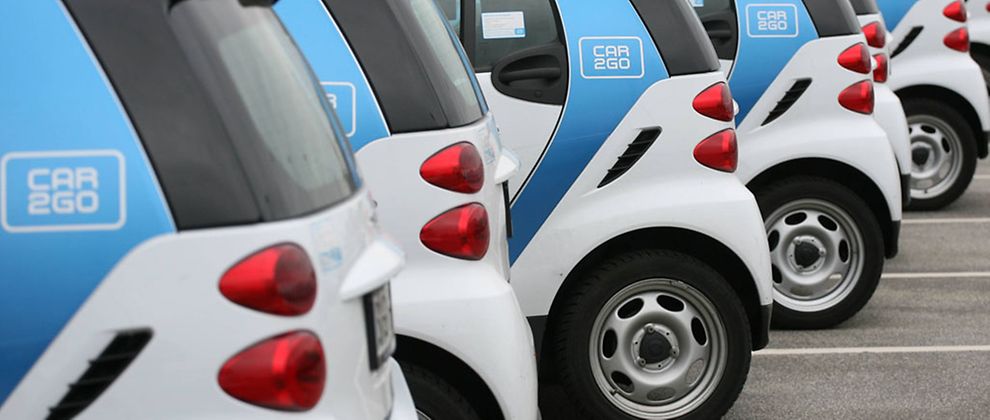
The idea of carsharing and what it means for steel suppliers has not been discussed too widely in the steel world. Just lately however some diverging views have surfaced on the topic within the sector.
“Society will need fewer cars in the future, and possibly less steel in the cars that will be built,” says Klöckner & Co’s ceo Gisbert Rühl when asked about the issue. He says that a privately-owned car runs for about 2 hours per day on average, whereas a shared car is used for some 30% of the day, or 7-8 hours. That means fewer cars sold, “… and it is a development that is coming faster than many deem possible,” he told Kallanish on the sidelines of the recent Handelsblatt/Euroforum conference in Düsseldorf.
On the conference’s second day, however, steel managers such as Paul Brettnacher of ArcelorMittal Europe offered a different opinion. Given that shared cars are used much more than privately-owned cars, they will need replacement relatively earlier, which will maintain car-production, and hence steel usage, he and others suggested.
Meanwhile, Germany’s automotive suppliers’ interest group, ArGeZ issued its outlook for the industry at the fair in Hanover. In 2018, car industry revenues totalled €264 billion ($296 billion), an increase of 3% year-on-year, whilst capacity utilisation rose to 87%.
ArGeZ spokesman Christian Vietmeyer, who is also the managing director of steel and metal fabricators’ federation WSM, notes that passenger car production so far this year remains steady. The falls in output that happened due to the WLTP procedure are “… only an aftermath now,” he says. Signals from China are ambivalent, whilst production prognoses in the UK and the US have become difficult due to the risks of Brexit and the imposition of tariffs respectively.
He also referred to the recent requirement by one major automotive producer that tier suppliers should lower costs and prices. “We are facing numerous challenges in emission-free drives, autonomous cars etc., which will affect the entire production chain,” Vietmeyer says. “Therefore, it does not fit in at all if an OEM creates unilateral cost pressures.”


German steel sector views vary on electric cars

Opinions among Germany’s carmakers diverge significantly on the question of how quickly the electric motor will become the main means of propulsion in a motor car. So do the opinions of steel suppliers as to which material will dominate.
In March, Volkswagen ceo Herbert Diess challenged most of the country’s other carmakers with his call for a quicker complete conversion from the internal combustion engine. Even the industry’s vehicle manufacturers’ association VDA felt uneasy about this turn of events.
“In principle, I wish for an open technology, rather than set a radical course like VW, and confine the research and development on one direction,” says Wolfgang Mitterdorfer, an executive in voestalpine’s Steel Division. At the Handelsblatt/Euroforum conference in Düsseldorf, he was joined by ArcelorMittal Europe’s Paul Brettnacher, who said that the change is also a question of feasibility.
“You need to look at the entire chain; it will take an enormous amount of money to adjust it, and you cannot do it all at once,” Brettnacher said in a discussion monitored by Kallanish. Mitterdorfer said that he himself drives a hybrid car, and the consensus at the event seemed to be that hybrid will likely provide the bridging technology for a while.
Participants at the conference all remain optimistic about the future for strip steel in electric engines, due to its safety, price advantage, and range of grades used. Gisbert Rühl of Klöckner & Co however takes a somewhat different stance. He believes that the role of steel will matter less than that of other technology such as sensors in the electric car. The requirement for high-quality sheet will trend towards the use of aluminium, he believes, and that is why Klöckner has invested heavily in an all-new aluminium processing line at its Becker service centre operation.

Norsk Stålkonstruksjonspris 2019 – den 15. i rekken! Forslagsfrist: 15. april 2019

Norsk Stålkonstruksjonspris 2019
Norsk Stålkonstruksjonspris ble første gang delt ut i 1991 og gikk til Stranden, Aker Brygge. Norsk Stålforbund og Norsk Forening for Stålkonstruksjoner står bak priskonkurransen som holdes hvert annet år. Det vinnende forslaget presenteres på Norsk Ståldag 31. oktober. Siste gang prisen ble delt ut var i 2017 og den gikk da til Bumerang bru og Jungelbru.
Vinnerne har holdt en meget høy standard, og prisen har derfor fått den nødvendige prestisje som er viktig for prisen og for stålmiljøet. Tilsvarende stålkonstruksjonspriser finnes i de fleste europeiske land, og nasjonale vinnere deltar i en europeisk priskonkurranse. Prisen består av et diplom som tildeles byggherre, arkitekt, rådgivende ingeniør og stålentreprenør.Juryen består av representanter fra Norske Arkitekters Landsforbund (NAL), RIF – organisasjonen for rådgivere, Norsk Forening for Stålkonstruksjoner (NFS) og Den Norske Stålgruppen.Det er åpent for alle å sende inn ett eller flere forslag til kandidater man har tro på kan hevde seg i konkurransen. Forslag til kandidat må være mottatt oss senest 15. april 2019 !
Les mer HER
Norske Arkitektstudenters Stålpris 2019
Norske Arkitektstudenters Stålpris ble første gang delt ut i 2005 og gikk til Anders Espen Bærheim ved Arkitektur- og designhøgskolen i Oslo for prosjektet “P(t)ower of the Rings” (bildet). Sist gang i 2017, ble prisen tildelt Anders Haagaas Grinde for prosjektet “FISH, a land based salmon farm in Oslo”.
Konkurransebidraget kan være laget av en enkeltstudent eller av en studentgruppe på inntil to personer. Konkurransebidraget kan være en semesteroppgave, et hovedprosjekt eller en annen type oppgave. Materialet skal være utarbeidet i løpet av de siste to år.
Norsk Stålforbund og Norsk Forening for Stålkonstruksjoner står bak priskonkurransen som holdes hvert annet år. Det vinnende forslaget presenteres på Norsk Ståldag. Prisvinneren vil få et diplom samt en sjekk på 20.000 kroner.
Juryen består av en arkitekt, en rådgivende ingeniør, representanter for Den norske Stålgruppen og Norsk Forening for Stålkonstruksjoner.
Frist for innlevering av arbeider er 15. april 2019.
Les mer om priskonkurransen HER
Med hilsen
Kjetil Myhre
Norsk Stålforbund
www.stalforbund.no

Fondazione Promozione Acciaio – Newsletter Aprile 2019
NUOVA PUBBLICAZIONE: L’ACCIAIO NEGLI INTERVENTI DI MIGLIORAMENTO O ADEGUAMENTO SISMICO DI EDIFICI INDUSTRIALI ESISTENTI
Strutturata in due parti, la brochure tecnica presenta da un lato il concetto di rischio sismico e le tre tipologie di intervento previste dalle NTC sugli edifici esistenti: riparazione locale, miglioramento, adeguamento sismico. Una seconda sezione è dedicata a casi di messa in sicurezza, miglioramento e adeguamento sismico reali effettuate su strutture esistenti in c.a. e acciaio.
»Scarica la brochure
FPA@ MADE expo 2019
ANTONIO BELVEDERE (RPBW)
MARIO CUCINELLA (MC Architects)
Si è concluso da poco MADE expo, evento internazionale sull’Architettura, il Design e l’Edilizia tenutosi a Fiera Milano al quale Fondazione Promozione Acciaio ha partecipato con l’intera filiera delle costruzioni in carpenteria metallica. Acciaio protagonista delle due Lectiones Magistrales tenute, su invito della Fondazione, dall’Arch. Mario Cucinella (MC Architects) e dall’Arch. Antonio Belvedere (RPBW) con la partecipazione dell‘Ing. Maurizio Milan (Milan Ingegneria), incentrate sulla bellezza delle architetture in acciaio, sulla poliedricità, l’uso del materiale e la sua versatilità. Sostenibilità, sfide progettuali, forza ed espressione della materia sono i temi portati dai due grandi architetti che hanno dialogato sulla fertile contaminazione tra discipline, tra ingegneria e architettura, tra produzione e progettazione, incredibile opportunità per una filiera come quella dell’acciaio.
» Mario Cucinella – scarica l’estratto della lectio
» Antonio Belvedere / Maurizio Milan – scarica l’estratto della lectio
FOCUS: DAL PROGETTO ALLA COSTRUZIONE
Rubrica a cura dell’Ufficio Tecnico di Fondazione Promozione Acciaio: questo mese le unioni saldate dal progetto al cantiere, i metodi di rappresentazione, tool di calcolo, le certificazioni ed i controlli.
UNIONI SALDATE
»LA SALDATURA DAL PROGETTO AL CANTIERE
»METODO DI RAPPRESENTAZIONE DELLE SALDATURE
»QUOTATURA DELLE SALDATURE
»ESEMPI DI RAPPRESENTAZIONE
TOOL DI CALCOLO
»UNIONI SALDATE
»VERIFICA GIUNTI SALDATI TRAVE COLONNA
LE SALDATURE IN OFFICINA E CANTIERE
»PROCESSI DI SALDATURA PER LE STRUTTURE IN CARPENTERIA METALLICA
»LE CERTIFICAZIONI E LE QUALIFICAZIONI
»PROCEDURE DI CONTROLLO PER LE OPERE DI CARPENTERIA METALLICA
»ESEMPIO DI CONTROLLO NON DISTRUTTIVO CON PARTICELLE MAGNETICHE: CARATTERIZZAZIONE IMPERFEZIONI NELLE SALDATURE
NTC 2018: APPROFONDIMENTI SUL CAPITOLO 11 – SECONDA PARTE
Online una nuova lista di Frequently Asked Questions per un’ulteriore panoramica sul Capitolo 11 “Materiali e prodotti ad uso strutturale”. L’approfondimento riguarda i controlli, i Centri di Trasformazione ed i compiti demandati alla Direzione Lavori, oltre che le prove sul materiale.
» Scarica il documento
FORMAZIONE ED EVENTI
CORSO: PROGETTAZIONE DI AUTORIMESSE ED EDIFICI INDUSTRIALI IN STRUTTURA DI ACCIAIO. SOLUZIONI CONFORMI E ALTERNATIVE SECONDO LE NORME TECNICHE DI PREVENZIONE INCENDI
BOLOGNA, 8 MAGGIO 2019 – 6 CFP
Il corso, organizzato dal Corpo Nazionale dei Vigili del Fuoco, dall’Ordine degli Ingegneri di Bologna e dalla Commissione per la sicurezza delle costruzioni in acciaio in caso di incendio di Fondazione Promozione Acciaio, si svilupperà in due sessioni. La prima verterà sulla progettazione strutturale di autorimesse aperte fuori terra in acciaio secondo il DM 21/02/2017. La seconda sessione sensibilizzerà i professionisti antincendio all’utilizzo del nuovo codice prevenzione incendi, con particolare riferimento agli edifici in acciaio a destinazione d’uso industriale. Saranno presentati casi studio relativi all’utilizzo dell’approccio ingegneristico (FSE) applicati a parcheggi e capannoni realizzati negli ultimi anni. Il corso è valido per il riconoscimento di 6 CFP per Ingegneri e 6 ore di aggiornamento per il mantenimento nelle liste 818. Iscrizione presto disponibile.
SEMINARIO: PROTEZIONE ANTICORROSIVA E FINITURA ESTETICA PER MANUFATTI IN METALLO
LA SPEZIA, 13 MAGGIO 2019 – 2 CFP
La costruzione a secco, realizzata da manufatti prefabbricati che giungono in cantiere pronti per la messa in opera, richiede sempre più nuove competenze. Uno dei temi da tenere in considerazione è la protezione del materiale. Il seminario, organizzato dall’Ordine degli Architetti della provincia di La Spezia, in collaborazione con l’Ordine degli Ingegneri, dei Periti della provincia di La Spezia e con Promozione Acciaio tratterà il tema della scelta della protezione anticorrosiva e la finitura estetica dei manufatti metallici per ottenere la durabilità desiderata in ogni ambiente di collocazione e gli accorgimenti costruttivi necessari. Saranno riconosciuti 2 CFP in base alle regolamentazioni vigenti di Ordini e Collegi.
FPA @ MADE IN STEEL – PAD 24 STAND S13
MILANO, 14-16 MAGGIO 2019
Fondazione Promozione Acciaio conferma la sua partecipazione alla principale manifestazione fieristica dedicata all’industria siderurgica. Made in Steel è il più importante evento del sud Europa dedicato all’intera filiera dell’acciaio, un equilibrio perfetto tra business e riflessione, relazioni e conoscenza, una vetrina espositiva e allo stesso tempo un polo di cultura che, attraverso convegni, forum e tavole rotonde, vuole favorire i flussi e la trasversalità delle conoscenze, elementi indispensabili per la competitività delle imprese.
COSTRUIRE IN ACCIAIO
UNA PASSERELLA IN ACCIAIO COLLEGA GROSSETO AL PARCO DELLA MAREMMA
Inaugurata il 28 Marzo l’infrastruttura ciclo-pedonale che collega il capoluogo maremmano ad un attiguo parco naturale, scavalcando il fiume Ombrone. Realizzata in carpenteria metallica, la struttura ad arco di altezza massima pari a 32 metri e una campata di 72 metri è una nuova importante opera di viabilità per la città di Grosseto. Gli archi a sostegno dell’impalcato sono in profili tubolari, mentre l’impalcato di calpestio è sostenuto da travi principali in sezione metallica a cassone e trasversi in profili a doppio T, appesi agli archi con una cortina di pendini in fune. Il piano di posa della pavimentazione è costituito da una soletta in calcestruzzo armato gettata su lamiera grecata collaborante ordita longitudinalmente fra un traverso e l’altro.
AMPLIAMENTO CANTINA VINICOLA KELLEREI KALTERN
NUOVE FACCIATE METALLICHE IN LAMIERE FORATE
Ha sede a Caldaro sulla Strada del Vino il progetto di ampliamento della cantina vinicola “Kellerei Kaltern” dove sono state utilizzate speciali lamiere metalliche forate per ricreare un particolare effetto scenico con foglie di vite che decorano l’edificio sia nelle ore diurne che in quelle serali. Ingegnerizzato dall’ufficio tecnico del costruttore in collaborazione con l’officina, il progetto vede l’impiego di 26 tonnellate di acciaio per le strutture secondarie, agganciate ad un edificio in cls e sulle quali sono stati fissati i circa 1.000 mq di facciate metalliche ornamentali. La posa della nuova pelle metallica ha richiesto solamente due mesi comprese le opere accessorie.
IL RECUPERO DEL CASTELLO DI SPEZZANO (MO)
CARPENTERIA METALLICA PER GLI ELEMENTI MUSEALI
Gli spazi seminterrati al di sotto dei saloni nobili del castello che sorge nel sassolese sono stati riqualificati e destinati a museo attraverso l’intelligente contributo dell’acciaio. Elementi in carpenteria metallica hanno permesso di realizzare passerelle, parapetti e una nuova pavimentazione, oltre che espositori ed elementi d’arredo in spazi d’intervento ristretti.
IL PADIGLIONE AZERBAIJAN A EXPO 2020 PARLA ITALIANO
Il 20 marzo è stato inaugurato il sito ove sorgerà il padiglione Azero nell’ambito di Expo Dubai. Tema del padiglione: “Seeds for the future” ed è proprio al futuro che guarda l’opera, progettata da un team italiano e che trova nella progettazione in BIM un punto di forza nel dialogo tra progettisti e costruttori in sede. La copertura del padiglione, un solido elissoidale, sarà in carpenteria metallica, con due travi Vierendel principali ed elementi secondari anch’essi in acciaio.

thyssen and Tata offer merger concessions to Commission

Tata Steel Europe and thyssenkrupp have submitted a list of subsidiaries to the European Commission (EC) that they would offer for sale to clear the way for their projected ‘thyssenkrupp Tata Steel’ joint venture.
“As we see it, our proposals cover all the concerns expressed by the Commission,” thyssenkrupp AG ceo, Guido Kerkhoff, says in a statement. “The offer is extensive and substantial. At the same time, it is acceptable to the joint venture partners and, no risk to the industrial logic of the joint venture.”
The EC had identified three product groups for discussion: hot-dip galvanized steel strip for the automotive industry, packaging steel and grain-oriented electrical steel strip. The EC has apparently now abandoned its concerns over electrical steels.
While details of the companies’ proposal were not made public, Kallanish hears several suggestions from insiders that are in line with earlier speculation. In the automotive industry HDG segment, the companies are offering two plants in Spain and Belgium for sale, which they say adequately address the amount of production capacity required by the EC. In packaging steel, they would divest two such Tata Steel sites in Belgium and the UK. No German sites have been highlighted as part of the proposals, sources suggest.
Furthermore, they are offer options on input materials such as crude steel, if requested by the purchaser, such as long-term supply contracts on a cost-plus basis. At the same time, they are questioning the rationale behind some of the requirements, insiders suggest.
One possible disagreement might emerge from the EC idea that the parties would have to offer the divestiture of assets along the entire value chain. thyssenkrupp and Tata, however, argue that this does not make industrial sense and depends on the nature of the buyer. They are prepared to select only buyers who are already active in steel production, have sufficient capabilities and can ensure successful long-term operation of the plants. This would exclude equity investor firms.
If the current conditions are accepted, an EC decision is expected for the beginning of June 2019.

European Commission summarises 2014-2018 steel trade actions

The current European Commission (EC), headed since 2014 by Jean-Claude Juncker, has summarised its trade actions related to the steel sector, in a report seen by Kallanish.
The Commission adopted 25 steel-related trade measures during the 2014-2018 period (out of the 35 total measures approved during the period). It also confirmed the imposition of safeguard measures for steel at the beginning of 2019.
“The report shows that the Commission’s efficient, firm and balanced approach permitted the protection of EU jobs. It also sent a strong response to increasingly protectionist stances by some trading partners, while in parallel reforming its own TDI system to work even more effectively in the future,” the Commission says.
According to the document, the EC’s response came as an effect of the severe losses suffered by the European steel industry during the 2013-2016 period, due to the “… trade spillovers of Chinese overcapacity.”
While acting firmly, the Commission has nevertheless aimed at maintaining a level playing field for global trade, it adds. “Duty levels applied by the EU were lower than those imposed by other trade partners. For instance, duties on steel currently range on average from 29% to 45%, while the corresponding duty averages applied by the United States is 54–87%,” the EC says in the report.
In addition to the physical trade measures adopted, the Commission has also worked to increase surveillance mechanisms as well as to accelerate the time it takes for investigations.
“Steel imports of products covered by measures adopted in the years 2014 – 2017 decreased by more than -95% on average when compared to the volume of imports before the measures were imposed. Imports were no longer competitive once the unfair element of these imports was neutralised by TDI measures,” the Commission adds. “In critical steel products, where the EU user industry depends on imports, such as hot rolled coils, the dumped or subsidised imports were replaced by imports from other sources, for which there was no evidence of unfair pricing at the time. By neutralising dumped or subsidised imports, the TDI measures restored a level playing field, not just for the EU producing industry, but also for other third country suppliers, thus allowing EU users to continue enjoying diversified sources of supply.”

EU “other countries” quotas now accessible to all

As of April 1, 2019, the European Commission’s steel import quotas for “other countries” have become accessible to all countries, while the unused quotas of “other countries” for the February 2-March 31 period have also become accessible to all countries which have used up their own quotas for the period
Accordingly “other countries” import quotas, for the period between April 1 and June 30, stand at 133,000 mt for rebar, at 74,518 mt for wire rod, at 76,708 mt for metallic coated sheet (section 4b) for automotive steel, and at 465,089 mt for metallic coated sheet (section 4a), and at 26,311 mt for organic coated sheet.
Given that Turkey exhausted its wire rod and rebar quotas very quickly after they came into effect on February 2, the country is now expected to try to obtain a share of the quotas for “other countries”.
According to the latest EU data, there is 9,272 mt of rebar waiting at customs, most of which is believed to be of Turkish origin, while there is 8,030 mt of metallic coated sheet (section 4b) waiting at customs with China likely to use up the quotas of “other countries” for this product quickly.
Steel import quotas for “other countries” for certain products for the April 1-June 30 period are as follows:


Digitalisierung – Warum haben Stahlhändler so viel Respekt?
Interview mit Thorsten Studemund und Markus Fischer, Geschäftsführer Voß Edelstahlhandel GmbH & Co.KG

marketSTEEL: Was verstehen Sie unter Digitalisierung bzw. was ist im Stahlhandel sinnvoll?
Thorsten Studemund:
Unsere Branche hat das Thema mittlerweile aufgenommen und wir empfinden auch, dass die Globaldiskussionen über Amazone und WEB – Shop abgeflacht sind. Wir alle gehen heute mehr in die Tiefe des Themas und haben auch erkannt, dass es viele Tools im Bereich der Digitalisierung gibt, die uns einfach besser, schneller und effizienter machen. Dazu gehört, dass wir unsere Prozesse im kompletten Betrieb heute so digitalisieren, dass quasi als Endergebnis unserer Arbeit und Investitionen die Daten zur Präsentation im WEB – Shop oder auf einer Plattform präsentiert werden können. Letztlich geht es um Datenaustausch auf effizientestem Weg mit Lieferanten und Kunden.
marketSTEEL: Digitalisierung im Stahlhandel – Warum haben Stahlhändler so viel Respekt?

Thorsten Studemund:
Man muss erkennen, dass wir alle uns lange Zeit nicht angesprochen gefühlt haben. Wir mussten über viele Jahre die kalkulatorische Herausforderung von kleiner werdenden Losgrößen, von Logistikanforderungen und steigendem Dokumentationsanforderungen meistern. Stichwort:“ Service muss bezahlt werden!“ Diesen Punkt haben die meisten Unternehmen unserer Branche erreicht. So ist es folgerichtig, dass jetzt erst die Fragen nach effizienterer Umsetzung folgen.
Markus Fischer:
Ein weiterer Punkt ist ganz sicher, dass der Stahlhandel eher zu den „old fashion-Branchen“ gehörte. Viele haben zunächst die Vorteile der Digitalisierung nicht erkannt, weil man die Hauptbegründung in möglichem Wachstum gesucht hat. Heute erkennen wir den Service- und Effizienzfaktor.
marketSTEEL: Welche Schritte sind Sie gegangen und wie profitiert Voß Edelstahl? Welche Erfahrungen haben Sie bislang gemacht?
Markus Fischer:

Wir haben bereits vor vielen Jahren begonnen, unsere Prozesse im Betrieb zu standardisieren. Das fängt mit der Investition von vollautomatischen Hochregalanlagen an und geht dann weiter in die Administration mit Tools, wie „Barcode“, „Workflow“ und digitaler Dokumentdatenaustausch. Doch bevor man diese Prozesse verändert, muss man einen langen Weg der Mitarbeiterschulung gehen. Diese wiederum müssen dann die entsprechenden Geschäftspartner mit einbinden. Dies fängt in der Beschaffung an und hört um Versand auf.
Thorsten Studemund:
Unsere Erfahrung ist, dass wir Vorteile haben in den Bereichen „Zuverlässigkeit“, „Kundenbindung“ und „Fehlervermeidung“! Gleichzeitig wird das Image der Unternehmung moderner, was bei der Problematik gute Mitarbeiter zu finden immer ein Pluspunkt ist.
marketSTEEL: Auf dem Digiday des BDS/EHV sagten Sie „Digitalisierung wird die Geschäftsmodelle nicht ändern“. Was meinen Sie hier genau?
Thorsten Studemund:
Digitalisierung ist letztlich ein Tool, ein Service, den man sich ankauft und nutzt, wie einen Rechtsanwalt oder einen Steuerberater. Unser Unternehmen hat ein fest definiertes Geschäftsmodell, welches durch die Digitalisierung nicht verändert, wohl aber weiterentwickelt und modernisiert wird.
Voß Edelstahlhandel GmbH & Co. KG, Neu Wulmstorf beliefert ausschließlich den Handel und niemals Endverbraucher oder Handwerk. Ein Versprechen, das seit über 40 Jahren bei Voß uneingeschränkte Gültigkeit hat. Das Lieferspektrum umfasst über 8.000 verschiedene Produkte im Bereich Langprodukte aus Edelstahl, Aluminium und Messing. Zehn Niederlassung, strategisch in Europa verteilt, und der Export in 15 Länder sowie enge Kooperationen mit langfristigen Partnern unterstreichen die internationale Wettbewerbsfähigkeit. www.voss-edelstahl.de

UK steel stockholder Meridian Metal Trading has entered administration.
The company has been in talks with its five main suppliers, credit insurers and Secure Trust Bank for months after a potential buyout fell through.
While the creditors and insurers have been supporting the business, they cannot provide fresh credit and the business has been having to prepay for steel, given its lack of cover.
One large trading firm that walked away from a deal to buy the company is keen to take it from administration, and other parties are also assessing the situation.
Meridian is a West Midlands-based decoiler with a nameplate capacity of around 240,000 t/yr across hot-rolled coil, cold-rolled coil and hot-dip galvanised. It has not operated at capacity for some time because of its funding difficulties.

EUROMETAL President at Made in Steel 2019

STEEL VISION: A GLOBAL PERSPECTIVE
Made in Steel Square SIDERWEB CONFERENCE ROOM
Tuesday, May 14, 2019
from 2:30 PM to 4:30 PM
New geopolitical relations, the emergence of new players in iron and steel, changing user sectors, new types of steels. In addition the future of the global steel industry is full of challenges for every business division. How should they be met? To give some answers are three one-to-one interviews with leaders from the steel industry.
Interviewees:
- Fernando Espada – President EUROMETAL
- Matthieu Jehl – CEO ArcelorMittal Italia
- Antonio Gozzi – Chairman Gruppo Duferco
Conducted by Emanuele Norsa – Kallanish and Lucio Dall’Angelo – siderweb
