


European Commission Vice-President Séjourné: “Made in Europe” priority should be strengthened in public procurement
European Commission Vice-President Stéphane Séjourné stated that the “Made in Europe” approach, which envisages giving priority to European companies in public procurement across EU member states, should be strengthened.
European Commission Vice-President Stéphane Séjourné, who is responsible for the EU’s industrial policy, published an opinion piece supporting the “Made in Europe” initiative, signed by more than 1,000 executives from EU-based companies. The article was published simultaneously in France’s Les Echos, Germany’s Handelsblatt, Spain’s El Mundo, and Italy’s Corriere della Sera.
In his column, Séjourné stressed that European countries should prioritize European companies in public procurement in order to protect their industries. “In our most strategic sectors, we must make a genuine European preference permanent. Without an ambitious, effective, and pragmatic industrial policy, the European economy will become nothing more than a playground for its competitors,” he said.
Pointing to the growing prevalence of tariffs, subsidies, export restrictions, and intellectual property violations in global trade, Séjourné warned that international competition is becoming increasingly unfair and argued that the EU must adopt a more proactive stance.
Recalling that major economies—particularly the United States and China—have similar programs supporting their strategic sectors, Séjourné noted that it is inevitable for the EU to adopt a comparable approach.
Emphasizing that the core principle of the “Made in Europe” strategy is clear, Séjourné stated: “Wherever public money is spent in Europe, it must contribute to European production and employment.”
The European Commission is expected to unveil its proposed “Industrial Accelerator Act” by the end of February, aimed at supporting European industry. The proposal is expected to include provisions introducing a “Made in Europe” requirement in public procurement.
While France is leading the initiative, several EU member states argue that local-content requirements could deter investment, increase costs in public tenders, and weaken the bloc’s global competitiveness.
Meanwhile, Türkiye maintains that factors such as the Customs Union, the existing level of economic integration, and regulatory alignment should be taken into account, and that Türkiye should be considered within the scope of the “Made in Europe” concept.
Source: AA


NLMK DanSteel achieves Silver Medal in sustainability performance
NLMK DanSteel received a Silver Medal from the international sustainability rating agency EcoVadis. With this achievement, the company ranked among the top 15% globally in terms of sustainability performance.
According to the company’s statement, NLMK DanSteel’s overall score increased to 77/100 from 74/100 compared to the previous year. The improvement was mainly driven by progress in the areas of environment, labour and human rights, and sustainable procurement.
It was noted that the transition to the Silver Medal level reflects a period in which sustainability standards across the industry have generally risen. Company management described this development as both a positive indicator and a source of motivation to further advance its sustainability goals.
The statement emphasized that the achievement was the result of strong teamwork, and expressed appreciation to all employees who contributed to the company’s sustainability efforts. NLMK DanSteel also stated that it aims to continue its activities with a focus on continuous improvement and measurable progress in the period ahead.

ArcelorMittal reviews 5.600 EU roles, Luxembourg impact unknown
ArcelorMittal Europe has opened a new review of support functions that a European works council member said could cover 5.600 roles, about 11% of the company’s 48.500-strong European workforce, with Luxembourg exposure still undisclosed.
The European arm of Luxembourg-headquartered ArcelorMittal, one of the world’s largest steel and mining groups, has launched a fresh phase of internal assessment into an efficiency drive covering support functions such as information technology, logistics and maintenance, a review that a member of the European works council claimed could place up to 5.600 roles across 20 European countries within scope.
The council member added the initiative was discussed during an extraordinary meeting held remotely last week and described it as a new phase of analysis into reshaping support functions across the group’s European entities, including potential relocations alongside other restructuring options.
On the basis of ArcelorMittal’s European headcount of 48.500 at the end of 2024, the perimeter under review would equate to about 11% of its European workforce.
Contacted by Paperjam, a representative of ArcelorMittal confirmed the review but did not confirm any numbers. The representative said ArcelorMittal Europe was looking into the possibility of expanding the scope of its project to transform support functions “with the goal of ensuring optimisation and standardisation of activities which are currently fragmented across a large number of sites in Europe”. The representative declined to comment on whether roles in Luxembourg were part of the assessment.
The steelmaker disclosed that the work included the creation of a “business services hub in India” and the expansion of its “business centre of excellence in Poland”. It said the objective was to support a sustainable business model for ArcelorMittal Europe by aligning the company’s performance with other major companies and using global talent, modern processes and advanced IT and AI to deliver “reliable, high-quality service”.
The review comes as European steelmakers face weaker demand in core end-markets such as automotive and construction, alongside intensifying pressure from imports, particularly from Asia and China, where production is sold at significantly lower prices.
According to national statistics bureau Statec, ArcelorMittal had 3.520 employees in Luxembourg on 1 January 2025, making it likely that at least some Luxembourg-based roles could ultimately be affected through relocation or being removed altogether, even if the company has not confirmed any local exposure.
A further meeting is scheduled for 26 February at ArcelorMittal’s Luxembourg headquarters. The company representative told Paperjam that more details would be shared at the appropriate stage but did not provide a timeframe.


ArcelorMittal responds to ADI mismanagement lawsuit with €1.8 bln damage claim
ArcelorMittal has responded to a €7 billion ($8.4 billion) lawsuit from Acciaierie d’Italia (ADI) with a €1.8 billion damage claim, the company said on Thursday January 29.
The claim, filed by ADI’s extraordinary administration on January 12, 2026 with a writ of summons before the Court of Milan, alleges that ArcelorMittal induced ADI directors and local management to engage in mismanagement as part of a unified strategy to run down production, destroy the business and extract profits from Italy, causing damages estimated at approximately €7 billion.
ArcelorMittal categorically denied all these allegations, including claims that it unlawfully influenced management decisions or acted to the detriment of ADI and its holding company, Acciaierie d’Italia Holding SpA (ADIH).
The company said that since 2021 ADIH has been under joint and equal control with Invitalia, which is wholly owned by the Italian Ministry of Economy and Finance and was appointed by the Italian government to implement a public-private partnership aimed at relaunching and acquiring Ilva’s business.
ArcelorMittal said it fulfilled all its contractual obligations, invested around €2 billion in the business and did not illicitly influence local management. It added that a significant share of that investment was directed toward implementing the environmental plan required to comply with Italy’s Integrated Environmental Authorization (AIA).
The operating environment deteriorated shortly after the transaction closed, according to the company, due to what it described as adversarial conduct by Invitalia and legislative interventions by the Italian government.
ArcelorMittal added that in June 2025 it initiated international arbitration against Italy, alleging unlawful expropriation and unfair and discriminatory treatment.
“These actions caused serious harm to ArcelorMittal, leading to the loss of its investments and adversely affecting its broader interests in Europe, resulting in an overall damage claim exceeding €1.8 billion,” ArcelorMittal’s statement reads.
ADI representatives declined to comment when contacted by Fastmarkets on Friday January 30.
Background
ArcelorMittal acquired ADI, which was known as Ilva at the time, in 2018 when it took a 94.4% stake.
In 2019, less than a year after ArcelorMittal began leasing the assets, the government removed legal protections that the company said were necessary to implement the environmental plan without criminal liability. ArcelorMittal said this prevented the fulfillment of conditions precedent and led to its withdrawal from the lease agreement.
The withdrawal was later settled through an agreement with Invitalia, which subsequently assumed joint control of ADI.
Since 2021, ArcelorMittal’s share has been reduced to 62%, with Invitalia, the National Agency for Inward Investment and Economic Development owned by the Italian Ministry of Economy and Finance, holding the remaining 38%.
The Italian government took over the administration of ADI from ArcelorMittal in February 2024, Fastmarkets reported. ArcelorMittal said the move substantially expropriated its investment.
ADI is the largest steelmaker in Italy, with installed capacity for 8 million tonnes per year of pig iron and 10 million tpy of crude steel. But the steelworks produced just 3 million tonnes of steel in 2023, below the target of 4 million tonnes. In 2024, the company produced less than 2 million tonnes of steel, market sources said.
ADI was officially put up for sale by the Italian government in August 2024.
Multiple groups have expressed interest, with reports highlighting participants such as Baku Steel, Jindal Steel International and others.


European HRC buyers show limited acceptance of higher prices
Hot-rolled coil buyers from Europe are gradually accepting higher prices from local suppliers, but the pace is moderate as customers’ inventories and port stocks are ample, Fastmarkets heard on Friday January 30.
Offers from integrated mills in Northern Europe come at €670-685 ($801-819) per tonne ex-works for April delivery coil with sporadic bookings heard done at the level of €650 per tonne ex-works.
March-delivery HRC was heard to be largely sold out, with only limited availability left at some suppliers. Offers were heard coming at €650 per tonne ex-works.
Fastmarkets’ daily steel hot-rolled coil index, domestic, exw Northern Europe was €650.00 ($777.60) per tonne on Friday, down by €5.83 per tonne from €655.83 per tonne on January 29.
The drop in the assessment reflected buyers at a crossroads, with current inventories and port stocks said to be sufficient, rather than indicating a trend reversal.
The index was up by €7.5 per tonne week on week and by €22.5 per tonne month on month.
In Italy, domestic HRC offers were reported varying within the range of €630-650 per tonne ex-works on Friday, with recent bookings said to be done within the range of €630-635 per tonne ex-works.
No major bookings were reported during the day.
Fastmarkets’ daily steel hot-rolled coil index domestic, exw Italy was calculated at €638.00 per tonne on Friday, January 30 versus€ 643.33 per tonne on Thursday, reducing by €5.33 day on day.
The index was up by €3.00 per tonne week on week and by €14.88 per tonne month on month.

Becker Group appoints Torsten Gieseke as new CEO
As of 1 February 2026, Becker Stahl-Service GmbH has appointed Torsten Gieseke as its new Chief Executive Officer (CEO).
In his new role, Torsten Gieseke will also join the management boards of the group’s subsidiaries, Becker Aluminium-Service GmbH and Umformtechnik Stendal GmbH, further strengthening strategic alignment across the Becker Group.
Torsten Gieseke succeeds Guido Kerkhoff, who had been serving as interim CEO of the Becker Group in addition to his responsibilities as CEO of Klöckner & Co SE, the parent company of the Becker Group.
With more than 20 years of experience in the steel and automotive sectors, Torsten Gieseke brings extensive industry knowledge and recognised expertise to the role. His appointment marks an important step in ensuring continuity and supporting the group’s future development.
Going forward, the management of the Becker Group will be led by a three-member executive team consisting of Torsten Gieseke (CEO), Joerg Kaib (CFO) and Bernd Guttek (COO).

European longs prices tick up, market resistance remains
The recent wave of price increase announcements for longs products across Europe is translating into modest transaction price hikes. However, buyers are widely sceptical about the scope for further rises under current market conditions.
Market sources across western and southern Europe report that, while demand is present, January has been sluggish, largely because many buyers implemented purchases in December ahead of year-end, Kallanish hears.
To compensate for weak domestic demand, European producers are increasingly targeting export sales within Europe. However, logistics constraints are becoming a growing challenge. “Logistics have become extremely expensive,” one longs mill confirms. Barge transport, a cost-effective option, is being disrupted this month by low water levels in Switzerland, Germany and France following a prolonged lack of rainfall. Vessel availability is also tight and some deliveries are being delayed.
Another mill source notes that shipping material to another country now costs almost twice as much as domestic truck transport. Despite this, export activity remains necessary to support order books and avoid production slowdowns, which would otherwise push up fixed costs at a time of high production cost levels.
According to a large European longs producer, demand is broadly stable and in line with what it describes as the “new normal” for Europe. January is traditionally a slow month and the weakness is seen as seasonal. Construction activity is expected to pick up in the coming weeks, having been further constrained in January by adverse weather conditions in several parts of Europe.
Sources say ArcelorMittal raised prices in January by an average of €25-30/tonne ($29.73-35.67/t) versus December across all long products. This is up by around €50/t compared with the lows recorded in October 2025.
While price increases are being implemented gradually, several mill sources stress that January’s upticks remain insufficient to offset rising costs. Electricity prices continue to climb, scrap values rose sharply in January and logistics costs remain high, all of which are weighing heavily on margins. Producers therefore appear determined to continue pushing for higher prices, arguing that current selling levels are close to production costs.
One producer adds that demand is being supported by some eastern European markets, while Spain is currently showing the strongest consumption in western Europe.
Author: Natalia Capra France


Voestalpine sells Böhler Profile to Massachusetts company
Voestalpine has agreed to divest Böhler Profil, a company in its High Performance Metals division, supplier of special profiles for a variety of industrial applications including industrial knives, Kallanish learns.
The buyer is US company Kadant, based in Webford, Massachusetts, with 3,900 employees in 22 countries worldwide. According to voestalpine, Kadant will retain the unit’s staff working at the production site in Bruckbach, Lower Austria.
The Austrian group is divesting the unit for strategic reasons and in line with the streamlining of the High Performance Metals division portfolio. “Kadant had repeatedly expressed interest in the company,” chief executive Herbert Eibensteiner notes on the occasion of the sale agreement.
In the business year 2024/25, Böhler Profil had a workforce of approximately 150 employees and generated revenue of €51.5 million ($61.6m). Over the past 15 years, voestalpine has invested a total of €23m in the Bruckbach site, for purposes including upgrading automation and digitalisation in profile manufacturing, the group highlights.
The spin-off follows the divestment of another unit of High Performance Metals, Buderus Edelstahl in Wetzlar, Germany, as well as site consolidations outside Austria, and capacity adjustments at voestalpine Böhler Bleche. With these measures, the High Performance Metals division has effectively completed the process of restructuring its portfolio, voestalpine states.
Author: Christian Koehl Germany
SSAB highlights minimal US tariff impact
SSAB, which operates production sites in Europe and the USA, has so far seen only a limited direct impact of the US steel tariffs, chief executive Johnny Sjöström said during a conference call this week.
He underlined how SSAB is well-positioned with significant local production in the US. Only a limited volume of special products, especially high-strength steels for the automotive industry, are exported from the Nordics and shipped to North America, and many other overseas locations.
Recently, “we have been selling some more volumes of special steels to the USA, but we don’t have to,” he said. If demand in the USA should go down, the group can divert deliveries to Europe easily, Kallanish heard him say during the call.
SSAB’s US operations at its SSAB Americas division were the main driver behind the group’s improved operating result of SEK 756 million ($86m) in the fourth quarter 2025, up from SEK 486m in Q4 2026. The group notes its strong position in the US heavy plate market was a notable factor that supported the result.
Over the full year, figures saw a year-on-year decline, due to lower steel prices in the group’s main regions. Operating profit fell by SEK 1.7 billion to SEK 6.1 billion, on revenue that dipped by SEK 7.2 billion to SEK 96 billion.
The group’s international setup and the global customer base for its special products are an advantage in principle. However, the nominal figures quoted in a strengthening Swedish krona are affected by a depreciated US dollar, in which most transactions are defined.
Shipments rose slightly at all three divisions, totalling 3.29 million tonnes at SSAB Europe, 1.84mt at SSAB Americas, and 1.24mt at SSAB Special Steels.
For the first quarter this year, the group predicts higher shipments for Europe and Special Steels, and slightly higher sales at Americas, which last year saw the highest volume increase. Prices are expected to climb “somewhat higher” than in Q4, except for Special Steels, which is subject to different market dynamics, and where price hikes will take effect with a delay (see Kallanish 29 January).
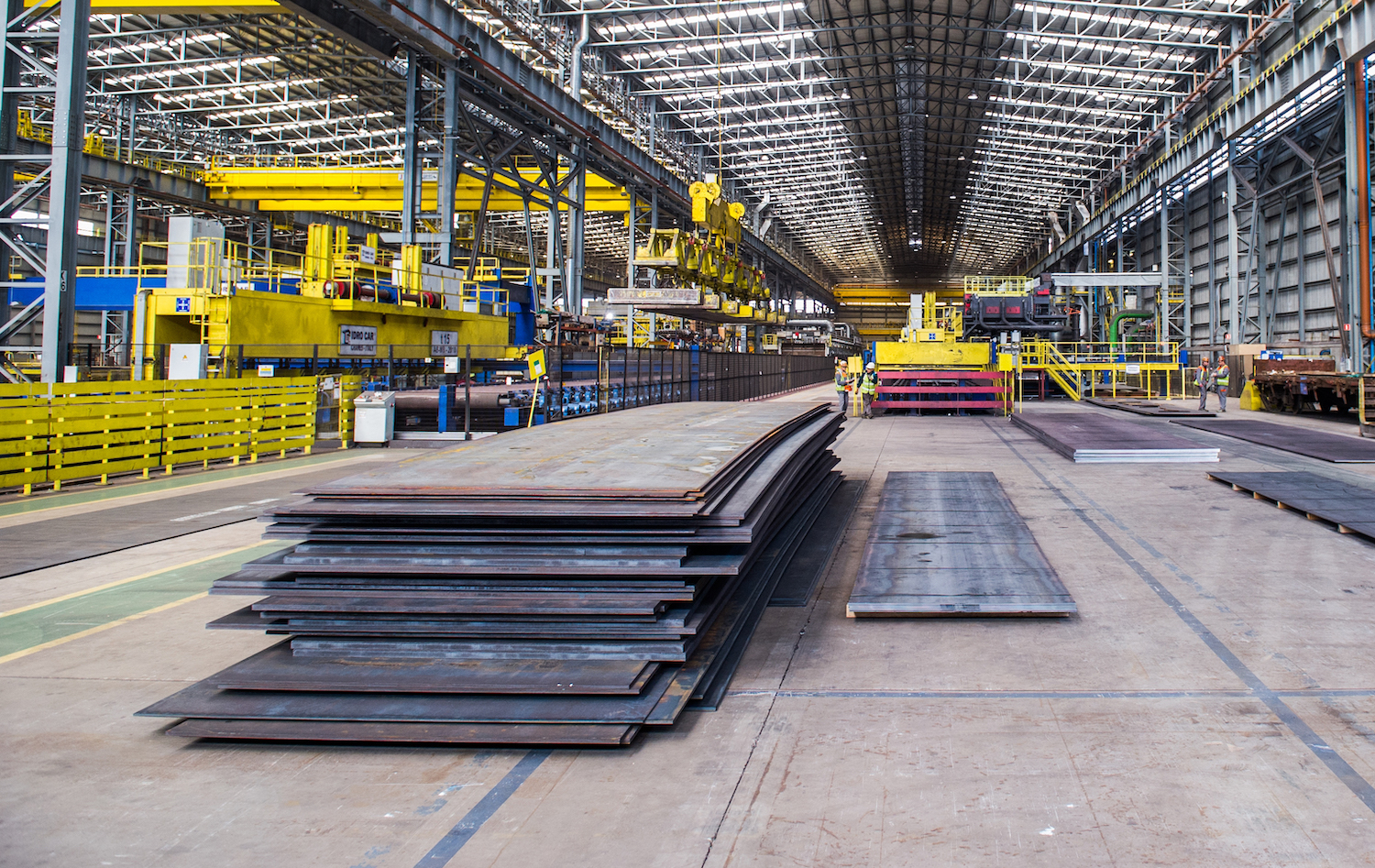
Italian heavy plate rises on CBAM slab costs
Italian heavy plate prices continue to rise, driven by higher imported slab costs linked to CBAM, Kallanish learns.
Market activity has been relatively quiet following the Christmas break, although mills report satisfactory order intakes. Lead-times have now extended into March, while import offers are said to be largely absent or not much below domestic prices.
Producers are also implementing further price increases this month, as CBAM slab costs remain particularly uncertain. One source says there is a possibility that plate prices could move to the €800/tonne ($951.21/t) level as early as February. “The market has to become accustomed to higher prices as protectionist costs take effect. CBAM will be another form of anti-dumping,” a mill source comments.
Mills are continuing to source slabs from their traditional Asian suppliers. Slab values, excluding CBAM costs, are reported at around $520/t cfr southern European ports.
However, prices are expected to rise significantly once CBAM charges are factored in, which sources say are currently difficult to quantify but are expected to be significant.
One slab buyer states that he has been actively working with his suppliers to support the certification of their direct emissions and is confident that, with the assistance of European experts, the certification process will proceed smoothly and costs will be contained. At present, however, CBAM costs appear extremely high when considering default values.
Italian mills are currently quoting around €750/t for S235 plate, with premiums of €30–35/t for S355 and approximately €10–15/t for S275. This represents an increase from around €700/t before to the holiday period. Current contract values before the increases for S325 material remain at €710-720/t ex-works on average.
One distributor says he is currently receiving good volumes of plate orders, but warns that demand could soften if prices reach €800/t, as downstream buyers may reduce tonnages.
Meanwhile, plate price dynamics are diverging between north and south of the Alps, with Italian values rising, while the northwest European market is not yet gaining pace.
Consequently, prices either side of the Alps are equal at present, so ordering Italian material makes little sense for buyers in Austria or southern Germany.
Given that Italian mills have little to no European slab base, they need to follow prices for slab imports, which have risen notably along with the full implementation of the CBAM. Hence, southern prices for S355 plate have reached €730/t in a short time. In northwestern Europe, that has been the desired mark for some two months now, amid limited movement and deals often closing at lower levels (see Kallanish 14 January).
Author: Natalia Capra France