


Leaked EU Industrial Accelerator Act seeks to unlock green steel demand, stalled investments
A leaked draft of the EU’s Industrial Accelerator Act (IIA), seen by Fastmarkets on Thursday January 22, sets out plans to accelerate decarbonization across strategic sectors, including steel, as part of a broader push to strengthen EU industrial competitiveness.
The IIA, part of the Commission’s Clean Industrial Deal, was originally due for publication in December, before being pushed to January 29 2026 and then to February 25, sources said.
The proposed regulation targets energy‑intensive industries, with steel singled out to be a priority due to declining production, rising imports, global overcapacity and a widening cost gap with competing regions since 2021.
More than half of announced decarbonization projects across energy‑intensive sectors, including steel, remain unimplemented because of high costs, weak demand signals and lengthy permitting procedures.
According to the draft, the EU’s share of global industrial value added fell to 14.3% in 2020, down from 20.8% in 2000, while production in energy‑intensive industries has “substantially decreased since 2021.”
Steel capacity utilization was described to be “unsustainably low,” and import penetration continues to rise, particularly in basic metals.
“Without decisive action, the EU risks further de‑industrialization precisely at a time when global partners are accelerating their industrial strategies and weaponizing their industrial successes,” the document says.
The draft calls on EU institutions and Member States to ensure manufacturing accounts for at least 20% of EU gross value added by 2030.
EU‑27 crude steel output reached 129.5 million tonnes in 2024, up 2.6% year on year but still well below pre‑2022 levels amid high energy costs, weak demand and ongoing economic headwinds, data from the European steel industry association EUROFER shows.
In early December EUROFER said in its fourth quarter market outlook that apparent steel consumption is projected to grow only modestly by 3% in 2026, leaving it well below the pre-pandemic levels. EUROFER also confirmed its earlier projection for 2025 of a 0.2% drop in apparent steel consumption to 128 million tonnes.
While both steel production and consumption in the EU have declined, imports have continued to gain market share, crowding out domestic supply, sources said.
EUROFER data shows carbon steel imports into the EU reached 26.36 million tonnes in 2024, up by 6.4% from 24.78 million tonnes in 2023. Over the first three quarters of 2025, carbon steel imports totaled 19.9 million tonnes.
Imports are currently estimated to account for around 25% of the EU flat steel market, industry stakeholders said.
Public procurement to drive low‑carbon steel demand
Under the leaked draft, minimum low‑carbon and “Made in EU” requirements would apply to steel used in construction and transport projects receiving public procurement or public financial support.
Unlike earlier policy discussions, these requirements would be limited strictly to public intervention, rather than steel sold on the wider market, a move the Commission says avoids disproportionate costs for downstream users, while helping create European-led markets.
Market participants generally agreed that public procurement would be essential to scale demand.
“Green steel will only spread through the supply chain once it becomes part of public procurement,” a German distributor said.
A mill source in Europe said, “if authorities do not push for green steel use through public procurement, [green steel] will remain a niche market.”
The draft aligns the entry into force of both the low‑carbon and EU‑origin requirements for steel to 2030, aiming to ensure demand visibility and support early‑stage markets.
Steel and cement are identified as priority materials because together they account for more than 6% of EU greenhouse gas emissions. Steel has also suffered a “substantial decline in EU market share” over the past decade, leaving the sector more exposed to further capacity loss. Market sources confirmed that integrated steel mills have operated at around 70% utilization at best in recent years.
Voluntary EU‑wide carbon‑intensity label
A voluntary EU‑wide carbon‑intensity label for steel is a central feature of the proposal. The label would rely heavily on existing EU Emission Trading System (ETS) data to minimize administrative burden and would be used in public procurement, public support schemes and investment frameworks.
Steel used in construction will fall under the low‑carbon definition of the Construction Products Regulation. Other steel products will be covered by ecodesign‑linked implementing rules, according to the document.
A lack of unified definitions has been a key barrier to green steel uptake, making the label an important step toward market clarity, sources said.
Fastmarkets has launched two low‑carbon steel assessments since 2023, differentiating based on emissions thresholds:
Fastmarkets’ methodology defines European green flat steel as “steel produced with Scope 1, 2 or 3 emissions at a maximum of 0.8 tonnes of CO2 per tonne of steel.”
Fastmarkets’ weekly assessment of the green steel domestic, flat-rolled, differential to HRC index, exw Northern Europe, was €100-150 ($117-176) per tonne on Thursday, narrowing from €100-170 per tonne the preceding week.
Demand for green steel has so far been niche and fragmented across Europe, with market participants highlighting the need for clear labelling and public procurement rules to boost buying interest.
Fastmarkets’ assessment of the flat steel reduced carbon emissions differential, exw Northern Europe, was €40-50 per tonne on January 22, stable over the recent week.
Fastmarkets’ methodology defines reduced carbon emissions flat steel as steel produced with carbon emissions thresholds of 1.4-1.8 tonnes of CO2 per tonne of steel,
Amid the lack of a clear definitions and standards for green steel, 30-40% decarbonized steel was suitable choice for many buyers, sources said.
One source pointed out that in some cases suppliers were selling reduced carbon steel without any premium, for marketing purposes.
Currently, 60% of the steel produced in Europe originates from the integrated blast furnace/basic oxygen furnace route (BF-BOF). Standard carbon emissions from this production route amount to around 2.0-2.2 tonnes of CO2 (direct and indirect emissions), according to the Institute for Energy Economics and Financial Analysis (IEEFA)Streamlined permitting for decarbonization projects
The leaked draft proposes a streamlined permitting framework for steel decarbonization projects, explicitly extending key provisions of the Net-Zero Industry Act (NZIA) to energy-intensive industries, including steel.
Under the proposal, steel decarbonization projects would benefit from:
– Single permit applications covering all authorizations
– Mandatory digital permitting and data reuse
– Legally binding decision timelines, aligned with NZIA rules
– Tacit approval at intermediate stages, except where environmental impact assessments apply
– A presumption of overriding public interest for large-scale projects such as hydrogen-based DRI and electric-arc furnaces
The Commission said permitting delays and regulatory uncertainty have been a key factor behind postponed or stalled final investment decisions for low-carbon steel projects.
Steel projects located in designated industrial acceleration areas would benefit from additional advantages, including prioritized infrastructure assessments and coordinated timelines for grid and energy connections.
Scrap availability and raw materials security
The leaked draft also places a strong emphasis on access to secondary raw materials, particularly steel scrap, as a key enabler of the EU’s industrial decarbonization strategy.
Many EU blast furnaces (BFs) are reaching end-of-life and need replacement or upgrades. Over 50% of EU blast furnaces are due to be retired before 2035, stakeholders estimate. EU producers now face critical decisions on whether to re-invest in existing asset base or pursue decarbonized alternatives.
In recent years, major European steelmakers have announced ambitious decarbonization strategies mainly using the same approach, aiming to replace BF-BOF capacity with electric arc furnaces (EAFs) and hydrogen-fueled direct-reduced iron (DRI) modules.
The first wave of EU’s announced green steel DRI/EAF projects has already faced increasing pressure relating to raw materials availability and energy pricing. DR-grade pellet, high-quality scrap, and reliable renewable electricity remain critical constraints for scaling low-carbon output, Fastmarkets reported
Member States are encouraged to take “appropriate measures” to ensure that scrap metals and other secondary raw materials generated within the EU – including steel, aluminium and copper scrap, as well as black mass, are, where economically viable, first made available for recovery, recycling or re-use within the Union.
According to the draft, priority should be given to supplying industrial installations and projects located in designated industrial acceleration areas, reflecting the Commission’s concern over growing competition for scrap and the risk of export-driven shortages.
Access to scrap is outlined in the document as a strategic issue for steelmaking, particularly as the EU transitions toward EAF steel production, which relies heavily on steel scrap.
Global overcapacity and economic security concerns
The Commission repeatedly links steel to broader economic security concerns, warning that persistent vulnerabilities in strategic supply chains could “weaken the economy, slow down investments and ultimately undermine public support for the transition.”
Global overcapacity, particularly in steel, is cited as a growing risk, alongside widening cost gaps with other regions and high energy prices.
“If these supply chains are not secured and protected, significant economic and societal risks could emerge, including disruption of public order in the Union,” the draft reads.
While the Industrial Accelerator Act does not introduce new steel trade defense measures directly, it is designed to operate alongside existing instruments, including trade defenses and CBAM, to reinforce EU steel competitiveness.
The draft remains subject to change ahead of formal adoption.

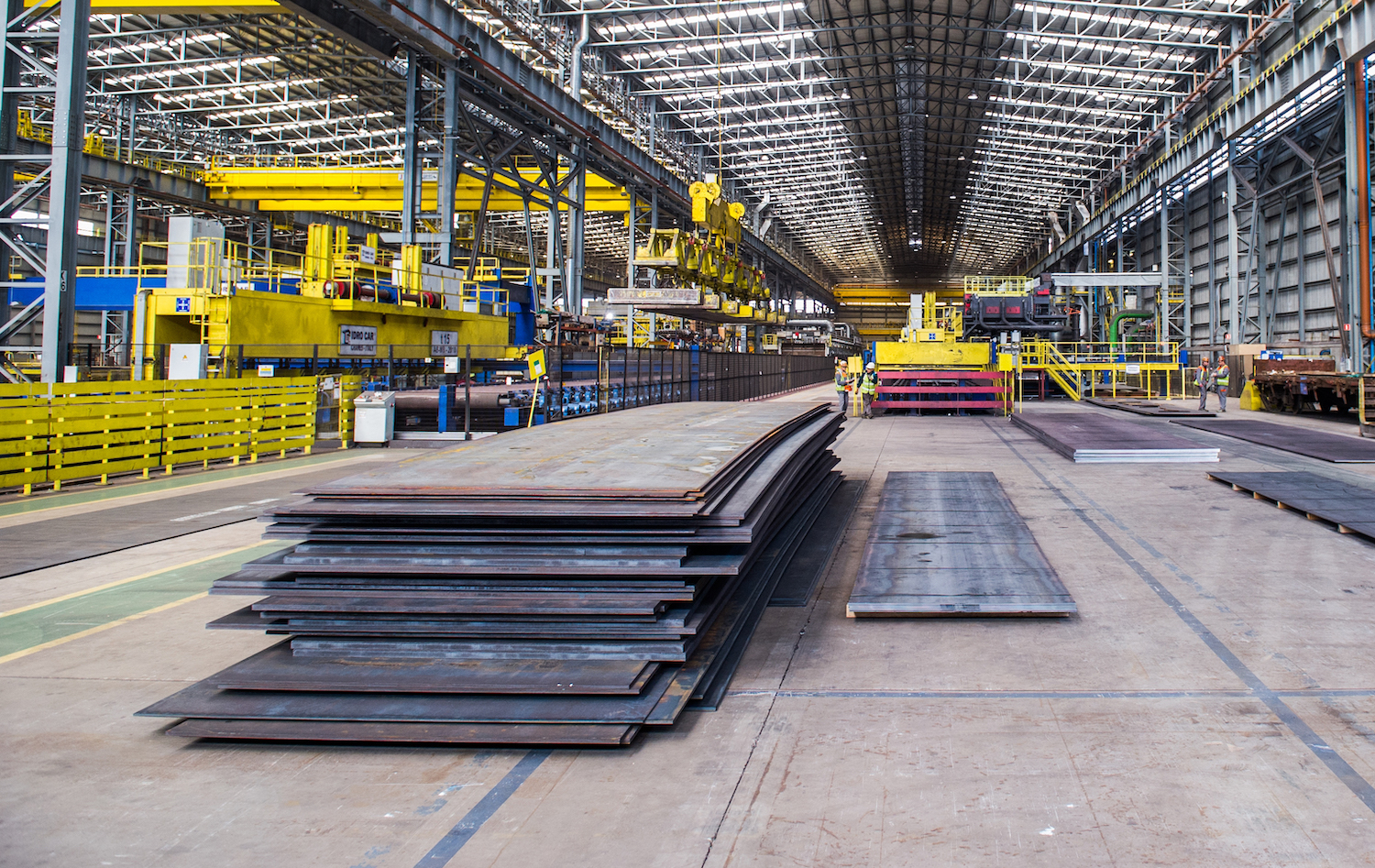
European heavy plate round-up: European plate prices up on CBAM, higher slab costs
European heavy plate prices increased further in the week to 23 January due to effect of the Carbon Border Adjustment Mechanism (CBAM) on costs, higher slab prices and seasonal demand recovery.
Italian re-rollers have been selling s275jr heavy plate at EUR700-730/t ex-works to spot buyers. Offers have been reported at EUR750/t ex-works with some transactions settled at this level with projects. European re-rollers have been offering March shipment plate.
German steelmakers have been firm in their s235jr material offers at EUR750-760/t ex-works. One of the country’s mills has been giving discounts of around EUR20-30/t to special customers, but this had little impact on the market as lower prices were not available to the larger pool of buyers.
A re-roller from the Czech Republic has been offering s235jr plate at EUR720-730/t ex-works.
Offers of s355jr plate from Italy to Germany were reported at EUR780-790/t delivered, and from German mills at EUR800/t delivered.
The introduction of CBAM at the start of the year has made buyers more cautious in their import purchases, often pushing them towards the domestic suppliers due to risks related to the CBAM duties. And while this has helped the domestic plate price recovery, the regulation has also increased production costs for re-rollers, traditionally relying on imported feedstock.
As the actual emissions in slab imports arriving in 2026 and, consequently, CBAM duties will not be certified until 2027, re-rollers have been estimating the duties at around EUR60-80/t. But until exporters obtain the certifications, European re-rollers risk that the duties would be calculated based on default values resulting in substantially higher costs.
Slab exporters from Asia, however, pushed slab offers higher citing good order books and reassuring European buyers that they will get required verifications in time to reduce the CBAM duties. Offers of slab from China and Vietnam have been reported at $530-560/t CFR for April shipment, up from the December deals settled at around $510/t CFR.
The slab costs rise offset the effects the plate price rise had on margins. Market sources said that current plate prices for re-rollers is already close to breakeven with the costs.
“The re-rollers need higher prices as slab prices moved up and with CBAM costs on top the EUR700/t ex-works the prices barely cover the costs,” a mill source said.
| Weekly European heavy plate, slab and green steel | |||||
| Unit | Term | 23-Jan-26 | Change | ||
| Weekly heavy plate | |||||
| Northwest Europe ex-works heavy plate | EUR/t | EX-WORKS | 740.00 | 10.00 | |
| Germany delivered heavy plate (Northwest Europe) | EUR/t | DEL | 785.00 | 10.00 | |
| Italy ex-works heavy plate | EUR/t | EX-WORKS | 715.00 | 15.00 | |
| Weekly steel slab | |||||
| Italy CFR slab | $/t | CFR | 530.00 | 20.00 | |
| Weekly green steel | |||||
| Green heavy plate premium (scopes 1-3 CO2 under 1t) | EUR/t | 25.00 | 0.00 | ||


Leaked IAA draft to harmonize EU industrial framework
The EU’s Industrial Accelerator Act (IAA) – intended to support the competitiveness of the bloc’s industries both globally and in the context of industrial decarbonisation – proposes wide-ranging support mechanisms for the bloc’s core industries, according to a leaked version of the legislation obtained by McCloskey, as it continues through the drafting stage.
Originally scheduled for late December, then late January, and now 25 February, the Commission’s upcoming legislative proposal has generated tensions within industry on several grounds, most prominently relating to low-carbon standardisation methodologies, and made-in-EU content requirements across state-managed procurement and financial support initiatives.
The IAA attempts to protect European industrial competitiveness as part of the Clean Industrial Deal – particularly for the steel and steel-consuming sectors – without unduly diluting the EU’s climate neutrality commitments, seeking a harmonization between climate and competitiveness policy.
Describing the IAA’s purpose, the Commission frames “delayed or insufficient progress on climate action” as a significant economic and social threat, stating that “securing and enhancing the Union’s strategic industries is therefore essential to protecting public order.”
The ‘strategic industries’ prioritised by the IAA are “energy intensive industries” – including the iron and steel sector – “net-zero technologies”, and “downstream industries”. The Commission cites high energy prices, global overcapacities, high capital and operating costs, constrained investment, and burdensome regulatory hurdles as dampening EU competitiveness in these areas.
To combat the downward trend, the IAA proposal introduces a new overarching benchmark for the EU’s industrial manufacturing capacity – assessed in terms of the bloc’s total gross value added – targeting a 20% share for manufacturing sectors by 2030.
In the IAA’s impact assessment – revised multiple times since the initial September report following criticisms from the EU’s Regulatory Scrutiny Board – the Commission acknowledges that downstream industries in particular could suffer net losses from the IAA as a result of “adjustment costs” across their supply chains, but consider that “these losses are largely offset by long-term benefits in terms of job creation, enhanced economic security and resilience of the European strategic industries, which ultimately provide stability and sustainable economic prosperity.”
Steel-consuming industries already feel threatened by potential inflationary effects from rapidly intensifying upstream steel trade protections, largely unshielded from substitutive imports in their own markets. A mandate on purchasing higher-value (and higher cost) low-carbon steel could turn these pressures existential, though the IAA and recent Automotive package provide that financial state support mechanisms will be available, conditional on the adoption of low-carbon domestic steel.
“The Union’s manufacturing industry is the largest sector of the Union’s economy in terms of its contribution to employment and value added.
[…]
There is a risk that the Union’s manufacturing industry may not be able to decarbonise fast enough for the Union to achieve its climate neutrality objective while preserving the Union’s competitiveness. Instead, the latest years have seen greenhouse gas emissions reductions coupled with reduced industrial output. The Union therefore needs to accelerate the decarbonisation of industrial processes and products by strengthening the business case for investment in decarbonisation within a globally competitive environment.”
– European Commission, IAA draft
The IAA in brief
As indicated by the Commission’s statements, a primary thrust of the IAA – aptly named the Industrial Decarbonisation Accelerator Act in its initial formulations – is to better prove this “business case for decarbonisation,” introducing new buy-side measures to incentivise demand for locally produced, low-carbon material in public (and private) procurement, facilitated by the creation of a new low-carbon steel label, and attempts at regulatory streamlining or harmonization.
The Commission considers limited demand for EU low-carbon products; difficulties in scaling industrial decarbonisation projects; and vulnerabilities in strategic supply chains as primary weaknesses in the EU’s industrial framework, presenting a range of measures to streamline regulatory barriers, consolidate and advance industrial decarbonisation, and leverage access to the EU’s Single Market for the benefit of domestic competitiveness.
Also included in the Commission’s recommendations are extensive provisions to control external investment in Union industries, aiming to ensure that the EU sees a reciprocal return for allowing positioning within its industrial sectors.
Overall, the IAA represents an attempt to consolidate regulatory mechanisms across industrial supply chains for the benefit of domestic industries, with measures focused on market pillars of supply; demand; bridged by standardisation provisions to better facilitate and encourage low-carbon liquidity across the EU market.
Detailed analysis of the provisions can be found in the links below – it is important to remember that the legislation exists in a leaked, draft form, and could see significant changes before its official presentation 25 February:
Supply – ‘Symbiotic’ Streamlining
Supply-side initiatives under the IAA largely relate to the clustering of industrial activities within designated zones, the streamlining of regulatory approval processes, and provisions on energy access and critical material stockpiling – most notably relating to steel scrap.
McCloskey has analyzed the specific provisions in this sub-article.
Standardisation – Consolidated Certification
EU green steel standardisation was announced as a priority for the Commission in its Steel and Metals Action Plan (SMAP), now implemented as part of the IAA.
McCloskey has analyzed the specific provisions in this sub-article.
Demand – Principled Procurement
Beyond the implied benefits of methodological standardisation for the liquidity of low-carbon steel on the spot market, the IAA introduces a mandatory preference for low-carbon, domestic steels in the form of minimum content requirements for both public procurement, and state-subsidised private procurement from energy-intensive industries.
McCloskey has analyzed the specific provisions in this sub-article.

European coil and green steel round-up: European coil prices inch up on CBAM, new quotas
The European coil market appears on the precipice of a bullish trend for second quarter deliveries as of 23 January, as market sources report declining availability for cheaper first-quarter material, and firmer offers for post-March lead times.
Market participants are now fairly unanimous that coil prices will rise once mills fully engage sales for Q2, with supply to be increasingly constrained by limitations to import accessibility from the Carbon Border Adjustment Mechanism (CBAM), and the EU’s upcoming replacement to its lapsing steel safeguards.
Hot-rolled coil prices (HRC) in Northwest Europe inched higher on the week, with first-quarter prices considered negotiable to EUR630-650/t ex-works by buyers, confirmed by mill sources. Levels are firmer for the first-quarter, seeing offers at EUR680-700/t delivered for April delivery and beyond.
“At the moment there is at least a 50 euro spread between coil offers, depending on lead time and mill,” said a German distributor, describing the market as “hectic.”
A mill source similarly attributed discrepancies to lead time differentials and a push for higher Q2 prices: “realistically mills are trading at stable prices if they have March material left, and all will claim to be firm on higher prices for the second quarter.”
Buyers are still skeptical in the near-term given poor demand conditions, with a Benelux distributor stating that “the mills really needed to do something to push prices higher as demand isn’t supporting higher rises – activity in the market is just not strong enough.”
Dynamics were similar in the Italian market, particularly on steel sheets, which are reportedly rising in price more rapidly than in North Europe due to additional sensitivity to CBAM costs.
Italian HRC prices were reportedly available between EUR620-640/t ex-works, with imports offered on a DDP Italy basis ex-Saudi Arabia at EUR615/t, and ex-Turkey at EUR620-630/t. CFR Italy offers were available at around EUR500/t CFR ex-India; EUR520-530/t CFR ex-Turkey (without AD duties); ex-Algeria at $670/t (EUR570/t); and ex-Indonesia at $550/t (EUR470/t).
Buyers are almost unanimously deterred from CFR-basis import purchases due to potentially existential CBAM costs if forced to use default emissions values and benchmarks. An Italian trader described how only minimal volumes could be traded CFR, even for larger importers like pipemakers:
“Importing on a CFR basis is still only possible for a small fraction of imports for any company relying on imports, able to dilute high CBAM duties elsewhere in their cashflow – maybe up to 10% of their total imports.”
Italian re-rollers have previously told McCloskey that they have “no choice” but to import under the assumption that requisite verifications for the use of ‘actual values’ for CBAM declarations, as default values otherwise pose too high a cost for continued operations.
Green Steel
While green HRC premiums continue to trade sideways at around EUR70-80/t, the low-carbon market saw its first sign of regulatory stimulus this week following the leak of the European Commission’s upcoming proposal for its Industrial Accelerator Act (IAA) – exclusively detailed by McCloskey in this series of articles.
The IAA introduces the EU’s first official “voluntary low-carbon label” for green steel standardization, and seems to incorporate the controversial ‘sliding scale’ mechanism in its classification thresholds on hot-rolled carbon steel products.
This label is to be incorporated into low-carbon local content mandates for both public and private procurement (where subsidised by state funds) in the EU, and could also assist spot market liquidity for green steel due to greater regulatory certainty as to what is – and is not – considered transparently low-carbon.
The IAA has been delayed again from its January timeline, and is now scheduled for presentation on 25 February.
| Weekly European steel coil | |||||
| EUR/t | Term | 23-Jan-26 | Change | ||
| Weekly Northwest Europe steel coil | |||||
| Northwest Europe ex-works HRC | EX-WORKS | 640.00 | 5.00 | ||
| Northwest Europe ex-works CRC | EX-WORKS | 730.00 | 5.00 | ||
| Northwest Europe ex-works HDG | EX-WORKS | 745.00 | 5.00 | ||
| Weekly South Europe steel coil | |||||
| Italy ex-works HRC | EX-WORKS | 630.00 | 5.00 | ||
| South Europe CIF HRC | CIF | 530.00 | 0.00 | ||
| Source: McCloskey by OPIS. | © 2026 Dow Jones Energy Limited. | ||||
| Weekly green steel | |||
| EUR/t | Term | 23-Jan-26 | Change |
| Green Northwest Europe HRC premium (scopes 1-3 CO2 under 0.8t) | 70.00 | 0.00 | |
| Green Northwest Europe ex-works HRC (scopes 1-3) | EX-WORKS | 710.00 | 5.00 |
| Green HRC premium (scopes 1-2 CO2 under 0.5t) | 70.00 | 0.00 | |
| Green Northwest Europe ex-works HRC (scopes 1-2) | EX-WORKS | 710.00 | 5.00 |
| Green HRC reduced carbon price (scopes 1-3) | 41.67 | -2.56 | |

CBAM spurs coil rises but buyers retreat
Participants are warning the European market may not be ready to accept a large rise in coil prices following the recent announcement of increases by ArcelorMittal, Kallanish learns.
While the hike has likely been encouraged by the Carbon Border Adjustment Mechanism (CBAM) coming into effect since the start of the year, the preceding months saw a slow and gradual increase gaining ground.
“But attempts by steel mills to raise prices more quickly are likely to meet resistance from processors who are not yet able to pass on these costs,” a Dutch manager believes.
He sees recent import offers from Turkey and the Middle East for hot rolled coil at up to €540/tonne ($633) cfr Antwerp. When adding CBAM costs, depending on the case, there would be barely any import arbitrage, with domestic HRC trading at €630-650/t ex-works until last week, he says. ArcelorMittal’s new offers take HRC to €700/t.
The hikes appear bolder for cold rolled coil and hot-dip galvanized coil, with offers now standing for CRC at €830/t and for galvanized material at €820/t. The previous highest quotes were reported in the Netherlands at €750 for CRC and €760 for HDG.
Notably, CRC offer prices have now eclipsed that of HDG. A German observer tells Kallanish that domestic mills have had less interest recently in producing CRC, preferring HRC and HDG, resulting in CRC becoming scarcer on the market.
The Dutch manager also points at EU measures, such as the ongoing anti-dumping investigation into CRC, where higher duties are expected soon. For mills this justifies an extra premium for cold-rolled material, he notes.
One German buyer finds that ArcelorMittal “takes it too far” and that the new prices for CRC and HDG, in particular, “do not fit the market at all; maybe for some special high-grade material”.
He is concerned the new quotes will scare buyers, who will then become even more reserved. “Many will hold back their orders, and a standstill is always bad for the market,” he adds.


Trasteel seeking to acquire Liberty’s Magona facility
Liberty Steel’s Magona facility in Italy is expected to be acquired by Swiss-based Trasteel, according to sources close to the matter.
Trasteel chief executive Gianfranco Imperato says that a sale agreement is likely to be signed shortly, with completion expected within 90 days of signing, according to Italian daily Il Secolo XIX.
Trasteel currently employs around 1,500 people and generates annual turnover of €1.7 billion ($1.98 billion). If the acquisition goes ahead, group turnover is projected to rise to approximately €2.2 billion.
Imperato also indicates that the company plans to invest around €100 million in the facility.
An informed source tells Kallanish that the unions have been informally told by the government that a meeting in Rome is expected to be convened on 17 February and a sale agreement is expected to be signed on that date. According to a union source, Trasteel plans to begin operations before the formal closing, potentially by leasing the facility for the period required to complete the transaction. To restart production, the new owner will need to secure hot rolled coil supply, a process that could take at least 60 days.
Magona has an annual capacity of around 650,000 tonnes, supported by two coating lines and one galvanizing line. Two additional re-rolling lines have been idle for several years.
It is believed that the plant is operating at sharply reduced rates, running fewer than 10 shifts per week out of 21 due to issues accessing HRC supply.
Liberty Steel declined to comment when approached by Kallanish while Trasteel was unavailable before the press deadline.

Rheinmetall signs up for SSAB Zero steels
SSAB and German defence and technology company Rheinmetall have signed a letter of intent for the supply of fossil-free steel, the Swedish group tells Kallanish.
It underlines that the deal “marks a significant milestone, as Rheinmetall becomes the first defence equipment manufacturer to adopt decarbonised steel in its production.” Rheinmetall is a global systems supplier in the defence sector and an innovator in civilian technologies, SSAB states.
The collaboration will begin with deliveries of SSAB Zero steels with volumes increasing over time. Future deliveries will also include SSAB fossil-free steel produced using HYBRIT technology.
The steelmaker describes its SSAB Zero line as the first commercial steel of its kind. “By using recycled steel and fossil-free energy, the fossil carbon emissions are virtually zero, without compromising on performance or quality,” it says.

European steel market sees growing price increase attempts
In the first weeks of the year, the European steel market has exhibited a complex dynamic, oscillating between “new price levels” and the “actual transaction pace.” While spot prices remain cautious in key hubs such as Germany and Italy, producers have notably intensified their attempts to raise prices across both long products and flat steel segments.
ArcelorMittal’s recent price announcements have played a decisive role in shaping the flat products market. Although the levels of €700/ton CPT for April-delivered HRC, €820/ton CPT for April-delivered HDG, and €830/ton CPT for May-delivered CRC exceed current spot prices, they have established important reference points for the market. Concerns over “replacement cost” have become more pronounced among service centers and distributors, reinforcing expectations for price increases. While some short-term increase attempts may be limited by negotiation, it is clear that the overall market direction is trending upward. ArcelorMittal’s pricing signals have increased the potential for upward movement in market prices.
In Germany, rebar trades at around €580/ton EXW and between €600–615/ton CPT, while wire rod prices hover between €590–600/ton CPT. Thick plate prices remain in the €690–700/ton EXW range. Flat products such as hot-rolled coil (HRC) transact near €630/ton EXW, with CRC priced between €725–735/ton and HDG ranging from €730–770/ton. These price levels reflect producers’ intentions to improve margins, though demand remains cautious.
The situation in Italy is similar but somewhat more fragmented. Long products such as IPN/IPE are priced within the €720–740/ton EXW band, while wire rod trades at €590–615/ton CPT. Thick plate prices are between €700–720/ton EXW, with CRC and HDG at €730–750/ton and €750–770/ton EXW respectively. HRC prices hover around €625–630/ton EXW, which is seen as the market equilibrium point. Italy’s prices remain more flexible compared to Germany, reflecting fragile domestic demand and more evident import pressure.
In Southern Europe, there is a clearer upward trend in rebar prices. In Spain, prices stand at approximately €640–650/ton CPT and €600–620/ton EXW. Portugal’s market reference prices are around €605–620/ton EXW. Export-wise, Portuguese-origin rebar is priced near €630/ton, while Spanish-origin rebar trades at about €660/ton. Offers from Megasa indicate CFR prices to North Africa at around €680/ton, demonstrating producers’ efforts to raise price levels both domestically and in export markets.
Some producers have already announced targets to set HRC prices, including deliveries, in the €670–700/ton range for the second quarter, anticipating continued price increases. Meanwhile, Turkish and Asian-origin products under CBAM are priced at approximately €600–630/ton DDP in Italy.
The implementation of CBAM as of January 1, 2026, has initiated a structural shift in the European steel market. However, significant uncertainties persist regarding the recognition of third-country ETS systems and emissions verification processes. These challenges complicate cost and reporting calculations for importers. The requirement for CBAM registration numbers in customs procedures rapidly became a key agenda item at the beginning of the year and has since become widespread. The mandatory use of TARIC codes has caused operational disruptions within the sector. While geopolitical and macroeconomic fluctuations have somewhat overshadowed CBAM’s short-term impact, it is now clear that CBAM will fundamentally alter trade dynamics and cost structures in the medium and long term. This structural transformation appears inevitable in shaping the new era of the European steel industry.


The European Parliament initiates legal process for the EU–Mercosur trade agreement
The European Parliament (EP) has decided to initiate the legal process regarding the trade agreement signed between the European Union (EU) and the Southern Common Market (MERCOSUR).
At the plenary session of the European Parliament held in Strasbourg, the trade agreement signed on 17 January between the EU and the MERCOSUR countries — Argentina, Brazil, Paraguay, and Uruguay — was discussed.
During the session, a proposal to request a legal opinion from the European Court of Justice (ECJ) on whether the EU–MERCOSUR trade agreement complies with EU treaties was put to a vote. The proposal was approved by 334 votes in favor to 324 against. Following this decision, the European Court of Justice will examine the legal aspects of the agreement. Similar cases reviewed by the Court are known to take around two years to conclude.
The EU–MERCOSUR trade agreement, whose negotiations lasted 25 years and which was signed on 17 January, will enter into force after being approved by both the European Parliament and the EU Council. Under the agreement, tariff concessions are expected for certain agricultural products such as beef, poultry, and dairy, while MERCOSUR countries are expected to further open their markets to European industrial goods.
The agreement also includes safeguard clauses allowing restrictions on market access for sensitive agricultural products imported from MERCOSUR when deemed necessary. However, farmers’ organizations across Europe have stated that they do not consider these measures sufficient.
Brussels views the agreement as a major geopolitical gain that will strengthen the EU’s trade presence and influence in Latin America. While Germany and Spain support the deal, several member states — notably France, Poland, and Hungary — along with many farming groups, have voiced opposition.

Steel heavy plate prices move up in Northern Europe; prices flat in Italy
Steel heavy plate prices in Northern Europe moved up in the week to Thursday January 22 amid Carbon Border Adjustment Mechanism (CBAM) cost support, while the Italian market remained unchanged but bullish.
Northern Europe
Plate prices in Northern Europe’s domestic market moved up in the latest pricing period amid higher offers, with support from a lack of import competition and uncertainty linked to the EU’s CBAM definitive regime, which came into force on January 1, while rising slab feedstock costs added further upward pressure.
“Reduced import volumes, driven by uncertainty around CBAM and safeguard measures, have prompted more buyers to rely on domestic supply,” said one buyer source.
They added that upward movement in the domestic market has been supported by these conditions.
Fastmarkets’ weekly price assessment for steel domestic plate, 8-40mm, exw Northern Europe was €720-750 ($846-881) per tonne on Thursday, rising by €20-50 per tonne from €700 per tonne a week earlier.
Offers for S235 plate were made at €720-770 per tonne during the week.
An import offer for S355 material was reported at €710 per tonne CIF Antwerp, including CBAM costs.
Plate market participants expressed further concerns around CBAM, with “complete insecurity around real imported slab [feedstock] costs”, especially regarding high default values given if actual emissions data cannot be verified.
And one plate trader said there remain big questions around which certification bodies would be verifying actual emissions data.
They added that many producers had stocked up on feedstock before the end of 2025 due to uncertainty around CBAM but added that restocking will be necessary in the near future.
Though some slab deals were heard at $520 per tonne in Italy’s slab import market during the week.
Italy
In Italy’s heavy steel spot market prices were flat, however the sentiment remained bullish amid fresh deals and lengthening lead times.
Fastmarkets’ weekly price assessment for steel domestic plate, 8-40mm, exw Southern Europe was €700-720 per tonne on Thursday, unchanged week on week.
Material was also heard sold at €750 per tonne, but for project-based work, which is often longer-term or involves special grades.
And offers were reported at €700-750 per tonne for S275 plate.
Indonesian S275 plate imports were offered at €670-680 per tonne DDP Italy during the week.