


The European Parliament initiates legal process for the EU–Mercosur trade agreement
The European Parliament (EP) has decided to initiate the legal process regarding the trade agreement signed between the European Union (EU) and the Southern Common Market (MERCOSUR).
At the plenary session of the European Parliament held in Strasbourg, the trade agreement signed on 17 January between the EU and the MERCOSUR countries — Argentina, Brazil, Paraguay, and Uruguay — was discussed.
During the session, a proposal to request a legal opinion from the European Court of Justice (ECJ) on whether the EU–MERCOSUR trade agreement complies with EU treaties was put to a vote. The proposal was approved by 334 votes in favor to 324 against. Following this decision, the European Court of Justice will examine the legal aspects of the agreement. Similar cases reviewed by the Court are known to take around two years to conclude.
The EU–MERCOSUR trade agreement, whose negotiations lasted 25 years and which was signed on 17 January, will enter into force after being approved by both the European Parliament and the EU Council. Under the agreement, tariff concessions are expected for certain agricultural products such as beef, poultry, and dairy, while MERCOSUR countries are expected to further open their markets to European industrial goods.
The agreement also includes safeguard clauses allowing restrictions on market access for sensitive agricultural products imported from MERCOSUR when deemed necessary. However, farmers’ organizations across Europe have stated that they do not consider these measures sufficient.
Brussels views the agreement as a major geopolitical gain that will strengthen the EU’s trade presence and influence in Latin America. While Germany and Spain support the deal, several member states — notably France, Poland, and Hungary — along with many farming groups, have voiced opposition.


Steel heavy plate prices move up in Northern Europe; prices flat in Italy
Steel heavy plate prices in Northern Europe moved up in the week to Thursday January 22 amid Carbon Border Adjustment Mechanism (CBAM) cost support, while the Italian market remained unchanged but bullish.
Northern Europe
Plate prices in Northern Europe’s domestic market moved up in the latest pricing period amid higher offers, with support from a lack of import competition and uncertainty linked to the EU’s CBAM definitive regime, which came into force on January 1, while rising slab feedstock costs added further upward pressure.
“Reduced import volumes, driven by uncertainty around CBAM and safeguard measures, have prompted more buyers to rely on domestic supply,” said one buyer source.
They added that upward movement in the domestic market has been supported by these conditions.
Fastmarkets’ weekly price assessment for steel domestic plate, 8-40mm, exw Northern Europe was €720-750 ($846-881) per tonne on Thursday, rising by €20-50 per tonne from €700 per tonne a week earlier.
Offers for S235 plate were made at €720-770 per tonne during the week.
An import offer for S355 material was reported at €710 per tonne CIF Antwerp, including CBAM costs.
Plate market participants expressed further concerns around CBAM, with “complete insecurity around real imported slab [feedstock] costs”, especially regarding high default values given if actual emissions data cannot be verified.
And one plate trader said there remain big questions around which certification bodies would be verifying actual emissions data.
They added that many producers had stocked up on feedstock before the end of 2025 due to uncertainty around CBAM but added that restocking will be necessary in the near future.
Though some slab deals were heard at $520 per tonne in Italy’s slab import market during the week.
Italy
In Italy’s heavy steel spot market prices were flat, however the sentiment remained bullish amid fresh deals and lengthening lead times.
Fastmarkets’ weekly price assessment for steel domestic plate, 8-40mm, exw Southern Europe was €700-720 per tonne on Thursday, unchanged week on week.
Material was also heard sold at €750 per tonne, but for project-based work, which is often longer-term or involves special grades.
And offers were reported at €700-750 per tonne for S275 plate.
Indonesian S275 plate imports were offered at €670-680 per tonne DDP Italy during the week.

European steel beam prices rise on CBAM cost-support, rising scrap feedstock costs
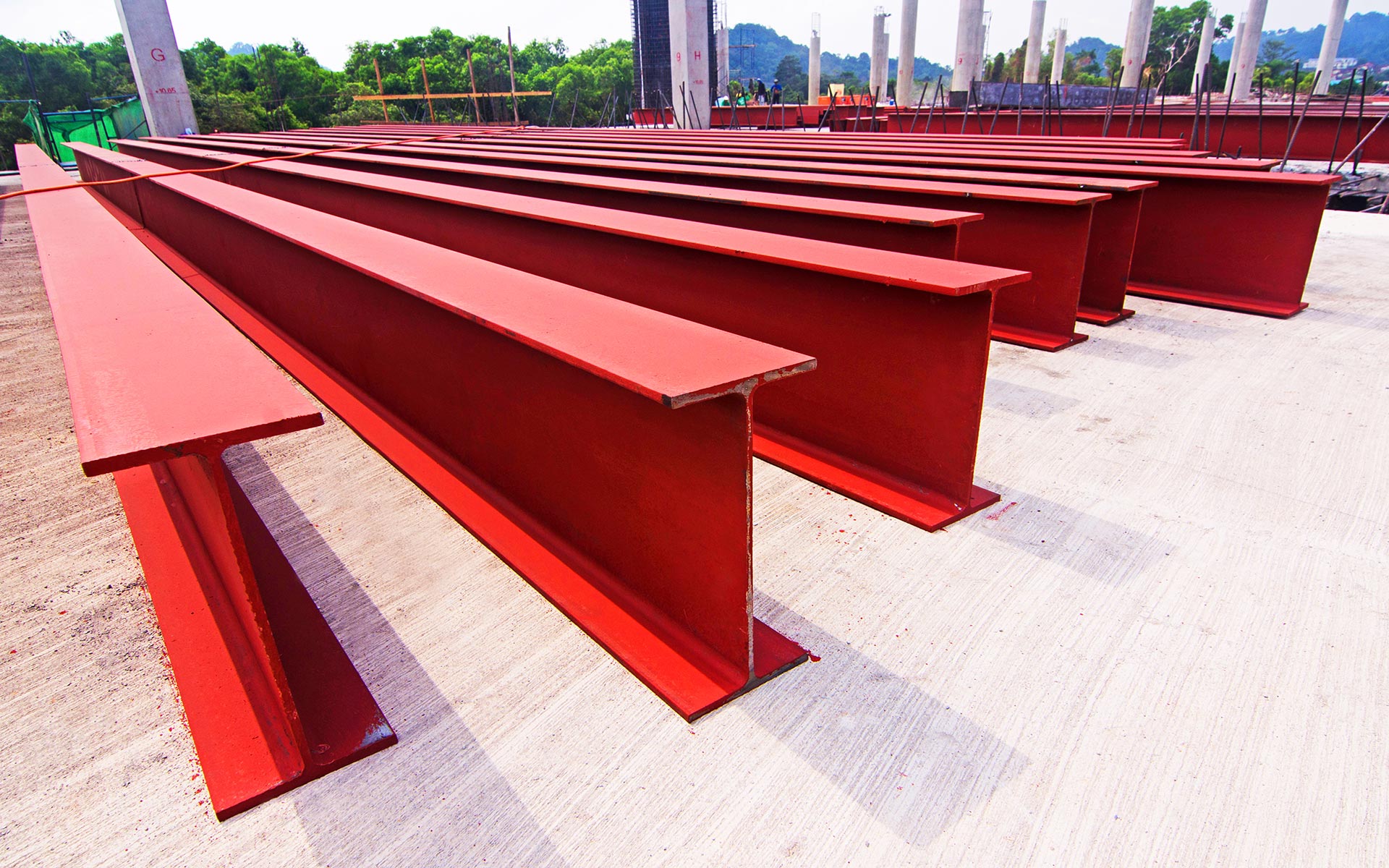
Steel beam prices in Europe rose considerably in the month to Wednesday January 21, with Carbon Border Adjustment Mechanism (CBAM) cost considerations affecting appetite for imports and supporting domestic markets, while rising scrap feedstock costs and bullish offers added further upward pressure.
The upward movement follows a dip in prices and sentiment in December.
Fastmarkets’ monthly price assessment for steel beams, domestic, delivered Northern Europe was €740-775 ($866-907) per tonne on Wednesday, up by €90-95 per tonne from €650-680 per tonne a month earlier.
Similarly, Fastmarkets’ monthly price assessment for steel beams, domestic, delivered Southern Europe was €740-775 per tonne on Wednesday, up by €90-95 per tonne month on month from €650-680 per tonne.
A key factor supporting the rise in domestic prices was the introduction of Phase 2 of the European Union’s (EU) CBAM – which, from January 1 2026, requires EU importers of high-carbon goods such as steel to purchase carbon certificates covering the embedded CO2 emissions of their imports.
There had already been significant price rises in flat steel markets late last year due to CBAM cost-considerations affecting import prices and demand.
Bullish seller sentiment at the start of the year also helped raise offers as producers aimed for higher prices.
However, while some market participants noted rising offers, they were sceptical of the tradability of higher prices amid continuing weak demand.
One market source said that the market was “very quiet” in early January, with market participants returning from the winter break.
Meanwhile, scrap feedstock prices in the bellwether Turkish market have been rising steadily since September 2025 – also contributing to the rise in European beams prices.
Fastmarkets’ calculation of its daily index for steel scrap HMS 1&2 (80:20 mix) North Europe origin, cfr Turkey was $369.97 per tonne on Wednesday, up by $5.26 per tonne month on month from $364.71 per tonne, and up by $42.97 per tonne from the low point of $327 per tonne on September 12 last year.

Steel hollow sections prices in Europe rise further on reduced import appetite, CBAM influences, higher HRC feedstock costs
Steel hollow sections prices in Europe’s domestic markets rose further during the month to Wednesday January 21 after the implementation of the EU’s Carbon Border Adjustment Mechanism (CBAM) on January 1 reduced import competition and lifted feedstock costs.
CBAM is an EU climate policy that puts a carbon price on certain imported goods based on their embedded greenhouse gas emissions.
Fastmarkets’ monthly price assessment for steel sections (medium) domestic, delivered Northern Europe was €770-840 ($902-984) per tonne on Wednesday, up by €10-40 per tonne from €760-800 per tonne a month earlier.
Fastmarkets’ monthly price assessment for steel sections (medium) domestic, delivered Southern Europe was €770-840 per tonne on Wednesday, up by €10-40 per tonne month on month from €760-800 per tonne.
Prices were also supported by bullish offers, with producers often targeting higher prices in the new year.
Hot-rolled coil feedstock costs have been moving up steadily since July.
More recently, CBAM-cost considerations and uncertainty have limited import availability, supporting higher prices in Europe’s domestic HRC markets.
Fastmarkets’ daily calculation of its steel HRC index domestic, exw Northern Europe was €642.59 per tonne on Wednesday, up by €16.34 per tonne from €626.25 per tonne a month earlier and up by €97.59 per tonne from €545 per tonne on July 8 last year.

Bisalloy strengthens Central and Eastern Europe presence
Australia’s Bisalloy Steels has signed a strategic partnership with MIRAS Steel Trade aimed at strengthening its footprint across Central and Eastern Europe.
The agreement will see the two companies collaborate on the supply, processing and distribution of high-performance armour and structural steel for defence, naval and heavy engineering applications, Kallanish notes. Coverage under the partnership will span Romania, Czechia, Hungary, Bulgaria and the Republic of Moldova, broadening Bisalloy’s European reach.
Bisalloy says the collaboration will allow it to offer shorter lead times, local processing options and closer technical support to European customers, while accelerating the expansion of its end-user base in the region.
MIRAS, meanwhile, has launched a dedicated platform named “SteelDefence”, providing European customers with integrated services ranging from stockholding and cutting to CNC machining and delivery of finished components.
The European expansion follows Bisalloy’s CE Marking approval in December 2025 under the Construction Products Regulation, enabling its structural steel grades to be marketed across the EU and the UK. The certification confirms compliance with European performance, quality and traceability requirements, opening the door to construction and infrastructure projects beyond the company’s traditional defence markets.
Bisalloy notes it is already engaged with a major customer on a long-term project, signalling early commercial traction.
Beyond Europe, Bisalloy continues to broaden its global operational footprint. In Indonesia, its joint venture partner, PT Bima, launched PT Bima Precision Processing last year, adding local fabrication capacity and allowing customers to source Bisalloy plate with integrated processing services. The company has also expanded its agency network through new representation in South Korea and Romania, it adds.


Germany sees another year of declining steel production
Steel production in Germany dipped notably in 2025, according to the national steel federation, WV Stahl in its yearly review.
Crude steel output at German mills came to 34.1 million tonnes last year, which was 9% below an already weak year in 2024. A similarly low level was seen only in the year of the global financial crisis of 2009.
The capacity utilisation has now fallen below 70%, which is a critical mark for the energy-intensive steel production, according to WV Stahl.
The year-on-year dip was stronger for oxygen-route crude steel, which fell by 10.7% to 23.6m tonnes. The EAF-route production fell by 3.5% to 10.5m tonnes. In December, the y-on-y gap levelled out at only a 0.2% decline compared with December 2024, to 2.7m tonnes.
This marks the fourth year that crude steel production in Germany has been below 40m tonnes, which is seen as the threshold of profitable nationwide steel output, Kallanish understands.
Steel demand in Germany has declined, too. According to preliminary data, the extrapolated market supply of 30m tonnes is again below the already low average of the past four years, the federation notes.
WV Stahl finds the development in foreign trade of steel particularly alarming. Global overcapacity – particularly in Asia – and the increasingly aggressive and unpredictable US customs policies are further exacerbating the situation, it says.
“Under these conditions, the steel industry will hardly be able to recover in 2026,” warns WV Stahl’s managing director, Kerstin Maria Rippel.
“In order to limit import pressure on the European market, the EU Commission’s sound proposal for a highly effective protective instrument must now be implemented swiftly. The industry cannot afford any further delays,” she concludes.

Nova Hut details investment plans, EAF preparation
Czech-Republic based Nova Hut, formerly Liberty Ostrava, is planning to invest up to CZK 150 million ($6.5m) this year in production modernisation, equipment renewal and energy efficiency, according to production and technical director Ivo Chmelík.
“A key strategic project is the preparation for the construction of an electric arc furnace, with an estimated value of approximately CZK 17 billion,” the company says.
“This long-term ecological project, supported by a grant from the Modernisation Fund of the Ministry of the Environment, has the potential to significantly shape the future of steel production at Nova Hut,” it adds.
The planned EAF capacity is up to 1.5 million tonnes/year, Kallanish notes.
In parallel, Nova Hut plans a series of operational investments focused on reducing energy consumption and emissions, recovering waste heat on hot rolling lines, modernising technologies and increasing the share of higher value-added products. It will also conduct a major upgrade of its rotary hearth furnace.
The company took over the formerly insolvent plant on 1 October, following approval from the Czech Competition Authority and consent of the insolvency court. The plant’s blast furnaces and coking plant have been permanently decommissioned.
Northwest Europe coil hikes fail to surprise buyers
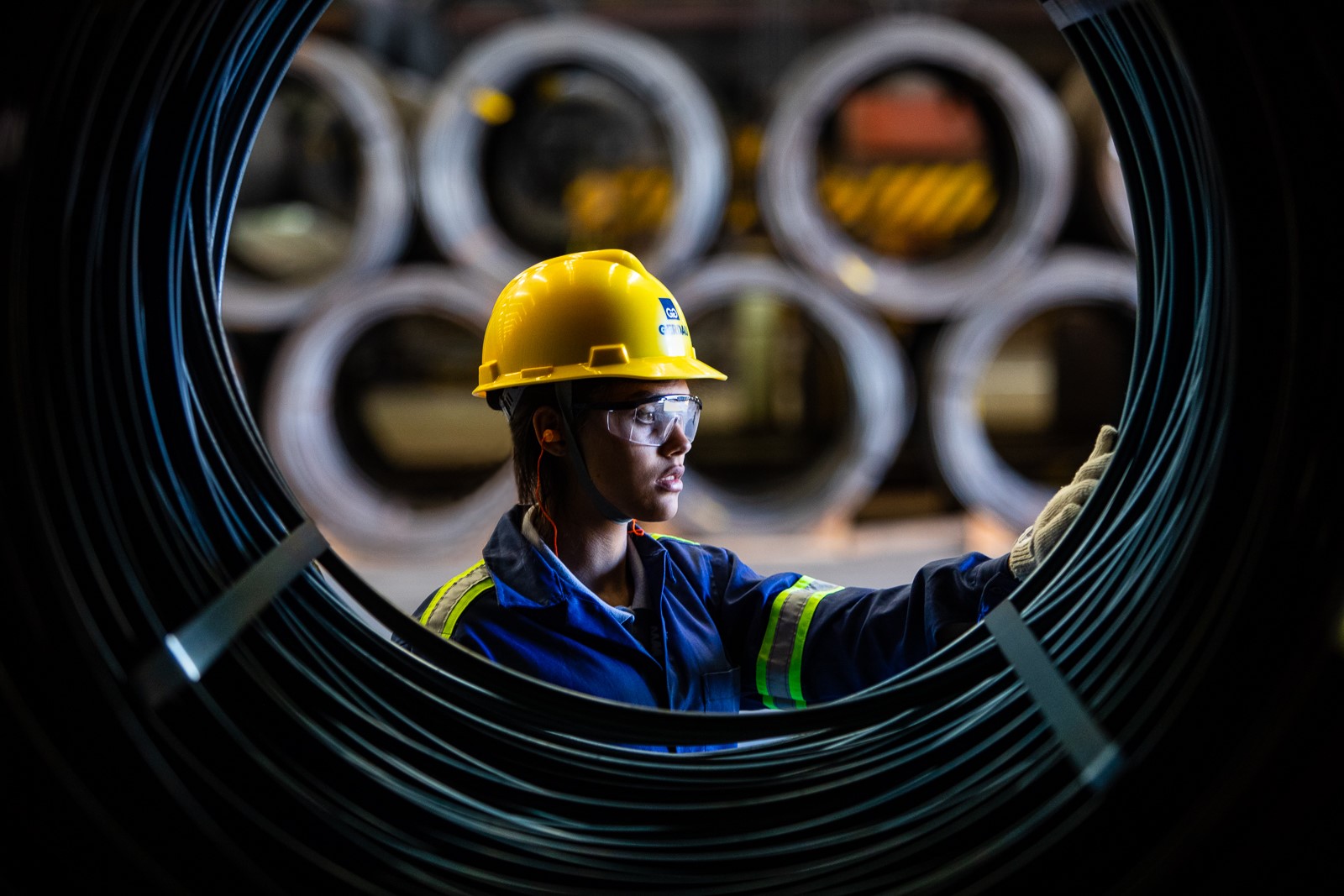
Buyers of coil in Germany, Benelux, and neighbouring countries have expressed little surprise over ArcelorMittal’s recent announcement of a hot rolled coil price increase to €700/tonne ($821) ex-works.
Mills started the year with a reserved attitude, one southern German buyer reflects. “Of five mills, two would still give offers, the others did not appear on the market,” he tells Kallanish. He therefore expected that a new price announcement was near, with the market leader making the first move.
“They’re calling for €700, so another mill will give you a more friendly offer of €680,” a southern German buyer believes. A realistic price on the market could be €660, “which would be an achievement, too,” he believes. That would line up with orders he placed last week with a mill which had some capacity left for mid-March. Despite a long transport duration, he concluded the transaction for €660 delivered.
The mill has since informed him of a €20 increase this week, before ArcelorMittal’s announcement.
According to another observer, mills have only limited capacity until end-March, with offers at €650/t ex-works.
“That won’t last much longer, and then they will likely ask for €670,” he says. He anticipates those prices were already the mills’ target when HRC was selling at €630/t.
A Dutch manager saw prices only slightly higher in the Netherlands last week, with expectations of a rise to €700 or higher for the second quarter.
But he, in line with most players, is sure that “buyers remain cautious and there is no clear urge to buy.” The arguments of import policy measures and production costs stand against a recovery in demand that is hardly visible in practice, he finds.

Davos: Von der Leyen calls for permanent European independence
Speaking at the World Economic Forum in Davos on 20 January 2026, Ursula von der Leyen delivered a clear message: Europe is entering a new global reality in which economic, energy and security dependencies can no longer be ignored.
Addressing world leaders under the theme “A Spirit of Dialogue”, the European Commission President argued that recent geopolitical shocks are not temporary disruptions but structural changes. According to von der Leyen, hoping for a return to the old global order is no longer an option. Instead, Europe must adapt permanently by strengthening its own economic and strategic foundations.
At the core of her speech was the concept of European independence, which she described as a necessity rather than a political choice. From energy and raw materials to defence, capital markets and critical technologies, Europe must reduce its vulnerabilities while remaining open to trade and partnerships. Independence, she stressed, does not mean isolation, but the ability to act, invest and trade from a position of strength.
Von der Leyen pointed to recent trade agreements, including the EU-Mercosur deal, as evidence that Europe continues to choose openness and cooperation while actively diversifying supply chains and de-risking its economy. At the same time, she acknowledged that internal fragmentation still limits Europe’s competitiveness and announced plans to simplify the Single Market through a new European company framework, enabling businesses to operate more easily across borders.
Energy security and affordability were highlighted as central to Europe’s industrial future, with accelerated investment in grids, interconnectors, nuclear power and renewables seen as essential to reducing dependencies and supporting growth. She also underlined the growing link between economic strength and security, referring to increased defence spending and sustained support for Ukraine as part of Europe’s broader responsibility for its own security.
Concluding her address, von der Leyen stressed that European independence must now become a permanent guiding principle. In a world that has changed irreversibly, she said, Europe must move faster, act together and build the economic and industrial resilience needed to secure its future.

Tariffs and energy: ArcelorMittal Luxembourg urges the EU to act
At its New Year’s ceremony on Wednesday 21 January in Differdange, ArcelorMittal Luxembourg drew a harsh assessment of the steel situation in Europe. Faced with global overcapacity, pressure from imports and energy costs, the group is calling for rapid European measures to preserve a competitive, low-carbon steel industry. And it is delighted with its new dust capture installation.
Meeting in Differdange for the 2026 New Year’s ceremony, the directors of ArcelorMittal Luxembourg delivered a detailed analysis of the situation in the steel market and the challenges facing the European steel industry. Valérie Massin, country manager, and Pierre Jacobs, CEO of long products Luxembourg, described a strategic sector weakened by global imbalances, while reaffirming the group’s industrial commitment to the Grand Duchy.
Pierre Jacobs recalled the central role of steel in the modern economy, present in infrastructure, construction, automobiles and now electric vehicles, as well as in the circular economy thanks to its recyclability. However, this indispensability contrasts with the evolution of the global market. In 2024, global steel production reached around 1.8 billion tonnes, almost three-quarters of which was produced in Asia, mainly in China, but also in India, South Korea and Japan. The European Union’s (EU) share now stands at only around 130 million tonnes, or less than 10% of global production, and is down by around 25% on levels before the health crisis.
This contraction is accompanied by a reversal in trade flows. Whereas the EU was still a small net exporter of steel in 2015 and 2016, since 2017 it has become a net importer, with imports sustainably exceeding exports. This development is having a direct impact on European industrial capacity utilisation. After a sharp fall during the 2009 financial crisis and then in 2020 with the health crisis, the production capacity utilisation rate today remains at low levels, often below 70%, reflecting both the scale of imports and an economic climate deemed gloomy in Europe.
Target of zero fatal accidents
There are also social issues at stake. The European steel industry represents around 300,000 direct jobs, over a million indirect jobs and several hundred thousand induced jobs. In terms of added value, the steel ecosystem contributes several hundred billion euros to the EU economy.
At the level of the ArcelorMittal group, Pierre Jacobs recalled the strategic priorities, starting with the health and safety of employees. Since the group was created in 2006, the lost-time accident frequency rate has fallen from around 3 in 2007 to 0.68 in 2025, at a time when the company has set itself the target of zero fatal accidents from 2027. The CEO acknowledged the highly ambitious nature of this objective, pointing out that fatal accidents have still been recorded in recent years, including in Luxembourg.
Installation reliability is another key focus, both for cost control and for meeting the delivery times promised to customers. Any unforeseen breakdown is likely to disrupt the production chain and the service provided. Added to this is the Group’s strategic growth, both organically and through acquisitions, illustrated in particular by expansion projects in India, Brazil and the United States.
The climate issue also plays a central role. As a heavy industry by nature, the steel industry is highly exposed to the challenges of decarbonisation. Pierre Jacobs pointed out that Luxembourg was ahead of the game in the 1990s when it replaced blast furnaces with electric furnaces, which emit at least four times less CO2. This transformation is a model that the group intends to extend to other European and global sites.
If the EU waits until June, the 50% surcharge will come too late
Economic indicators confirm the current tensions. The PMI index, a barometer of industrial activity, has been fluctuating below the 50 threshold since 2023, signalling a lack of real growth, including in Luxembourg. In terms of prices, the hot-rolled coil benchmark shows that European prices are still lower than those in the United States, while Chinese export prices are much lower. China, which accounts for around 50% of the world’s steel production, thus has a major competitive advantage, fuelling pressure on the European market.
Valérie Massin extended the analysis by highlighting the structural deterioration of the market. Global overcapacity is estimated at almost 600 million tonnes, while European demand is contracting and cost differentials between European and non-European producers persist, notably due to energy prices. Faced with this situation, the European Commission presented an action plan on steel and metals in 2025, aimed at strengthening trade defence instruments, limiting imports and implementing the carbon adjustment mechanism at borders.
As far as imports are concerned, a ceiling of around 18 million tonnes of steel that can enter the European market freely is envisaged, above which a surcharge of up to 50% would apply. For ArcelorMittal, the challenge now is to implement these measures quickly. Delayed deployment, particularly after the first half of the year, could significantly reduce their effectiveness for 2026. All the more so as imports have been increased in anticipation by “stockists” who will not only have acquired stocks at lower cost, but who will no longer want Luxembourg products as a result.
A strategy to circumvent the balancing mechanism
The border carbon balancing mechanism, which comes into force on 1 January 2026, is a long-awaited step forward for European producers. However, Valérie Massin pointed to persistent loopholes, in particular practices that allow certain producers to direct lower-emission production towards Europe, while selling higher-carbon volumes elsewhere. In her view, these situations undermine the objective of a level playing field between producers subject to the EU ETS (Emissions trading system) and their international competitors.
Energy costs remain another determining factor. Since the war in Ukraine, gas and electricity prices in Europe have remained well above those in the United States or China, even though energy is a major input in steel production. While the European plan sets out guidelines, the group is still waiting for concrete measures for the wholesale market and for industries that consume a lot of energy.
In Luxembourg, ArcelorMittal employs around 3,510 people across several industrial and administrative sites. The country is ahead of the game in terms of decarbonisation, with 98% of its production based on electric furnaces using mainly recycled scrap metal. The group also highlights emblematic achievements, such as the supply of exceptional parts for the Henry Ford Hospital site in Detroit or the development of XCarb steel, showing around 300 kilos of CO2 per tonne produced thanks to the use of green electricity.
At the same time, ArcelorMittal is continuing to invest in Luxembourg, notably with the construction of its future world headquarters on the Kirchberg plateau, scheduled for completion in the first half of 2027. The building, 14,000 tonnes of steel, will embody the group’s expertise in low-carbon steel and sustainable construction.
