


Assofermet Acciai: September starts weak for Italian steel, with CBAM and US tariffs fueling uncertainty
In the July-August period, the Italian steel market recorded a partial recovery in purchase prices, which rekindled operators’ interest, albeit timidly. However, according to the latest monthly report from Assofermet Acciai, updated as of September 11, the sector faced strong difficulties in passing on the increase in coil costs to end customers, amid persistently weak demand and a widespread climate of uncertainty.
The September outlook shows substantial continuity with previous months, further aggravated by growing concerns related to the CBAM. Imports done during 2026 will be subject to the purchase of certificates as of February 2027. However, the European Commission has not yet disclosed the calculation basis needed to estimate the effective costs.
Additional uncertainty comes from US tariffs on steel and aluminium, which risk diverting volumes from the Far East to Europe, exacerbating the domestic oversupply. In this context, ahead of the new regulation that will replace the current safeguard measure in June 2026, Assofermet has already submitted several key points to the European Commission for consideration in the drafting phase.
July ended with reduced volumes and prices still at their lowest levels, while the first week of September showed no signs of recovery: demand remains below expectations and purchasing activity is limited, also due to high stock levels and very short production lead times.
For stainless flat products, July showed relative stability, with limited single-digit percentage movements, while in August some products, particularly cold-drawn tubes, attempted a modest upward push sufficient to support revenues. The construction sector remains more fragile, with rebar, welded mesh and related products continuing to show signs of weakness.
In the distribution segment, July recorded a trend similar to that of the previous year: stable prices allowed the market’s underlying direction to be assessed without sudden fluctuations, while August saw attempts at upward movement in some categories. September opened with a cautiously improving scenario, with moderately higher volumes and slight price increases in some segments, although the fragility of downstream demand remains evident.
According to Assofermet, the coming weeks will be decisive in shaping the trend for the final part of the year. The evolution of demand in key end-use sectors such as construction and automotive, together with inventory management, will be crucial in determining whether the market can consolidate the first signs of recovery or whether downward pressure from oversupply and international uncertainties will prevail.


European Parliament approves simplified CBAM rules with new import threshold
The European Parliament has announced that it has voted to approve reforms to the Carbon Border Adjustment Mechanism (CBAM), introducing a streamlined framework designed to ease compliance for small importers.
It was emphasized that the reform contributes to supporting competitiveness, while ensuring a just transition for EU industries and maintaining climate neutrality goals for 2050.
A central change is the introduction of a de minimis mass threshold. Imports of up to 50 mt per importer per year are now exempt from CBAM obligations. 90 percent of importers will fall under this exemption, particularly SMEs and individual importers handling small volumes.
Crucially, the reform preserves climate integrity. 99 percent of emissions from imports of iron, steel, aluminum, cement, and fertilizers will remain covered by CBAM.
For importers still covered by CBAM, the legislation introduces simplifications across several areas:
- Authorization process is streamlined for easier access
- Emissions calculation is clarified and standardized
- Verification procedures are simplified for reporting obligations
- Financial liability becomes clearer for CBAM declarants
These measures are designed to reduce administrative burdens, addressing concerns raised by businesses while keeping the mechanism effective.
The revised CBAM also includes stronger anti-abuse measures aimed at preventing circumvention. This ensures that the new threshold cannot be exploited to evade compliance.

EUROFER files petition for antidumping investigation into Turkish cold rolled coil
According to an official communication circulated by the General Directorate of Imports, Ministry of Trade of Turkey, the European Steel Association (EUROFER) has filed a petition with the European Commission for an antidumping investigation for cold rolled coil imports from Turkey.
The petition included Turkish producers Atakaş Çelik, Çolakoğlu Metalurji, Diler Holding, Erdemir, Gazi Metal, Göktaş Metal, Habaş, Kibar Holding, MMK Metalurji, Tat Metal, Tezcan Galvaniz, Tosyalı-Toyo and Yıldız Demir Çelik. The investigation has not been initiated yet.
The products subject to the investigation fall under Customs Tariff Statistics Position Numbers codes of 7209.15.00, 7209.16.90, 7209.17.90, 7209.18.91, 7209.18.99, 7209.25.00, 7209.26.90, 7209.27.90, 7209.28.90, 7211.23.30, 7211.23.80, 7211.29.00, 7225.50.80 and 7226.92.00 (TARIC codes of 7209.15.00.90, 7209.18.99.90, 7209.25.00.90, 7211.23.80.19, 7211.23.80.95, 7211.23.80.99, 7211.29.00.19 and 7211.29.00.99).
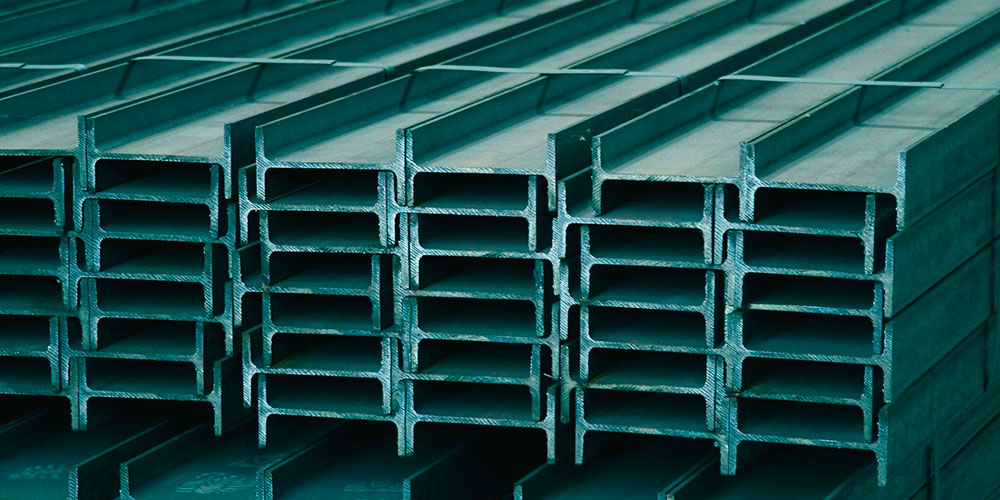
European longs market stable to lower amid pessimistic mood
No major changes have been reported in the longs steel segment in Europe this week. The market mood is overall sluggish, and price trends have emerged as sideways to lower amid offer exceeding demand and international uncertainty due to recent military escalations that have involved Poland.
Pessimistic mood is emerging among rebar sellers in Italy, who have reported a decline of €20/mt in prices. If €280/mt ex-works base (€545/mt ex-works including regular extras) had only been seen in a couple of deals last week, when the average price was €300/mt ex-works base (€565/mt ex-works including regular extras), the new level this week seems to have stabilized at the lowest. “Offers are high considering insufficient [rebar] demand,” a source claimed. “I expect further declines next week”. In the meantime, though, in southern Italy demand of finished steel seems good, and according to media reports, rebar incomes since the beginning of this year have been rather satisfying compared to other finished products, even though their levels are not comparable to pre-pandemic’s.
In the wire rod segment, no changes have been reported in Italy nor in other European countries, where the market mood remains weak, and the low steel demand – especially in Poland – is mainly due to a general sluggishness. “Market players are worried about two main issues, i.e. recent military events and the CBAM. Especially about the latter, they are eager to have more information, but no one seems to have the right indications,” a source reported.
As for exports, ex-Spain rebar prices to UK ports have been reported at €535/mt FOB, down by €5/mt week on week.
Finally, in the import segment, most price levels have remained unchanged compared to last week. Rebar and wire rod prices from Turkey have been reported at €485-495/mt CFR and €495-500/mt CFR, respectively, unchanged compared to last week. Rebar and wire rod prices from Egypt have been reported at €485-495/mt CFR and €500-505/mt CFR respectively. The former is down by €5/mt on the lower end of the range, whereas the latter is unchanged compared to last week. Finally, Indonesian wire rod prices to Europe have been reported at €480/mt CFR. These prices are based on the euro-dollar exchange rate of 1.17 (European Central Bank, September 11).

European CRC, HDG prices hold in quiet market; rumored AD probe likely to curb appetite for Asian CRC
Meanwhile, a rumored multi-country anti-dumping investigation into cold-rolled coil is expected to curb appetite for imports further.
Trade regulations affect demand for imports
Demand for imported steel had already been curbed due to the expected implementation of the EU’s Carbon Border Adjustment Mechanism (CBAM) in 2026 and new steel safeguard measures, Fastmarkets reported previously.
“We expect revisions of safeguard mechanisms as we approach the end of September, which will generate more movement in the market by late October or early November,” one source told Fastmarkets.
Several sources familiar with the matter also told Fastmarkets that the European Commission will open a new anti-dumping (AD) investigation into steel cold-rolled coil imports from India, Turkey, Japan and Taiwan.
The complaint was reportedly lodged by European steel association Eurofer on behalf of European steel mills at the end of August, with the official investigation expected to be begin in September.
Eurofer declined to comment when contacted by Fastmarkets.
“We never comment on trade cases – potential or ongoing,” the spokesperson said.
The Commission did not return Fastmarkets’ request for comment by the time of publication.
Sources expect that with the AD investigation in place, buying appetite for CRC imports will be even lower and therefore a stronger reliance on European CRC could support domestic prices in the long run.
A similar AD case was launched by the Commission against hot-rolled coil originating in Egypt, India, Japan and Vietnam in August 2024.
Provisional duties were implemented in April 2025, with final rates expected to be published in September.
Northern Europe
Domestic CRC prices in Northern Europe narrowed upward slightly during the week to Wednesday, but were still below target offers, according to market sources.
Offers were heard hovering around €660-700 ($703.34-745.96) per tonne ex-works this week. But sources argued that the lower end of the range was no longer offered by integrated suppliers.
Deals were reported at €670-680 per tonne ex-works during the week.
Fastmarkets’ weekly price assessment for steel CRC, domestic, exw Northern Europe was €670-685 per tonne on Wednesday, narrowing upward by €10 from €660-685 per tonne the previous week.
Import prices for CRC also rose during the assessment week, with higher offers from Taiwan heard at €650-660 per tonne CFR on Wednesday, while offers from Turkey were reported in the range of €620-630 per tonne CFR.
Fastmarkets’ weekly price assessment for steel CRC, import, cfr main port Northern Europe was €620-650 per tonne on Wednesday, widening upward by €20 from €620-630 per tonne the previous week.
Both domestic and import prices for hot-dipped galvanized (HDG) coil remained stable this week, according to market sources.
Fastmarkets’ weekly price assessment for steel hot-dipped galvanized coil, domestic, exw Northern Europe was €670-690 per tonne on Wednesday, unchanged week on week.
Local mills unsuccessfully tried to push offers to €700 per tonne ex-works and above, but demand was not supportive of such rises.
Italian HDG was offered to Germany at €700-730 per tonne delivered.
But buyers ‘estimations of achievable species did not exceed €670-690 per tonne ex-works.
Sources also mentioned muted demand from core industries such as the automotive sector, among other factors limiting price growth.
For imported HDG, market sources estimated the workable market at €690-700 per tonne CFR, in line with previously reported prices.
Fastmarkets’ weekly price assessment for steel hot-dipped galvanized coil, import, cfr main port Northern Europe remained €690-700 per tonne on Wednesday.
Southern Europe
Domestic CRC prices also inched up slightly in Southern Europe, according to sources.
This week, market participants estimated the workable market for CRC at around €640-650 per tonne ex-works, compared with prices of around €630-650 per tonne during the summer period.
Target offers remain higher at €690-700 per tonne ex-works in Italy and Spain, but no trades were reported.
Fastmarkets’ weekly price assessment for steel CRC, domestic, exw Southern Europe was €640-650 per tonne on Wednesday, narrowing upward by €10 from €630-650 per tonne the previous week.
Meanwhile, CRC import prices were stable this week, with offers heard hovering at €610-650 per tonne CFR on Wednesday, stable with offers seen in the previous assessment period.
Higher-end offers were still coming from Taiwan at €650 per tonne CFR, while lower-end offers at €610 per tonne CFR are coming from Vietnam.
Fastmarkets’ weekly price assessment for steel CRC, import, cfr main port Southern Europe was €610-650 per tonne on Wednesday, unchanged week on week.
Domestic HDG prices in Southern Europe also moved up slightly this week, mirroring trends in the CRC and HRC markets.
Market participants estimated the workable market for HDG at €650-670 per tonne ex-works in Italy and Spain on Wednesday, compared with €650-660 per tonne ex-works during the previous assessment period.
Offers were heard at €685-700 per tonne ex-works on Wednesday.
As a result, Fastmarkets’ weekly price assessment for steel hot-dipped galvanized coil, domestic, exw Southern Europe was €650-685 per tonne on Wednesday, widening upward by €25 from €650-660 per tonne the previous week.
Regarding imports, sources estimated the workable market for HDG in Southern Europe around €700 per tonne CFR on Wednesday, compared with €660-690 per tonne CFR during the previous assessment period.
Firm offers were rare, with many suppliers having exceed their third-quarter allocations quickly and a similar situation expected for the fourth quarter, Fastmakrets reported. As well, Asian suppliers were offering late arrival – potentially in 2026 – which would mean facing CBAM risks.
One offer was reported from Vietnam for 0.58mm HDG with Z140 coating at €810 per tonne CFR to Southern Europe, Fastmarkets heard. Bids for such material were heard lower by €30-40 per tonne at €770-780 per tonne CFR. The price was not included in the final range due to being out of Fastmarkets’ specifications.
Fastmarkets’ weekly price assessment for steel hot-dipped galvanized coil, import, cfr main port Southern Europe was €690-700 per tonne on Wednesday, up €10-30 rising from €660-690 per tonne the previous week.


Northern Italian rebar prices under pressure, domestic market widens downward
Fastmarkets’ weekly price assessment for domestic steel reinforcing bar (rebar), ex-works Italy, widened downward to €550-620 per tonne on Wednesday September 10, compared with €560-620 per tonne on September 3.
One trader said that rebar prices in Northern Italy were under further pressure this week.
“Demand remains low, and some producers are pushing to sell, offering low prices,” the same trader added.
Meanwhile, other market participants noted greater stability at the upper end of Fastmarkets’ assessed range, with prices in southern Italy said to be fairly stable.
However, continuing market uncertainty and a widespread wait-and-see stance among participants continued to limit trading activity.
In Spain, prices remained stable.
Fastmarkets’ price assessment for steel reinforcing bar (rebar) domestic, delivered Spain was €640-645 per tonne on September 10, unchanged week on week.
And, in Northern Europe, prices were under slight downward pressure.
Fastmarkets’ weekly price assessment for steel reinforcing bar (rebar) domestic, delivered Northern Europe was €625-640 per tonne on September 10, widening downward by €5 per tonne from €630-640 per tonne on September 3.
Market activity in the region has been slow to pick up after the summer holiday period, with market participants adopting wait-and-see attitudes, sources said.

Demand for green steel remains niche across Europe, premiums soften
Fastmarkets’ assessment of the green steel domestic, flat-rolled, differential to HRC index, exw Northern Europe was €100-170 per tonne on Thursday, widening downward from €120-170 per tonne seven days ago.
Fastmarkets’ methodology defines European green flat steel as “steel produced with Scope 1, 2 or 3 emissions at a maximum of 0.8 tonnes of CO2 per tonne of steel.”
Premiums for such steel were set at a minimum price of €200 ($233) per tonne among European mills, with some offers reported as high as €300 per tonne in the Nordics.
Buyers estimated achievable prices much lower, at €100-130 per tonne, adding that mills were willing to grant discounts for volumes above 2,000 tonnes.
Suppliers estimated achievable prices higher at €150-170 per tonne.
One mill reported a bid for 25 tonnes of green steel at €70 per tonne, but said it was rejected.
“Some bids we receive are ridiculously low. Green steel production is expensive, and we can’t sell [steel] produced with emissions below 800 kg per tonne at such a price,” the mill source said.
At the same time, mill sources confirmed that demand for green steel was very niche, and the number of inquiries they were receiving had declined in the past few weeks.
“Buyers say they have other issues on the table to deal with: CBAM, safeguards 2.0, poor demand, bad economy etc, etc, etc,” a second mill source said.
A buyer in Germany confirmed that they were holding back on new purchases of green steel due to subdued demand.
In contrast, a source in Norway claimed that local companies were procuring green steel for public projects, although they admitted that volumes remained limited.
Meanwhile, Fastmarkets’ assessment of the flat steel reduced carbon emissions differential, exw Northern Europe was also unchanged week on week at €40-60 per tonne on Thursday.
For steel produced in blast furnaces with reduced carbon emissions of 1.4-1.8 tonnes of CO2 per tonne of steel, offers for premiums were reported at €60-70 per tonne during the assessment week.
Buyers’ estimates of tradable prices were around €20-50 per tonne, with most of the estimations reported at €50 per tonne.

Long-standing CEO of SMS group Heinrich Weiss passes away at 83
SMS group has announced the passing of Heinrich Weiss, former CEO and long-standing figurehead of the company, who died on 8 September surrounded by his family.
Heinrich Weiss led SMS group for more than five decades, transforming it from a regional enterprise into a global leader in machine and plant engineering for the steel industry. He took over as Chairman of the Managing Board in 1971, following his entry into the family business in 1968. Under his leadership, SMS group expanded internationally, including the key acquisitions of Schloemann (1973), Mannesmann Demag (1999), and Paul Wurth (2021).
Weiss remained involved in the company’s strategic direction until 2024, ensuring a smooth generational transition. Alongside his business leadership, he held numerous influential positions in German industry and economic policy.
SMS group, the Weiss Family Foundation, and his family have paid tribute to his lasting legacy and commitment to innovation, integrity, and entrepreneurship.

State of the Union: EU steelmakers welcome President von der Leyen’s focus on the steel sector
The European Steel Association has welcomed the attention given to the steel industry by Commission President Ursula von der Leyen during today’s State of the Union address, in which she pledged to propose new measures to support clean manufacturing and Europe’s strategic industrial value chains.
In his statement, EUROFER Director General Axel Eggert underlined the severity of the challenges facing European steel producers:
“Our industry is currently facing all odds: global overcapacity, unfair trade practices, high energy prices, scarcity of strategic raw materials such as scrap, and the massive investment challenge of decarbonisation.”
The sector is now looking for concrete and urgent action — particularly on trade. Eggert emphasised the need for a robust successor to the current steel safeguard measures, which are due to expire in mid-2026. Without new tools in place, the EU market risks being overwhelmed by cheap, high-carbon imports that undermine domestic production and the EU’s climate ambitions.
President von der Leyen’s commitment to strengthening Europe’s clean manufacturing base, including proposals to support the transition to green production, promote circularity, and ensure energy access, was seen as a positive signal. However, Eggert stressed that implementation will be key:
“The Steel and Metals Action Plan (SMAP), unveiled last March, must be implemented in full – without watering down the ambition of the Commission President and her College of Commissioners.”

EESC calls for stronger trade protection in face of deepening EU steel industry crisis
The European Economic and Social Committee (EESC) has sounded the alarm over the existential crisis facing Europe’s steel and metals industry.
With imports surging, US tariffs shutting down export routes and global overcapacity rising, the EESC warns that Europe risks losing not only its steelmaking strength but also its strategic autonomy, green transition and industrial security.
Since 2018, EU steel production has plummeted by 31 million mt, while imports now command 27 percent of the domestic market. A key blow came in March 2025 when the US re-imposed 50 percent tariffs on EU steel, cutting off a vital market for 4.6 million mt of exports annually. This measure risks diverting 27 million mt of global steel flows toward Europe, with global overcapacity projected to surge to 721 million mt by 2027 – five times Europe’s annual production.
The EESC proposes a blueprint for saving Europe’s steel industry, with a mix of trade, energy and environmental measures:
- Tougher trade safeguards
- Import caps: 15 percent for flat & stainless steel, five percent for long steel.
- Universal tariffs applied to all countries, without exemptions.
- Strict “melted and poured” rules to stop circumvention.
- End carry-over quotas; enforce strong above-quota tariffs (ideally at 50 percent).
- Energy market reforms
- Immediate relief on energy prices for energy-intensive industries.
- Rebates on network tariffs.
- Dedicated hydrogen funding for green steelmaking.
- Fixing Carbon Border Adjustment Mechanism (CBAM)
- Close loopholes that allow circumvention.
- Maintain free allowances for exporters.
- Extend CBAM scope to downstream steel-intensive products.
- Protecting strategic scrap
- Monitor ferrous and aluminum scrap flows.
- Consider export duties or tariff quotas.
- Enforce stricter rules against illegal scrap exports.
What is at stake
While the US, China and India actively protect and invest in their steel sectors, Europe risks being left behind.
- Energy prices in Europe are two to three times higher than in China or India.
- Nine million mt of EU production were shut down in 2024 alone.
- Russia continues to export large volumes of steel into Europe despite sanctions.
Without decisive action, Europe could become the world’s dumping ground for high-emission, subsidized steel, devastating domestic producers, the EESC noted.
The EESC stresses that delay means defeat. It stated that Europe must act decisively with permanent trade defenses, energy market reforms, CBAM fixes and strategic raw material protection.