


Thyssenkrupp chief demands European Steel Content tender quota
The head of thyssenkrupp Steel, Dennis Grimm, has called for a “European steel content” quota in public tenders.
His plea is linked to the €500 million ($583m) “Special Federal Budget for Infrastructure” launched by the German government. The spending only makes sense if the tenders require the use of steel made in the EU, which is not the case yet, he says. “It would be grotesque if the German special fund becomes a booster for imported steels that were subsidised in China,” he notes in a guest article for business weekly Wirtschaftswoche.
“Grotesque” is the word he also uses for the fact that the EU still allows the import of Russian slab into Europe. By doing so, Europe is helping finance Russia’s aggression, while domestic mills need to cut back their workforce, he argues. “I am lacking the imagination on how to bring this home to my employees,” he writes in the article seen by Kallanish.
Grimm identifies three main issues on which policymakers must act as soon as possible. Apart from a European content quota, he names the Carbon Border Adjustment Mechanism (CBAM) and trade protection against subsidised imports. Here he refers to the tangible proposal from the European Commission to halve the current import quota, and to impose a 50% duty on imports above the limit.
“Eleven countries are supporting this proposal, but not Germany, the number one steel producing country”, for concern of rising prices for consumers, Grimm points out. However, these costs would be manageable, with approximately €50 more for a passenger car, and €1 more for a washing machine.
“We can live with that, rather than with the demise of entire value chains, which would then be irreversible,” Grimm warns.
Christian Koehl Germany


French post-holiday market reopens sluggishly, prices mostly flat
The French steel market remains subdued after the August holiday period. Prices are largely unchanged from July levels, with buyers seeing no justification for increases at this stage, Kallanish notes.
Some long product prices weakened over the summer, driven largely by competitive imports from Spain and Italy, particularly Spanish merchant bar and Italian rebar. According to one distributor, Italian rebar has at times reached southern France at discounts of up to €50/tonne ($58/t) compared to domestic prices.
French buyers are resisting ArcelorMittal’s latest, €30/t hike on European long products, as downstream demand is showing no sign of improvement. Market sentiment remains weak, with companies discouraged by sluggish steel consumption and a concerning political uncertainty which limits any investment plans.
Following a seasonally slow August, conditions are described as particularly challenging, with only “a handful of hard-fought transactions” taking place, according to one market observer.
Market participants expect prices to remain broadly stable, with scrap values likely to soften slightly. Profitability remains a key concern. Producers have announced a €20/t increase on tubes and sheets, aligning with the recent uptick in coil prices and anticipated rises on flat products driven by CBAM and the safeguard replacement measure. Buyers are currently resisting these price hike attempts.
In the longs segment, foreign merchant bar producers who attempted price increases in France in recent months have lost orders. Buyers expect this trend to persist. Current merchant bar quotes stand at €220-230/t base delivered for larger volumes, excluding size extras. Rebar prices have also softened by around €10-15/t since mid-July. They are now at €590-610/t delivered, depending on volume. Sections prices remain stable at €760/t delivered.
A major buyer reports he will not place orders for long products in France at higher prices, citing weak downstream demand and tight margins. While volumes are “not that bad”, low profitability is driving many firms to pressure producers to maintain values.
Natalia Capra France

Germany to hold steel and automotive summits: IG Metall calls for concrete results
German Chancellor Friedrich Merz has announced plans to convene both a steel summit and an automotive summit to address mounting industry challenges.
According to official government press records, the summits will bring together steel producers, automotive manufacturers, trade unions, and federal states in the near future. The exact dates will be announced once preparations are complete.
IG Metall welcomes decision
The metalworkers’ union IG Metall welcomed the announcement, stressing that workers urgently need concrete solutions amid job losses, uncertainty, and lack of prospects across the steel and automotive industries.
Steel industry: need for concrete results
The steel summit carries particular importance for Duisburg, home to Europe’s largest steelmaking hub. Jürgen Kerner, vice chairman of IG Metall, emphasized that, while Merz’s commitment to Germany as a steel production hub is welcome, lip service is not enough, and tangible outcomes are needed rather than delays.
IG Metall’s key demands:
- Effective EU tariff regulations to counter steel dumping from China and Russia
- Competitive industrial electricity prices starting January 1, 2026
- Corporate responsibility to avoid plant closures and relocations
For Duisburg and beyond, IG Metall stressed that the summits must not become symbolic events. Kerner underlined that the challenges are well-known, and solutions already exist, while what is required now are concrete results that send a clear signal to employees and project jobs.
Automotive industry: jobs versus relocation
In the automotive sector, Christiane Benner, first chair of IG Metall, criticized recent job cuts and called on employers to end relocation debates. Instead, she urged cooperation with workers to ensure job security and foster innovation in the industry.


Toyota to produce first EU-made BEV in Czechia
Japanese automaker Toyota says it will produce its first Europe-made battery electric vehicle (BEV) in Kolín, Czech Republic, Kallanish reports.
For that, it has earmarked €680 million ($791.2m) in new investment, of which €64m is to be provided by the Czech government for a dedicated battery assembly facility. Toyota Motor Manufacturing Czech Republic (TMMCZ) will expand its existing Kolín plant from 152,000 to 173,000 square metres to accommodate new vehicle production, battery manufacturing, and new paint and welding shops.
Currently, TMMCZ produces the Aygo X and Yaris Hybrid at a capacity of around 220,000 units/year. The carmaker believes the new investment will create about 245 jobs in the country and benefit the supply chain, as the majority of parts will be sourced locally.
“This great success is the result of a series of negotiations in both Europe and Japan, which my team and I had the privilege to work on,” comments Lukáš Vlček, Czech industry and trade minister. “Toyota’s investment is crucial for the future of the Czech Republic automotive industry, as well as for transitioning our economy to higher added value, as defined in our economic strategy.”
The government expects its investment will return €250m in “benefits for the state”, noting the automotive industry makes up around 10% of the country’s GDP.
TMMCZ is Toyota’s first logistics EU mega hub location, supplying vehicles to Toyota and Lexus dealerships in Germany, Austria, Poland, Slovakia, Hungary and the Czech Republic. It started production in 2002.
Yoshihiro Nakata, ceo of Toyota Motor Europe, believes adding a BEV to its production line will enhance Toyota’s presence in the European market and contribute towards more efficient transportation.
Production details for both BEV and batteries were not disclosed.
Kallanish Asia

Marcegaglia updates price lists amid costlier logistics, HDG
Italian re-roller and steelmaker Marcegaglia has updated its current carbon tube price list, reflecting higher raw material and delivery costs. The update shows rising internal and external logistics expenses, as well as higher costs for hot-dipped galvanised coil used in the production of galvanised tube.
Marcegaglia sales director Enrico Paladini tells Kallanish the new price list incorporates higher external logistics costs, driven by rising labour, fuel, toll fares and other expenses. For internal logistics, the company has introduced a surcharge linked to minimum order quantities (MOQ).
He explains that the distribution sector’s buying behaviour has shifted since Covid, with customers now placing smaller and more frequent orders, combining multiple specifications in single truckloads. This trend, reflecting ongoing market uncertainty, has lengthened both loading and unloading times.
Transport firms are now imposing surcharges for loading times exceeding two hours. When customers buy 23 product types in a single shipment, trucks often need to load from multiple warehouse areas, particularly in larger facilities, causing delays and additional costs.
Under the new price list, orders of fewer than two packs of 6-metre welded tubes will incur a MOQ surcharge of €20/tonne ($23/t). This initiative marks a first step towards gradually restoring the economies of scale that are essential for a tube manufacturer, with the target to improve efficiency and cost management, Paladini notes.
Given the high complexity of current orders, the move also encourages buyers to optimise their purchases, making them faster to process and to get them in house. A “conditional delivery” surcharge will also be applied to customers requiring special delivery services. The surcharge amount will be determined based on the specific order and service requirements, Paladini confirms.
The company will also apply an increase to the nominal value of the galvanised tubes price list. This adjustment follows the widening of the spread between hot rolled coil and galvanised coils as a result of the EU safeguard amendment earlier this year, coupled with improving European galvanized steel demand.
This situation has enabled coil producers to widen the price spread between black hot-rolled coil and HDG to €130-140/tonne, compared with the previous €120/t. The cost increase has so far been absorbed by re-rollers.
According to Paladini, the European Commission’s policy is pushing imports back to 2015 levels. September announcements on CBAM and safeguards could have a significant impact on HRC procurement for the coming months and year ahead.
Kallanish understands several re-rollers, tube makers and steel service centres are also considering similar measures, including raising prices for new orders in line with increasing European HRC prices.
Natalia Capra France

European HRC market stable; mills bullish despite muted demand
Fastmarkets’ calculation of the daily steel hot-rolled coil index domestic, exw Northern Europe was €578.33 ($673.67) per tonne on September 5, down slightly by €0.42 per tonne from €578.75 per tonne on Thursday September 4.
The Northern European index was stable week on week but up by €18.15 per tonne month on month.
Trading remained muted in the region, with transaction prices for steel trending below target offers.
“We purchased slightly more [HRC] in end-July/early August, when European mills started raising prices, so there is no immediate need for bookings,” a distributor in Germany told Fastmarkets.
Most buyer sources estimated achievable prices at €570-580 per tonne ex-works, with transactions for October delivery HRC mainly reported within this range.
This was in contrast to offers at €600-630 per tonne ex-works for October and November delivery HRC in Germany, the Benelux area and Nordic states.
Leading European mills were heard to be aiming for €630 per tonne ex-works for November and €650 per tonne ex-works for December delivery HRC.
But sources pointed out that November and December offers were not yet announced officially`, and were rather “a price idea” so far.
October offers from suppliers still stood at €610 per tonne ex-works.
On Friday, several sources said that €600 per tonne delivered (around €580-585 per tonne ex-works) was achieved in deals in Poland.
In Southern Europe, meanwhile, Fastmarkets’ daily steel hot-rolled coil index domestic, exw Italy was calculated at €550.73 per tonne on Friday, up by €3.23 per tonne from €547.50 per tonne on Thursday.
The index was up by €9.06 per tonne week on week and up by €15.73 per tonne month on month.
Italy’s HRC market was also waking up slowly after the summer lull, with only sporadic trading reported in the week to September 5.
But local mills were also aiming to get higher prices. Notably, target offers were reported at around €570-585 per tonne ex-works from integrated mills and re-rollers for October-November delivery HRC.
One European mill was offering October delivery HRC at €600 per tonne delivered.
Buyers, however, said they were not in a hurry to make new bookings, sitting on sufficient stocks. They estimated tradeable values at €540-550 per tonne ex-works.
Lack of new imports due to the looming implementation of CBAM and new steel safeguard measures was considered to be the major driver behind producers’ bullishness, while real demand was still stable at low levels, sources said.
Offers from Turkey, meanwhile, remained around €520-540 per tonne CFR, including the EU anti-dumping duty.
From India, offers were reported at €520-530 per tonne CFR for October-November shipment of HRC.

IREPAS Short Range Outlook: September 2025
Mills struggle to make ends meet in global longs market amid severe competition
Demand is very weak and the situation remains difficult in the global long steel products market. Mills are cutting production, protectionist measures are continuing full speed ahead, while China and other countries in the region are exporting a lot, putting pressure on prices. There is very severe competition in the market and every producer is fighting with its last penny in order to keep operating. Imports displaced by US tariffs are searching for homes, causing worldwide disruptions and any demand is contested by multiple origins.
Demand may show some improvement after the holiday season
The holiday season is over and we may observe relatively better demand in the coming months. For the last few weeks, a small price increase has been seen in Chinese domestic market, which has had a positive impact but further developments in China need to be observed. Anticipated interest rate cuts may also create a positive atmosphere in the global longs market. The price of scrap has moved sideways and the main problem is that mills are operating with no profits due to low capacity-utilization, which creates real damage for the future.
Imports still flood into Europe, summer production halts may support market balance
Imports continue to flood into Europe and demand there is weak. However, with European mills cutting production over the summer there is at least a chance of some balance returning to the market in the fourth quarter of the year. Whether this leads to a real turnaround remains to be seen. German domestic prices dropped substantially from June to August but now mills are trying to push prices back up again and recover some lost ground. Activity is still very slow, but the expectation is that September will be a better month.
Court appeals against Trump’s tariffs create further uncertainty
US President Trump has now had five of his tariff rulings challenged by courts of appeals. This will throw the market into uncertainty, more than before. It may take at least six months to have the appeals go through the court system all the way to the Supreme Court.
Domestic supply meets most demand in US longs market, prices soften a little
In the US, demand is very soft. With little to no imports, domestic supply seems to be meeting demand, which is why prices have not moved up even with the 50 percent duty on imports. On the contrary, most prices are moving down a little each week. Capacity utilization is still under 80 percent despite six months of “tariff protection”. More capacity is coming online, which means that the capacity utilization percentage will probably move down further. The market seems to be waiting for interest rate cuts. If the cut is just 0.25 percent, it will not be enough to stimulate the economy. Most stockists expect a reduction or a change in import duties, which is why they prefer to wait, instead of importing now in order to restock.
Current market is unstable and unpredictable, with an unsatisfactory outlook
Under these circumstances, the current status of the market can be described as unstable. Prices are within long-term trends, but market fundamentals and economic policies are unpredictable. The outlook of the market for the next quarter is also unstable and unsatisfactory, with weak demand and policy uncertainty pointing to continued weakness of the market.


Italian coil market starts slow after August break
The Italian coil market remains subdued following the summer holiday, with virtually no contracts concluded since the sector resumed activity this week, Kallanish reports.
During July, all hot rolled coil buyers in Italy and Spain purchased large volumes from Asia, particularly Indonesia, at €450-470/tonne cfr ($527-550/t). Southern European buyers also continued sourcing from Turkey and North African producers through late July and into August, at €460-515/t cfr duty paid.
Turkish mills reportedly sold large volumes to Italy and Spain over the summer, filling their order books. By late July and early August, they had raised prices, quoting from €500/t cfr and above.
Currently, with Turkey’s third-quarter EU HRC quota exhausted, service centres are largely refraining from imports, apart from selective purchases of Asian cold rolled coil at competitive prices.
European prices are expected to rise in the coming weeks, driven by the impact of CBAM and the safeguard replacement, the latter of which the European Commission could implement earlier than July 2026. “Prices will increase in Europe, but slowly and painfully,” a trader notes. Large volumes of material are currently arriving and will continue to arrive at ports, likely causing congestion in the near future.
European producers are likely to need to sell, but major buyers are not expected to purchase, having already sourced from the import market over the summer. As a result, they will largely be absent from the EU market in September.
Multiple service centres tell Kallanish they also do not plan to buy for at least the next three weeks. One source says he may refrain from purchasing until the end of October, while another expects only minimal purchases to fill small stock gaps. Overall, buyers anticipate that European producers will receive only low-volume orders throughout September and October.
Prices in Europe are still expected to rise. Two sources anticipate levels reaching around €600/t by early October. A major service centre, however, notes that much will depend on CBAM costs and Asian mills’ pricing. European producers should not push prices too high, he believes, as creating a large gap with import levels could dampen demand.
While the Italian market was even quieter than is typical in August, some transactions took place in northern Europe. “Europe has been Italianising for the past few years. August has become a holiday period across the continent, resulting in very few transactions everywhere,” a northern European trader comments.
In Italy, prices have only increased slightly compared with the beginning of August, by around €10/t, below producers’ target levels. Domestic HRC is at about €540/t delivered, and up to €570/t delivered in northern Europe, according to sources. Buyers in Italy are expected to return to the European market in October or November to secure volumes for year-end and 2026. One service centre warns that, given the high imports from Asia into southern Europe over the past month, quota-related issues may arise.
Natalia Capra France

European manufacturers urge CBAM inclusion of solar products to ensure fair competition
The European Solar Manufacturing Council (ESMC) has urged the European Commission to extend the Carbon Border Adjustment Mechanism (CBAM) to cover solar PV modules, mounting structures, and solar trackers. According to ESMC, excluding finished solar products creates loopholes that weaken EU competitiveness and carbon pricing integrity.
Current gap in CBAM coverage
Although CBAM already applies to carbon-intensive materials such as steel, aluminum, and glass, it does not extend to finished solar products that rely heavily on these inputs. A typical 22 kg solar module contains 14 kg of glass and three kg of aluminum, both subject to CBAM when imported separately. Yet, foreign manufacturers, particularly from China, can export finished products to the EU without facing the same carbon costs.
This imbalance means EU producers must buy CBAM certificates for raw materials, while foreign producers bypass carbon pricing, undermining the EU’s climate goals and industrial competitiveness.
Anticircumvention and feasibility
ESMC highlighted that extending CBAM to solar products would act as an anti-circumvention measure, preventing untaxed carbon embedded in imports from entering the EU. Most solar manufacturers already disclose emissions data through Environmental Product Declarations (EPDs) or France’s Certisolis program, making compliance both practical and verifiable.
Strategic alignment with EU policy
The council stressed that including solar goods in CBAM aligns with the Net-Zero Industry Act and the European Solar Initiative, supporting EU reindustrialization while addressing supply security concerns. With 90 percent of solar modules installed in the EU currently sourced from China, ESMC warned of strategic risks in sustainability and resilience.
Technical recommendations
To support enforcement, ESMC backs SolarPower Europe’s proposal to create specific customs codes for mounting systems and solar trackers. This would help customs authorities identify and monitor imports effectively under CBAM rules.
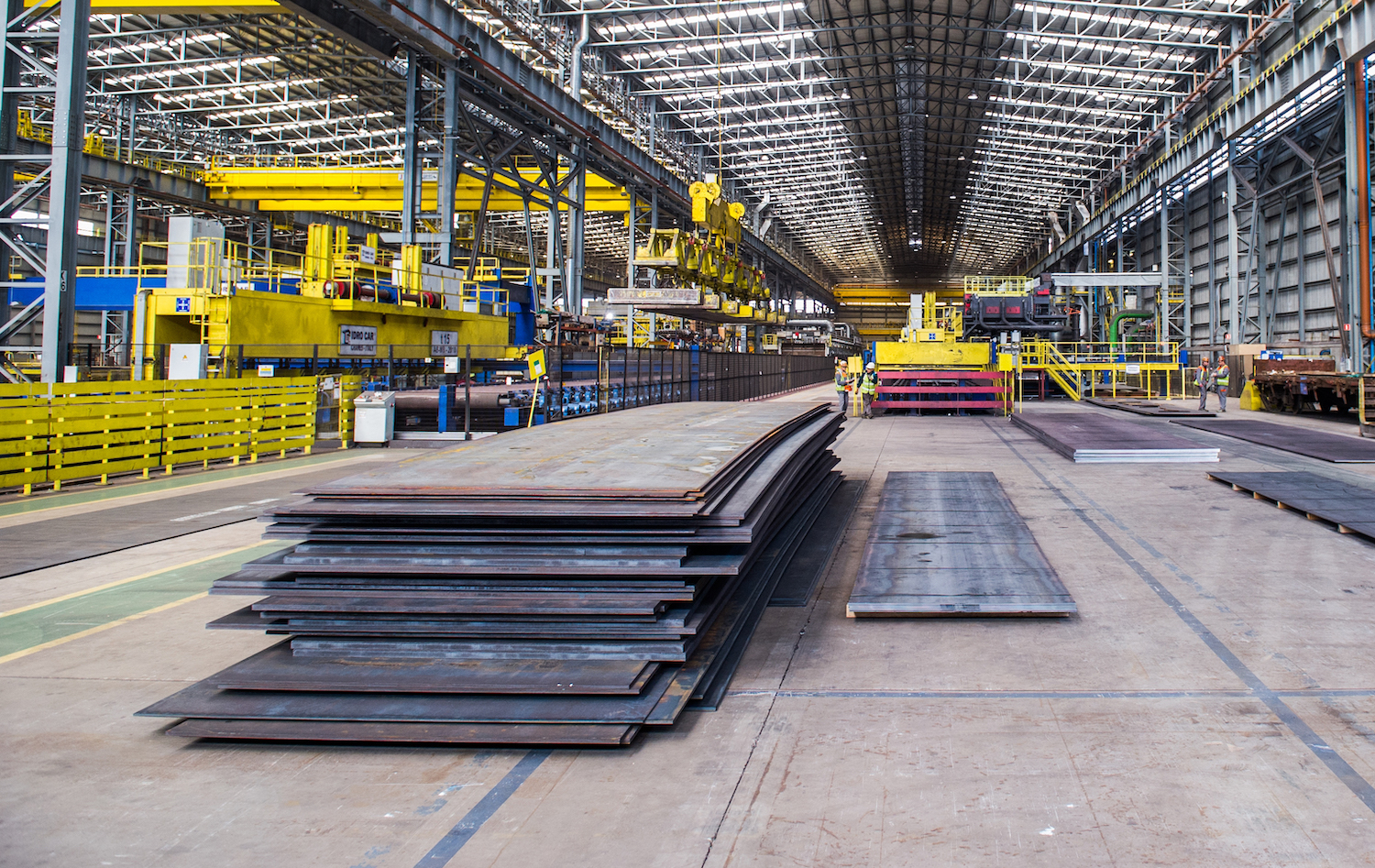
European heavy steel plate markets sluggish; imported material offered with CBAM premium
European steel heavy plate prices remained mostly stable in the week to Thursday September 4, with sources noting continued sluggish trade after the end of the summer-slow period.
And imported material was heard offered for January delivery with a Carbon Border Adjustment Mechanism (CBAM) premium applied. Interest in such offers, and possible deals, suggest some importers are potentially willing to take on the risk of regulatory uncertainty around CBAM — and its related costs — to lock in import tonnages.
Italy
Italian commodity-grade heavy plate prices were flat over the pricing period, with sources noting a lack of buying appetite.
“There is still not enough demand strength to move prices up. We are looking at the gradual reopening of the market [after summer’s end],” a producer said.
However, a few market participants were bullish in their market assessments despite muted trading.
Fastmarkets’ weekly price assessment for steel domestic plate, 8-40mm, exw Southern Europe was €590-620 ($686-721) per tonne on Thursday, unchanged week on week.
Northern Europe
Prices for plate in Northern Europe’s domestic market widened downward slightly amid “very sluggish trade”.
And there was some market chatter around an expected pickup in trading toward the end of the month.
“What we are hearing from our sources and clients across Europe, and in particular Poland, Germany and Scandinavia, is that a purchase wave is expected within two to two and a half weeks’ time,” a second producer said.
Offer levels from mills in Germany were reported at a wide range, from €620-710 per tonne, but a trader source noted that mills offering at higher levels were rarely booking at such prices.
A few sources expressed a bullish price outlook, with one trader suggesting that domestic plate prices could rise in the coming months due to increased regulatory uncertainty and therefore greater risk for imported plate purchases, with new trade measures set to replace safeguards and the implementation of CBAM implementation in January 2026.
However, uncertainty around CBAM’s implementation continues to linger in the market, with rumors swirling around a possible postponement — despite no official confirmation of any changes to the mechanism’s implementation date.
Fastmarkets’ weekly price assessment for steel domestic plate, 8-40mm, exw Northern Europe was €620-670 per tonne on Thursday, widening downward by €10 per tonne from €630-670 per tonne a week earlier.
Imports
While heavy plate import prices have remained unchanged since June due to a lack of buying interest, high import stock levels and general weak demand, higher offers and possible deals were reported at €645 per tonne CIF Antwerp for January delivery.
This price includes an in-built CBAM premium, the inclusion of which is a recent occurrence in steel flat markets.
The price point was not included in Fastmarkets’ latest price assessment for northern European plate imports, as it exceeds the timing specification of 8-10 weeks.
Fastmarkets weekly price assessment for steel plate (8-40mm) import, cfr main port Northern Europe was €595-630 per tonne on Thursday, unchanged since June 4.
Fastmarkets weekly price assessment for steel plate (8-40mm) import, cfr main port Southern Europe was €585-600 per tonne on Thursday, unchanged since June 12.
The second producer said there will be more clarity on CBAM by the end of September or early October, but they estimate that the fee to be applied could cost around €30-35 per tonne.
