


EU starts anti-dumping case into CRC from 4 countries
The European Commission has initiated an anti-dumping investigation into imports of cold-rolled flat steel originating from India, Japan, Turkey, Vietnam and Taiwan, according to an entry in the Official Journal of the European Union dated 18 September.
The Commission also intends to instruct customs to start registration of the steel under investigation to allow retroactive introduction of definitive duties.
Earlier this month, McCloskey reported that the case into cold-rolled coil from India, Japan Vietnam and Taiwan, China as well as from Turkey was forthcoming.
The probe was started following a complaint lodged by the European steel association Eurofer on behalf of EU steelmakers on 4 August this year. Eurofer provided evidence that the imports in question had increased overall in absolute terms and in terms of market share and that the material sold harmed the EU steel industry.
The complainant also alleged that the raw materials in used in cold-rolled steel exports are subject to export duties and restrictions in the countries of origin, and since they account for more than 17% of total costs this indicated a market distortion. The raw materials in question are iron ore and steel scrap in India, and the same raw materials and coal in Vietnam.
The products subject to the investigation are currently classified under CN codes ex 7209 15 00, 7209 16 90, 7209 17 90, 7209 18 91, ex 7209 18 99, ex 7209 25 00, 7209 26 90, 7209 27 90, 7209 28 90, 7211 23 30, ex 7211 23 80, ex 7211 29 00, 7225 50 80, 7226 92 00 (TARIC codes 7209 15 00 90, 7209 18 99 90, 7209 25 00 90, 7211 23 80 19, 7211 23 80 95, 7211 23 80 99, 7211 29 00 19, 7211 29 00 99).
The EU authorities will make a definitive decision in the case no later than 14 months after the case was opened, and the provisional measures will be imposed no later than within seven months.
Maria Tanatar Associate Director, Steel and Green Steel

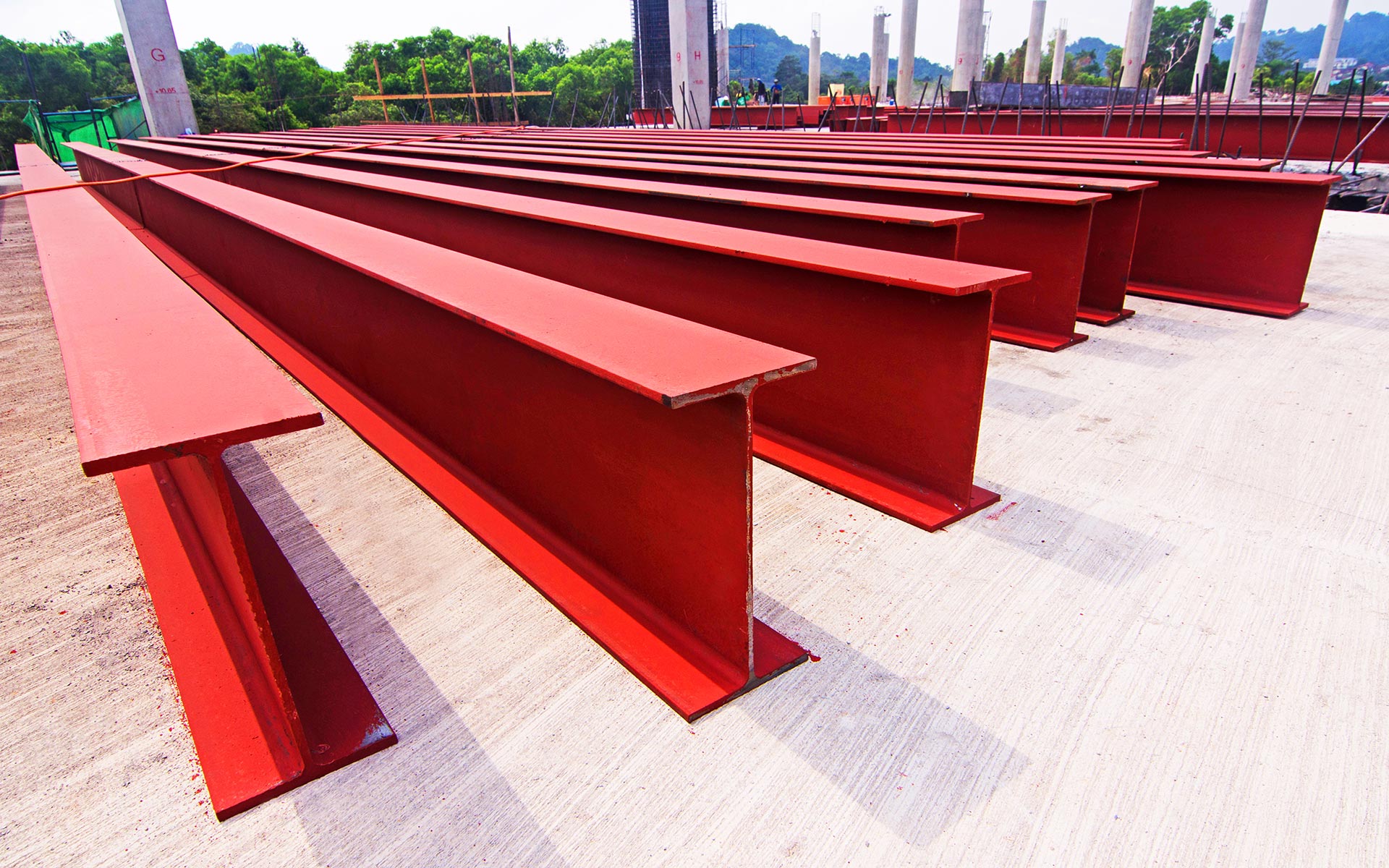
Steel beam prices in Europe fall on weak consumption, market cautious
Fastmarkets’ monthly price assessment for steel beams, domestic, delivered Northern Europe, was €730-760 ($865-900) per tonne on Wednesday, falling by €20 per tonne from €750-780 per tonne a month earlier.
Similarly, Fastmarkets’ monthly price assessment for steel beams, domestic, delivered Southern Europe, was €730-760 per tonne on Wednesday, down by €20 per tonne month on month from €750-780 per tonne.
Producers have been targeting higher market prices, trade sources said, but there was scepticism around the achievability of higher offers amid such weak demand.
Poor end-user consumption in the region’s construction sector has continued to weigh on appetite for bookings, and regulatory uncertainty was contributing to a cautious market mood, sources told Fastmarkets.
And, according to European steel industry association Eurofer, the outlook will remain bleak, with apparent demand expected to decline by 0.2% to 128 million tonnes this year.
Still, the association’s forecast was a little less pessimistic than previous expectations of a 0.9% decline in apparent consumption, voiced in June.
While Eurofer forecast a modest output increase in construction activity this year overall, significant growth in that sector was projected to return only in 2026.
Meanwhile, scrap prices in Turkey’s bellwether market fell in the month.
Fastmarkets’ calculation of its daily index for steel scrap, HMS 1&2 (80:20 mix), North Europe origin, cfr Turkey, was $329.10 per tonne on Wednesday, down by $11.56 per tonne compared with $340.66 per tonne on August 15.


European steel HRC market remains quiet, demand subdued
Workable prices for domestic HRC in Northern Europe were estimated in the range of €580-585 ($687-693) per tonne ex-works, but no sales were heard during the day.
Fastmarkets’ calculation of the daily steel hot-rolled coil index, domestic, exw Northern Europe, was €581.25 ($688.49) per tonne on Wednesday, down by €3.75 per tonne from €585.00 per tonne on September 16.
The Northern European index was down by €1.88 per tonne week on week but up by €12.08 per tonne month on month.
Trading was still limited, with buyers cautiously waiting for more clarity on the EU’s Carbon Border Adjustment Mechanism (CBAM) and for demand to pick up momentum.
According to one market source, mills were “still pushing for higher offers,” but the market will start to show “more movement” once regulations become clearer.
Prices for overseas coil also increased over the past week.
Fastmarkets’ weekly price assessment for steel hot-rolled coil, import, cfr main port Northern Europe, was €500-520 per tonne on Wednesday, narrowing upward from €490-520 per tonne the previous week.
In the Italian market, hot-rolled coil offers were heard around €570-580 per tonne ex-works, but no trades at those levels have been reported.
Buyer estimates of tradable prices were in the range of €550-570 per tonne ex-works.
Fastmarkets’ daily steel hot-rolled coil index, domestic, exw Italy, was €553.33 per tonne on Wednesday, down by €2.92 per tonne from €556.25 per tonne on Tuesday.
The Italian index was up by €4.83 per tonne week on week and by €15.83 per tonne month on month.
Meanwhile, offers of overseas HRC increased over the past week.
Offers from Turkey were heard around €530-540 per tonne CFR, including the EU anti-dumping duty, while offers from India were reported at €530 per tonne CFR.
Offers from Indonesia were also heard at €510-515 per tonne CFR.
Fastmarkets’ weekly price assessment for steel hot-rolled coil, import, cfr main port Southern Europe, was €510-530 per tonne, rising from €485-520 per tonne during the previous assessment period.

Deal to eliminate US tariffs on UK steel put on hold
The United Kingdom government has reportedly halted efforts to negotiate Section 232 tariffs down to zero, leaving the rate at 25% for US imports of UK steel. The UK is currently the only country with a 25% rate—all others are subject to a 50% tariff rate.
A proposed deal ahead of Donald Trump’s visit to the UK this week has been shelved indefinitely, as ministers who were set to finalize a new tariff rate said the deal would have only secured 0% tariffs for a minimal quota of steel shipments, which they said would prolong uncertainty in the UK steel industry.
Ministers are reportedly seeking a permanent guarantee that tariffs on British steel exports will not exceed 25%. In June, the US and UK signed a trade deal that reduced tariffs on auto and aerospace imports to the US, but a proposal to reduce steel tariffs down to zero was put on hold due to reported concerns about circumvention from other steel-producing countries.
Trump reportedly hinted at further tariff relief ahead of his arrival in the UK on 16 September: “We’ve made a deal, and it’s a great deal, and I’m into helping them,” he said to news outlets.
In response, a UK government spokesperson issued a statement that said Britain is “continuing to work closely with the US to deliver certainty for UK industry, protect skilled jobs and support economic growth.”
The director general of UK Steel, Gareth Stace, commented to news outlets that it is “disappointing” to not have a tariff-free quota level by now, noting that it is “even more imperative now that the UK government beefs up its own trade defenses to ensure UK steelmakers have a sustainable share of their own market. In these market conditions, the last country to protect their industry will be the first to lose it.”
Steel shipments to the US comprise around 6% of all UK steel exports. For the full-year 2024, imports of steel from the UK accounted for around 0.9% of total US steel imports. Year-to-date (as of July 2025), UK steel is around 0.8% of all US steel imports.

European long steel round-up: stable market
The Northwest European rebar market was stable in the week to 17 September, with Eurofer’s recent industry outlook report demonstrating increased localisation in the European market.
Price indications for the Northwest European market were reported stable or sideways, at EUR630-640/t delivered.
McCloskey’s market sources in other steel product markets regard the space as difficult to penetrate given difficult margins, a low consumer risk appetite, and poor sentiment for the infrastructure sector, limiting the potential for new entrants to the market or speculative moves from existing players.
While policy announcements supporting potential infrastructure demand momentum should instill optimism in the market, many are very negative about European governments’ capacity to actually realise these developments, keeping positive expectations in check.
These factors are compounding regionality and market fragmentation across the rebar market, as frequent construction project delays or cancellations can see rebar distributors stuck with unwanted stock.
Domestic mills are also chasing volumes wherever possible, limited in how far they can offer discounts for volumes due to scrap and energy cost lines and a prolonged depression of trading margins, and are instead looking down the value chain to find opportunities to access consumer demand directly.
Steel producer association Eurofer’s third quarter outlook gives some insight, describing a 49% decline in rebar exports in the second quarter of 2025.
Rebar imports also decreased by 24% during the same period, which reflects tightening margins and intensified response to the European safeguard system back in early Q2. That was when 20% caps were introduced for individual exporters under residual quotas, and quota liberalization rates cut.
Weekly European long steel markers
| EUR/t | Term | 17-Sep | Weekly change |
|---|---|---|---|
| Northwest Europe DEL rebar | DEL | 635.00 | 0.00 |
| Northwest Europe CFR rebar | CFR | 540.00 | 0.00 |
Benjamin Steven Journalist, Steel

Assofermet urges effective EU response to US tariffs
Italian steel trade association Assofermet is warning that new EU policies in response to tensions with the United States could severely disrupt supply chains and weaken Europe’s manufacturing sector.
“After months of negotiations, the agreement reached between the EU and the US has not resolved the issue of tariffs on steel and aluminium, which have remained at 50% since 4 June … This situation risks generating a massive relocation of exports to Europe, putting pressure on the EU market,” Assofermet says in a note sent to Kallanish.
The association is renewing its appeal to Italian and European authorities to ensure that any new measures remain balanced, proportionate, and effective, protecting not only European steel producers but also downstream users. At stake, the association stresses, is the competitiveness of the European industry and its ability to remain integrated within global trade flows.
The debate on steel is focused on the replacement of the current safeguard system, set to expire at the end of June 2026. The European Commission is to propose a new, allegedly more balanced, trade defence instrument. Assofermet is instead suggesting a mechanism based on annual and quarterly quotas, not tied to specific exporting countries. Such a framework would better balance the protection of Europe’s steel producers with the need to guarantee sufficient supply for EU manufacturing.
The association warns that excessive import restrictions could have “devastating effects” on the European industry, already under strain from high energy costs and the introduction of the Carbon Border Adjustment Mechanism (CBAM).
Earlier this week, the association urged the European Commission to rethink the protectionist and environmental policies currently under discussion, underlining the necessity to ensure a balance between environmental goals, industrial resilience, and the protection of Europe’s metals and steel value chain. Without such a balance, the association warned, the EU risks undermining the competitiveness and sustainability of its own manufacturing base.
Natalia Capra France


Salzgitter gains LESS classifications for some steel products
Salzgitter Group has gained certification for some of its steel products and production routes from an industry scheme, Kallanish learns.
The company says production routes for beams and profiles, flat steel and heavy plate have been validated by TÜV Nord and verified by The Low Emission Steel Standard (LESS) Association.
The system is a six-stage classification system, placing steel manufacturing processes transparently into six classes depending on the scrap content and CO2 emissions. The LESS scale ranges from “E” through “Low Emissions” – “D” to “A” – to the challenging “Near Zero” category for steel produced with virtually zero emissions.
The production routes of four Salzgitter Group companies have been classified: Salzgitter Flachstahl, Peiner Träger, Salzgitter Mannesmann Grobblech and Ilsenburger Grobblech.
CO2-reduced products from the Salzgitter Group are marketed under the SALCOS brand. The Salzgitter products that are already available are based on scrap-based crude steel from Peiner production.
An essential part of the product promise is that SALCOS products comply at least with classification C according to LESS. This has been confirmed externally with the classifications now available, with some gaining classifications A and B.
Marcus Lippe, head of technical customer service at Peiner Träger, says: “We are delighted to now be able to supply our customers with SALCOS Structural Steel products classified according to LESS and are particularly proud to even be offering products with an ‘A’ classification.”
“With the very good classifications our SALCOS products have received, the Salzgitter Group is underlining its pioneering role in industrial transformation. We have done our homework,” says Salzgitter chief executive Gunnar Groebler.
“With the certifications now available, the steel industry has put down the foundations for the introduction of green lead markets. These are intended to help bring CO2-reduced raw materials quickly and comprehensively to the various value chains. The political course for these lead markets must now be put in place with the same determination, in order to lead the transformation of the industry to success,” he adds.
From the first half of 2027, CO2-reduced crude steel for SALCOS products will also be produced at the Salzgitter site, using an electric arc furnace, with the direct reduction process to process ores using hydrogen-containing gases.
Carrie Bone UK
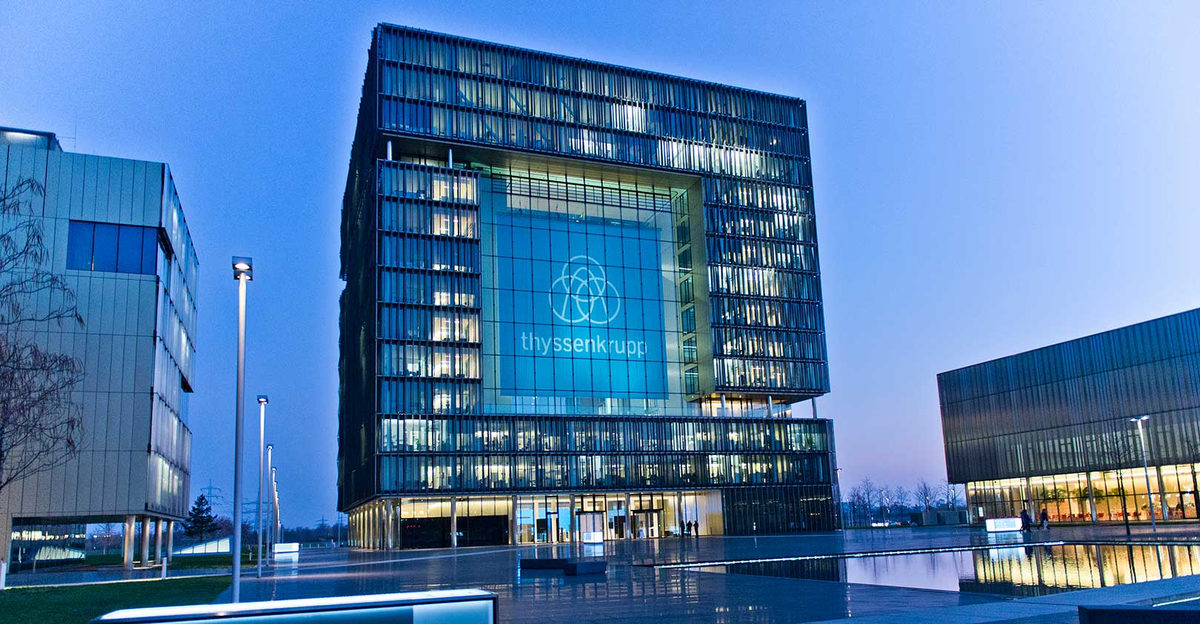
Thyssenkrupp Materials Trading signed a purchase agreement for green steel project in Australia
Thyssenkrupp Materials Trading has signed a 100% purchase agreement with Progressive Green Solutions (PGS) for the first large-scale green steel project to be implemented in Geraldton, in the Mid-West region of Western Australia.
The agreement highlights that Western Australia’s renewable energy potential can directly support Germany and the European Union’s decarbonization targets and potentially set a global standard for green hydrogen-based industrial projects. In this context, the region is expected to develop a new value-added manufacturing industry in the long term, while also strengthening German technology and expertise on a global scale.
The project will deepen trade relations between Australia, Germany, and the EU, while also increasing diversity in demand and supply chains. Supported by Western Australia’s Premier Roger Cook and his government, the initiative involves Thyssenkrupp, technology providers SMS Group, Midrex, Thyssenkrupp Nucera, and financial partner KfW IPEX Bank.
Western Australia’s Minister for Mines, Petroleum and Finance David Michael, Parliamentary Secretary David Scaife, and Geoff Baker, a member of the Friends of Clean Energy and Climate Action Group, welcomed the German delegation at the WA Parliament House and expressed their support.
As highlighted by European Union leaders, there is an emphasis that “the time is now not for talking, but for action” to achieve climate goals. The project aims to overcome “greenwashing” criticisms and mark a turning point in genuine green steel exports.


EESC: European steel sector faces existential crisis
The European Economic and Social Committee (EESC) has unveiled a plan to rescue Europe’s steel industry in order to safeguard the EU’s strategic autonomy and green sovereignty.
According to the Committee’s statement, EU steel production has fallen by 31 million tons since 2018. Imports have captured 27% of the domestic market, while the sector has lost more than 95,000 jobs since 2008, with 18,000 of those losses occurring in 2024 alone. This situation has deepened into systematic failure due to global overcapacity, unfair trade practices, and the collapse of transatlantic trust.
One of the most significant turning points in the crisis was the US decision in March 2025 to impose a 50% tariff on EU steel. This move closed the American market, which had previously absorbed 4.6 million tons of European steel exports annually, while creating the risk of redirecting 27 million tons of global steel flows to Europe. According to estimates, global overcapacity will reach 721 million tons by 2027, equivalent to five times the EU’s annual production. The EESC warned that this process could turn Europe into a “last resort dumping ground” for subsidized and high-emission surplus steel.
The statement emphasized that current security measures and trade defense instruments are insufficient. According to the EESC, the EU now needs bold, comprehensive, and permanent trade measures against global overcapacity. Key recommendations under the Committee’s Steel and Metals Action Plan include:
Strict import limits should be set (15% for carbon flat and stainless steel, 5% for long products).
Customs duties should be applied universally to all products and countries, including those with free trade agreements with the EU, without any loopholes or exceptions.
To prevent smuggling, the origin of steel should be tracked using “melted and cast” rules.
Rolling quotas should be abolished, and an additional tariff of up to 50% should be applied to products above the quota to send a strong price signal to the market.
However, according to the EESC, trade protection measures alone are not sufficient. Energy prices in Europe are 2-3 times higher than those in China or India, weakening competitiveness. The Committee recommends the following steps:
- Emergency energy price reductions and network tariff refunds for energy-intensive industries,
- Reorganization of the electricity market to decouple fossil fuel prices from electricity,
- Establishment of a special hydrogen financing mechanism to support industrial transformation.
The EESC also addressed Carbon Border Adjustment Mechanism (CBAM), noting that the current regulation will not achieve its objectives. According to the statement, if the gaps in CBAM are not addressed, it will be ineffective, and legal regulations are needed to protect free permits in exports. Furthermore, the scope of CBAM should be expanded to include steel-intensive sectors.
The issue of scrap metal was also one of the prominent topics. EESC drew attention to the rapid increase in scrap exports, which are critical to the circular economy. Iron scrap exports are expected to double, while aluminum scrap is expected to exceed 1.3 million tons. Therefore, it was stated that the Commission should apply strict sanctions against export taxes, tariff quotas, and illegal exports.
EESC reminded that this process directly affects not only the steel sector but also Europe’s Green Deal targets and the 2030 Defense Readiness. The statement said, “While the US, China, and India support their steel sectors with protective measures, Europe must show the same determination.”
Finally, EESC called on European institutions, national governments, and industry representatives to implement a joint action plan without delay: “Europe’s future strength begins with steel. Delay is defeat!”

Sudhakar Sivaji appointed CEO of Aperam, succeeding Tim Di Maulo
The ceo of stainless steel producer Aperam, Timoteo Di Maulo, is retiring after more than a decade at the helm.
The board of directors has appointed Sudhakar Sivaji, currently Aperam’s cfo, as ceo, with the transition taking effect from 1 January 2026, Kallanish notes from a company statement.
Sud Sivaji, who joined Aperam as cfo in 2020, brings nearly 25 years of industry experience in steel, alloys, and the aerospace sector. He has previously worked at Thyssenkrupp’s Steel and Materials Services businesses in leadership roles across Europe, the US, China, and Brazil.
Di Maulo will remain a member of the board of directors and as strategic advisor on European public affairs. Under his leadership, Aperam diversified its business and strengthened its circular model.
He established a four-segment structure, placed carbon reduction and recycling at the core of strategy, and reinforced trade defence and commercial excellence.
“Tim has been an outstanding leader, guiding Aperam through a period of profound transformation. He has built a stronger, more diversified, and more sustainable company, well prepared for future challenges,” says Lakshmi Mittal in a note.
Looking ahead Aperam aims to strengthen what is calls value leadership. Each division will concentrate on competitiveness and growth, as the company intends to reinforce its supply chain and implement major investments in Brazil, France, US, and across Europe.
Nicolas Changeur, ceo of service and solutions and cmo for Aperam Stainless Europe, has been appointed chief financial officer.
Natalia Capra France