

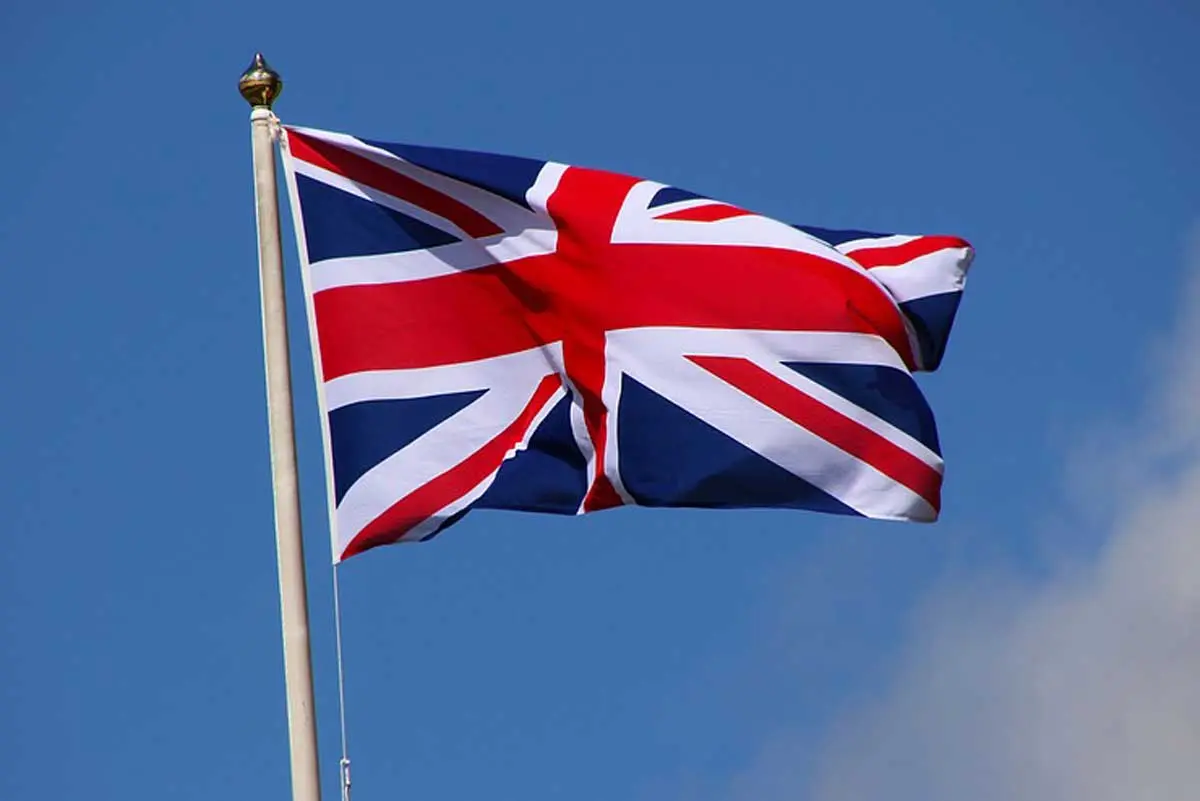
UK to implement a CBAM in 2027 to prevent carbon leakage
The UK has confirmed that it will introduce a Carbon Border Adjustment Mechanism (CBAM) starting January 1, 2027, aimed at tackling carbon leakage and supporting its target for net zero emissions by 2050.
This move aligns with the UK’s commitment to reduce emissions by 68 percent by 2030 and by 81 percent by 2035, compared to 1990 levels.
Why CBAM is needed
The UK Emissions Trading Scheme (UK ETS) is reducing allowances by 45 percent between 2023 and 2027, pushing carbon prices higher. Free allowances are guaranteed until 2026, with their future under review. While this accelerates decarbonization, it also increases the risk of industries relocating production abroad, where climate regulations are weaker, a phenomenon known as carbon leakage.
To address this risk, the CBAM will cover emissions-intensive imports such as aluminum, cement, fertilizer, hydrogen, and iron and steel. Importers will pay a carbon price based on embedded emissions, either through verified data or government-set default values. The tax rate will also reflect the domestic carbon price that would have been incurred, had the goods been produced in the UK. The first tax returns and payments are due in May 2028.
Scope and coverage
The CBAM will apply to specific goods identified by UK tariff commodity codes under the Combined Nomenclature (CN), linked to the Harmonized System (HS). While upstream materials such as aluminum sheets and steel bars are included, finished products such as car doors are excluded. Both direct emissions and indirect emissions fall within the scope of the CBAM.
Rate and relief
- CBAM rates will be set quarterly from 2027, mirroring the UK ETS allowance price and Carbon Price Support (CPS).
- Importers may claim carbon price relief if equivalent carbon costs were paid abroad.
- A registration threshold of £50,000 per year ensures small importers are exempt, while still capturing over 99 percent of imported emissions.
Comparison with EU CBAM
While the UK and EU CBAMs share the same core purpose, there are key differences:
| Aspect | UK CBAM | EU CBAM |
|---|---|---|
| Sectors covered | Aluminum, cement, fertilizer, hydrogen, iron & steel. Electricity not included in the UK CBAM due to different carbon leakage risk profile | Aluminum, cement, fertilizer, hydrogen, iron & steel, electricity |
| Implementation timeline | Full obligations start Jan. 1, 2027. No prior reporting period. | Reporting-only period started Oct. 2023. Liabilities apply from 2026. |
| Mechanism | Works like a domestic tax. Importers declare embodied emissions and pay HMRC after each accounting period. | Importers must buy and surrender CBAM certificates equivalent to emissions of imports. |
| Emissions reporting | Based on verified actual emissions data or default global average values (from 2027). | Verified actual emissions data required; default values based on exporting country averages, with adjustments. |
| Verification of emissions | Independent bodies accredited by members of the International Accreditation Forum (IAF). | Independent verifiers accredited under EU accreditation frameworks. |
| Threshold for registration | Only applies if the total value of CBAM imports in a rolling 12-month period meets or exceeds £50,000. | Exemption for importers of less than 50 ton per year of CBAM goods. |
Looking ahead
The UK and EU are working on linking their ETS systems, which could lead to mutual exemptions from CBAM obligations. Future updates will refine emissions methodologies, align with global carbon pricing, and review the role of free allowances in maintaining competitiveness.


European Commission confirms no delay to CBAM
The European Commission has replied to a request for clarification from European steel distribution association EUROMETAL, confirming that the Carbon Border Adjustment Mechanism (CBAM) will proceed as scheduled in January.
“The date of coming into effect of CBAM on 1 January 2026 is EU Law. It can only change with a legal proposal by the European Commission and the agreement of the European Parliament and the European Council. There is no such proposal on the table,” said the EU’s Directorate-General for Taxation and Customs Union.
Rumours pervading the market had increasingly suggested that CBAM’s definitive stage – under which imports become fiscally liable for their associated carbon emissions – could be delayed past its January implementation date due to ongoing procedural uncertainties. Some of McCloskey’s sources previously expected that CBAM could be delayed by as much as a year, though the Commission’s reply confirms the position of the opposite camp – that CBAM is now too ingrained to accommodate further delays.
The European steel supply chain has been relatively harmonious in its support for CBAM in principle as a measure to protect Europe’s decarbonising industries, focussing campaigning on practical refinements to the mechanism such as an extension to downstream products, possible export rebates, and circumvention protections. The European Commission’s public consultation on extending CBAM’s scope ends today, 26 August.
However, as CBAM’s definitive stage looms, market participants have been less enthused about the instrument’s practical implementation, lamenting administrative uncertainties still yet to be clarified by the Commission – most prominently the lack of transparency around operative benchmarks in CBAM’s cost formulas that makes it impossible for importers to assess their actual exposure when purchasing international steel.
McCloskey’s sources, particularly in the trade, have been working with estimated values of around 1.3-1.4t/CO2e for blast-furnace route steel basis historical data and tendencies under the Emissions Trading System (ETS), but the actual values are not expected to be released by the European Commission until later this year, or even early 2026. There is also uncertainty surrounding whether steel produced via the electric-arc furnace route will receive its own benchmark classification, as opposed to a single, unified emissions benchmark for international steel.
The industry has previously described the ongoing implementation of CBAM as a “nightmare by nature,” “insane,” “a fiasco” and, most illustratively “a molotov cocktail for the entire supply chain.”

While steel industry associations like EUROMETAL have been loudly proclaiming the difficulties this lack of transparency presents for European importers, these issues have also been highlighted in the EU legislature. Member of the European Parliament (MEP) Filip Turek submitted written questions to the European Commission in mid-July on what measures were being taken to alleviate threats to competitiveness from CBAM cost uncertainties and the non-publication of CBAM’s benchmark values, suggesting a potential dependency between updates to benchmark values for CBAM and those under the ETS, the latter of which Turek does not expect until Spring 2026.
The European Commission commits to replying to written questions within six weeks, which by McCloskey’s estimations sets a 27 August deadline for this potential further clarification.
Benjamin Steven Journalist Steel


Germany’s Dillinger to restart BF No. 4
German heavy plate producer Dillinger will restart its temporarily idled blast furnace (BF) No. 4 at its Rogesa Roheisengesellschaft Saar plant on 30 August, the steelmaker said on 28 August.
The furnace was shut down in May this year for planned repairs.
The stoppage had no impact on the heavy plate market due to seasonally weak demand during summer. In addition, the steelmaker stockpiled slab before the furnace relining to avoid supply disruptions.
Since the BF No.4 stoppage, Rogesa continued to operate BF No. 5 to supply pig iron to Dillinger subsidiaries.
In Northwest Europe, offers for s235-grade plate from integrated mills were reported in a range of EUR670-680/t ex-works. German steelmakers have been focused on deliveries to projects and to end-users under long-term agreements, which has supported spot prices.
Maria Tanatar Associate Director, Steel and Green Steel

Southeast Europe’s July steel output falls on-year
Southeast Europe (SEE) crude steel output amounted to 224,357 tonnes in July, which is flat on-month, but less compared to 236,441t in July 2024, according to worldsteel data.
In the first seven months of the year, regional production was 1.66 million tonnes compared to 1.76mt in January-July 2024, Kallanish notes.
Serbia was again the largest steel producer among the seven countries of SEE in May, which also include Bulgaria, Croatia, Slovenia, Bosnia, North Macedonia and Moldova.
However, worldsteel did not provide data for June steel production in Bosnia or Moldova.
Serbia’s production of crude steel was up 1.6% on-year at 816,600t in January-July.
Second-largest producer in the region Slovenia saw production in the seven months almost flat on-year at 380,437t. Special steelmaker Slovenian Steel Group (SIJ) reported revenue in 2024 at €1 billion ($1.13 billion), unchanged versus the previous year, and expects the steel market will recover this year.
Third-largest steel producer Bulgaria saw its crude steel output in January-June flat on-year at 300,500t.
North Macedonia produced 161,947t, down 16.4% on-year.
Croatia did not produce steel in January-July.
Bulgaria’s government granted in June a derogation from EU sanctions on Russia to the supply of iron and steel for Bulgaria’s Kozloduy nuclear power plant (see Kallanish passim). A large part of the nuclear equipment is Russian and cannot be replaced by imports from elsewhere.
In June, ArcelorMittal signed a sale and purchase agreement to sell its operations in Bosnia. ArcelorMittal Zenica, an integrated steel plant, and ArcelorMittal Prijedor, an iron ore mining business which supplies the Zenica plant, will be sold to Bosnian real estate company Pavgord Group.
Zenica is the largest producer of long products in the Balkans with a capacity of 700,000 tonnes/year. The basic product range includes rebar in bars and coils, wire rod, mesh, and lattice girders.
Svetoslav Abrossimov Bulgaria


Marcegaglia awards Danieli contract for new Fos-sur-Mer mill
Marcegaglia is starting the engineering phase of its new flat steel production facility in Fos-sur-Mer, Southern France, a source close to the company confirms to Kallanish. The new flat mini-mill known as the “mistral project” is scheduled to begin production in 2028.
Italian equipment maker Danieli has been entrusted with the mini-mill supply, which will include full production facilities for scrap preparation, electric steelmaking, slab casting, and hot-strip rolling. The new mini-mill will produce up to 2.1 million tonnes annually of stainless and carbon hot rolled coil. It will supply Marcegaglia’s cold-rolling complex in Ravenna, meeting about 30% of the company’s total HRC requirements.
“The new electric steel meltshop will feature a Danieli Fastarc Zerobucket furnace equipped with ECS continuous scrap charging and Tornado preheating system, and Q-Melt adaptive process control with auto-pilot,” Danieli explains in a note. “Liquid steel will be processed into quality grades by twin-ladle refining stations and twin-tank vacuum degassers, ensuring high energy efficiency and reduced carbon and NOx emissions.”
The mill design will provide Marcegaglia with flexible production capacity by integrating a Steckel mill and a hot-strip mill into a single configuration. The layout consists of a roughing stand and a five-stand finishing mill. The first stand will operate in Steckel mode when required. This configuration will enable stainless steel slab from Marcegaglia’s Sheffield plant to be rolled in Steckel mode. Carbon steel slab from the caster will be processed in continuous mode through the five-stand finishing mill.
The design includes water and fume treatment systems to guarantee full compliance with environmental standards.
Marcegaglia has provisionally secured a long-term supply of low-carbon nuclear energy to power the facility in Fos. In June, the Italian steel group signed a letter of intent with French utility EDF for a ten-year supply contract that will cover 50% of the energy requirements for the future site.
Marcegaglia plans to invest almost €800 million ($937m) in the former Ascometal site, acquired in 2024. Since last year’s acquisition, Ascometal Fos-sur-Mer has been renamed Marcegaglia Fos-sur-Mer. It will produce HRC and retain its EAF. Jacques-Yves Floch, a former manager at ArcelorMittal Dunkirk, has been appointed director of the plant. The site will be transformed with a focus on sustainability and energy efficiency, producing steel from scrap and low-emission direct reduced iron.
Groundbreaking following engineering studies is scheduled at the beginning of next year (see Kallanish passim).
Natalia Capra France

New German rebar size extras show differing approaches
The recent German and Austrian rebar pricing size extras revamp includes some noteworthy adjustments, such as the reduction in some size extras charges.
In the new lists of two mills, the size extra for straight rebar in the standard 12mm diameter was increased by €15 to €280/tonne ($327). For coiled rebar, however, it has been decreased by €10, at least at Badische Stahlwerke, versus the previous list from 2015. Straight rebar and coil extras are now both at €280.
“That’s right, straight rebar has been brought up, coil brought down,” one big buyer confirms to Kallanish. He also points out the relatively bigger increase for thin-gauge straight bar: size extras for 8mm increased by €40 to €325, whereas coil in the same size remained at €300.
In the case of Badische, the size extra of €280 for coil in 12mm is now on par with other mills; for the last ten years, it used to be €10 higher, at €290. Until now, “Badische charged more using the argument of higher quality,” the buyer says, adding that “they do in fact have a point with that”.
Another manager shares this impression. With the new pricing in favour of coil, he believes that Badische wants to convince buyers that prefer straight bar to instead purchase de-coiled bar. From a wound coil, virtually all bar lengths cat be cut.
According to the manager, the process of re-straightening is more economic than keeping many bar sizes available in store: “You can easily save more space and inventory, from more than 2,000 tonnes to some 1,000t, which also saves you hundreds of thousands in tied-up capital.”
Other mills are not as prominent in working with coiled bar because “you need the infrastructure, a good straightener that avoids flaws in the process”, he concludes.
Christian Koehl Germany
Romanian longs prices stable, import negotiations with Turkey continue
Considering the still slow demand and the continuing impact of the holiday period, Romanian long steel traders and the sole domestic rebar producer have decided to keep offers unchanged from last week. Although demand remains subdued, market participants report some gradual improvement, with expectations of a stronger recovery in the coming days. As a result, some rebar traders have attempted to test higher levels, though, according to reports, these efforts have not generated any significant interest.
In the domestic market, ex-works offers from the sole rebar producer have remained firm at €585-590/mt ex-works, while retail prices across Romania are stable at €580-595/mt ex-warehouse. However, as noted above, some traders attempted to lift offers to €600-605/mt ex-warehouse, but with limited success.
Similar stability has also been observed in the wire rod market. Despite sluggish demand, offers have remained unchanged at €575-585/mt ex-warehouse, the same as in the previous week.
Meanwhile, in the import market, although no fresh deals have been reported, Romanian buyers remain interested in purchasing and are engaged in negotiations, particularly with Turkish mills. These negotiations are expected to conclude with some deals in the coming weeks. Current offers from Turkish mills are quoted at $530-545/mt FOB, which, at an exchange rate of €1 = $1.17, correspond to €470-485/mt CFR for delivery to Romania, down from €475-490/mt CFR in the previous week. Non-EU supplier Egypt has decided to keep stable offers for October shipments, with rebar priced at €485-490/mt CFR and wire rod at €495-500/mt CFR. Meanwhile, EU suppliers such as Bulgaria have slightly decreased offers to €590-600/mt CPT, down from €595-605/mt CPT, for September-October shipments. Additionally, Moldova has continued to offer rebar at €590-600/mt CPT, unchanged from last week.

EU HRC market remains weak, mills eye September pickup
The European HRC market has remained subdued this week amid the summer break, with only a modest pickup in activity seen in the north, while in the southern region, including Italy and Spain, most participants are expected to return in September. At the same time, indicative domestic prices have edged up by €5-10/mt compared with last week’s estimates. Still, despite this slight improvement, August offers above €600/mt ex-works are widely viewed as unworkable in the current market environment.
More specifically, local HRC prices from mills in northern Europe, mainly for October delivery, have been estimated at €580-590/mt ex-works, compared to €580/mt ex-works last week. Besides, according to sources, some mills are reported to be targeting €600-630/mt ex-works for new orders. However, the tradable price level has been estimated at €560-570/mt ex-works level so far, up by €10/mt week on week.
Meanwhile, in Italy, while mills have been aiming to increase their prices for October delivery HRC to €570-580/mt ex-works, some sellers are still ready to sell at around €550-560/mt ex-works, while customers have continued to aim for €530/mt ex-works, the same as last week.
“The price rise announcements from ArcelorMittal and other producers at the end of July prompted a short-lived improvement in sentiment, leading buyers to secure HRC for autumn. Since then, however, all offers above €600/mt ex-works in August have struggled to find acceptance,” a market insider told SteelOrbis.
In the meantime, trade activity in the import segment has remained close to zero, with offers estimated at €470-530/mt CFR, depending on the supplier, where the lower end the of range corresponds to indicative offers for ex-Indonesia HRC, while other foreign suppliers’ offer prices have mainly been estimated at €515-530/mt CFR levels.
In particular, offers for ex-Turkey HRC have been heard at €520-530/mt CFR, including duty, mainly the same as last week. Besides, offers for ex-Algeria HRC have been voiced at €515-520/mt CFR, versus €515/mt CFR last week. Furthermore, offers from Indian suppliers have remained at €515/mt CFR.

Spain’s Eco Steel Solutions closes operations
Spanish Eco Steel Solutions (ESS), a subsidiary of coil processing company Network Steel, has halted operations, Kallanish notes. The company informed workers’ representatives of its intention to file for redundancies.
The mandatory 15-day consultation period will begin next week. ESS operates a pickling steel line in Aranda de Duero.
“The cessation of activity is motivated by the global crisis affecting the steel sector, which in recent months has resulted in sharp falls in prices, low demand and high energy and operating costs, further exacerbated by ongoing international conflicts,” ESS states. “The current steel market situation makes it impossible to make a profit from an environmentally friendly product such as that produced by ESS, with the result being economic losses,” the company explains.
ESS has informed workers’ unions of the planned closure, as an effective solution to the situation facing the company.
Todor Kirkov Bulgaria
Austria ramps up crude steel production in July
Austria increased crude steel production in July, bucking the overall EU downtrend, according to worldsteel data.
Output amounted to 658,067 tonnes, up 7.5% on-month and 2.3% more year-on-year, Kallanish notes.
In the first seven months of the year, the country produced 4.31 million tonnes of steel, compared to 4.47mt in the same period last year.
Austria remained in 23rd place in the ranking of top global steel producers, the data show.
Overall EU output in June was down 7% on-year at 10.16mt. January-July production was 75.6mt compared to 78.6mt in the same period last year.
Austrian steelmaker voestalpine recently expressed optimism over economic stimulus in the form of the infrastructure spending programme announced by the German government (see Kallanish passim).
The steelmaker said earlier it will supply steel to Chinese electric vehicle producer BYD for its new car factory in Hungary. The company was chosen by BYD because of its geographical proximity to the Hungary plant, and the high quality and excellent reputation of Austrian steel, the Chinese company noted.
Svetoslav Abrossimov Bulgaria