

CBAM rollout, safeguard revisions curb Europe’s appetite for steel imports
Uncertainties concerning the EU’s Carbon Border Adjustment Mechanism (CBAM) and the implementation of new safeguarding measures were limiting buying appetite for new steel imports into the EU, trade sources told Fastmarkets on Thursday September 4.
CBAM
The scheduled implantation of CBAM in January 2026 was currently the major talking point for the European steel market, Fastmarkets heard, due to continued lack of clarity on its implementation, just a few months ahead of the official starting date.
On August 28, the European Commission launched three public consultations on the practical implementation of CBAM.
These linked consultations were intended to finalize the rulebook for CBAM’s full launch – specifically defining how emissions will be measured, how EU free allowances will be adjusted, and how existing carbon prices paid elsewhere will be recognized – to ensure that the mechanism is fair, effective and ready by January 2026.
CBAM consultations goals
1. Define the methodology for the definitive CBAM period (starting January 1, 2026)
Main goal
To establish and refine the methodology for calculating the carbon emissions, both direct and indirect, embedded in imported goods under the CBAM once it transitions to its full (definitive) phase in 2026.
This includes clarifying the use of actual emissions data versus default values, simplifying and standardizing calculation procedures, and ensuring consistency with EU ETS-based reporting, thereby reducing administrative burdens and promoting environmental integrity.
2. Adjustment of CBAM certificates for free ETS allowances
Main goal
To set out detailed rules for adjusting the obligation of CBAM declarants (importers) to surrender CBAM certificates, to account for free allowances they would otherwise receive under the EU Emissions Trading System (ETS).
This ensures that EU- and non EU produced goods will face equivalent carbon pricing, maintaining a level playing field when those free allowances are phased out from 2026 to 2034.
3. Carbon price paid in a third country
Main goal
To define the rules and procedures for allowing importers to reduce their CBAM certificate obligations by accounting for carbon pricing already paid in a third (non EU) country.
This includes specifying how to convert such payments to euros, what evidence must be provided and who can certify it, ensuring fairness and avoiding double penalties for non-EU producers which already face carbon costs.
The Commission will accept feedback until September 25, 2025, with a final draft on CBAM implementation expected to be published during the fourth quarter of the year.
Market reaction
Several sources told Fastmarkets that some Asian suppliers – notably from Vietnam, Taiwan and China – have been offering cold-rolled and hot-dipped galvanized coil with remarks that they were ready “to take the risk of CBAM costs,” meaning that supplier would bear any additional costs.
But it was still unclear what CBAM costs will be for new imports starting in January 2026.
“[CBAM costs] will depend on [emissions] benchmarks that the European Commission will set for each product, and on carbon emissions costs. All of that is not clear yet, and the final draft is supposed to be published after consultations on CBAM are closed [this month],” a buyer in southern Europe said.
Offers of CRC to Southern Europe from Vietnam were reported at €610 ($710) per tonne CFR and at €650 per tonne CFR from Taiwan.
In August, several market sources reported a booking of China-origin CRC to Antwerp at €640 per tonne CFR, with the price reported to include both anti-dumping duties and CBAM-related costs.
Fastmarkets’ weekly price assessment for steel cold-rolled coil, import, cfr main port Southern Europe, was €610-650 per tonne on September 3, up from €600-610 per tonne seven days earlier.
Vietnamese suppliers of 0.58mm HDG with Z140 coating were said to be hoping to achieve €810 per tonne CFR to Southern Europe, Fastmarkets heard. Bids for such material were heard lower by €30-40 per tonne at €770-780 per tonne CFR.
Steel safeguard measures
Another major steel imports regulation tool, steel safeguards measures that have been in place since 2019, were also expected to change in 2026.
The European Commission held public feedback consultations on future steel trade measures to replace the existing steel safeguard measures in July-August, with adoption planned for the third quarter of 2025.
The consultation attracted 143 submissions, with the great majority from European companies and associations supporting long-term measures based on tariff-rate quotas (TRQs), with no exceptions and covering all basic steel products, including steel derivatives and processed products, Fastmarkets understands.
Trade sources that spoke to Fastmarkets believed that the new measures would most likely come into force sooner than July 2026, with one mill source saying: “The idea is for the new measures to be implemented as of January 2026.”
Meanwhile, the existing steel safeguarding measures cover 26 product categories.
Fastmarkets analyzed hot-rolled coil (HRC), cold-rolled coil (CRC) and hot-dipped galvanized coil (HDG) steel safeguards quota usage by country from July to September 2025.
Regarding HRC, suppliers such as Turkey, South Korea and Taiwan managed to fully exhaust their allocated quotas for July-September. India, Egypt and Vietnam used less than one-third of their quotas during the same period.
In addition to the safeguard quotas, Egypt Vietnam and Japan have also had provisional anti-dumping duties for HRC imposed in the EU since April, with definitive duties expected to come into force in October.
For CRC, most countries under steel safeguards quotas managed to use between 91% and 100% of their allowance during the third quarter of the year, with only Turkey fully exhausting its allowance.
From Turkey, CRC offers were reported at €600-620 per tonne CFR on September 4. But despite having an advantage of quicker delivery to the EU, Turkey remained a risky option due to its limited quota allocation of only 43,989 tonnes per quarter.
“There are too many CRC suppliers in Turkey and too little tonnage available, so the quota is always exceeded,” a second European buyer said.
Similarly, most countries took advantage of their steel safeguard allowance for HDG – both categories 4a and 4b. Suppliers such as China and Taiwan used 100% of their quotas, closely followed by Turkey, Vietnam and South Korea, which used more than 90% of their available balances.

Julia Bolotova, Davide Montagner


European steel CRC, HDG prices rise, but growth remains limited
Downstream flat steel prices in Europe showed early signs of growth in the week to Wednesday September 3, with the market slowly picking up pace after the summer break, according to trade sources.
But business was still slow compared with previous years, with traders pointing to rising energy prices, lack of demand from key industries and regulatory uncertainty as some of the main issues facing the market.
“September is usually a good month, but even though we see prices going up, there isn’t enough demand to sustain those prices,” a distributor source said.
The source added that the EU’s Carbon Border Adjustment Mechanism (CBAM) was also “causing trouble” because buyers still do not know which duties will be introduced in January, which they said will affect demand.
“Sectors such as the automotive industry are still suffering,” a second distributor source told Fastmarkets. “I think that, by the beginning of next year, we’ll start to see more steel consumption.”
Southern Europe
In Southern Europe, domestic CRC prices increased in the week to Wednesday, according to market sources.
Fastmarkets’ weekly price assessment for steel cold-rolled coil, domestic, exw Southern Europe, was €630-650 ($735-748) per tonne on Wednesday, rising from €620-630 per tonne the previous week.
Import prices for CRC also increased in the week to Wednesday, with offers from Taiwan heard around €650 per tonne CFR, compared with €600-610 per tonne CFR in mid-August.
Fastmarkets’ weekly price assessment for steel cold-rolled coil, import, cfr main port Southern Europe, was €610-650 per tonne on Wednesday, rising from €600-610 per tonne in the previous assessment period.
Domestic HDG prices in Southern Europe also increased this week, with sources estimating the workable market around €650-660 per tonne CFR, compared with €630-650 per tonne CFR at the end of July.
Therefore, Fastmarkets’ weekly price assessment for steel hot-dipped galvanized coil, domestic, exw Southern Europe, was €650-660 per tonne on Wednesday, up from €630-650 per tonne the previous week.
Meanwhile, imported HDG prices remained stable this week, with Fastmarkets’ weekly price assessment for steel hot-dipped galvanized coil, import, cfr main port Southern Europe, at €660-690 per tonne.
Northern Europe
Domestic CRC in Northern Europe also showed a slight increase in the week to Wednesday.
Market participants estimated the workable price for domestic CRC around €670-685 per tonne ex-works on Wednesday, compared with €660-680 per tonne ex-works in mid-August.
But some offers were also heard around €660-670 per tonne ex-works this week.
As a result, Fastmarkets’ weekly price assessment for steel cold-rolled coil, domestic, exw Northern Europe, was €660-685 per tonne on Wednesday, widening upward from €660-680 per tonne the previous week.
Meanwhile, imported CRC prices remained stable this week, with Fastmarkets’ assessment for steel cold-rolled coil, import, cfr main port Northern Europe, remaining at €620-630 per tonne.
Prices for both domestic and imported HDG also remained stable this week.
The weekly price assessment for steel hot-dipped galvanized coil, domestic, exw Northern Europe, stayed at €670-690 per tonne on Wednesday.
And the assessment for steel hot-dipped galvanized coil, import, cfr main port Northern Europe, remained at €690-700 per tonne.

German study warns EU steel scrap export ban could undermine competitiveness and green transition
A new independent study conducted by the Ernst Abbe University of Applied Sciences in Jena in Germany has raised serious concerns about proposals to restrict steel scrap exports under the European Steel and Metals Action Plan (SMAP). Commissioned by the Federal Association of German Steel Recycling and Waste Management Companies (BDSV) and the Association of German Metal Traders and Recyclers (VDM), the study concludes that such measures would damage Europe’s competitiveness and hinder its green transition.


EU opens CBAM consultation on emissions calculation, free allowances and carbon price deductions
The European Commission has announced that it has launched a new consultation process to gather feedback on crucial aspects of the Carbon Border Adjustment Mechanism (CBAM), which will enter its fiscal phase in January 2026. This initiative is part of ongoing efforts to simplify the CBAM regulation, improve cost efficiency, and provide greater legal clarity to businesses. The feedback window will remain open until September 25, 2025.
Focus of the consultation
The consultation invites views on defining how to measure carbon emissions embedded in CBAM goods, rules for aligning CBAM certificates with free allocations under the EU Emissions Trading System (ETS), and establishing rules for deducting carbon costs already paid in exporting countries.
Who is targeted?
The consultation is open to a wide range of stakeholders, including EU and non-EU businesses affected by CBAM, the competent national authorities and customs officials responsible for enforcement, third-country authorities engaged in carbon pricing schemes and academics and researchers, invited to submit studies and data to support evidence-based policymaking.

Italy rebar prices widen amid fresh deals heard, lower offers; traders in wait-and-see mode
Rebar prices in the Italian domestic market widened in the week to Wednesday September 3, following deals heard second-hand in southern Italy and lower offers from some mills.
Prices are traditionally higher in the southern region of the country, so deals heard at €610-620 ($711-722) per tonne ex-works in that region pushed Fastmarkets’ price range up.
As a result, Fastmarkets’ weekly price assessment for steel reinforcing bar (rebar) domestic, exw Italy widened to €560-620 per tonne ex-works on September 3, from €570-600 per tonne on August 27.
There were mixed perspectives within the market during the pricing session, with some sources expressing a bullish outlook for this month and into October, but most saying that they were in “wait-and-see” mode due to a lack of clarity in price direction.
One buyer said that they have been using their warehouse “to the fullest” and only purchasing to fill gaps rather than build stock.
“We’re buying the material we are missing until we understand how the market is moving,” the source said. “There’s a lot of work here in Italy, so demand is strong against a deficient supply.”
But other sources gave a contrasting, bearish perspective, with low demand placing downward pressure on prices.
“We had a good last week in August, but the beginning of September has been very quiet, and I think customers are in waiting mode to see if they [sense] the beginnings of a price downtrend,” a trader said.
In Spain, prices remained stable.
Fastmarkets’ price assessment for steel reinforcing bar (rebar) domestic, delivered Spain was €640-645 per tonne on September 3, unchanged week on week.
In Northern Europe, prices were under slight downward pressure.
Fastmarkets’ weekly price assessment for steel reinforcing bar (rebar) domestic, delivered Northern Europe was €630-640 per tonne on September 3, widening downward by €5 per tonne from €635-640 per tonne on August 27.
Material was reported booked at these levels.

European HRC prices drop slightly; market direction unclear
Domestic prices for hot-rolled coil in Europe dropped slightly on Wednesday September 3, with demand still muted following the summer break, sources told Fastmarkets.
Fastmarkets’ calculation of the daily steel hot-rolled coil index domestic, exw Northern Europe was €575 ($670.40) per tonne on Wednesday, down by €4.79 per tonne from €579.79 per tonne on Tuesday September 2.
However, the Northern European index was up by €2.50 per tonne week on week and by €15 per tonne month on month.
Trading was limited as people returned from the summer break, with traders expecting prices to rise by the end of September.
Integrated mills in the region were heard to be pushing for higher prices around €600-610 per tonne ex-works for October-delivery coil, several sources said.
Some suppliers were aiming for even higher prices for November-delivery HRC, at €630 per tonne ex-works.
However, other buyer sources reported lower prices from the market, estimating achievable prices around €550-580 per tonne ex-works.
“Business remains quite slow,” a source said, adding that expectations on price increases depend on how much “protection” buyers will get from extra costs linked to the Carbon Border Adjustment Mechanism (CBAM) and other regulatory updates.
Meanwhile, prices for overseas coil increased slightly over the past week.
Fastmarkets’ weekly price assessment for steel hot-rolled coil, import, cfr main port Northern Europe was €475-515 per tonne on Wednesday, increasing from €470-510 per tonne the previous week.
The upper hand of the range reflected lower end of offers from Turkey.
Italian market participants were largely holding back from trading, assessing the market after three weeks of summer break.
“We most likely will have two to three more quiet weeks in Italy before trading fully restarts,” a buyer source told Fastmarkets.
Buyer sources estimated tradable levels at €540-550 per tonne ex-works.
One trading source, however, argued that these levels were “hard to get” even from the most aggressive suppliers.
Mills in the region were hoping to achieve €560-580 per tonne ex-works for October-delivery coil.
A major supportive factor for potential price rises was the lack of “viable” import options amid looming CBAM implementation and new safeguard measures.
“Bullish sentiment is driven by potential import supply issues amid regulatory changes. Steel demand remains on the low side,” the second buyer said.
Fastmarkets’ daily steel hot-rolled coil index, domestic, exw Italy was calculated at €548.33 per tonne on Wednesday, down by €1.67 per tonne from €550 per tonne on Tuesday.
However, the Italian index was up by €8.33 per tonne week on week and by €20.83 per tonne month on month.
Prices for overseas coil were stable this week, with minimal interest for new bookings reported amid regulatory uncertainty.
Fastmarkets’ weekly price assessment for steel hot-rolled coil, import, cfr main port Southern Europe was €470-520 per tonne on Wednesday, unchanged week on week.
Julia Bolotova, Davide Montagner

Rainer Böse becomes ArcelorMittal Germany chief
Rainer Böse has been appointed the new chief executive of ArcelorMittal Germany, in addition to his position as chairman of the management at the group’s two strip mills in Bremen and Eisenhüttenstadt.
He succeeds Thomas Bünger, who previously held the same positions and left the company in May, Kallanish learns.
Böse, aged 57, has held various positions at ArcelorMittal. Most recently, from 2017 until May this year, he was in charge of industrial customers in northern Europe at the group’s ArcelorMittal Europe – Flat Products unit as chief marketing officer.
Although ArcelorMittal recently stopped its plans for a transition towards direct reduction in Germany, in his inaugural words Bünger mentioned the “next step is transformation to climate-neutral steel production”. This will only be possible if policymakers act to facilitate affordable energy for steelmakers, he added.
Christian Koehl Germany

European scrap export ban would hurt steel: associations
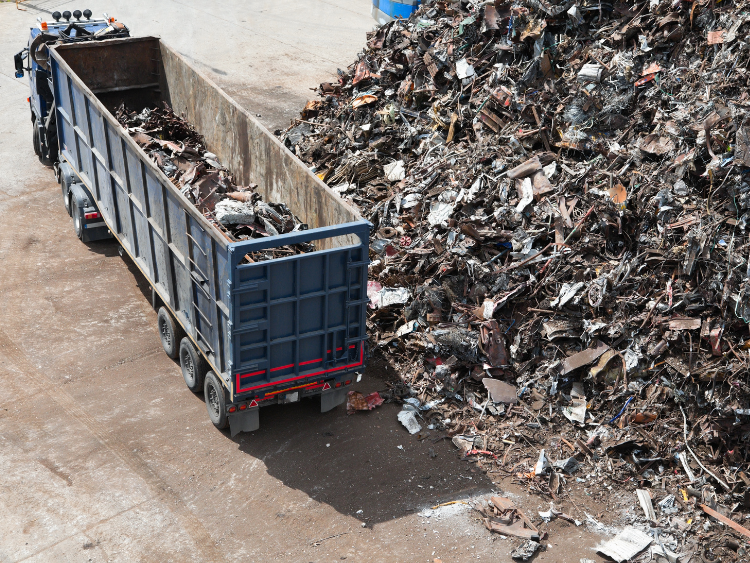
The Federal Association of German Steel Recycling and Waste Management Companies (BDSV) and the Association of German Metal Traders and Recyclers (VDM) are against the proposal of the European Steel and Metals Action Plan (SMAP) to potentially restrict the export of scrap, Kallanish notes.
They point to a recently published independent study on the impact of export bans on ferrous scrap, conducted by the Ernst Abbe University of Applied Sciences in Jena (see Kallanish passim).
It concluded that export barriers to recycled steel would distort markets, trigger retaliatory measures, and undermine Europe’s security of supply – without strengthening the EU steel sector. Such measures would undermine both the European steel industry and global climate protection efforts, it noted.
Since scrap trade is very sensitive to cost changes, trade barriers can lead to a shift in trade flows away from Europe. Export barriers pose trade policy risks, including retaliation, the risk of restricting access to high-quality imports and reducing global scrap use, BDSV and VDM conclude,
The study finds that EU policy should address structural challenges such as high energy costs, while accelerating sorting and pre-sorting, standardising quality and certification, and supporting investments that improve the quality of recycled steel and stimulate market demand.
“This document confirms what recycling companies have long been saying: export restrictions on recycled steel are the wrong tool,” says European Recycling Industries’ Confederation (EuRIC) secretary general Julia Ettinger. “The EU should focus on real solutions – reducing energy costs and investing in high-quality recycling – instead of turning to protectionism.”
“The European recycling industry is globally competitive,” says BDSV managing director Guido Lipinski. “Export restrictions would harm this competitiveness, while diverting non-European trade flows would have no positive impact on the supply of European consumers, which is not at risk.”
Svetoslav Abrossimov Bulgaria

ArcelorMittal Hunedoara halts production amid deteriorating market
Romania-based ArcelorMittal Hunedoara will suspend production from 5 September for an indefinite period, parent company ArcelorMittal tells Kallanish.
“This decision, while difficult, reflects the company’s ongoing assessment of the deteriorating market landscape, which continues to be shaped by persistently high electricity costs, limited governmental support, and intensifying competitive pressure from imports,” it says.
“These factors have significantly impacted the site’s ability to remain competitive across domestic, European, and international markets. The order book has seen a sharp decline, with volumes down nearly 60% compared to 2024, further reinforcing the need for this extended pause,” it adds.
In light of these conditions, the company also anticipates prolonging the current economic unemployment measures beyond 30 September, for an indefinite period.
This step is being considered as part of a broader effort to responsibly manage the evolving situation and mitigate the financial impact on employees, the group notes. “ArcelorMittal remains committed to closely monitoring market developments and will reassess its position as conditions evolve,” it adds.
The enterprise is immediately commencing discussions with its social partners.
ArcelorMittal Hunedoara previously suspended production from 14 February until 31 March due to very high electricity prices (see Kallanish passim).
Last December, the plant reduced production due to a lack of orders.
The Romanian firm took similar measures in 2022, also due to a lack of orders. In 2020, it also stopped production temporarily due to the Covid pandemic.
Electric arc furnace-based Hunedoara, part of the ArcelorMittal Europe – Long Products division, produces sections, billet and merchant bar, employing 584 people and some contractors. The firm produces 200,000-300,000 tonnes/year of crude steel.
Hunedoara remained part of ArcelorMittal after the steelmaking group sold its flagship Romanian Galati steelworks to Liberty Steel in 2019.
Svetoslav Abrossimov Bulgaria

Turkey nears exhaustion of EU HRC import quota for Q3
Beginning the last month of the EU quota period from July 1 to September 30, some import quotas for certain steel products allocated for countries like South Korea, Taiwan, Egypt, China and some other countries have already been exhausted, according to the latest data from the European Commission. Turkey’s 402,732 mt HRC (1A) quota usage has reached 99.98 percent, with just 2,740 mt of the quota remaining.
In addition, Turkey, Vietnam and Japan have each exhausted their 21,207 mt quota for metallic coated sheets (4B) allocated under “other countries”.
Turkey’s EU import quota usage by product in Q3

Looking at the other exhausted quotas, Taiwan has used all of its 113,428 mt quota for metallic coated sheets (4A), while it has exceeded its quota of 23,037 mt for organic coated sheets with 2,178 mt waiting for customs clearance. China has exhausted its 141,949 mt quota for merchant bars and light sections and its 17,563 mt quota for rebar allocated under “other countries”. South Korea has used all of its 71,880 mt quota for organic coated sheets, while Egypt has exhausted its 15,255 mt quota for wire rod allocated under “other countries”.
The other quotas near exhaustion can be seen in the table below.
| Product | Country | Amount (mt) | Remaining (mt) | Used (%) |
| HRC (1A) | Australia (under other countries) | 112,716 | 21,209 | 81.18 |
| CRC | South Korea | 95,726 | 6,134 | 94.32 |
| CRC | Vietnam (under other countries) | 43,989 | 1,647 | 96.26 |
| CRC | Taiwan (under other countries) | 43,989 | 4,602 | 91.52 |
| Metallic coated sheets (4A) | India | 54,279 | 9,745 | 82.05 |
| Quarto plate | South Korea (under other countries) | 111,358 | 6,735 | 93.95 |