


US, Japan reach trade deal; steel tariffs remain
The US and Japan reached a trade deal, with Japan to invest $550 billion into the US economy, US President Donald Trump said late on Tuesday July 22.
“We just completed a massive Deal with Japan, perhaps the largest Deal ever made [sic],” Trump announced via a social media post.
The US will receive “90% of the Profits [sic],” he said. “Japan will open their Country to Trade including Cars and Trucks, Rice and certain other Agricultural Products, and other things.”
A tariff rate of 15% on Japan will be applied instead of the previous rate of 25%, Trump’s post said.
Japanese Prime Minister Shigeru Ishiba supported the deal, saying “Japan’s tariff rate, which had been set to increase to 25% on reciprocal tariffs, was kept at 15%. This is the lowest figure to date among countries with trade surpluses with the US.”
“Japan is, for the first time ever, OPENING ITS [market] TO THE USA, even to cars, SUV’s, Trucks, -and everything else, even agriculture and RICE, which was always a complete NO, NO [sic],” Trump said in a Truth Social post Wednesday July 23. “The Open Market Japan may be as big a profit factor as the Tariffs themselves, but was only gotten because of the Tariff Power.”
Japanese chief negotiator Ryosei Akazawa told reporters on July 22 there would be no change to the Section 232 steel and aluminium tariffs yet.
Currently, the US imposes a 50% tariff rate on all imports of steel from Japan.
The ramifications on the steel industry are “too early to know,” Keybanc director of metals equity research Phil Gibbs told Fastmarkets.
“It sounds like a good deal for the US,” a steel buyer said, “but the devil is in the details.”
US buyers “would love to have slabs from [Japanese producer] JFE at 15% versus possible 50% from Brazil,” the buyer added.
The US automotive industry reacted negatively to the news. American Automotive Policy Council leader Matt Blunt told an independent news source, “any deal that charges a lower tariff for Japanese imports with virtually no US content than the tariff imposed on North American-built vehicles with high US content is a bad deal for US industry and US auto workers.”
Japan’s trade deficit with the US totaled $68.5 billion in 2024, according to data from the Office of the US Trade Representative.
In the first six months of 2025, the US imported 491,454.57 tonnes of steel from Japan, making Japan the sixth-largest exporter to the US, according to data from the US International Trade Agency. The US imported 218,068.72 tonnes from Japan in the three months after the revival of the Section 232 tariffs, down by 17.3% from the same period in 2024.
Deal comes after conclusion of US Steel-Nippon Steel Saga
The agreement between the two countries comes amid the finalization of of Japanese-owned Nippon Steel’s fraught acquisition of US Steel.
The deal concluded on June 18, after a long-winded saga that began during the Biden Administration.
Trump approved the merger with various caveats, like US Steel must maintain its name and headquarters in Pittsburgh, Pennsylvania. The companies also had to sign a national security agreement and issue a “golden share” to the US government.
The merger will give the company a total global capacity of 86 million short tons, nearing Nippon’s goal of 100 million tons.
Robert England in Milton, Delaware, contributed to this story.

China sells 20,000 t of greensteel slab to Italy
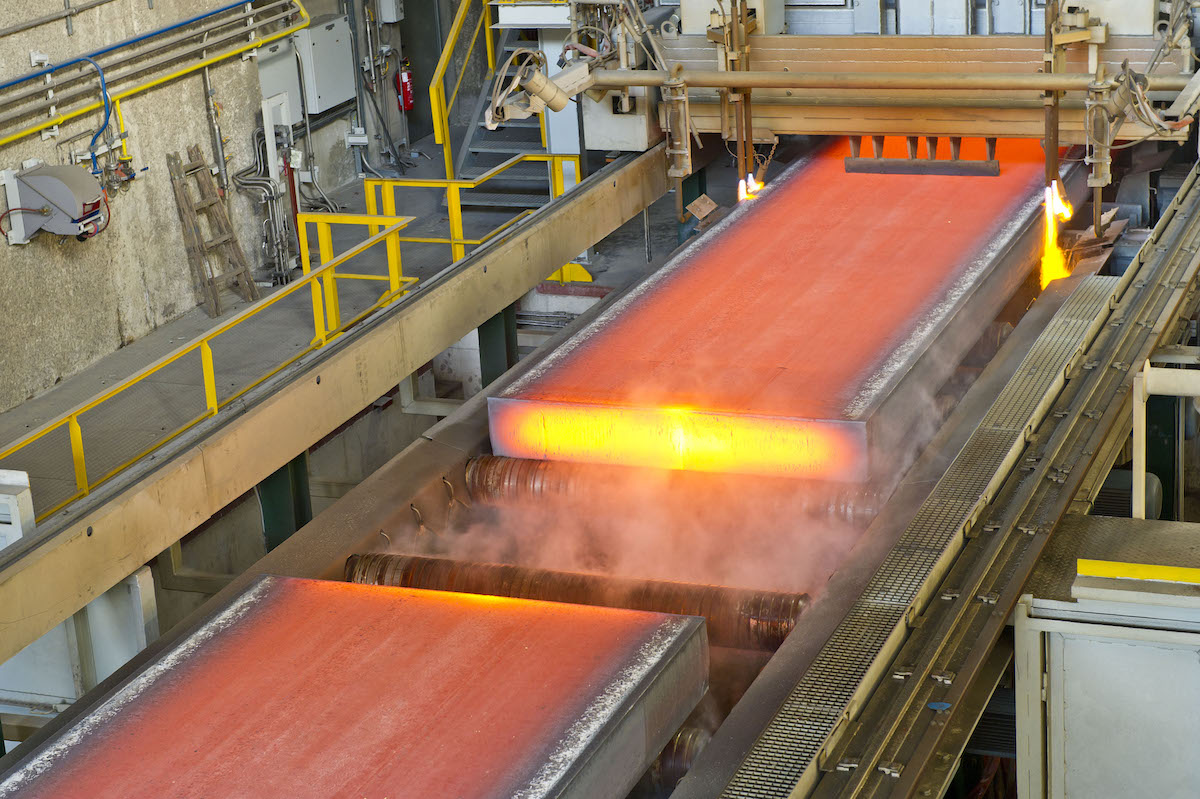
Chinese steelmaker HBIS has traded up to 20,000 t of hydrogen-based green steel slab to Italy, with the material to be shipped before September, market participants told McCloskey on 22 July.
HBIS released a statement on 18 July describing the sale of a non-specific 10,000 t of “hydrogen metallurgical green steel” to an Italian end-user, cited as bearing a 50% reduction in embedded carbon content.
Through investigation with market sources, McCloskey now understands the exporter agreed additional volumes – for a total of around 20,000 t of steel slab – all sold to Italy. Approximately half of this material, or 10,000 t, has been confirmed as purchased by an Italian re-roller. The remaining order allocation has not been confirmed, though some in the market attributed the rest of the load to the same re-roller in a further 10,000 t deal.
Sources close to the deal describe the CO2 content of the material as around 0.5 per tonne of steel – competitive against even European electric-arc furnace (EAF) producers – with slab of comparable CO2 content said to be almost impossible to source within Europe at present due to a lack of relevant offerings from EAF-based mills, and in increasing demand due to the upcoming definitive stage of the Carbon Border Adjustment Mechanism (CBAM).
“It seems everybody is searching for slab [from alternative sources] now due to CBAM,” a distributor source said.
Even if calculated on default EAF values for the CBAM, which enters its duty-liability phase from January 2026, sources consider HBIS’ hydrogen-produced slab as preferable to other exporters that predominantly operate via the blast furnace route, able to attract lower CBAM duties due to its reduced emissions balance.
Despite the material’s marketability, McCloskey understands that the deal did not incorporate a significant green steel premium, traded at only around a 2-3% premium to current slab prices, in the vicinity of $500/t CFR Italy. In contrast, green hot-rolled coil (HRC) sales to end-users in the European domestic market can reach premiums of up to EUR200/t. McCloskey’s reduced carbon marker, which calculates the value of one unit of reduced carbon in reference to all surveyed green HRC premiums in the week to its publication, currently stands at just under 11% of the spot HRC price in Northwest Europe.
HBIS did not give detail of the production route of the cited 10,000 t order in its public statement, but McCloskey’s Asia-specific Green Steel Profile describes HBIS’ Zhangzuan Technology (ZXHT) site as utilising a hydrogen-rich coke oven gas direct-reduced-iron (DRI) plant to feed the steelmaker’s EAF production of low-carbon steel.
Both market sources and HBIS’ press release confirm that the steelmaker is targeting the European market with its low-carbon offerings, taking advantage of emerging arbitrage opportunities resulting from the upcoming full implementation of CBAM, potentially compounded if relevant carbon costs have already been paid domestically under China’s own Emissions Trading System.
Benjamin Steven Journalist, Steel
Maria Tanatar Associate Director, Steel and Green Steel

Luxembourg government moves to acquire insolvent ex-Liberty Dudelange plant
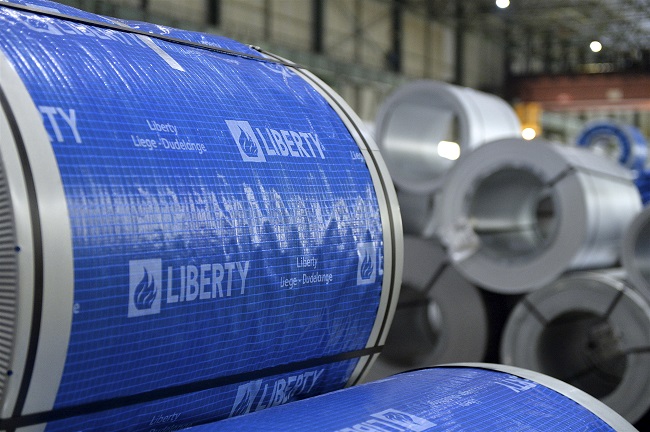
“In the context of the bankruptcy of Liberty Steel Dudelange, the Government Council has decided to submit an offer to the trustee to acquire the site,” the Ministry of Economy said in a press release.
“After almost three years of inactivity, the site can be redeveloped in a way that maximizes the use of available space and finally gives it a new purpose to contribute to economic development,” the ministry added.
In 2019, Liberty Steel acquired the Dudelange site, along with several other European steel assets, from ArcelorMittal. Almost all of those acquisitions have faced insolvency or closure in recent years.
The plant in Dudelange is capable of producing around 1 million tonnes per year of galvanized products from both electro-galvanizing and hot-dipped galvanizing lines, according to Fastmarkets’ information. There are two hot-dipped galvanizing lines with combined capacity for 620,000 tpy and two electro galvanizing lines with combined capacity for 360,000 tpy, according to Liberty Steel’s website.
There are 185 workers employed at the Dudelange plant, which lies in the south of Luxembourg, which itself is between France, Belgium and Germany.
The asset was part of Liberty Steel Belgium, along with Liberty Liège, which comprises the Flémalle and Tilleur production sites in Belgium, each producing cold-rolled coil, hot-dipped galvanized coil and tinplate.
In December 2024, the Dudelange plant was declared insolvent and a receiver was appointed, while the Belgian assets entered a process of liquidation.
Liberty Steel’s attempts to organize a reacquisition faltered. Then, in February this year, Turkey’s Tosyali Steel submitted an offer for the potential acquisition of the Dudelange plant, but Fastmarkets understands that the deal did not progress beyond that initial stage.
“If this offer is accepted, the Ministry of Economy will develop the land with a view to developing new industrial activities and promoting the creation of high-value jobs. The government will also examine the possibility of dedicating part of the site to defense-related projects,” the Ministry of Economy said.
Because no other potential buyer has emerged, industry sources familiar with the matter said that the chances were high that the Dudelange site would be nationalized.
Galvanized coil is mainly used in the automotive and construction industries. But these products are also used in the military industry, mainly for their corrosion resistance and durability in extreme conditions. Applications include structural elements, vehicle components and essential parts such as chains and anchors for landing craft.

European Commission starts consultation on new trade measures to replace steel safeguards
The European Commission has opened a consultation on future steel trade measures to replace existing steel safeguard measures, with market participants expecting the new measures to be phased in sooner than in July 2026, Fastmarkets understands.
On Friday July 18, the Commission launched a targeted consultation aimed at identifying potential future actions to protect the EU steel industry from unfair trade practices and the adverse effects of global steel overcapacity.
The existing steel safeguard measures have been in place since 2019 and were intended to protect EU steelmakers from a potential surge in imports. The current measures are set to expire on June 30, 2026.
The Commission is aiming to find “an effective replacement” for the current EU safeguards on steel.
Steel industry stakeholders have until August 18, 2025 to submit their views on several options prepared by the Commission.
In the third quarter of 2025, the Commission is expected to propose long-term measures, based on tariff-rate quotas, to replace the steel safeguards from July 1, 2026, providing an equivalent level of protection against negative trade-related effects caused by global overcapacity.
Sources, however, told Fastmarkets that the new measures might come into force sooner than July 2026.
“The idea is for the new measures to be implemented as of January 2026,” a source said.
Potential scenarios
European Steel Association (EUROFER) director general, Axel Eggert, told delegates at the Eurometal 75th anniversary event earlier this month, that any new measures should cover all basic steel products, including steel derivatives and processed products.
The existing steel safeguarding measures cover 26 product categories.
The Commission said the new “highly efficient measures” should apply to all countries, “regardless of market orientation or development status.”
Several sources told Fastmarkets they expect the new measures to be product-based rather than country based.
“There is likely to be a tariff-rate based quotas for each steel product. And this [quota] will be applied to all overseas suppliers with no exemptions,” a source said.
Under the current measures, many developing countries are exempt from steel safeguards, although there are some exceptions for specific product categories.
This allows for certain loopholes and increased deliveries of certain steel products from countries not covered by safeguards to the EU markets.
For example, earlier this year, sources said there was a sharp increase in HRC deliveries, notably from Indonesia, that could result in either an anti-dumping probe or their inclusion in the “other countries” quota, with the latter appearing more likely.
For example, in January-April 2025, Indonesia supplied 213,152 tonnes of HRC to the EU, compared with just 64,213 tonnes over the same period in 2024. Total HRC deliveries from Indonesia to the EU amounted to 250,908 tonnes in 2024.
EUROFER has suggested the introduction of an increased tariff for above-quota imports of 50% – it is currently 25%.
Tighter measures were necessary to safeguard struggling domestic steel producers in the face of an unprecedented surge of imports., the
The EU has seen a rise in steel imports, particularly from countries with overcapacity and potentially lower production costs. This surge in imports of foreign steel has put downward pressure on prices and reduced the demand for domestically produced steel.
Apparent steel consumption in the EU amounted to 127 million tonnes in 2024, down by 2.3% from 130 million tonnes in 2023 and lower than during the 2020 pandemic year, when it stood at 129 million tonnes, according to EUROFER data.
Real steel consumption shrunk by 3.8% in 2024 to around 132.7 million tonnes, down from around 138 million tonnes in 2023.
While both steel consumption and production in the EU declined, the share of steel imports in the European market has been rising, crowding out local supplies, sources said.
EUROFER data also shows that carbon steel imports to the EU in 2024 amounted to 26.36 million tonnes, up by 6.4% from 2023’s 24.78 million tonnes.

European steel HRC market remains quiet on seasonal holidays
The steel hot-rolled coil market in Europe remained quiet on Tuesday July 22, with many market participants in Northern Europe on holiday and those in Italy digesting higher offer prices from some local mills.
Mills in Northern Europe had mostly filled their September order books, with some minor tonnages remaining, and thus offered mainly October tonnages at prices no lower than €560 ($656) per tonne ex-works.
Activity among customers was also quiet due to holidays and the seasonal maintenance period. Trading was expected to be subdued until September.
Some rare estimates of workable prices were heard at €550 per tonne ex-works, but no major sales were heard during the day.
Fastmarkets’ calculation of the daily steel HRC index, domestic, exw Northern Europe, was €555.00 ($650.59) per tonne on July 22, up from €550.83 per tonne on July 21.
The Italian HRC market was splintered, because of the limited availability of material from domestic mills.
The market leader increased its offer prices to €540-550 per tonne ex-works, following the lead of fellow mills in Northern Europe, but one customer said that “its price is very much case-by-case and the mill is very firm.”
Meanwhile, a re-roller was said to be struggling to sell at €520 per tonne ex-works.
And a third participant was out of the market, facing delays on previous orders and having no spare capacity for new orders.
“There is no overall workable price in the Italian domestic market these days,” a local source said.
Fastmarkets’ daily steel hot-rolled coil index, domestic, exw Italy, was calculated at €530.63 per tonne on July 22, up from €523.33 per tonne ex-works on July 21.

Consortium to acquire Liberty Steel’s Ostrava steelworks in Czech Republic; Liberty’s other European assets mostly face closure
The Ostrava steelworks in the Czech Republic, previously owned by Liberty Steel, has been acquired for 3 .01 billion Czech koruna ($142.5 million) by a consortium of local companies, Fastmarkets understands.
The offer from SPV NH Ostrava and SPV NH Koksovna – which is owned by former minister of the interior of the Czech Republic, Martin Pecina – is for the steelmaking and coking assets at Ostrava and has been approved by the creditors’ committee, according to local media reports.
But the transaction still has to be approved by the insolvency court, the Czech antitrust authority and the Office for the Protection of Competition (ÚOHS), Fastmarkets understands.
The Ostrava steelworks was declared insolvent in June 2024 but, if approved, the acquisition is expected to be complete in autumn 2025 and sources said there were no other parties interested in purchasing the Ostrava assets.
The Ostrava steelworks has four blast-furnaces with a combined capacity of more than 4 million tonnes per year, although the last operational blast furnace was idled in October 2023.
The plant is able to produce hot-rolled coil, cold-rolled coil, steel sections and wire rod, and sources told Fastmarkets that, after the hot-end closure, Liberty was still operating the plant as an “on and off” reroller, using imported slab.
Other Liberty assets in Europe
Most of Liberty Steel’s insolvent steelmaking assets in Europe, meanwhile, now face permanent closure due to a lack of potential investors, sources told Fastmarkets on Tuesday July 22.
Liberty acquired a number of its European steel assets, including the purchase of Liege-Dudelange from ArcelorMittal, in 2019, but almost all those acquisitions have faced insolvency or closure in recent years.
Liberty’s Liège-Dudelange operation in the Benelux region, comprised three production sites – at Flémalle and Tilleur in Belgium and at Dudelange in Luxembourg – with each producing cold-rolled coil, hot-dipped galvanized coil (HDG) and tinplate.
Liberty Flémalle had a capacity of about 1 million tpy of HDG, while Tilleur produced around 200,000 tonnes of CRC and tinplate. And the Dudelange site in Luxembourg produced around 1 million tpy of galvanized products.
Sources told Fastmarkets that Liberty Steel’s plant at Dudelange employed around 185 workers, but added that it was “highly dependent” on feedstock supplies from the Liege operations.
And, in December 2024, the Dudelange plant was declared insolvent and a receiver appointed, while the Belgian assets also entered a process of liquidation.
Liberty Steel’s attempts to organize a reacquisition faltered. Then, in February this year, Turkey’s Tosyali Steel submitted an offer for the potential acquisition of the Dudelange plant, but Fastmarkets understands the deal did not progress beyond that stage.
However, part of the Liege operation was “lucky enough” to find an investor earlier this month, when ArcelorMittal confirmed the takeover of Liberty’s Flémalle facilities, including the HDG line, some “CEPI” repair lines and a water treatment plant.
“The galvanizing line in Flémalle will allow us to expand our ability to manufacture a high added-value product for our automotive and construction customers across Europe, ArcelorMittal Belgium chief executive officer Frederik Van De Velde said on July 10.
“We look forward to working with the skilled team at Flémalle and to restoring the plant to operating at a world-class level,” he added.
The final steps to complete the acquisition are expected to be completed shortly and ArcelorMittal Belgium expects to start operating the galvanizing line in 2026, following about nine months of maintenance work alongside any other investment projects required to restore the line.
Another Liberty asset – the Galati steelworks in Romania – recently restarted one blast furnace, but was faced with technical setbacks just days after the restart.
Former Liberty steel plate producer, Huta Czestochowa in Poland, was declared bankrupt in October 2024, but the Polish Ministry of Defense is understood to be planning to buy the assets.
Fastmarkets’ reached out to Liberty Steel for comment, but had not received a response at the time of publication.

SÜLZLE Stahlpartner acquires WesterwaldStahl
SÜLZLE Stahlpartner GmbH is taking over the reinforcing steel division of WesterwaldStahl GmbH in Ransbach-Baumbach on 1 July 2025.
With this step, SÜLZLE Stahlpartner is expanding its presence in the Westerwald, Rhineland and the neighbouring metropolitan regions in western Germany. Customers can look forward to a wide range of services and familiar support from the proven local team. The takeover strengthens SÜLZLE Stahlpartner’s proximity to its customers and emphasises its claim to offer innovative and sustainable steel solutions for the construction industry throughout Germany.
Since 2014, WesterwaldStahl GmbH can look back on an eventful history with several successful takeovers and mergers. As a specialist in construction steel and reinforcing steel, the steel trading company in Ransbach-Baumbach has built up an excellent reputation in the Westerwald region and beyond as a subsidiary of the SchwarzwaldEisen Group in recent years. Following the takeover, the site will remain an independent branch under the umbrella of SÜLZLE Stahlpartner and will complement the Germany-wide network of one of the leading reinforcing steel traders and bending companies.
‘In SÜLZLE Stahlpartner, we have found an experienced and strong partner who will continue to develop our company with innovative strength and in line with our shared values’, emphasises branch manager Jörg Jung.
With the integration of the new location, SÜLZLE Stahlpartner has secured a direct presence in the heart of Germany.
‘With Ransbach-Baumbach, we are closing an important gap in our network and can supply our customers even faster and more flexibly. We are particularly pleased that all employees will be taken on and that their experience and expertise will be retained’, explains Heinrich Sülzle, Managing Partner of the SÜLZLE Group.
Andreas Sülzle, Managing Partner of the SÜLZLE Group, also sees the takeover as a strategic milestone: ‘We are making targeted investments in the future viability of our group of companies and want to be a pioneer for sustainable solutions in the industry. Our focus is on individualised support and reliable supply for our customers.’

SchwarzwaldEisen Managing Director Dr Marco Stefan Auer adds: ‘We are delighted to be placing the Ransbach-Baumbach site in the good hands of SÜLZLE Stahlpartner. The rolled steel business under the name WesterwaldStahl as part of SchwarzwaldEisen GmbH will remain unaffected by the takeover and will continue as usual at the Andernach, Ransbach-Baumbach and Altenkirchen sales locations as well as with the warehouses in Andernach and Altenkirchen.’
With 17 locations, SÜLZLE Stahlpartner is one of the leading steel distributors and bending companies in Germany and has stood for innovation and partnership-based cooperation for 145 years. The family-run company, now in its fourth generation, offers a comprehensive range of products – from customised reinforcement cages, bolted connections and reinforcing steel in all variants to sectional steel, steel beams, steel bars, tubes and flat products. SÜLZLE Stahlpartner supplies construction projects of all sizes – from private house builders to major projects such as Terminal 3 at Frankfurt Airport in the Rhine-Main region. As a pioneer in the industry, the company also enables its customers to purchase climate-friendly steel and thus makes an active contribution to CO₂ reduction in the construction industry.

Italian crude steel production down 3.2 percent in June from May
According to the latest data released by Federacciai, the Italian federation of steel companies, in June this year crude steel production in Italy totaled 1.8 million mt, marking a decline of 3.2 percent year on year, and down from 2.0 million mt in May. In the January-June period this year, Italian crude steel production rose by 2.9 percent compared to the same period in 2024, amounting to 11.1 million mt.
| 2025 | Crude steel | |||
| Month | 000/mt | Y-o-y change (%) | Cumulative (000/mt) | Y-o-y change (%) |
| Jan | 1,698 | 3.9 | 1,698 | 3.9 |
| Feb | 1,817 | -0.5 | 3,515 | 1.6 |
| Mar | 2,044 | 7.5 | 5,559 | 3.7 |
| Apr | 1,800 | 6.1 | 7,359 | 4.2 |
| May | 1,960 | 3.7 | 9,319 | 4.1 |
| Jun | 1,783 | -3.2 | 11,112 | 2.9 |
As for the long products, the monthly output amounted to 1.1 million mt in June, up 2.3 percent year on year, whereas for flat products it totaled 720,000 mt, up by 6.6 percent year on year. Italian long steel production amounted to 6.4 million mt in the first half, exceeding last year’s volume by 0.4 percent, whereas Italian flat steel production increased by 7.7 percent, amounting to 4.9 million mt.



European steel HRC market quiet, customers resist price rises
The markets for steel hot-rolled coil were largely quiet in Europe on Monday July 21. Seasonal holidays that have already started in the North, as well as scheduled maintenance in August, added to already modest demand, with most buyers preferring to take a cautious stance and wait to see how the situation would develop after the summer break.
Last week, mills in Northern Europe started to test the market with somewhat higher offers of €560-580 ($655-679) per tonne ex-works], using as leverage the introduction of the EU’s Carbon Border Adjustment Mechanism (CBAM) in 2026, and potential lower interest in importing material scheduled for delivery early next year.
As of Monday, several buy-side sources said some mills in Germany have no material available for September deliveries, while one market source said that the market leader had no interest in the spot market at the moment, with others not offering at prices below €560 per tonne ex-works.
“I think the time when you could buy material below €550 [per tonne] exw is over,” one processor from Germany said.
Nevertheless, some buyers voiced doubts that these new higher levels would be easily accepted, at least in the near term, due to the lack of demand.
Fastmarkets’ calculation of the daily steel HRC index, domestic, exw Northern Europe, was €550.83 ($644.46) per tonne on July 21, down from €551.67 per tonne on July 18.
Producers in Italy followed the lead of their colleagues in Northern Europe, with fresh offers at €540-550 per tonne ex-works, but workable prices still within the range of €510-520 per tonne ex-works.
Fastmarkets’ daily steel hot-rolled coil index, domestic, exw Italy, was calculated at €523.33 per tonne on July 21, down from €525 per tonne ex-works on July 18.
The Italian market was comparatively more strongly influenced by import offers than Northern Europe.
Offers of Indonesian coil scheduled for delivery in September varied within the range of €450-460 per tonne CFR.
Algerian material was reported available at €500 per tonne CFR.
In Northern Europe, Indian coil was available at $590 per tonne CFR.
Tariff errors intensify UK steel safeguard row
The ongoing row over recent changes made to the UK steel safeguards has intensified after several errors with the quota system were identified leading to the suspension of certain product accounts, Kallanish learns.
Jonathan Reynolds, Secretary of State, recently overrode, at short notice, Trade Remedies Authority (TRA) recommendations to bring in a 15% cap on the residual quota of category 4 and a 20% cap on the residual quotas of categories 7 and 13. This was much to the displeasure of many importers who continue to call for immediate changes.
A notice by HM Revenue & Customs (HMRC) highlights two issues identified for resolution. One is the Online Trade Tariff display working incorrectly for the opening balance for the capped individual country quota accounts. This shows the opening balance for the associated residual quota account. HMRC says it is working with DBT to fix this.
It adds that a calculation issue has been identified within the quota system that affects all capped individual country quota accounts with an associated residual account.
The issue occurs when the individual country account is near exhaustion and partial allocations are required. Due to this issue, two accounts have been suspended pending further investigation, 058410 for Vietnam and 058411 for South Korea, both under category 4, metallic coated sheets.
HMRC adds the other capped individual country quota accounts have a healthy remaining balance, and claims can continue to be made against them.
In a social media post, traders association ISTA says the system is suspended until 1 August, referring to the move as “totally untenable”.
It calls for Reynolds to address the “catastrophic situation” and either reconsider his determination on TQ0066 or at least delay implementation until 1 October.
ISTA, among others, has continued to campaign for changes to steel safeguards, with importers heavily impacted by the restricted allowances and short notice.
In the weeks since the changes, businesses have continued to vent their frustration at the system, which some say has left them in limbo and unable to calculate the duties they owe.
Carrie Bone UK
