


European STEEL HRC buyers digest higher offers; spot market still at standstill
European prices for steel hot-rolled coil were stable to slightly higher on Thursday July 24, despite a substantial rise in offer prices announced by some suppliers. Buyers remained unconvinced of the chances of a price rebound because of insufficient end-user demand, Fastmarkets heard.
On July 23, leading European steelmaker ArcelorMittal pushed its October-delivery HRC offers up by €30 per tonne to €590 ($627) per tonne delivered in Northern Europe.
Similar offers were heard from other integrated mills in the Benelux area, also for October-delivery coil.
But these new offers have not been traded yet and there was “a lot pf pushback from customers,” sources told Fastmarkets.
“There are still sufficient stocks around. Consumption is not growing,” a buyer source said.
Buyers’ ideas of tradable prices were still around €540-560 per tonne ex-works.
Some buyers even gave lower estimates of €520-550 per tonne ex-works, referring to the latest deals in the region for HRC with August-September lead times.
Mill sources claimed that €520 per tonne ex-works “could only be possible form a re-roller.”
As a result, Fastmarkets’ calculation of the daily steel hot-rolled coil index, domestic, exw Northern Europe, was €557.50 per tonne on July 24, up by €2.50 per tonne from €555.00 per tonne on July 23.
The Northern European index was up by €6.87 per tonne week on week but was down by €18.21 per tonne month on month.
Despite recent offer price rises, industry sources expected little change in spot trading in the coming weeks due to summer holidays and maintenance closures.
“Let’s wait for September – we are now going into a waiting mode,” a supplier source said.
The market situation in Italy was similar.
Local suppliers also pushed for higher offers, to around €540-550 per tonne ex-works for September -October delivery HRC, while buyers’ price ideas were no higher than €520-530 per tonne ex-works.
European mills were offering October-delivery HRC to Italy at €580 per tonne delivered.
One buyer source estimated the market even lower, at €510-530 per tonne ex-works. Mill sources, however, said that sales at the lower end of the prie range “were no longer possible.”
“The latest bookings for September [delivery] were closed around €520-530 [ex-works]. After buyers had booked the tonnages they needed to re-open in September, trading fell quiet again,” a mill source said. “We need to increase [HRC prices] to at least €540-550 [per tonne].”
Even though order books at local suppliers were “much better now,” market sources said, the viability of the post-summer uptrend was still in question.
Some supplier sources were counting on the introduction of the EU’s Carbon Border Adjustment Mechanism (CBAM) in 2026 to curb import flows and thereby act as support for a domestic price rebound in the fourth quarter. In addition, new steel trade measures to replace existing steel safeguard measures, expected to be presented by the European Commission later this year, were also seen as a supportive factor.
Buyers, for their part, remained cautious about the potential benefits of CBAM and new trade measures, with some expressing skepticism about any possible price increases due to the continuing weak demand and strong import competition, particularly in the HRC market.
“There are plenty of [HRC] tonnages already in the ports and more will be customs-cleared before the year’s end,” a buyer in Italy said. “Besides, some imports will still be competitive even with CBAM costs on top – just due to lower costs of production outside Europe.”
As a result, Fastmarkets’ daily steel hot-rolled coil index, domestic, exw Italy, was calculated at €527.50 per tonne on Thursday, up by just €0.62 per tonne from €526.88 per tonne on Wednesday.
The index was also up by €3.12 per tonne week on week, but down by €20.83 per tonne month on month.
Import HRC offers to Europe have remained stable so far, but industry sources were not ruling out an uptrend in the overseas coil market as well, considering positive sentiment and a “futures rally” in the Asian market.
HRC offers from Asia to Italy were heard at €450-500 per tonne CFR and from Turkey at €480-500 per tonne CFR, including anti-dumping duty.


Bandstahl Hagen plans major warehousing and processing investment
German steel service centre Bandstahl Hagen is planning a major enlargement of warehousing and processing capacities. Its parent, industrial group Niedax, has lined up a double-digit million euro investment for this purpose, Kallanish hears.
Bandstahl-Service-Hagen (BSH) is one of two steel service centres within the Niedax group, alongside Boecker Stahl-Service in Schwerte. The two sites process slit strip from hot-rolled wide strip, cold-rolled strip, hot-dip galvanized steel, and stainless steel. Annual volumes exceed 225,000 tonnes, with up to 130,000t of these sold in Hagen.
BSH’s 35,000-square-meter production and warehouse facilities are set to be expanded by 2030 with new, process-optimised production and warehouse facilities on a new 36,000m2 site. In addition to the construction of the new hall, the investment will also be used for automation and increased use of artificial intelligence to optimise existing production processes, the parent group notes.
“We have confidence in our steel service centres in the Ruhr region,” says Niedax chief executive Bruno Reufels. “By purchasing a new splitting machine and using AI-controlled technology, we aim to achieve significantly more efficient processes and double the volume processed.”
Both SSCs play a strategically important role within the company’s value chain. Their steel is not only supplied to industrial companies for further processing but used primarily for the manufacture of the company’s own cable trays, which is the core business of the Niedax Group.
Niedax is furthermore involved in a project to build a secure, high-performance glass fibre network in Germany using the cable management systems.
Christian Koehl Germany


EUROMETAL meets with DG TAXUD to discuss CBAM and Steel Derivatives
Last Thursday, 24 July, EUROMETAL President Alexander Julius and Director General Ricardo Silva held a virtual meeting with Mr. Gerassimos Thomas, Director-General of DG TAXUD (European Commission), to discuss two pressing concerns facing the steel distribution and manufacturing sectors: the implementation of CBAM and the trade treatment of steel derivatives.
During the exchange, EUROMETAL reiterated member concerns regarding the commercial uncertainty caused by the lack of benchmark values (for BOF and EAF routes) and the evolving role of the ETS price in CBAM calculations. EUROMETAL underlined that European manufacturers are already contracting steel imports for 2026 and require price clarity today, as many operate under fixed-price procurement models. The absence of key input values risks disrupting supply chains, especially as suppliers are unable to offer binding quotes for future deliveries.
Additionally, EUROMETAL informed DG TAXUD of its joint initiative with national distributor federations and EUROFER to advocate for equal protection for steel derivatives under EU trade measures. Currently excluded from safeguard and anti-dumping regimes, these downstream products are entering the EU at unsustainably low prices, undermining both EU processors and manufacturers. Insolvency rates in affected segments are rising sharply, reportedly reaching up to 15% per month in some cases.
EUROMETAL reaffirmed its commitment to working constructively with the European Commission to ensure that the full steel value chain — including distribution and downstream transformation — is effectively supported in the EU’s trade and decarbonisation policies.
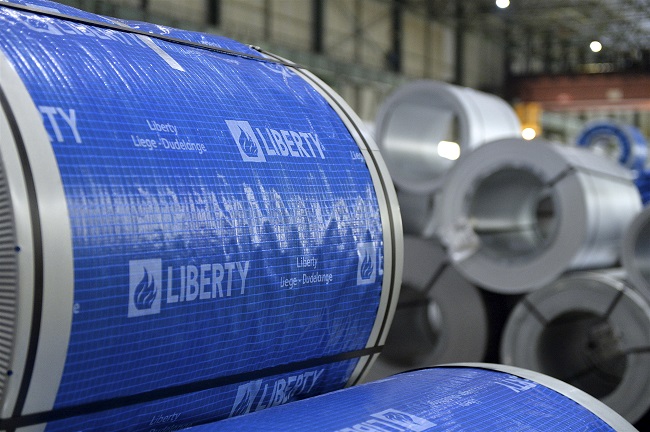
Luxembourg government eyes Liberty Dudelange acquisition, site repurposing
The Luxembourg government has submitted an acquisition offer to the court-appointed liquidator for bankrupt galvanizer and service centre Liberty Steel Dudelange. It aims to repurpose the site for another use and not resume steel operations.
According to Luxembourg’s Ministry of Economy, following nearly three years of production stoppage, the site presents a strategic opportunity for redevelopment. The objective, according to a ministry note obtained by Kallanish, is to optimise land use and repurpose the facility to support industrial renewal and drive economic growth.
“If this offer is accepted, the Ministry of the Economy will proceed with the development of the land with the aim of establishing new industrial activities and promoting the creation of high value-added jobs. The government will also consider the possibility of dedicating part of the site to defence-related projects,” the note says.
No other buyers have emerged for the Dudelange site, nor for Liberty Steel’s Liège facility. Despite ongoing efforts to identify potential investors, both sites remain without viable acquisition prospects, largely due to structural challenges in the European steel market and restrictive trade conditions.
In May, the sales process for the Dudelange plant was suspended after rumoured bidder Tosyali reportedly withdrew its interest. A recent visit by another potential buyer reportedly took place at the Dudelange site, though the interested party is also said to be based outside the EU.
The EU quota system is a major obstacle to any acquisition of both the Dudelange and Liège sites. The fundamental issue lies in its restricted ability to import hot rolled coil feedstock from outside the EU, which significantly undermines the site’s competitiveness and operational viability.
Natalia Capra France

World crude steel output down 5.8 percent in June 2025
Global crude steel production in June this year decreased by 5.8 percent year on year to 151.4 million mt, according to the World Steel Association (worldsteel).
In the first half of this year, global crude steel production went down by 2.2 percent year on year to 934.3 million mt.
In June, crude steel output in Asia amounted to 112.9 million mt, down 6.2 percent, with China’s output at 83.2 million mt, down 9.2 percent, with 6.7 million mt produced by Japan, decreasing by 4.4 percent, 13.6 million mt produced by India, up by 13.3 percent, and 5 million mt produced by South Korea, moving down by 1.8 percent – with all comparisons on year-on-year basis.
EU-27 countries produced 10.4 million mt of crude steel in June, down by 8.2 percent year on year. In the given period, Germany’s output amounted to 2.7 million mt, down 15.9 percent year on year.
Turkey produced 2.9 million mt of crude steel in June with a 3.5 percent decrease compared to the same month in the previous year. The CIS registered a crude steel output of 6.7 million mt, decreasing by 8.8 percent on year-on-year basis, with Russia’s estimated output at 5.6 million mt, down 7.4 percent year on year.
In North America, in June, crude steel output totaled 8.7 million mt, up by 1.2 percent year on year, with the US producing 6.9 million mt, increasing by 4.6 percent, both year on year. Crude steel output in South America in June amounted to 3.5 million mt, up by 1.3 percent compared to the same month in the previous year, with Brazil’s output totaling 2.8 million mt, falling by 0.5 percent year on year.
In the given month, Africa produced 1.7 million mt of crude steel, increasing by three percent year on year. In the Middle East, crude steel output totaled 4.3 million mt, moving down by 4.9 percent.
Shares in global crude steel production in June 2025



Vallourec inks agreement to sell Déville-lès-Rouen site
French pipe manufacturer Vallourec has announced that it has signed an exclusive agreement with France-based VINCI Immobilier to sell its Déville-lès-Rouen site, its former tube mill.
Following an intensely competitive selection process, VINCI Immobilier emerged as the preferred buyer in March 2025, entering into exclusive negotiations with a project proposal that aligned with local development goals and stakeholder expectations.
The final transfer of the site is expected in 2026 after the necessary regulatory steps.

EU issues minor Chinese tinplate anti-dumping duties correction
The European Commission has issued a corrigendum concerning definitive anti-dumping duties on imports of flat-rolled products of iron or non-alloy steel plated or coated with tin originating in China, notes Kallanish.
The correction addresses minor numerical inaccuracies in the duty rates originally adopted in May 2025. While the adjustments are purely technical, the update ensures legal precision without altering the substance or scope of the anti-dumping measures imposed, EC notes.
The definitive anti-dumping duty and dumping margin for Shougang Jingtang United Iron & Steel Co., Ltd. have been revised from 46.8% to 46.7%. Similarly, the figures for other cooperating Chinese companies listed in the annex have been corrected from 24.6% to 24.5%.
| Chinese exporter | EU definitive AD duty % |
| Baosteel Group: — Baoshan Iron & Steel Co. — WISCO-Nippon Steel Tinplate Co. |
13.1 |
| Shougang Jingtang United Iron & Steel Co. | 46.7 |
| Other cooperating companies | 24.5 |
| All other imports originating in China | 62.3 |
Elina Virchenko Ukraine

EU’s Russia-origin semis imports fall, pig iron surges
The EU has decreased imports of most steel products from Russia, but pig iron and scrap intake increased in January-May, according to Eurostat data.
Overall HS chapter 72 product volumes amounted to 2.57 million tonnes, up by 1.1% year-on-year, Kallanish notes. Revenue generated by these shipments however decreased 14.7% to €1.06 billion ($1.24 billion).
The main share of imports was taken by semi-finished products, accounting for 86% of supply. Semis intake nevertheless decreased 3.3% on-year to 1.49mt and revenue fell 14.6% to €681.9m.
Belgium took 554,630t of semis, down by 9.4% on-year. Italy imported 358,940t, higher by 5.6%, and Czech Republic 294,080t, up by 49%. Denmark took 251,040t, up 2.8% on-year.
Imports of pig iron from Russia to the EU in January-May amounted to 696,990t, up 68.5% y-o-y. Revenue increased by 52% to €254.45m. Italy imported 524,620t, an increase of 3.9%. Latvia took 82,270t, up 17% on-year, and Belgium accepted 31,070t compared with zero in January-May 2024.
There were not many deliveries of Russian-made ferroalloys to the EU market in January-May 2025, just 3,800t versus 39,470t a year earlier.
Supply of direct reduced iron from Russia to the EU amounted to 353,190t, down 33% on-year, at a value of €110.4m, down 38.9%.
EU scrap intake from Russia amounted to 30,550t, up 51%.
Iron ore supply was only 2,040t versus 9,360t in January-May 2024.
European steelmakers association Eurofer has previously voiced concern over the European Commission’s decision to continue to allow Russian slab to enter the EU until 2028 (see Kallanish passim).
As part of the EU’s 12th Russia sanctions package, EU importers will be able to import some 3m t/year of slab from Russia until October 2026. The quota will be reduced to 2.6mt and then 2mt during the following 12-month periods through October 2028.
Russian-origin billet imports into the EU have been prohibited since April 2024. EU pig iron imports from Russia will be banned from 2026 and are subject to quotas in 2024 and 2025. Russia already exhausted its 2025 quota in February.
Ukraine’s Metinvest urged the EU to close all loopholes for imports of Russian semi-finished products as soon as possible (see Kallanish passim). Russian steelmakers have maintained competitive positions in the EU market despite sanctions, especially in the area of slab supply, the firm said.
Svetoslav Abrossimov Bulgaria

Italian rebar prices, demand recover
Italian rebar prices are on the rise, with both producers’ asking prices and contracted levels increasing.
Steelmakers are now pushing for further hikes this week, following a sharp drop in both prices and volumes since May. Domestic producers are currently proposing an additional €30/tonne ($34) increase compared to mid-July quotations.
Compared to the initial round of increases in mid-July, when steelmakers were asking for around €270/t base ex-works, current offers have risen to €290/t base ex-works. This upward movement is driven by reduced availability of specific grades and rebar in coil, along with elevated production costs that continue to pressure mill margins.
Sellers are reporting some restocking activity as buyers replenish inventories ahead of the planned production stoppages in August. Most mills will be idled between 8-24 August, Kallanish notes.
Current base transaction levels for rebar now range from €250-270/t ex-works, reflecting an average increase of €30/t compared to the first half of July. Effective rebar prices, including size extras averaging €260-270/t, are reported at €510-540/t ex-works.
Domestic mesh prices are also trending up, averaging at €350-370/t ex-works, excluding transport and size extras which add approximately €300/t.
Natalia Capra France

European HRC producers target higher prices; buyers hold back
European hot-rolled coil prices were broadly stable amid subdued trading on Wednesday July 23. Mills expected regulatory pressure and increased protectionism to support price rebounds later in the year, and ArcelorMittal increased offers by €30 ($35) per tonne, Fastmarkets heard.
Trading was seasonally quiet in the European HRC market, sources said.
However, most major suppliers have already closed order books for September-delivery coil, with some mills already trying to implement minor price hikes for October-delivery material.
“European mills are relying a lot on the potential impact of CBAM (Carbon Border Adjustment Mechanism) on the market and also the implementation and new trade measures to replace safeguards,” a buyer source said. “These measures are supposed to limit imports, especially in the first quarter of 2026, so European mills will be able to grab bigger market share.”
Leading European steelmaker ArcelorMittal increased HRC offers for October delivery by around €30 per tonne, to €590 per tonne delivered in Northern Europe, several sourced told Fastmarkets.
It remains to be seen if new offers will be sealed in deals.
“I heard that [a leading European steel producer] intends to increase [HRC prices], but I guess the market will not accept,” a second buyer said.
Offers from integrated suppliers in Europe were reported at €560-590 per tonne ex-works.
Italy-origin coil was offered to Germany at €580-600 per tonne delivered, but buying interest for such prices was minimal so far. An Italian supplier could still offer September lead times, sources said.
Buyers’ ideas of tradable prices were still hovering around €540-550 per tonne ex-works.
“It remains to be seen if higher offers will be traded. Mills put too much hope in protectionism, while real consumption is not supportive of any increase at all,” a third buyer said.
But most mill sources that spoke to Fastmarkets indicated a minimum €560 per tonne ex-works for new sales.
Some suppliers claimed that new offers should be in the €600s per tonne amid high production costs.
As a result, Fastmarkets’ calculation of the daily steel hot-rolled coil index, domestic, exw Northern Europe was €555.00 per tonne on July 23, stable day on day.
The Northern European index was up by €7.94 per tonne week on week but was down by €25.23 per tonne month on month.
Meanwhile, in Italy, Fastmarkets’ daily steel hot-rolled coil index, domestic, exw Italy was calculated at €526.88 per tonne on Wednesday, down by just €3.75 per tonne from €530.63 per tonne on Tuesday.
The index was however up by €2.50 per tonne week on week, but down by €29.12 per tonne month on month.
Local integrated suppliers were aiming for €540-550 per tonne ex-works for coil to be delivered in September-October, but this price was not yet accepted in deals.
Buyers’ estimates of achievable prices remained at €520-530 per tonne ex-works.
“We still have about two weeks before summer closures — we’ll see if mills manage to sell anything at higher prices,” a source in Italy said.
Import offers were broadly stable in the week to Wednesday, but there were some signs of higher offers amid cautious optimism in China.
Fastmarkets’ weekly assessment for steel hot-rolled coil import, cfr main port Southern Europe was €450-500 per tonne on Wednesday, stable week on week.
