

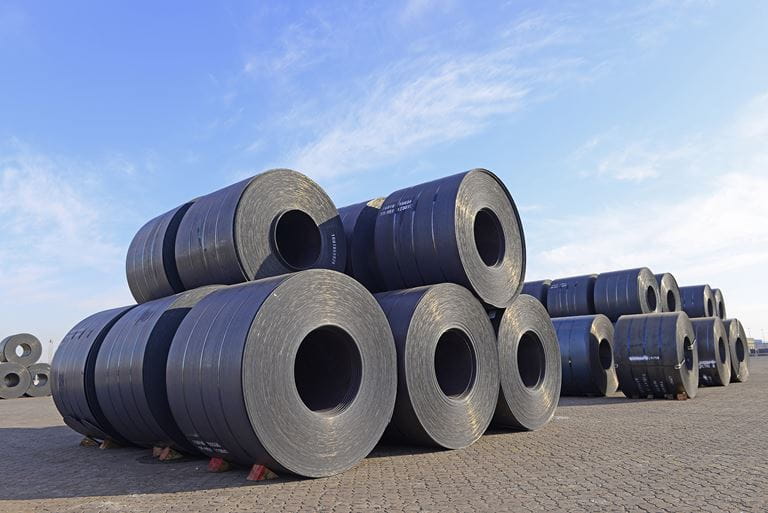
European HRC market slows for summer; prices steady despite higher offers
Trading was seasonally slow across Europe with market sources expecting to see little change in the coming weeks due to the vacation season.
In the week to July 25, major European mills pushed up their offer prices for October-delivery HRC to €590 per tonne ex-works or delivered, but buyers remained largely skeptical about the chances of those higher offers being sealed in deals, citing poor demand.
Supplier sources, meanwhile, reported an uptick in inquiries for HRC on Tuesday, with delivery timelines extending into the fourth quarter of 2025 and into the first quarter of 2026.
Despite the flat prices on Tuesday, supplier sources said they had “satisfactory” order books and were hoping to achieve even higher prices for fourth-quarter delivery HRC on restocking activity, a lack of imports and tighter domestic supplies.
According to one supplier source, the potential rebound in HRC prices will be driven by the implementation of the Carbon Border Adjustment Mechanism (CBAM), which is expected to increase the cost of imported coil, along with the implementation of new trade measures to replace the current safeguard measures. As a result, they said, many buyers will be looking to secure European HRC for late 2025 and early 2026.
This trend was echoed by several small- and medium-sized buyers in the region, who told Fastmarkets they had stopped ordering overseas coil because of concerns over the impact of the CBAM and existing safeguard measures.
“Mills are counting on the trade measures and lower coil availability to support the uptrend, but the reality is that the demand is still falling short of supply and consumption is not growing,” a stockholder in Germany told Fastmarkets.
Buyer ideas about the tradable level came in at about €550-560 per tonne ex-works.
But one buyer source said a bid at €550 per tonne ex-works had been rejected by a mill in the Benelux region.
“Buyers keep saying they will not pay anything above €550-560 ex-works, but there are no actual deals [being done] at such levels now,” a mill source said.
Fastmarkets’ calculation of the daily steel HRC index, domestic, exw Northern Europe, was €558.33 per tonne on Tuesday, down slightly by €0.67 per tonne from €559.00 per tonne on Monday.
The Northern European index was up by €3.33 per tonne week on week, but was down by €7.30 per tonne month on month.
In Southern Europe, meanwhile, Fastmarkets’ daily steel hot-rolled coil index, domestic, exw Italy, was calculated at €525.83 per tonne on Thursday, up by just €1.45 per tonne from €524.38 per tonne on Wednesday.
The index was up by €5.41 per tonne week on week, but down by €42.87 per tonne month on month.
Sources said, that following price-rise announcements in the week to July 25, there was an uptick in inquiries because buyers were trying to “collect orders” at the previous prices around €520-530 per tonne ex-works.
At the same time, there was a brief surge in activity in the Italian coil market, with some buyers rushing to secure volumes at previous price levels of €520–530 per tonne ex-works.
But those earlier prices are no longer available, a supplier source said “because they reflect market conditions from two weeks ago.”
New offers, came in at €540-550 per tonne ex-works, with some suppliers still having only limited availability of September delivery HRC.
For HRC tonnages of around 1,000 tonnes, one seller estimated the tradable price at €530 per tonne ex-works.
It still remains to be seen if higher offers will be traded in September, sources said.
Import offers have been broadly steady recently, but there were some signs of higher offers amid cautious optimism in China.
In the week to July 25, a small cargo of Turkish HRC was sold into Italy at €495 per tonne CFR, including import duty. And on July 29, new offers were reported at around €510 per tonne CFR, including the duty.
But sources said that Turkish suppliers were currently more focused on domestic sales.
An HRC cargo from India was heard sold into Italy at €490 per tonne CFR, sources said, and one market participant reported that HRC from Algeria had changed hands in Italy at €515 per tonne CFR to Italy.
No new offers were reported from Indonesia, however, despite it regularly being the most aggressive overseas supplier to Europe.
“A lot of HRC from Indonesia that was booked at €450-460 per tonne CFR is still in the pipeline,” a buyer in Italy told Fastmarkets.


European Commission tweaks safeguards for steel angles/sections, removes caps for HDG
The changes primarily target product category 17 – angles, shapes and sections of iron or non-alloy steel . They are intended to restore balance in the European steel market by reintroducing country-specific quotas and changing the controversial import cap.
In 2022, following the disruption of Ukrainian steel exports due to Russia’s invasion of the country, the EU had “globalized” quotas for this category to prevent supply shortages.
But a 15% per-country cap introduced in the latest safeguards review in March 2025, intended to prevent market dominance by individual exporters, ended up restricting access for key trading partners such as the UK, Turkey and South Korea, whose historical trade levels exceeded that threshold.
The new regulation removes the 15% cap, reinstates individual quotas for those countries, and reintroduces a residual quota for all other exporters. To ensure fair competition, a new 40% cap per country will apply within the residual quota, the Commission said in a notice seen by Fastmarkets.
Indeed, starting from 2023, market source have noted sharp rises in the deliveries of steel product category 17 [HS codes 7216 31 10, 7216 31 90, 7216 32 11, 7216 32 19, 7216 32 91, 7216 32 99, 7216 33 10, 7216 33 9] from non-traditional suppliers – notably China – to the EU.
For example, in 2023, the East Asian country delivered 16,093 tonnes of steel angle/sections to the bloc, sharply up from just 692 tonnes in 2022, Global Trade Tracker (GTT) data showed.
In January-May 2025, deliveries from China rocketed to 41,933 tonnes. In contrast, for the entire year of 2024, China shipped 20,451 tonnes of steel angles/sections to the region.
The Commission also announced that, due to the mid-quarter implementation of a new regulation, available volumes for the third quarter of 2025 (July–September) will be pro-rated based on unused quota volumes as of August 1, to ensure a smooth transition.
In addition, the regulation removes an “unnecessary” cap on category 4B (Metallic Coated Sheets) and corrects several technical inaccuracies.
Notably, for category 4B – hot-dipped galvanized coil (HDG) – the cap was set at 20% in March 2025, Fastmarkets reported.
HDG is widely used in the automotive and construction industries. Errors in tariff-rate quote distribution had caused oversaturation or under-utilization by some exporters, Fastmarkets understands.
The European Commission said that these adjustments were meant to preserve historical trade flows while maintaining safeguards against import surges that could harm EU industry.
The regulation was immediately binding and applicable in all EU Member States, and shall apply from August 1.

France leads push for new EU steel safeguard
In a critical step to protect the European steel industry, France’s industry minister Marc Ferracci has proposed a comprehensive new trade measure aimed at addressing the growing risks of global steel overcapacity. With the current EU safeguard framework expiring in June 2026, this new initiative seeks to ensure the industry’s long-term competitiveness and capacity utilization.
The non-paper, supported by 11 key EU Member States – including Austria, Belgium, Bulgaria, Greece, Italy, Luxembourg, Poland, Romania, Slovakia, and Spain – outlines a roadmap for replacing the current safeguard regime with a more effective, inclusive system starting January 1, 2026.
According to Mr. Ferracci, global steel overproduction continues to distort European markets, threatening local producers by suppressing prices and saturating demand. The current safeguard system, which imposes duties on imports exceeding tariff-free quotas, is due to expire, leaving the industry vulnerable.
Key proposals in the new framework
Import quotas would remain duty-free up to a fixed volume, maintaining trade flows while shielding local capacity; once quotas are exceeded, customs duties would apply without exception, similar to current measures; the plan would prevent quota monopolization by any specific country, promoting fairer trade distribution; and the new system would extend to steel and iron products not currently covered, ensuring comprehensive protection. Proposed product categories for inclusion are tubes and hollow profiles, grain-oriented electrical steel sheets, granules of pig iron or steel, stainless steel drawn wires, grinding balls, bearing tubes, forged bars, and alloy wires.
Timeline and urgency
The proposal urges the European Commission to develop and present the new framework well before the current safeguard’s expiration in June 2026. The preferred launch date is January 1, 2026, allowing for seamless transition and uninterrupted market protection.
Commenting on the proposal, Axel Eggert, director general of the European Steel Association (EUROFER), said, “We call upon other Member States, the European Parliament and the Commission to fully support this initiative. This is exactly the kind of coordinated action we need to stop the tsunami of cheap steel imports from destroying Europe’s industrial base, jobs, and green transition. Urgency and political determination are now more critical than ever: every day lost is a step further away from European industrial sovereignty.”


EU imposes definitive Chinese organic coated steel duties
The European Commission has imposed two separate duties, a definitive anti-dumping duty and definitive countervailing duties, on imports of certain organic coated steel products from China, following expiry reviews, Kallanish notes.
The AD (regulation 2025/1508) and countervailing (regulation 2025/1506) measures cover flat-rolled products of non-alloy or alloy steel, excluding stainless steel, that are painted, varnished, or coated with plastics on at least one side. They exclude sandwich panels used in construction, products with a final zinc-dust coating (containing 70% or more zinc by weight), and those with metallic coatings of chromium or tin.
New Chinese exporters who did not export during the original investigation period (October 2010-September 2011), are unrelated to duty-imposed exporters, and can prove current or imminent exports, may be added at the 13.6% weighted average anti-dumping duty rate applied to cooperating non-sampled companies.
The AD regulation stipulates that if countervailing duties under separate regulation are modified or removed, the anti-dumping duties will be adjusted proportionally, respecting the limits of the dumping or injury margin established per company.
The countervailing regulation allows for a future upward adjustment of these duties if the parallel anti-dumping duties are altered or withdrawn, to ensure combined duty coverage does not fall below the level of injury or dumping margins. In cases where the countervailing duty has been subtracted from the anti-dumping duty, refund claims will trigger a reassessment of the applicable dumping margin.
| Company | Definitive countervailing duty (%) | Definitive anti-dumping duty % |
| Union Steel China | 13.7 | 0 |
| Zhangjiagang Panhua Steel Strip Co., Ltd, Chongqing Wanda Steel Strip Co., Ltd, and Zhangjiagang Free Trade Zone Jiaxinda International Trade Co., Ltd. | 29.7 | 26.1 |
| Zhejiang Huadong Light Steel Building Material Co. Ltd and Hangzhou P.R.P.T. Metal Material Company, Ltd. | 23.8 | 5.9 |
| Angang Steel Company Limited | 26.8 | 16.2 |
| Anyang Iron Steel Co., Ltd. | 26.8 | 0 |
| Baoshan Iron & Steel Co., Ltd. | 26.8 | 0 |
| Baoutou City Jialong Metal Works Co.,Ltd. | 26.8 | 16.2 |
| Changshu Everbright Material Technology Co.,Ltd. | 26.8 | 16.2 |
| Changzhou Changsong Metal Composite Material Co.,Ltd. | 26,.8 | 16.2 |
| Cibao Modern Steel Sheet Jiangsu Co., Ltd. | 26.8 | 0 |
| Inner Mongolia Baotou Steel Union Co.,Ltd. | 26.8 | 16.2 |
| Jiangyin Ninesky Technology Co.,Ltd. | 26.8 | 0 |
| Jiangyin Zhongjiang Prepainted Steel Mfg Co.,Ltd. | 26.8 | 0 |
| Jigang Group Co., Ltd. | 26.8 | 16.2 |
| Maanshan Iron&Steel Company Limited | 26.8 | 16.2 |
| Qingdao Hangang Color Coated Sheet Co., Ltd. | 26.8 | 16.2 |
| Shandong Guanzhou Co., Ltd. | 26.8 | 16.2 |
| Shenzen Sino Master Steel Sheet Co.,Ltd. | 26.8 | 16.2 |
| Tangshan Iron And Steel Group Co.,Ltd. | 26.8 | 16.2 |
| Tianjin Xinyu Color Plate Co.,Ltd. | 26.8 | 16.2 |
| Wuhan Iron And Steel Company Limited | 26.8 | 16.2 |
| Wuxi Zhongcai New Materials Co.,Ltd. | 26.8 | 0 |
| Xinyu Iron And Steel Co.,Ltd. | 26.8 | 0 |
| Zhejiang Tiannu Color Steel Co., Ltd. | 26.8 | 16.2 |
| All other imports originating in the People’s Republic of China | 44.7 | 13.6 |
Source: Official Journal of the European Union
Elina Virchenko Ukraine

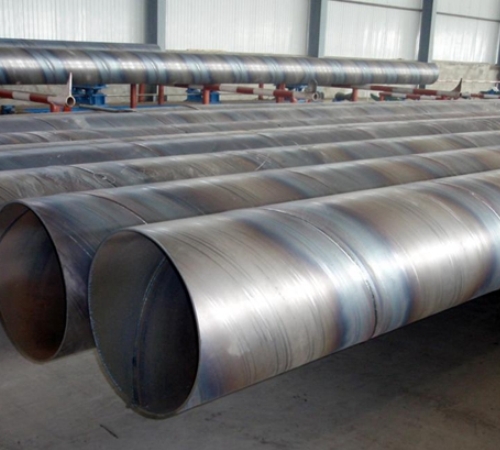
Italian welded tube prices begin to rise
The recent downward trend in Italian welded tube prices is showing signs of reversal, aligning with a broader wave of price increases across coils, derivatives, and other flat steel products.
According to a re-roller who spoke to Kallanish, the market is experiencing a rise in apparent demand, largely driven by growing uncertainty surrounding buyers’ ability to secure material from the import market. This hesitancy stems from evolving trade barriers, including the Carbon Border Adjustment Mechanism (CBAM) and impending safeguard replacement measures. These are prompting many buyers to shift back towards domestic and EU-based sourcing.
As a result, welded tube prices are beginning to tick up and may firm further in the coming weeks as supply tightens and purchasing activity resumes. With demand showing early signs of recovery and import uncertainty, Italian re-rollers are actively reducing welded tube discounts, which had reached 42-43 points in July.
Before the upcoming August production stoppages, they aim to bring discounts down to 40 points. This move reflects an effort to restore margin levels amid rising input costs and strengthening coil prices.
Another welded tube seller notes the urgent need to reach “a sustainable discount level that matches the input cost of increasing hot rolled coils”, driven by market tightening and regulatory pressures such as CBAM.
Last week ArcelorMittal and other EU producers including in Italy increased hot and cold rolled, as well as hot-dipped galvanised coil prices by €20-30/tonne ($23-34) across Europe, effective for new contracts covering the remaining third-quarter delivery slots and October shipments.
The revised base price for HRC is now set at €590/t delivered, using the German market as a reference point for northern Europe. In southern Europe, asking prices are at €580/t base delivered.
Natalia Capra France

Spain’s rebar producers raise prices before maintenance
Spanish rebar prices have risen since mid-July, market sources tell Kallanish.
Traders confirm that rebar mills in Spain increased their prices, driven by the start of scheduled maintenance periods. The rise is slightly above other European markets, taking advantage of the rebound in demand from the construction sector.
“Longs product output is expected to drop in the coming weeks, and producers have raised prices ahead of their planned shutdowns,” says one seller. “Even with high prices, demand remains strong.”
Market sentiment is positive heading into the summer, supported by the recovery of construction activity.
“Activity has picked up in June and July, mainly boosted by public and residential sector works,” a representative from a local construction firm notes. “We’re in a period of strong activity, with more building permits being granted. Private construction projects are also contributing to the sector’s positive momentum.”
Another participant points out that the local market has become more predictable and stable, although a slight price adjustment by the end of this month, of €5-10/tonne ($5.87-11.75/t), would be no surprise.
According to Spanish Chamber of Commerce data, the monthly index for Spanish domestic rebar prices (B-500 SD 12 meter/12mm) increased for a seventh consecutive month in July. The index stood at 198.08, up 1.23% over June. It was also 13% higher year-on-year. The index is based on a value of 100 in 2014.
Current offers for 16mm rebar in Spain are at €373-378/t base. Including €262/t size extras and loading expenses, transaction values are at €635-640/t ex-works.
Todor Kirkov Bulgaria

EUROMETAL and EUROFER call for immediate action to protect the European steel value chain
EUROMETAL and EUROFER have issued a joint statement calling for the urgent implementation of robust trade measures to safeguard the European steel value chain, with a particular focus on steel derivatives.
The European steel industry is facing unprecedented challenges. Deindustrialisation is accelerating across the production, distribution, and processing sectors — jeopardising the resilience and sustainability of an industry that is fundamental to Europe’s strategic autonomy. Imports of steel-based downstream products, many of which are not subject to existing safeguard or anti-dumping measures, continue to displace EU-manufactured goods and undercut domestic production.
Steel derivatives vital to Europe’s green transition — including components used in energy infrastructure — now make up as much as 50% of EU consumption, threatening jobs, innovation investment, and long-term viability across the supply chain.
The joint statement reflects a strong consensus across the European steel distribution sector, with the active participation of 12 national federations of steel distributors from across the EU27, united in urging policymakers to act decisively.
The joint statement reaffirms the shared commitment of EUROMETAL and EUROFER to an integrated, competitive, and future-ready steel ecosystem. Echoing the Steel and Metals Action Plan, the two associations stress that excluding downstream products from trade protections only shifts pressure further along the supply chain and increases the risk of carbon leakage under CBAM.
With global trade dynamics shifting — including record-high Chinese exports of both steel and embedded steel products — the statement underlines the urgent need for action to preserve European industrial capacity and ensure a just transition to a green and digital economy.
Joint Statement by EUROFER and EUROMETAL – Steel Derivatives

EU and US reach trade agreement: major implications for steel and metal distribution
President of the European Commission Ursula von der Leyen has announced that the European Union and the United States have reached a comprehensive agreement on tariffs and trade.
The deal establishes a single 15% tariff rate across most sectors, including automotive, semiconductors, and pharmaceuticals, providing greater clarity and predictability for businesses and citizens on both sides of the Atlantic. It also introduces zero-for-zero tariffs on a list of strategic products such as aircraft components, certain chemicals, generics, semiconductor equipment, agricultural goods, natural resources, and critical raw materials.
On steel and aluminium, both sides acknowledged the shared challenge of global overcapacity. The agreement includes tariff reductions and the implementation of a quota system, aimed at fostering fair competition and reducing trade barriers between the EU and US.
“On steel and aluminium, the EU and the US face the common external challenge of global overcapacity. We will work together to ensure fair global competition. And to reduce barriers between us, tariffs will be cut. And a quota system will be put in place”, stated President von der Leyen.
Additional elements of the deal include enhanced transatlantic energy cooperation, with the EU set to diversify its supply through increased purchases of US LNG, oil, and nuclear fuels. Furthermore, US AI chips are expected to support Europe’s digital infrastructure, including AI gigafactories.
The agreement delivers immediate tariff relief, secures continued access to key export markets, and lays the foundation for further tariff reductions and economic cooperation.
President von der Leyen also highlighted this deal as a significant step in the EU’s broader trade strategy, alongside recent trade agreements concluded with Mercosur, Mexico, and Indonesia.
The Commission thanked President Trump, Commissioner Maroš Šefčovič, and EU Member States for their roles in securing this outcome.

European heavy plate round-up: European plate offers to rise to cover higher slab costs
European re-rollers plan to increase offers for heavy plate following a rise in import slab offers in the week to 25 July.
Import slab offers from China and Turkey have moved up by $10-30/t over the week to $520-540/t CFR Italy. The rise was driven by higher steel prices in China.
Market participants hope that they would be able to negotiate prices during the next round of the semi-finished steel purchases at around $510/t CFR.
Italian re-rollers have been trying to book more slab with delivery within 2025 to avoid carbon border adjustment mechanism (CBAM) duties which will come into force in 2026. They are expected to accept higher slab prices to secure delivery within this year.
The approach of CBAM made re-rollers look for alternative sources of slab which would have lower CO2 content. Chinese steelmaker HBIS has sold around 20,000 t of hydrogen-based green steel slab to Italy, with the material to be shipped before September.
“Heavy plate prices need to be at least EUR610/t ex-works to cover higher slab costs,” a producer source said.
Heavy plate prices in Italy, however, remained stable over the week at EUR590-610/t ex-works. Some sources said that mills have been giving discounts, but the information was not widely confirmed in the market.
“Hopefully we will not see further decreases and the trend will turn positive supported by coil market prices, upcoming CBAM and consequent decrease in import plate demand. The prices are expected to start moving up after summer time or immediately before the start of holidays,” a trader said.
Apart from higher slab prices, an increase of offers for coil products is also expected to contribute to the bullish mood of re-rollers.
In Germany, domestic heavy plate prices inched up by EUR5/t on week to EUR660-680/t ex-works.
European heavy plate prices
| Unit | Term | Marker | Change | |
| Weekly heavy plate | ||||
| Northwest Europe ex-works heavy plate | EUR/t | EX-WORKS | 670 | 5 |
| Germany delivered heavy plate (Northwest Europe) | EUR/t | DEL | 680 | 10 |
| Italy ex-works heavy plate | EUR/t | EX-WORKS | 600 | 0 |
| Weekly steel slab | ||||
| Italy CFR slab | $/t | CFR | 510 | 10 |
| Weekly Green steel | ||||
| Green heavy plate premium (scopes 1-3 CO2 1t) | EUR/t | 25 | -25 |
Benjamin Steven Journalist, Steel
Maria Tanatar Associate Director, Steel and Green Steel


European coil and green steel round-up: coil prices supported by lack of import competition
European coil prices rose as the week reached its conclusion, amid market conditions that are increasingly amenable to uptrends given relaxing import pressure and fuller orderbooks for the regions’ producers.
Rising offer prices
Northwest European hot-rolled coil (HRC) offers were around EUR590/t ex-works, with the majority of mills increasing their offer prices to this level – around a EUR30/t increase on previous offer prices.
“Mills seem to have collected enough orders to be comfortable holding back and raising offers,” a trader source said.
“Steelmaker orderbooks are much better after all the low-price sales over the past month,” agreed a distributor, “soon buyers will realise they’ve exhausted their import alternatives and will start accepting higher prices.”
That said, buy- and sell-side sources still perceived opportunity at week’s end to secure last-minute deals at around EUR550-560/t ex-works. A German service centre source held an offer within that range valid until end of day from a leading mill, while a Benelux distributor reported a rejected bid at EUR550/t delivered (the equivalent of around EUR540/t ex-works).
In South Europe, the Italian market experienced similar offer increases – though not as forcefully as in the North – with an offer reported from buy-side at EUR580/t delivered. A producer source reported more “realistic” offers in the market as grouping around EUR550/t ex-works, against buyer bids at EUR520/t ex-works, and considered current and near-term deals to fall within that spread.
Diminishing import pressures
Declining import pressure was said to be a primary factor motivating mills to increase offer prices, as January’s tandem uncertainties of the Carbon Border Adjustment Mechanism (CBAM) and a possible expediting of the European Commission’s long-term replacement for the EU’s steel safeguard system both threaten unpredictable duties on current import lead times.
“CBAM remains a big concern for us,” said a northern distributor. “To be honest it will definitely be less risky just to source from local mills.”
Trading sources reported that while Indian, Algerian, and Turkish material could still technically arrive in time to escape CBAM liabilities, by then safeguard quotas could be exhausted such to require out-of-quota clearances under the 25% duty-rate, or even become subject to an upwardly revised rate if the safeguard replacement is brought forward to January from July as rumoured.
Import prices were generally reported higher, with one Italian trader stating that international steel could no longer be sourced below EUR500/t CFR, seeing offers slightly higher at EUR515-520/t CFR Italy. Imports from Asia were said to be particularly exposed to CBAM costs due to their higher emissions balance. A larger service center did still report lower import prices as available for Indonesian material at EUR450-460/t CIF.
European capacity reductions
The region’s steelmakers have also signalled capacity reductions down-the-road, with ArcelorMittal Poland scheduling a temporary idling of its blast furnace (BF) No. 3 at Dąbrowa Górnicza for September, leaving a single furnace operational. The company highlighted the squeeze of ETS cost exposure and the dominance of imports in the Polish market (cited as an 80-95% market share) as motivating the shutdown.
Swedish steelmaker SSAB also indicated plans to reduce output in the third quarter – adjusting production and staffing levels. The decision was premised on a combination of demand decline factors, namely the seasonal summer slowdown, and growing uncertainty in the market from combative trade protectionism.
In other news, Italy’s Ministry for Enterprises and Made in Italy (MIMIT) announced that the final meeting of Acciaierie d’Italia’s (ADI) technical committee would be held to finalize future upgrades and the wider decarbonisation strategy for the plant on 31 July. Italian authorities have already reviewed a number of options for the site including integrating gas supplies for direct-reduced iron (DRI) production, to replace the plant’s blast furnaces.
Local Italian media reported a series of agreements from this week’s economic summit between Italy and Algeria in Rome, specifically citing an agreement between Italian steel consortium CEIP scarl and Algerian industrial specialists Copresud for a new Algerian DRI plant, while Duferco and Copresud separately signed a Memorandum of Understanding “with the aim of strengthening collaboration in the energy sector, focusing on the integration of renewable energy sources and the progressive use of green hydrogen in industrial processes.” McCloskey understands that both agreements remain independent of ADI’s aforementioned decarbonisation strategy.
Green Steel
While the green steel markets remain subdued awaiting regulatory clarity from the European Commission’s low-carbon label, which seeks to define green steel for the generation of decarbonisation-supportive lead markets and associated pricing premiums, McCloskey continues to record spot deals for low-carbon products.
Northwest European distributors reported actual and estimated premiums of EUR80-100/t for green HRC this week, with CO2 content of 0.75-0.8t per ton. Mass-balanced material was heard available at a EUR60/t premium, offering a 20% emissions reduction from 2t CO2e/t.
“We still trade [green steel] regularly for smaller volumes,” said one distributor, achieving premiums of around EUR100/t to traditional steel prices in sales to end-users. “Companies increasingly need it to manage their own emissions targets.”
McCloskey’s reduced carbon marker – calculated on the basis of all green HRC premiums surveyed in the week to publication – reflects this consistency, standing at EUR62.21/t as of 25 July and demonstrating a relative variability of just over 6% in 2025 to-date.
European coil and green steel prices
| Term | Marker | Change | |
| Weekly Northwest Europe steel coil | |||
| Northwest Europe ex-works HRC | EX-WORKS | 555 | 15 |
| Northwest Europe ex-works CRC | EX-WORKS | 650 | 10 |
| Northwest Europe ex-works HDG | EX-WORKS | 660 | 0 |
| Weekly South Europe steel coil | |||
| Italy ex-works HRC | EX-WORKS | 530 | 10 |
| South Europe CIF HRC | CIF | 510 | 10 |
| Weekly Green steel | |||
| Green Northwest Europe HRC premium (scopes 1-3 CO2 0.8t) | 80 | 10 | |
| Green Northwest Europe ex-works HRC (scopes 1-3) | EX-WORKS | 635 | 25 |
| Green HRC premium (scopes 1-2 CO2 0.5t) | 80 | 10 | |
| Green Northwest Europe ex-works HRC (scopes 1-2) | EX-WORKS | 635 | 25 |
| Green HRC reduced carbon price (scopes 1-3) | 62.21 | 3.94 |
Benjamin Steven Journalist, Steel
Maria Tanatar Associate Director, Steel and Green Steel