


Siderúrgica Balboa to install captive solar plant
Spain’s Grupo Industrial Cristian Lay (CL) has commenced construction of a photovoltaic plant to feed production at its Siderúrgica Balboa plant, Kallanish learns from the company.
The facility will be the second-largest industrial self-consumption solar project in Spain.
The new solar plant, located in Jerez de los Caballeros, is expected to have an installed capacity exceeding 25 megawatts (MWp), equipped with 35,820 bifacial solar modules of 700 Wp each.
The infrastructure is being built by the group’s renewable energy engineering and construction firm, Global Energy Services (GES), under an engineering, procurement, and construction contract.
The so-called El Corchito project is estimated to deliver annual energy savings of €2.5 million ($4.04m), bolstering CL’s long-term competitiveness amid volatile energy markets.
“Our commitment to this project is a clear demonstration of our industrial vision for the future: competitive, sustainable, and self-sufficient,” says CL’s steel division chief executive, Miguel Ángel Leal. “Generating renewable energy on-site enables us to reinforce the energy independence of our operations, ensure greater cost stability, and advance decisively in meeting our climate commitments.”
The El Corchito plant will not supply electricity to the national grid, as 100% of the output will be consumed by Siderúrgica Balboa. This will allow the steel plant to cover approximately 10% of its annual energy needs with solar power.
The solar plant is scheduled to be operational before the end of the year. Total investment in this project exceeds €14m.
Siderúrgica Balboa’s facilities in Jerez de los Caballeros comprise a steel mill and two rolling plants. The company produces wire rod and profiles.
CL Grupo Industrial’s steel division also includes companies such as Alfonso Gallardo, Ferromallas, Galvacolor, Corrugados Getafe, Lasaomallas, Marceliano Martín, and Steel Solaris.
Todor Kirkov Bulgaria


German rebar prices come down
German rebar prices have seen the drop some market participants were expecting, after defying the downtrend in neighbouring countries for months.
Base prices have now largely undercut the mark of €400/tonne ($460), which had long remained unbroken, with some deals peaking at €430/t. A buyer at a Ruhr-based distribution/bending group tells Kallanish of base prices between €380 and €390, which together with the average size extra of €265 would result in €645-655/t delivered.
While smaller customers might still have to expect higher prices, the break through the €400/t barrier is confirmed from southern Germany, where price levels tend to be lower than in the Ruhr. A manager there attributes the decline to the preceding fall in scrap prices, which a month ago came down by more than $50/t in Rotterdam.
In Germany, scrap prices did not fall quite as dramatically, but mills have meanwhile factored them in to some extent, the Ruhr buyer says. German scrap merchants resisted the drastic downtrend in export prices by lowering only limited volumes by $50/t, but demanded higher prices when mills needed more supply, he explains.
The slide in rebar prices has occurred rapidly, which the buyer attributes to typical purchasing behaviour in times of low demand: “Once the trend goes down, people buy even less than before,” he says.
He also notes that Riva Germany is now back to providing a larger range of products and sizes. While the EAF at Riva Hennigsdorf remains idle, the rolling mill has been temporarily reactivated to meet demand from customers.

German industry body urges EU action, new trade pacts to counter China
Germany’s mechanical engineering industry association, VDMA, calls on EU to reduce dependence on the Chinese market and improve access to new markets, raising the alarm regarding the growing challenges posed by China’s industrial policies.
As China continues to leverage competition-distorting advantages and government subsidies, European companies find themselves at a crossroads, demanding immediate action from policymakers.
“Our companies are ready to take on the competition with Chinese companies. We want to be successful on the global market based on our own strength,” VDMA President Kawlath said. “We are doing our homework. But that is not enough. We are calling on politicians to strengthen the location and ensure fair competition on the domestic market now.”
VDMA President Bertram Kawlath articulated the urgency of the situation during a recent media conference, where the association unveiled its position paper titled “Leveling the Playing Field: A Call for Fair Competition with China.” The paper outlines the pressing need for a united European front to counteract the unfair practices that have been undermining the competitiveness of local industries.
“Chinese companies are not playing fair,” Kawlath stated. “They benefit from substantial government support and often disregard our technical regulations, which puts our businesses at a significant disadvantage.”
According to VDMA European companies are eager to compete on fair terms but require better support from their governments. This includes implementing countervailing duties on imports from countries that violate EU antidumping or anti-subsidy rules and enhancing market surveillance to penalize non-compliance with EU legislation.
To avoid dependencies on China, the development of strategically relevant technologies should be supported by industrial policy. This could be achieved through non-price-related criteria in public tenders, exclusion criteria for market access and local content criteria but also concluding free trade agreements: There is an urgent need for the EU to conclude more free trade agreements, particularly with MERCOSUR and India, to improve access to new markets and reduce dependence on the Chinese market.
“We need new free trade agreements, with India, for example. The agreement with the South American Mercosur states has long been completed.
Now it must finally come into force,” Bertran Kawlath, VDMA President said.
The association also urged to promote standardization activities by European companies to avoid competitive disadvantages as China uses standardization as an instrument to implement its economic policy interests and is striving for global dominance of Chinese standards, VDMA said.
Platts, part of S&P Global Commodity Insights, assessed domestic HRC in Northern Europe at Eur600/mt ex-works Ruhr, and imported HRC in Northern Europe at Eur520/mt CIF Antwerp, both stable day over day.


EU plans to reintroduce country-specific quotas on certain steel products
In a notification published by the World Trade Organization (WTO) on 11 June 2025, the European Union (EU) announced plans to amend safeguard measures on imports of certain steel products.
According to the notification, these changes cover product category 17, which is defined as “angles, shapes and sections of iron or non-alloy steel”.
The EU had previously introduced a single “global quota” system applicable to all countries, abolishing the country-specific quotas for Türkiye, the United Kingdom and Korea after Ukraine halted its exports of this product group in 2022 due to the war.
However, the EU Commission found that the restriction imposed under this global quota system, which limits any country’s quota share to 15%, has caused some traditional suppliers’ trade volumes to fall below historical levels.
Accordingly, the Commission proposed a regulation to abolish the 15% quota cap and reintroduce country-specific quotas for Türkiye, the United Kingdom and Korea. According to the Communication, if adopted, this would enter into force on July 1, 2025. In addition, country-specific quota holders will not be able to benefit from the “residual quota” in the last quarter of the safeguard year.
The proposed measures will last until June 30, 2026, with a gradual liberalization of 0.1% per year.
In the notification, it was also stated that meetings will be held with the relevant exporting countries in Brussels or online between June 12-19, 2025, and that members wishing to request consultation in this context can apply to the EU Delegation or the Commission.

European longs prices decline amid sluggish activity
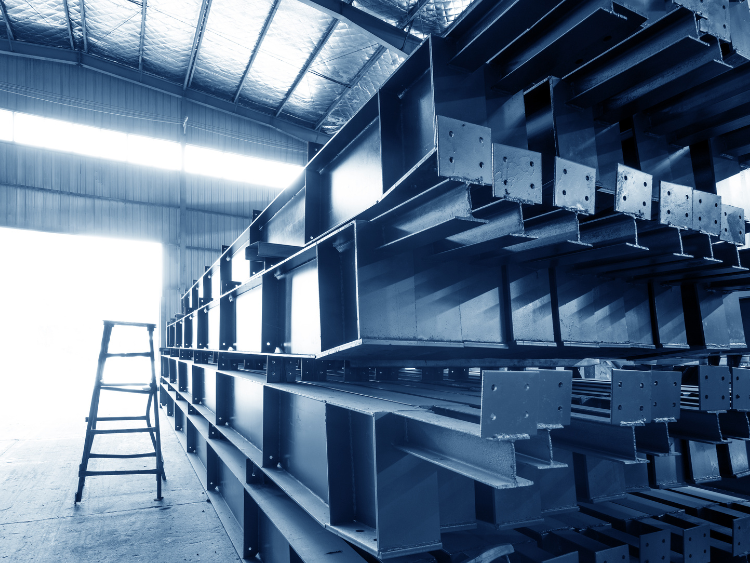
The European longs market has showed substantial weakness in demand this week, although there have been no major downward adjustments in the prices of rebar or wire rod. In spite of a general lack of trust in the market sentiment, the bottom has likely been reached, as prices are unlikely to fall further under the current conditions, at least in the rebar market.
In the Italian rebar market, prices have been reported at €250-260/mt ex-works base (€515-525/mt ex-works including regular extras), with lows of €240/mt ex-works base (€505/mt ex-works including regular extras). Demand is still low, as end-users are reluctant to make purchases and they are waiting for prices to reach the minimum level. According to a representative of an Italian steel mill, however, this level has already been achieved, and “waiting too long would mean not receiving the goods on time” because of logistical problems on Italian territory. According to an Italian trader, however, the difficulties derive from oversupply: “If producers do not come up with the idea of stopping their plants, prices certainly cannot recover” he said.
A small price recovery in the longs market is instead happening in Germany, where, due to the increases in scrap prices and the previous lack of rebar, prices have settled slightly upwards.
Small declines have been recorded in the wire rod market in Italy, “in the wake of the negative information about scrap that was circulating in May”, a source commented. The market, however, seems to be moving towards stabilization, and demand is now balanced by supply. According to the latest SteelOrbis surveys, wire rod prices in the local Italian market have declined by €5/mt compared to previous levels and are standing at €620-635/mt delivered for drawing quality wire rod and €605-620/mt delivered for mesh grade wire rod.
In Germany and Poland, on the other hand, wire rod prices have been reported at higher levels, equal to – respectively – €645-660/mt delivered and €630-645/mt delivered for drawing quality wire rod and €610-625/mt delivered and €600-620/mt delivered for mesh grade wire rod. Poland is particularly affected by the unfavorable exchange rate with the dollar, which has weakened from $1 = PLN 4.14 at the beginning of the year to $1 = PLN 3.68 on June 12.
As for the export market, ex-Greece prices for rebar and wire rod have been reported at €575/mt FOB and €570/mt FOB respectively, while there was no change in rebar export prices from Spain to UK ports, which remain at around €550/mt FOB.
Finally, the import market from Turkey has also been stable and lacking movement, with rebar prices being reported at €495-510/mt CFR and wire rod prices at €510-515/mt CFR. Prices are based on the exchange rate $1 = €0.87 (European Central Bank, June 11), and have marked a slight decrease on dollar basis but a slight increase on euro basis due to exchange rate fluctuations.


Romanian long steel market stable but demand remains low
The Romanian long steel market has remained stable in the past week, with business activity continuing at a slow pace. Most long steel spot traders, along with the country’s sole rebar producer, have chosen to keep prices unchanged over the past week. Despite stable prices, market sources report that overall conditions in the domestic market remain weak, as sluggish demand persists and previous price cuts have failed to stimulate sales. Additionally, sources report that recent changes in the government have led to a decline in both public and private investments. With the summer period approaching, market players expect a financially difficult few months ahead.
“Unfortunately, sales in Romania are weak. The government has not yet been formed, and investment has decreased significantly in both the public and private sectors. Prices only drop for larger-volume purchases,” a trader told SteelOrbis.
At present, rebar prices from Romania’s sole producer remain stable week on week at €590-605/mt ex-works, while traders’ rebar prices are also unchanged, at €590-600/mt ex-warehouse.
Similarly, the outlook for the wire rod segment remains pessimistic, with traders continuing to offer prices at €580-595/mt ex-warehouse, the same as last week.
In the import market, no new purchases have been reported. However, Greek offers for rebar and wire rod remain steady at €600-605/mt CFR and €595/mt CFR, respectively. Similarly, Bulgarian rebar offers have remained stable from last week at €610-630/mt CPT. In contrast, Egyptian rebar and wire rod offers have declined to €505-510/mt CPT and €520-525/mt CPT, down from last week’s €510-520/mt CPT and €535-545/mt CPT. Likewise, Turkish rebar offers to Romania have dropped by €10/mt, now at €490-510/mt CFR, based on an exchange rate of €1 = $1.16 and freight costs of €25-30/mt.
Volvo Cars signs up for SSAB Zero steel
SSAB and Volvo Cars have signed a landmark agreement for the delivery of SSAB Zero steel starting already this year, Kallanish hears from the Swedish steelmaker.
According to SSAB, this agreement makes Volvo the first automaker to commit to using decarbonised steel in serial production.
According to SSAB, its proprietary SSAB Zero is the world’s first commercially available steel produced from recycled scrap metal using fossil-free electricity and biogas. This process results in steel with virtually zero fossil carbon emissions, available in a variety of grades and dimensions.
The steel will be used in key components of Volvo Cars’ upcoming fully electric EX60 SUV, as well as other cars based on Volvo Cars’ next-generation SPA3 car architecture. It meets the same stringent safety standards and performance requirements as the primary steel used in Volvo Cars, SSAB says.
Volvo Cars is committed to a fully electric future and has the ambition to achieve net-zero greenhouse gas emissions by 2040. “With forward-thinking partners like Volvo Cars, we continue to lead the transformation of the steel industry,” says Tony Harris, head of SSAB Europe.
Christian Koehl Germany

ArcelorMittal Spain consolidates distribution at new Madrid centre
ArcelorMittal Spain is constructing a new distribution centre at its former beam production plant in Villaverde, Madrid, Kallanish notes. The site aims to become a strategic logistics hub dedicated to steel distribution, long product processing, and steel recycling.
The new facilities will cover a total area of 26,300m², of which 20,000m² will be under roof, allowing the consolidation of services that were previously provided at ArcelorMittal’s Getafe and Coslada locations in Madrid.
“The ability to offer new services from Villaverde will enable us to adequately meet the demand for steel products in the Madrid region and surrounding provinces,” says ArcelorMittal Distribution Iberia.
The new centre will be equipped with four long product cutting saws, two saws with drilling capability, an oxy-cutting table, and a new shot blasting and painting installation. These additions will position the Madrid centre as one of the most advanced long product processing facilities in the region, according to the company.
The industrial warehouse is being built using ArcelorMittal’s XCarb steel. More than 1,300m² of solar panels with a capacity of 300 MWh will be installed on the roof, and charging stations for both commercial and freight electric vehicles will also be provided.
The new facility is scheduled to be operational in the first quarter of 2026.
ArcelorMittal closed production at the Villaverde plant in 2012, later converting the site into a scrap purchasing point and a centre for processing and distributing steel products.

Todor Kirkov Bulgaria
Italian rebar prices continue to decline
Italian rebar prices are experiencing a downward trend week-on-week, continuing the significant decrease noted in May, which aligns with developments in all long products markets.
Although the market is subdued, a major southern distributor reports that rebar demand has been rising recently. A construction company also reports multiple projects are underway, and it is placing weekly orders for rebar, Kallanish hears.
“There is complete and utter uncertainty. Shipments are decreasing as many clients are waiting,” a mill source states.
Domestic transactions have lost about €10/tonne ($11) compared to last week on average and are hovering at €250/t ex-works. Effective rebar values are at €510-520/t ex-works, with size extras averaging at €260-270/t. Domestic mesh contracts are also decreasing by €10/t to €350-360/t on average. This does not include transport charges or size extras, which are at roughly €300/t, according to sources.
Natalia Capra France
Italian coil buying recovery forecast for end-June
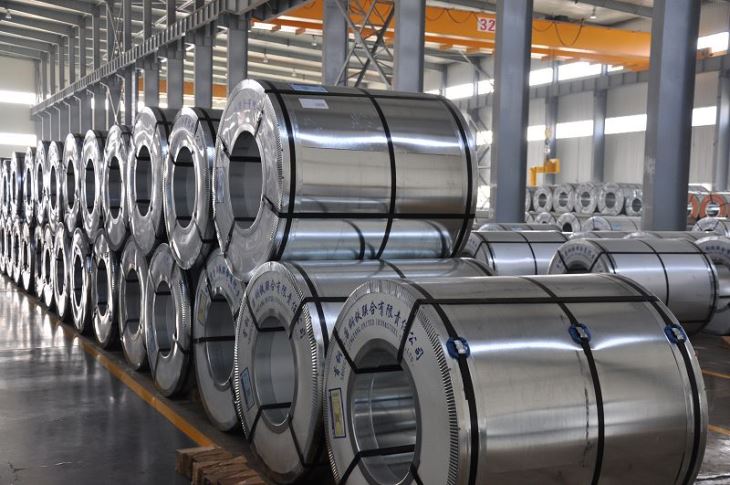
The Italian coil market is currently experiencing subdued sales, with buyers largely adopting a wait-and-see approach, making only minimal purchases to address minor stock gaps. Two large service centres indicate elevated inventory levels as a result of persistently weak downstream demand, Kallanish notes.
Hot rolled coil prices have largely remained stable this week, following a downward trend observed in Europe the previous week. Import offers are showing signs of weakness, prompting both re-rollers and service centres to adopt a cautious approach as they assess market conditions, waiting for the bottom.
Producer sources suggest limited sales; however, this situation is believed to be temporary. There is an expectation for prices to rebound post-summer, driven by increases in both imported and domestic values due to the implementation of the Carbon Border Adjustment Mechanism (CBAM) from January.
The CBAM effect presents a strategic opportunity for European producers to increase their pricing. This situation, however, may lead to a stagnation in sales, as end-users along with distribution and service centres, are unable to transfer any cost increases downstream.
A prominent service centre suggests contracts originating from Asia need to be finalised by the end of July or early August to ensure timely delivery of material before year-end. He predicts the market will resume buying activity in the final week of June. Another buyer plans to make purchases from Asia in July. Both sources believe that neighbouring countries, such as Turkey and North Africa, will increase their prices in September, as they will be the sole import alternatives for Europe.
Italy is currently observing a trend of declining HRC offers from Turkey, North Africa, and the Far East. Present offers from Turkey are observed falling within the range of €510-515/tonne ($588-594) cfr Italy, inclusive of duties; however, sellers appear open to negotiations.
Indonesia is currently priced at €470/t cfr, whereas other Asian producers, including those in Vietnam and Thailand, are pricing their large-tonnage vessels at between €500/t and €515/t cfr. Sources suggest the base delivery price of Italian HRC is at €570-600/t.
Natalia Capra France