


Strong action can reverse EU deindustrialisation: Henrik Adam
There is strong political will to support the steel industry in Europe, for the first time, Henrik Adam, executive chairman of Tata Steel Netherlands Holding BV, told delegates at Kallanish Europe Steel Markets in Amsterdam on Wednesday.
The state of the US steel industry shows there is hope for the steel industry if governments are willing to take decisive action, added Adam, who is also Eurofer president.
In order to avoid deindustrialisation, not only in the steel industry but also for its downstream manufacturing customers, problems with the Carbon Border Adjustment Mechanism (CBAM) must be addressed, Adam warned. The system in its current form has holes that “you could put a train through”, he remarked.
In particular, CBAM must also cover derivative products made with steel. Otherwise, these products could simply be made in other regions without paying carbon costs and EU manufacturers would be unable to compete.
The current crisis in the EU steel industry has been driven by high costs, including carbon costs. There have been 29 million tonnes/year of permanent capacity closures and 90,000 jobs lost over 2008-2023.
To pull out of this crisis, the EU must address trade, CBAM, energy and scrap issues. This is particularly true considering the more than 700m t/y of global steelmaking overcapacity. For energy, accessible, abundant, and affordable fossil-free electricity is needed, Adam added.
Over 2010-2020, the industry needed around 75 TWh/y of electricity. By 2030 this could rise to 165 TWh/y, and by 2050 400 TWh/y will be needed. Of this, 170 TWh/y would be used in steelmaking and 230 TWh/y would be needed to produce 5.5m t/y of hydrogen.
Especially since the energy crisis of the last three years, European gas and electricity prices are far above those paid in competing steelmaking regions.
Despite the deep crisis of the EU steel industry, there is hope that strong action can revive its fortunes. Although Adam does not agree with the methods that have been used in the USA, decisive action there has led to a sharp increase in capacity utilisation and investment.
EU capacity fell to 95% of 2010 capacity by 2019 and has since slumped to 86% of 2010 capacity. US capacity also fell to 94% of 2010 levels by 2019, but then rebounded to 101% in 2024, Adam noted.


European steel industry faces three-option transformation choice: Genet
There are three possible solutions to Europe’s steel industry woes, Laplace Conseil founder, consultant Marcel Genet asserted at Kallanish Europe Steel Markets in Amsterdam this week.
The main problem is that Europe’s steel industry is currently facing overcapacity and falling exports.
Genet said that Europe, including the EU, UK, Norway, Switzerland and the Balkan countries, produced 136.9 million tonnes of crude steel in 2024, with 55% and 45% respectively contributed by 29 BF-BoF and 132 EAF plants.
For the 29 integrated BF-BoF plants, the average capacity utilisation rate was only 62% in 2024, measured by the OECD based on its annual survey, and from capacity and production reported by mills.
“We keep talking about the excess capacity of Chinese steel and any other countries. We never talk about the excess capacity of Europe. Europe has the lowest level of capacity utilisation in the world,” Genet noted.
Rather than just blaming imports, and relying on government subsidies and trade measures, EU mills should invest into new technology. The three main options that steel mills are thinking about and taking action on are to replace BF-BOF with natural gas-based direct reduced iron-making, hydrogen-based DRI and scrap recycling through EAFs.
Unfortunately, Europe faces a very high price for natural gas, which is about ten times that in the Middle East, North Africa, the US, Mexico and Canada. Therefore, the EU cannot produce DRI to make steel competitively, Genet observed.
By contrast, producing fully decarbonised steel using scrap requires seven times less clean electricity than with iron ore and hydrogen.
For steel production, Genet forecasted the EU will reach 150mt by 2050, 10% more than in 2024. 70% of it will be contributed by EAFs using scrap, with the remainder to be shared equally by EAFs using hydrogen-based and natural gas-based DRI.
Genet also expects the last European BF will be extinguished in 20-25 years, ten years after the last one shuts down in North America.
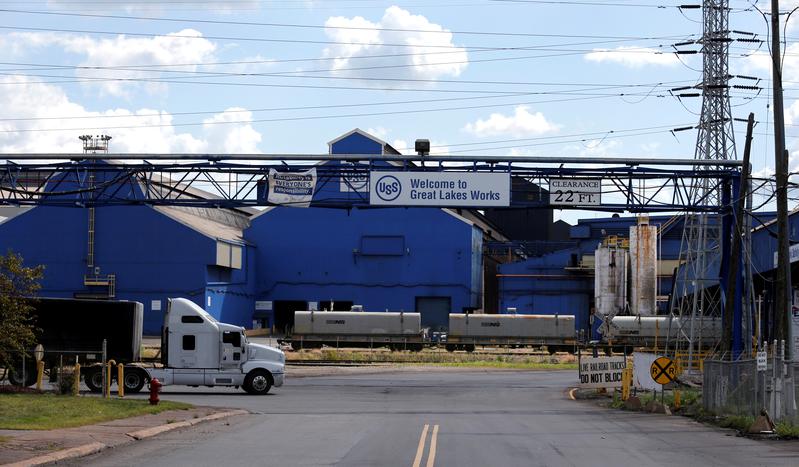
Nippon completes acquisition of US Steel
The long-awaited and contested merger between Nippon Steel and US Steel has closed, Kallanish learns from a US Steel press release issued Wednesday.
Highlights of the acquisition include Nippon’s $11 billion investment into US Steel facilities by 2028. The US Steel headquarters will remain in Pittsburgh, Pennsylvania, with existing US mills maintaining capacity to meet domestic demand. Additional investments are designed to protect and create more jobs at the acquired sites in Pennsylvania, Indiana, Arkansas, Minnesota and Alabama.
“This is a momentous day for our country, our communities, and the American steel industry,” states US Steel chief executive Dave Burritt. “American workers secured the best possible deal. US Steel will remain rooted in the United States and continue to call Pittsburgh home. Through our partnership with Nippon Steel, we are poised to grow better and bigger, with transformative investment, cutting-edge technology, and the creation of good-paying jobs across the United States.”
A key aspect of the national security agreement (NSA) with the US government tied to the $14.1 billion deal is what commerce secretary Howard Lutnick calls a “perpetual golden share” provision. The agreement prevents Nippon Steel from relocating US Steel operations out of Pittsburgh, changing the company’s name, or closing domestic plants without government consent.
“I am very pleased that the partnership between Nippon Steel and US Steel has been realised thanks to President [Donald] Trump’s historic and visionary decision,” states Nippon Steel chairman and chief executive Eiji Hashimoto.
Nippon’s ceo expresses the company’s excitement about opening a new chapter in US Steel’s storied history and becoming what he calls “world’s leading steelmaker.”
In a previously scheduled appearance at the Global Steel Dynamics Forum on Wednesday afternoon in New York, Burritt celebrated the closing of the transaction by thanking many, many stakeholders and supporters of the deal. He said Nippon will deploy additional artificial intelligence and automation at the US properties “that will strengthen, not sideline, our people.” Nippon ownership, under the agreed-to guarantees, will ensure that US Steel, founded in 1901, thrives “for the next 124 years,” Burritt proclaims.
US Steel is now a wholly owned subsidiary of Nippon Steel North America. The shares stopped trading on the New York Stock Exchange on Wednesday morning. Ticker “X” will be officially delisted on 30 June. The sharefolders are collecting $55/share in cash from Nippon.
Dom Yanchunas USA , John Isaacson USA

European steel demand will recover only modestly
European steel demand should recover from record lows in the coming periods, but the extent of rebound remains unclear, participants concluded at Kallanish Europe Steel Markets in Amsterdam on Tuesday.
Although EU industrial activity should recover, the impact on steel demand and role of energy costs are difficult to predict, said Eurofer director of market analysis and economic studies Alessandro Sciamarelli. He forecasted EU GDP growth of 0.9% this year, and 1.4% in 2026. But he also cautioned that “no real improvement in steel demand is in sight, due to US tariff-related turmoil”.
A bit more optimism was expressed by Tata Steel Nederland director markets, pricing & services Ronald de Haan, who sees real demand kicking in and new orders revving up. A recovery should be felt by the fourth quarter of 2025 or Q1 2026, he added.
Regarding the scenario of multiple threats like trade restrictions and inflation, he stated that “we used to have economic cycles, but these do not exist any more”. The same applies to the steel industry restocking cycle. “The market is so uncertain, that everyone is stocking down, and that affects pricing,” he noted.
He also stressed that demand will not recover evenly across the EU. “It is completely different in Poland than in Germany, which depends much on exporting machinery,” he said. Against the high level of energy costs, “the one thing you can do is cut costs – in R&D, automation, human resources – and that might get you in a negative spiral”.
“Energy is one of our biggest concerns,” commented ArcelorMittal Europe head of climate change – governmental affairs Stéphane Tondo. The problem has been realised at the top of the European Commission, he noted, but the clerical staff still possess an old mindset that hinders progress. “The head is fast, but the feet are slow,” he concluded.
Christian Koehl Germany

CBAM costs spark concern for EU steel
CBAM can help “level the playing field” for EU importers but will also distort competition and threaten the competitiveness of European steelmakers and manufacturers, experts said at Kallanish Europe Steel Markets 2025 in Amsterdam on Tuesday.
“European steel mills are already facing ETS [Emissions Trading System] costs; it’s as simple as that,” said Tata Steel Nederland head of trade affairs Jaap Jan Aardenburg.
He called it a “misconception” that all EU mills receive free emissions allowances under the ETS. “To create a level playing field, importers are not paying any carbon cost. And to equalise that so that we are all facing the same cost levels, we have the CBAM system in place,” he explained.
However, Aardenburg also acknowledged the complexity of CBAM’s implementation and the need for a workable solution that balances the interests of both steel producers and users. He warned the lack of clarity from the European Commission is already causing market distortions.
“CBAM is also a direct tax and it cannot be offset,” noted Alexander Julius, presidency member at EUROMETAL. He said steel-consuming manufacturers producing in Europe will also feel a CBAM impact which will “minimise” their competitiveness and, subsequently, exports of finished products will also decrease.
Julius also underlined the administrative burden placed on importers, questioning the feasibility of requesting emissions data from around 100,000 suppliers globally. He stressed the need for third-country exporters to register with the Commission to streamline compliance.
He also called on the Commission to accelerate guidance and technical clarification, so that the industry can accurately assess product costs under the new regime.
Panellists also noted how ongoing energy supply risks, particularly in France, are compounding cost pressures for European mills already contending with high regulatory burdens.

Suhita Poddar India

Eurofer: US friction delays EU demand recovery
The recovery in steel demand in the EU has been delayed until 2026, Alessandro Sciamarelli, director of economic and market research at European steel producers’ federation Eurofer, told delegates at Kallanish Europe Steel Markets 2025 in Amsterdam on 17 June. Meanwhile, the bloc is at risk of remaining a structural net importer of steel.
EU steel-weighted industrial production (SWIP) fell by 3.7% on-year in 2024, driven by the automotive sector, but with declines also across construction, mechanical engineering, domestic appliances and other sectors. However, most of Europe has managed a “soft landing”, he noted. Only Germany went into a formal recession over 2023-2024.
In 2025, SWIP is expected to decline another 0.5%, Sciamarelli added. The construction sector has stabilised, thanks in large part to major public spending investments. Automotive remains weak, falling another 2.6%. An expected recovery this year has been postponed by trade frictions with the USA, to which the automotive sector is particularly vulnerable.
In 2026, Eurofer expects SWIP to recover 1.3% with all major sectors seeing some improvement. However, this would still leave demand far below 2008 levels.
Sciamarelli also noted there is significant uncertainty around any forecasts. In addition to trade frictions, there are a number of geopolitical risks. Inflation has returned to around the 2% target, but a spike in energy prices could derail this.
The EU has been a net steel importer since 2017. In addition to high domestic production costs, global overcapacity is resulting in high volumes shipped to the bloc, Sciamarelli argued. “Is the EU permanently becoming a net importer of steel products?” he asked.
EU longs unprotected, CBAM offers opportunity
Long steel products are not being protected sufficiently by European trade measures, Carlo Beltrame, chief executive at Beltrame Group – Donalam SRL, told delegates at the Kallanish Europe Steel Markets event in Amsterdam on 17 June.
“There is a different speed of interest in applying the protection measures between flat and long products,” he said. The recent EU safeguard tariff-rate quota revision gave priority to flat products, he added.
“Long products are not protected. Long products by electric arc furnaces are [considered a] class B producer. We are not … taken into consideration, even if we have decarbonised the process,” Beltrame commented.
He also questioned how producers in other countries can compete against the competitive energy costs seen in regions such as France and Spain.
However, fellow panellist Stanislav Zinchenko, ceo of GMK Center, said there was an opportunity for European producers to gain market share as imports of long products produced by blast furnace-basic oxygen furnace mills overseas will become blocked by the incoming CBAM regulation.
“Who will replace [these] imports – Turkey, MENA, or Italian producers? It’s a big question,” he noted. “CBAM creates some opportunity to replace imports, but who will support this replacement?”
“It’s a very challenging time for the European steel industry,” Zinchenko added.
Carrie Bone UK

CBAM will hit EU hard at first
European steel industry players will struggle with the Carbon Border Adjustment Mechanism (CBAM) into 2026, when the measure takes full effect, participants said at Kallanish Europe Steel Markets 2025 in Amsterdam on Tuesday.
“I am not optimistic that 50% of players are prepared,” noted Stanislav Zinchenko, chief executive of Ukrainian consultancy GMK Center. “When your normal competence is that of a trader, people are not prepared in their business processes, and still do not understand this game,” he added, likening the buying of CBAM certificates to financial trading.
He predicted “chaos at the start”, and highlighted that CBAM will be less of a trade hurdle and more of a technical barrier to the supply chain on a trader and consumer level.
Tata Steel Nederland director markets, pricing & services Ronald de Haan said complications are not unusual in the early stages of a new measure.
“CBAM will be with us, not for years, but for decades,” de Haan noted. The mechanism needs enforcement tools and EU steelmakers will push for that. In an example of the complexity of the value chain, he wondered “if a reroller in Turkey buys hot rolled coil [substrate] from China, is he aware of those costs” when offering his final product into the EU.
ArcelorMittal Europe head of climate change – governmental affairs Stéphane Tondo reminded the panel that “CBAM is not meant to be a trade measure, and we Europeans should not expect it to protect us from clean steel coming from elsewhere”.
Christian Koehl Germany

Jindal Steel vice chairman: not interested in producing steel in India for Europe
Indian steelmakers will not rely on exports, focusing more on satisfying growing domestic demand in the coming years driven by infrastructure investment. The majority of their capacity will not be converted to low emissions but a small tonnage will be in order to continue supplying the EU once CBAM is implemented, says Jindal Steel vice chairman advisory board VR Sharma.
For Jindal Steel itself, which rebranded from Jindal Steel & Power this week, the firm is “not interested in producing steel in India for Europe”, Sharma said at Kallanish Europe Steel Markets in Amsterdam on Tuesday. Whatever steel it supplies to Europe will come from within Europe itself or the Middle East.
The firm is constructing a low-emission steelworks in Oman, under its Vulcan Green Steel brand, which will supply to Europe, among other destinations. It also recently acquired Czech plate mill Vitkovice Steel, where it plans to install an electric arc furnace to produce up to 1.5 million tonnes/year of slab using the plentiful scrap feedstock available domestically and in neighbouring countries.
Jindal Steel’s strategy is to maintain its existing blast furnace-basic oxygen furnace plants and reduce CO2 emissions wherever possible, but to simultaneously also install new DRI-EAF facilities. In India, the firm already has one DRI plant and has now added a second, based partly on green hydrogen and partly on recovered coke oven gas, he added.
Asked why foreign companies would invest in the EU, Sharma provided a damning conclusion. “It is very difficult for any investor to come into Europe and take charge of 50-60 year old plants. These plants are scrap, I’m, sorry to say, but these plants are no good,” he observed. “It’s better to put small plants in Europe, especially eastern Europe. The next happening places will be Hungary, Czech Republic, Poland and Romania.”
As for the Indian market, the 12% safeguard duty is “a fairly good amount of duty and, personally, I don’t expect more than that,” Sharma noted, adding that Indian downstream manufacturers also need to be accounted for. The current Indian market price decline is more of a correction as input costs have gone down. Flat steel is “feeling the heat” due to oversupply while longs are faring better, he added.
Indian steel demand is increasing by 10% each year amid the country’s nation building phase, and steelmakers will target this demand rather than exports, he concluded.
Adam Smith Poland

Italian plate market weakness deepens
Italian heavy plate prices are experiencing a continued decline, driven by weak order books and unfavourable sentiment reported across the value chain, Kallanish notes.
The current market weakness reflects a broader context, characterised by diminished demand and a downturn affecting all flat products across Europe. The recent adjustment of the European Commission’s safeguard measures has resulted in a notable decrease in plate imports, enhancing the protection of the domestic market. Current import prices are aligned with domestic material.
Two mill sources indicate that the market is currently facing stagnation, due to a decline in confidence and the ongoing negative sentiment from the uncertain geopolitical landscape. Currently, monthly turnover is accomplished without any visibility. Despite certain end-users making purchases, the distribution sector is experiencing margin pressures and is predominantly carrying out back-to-back buying transactions.
One source, however, claims that the first half of the year was “moderately positive” with the company maintaining limited profitability. The second half presents uncertainty.
The disparity between the cost of slabs, at $500/tonne cfr Italy on average, and the selling prices of plates results in no profit margin for producers.
The source says his mill is currently operating at maximum capacity. The current lead time offered by most plate manufacturers is approximately two to three weeks.
No significant improvement is anticipated in July and August; however, the potential for a market recovery may materialise in the fourth quarter.
CBAM is expected to have a favourable impact across a wide Europe-made range of products. The details surrounding the regulation, set to be implemented in January 2026, remain ambiguous and unclear. In the face of uncertainty, consumers are likely to delay or hold off purchases from the import market from September on.
Recent transactions for S275 plate indicate a €20-25/t ($23-28/t) average decline compared to last month, hovering at €600-610/t ex-works. S355 is currently being traded at €640-650/t delivered, or €620-630/t ex-works, according to market sources.
Natalia Capra France