


European steel HDG, CRC prices drop on weaker demand
Suppliers were heard offering hot-dipped galvanized coil at €720-730 ($822-834) per tonne ex-works during the assessment period, compared to €730 per tonne ex-works the previous week.
Deals were also heard at €720 per tonne ex-works this week.
As a result, Fastmarkets’ weekly price assessment for steel hot-dipped galvanized coil, domestic, exw Northern Europe, was €720-730 per tonne on Wednesday, falling from €730-740 per tonne in the previous week.
Market sources pointed to “weak demand” as a main contributor to the downward price trend, with mills “increasingly willing to lower prices” in order to sell their products.
On the other hand, import prices for hot-dipped galvanized coil remained stable this week.
Fastmarkets’ weekly price assessment for steel hot-dipped galvanized coil, import, cfr main port Northern Europe, was €700-740 per tonne on Wednesday, unchanged since April 23.
Meanwhile, the market for domestic cold-rolled coil also showed downward changes during the assessment period.
Sources estimated the workable market for domestic CRC in Northern Europe at €700-720 per tonne ex-works.
Fastmarkets’ weekly price assessment for steel cold-rolled coil, domestic, exw Northern Europe, was €700-720 per tonne on Wednesday, falling from €720-730 per tonne the previous week.
Concurrently, import prices for cold-rolled coil to Northern Europe also dropped in the week to Wednesday. This week, reported offers from Asia hovered around €650-655 per tonne CFR, compared to €660-680 per tonne CFR in mid-May.
Fastmarkets’ weekly price assessment for steel cold-rolled coil, import, cfr main port Northern Europe, was €650-660 per tonne on Wednesday, falling from €660-675 per tonne the previous week.
A buyer source cited “bearish sentiment” in the European market for imported coils, which they said could lead to less activity within the market.
“Buyers have become more cautious when booking imported coil, due to ongoing uncertainties around trade measures and the upcoming implementation of the CBAM (Carbon Border Adjustment Mechanism) regulations,” the source said.
“As a result, the European market is expected to face reduced import exposure in the second half of the year,” the source added.
Southern Europe
Domestic HDG and CRC prices in Southern Europe also fell in the week to Wednesday, according to market sources.
Sources assessed the market for HDG at €720 per tonne ex-works this week, compared to offers of €730-750 per tonne ex-works heard in mid-May.
As a result, Fastmarkets’ weekly price assessment for steel hot-dipped galvanized coil, domestic, exw Southern Europe, was €720-730 per tonne on Wednesday, falling from €730-750 per tonne the previous week.
CRC prices in Southern Europe also experienced some downward movement. Sources assessed the market at €700 per tonne ex-works this week, compared to €710 per tonne ex-works in mid-May.
Fastmarkets’ weekly price assessment for steel cold-rolled coil, domestic, exw Southern Europe, was €700-710 per tonne on Wednesday, falling from €710-720 per tonne the previous week.
Import prices for both HDG and CRC were unchanged during the week.

Green steel demand sluggish in Europe; buyers focus on broader market pressures
Industry sources said the market for green steel remained very patchy in Europe.
“Trading remains very limited for now. We sell some small tonnages here and there, but the volumes are [minimal], and most of them go to the Nordic States,” a mill source said.
Fastmarkets’ weekly assessment of the green steel, domestic, flat-rolled, differential to HRC index, exw Northern Europe was €170-200 ($194-229) per tonne on Thursday, flat week on week.
Fastmarkets’ methodology defines European green flat steel as “steel produced with Scope 1, 2 & 3 emissions at a maximum of 0.8 tonnes of CO2 per tonne of steel.”
For steel that falls under such specifications, offers from major European suppliers were stable at premiums of €200-300 per tonne. Offers at the higher end of the range were mainly reported from Nordic-based suppliers.
Latest transactions for flat steel produced with emissions below of 0.8 tonne of CO2 per tonne of steel were reported at €170-200 per tonne for June-July shipment material, but mainly for small-size tonnages.
A major buyer told Fastmarkets they have not made any green steel booking for a few months due to poor market fundamentals.
“Unfortunately, we have other problems than green steel now — Trump tariffs, safeguards, shrinking production and consumption,” they told Fastmarkets.
“You only book green steel if you have a customer to sell it to, so it’s a back-to-back business. Nobody is buying [green steel] for stockholding,” another buyer said.
Europe’s economic slowdown — particularly the decline in major steel-consuming sectors like automotive and construction — has also impacted the green steel market, hindering the adoption of low-carbon products.
Notably, European Steel association Eurofer has downgraded its outlook for both apparent and real steel consumption in the EU’s 27 member states for 2025 in the report published on Thursday.
“The overall evolution of steel demand remains subject to very high uncertainty,” Eurofer’s report said. “No improvement in apparent steel consumption is expected before the fourth quarter of 2025, and consumption volumes are expected to remain far below pre-pandemic levels.”
Output in the automotive sector — a key consumer of green steel — is expected to decline by 2.6% this year amid growing global uncertainty and very low confidence, before a projected recovery of 1.9% in 2026, according to Eurofer. However, absolute output volumes will remain well below 2019 levels.
Meanwhile, Fastmarkets’ assessment for the green steel, differential to steel reinforcing bar (rebar), domestic, delivered Northern Europe was €20-30 per tonne on Wednesday June 4, stable week on week.
Fastmarkets’ methodology defines European green long steel as “steel produced with Scope 1, 2 & 3 emissions at a maximum of 0.5 tonne of CO2 per tonne of steel.”
Meanwhile, electric arc furnace (EAF) producers — who use scrap as feed — typically emit around 0.8 tonne of CO2 per tonne of steel.
Buyers’ estimations of achievable price came in at €20-30 per tonne in the assessment week — unchanged over the past seven days.
No fresh trades were reported.

Stéphane Séjourné: EU needs simplification, industry engagement; 2025/26 critical
Simplifying and aligning bureaucracy between member states, as well as increased consultation with industry are needed to ensure EU industry regains competitiveness in a changing world, says European Commissioner for Prosperity and Industrial Strategy Stéphane Séjourné. 2025 and 2026 are key years of action given global economic reorganisation.
Speaking at EU Industry Days 2025 in Rzeszow on Thursday, the commissioner said the EU’s focus is on three pillars – strengthening internal market competitiveness, protecting the external borders of the customs union and driving forward “Made In Europe”.
Simplifying and unifying rules across the EU is crucial to improve the functioning and growth of EU businesses but it is a challenge as these can be different from country to country, Séjourné pointed out.
This process would also support the “Made in Europe” initiative, which aims to enable EU manufacturers to penetrate new global markets with their products. “We need to strengthen some key sectors … to be more competitive on a global level,” Séjourné noted at the event attended by Kallanish.
“We need to protect our commercial border around the EU if we want to have an effective internal market,” he added.
EU industry is at a critical juncture with the emergence of China as a low-cost competitor in global markets for manufactured products amid global geopolitical fragmentation. Climate policies have resulted in high EU production costs, while investment climate and demand in the bloc remain subdued, not helped by the Ukraine war next door, now in its fourth year. The steel safeguard measure meanwhile expires next year.
The European Commission published its Clean Industrial Deal earlier this year, which is being followed by various sector-specific action plans, such as the Steel & Metals Action Plan published in March. These involve an unprecedented level of engagement with industry to establish the nature of required measures, most of which are being implemented in 2025 and 2026.
These years will be critical given the reorganisation of the global economy and some issues “we did not want to be there”, like US tariffs, Séjourné said. These nevertheless require the EU to react flexibly and with agility. “The method we use is as important as much as the target,” he concluded. This could be perceived as a rejection of US blanket tariffs, which lack the finesse of EU trade measures.
Adam Smith Poland


EU launches new import surveillance tool to protect industry from trade diversion
The European Commission has launched a new import surveillance tool to help protect EU markets from potentially harmful trade diversion, particularly in light of recent disruptions to global trade flows.
The European Commission has set up a new surveillance tool to help protect the EU against sudden and potentially disruptive surges in imports. This system aims to prevent harmful trade diversion, which occurs when a significant amount of goods that cannot enter other markets due to high tariffs and other restrictions are redirected into the EU. By providing fact-based information building on customs data, the surveillance tool will enable the Commission to swifty identify any such import surges and take early and effective action to protect the EU market from adverse impacts.
This development comes in direct response to a call to action by EUROMETAL in April 2025, where we urged EU institutions to implement faster and more transparent mechanisms to monitor import surges that could threaten the competitiveness of European steel distribution and service centres.
To further strengthen this initiative, the Commission is inviting EU manufacturers, industry associations and Member States to review the import trends available on the tool website and provide further market intelligence and data on the industry’s economic situation. This will further assist the Commission in identifying specific products that may be at risk due to significant import increases.
A dedicated task force to address trade diversion
The new tool builds on EU Commission President Ursula von der Leyen’s initiative to set up an import surveillance task force in order to protect EU markets and industries. This group is tasked with addressing the challenges posed by trade diversion, particularly in the wake of recent turbulence in the global trading system
The task force’s work is focused on providing timely and informed insights to support the Commission’s decision-making process. It has previously developed an internal dashboard, which monitors all imports to the EU and, through statistical analysis, also identifies products that have seen a potentially harmful increase of imports. Focusing on the period since 1 January 2025, the task force will keep monitoring imports and other indicators on an ongoing basis, with the results published online regularly.
Additionally, the Commission is setting up a dialogue with China to track possible trade diversion and ensure that any notable developments are duly addressed. This proactive approach will enable the EU to stay ahead of emerging trends and address any emerging risks. By working closely with key partners and stakeholders, the Commission is demonstrating its commitment to safeguarding the EU’s economic interests and promoting a level playing field for European industries.
Read More: ec.europa.eu

Voestalpine strengthens international production bases, invests in Brazil
Austria’s voestalpine is banking on local-for-local production in its various countries of activity, executives said during a conference call on Wednesday, when they also revealed several new projects.
They highlighted Brazil, especially, as a market with great potential, which has not been often mentioned in company communication, with voestalpine one of the leading manufacturers of special tubes and sections in the country. Its location in Caxias do Sol is currently being expanded to include a logistics centre with corresponding facilities, Kallanish hear during the conference.
In the niche area of welding technology, voestalpine has invested in expanding its production of welding consumables in India. Voestalpine Böhler Welding has been gradually expanding its local value creation in India in recent years and invested around €3 million ($3.4m) in its Indian locations.
In Egypt, voestalpine Railway Systems is manufacturing turnouts in Cairo, supplying around 260 high-speed turnouts for the construction of the first Egyptian high-speed line – the Green Line.
In the USA, the foundation has been laid for the expansion of production and sales capacities in the storage systems business segment in Louisville, Kentucky. Carola Richter, head of voestalpine’s Metal Forming division, highlighted that storage systems are a particularly successful segment within the group, with further expansion planned.
Regarding the doubling of US steel import tariffs, chief executive Herbert Eibensteiner noted that the 25% duties imposed until now could still be handed down to the customer. At 50%, however, demand from the US will clearly see a setback. The company already expected a loss in the two-million digit euro range under the previous scenario. With 50% imposed, the loss will be in the higher end of that range, he predicted.
Christian Koehl Germany

Marcegaglia boosts digitisation for quality control in Ravenna
Marcegaglia aims to enhance product quality by implementing a smart quality management system at its Ravenna facility in Italy.
Called Eyeron, the solution, developed by French equipment maker Fives, monitors every stage of the production process, records quality incidents, and gathers production data throughout the workshops. It also automatically assesses products in real time, leading to notable enhancements in efficiency and quality management.
“Due to a wide upstream diversity and a multitude of end customer requirements, we were looking for an intelligent solution to ensure the best quality and substantially reduce the rate of downgraded coils. Eyeron will be installed throughout the Ravenna plant to bring our production process and quality management to a higher level,” Marcegaglia Ravenna quality manager Michele Manaresi says in a joint note sent to Kallanish.
The initial stage of the project was launched in 2024, during which a pilot solution was carried out at the facility. It is now moving into the second phase, which involves data collection, rule enforcement, and dashboard customisation for the entire plant, to consolidate process and quality-related information on a single device.
Data collection supports quality rules that evaluate product conformity with end-user needs and offer corrective methods if necessary. Data can be evaluated from any mobile device or computer by all users, regardless of location, as Eyeron was completely tailored for Marcegaglia.
Fives previously supplied SmartLine to Ravenna, an automatic control system for enhanced coil processing, installed on four galvanising lines in 2021.
Marcegaglia is implementing its “MasterModel” innovation project to digitise all re-rolling of hot rolled coil, from pickling to galvanising. MasterModel is a high-level mathematical software system capable of integrating the metallurgical details of HRC, such as chemical and mechanical properties and microstructure, with the target quality of the final product (see Kallanish passim).
Natalia Capra France
UK steel welcomes US reprieve, urges tariff-zeroing deal
UK Steel has welcomed the US decision to keep tariffs on UK-origin steel imports at 25%, but says the US-UK deal agreed in May must be implemented urgently to remove tariffs completely – as well as uncertainty.
US President Donald Trump signed on Tuesday the proclamation that increases the levy on steel and aluminium products from 25% to 50%, effective 4 June (see Kallanish passim). Contrary to UK steelmaker concerns last week, when Trump first announced the tariff doubling, the levy on UK steel remains unchanged to allow for the implementation of the US-UK Economic Prosperity Deal signed on 8 May.
Although the UK exemption is a vote of confidence for UK steelmakers’ ability to continue supplying the US market, it also creates further uncertainty, which is disruptive, says UK Steel.
“Continued 25% tariffs will benefit shipments already on the water that we were concerned would fall under a tax hike. However, uncertainty remains over timings and final tariff rates, and now US customers will be dubious over whether they should even risk making UK orders,” notes the association’s director general, Gareth Stace.
“The US and UK must urgently turn the May deal into reality to remove the tariffs completely. At an already crushing time for our steel industry, with global oversupply and weak demand, we must continue to work together to support sales levels in our second most important export market,” he adds.
On or after 9 July, the US will likely finalise the agreement to replace tariffs on UK steel with tariff-free quotas, or choose to pull tariffs up to 50% for the UK.
The UK must also provide added protection for its steel market, as there is evidence that trade diversion is “switching gears” into the UK after the EU stepped up its trade defences, Stace says. “We must not lose sight of our domestic market while battling to stabilise exports to the US,” he concludes.
Adam Smith Poland
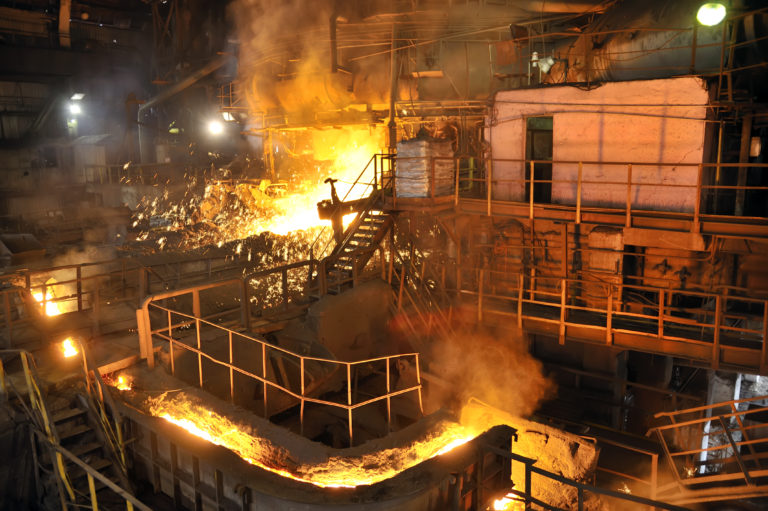
Galati restarts blast furnace, restructuring plan talks continue
Liberty Galati has restarted pig iron production at blast furnace no.5, after an almost year-long stoppage, with liquid steel output to begin by the weekend and then continuous casting and rolling next week, Kallanish notes.
In the first two weeks, average daily production is expected to be 3,800 tonnes of hot metal, equivalent to approximately 4,300 t/day of steel. This will gradually increase to 5,500 t/d of hot metal, equivalent to 6,500 t/d of steel, to reach the break-even point, Galati says.
Parallel to the production restart, negotiations continue with Liberty Galati’s approximately 1,200 creditors for the approval of the steelworks’ restructuring plan, which is expected to be validated by the Galati Court by 5 July.
Galati’s action plan “aims to achieve a positive Ebitda over the next two years, expand the order portfolio in strategic industries such as defence, infrastructure, construction, and shipbuilding, and improve operating costs. The company is also implementing initiatives to preserve the value of Romanian assets, monetise non-core assets such as real estate, and identify new funding sources,” says Remus Borza, president at EuroInsol, the insolvency advisors working with Galati on its restructuring process.
“Steel demand has begun to stabilise, supported by the European Union’s trade measures, strategic support, and the CBAM regime,” Liberty Galati notes. “It is expected that the new EU-imposed quotas limiting imports, as well as the future reconstruction of Ukraine, will positively influence steel demand – including for high-quality products made in Galati. The EU’s focus on the defence industry and other key sectors will further stimulate demand and pricing for steel in the medium to long term.”
The steelmaker signed an agreement with the Romanian government in March to secure a €350 million ($377m) working capital loan from Romania’s Exim Bank to finance raw materials supply. It initially set a deadline of 22 April for the production restart.
Adam Smith Poland

European HRC prices slide in recent deals
Offers from mills in Northern Europe for HRC with July lead times were heard at €620-650 ($707-742) per tonne ex-works or delivered
Italy-origin coil was offered to Germany at €630 per tonne delivered.
Buyers’ estimations of tradable values were heard at €590-620 per tonne ex-works.
Several buyers reported a transaction from one major mill in the region around €600 per tonne delivered in Germany, which nets back to about €585-590 per tonne ex-works, but it was not confirmed by the seller.
Another source said the same deal was done at €595 per tonne delivered.
“Before this year’s end, we will see more price drops. Demand is just not there, US imposes 50% tariffs on steel, CBAM is approaching. [There’s] no light in the end of the tunnel,” a buyer in Germany said.
As a result, Fastmarkets’ calculation of the daily steel hot-rolled coil index, domestic, exw Northern Europe was €612.50 per tonne on Wednesday, down by €14.38 per tonne compared with €626.88 per tonne on Tuesday June 3.
The index was down by €16.25 per tonne week on week and by €42.50 per tonne month on month.
In Italy, meanwhile, Fastmarkets’ daily steel hot-rolled coil index, domestic, exw Italy was calculated at €593.13 per tonne on Wednesday, down by €3.54 per tonne from €596.67 per tonne on the previous day.
The Italian index was down by €6.87 per tonne week on week and by €30.00 per tonne month on month.
Offers from domestic mills were heard at €590-600 per tonne ex-works on Wednesday.
Estimates of tradable values were heard at €580-600 per tonne ex-works.
In the secondary market, 4 mm HR sheet was traded at €660-580 per tonne CPT.
Sources reported softer import offers in the week to Wednesday.
Notably, suppliers from Indonesia reduced offers to €490-500 per tonne CFR to Italy, compared with €520 per tonne CFR at the end of May.
Despite attractive prices, no fresh deals for Indonesian coil was heard so far.
“Italian buyers just received tonnages from Indonesia ordered earlier and [are testing] the quality,” a buyer in Southern Europe said.
Lower offers were also heard from India — around €535-540 per tonne CFR to Italy, compared with €550-560 per tonne CFR in end-May.
Turkey-origin coil was offered at an average price of €530-545 per tonne CFR duty paid to Italy.
Published by: Julia Bolotova
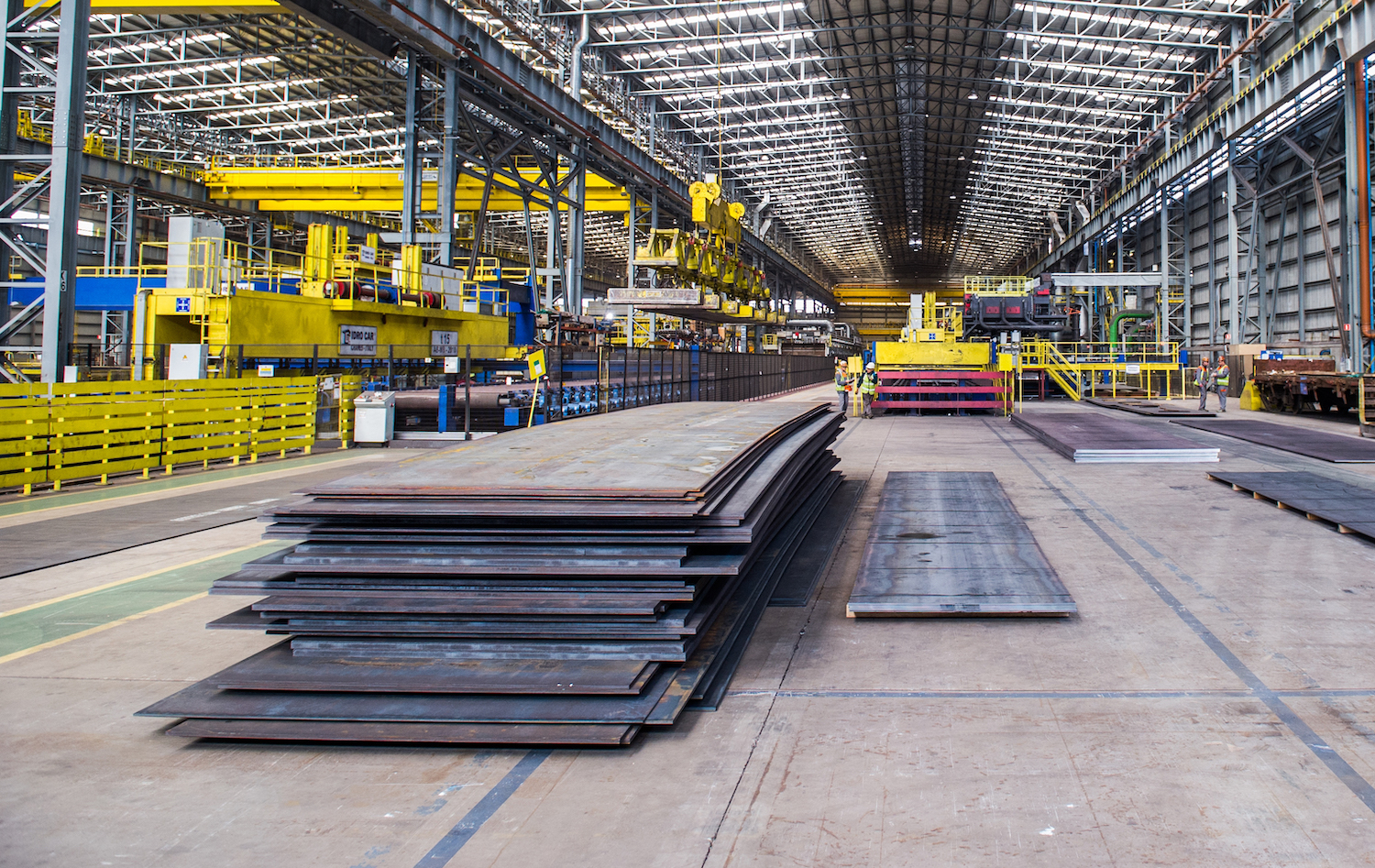
Italy heavy steel plate prices widen downward, European import prices rise on changes to quota rules
Meanwhile, imported plate prices in both northern and southern Europe rose during the pricing session, with market sources attributing the increases to adjustments in the region’s steel safeguard measures that were introduced in April.
Italy
Heavy plate prices in Italy were under downward pressure in the week, with limited buying and weak demand weighing on the market.
Fastmarkets’ weekly price assessment for steel domestic plate, 8-40mm, exw Southern Europe, was €610-630 ($697-720) per tonne on June 4, widening downward by €10 per tonne from €620-630 per tonne on May 28.
Most transactions were heard to be made at the lower end of the range, one buy-side source said.
A producer source told Fastmarkets that prices for booked or offered material depended on individual mills’ order books, with lower prices offered by mills with thinner order books to attract business.
Meanwhile, import offer prices were at higher levels following new EU steel quota caps introduced on April 1, to remain in force until June 30, 2026.
New measures include a reduction in the annual liberalization rate to 0.1% from 1%in the EU’s steel safeguard measures, tightening import controls, as well as new caps per country over the tariff-rate quota (TRQ) volume initially available in each quarter.
The same producer source said that significant import tonnages for South Korean and Indonesian material have been affected by the new measures.
Indonesian, Indian and Brazilian imported material was offered at €610 per tonne CIF in the week.
Fastmarkets’ weekly price assessment for steel plate (8-40mm), import, cfr main port Southern Europe, was €585-610 per tonne on Wednesday, up by €10-25 per tonne from €575-585 per tonne a week earlier.
And Italian import prices for slab feedstock also widened downward due to the greater availability of cheaper Russian slab in the market.
Northern Europe
In Northern Europe, the domestic commodity-grade steel heavy plate market remained stable, but sources said that the market was still facing weak demand and sluggish trade.
“Northern European prices are always higher versus prices in the south, but even [in the North] prices are under [downward] pressure,” a third market participant said.
Fastmarkets’ weekly price assessment for steel domestic plate, 8-40mm, exw Northern Europe, was €660-700 per tonne on Wednesday, stable week on week.
Imported plate prices in the Northern European market also increased along with Italian imports, with Indonesian offers to Spain reported at €630 per tonne CIF during the week.
Published by: Holly Chant