


Polish rebar prices rise amid pick-up in domestic demand, with imports limited by weaker zloty
Most Polish mills were aiming to sell May production rebar at 2,700 zloty ($703) per tonne CPT, with only one small supplier heard offering the material at 2,600 zloty per tonne CPT, sources said.
The offers from the small supplier were not considered as indicative of the wider market because it does not provide a full range of rebar specifications, but it still had some impact on the Polish market, Fastmarkets understands.
Most market participants estimated the tradable market level at 2,650-2,700 zloty per tonne CPT.
Fastmarkets’ weekly price assessment for steel reinforcing bar (rebar), domestic, cpt Poland was 2,600-2,700 zloty per tonne on Friday, up by 70 zloty per tonne from 2,600-2,630 zloty per tonne on April 4.
“Demand looks much better now compared with two weeks ago,” a distributor source told Fastmarkets, adding that the improvement was due to seasonal factors.
Germany, which until recently was actively exporting rebar to Poland has now halted shipments to focus on its own domestic market.
One leading German rebar supplier has yet to resume operations since stopping production in December.
And a second German rebar producer, whose main production capacities are located close to the Rhine river, has reduced its output due to struggling to secure scrap supplies because transportation costs have increased due to low water levels in the river, sources told Fastmarkets.
The weak Polish zloty has also made imports more expensive. According to the OANDA currency converter, €1 was worth 4.25 Polish zloty on April 11. In comparison, on March 11, €1 was equivalent to 4.19 Polish zloty.
“A rebar price at 2,700 zloty per tonne CPT is not that high, considering the current exchange rate. Mills could easily sell at this level amid the uncertainty related to the exchange rate and limited supplies from Germany to Poland,” a producer source told Fastmarkets.
The source said that Poland was now exporting rebar to Germany.
In terms of other imports, a Lithuanian distributor was rumored to have purchased 35,000 tonnes of rebar from Turkey and is now offering the volumes to Poland at €610 ($661) per tonne DAP, Fastmarkets understands. However, the transaction could not be widely confirmed by the time of publication.
Rebar from Ukraine was on offer to Poland at €575-580 per tonne delivered on the border.
Wire rod
Polish domestic prices for low-carbon drawing-quality wire rod also increased slightly in the week to Friday, sources told Fastmarkets, with Polish mills offering the material at 2,850-2.950 zloty per tonne CPT.
Sources estimated the tradable market level at 2,770-2,850 zloty per tonne CPT.
Fastmarkets’ price assessment for steel wire rod (drawing quality), domestic, delivered Poland was 2,770-2,850 zloty per tonne on Friday, up by 20 zloty per tonne from 2,750-2,850 zloty per tonne on April 4.


European HRC prices stable amid cautiously positive sentiment
Transaction prices, however, remained below the targeted offer levels by producers, Fastmarkets understands.
German mills continued offering June-July delivery HRC at €670 ($743) per tonne ex-works.
A major Benelux-based mill was aiming for €670-680 per tonne ex-works for coil with June-July lead times, industry sources told Fastmarkets.
A leading integrated European steelmaker was still offering HRC at €700 per tonne ex-works or delivered, depending on location.
Italy-origin coil was heard offered to Germany at €680 per tonne delivered.
Buyer sources, however, estimated the tradeable market price at €640-660 per tonne ex-works.
Some low-tannage deals were reported at €650-660 per tonne delivered Germany, Fastmarkets understands.
“No trading is happening anywhere near €700 [per tonne for HRC],” a Benelux-based buyer source told Fastmarkets.
“Current momentum in the HRC market is not demand-driven. But the situation with imports and limited supply at some mills in the second quarter supported domestic prices,” a second buyer source based in Germany said.
As a result, Fastmarkets calculated its daily steel hot-rolled coil index domestic, exw Northern Europe at €654.38 per tonne on Friday, down marginally by €0.20 per tonne from €654.58 per tonne on Thursday April 10.
The Northern European index was up by €2.55 per tonne week on week and by €18.55 per tonne month on month.
Meanwhile, in Southern Europe, Fastmarkets’ daily steel hot-rolled coil index domestic, exw Italy was calculated at €631.67 per tonne on Friday, up by €0.42 per tonne from €631.25 per tonne on Thursday.
The index was up by €4.17 per tonne week on week and by €11.67 per tonne month on month.
Domestic HRC prices in Italy have not show the same growth momentum as in Northern Europe recently. Sources said this was mainly due to muted downstream demand and buyers’ higher inventory levels.
The latest domestic offers for HRC with delivery in four to five weeks were heard at €660-670 per tonne delivered, equivalent to €650-660 per tonne ex-works.
An integrated European mill was still offering June-delivery HRC in the Italian market at €680-700 per tonne delivered, Fastmarkets understands.
However, no major transactions were heard in the Italian market, with most buyers estimating the tradable market level at €620-630 per tonne ex-works.
The market for imported HRC remained largely quiet with no fresh offers or deals heard in the market.

Thyssenkrupp may sell distribution arm, sources say
Earlier this week, international media reported Thyssenkrupp’s intention to sell its distribution arm, Thyssenkrupp Material Services, as a part of a major restructuring effort intended to increase efficiency by divesting less profitable parts of the company.
“Our goal is to transform Thyssenkrupp into a high-performance and sustainable company with a portfolio of sectors geared to profitable growth,” the company’s spokesperson told Fastmarkets on April 11. “We want every single Thyssenkrupp business to develop in the best possible way and to achieve a sustainable competitive position.
“The declared aim is to generate a permanently positive value and cash flow contribution for the group, and a reliable dividend payment to our shareholders,” the spokesperson added.
“We will continue to pursue our strategy, with a focus on the separation of the Steel and Marine divisions. The primary aim for all sectors is to increase growth and performance. This may include growth through partnerships and portfolio activities, provided this makes sense strategically and technologically,” the spokesperson said.
In August 2024, the company sold a 20% share in its steel business to a Czech private energy company, and was discussing the sale of a further 30% stake.
Thyssenkrupp Materials Services is the group’s trading arm, offering a wide range of processing and logistics services, and employing around 16,000 people. In the fiscal year 2023/24, Thyssenkrupp Materials Services’ adjusted earnings before interest and taxes (EBIT) was €204 million ($231 million). The division’s sales for the same period were €12.1 billion.
By 2030, Thyssenkrupp, which is the largest steelmaker in Germany, intends to cut steel output by 2.5 million tonnes per year, with 11,000 jobs likely to be eliminated by the fundamental changes taking place across the European steel market.
Thyssenkrupp is currently building a 2.5 million tpy DRI module in Duisburg that was expected to have capacity for around 5 million tpy of low-CO2 steel by 2030.
In March 2025, Thyssenkrupp put on hold a hydrogen tender for its green steel plant due to elevated prices, but said that it was still committed to the Duisburg site’s green transformation.
Crisis in European steel market
According to the Organization for Economic Co-operation & Development (OECD), the nominal crude steelmaking capacity in Europe is well over 200 million tonnes per year, but actual output volumes have been lagging far behind that in recent years.
In 2022, crude steel production across Europe amounted to 136.30 million tonnes, down from 152.60 million tonnes in 2021, according to data from the World Steel Association (worldsteel). The decline was due to massive output cuts that were implemented by European mills in the third and fourth quarters of 2022, due to deteriorating demand and falling steel prices.
In 2024, steel output rebounded slightly to 129.5 million tonnes compared with 126.3 million tonnes in 2023, according to worldsteel. But the total volume was still below the 159.4 million tonnes recorded pre-Covid in 2019.
Steel production in Germany amounted to 37.23 million tonnes in 2024, up by 5.2% from 35.4 million tonnes in 2023.
But despite that slight rebound, steel production in Germany remained lower, and has been below 40 million tonnes for three years in a row, German steel federation WV Stahl said.
Earlier this week, Dutch steelmaker Tata Steel Nederlands (TSN) added to the problems in the European steel sector when it announced plans to undergo a large-scale transformation that will lead to the loss of about 1,600 jobs at its IJmuiden facility.
In March this year, the European Commission presented a Steel and Metals Action Plan to support the struggling industry, but it remained to be seen how the plan will be implemented and what results it will bring.
So far, the European Commission has focuses on tightening trade policies to protect the local market from unfair imports.
On April 1, the Commission introduced new, tighter, steel safeguard measures to support the domestic steel sector.
And from April 7, the EU has imposed anti-dumping duties on imports of hot-rolled coil from Egypt, Vietnam and Japan.
Europe’s steel sector was still at the heart of several regional economies, with approximately 500 production sites across 22 EU member states, the Commission said. According to EU data, the European steel sector contributes around €80 billion to the bloc’s gross domestic product and supports more than 2.5 million jobs.
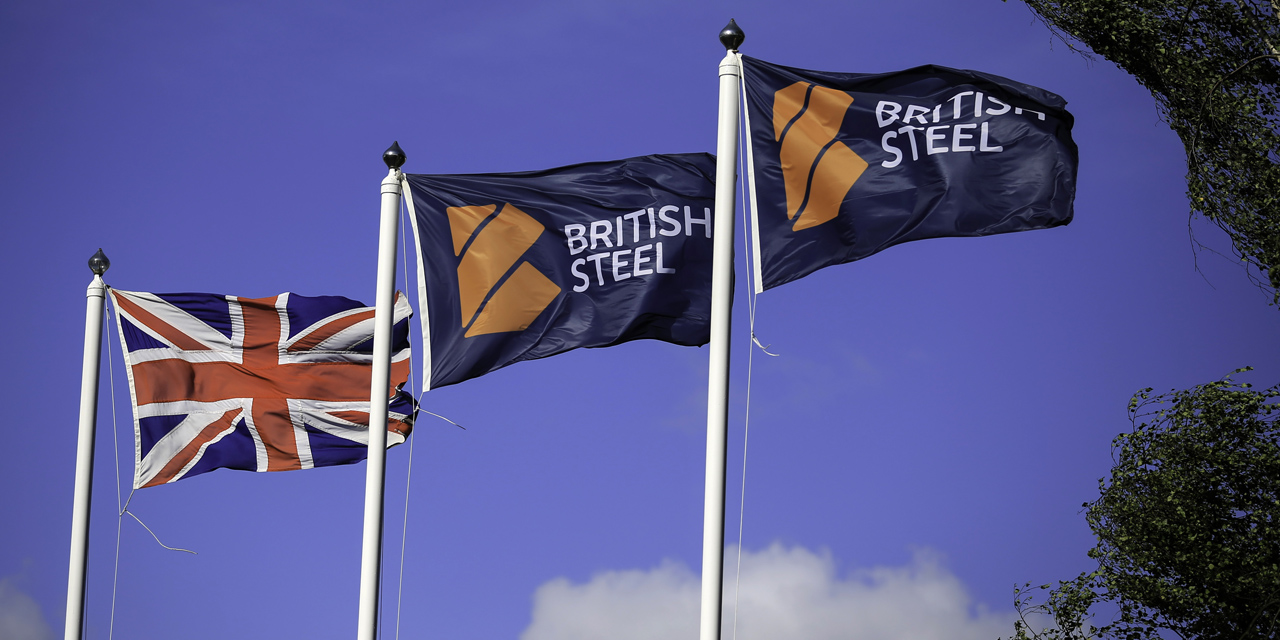
UK government takes control of British Steel
The UK government has taken control of British Steel after the recalling of Parliament for a rare Saturday sitting on 12 April to debate its Steel Industry Bill, in a bid to keep blast furnaces alight at Scunthorpe, Kallanish reports.
The Steel Industry (Special Measures) Bill, which was approved by both parliamentary houses and became law after being granted Royal Assent, is not yet full-blown nationalisation, as ownership of the assets has not been transferred.
Jonathan Reynolds, the Secretary of State for Business and Trade, said during Saturday’s debate that the government had been negotiating in good faith with British Steel parent company Jingye. It had made a “generous” offer “that included sensible, common-sense conditions to protect the workforce, protect taxpayers’ money, and create a commercially viable company for the future,” he observed. “Despite our offer to Jingye being substantial, it wanted much more – an excessive amount, frankly.”
The offer was likely an improvement on the £500 million ($654m) believed to have been offered by government in late March, which Jingye rejected.
“However, we remained committed to negotiation, but over the past few days, it has become clear that the intention of Jingye was to refuse to purchase sufficient raw materials to keep the blast furnaces running. In fact, its intention was to cancel and refuse to pay for existing orders. The company would therefore have irrevocably and unilaterally closed down primary steelmaking at British Steel,” Reynolds added.
He also highlighted the government had offered to purchase the raw materials to keep the BFs going. However, “a counter-offer was instead made by Jingye: that we transfer hundreds of millions of pounds to it, without any conditions to prevent that money, and potentially other assets, being immediately transferred to China,” Reynolds noted.
“Jingye also refused the condition of keeping the blast furnaces maintained and in good working order,” he added.
Meanwhile, Reynolds said that if there was a transfer of ownership, the government would pay fair market value for the assets, but “in this case, the market value is effectively zero”.
He also noted that Jingye’s “intention has been to keep the downstream mills … and supply them from China, rather than from Scunthorpe.”
“A transfer of ownership to the state remains on the table. It may well, at this stage, given the behaviour of the company, be the likely option,” Reynolds continued.
However, he added that government’s “aspirations for British Steel remain a co-investment agreement with a private sector partner to secure a long-term transformation … The state cannot fund the long-term transformation of British Steel, nor would it want to.”
British Steel previously announced its transition to electric arc furnaces would cost £1.2 billion ($1.6 billion).
Gareth Stace, UK Steel director general, welcomed the new legislation. “A blast furnace is a dynamic piece of machinery. If the fires go out, it is nigh on impossible for it to be brought back to life – so a solution to keep them running is time-critical. It is, therefore, vital that the blast furnaces remain operational during negotiations, providing some security and breathing space in the short term, and this legislation will ensure this can happen,” Stace asserted.


Hoberg & Driesch, Mannesmann Precision Tubes intensify collaboration
German steel tubes distributor Hoberg & Driesch and Salzgitter AG’s tubemaking subsidiary Mannesmann Precision Tubes have agreed to step up their long-standing partnership.
The move follows Hoberg & Driesch’s acquisition of parts of the tube distribution business from Salzgitter Mannesmann Stahlhandel GmbH.
The objective of the intensified collaboration is to further optimise the interaction between manufacturer and distributor, especially in the field of precision tubes, Hoberg & Driesch says. The partners plan to work together more closely on both stockholding and project business for end customers.
“Together, we can further develop both the stockholding business and end-user project business in a targeted manner, allowing us to offer even more tailored solutions,” says Hanns-Jörg Westendorf, chief executive of Hoberg & Driesch.
The company operates ten locations in 13 countries, with an inventory of 90,000 tonnes.
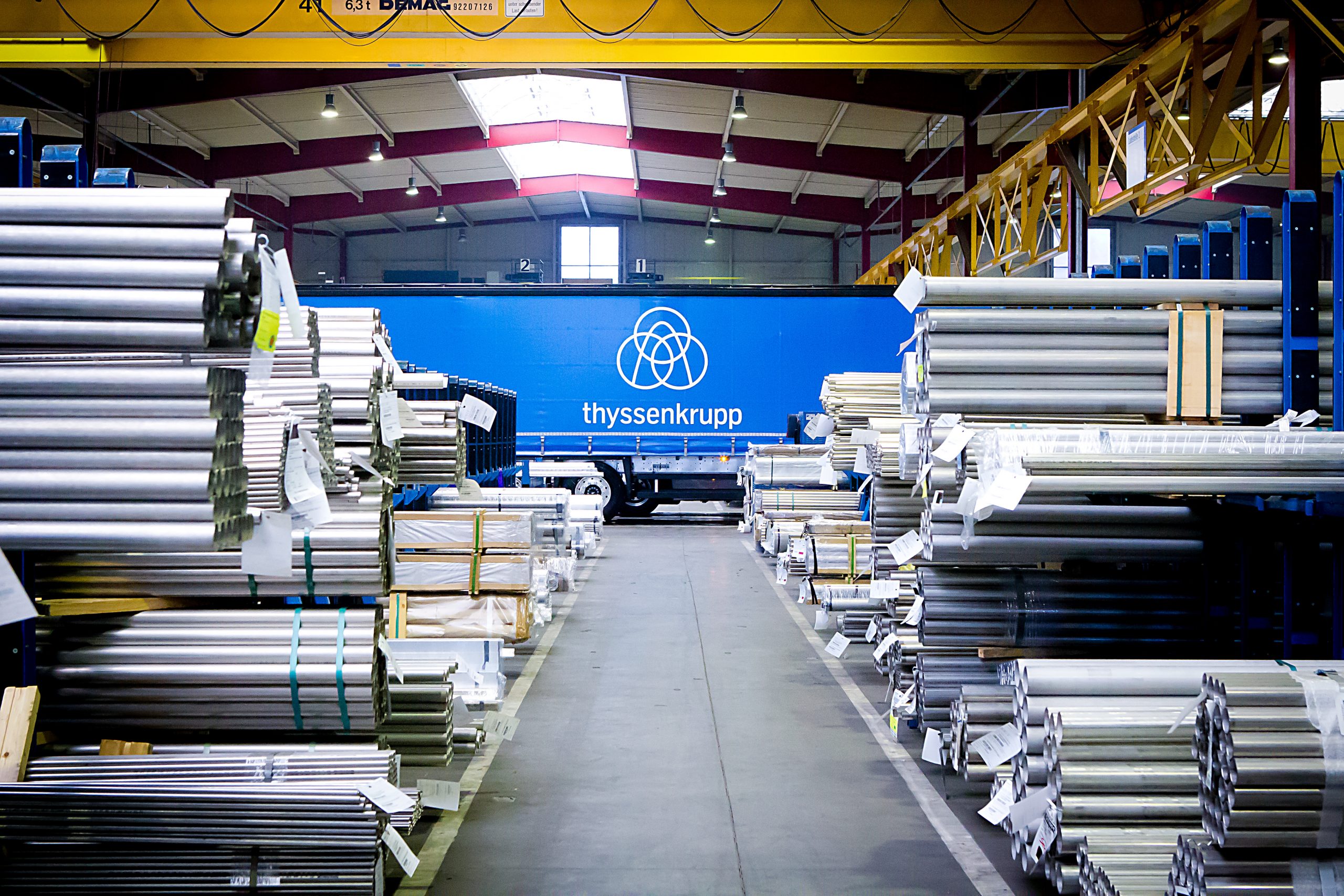
Thyssenkrupp could sell Materials Services division
Germany’s thyssenkrupp AG is rumoured to be considering divesting its steel and materials distribution division, thyssenkrupp Materials Services.
The multi-industries group has for years strived to separate from its steel production division, tk Steel Europe. It is now in the process of selling a 50% stake in tk Steel to Czech group EPCG, which has already acquired 20%.
While tk Steel Europe has long been a problem child for the group, tk Materials Services has been performing reasonably well. It is one of the biggest steel distributors in Europe and beyond, with more than 300 sites across all continents, and an order volume of €12.1 billion ($13.5 billion) in the last fiscal year.
Good earnings in its international supply chain business led to an increase in adjusted Ebit last fiscal by 15% to €204 million. Tk Steel, on the other hand, posted negative Ebit of €770m.
If true, the divestment would sever thyssenkrupp’s ties to its history as a steel company, but would also generate cash for the other miscellaneous activities of the group.
Speculation over the sale was reported by Bloomberg earlier this week. In a statement sent to Kallanish, thyssenkrupp AG did not confirm the plan but did not explicitly deny it either.
A German industry observer tells Kallanish he heard of the rumour weeks earlier, with €2 billion touted as a target price, The price is fair in view of the division’s assets, he notes. Although he doubts the offer would lure too many bidders, he has heard of interest being expressed by Asian companies.

Turkish exporters must heed EU trade adjustments
Turkish steelmakers must remain alert and adaptive to an EU trade landscape that is rapidly evolving and aiming to achieve sustainability and fair competition. This includes new carbon regulations, evolving trade defence instruments (TDIs), and tighter origin rules, according to Van Bael & Bellis trade law expert Fabrizio Di Gianni.
The EU’s Clean Industrial Deal (CID) aims to make decarbonisation economically viable, targeting energy-intensive sectors like steel. Central to this initiative is the Carbon Border Adjustment Mechanism (CBAM), which will replace free allowances under the EU Emissions Trading Scheme (ETS) starting in 2026.
CBAM will impose carbon costs on imports into the EU, increasing the cost burden on carbon-intensive products while targeting practices such as product modifications and carbon “greenwashing”, Di Gianni said at this week’s EUROMETAL Steel Day and 10th YISAD Flat Steel Conference in Istanbul attended by Kallanish.
A full CBAM review is expected in the second half of 2025, which may expand the mechanism’s coverage and ease administrative burdens for small and medium-sized firms, while still accounting for over 99% of emissions.
The CID also includes a Steel and Metals Action Plan focused on six pillars, including carbon leakage prevention, innovation, and competitiveness. Alongside CBAM, the EU is ramping up trade defence enforcement – intensifying market surveillance and preparing to launch AD/CVD investigations based on potential injury, rather than proven harm. A revision of the Lesser Duty Rule is also on the table, potentially enabling higher tariffs, Di Gianni noted.
Additionally, safeguard measures have been tightened, significantly affecting Turkish exports, particularly in high-impact product categories like 1A (hot rolled coil) and 5 (organic coated steel).
Among the most significant developments are proposed changes to origin rules. Traditionally, origin has been determined based on the last substantial transformation of a product. However, the EU is now considering a shift to a “melted and poured” regime, where the origin would be linked to the initial smelting location.
For example, Chinese-origin HRC processed into final goods in Turkey could still be classified as Chinese for TDI purposes. This would undermine traditional global value chains and poses serious challenges for Turkish steel processors, Di Gianni commented.
He also emphasised the EU’s staged sanctions framework means steel products processed from Russian materials face growing restrictions. Turkish companies must carry out enhanced due diligence in sourcing and exports to avoid becoming involved – knowingly or unknowingly – in activities considered circumvention under EU sanctions legislation.
As of 1 April 2024, imports into the EU are banned if Russian-origin billet has been transformed into steel rod (HS 7215) and then into steel wire (HS 7223). From 1 October 2028, the ban will extend to HRC of alloy steel (HS 7225 and 7226) and steel tubes (HS 7306) processed from Russian slab.
However, not all forms are covered. Russian-origin pig iron transformed in Turkey from slab is currently exempt and may still be imported.
These sanctions bring additional compliance risks for Turkish companies, particularly related to inadvertent circumvention via transshipment or supply chain diversion, Di Gianni noted.
Restrictions on scrap exports are also under consideration by the EU, which could limit third-country access to EU scrap.

Assofermet: Italian steel market’s weak recovery in March disrupted by tariffs
March and the first days of April were characterized by strong uncertainty in the Italian steel market due to the introduction of import tariffs by the US. This is what emerges from the monthly analysis of Assofermet Acciai, the steel division of Assofermet, the association representing Italian distributors of scrap, raw materials, and steel products.
Starting from flat products, Assofermet described an uptrend in March. The slight recovery of consumption, however, has been jeopardized by the possible outcome of a global trade war. Moreover, new EU safeguard policies – which hamper steel inflow into the territory – may divert import volumes, hence generating possible price increases. “Since they are dealing with low demand, we have yet to understand if finished steel users will be able to support such rises without losing competitiveness in the international market,” Assofermet stated. End-users’ sales volumes, in fact, are still suffering from the automotive and white goods crisis, and there are no signs of a possible recovery in the month of April.
In the stainless steel segment, both longs and flat products are experiencing low levels of demand. Offers, however, are still abundant and this keeps prices under pressure. Nonetheless, Assofermet reports weak signals of stabilization, which could suggest a gradual rebalance. The scenario is rather complicated, Assofermet concluded, but “it offers some ease for those who will be able to be resilient to the market’s evolutions”.
As for warehouses, March recorded a negative performance overall, with the exception of seamless pipes. Steel sheets, on the other hand, seem to be the most affected category. The prospects, unfortunately, are not bright: with the introduction of new tariffs by the United States, some sectors such as mechanics could decide to revise their investment plans by reducing the volumes purchased in the face of a foreseeable drop in turnover due to the reduction in exports.
Finally, in the tinplate segment, there was a recovery in demand in Europe due to the introduction of a 20 percent cap for each country in the “Other Countries” quota. “Some tin coating plants, which remained inactive throughout last year, are gradually returning to full operation,” Assofermet reported.

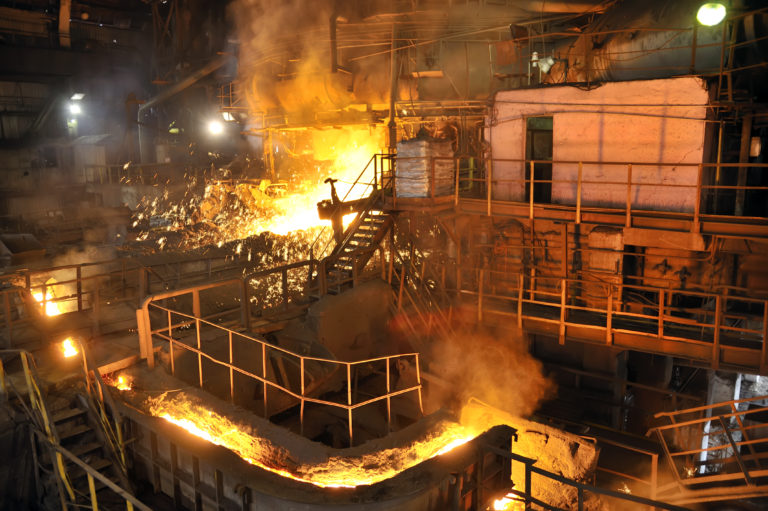
Romania’s Liberty Galati plans to restart BF No. 5 in late April
Following the loan received from the government, Romania-based Liberty Galati plans to restart its blast furnace No. 5 on April 22 after the Easter vacation.
The mill was shut down for maintenance and has remained closed due to poor market conditions since the beginning of summer last year.
“Together with a strong and dedicated team of steelmakers, we are preparing to restart production operations, which is a real challenge, as the steel industry is facing the most difficult market conditions I have encountered throughout my career, comparable to the 2008 financial crisis and the 2015 steel industry crisis. However, we know how important Romanian steel is for the national economy and for the community in Galați, which is why we are making every effort to ensure the steel needs of Romania’s strategic industries. With the support of the team, I am confident that we will restart primary production operations after Easter, on April 22,” said Cornel Moisescu, head of primary at LIBERTY Galați.
Furthermore, according to sources, Liberty Galati has started to collect flat steel orders for May production. However, most purchasers are hesitating to buy because of the uncertainty that has persisted for months.

Romania’s rebar spot prices rise further, but sole rebar producer’s prices remain firm
This week, the upward trend in Romania’s rebar spot market has continued, while the sole Romanian sole rebar producer and the wire rod spot segment have kept offers stable from the previous week.
Although the start of the new EU quota period resulted in a rise in pricing, especially in the rebar segment, this increase did not translate into increased demand and trading volumes remain limited in the domestic market.
According to market participants, as the Easter weekend approaches, prices may fall slightly since purchasers, seeing big price increases, are less likely to want to buy at the current prices.
The sole domestic mill’s rebar price is stable week on week at €590-605/mt ex-works. On the other hand, Romanian rebar traders have increased their offers by €10-25/mt week on week to €610-630/mt ex-warehouse.
In the wire rod market, many traders have maintained their pricing at €580-595/mt ex-warehouse from last week as demand has remained unsupportive of an increase.
Meanwhile, in the import market, while most offers remain flat and no purchases have been concluded since last week, Bulgarian suppliers have increased their offers. According to sources, Bulgaria has raised rebar offers to roughly €635-640/mt CPT, up from €610-620/mt CPT last week.
However, Egyptian suppliers have kept rebar and wire rod prices unchanged week on week at €550-555/mt CPT and €560-565/mt CPT, respectively. Furthermore, Greece’s rebar and wire rod offers remain stable week on week, at €620-625/mt CFR and €610-615/mt CFR, respectively.
In contrast, this week Turkey’s average rebar price has fallen by €10-15/mt to €540-560/mt CFR Romania, based on a €1 = $1.11 exchange rate and freight costs of around €25-30/mt.