

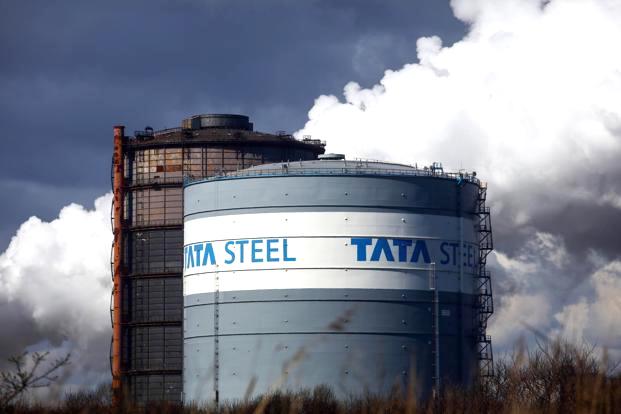
Tata Steel UK signs contracts for pickling line
Tata Steel UK has signed contracts with Clecim and ABB Limited to supply the pickling line for its Port Talbot site in Wales, Kallanish learns.
This further progresses its ongoing £1.25 billion ($1.65 billion) transformation of the site, which envisages a 3 million tonnes/year capacity electric arc furnace commissioning by late 2027/early 2028.
As leader of the consortium, global supplier of steel processing lines and rolling mills Clecim, together with global technology company ABB, will supply essential equipment and expertise needed to power the site’s brand new 1.8m t/y pickling line.
The new line will process hot rolled coil to eliminate oxide scale formed during the steel rolling process, ensuring a clean surface for further processing, improving product quality, and enhancing the bonding of coatings or finishes.
Tata Steel chief executive Rajesh Nair says: “Our new and advanced pickle line will form a major part of our green steelmaking facility at Port Talbot, ensuring we can supply downstream businesses with the high-quality, low CO2 steel products our customers are demanding.”
“This collaboration represents another critical step toward securing a sustainable future for steel production in South Wales – made possible by the expertise and innovation provided by these best-in-class business partners,” he adds.
Clecim will design and supply mechanical and process equipment, while ABB will deliver electrification and automation technology required for the cutting-edge pickle line. With the pre-engineering phase of the project completed, both companies are now moving forward with detailed engineering.
Clecim chief executive Thomas Comte comments: “We are proud to help pioneer this project by combining engineering, sourcing, and mechatronic products manufactured in France, to make this phase of Port Talbot’s transformation a reality.”
“This achievement is a testament to the strong partnership we’ve developed with Tata Steel and ABB over the past several months. Together, we are working in an agile and innovative manner to successfully install the new pickle line,” he concludes.


Global stainless steel production grew by 7% y-o-y in 2024
Global stainless steel production in 2024 increased by 7% compared to 2023 to 62.621 million tons. This is evidenced by the data of the non-profit organization World Stainless Association.
Over the year, Europe, including Ukraine, increased stainless steel production by 1.5% y/y – to 6.09 million tons. The United States increased its output by 6.9% y/y over 12 months – to 1.95 million tons.
In Asia, excluding China and South Korea, stainless steel production last year increased by 6.4% y/y – to 7.32 million tons, and China produced 39.44 million tons of stainless steel over the same period, up 7.5% y/y.
Other countries, such as Brazil, South Africa, Indonesia, South Korea, and the Russian Federation, increased stainless steel production by 9.2% y/y – to 7.82 million tons.
In the fourth quarter of 2024, global stainless steel production increased by 4.9% q/q – to 16.45 million tons.

Europe decreased production by 7.4% q/q – to 1.39 million tons, while the United States decreased by 8.5% q/q – to 441 thousand tons. China increased its production by 8.5% q/q – to 10.74 million tons, Asia (excluding China) – by 8.5% q/q, to 1.93 million tons, and other countries – by 3.7% q/q, to 1.95 million tons.
Thus, the quarterly growth was provided by Asian countries, in particular, China, while other regions showed a decline in production in the fourth quarter. Europe and the United States showed the lowest year-on-year figures, while China and Asia showed the highest.
As GMK Center reported earlier, global stainless steel production in 2023 increased by 4.6% compared to 2022 to 58.4 million tons. Europe, including Ukraine, decreased its stainless steel production by 6.2% compared to 2022 to 5.9 million tons. The United States for the year decreased by 9.6% y/y – to 1.82 million tons, China – increased by 12.6% y/y – to 36.68 million tons.


Sev.en GI completes acquisition of Celsa Group subsidiaries
The Czech Republic-based investment group Sev.en Global Investments (Sev.en GI) has announced that it has successfully completed the acquisition of the UK- and Scandinavia-headquartered subsidiaries of Spain-based long steel producer Celsa Group, having reached an agreement with Celsa Group back in November 2024.
Within the scope of the acquisition, Celsa Nordic will be rebranded as 7 Steel Nordic, and Celsa Steel UK will become 7 Steel UK, both of which will be under the roof of 7 Steel. The combined steel production capacity of both mills, which offer several products including bars, sections, mesh, and wires, amounts to 2 million mt per year. They serve different industries such as shipbuilding, railway and wind energy generation.
Meanwhile, 7 Steel Nordic has a smelter and a rolling mill, while 7 Steel UK is the UK’s leading low-carbon construction steel producer and the largest scrap recycler. Its fully integrated operation consists of scrap collection, steel production, four scrap yards and 17 depots.
In addition, Sev.en GI stated that the acquisition will allow it to strengthen its position and to unlock new opportunities, while supporting innovation and the green transition.

Germany’s Salzgitter ends talks with consortium regarding its takeover
German steelmaker Salzgitter AG has announced that it has decided to end discussions with the consortium of GP Günter Papenburg Aktiengesellschaft and TSR Recycling GmbH & Co. KG regarding a potential takeover offer.
The decision was made based on significantly differing views on the current and future value of the company due to the positive impact expected from the incoming German government’s economic policy measures and its expanded performance program P28 launched with a savings target of €500 million.
“Salzgitter AG will remain an independent company. Under our expanded P28 performance program we launched additional measures to strengthen our competitiveness,” Gunnar Groebler, CEO of Salzgitter AG, said.
In January this year, the consortium increased its bid to acquire the company to €18.50 per share, valuing Salzgitter at approximately €1.1 billion, as SteelOrbis previously reported.

France’s Vallourec to sell welding subsidiary Serimax
France-based pipe manufacturer Vallourec has announced that it has entered into exclusive negotiations with local investment company Aldebaran for the sale of its subsidiary specializing in mechanized welding solutions, Serimax, for a value of €79 million.
The sale is expected to be completed in the next few months.
This transaction is part of the company’s New Vallourec plan that focuses on its core business as a premium seamless tubular solutions provider. As part of the New Vallourec plan, Serimax has undergone a rapid transformation and is now operating profitably as a standalone company.
Serimax generated approximately €105 million of revenues in 2024.
Raw materials secured to keep British Steel BFs alight, UK govt says
Operations at British Steel were taken over by the UK government over the past weekend following failed negotiations with Chinese owner Jingye over the future of the plant.
“After intensive work over the weekend, the government has secured coke and iron ore pellet for the BFs, and is confident that there will be enough materials to keep the furnaces burning,” the UK Department for Business and Trade (DBT) said on Tuesday.
At Immingham, a major port on the east coast of England, raw materials shipped from the US have been unloaded and transported to the site “following the government settling payment for them,” the DBT said.
“The materials are enough to keep the blast furnaces running for the coming weeks, with officials continuing to work at pace to get a steady pipeline of materials to keep the fires burning,” it added.
A separate vessel with coking coal was on the way to the UK from Australia, the DBT said, adding that the cargo was “the subject of a legal dispute between British Steel and Jingye over the weekend that has now been resolved” and has been purchased using the existing DBT budget.
“It’s a huge relief that this crucial and overdue shipment of coke arrived at Immingham this morning,” Alasdair McDiarmid, assistant general secretary of trade union Community, said on April 15. “We thank the prime minister and business secretary for their decisive action to secure the raw materials required to keep the blast furnaces [in operation].”
British Steel has installed capacity for 4.3 million tonnes per year of pig iron, and four BFs. It can manufacture a wide range of long steel products, including rails, wire rod, sections and slabs.
Of the four BFs at the site, only two were still operational, but a lack of critical raw materials in stock – iron ore and coking coal – put them on the verge of a complete and potentially very costly shutdown.
If temperatures in the BF were to fall below critical levels, it could disrupt the smelting process, and result in damage to the furnace lining, blockages to inlets and outlets, and difficulties in restarting the furnace. The “cold” furnace would probably need extensive repairs before it could be reheated safely.
EAF future awaits?
Should the two operational BFs be preserved and remain in operation, thoughts will turn to the future of the Scunthorpe plant, which industry sources still expected would make the transition to become a greener and recycling-dependent electric-arc furnace (EAF) operation.
“There is now some demand for lower-emission steel, with some UK construction customers preferring to import EAF steel rather than continuing to use BF steel made in the UK,” a spokesperson for industry body UK Steel told Fastmarkets on Monday.
“Our energy costs are [among the] dearest in the world, so we will never be competitive in steel,” a major UK scrap processor said on Tuesday.
British Steel’s product mix was not sufficiently specialized to shield it from global competition, the same source said. He pointed out that Indian steelmakers can easily make large volumes of rail with lower costs for “compliance”, health and safety, and energy than in the UK.
Energy costs were also making the processing of scrap very expensive in the UK, he said, but added that British Steel moving to an EAF model would be a boon for scrap demand in northern England at a time when minimal volumes were being sold into the local market, with most UK scrap bought by export docks.
In March 2025, Jingye turned down £500 million ($661 million) in financial support, offered by the UK government, intended to support British Steel’s transition to green steel production by moving production toward the use of EAFs.
Wales-based Tata Steel accepted a similar £500 million offer in public funding from the UK government to develop a greener EAF-based steelmaking plant at Port Talbot in September 2024, with the company pledging to invest an additional £750 million.
The UK produced just 4 million tonnes of steel in 2024, down by 29% year on year from 5.6 million tonnes in 2023, ranking the country’s economy just 35th in the world as a steel producer, according to the World Steel Association.
At the same time, the UK imported 6.45 million tonnes of iron and steel products over the year, according to UK customs data cited by Global Trade Tracker.


European HRC prices broadly flat amid quiet market
Fastmarkets calculated its daily steel hot-rolled coil index, domestic, exw Northern Europe at €654.17 ($740.04) per tonne on Tuesday, up by €0.42 per tonne from €653.75 per tonne the previous day.
The Northern European index was down by €0.21 per tonne week on week, but up by €18.17 per tonne month on month.
Mills in Northern Europe continued offering June-July delivery HRC at €570-700 per tonne ex-works, industry sources told Fastmarkets.
However, trading in the region was largely quiet, with no significant transactions reported in the market.
Buyers’ estimations for the tradable market level for HRC in Northern Europe were at €640-660 per tonne ex-works.
“The market is quiet, we do not see any [increased] dynamics [in terms of buying]. [It] seems that customers are still evaluating [the current] situation, and demand is still not that big,” a producer source told Fastmarkets.
Another industry source told Fastmarkets that the uncertainty around the new US tariffs on aluminum and steel had a negative impact on the exports of different types of machinery from the EU.
This would also have some effect on the European HRC prices, which would probably stabilize around this level or even decrease slightly in the short run, according to the source.
However, prices would probably continue to increase in the second half of the year, considering the good order books of the European mills, the source added.
In Southern Europe, Fastmarkets’ daily steel hot-rolled coil index, domestic, exw Italy was calculated at €631.50 per tonne on Tuesday, down by €1.00 per tonne from €632.50 per tonne the previous day.
The index was up by €0.25 per tonne week on week and by €11.50 per tonne month on month.
Offers of HRC in Italy were hovering around €640-660 per tonne delivered, which would net back to €630-650 per tonne ex-works.
An Italian supplier was heard selling some HRC volumes at €605 per tonne ex-works, industry sources told Fastmarkets. But this price level was an exception, with most transactions being concluded at €620-630 per tonne ex-works.
Buyers’ estimations for the tradable market level for HRC in Italy were close to this level at €620-640 per tonne ex-works.
Regarding imports, India was heard offering HRC to Italy at $630-640 per tonne CFR.
Turkey’s offers of HRC to Italy stood at €580-590 per tonne CFR, including the anti-dumping duty, industry sources told Fastmarkets.
Julia Bolotova in Brussels contributed to this report.
European stainless coil prices decline
The European stainless flat steel market is experiencing a difficult period characterised by sluggish order intake and a downward trend in coil prices, according to stainless processors and service centres.
Several mills in Europe have reduced their prices for May delivery by approximately €20-30/tonne ($22-34), with order books remaining under pressure. A stainless steel producer is reportedly implementing a gradual weekly price reduction, with expectations for this trend to continue. The coil price increases in March did not yield the desired results, as buyers, facing market uncertainty and diminished demand, opted to reduce purchases, Kallanish notes.
Coil supply exceeds demand in Europe. According to one source, last year saw a supply and demand equilibrium, as both Acerinox and Outokumpu halted production amid social unrest.
A service centre in Italy reports its clients are engaging in minimal purchasing activity and continue to execute low-volume transactions, frequently on a back-to-back basis. Service centres are also buying limited quantities to address inventory gaps.
Multiple processors indicate first-quarter sales volumes align with those of Q1 2024; however, margins are experiencing pressure and, in some cases, are falling below cost. Efforts to raise sheet prices have encountered difficulties, with values remaining largely stable in the range of €2,550-2,620/t ex-works, contingent upon volumes and client specifications.
April and May are projected to experience a slowdown, attributed to the Easter holiday and multiple bank holidays in May, particularly in France. A service centre in northern Europe confirms the market is slow in Italy, France, and Germany, and there is no appetite for risk or speculation. The company is focusing on diversification, trying to stay away from commodity products where competition is tough and prices are under pressure.
European mills are quoting €2,450/t for stainless cold rolled coil for May delivery, inclusive of delivery costs. Hot rolled coil prices range from €130-150/t lower, based on volume.
Italian stainless flats prices remain subdued, at approximately €50/t lower than the broader European market. CRC pricing in Italy is at €2,380-2,400/t delivered. HRC in Europe stands at approximately €2,170-2,200/t delivered.
According to Italian steel trade association Assofermet’s April market note, demand for flat and long stainless steel products remains subdued in the country. Nonetheless, a potential rebalancing between supply and demand is anticipated for April. Increased focus on inventory management may limit price declines and help maintain margins.

German mills welcome incoming government’s strategy
German steel federation WV Stahl has welcomed in principle the signing of the “Coalition Contract” between the coalition partners forming the future German government. The association emphasises power prices and the associated grid fees are the top issue the new government must address.
The coalition of the conservative CDU party, social democrat SPD party, and the Green Party presented the agreement last week, outlining the issues it plans to tackle. Among the pledges is the reduction of power prices and grid fees.
This is a step in the right direction, but measures are needed to tackle basic market prices, which are too high in Germany to be internationally competitive. “What we need is a dedicated industry power price we can rely on,” Kallanish reads in the federation’s statement. It points to France and Italy as the models for this.
Another point of the Contract is that the parties intend to keep pushing the promotion of hydrogen. “We are especially pleased with the openness for a variety of hydrogen colours,” says WV Stahl managing director Kerstin Maria Rippel.
The coalition also pledges to promote the continuation of EU safeguard measures, which are imperative considering that one third of the steel used in the EU comes from third countries. Related to that, the federation hails the Contract’s clear message to protect from imports by means of the Carbon Border Adjustment Mechanism (CBAM). This needs to be widened to the larger value chain, as was worded in the EU’s Steel and Metals Action plan, Rippel notes.
WV Stahl furthermore underlines the coalition’s decision to consider steel scrap in the Contract, to facilitate the domestic supply of this important feedstock.
Last but not least, the statement addresses Germany’s Special Fund for Infrastructure that was announced a week earlier. WV Stahl warns that the money must be spent with a focus on strengthening domestic industry, and that the government needs to push ahead with creating lead markets for CO2-reduced products.

75 Jahre EUROMETAL: Die Zukunft der Stahldistribution im Fokus
EUROMETAL, die führende Stimme der europäischen Stahldistribution, feiert in diesem Jahr ihr 75-jähriges Bestehen mit einer hochkarätigen Konferenz in Luxemburg.
Unter dem Motto „Driving the Future of European Steel Distribution“ bringt die Veranstaltung am 2. und 3. Juli 2025 Entscheidungsträger und Expert*innen aus ganz Europa zusammen, um über die Zukunft der Branche zu diskutieren.
Die Jubiläumskonferenz bietet eine einmalige Gelegenheit, mit führenden Vertreter*innen aus den Bereichen Flachstahl-Servicezentren, Stahlhandel und Stahlvertrieb in den Dialog zu treten. Im Fokus stehen aktuelle Markttrends, politische Rahmenbedingungen, Innovationen entlang der Lieferkette sowie die künftige Rolle Europas in der globalen Stahlindustrie.
Was bietet die Veranstaltung?
- Exklusive Einblicke: Hochkarätige Keynotes von Branchenführern und internationalen Organisationen
- Vernetzung: Treffen Sie zentrale Akteure der europäischen und globalen Stahlwirtschaft
- Wissenstransfer: Diskutieren Sie über nachhaltige Strategien und digitale Transformation
- Feierlicher Anlass: Seien Sie Teil des 75-jährigen Jubiläums von EUROMETAL – einem Meilenstein für die Branche
Bestätigte Speaker:
- Henrik Adam – Tata Steel
- Guido Kerkhoff – Klöckner & Co
- Antonio Marcegaglia – Marcegaglia
- Anthony de Carvalho – OECD
- Axel Eggert – EUROFER
- Edwin Basson – World Steel Association
- Julian Verden – Stemcor
- Cosmin Bakai – Autoliv
- Alexander Julius – EUROMETAL
Jetzt anmelden und dabei sein, wenn Europas Stahlbranche die nächsten 75 Jahre in den Blick nimmt.
Mehr Informationen und Registrierung sind hier zu finden.
