


ArcelorMittal increases flat steel prices in Europe again
Notably, new HRC offer prices from ArcelorMittal with lead times in June-July were heard at €700 per tonne ex-works, or delivered, across Europe, sources said.
This is up from the producer’s previous offer price of €680 per tonne ex-works for HRC reported in March.
In February, the steelmaker did a similar move, raising prices in Europe by €30 per tonne.
ArcelorMittal’s press office does not usually comment on prices.
So far, the market has had mixed reactions to the new increase.
“The price increase is based entirely on the lack of imports [because of]… safeguard measures and domestic supply issues. Real demand is still slow,” a buyer in Germany said.
Meanwhile, other mill sources said that apparent buying did pick up recently after new safeguards measures were announced and provisional anti-dumping (AD) duties against Japan, Vietnam and Egypt were set.
On March 25, the European Commission announced the results of its steel safeguards review, with new adjustments to the current measures to come into force this Tuesday.
And on March 14, the Commission proposed to set provisional AD duty rates on HRC imports from Egypt, Vietnam and Japan, Fastmarkets reported.
In recent weeks, European HRC prices have been gradually increasing, with support from limited availability of imports and supply issues at some domestic suppliers.
“ArcelorMittal is doing what they have to do as market leaders. And we all know that HRC imports will face a bottleneck; alternatives, such as Indonesia and Malaysia, are not yet as reliable,” a trading source in Southern Europe said.
Order books at key suppliers in Germany and the Benelux area were reportedly satisfactory, so producers were in no hurry to sell material and felt no pressure to give discounts.
“Most major suppliers are comfortably booked and have little tonnages left for second-quarter delivery,” a mill source in northern Europe said.
“Demand has picked up in recent weeks — there is restocking, and considering the imports situation [new safeguards and anti-dumping against Vietnam, Egypt and Japan], many buyers opt for European HRC to mitigate risks,” a second mill source said.
But tradeable prices for HRC across Europe have remained far below ArcelorMittal’s target offers, sources said.
“Increasing [HRC] prices against weak consumption is unsustainable,” a second trader said.
Fastmarkets calculated its daily steel hot-rolled coil index, domestic, exw Northern Europe at €645.00 per tonne on April 1, down by €1.25 per tonne from €646.25 per tonne on Monday March 31.
The Northern European index was up by €1.67 per tonne week on week and by €18.17 per tonne month on month.
Published by: Julia Bolotova


EU Steel Safeguard could wipe out 6MT imports
Recent safeguard measure adjustments and anti-dumping duties will reduce EU flat steel imports by 5-6 million tonnes/year. This encompasses hot and cold rolled coil, as well as coated flats, EU steelmaker sources tell Kallanish.
“We believe the market perception following the publication of the safeguard review may have been overly pessimistic, influenced by exceptionally high expectations. Because the document is very technical, market participants had the tendency to talk it down … When you read every detail and try to simulate what it means product by product, you end up realising this means several million tonnes of lower imports,” a European steelmaker says.
The steelmaker expresses optimism regarding the short to medium-term effects of the adjustments on the domestic market.
Several market participants initially expressed dissatisfaction with the safeguard review but are now realising its significance, the source continues.
“The EU communication is not [US President Donald] Trump’s style; they don’t say they will build a concrete wall and impose 25% for every tonne imported, but if we add up everything, we come to this significant 5-6 million tonnes figure,” the source explains.
Estimates from the steelmaker and a significant European coil buyer suggest some 3m t/y of HRC imports could be removed from the EU market as a result of the review.
Buyers are exploring alternative sources, including Indonesia, Malaysia, and Algeria. Multiple buyers, however, have reported the initial feedback regarding Indonesian material is unfavourable and the relationship with producers from these countries could be complex. “The good quality suppliers from Asia are already booked out for two quarters, so reliable material is no longer available,” the buyer says.
The steelmaker source acknowledges the safeguard document contains certain omissions that indicate potential counter-lobbying from various buyers, including Vietnam’s position and the reallocation of the Russian quota.
However, “overall, we think it’s effective, and we will feel the impact in the next months,” the source continues. He has observed a significant shift in tone and language within European Commission circles, indicating authorities’ intent to achieve “appropriate and effective protective measures and a highly effective level of protection”.
The Commission published its long-anticipated Steel and Metals Action Plan on 19 March.
“These words are there and are not there by coincidence … I find it very interesting that you see in the document a real action plan; they now have a timeline and actions which I have never seen in such a document. For instance, the circumvention [measure] has to be in action by the end of Q3 2025. This is a shift in attitude that gives us more confidence. They now have a real working plan with clear objectives. Certainly, we still have to work a lot to make sure they stay on track,” the source comments.
The “melted and poured” rule will also stop unfair practices, he adds.
“There are question marks about CBAM; it is unclear how the design will evolve and there are still a lot of flaws.” However, the Commission is looking to find practical solutions to the overly complex mechanism.
Customers have been used in recent years to procuring any product available with a short lead time at the lowest price, but “now this is changing. We are starting to get more enquiries and more pricing power because buyers do not have so many options. The few import origins available also have a long lead time and sometimes limited range,” the steelmaker believes.
He sees an increasing sense of optimism in the market, particularly emanating from Germany. The national infrastructure fund is poised to significantly influence steel demand, especially for long products and plate, which will likely yield a favourable effect on the overall market.
“It will have a multiplicator effect on the economy and that cannot be underestimated. I think the biggest news is that Germany has said the era of frugality is behind us, we understand what’s ahead of us … which is a huge political change. The country has decided to use its power and has all the financial means under the elbow required; this is the biggest thing for Europe,” the source concludes.
The European Commission’s steel safeguard measure review has resulted in new residual quota caps, the reduction of liberalisation rates and scrapping of quota carry-over, among other measures (see Kallanish passim). The Action Plan has so far promised to assess the melted and poured rule and consider proposing scrap export duties, as well as present a legislative proposal to amend CBAM in Q4, besides other proposals. However, numerous proposed measures are yet to be confirmed or detailed.
Natalia Capra France

Kloeckner acquires Ambo-Stahl for defence portfolio
Kloeckner Metals Germany says it has taken over Ambo-Stahl GmbH, Kallanish hears from the German unit of distribution group Kloeckner & Co.
Based in Cologne, Ambo-Stahl is a processor of mainly high-tensile and wear-resistant steels. With the acquisition, Kloeckner intends to widen its portfolio for customers in the defence industry. According to Kloeckner, Ambo-Stahl also supplies to the segments of construction machinery, utilities infrastructure and conveyor technology. Besides flame cutting, it offers machining services such as milling, drilling, and grinding, and prefabrication such as bending and welding.
The takeover marks a further step on Kloeckner & Co’s journey from a distributor to a metals processor. In addition, Kloeckner highlights its ambition in playing a role in the defence sector.
Felix Schmitz, chief executive of Kloeckner Metals Germany, refers to the European “Zeitenwende”, or turning point in history, a term coined by chancellor Olaf Scholz after Russia invaded Ukraine. He says it is the company’s responsibility during this time to support customers in the defence industry by forming strong value chains.
Ambo-Stahl’s website does however not highlight defence, or any other customer group.
Christian Koehl Germany
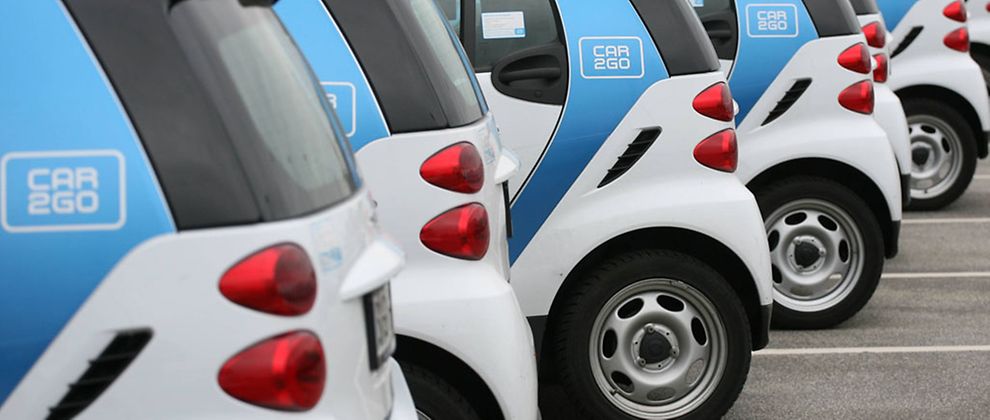
EU, UK fine carmakers for recycling cartel
European carmakers have been fined €458 million ($495.6m) for participating in a 15-year cartel concerning end-of-life vehicle (ELV) recycling, Kallanish reports.
The European Commission said Tuesday that 16 major automakers and industry trade body ACEA entered into “anticompetitive agreements” and engaged in concerted practices related to vehicle recycling. The investigation was coordinated with the UK Competition and Markets Authority (CMA).
Thanks to Mercedes-Benz’s tip-off, officials in Brussels and London found that the parties agreed not to pay car dismantlers for processing ELVs and not to promote how much of an ELV can be recycled, recovered and reused.
“Their goal was to prevent consumers from considering recycling information when choosing a car, which could lower the pressure on companies to go beyond legal requirements,” the EC explains.
Japanese carmakers Honda, Mazda, Mitsubishi and Suzuki had a lower involvement, thus a smaller fine. Officials also granted a reduction to Renault since the French carmaker had previously asked to be exempted from the agreement not to advertise the use of recycled materials in new cars.
Stellantis, Mitsubishi and Ford benefitted from reductions of 50%, 30% and 20%, respectively, for their cooperation with the EC. Mercedes-Benz received full immunity for revealing the cartel, avoiding a fine of €35 million.
The investigation issued the biggest fine to Volkswagen at €127.7 million. Renault/Nissan followed with a penalty of €81.46m, while Stellantis (excluding Opel) was hit with a fine of €74.9m.
“Today, we have taken firm action against companies that colluded to prevent competition on recycling,” comments Teresa Ribera, EC vice president for Clean, Just and Competitive Transition. “We will not tolerate cartels of any kind, and that includes those that suppress customer awareness and demand for more environmental-friendly products.”
The official adds that high-quality recycling in key sectors such as automotive will be central to meeting the EU’s circular economy objectives, “not only to cut waste and emissions, but also to reduce dependencies, lower production costs and create a more sustainable and competitive industrial model in Europe”.
While ACEA was the facilitator of the cartel, its UK counterpart SMMT was also involved.
Separately, the CMA issued fines of over €77m to ten carmakers in the UK: BMW, Ford, Jaguar Land Rover, Peugeot, Citroen, Mitsubishi, Nissan, Renault, Toyota, Vauxhall and Volkswagen.
Under the so-called buyers’ cartel, the parties agreed among themselves how they would individually interact with suppliers. “In this case, the manufacturers involved mutually agreed the price that they would each individually pay for recycling services (zero), thereby preventing the providers of recycling services from negotiating a higher price,” the CMA explains.
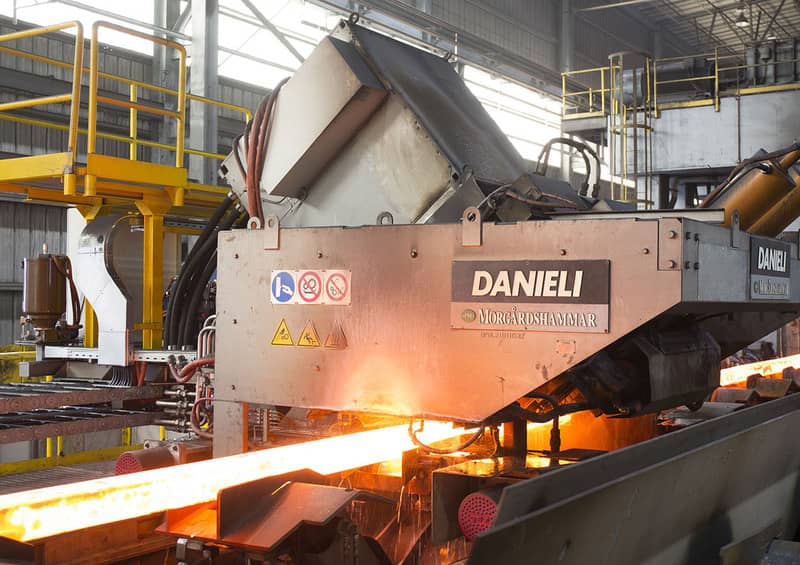
Fagersta orders bar-in-coil line from Danieli
Stainless steel producer Fagersta Stainless – part of Marcegaglia Group – has selected Danieli technology for a strategic product expansion at its works in Fagersta, Sweden.
Danieli will supply a bar in coil line to produce not only rounds but also squares and hexagons, starting from 8.5 and 8.8mm diameter in 1-tonne coils, at 35t per hour, Kallanish learns.
The new bar-in-coil line will receive hot-rolled bars from the same rolling mill feeding the wire rod line and make use of the finishing services of the wire rod mill for coil compacting and tying operations.
The layout of the line will allow higher productivity of up to 50 t/h, and double coil-weight capacity, Danieli claims.
According to the technology supplier, the investment will guarantee Fagersta the highest quality of a broader product range, maximum production flexibility and best production costs. Startup is scheduled for the first quarter of 2026.
Christian Koehl Germany


ArcelorMittal denies Fos-sur-Mer pollution allegations
ArcelorMittal has denied allegations that its Fos-sur-Mer facility falsified data and its pollution is endangering the local population.
Marseille public prosecutor Nicolas Bessone announced last week the steelmaker is being investigated for allegedly endangering others, and falsifying and utilising falsified documents on industrial pollution. This stems from a legal complaint lodged by multiple residents of Fos-sur-Mer, who assert that toxic waste emitted by the steel producer has contributed to an increase in cancer cases within the region.
“ArcelorMittal Méditerranée has always communicated transparently with the authorities and has done everything possible to ensure that emissions from the Fos-sur-Mer site comply with the prescribed annual limit values. There has been no falsification of data,” the company says in a note sent to Kallanish.
Since 2014, the steelmaker has invested more than €735 million ($795m) in revamping and modernisation works to curb its emission levels. Approximately one-third of the funds invested were focused on environmental improvements and less than 10% represented public investment. This has reduced atmospheric emissions from the Fos-sur-Mer site by 70% compared with 2002.
“ArcelorMittal Méditerranée will not comment on the decisions by the investigating judge in charge of this procedure, as it is an ongoing procedure, and reminds all stakeholders that ArcelorMittal Méditerranée and its management benefit from the presumption of innocence and respect for the confidentiality of the investigation,” the note continues.
Natalia Capra France
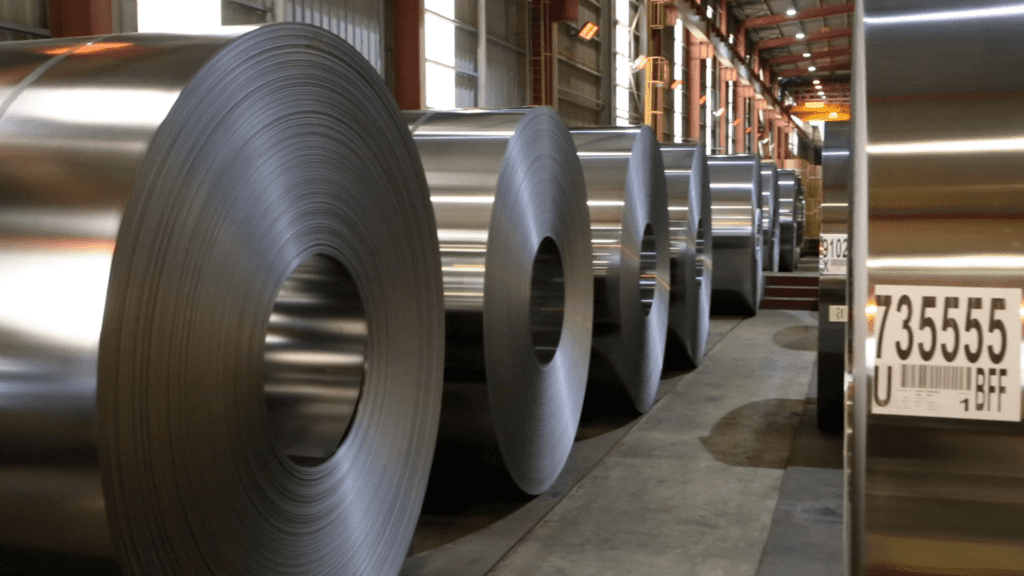
Aperam to launch new straightening and cutting line to meet LNG demand
Luxembourg-based global stainless steel producer Aperam SA has announced the launch of a new straightening and cutting line at its Imphy plant in France. Engineered for maximum efficiency and precision, the new line produces strakes up to 50 meters long, 536 mm wide, and less than 1 mm thick, delivered in approximately 150 kg coils, the company stated.
The new facility is specifically designed to support the Liquid Natural Gas (LNG) tanker market. The recent global shift in LNG usage, along with growing demand from shipbuilders in Korea and China, has created an urgent need for expanded production capacity.
Frederic Mattei, Chief Executive Officer Alloys & Specialties, and Chief Innovation Officer at Aperam, commented: “This expansion reaffirms our commitment to maintaining our leadership in the LNG market. By doubling our production capacity, we are not only securing our position as the top supplier of INVAR® M93 alloy but also ensuring that we meet the growing needs of our shipyard customers with strong reliability and efficiency. Furthermore, the investment has created 35 new jobs, strengthening local employment and boosting the economy”.

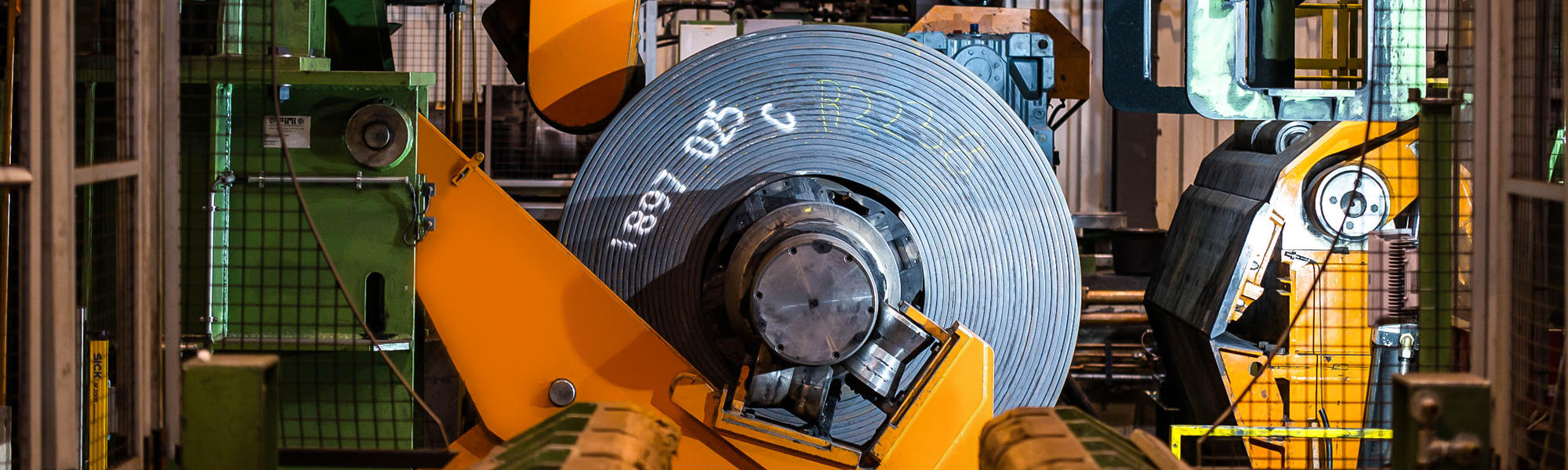
Italian re-rollers signal some optimism
Price increases for Italian coil derivatives are being pushed through very slowly. Welded tube values are showing an upward trend, and there is a slight improvement in sentiment among re-rollers. However, the outlook from service centres continues to be negative, with sheet prices experiencing another decline.
The market is seeing a degree of uncertainty characterised by subdued demand; however, both positive and negative indicators are present. A re-roller says the protectionist policies implemented by US President Donald Trump have merely expedited a trend that began years ago. The ongoing regionalisation of markets has the potential to enhance business opportunities for European companies. Many re-rollers within the EU primarily serve the European market, with only a minimal portion of their production being exported.
There has been a noticeable uptick in interest from German buyers seeking to establish procurement agreements, as non-EU imports of welded tube are facing growing challenges. The source, along with a coil producer, tell Kallanish they are observing an increase in confidence among large German buyers, indicating a shift in sentiment that had stagnated for months.
Germany’s new infrastructure fund is poised to enhance steel demand significantly. The modest boost in confidence over flat steel price increases may result in a return to profitability across the value chain.
Multiple sources see the gradual increase in coil prices continuing, attributed to reduced product availability in Europe and a decline in imports. The re-roller indicates the implementation of safeguard and anti-dumping measures has resulted in the removal of more than 2 million tonnes of imported material within the European market.
Hot rolled coil prices in Europe are at €630-650/tonne ($674-700) delivered, with the lower end of the range accessible in Italy. Some mills are asking for €670/t base delivered and considering further increases (see separate story). The two sources believe HRC values, at least in Italy, will be lifted towards €700/t delivered by the time of the Made in Steel event in Milan in May.
Italian welded tube discounts are being pushed down and in some cases are beginning to fall from the level of 48 points, towards 46 points. Smaller tube makers, however, with a more limited product offering, are compelled to make concessions, continuing to sell at discounts of 47.
Marcegaglia has restructured its price list and changed its dynamics starting from 24 March. The new list bears the structure of the list in place in 2021. According to the old list, the company was pushing down discounts to 44-45 points. With the new list, discounts are brought down to the level of 33-44, reflecting a price recovery of €30-40/t on average as some grades will increase more than others.
The new list considers the trends of all raw materials used in the production of each tube grade, alongside the currently high production costs, a company representative explains.
Natalia Capra France

German, Czech carmakers fret over US tariff impact
The German and Czech automotive industries have called on the EU and US to find an alternative solution to tariffs, which are likely to have a significant impact on EU car manufacturing, Kallanish notes.
German automotive association VDA says US tariffs on foreign-made vehicles, which go into effect on 2 April, will have a “significant negative impact” on exports from the EU to the US. They “place a significant burden on both companies and the automotive industry’s closely interwoven global supply chains – with negative consequences especially for consumers, also including those in North America,” it adds.
Germany exported almost 450,000 vehicles to the USA in 2024. However, German manufacturers also have a significant presence in the US, producing over 844,000 vehicles there last year, of which around half were exported worldwide. The US exported 233,600 vehicles to the EU last year, of which 136,000 units went to Germany.
Czech automotive association AutoSAP meanwhile notes US tariffs pose a direct threat to EU carmakers and their suppliers, “disrupting global supply chains and threatening their competitiveness at a time when the automotive industry is facing a major transformation and increasing international competition.”
Although only 0.8% of Czech automotive exports went to the US in 2023, with no finished vehicles exported, the tariffs will impact Czech suppliers of parts and services, especially those supplying to German customers. This will mean a significant reduction in export opportunities, the association says.
The imposition of US tariffs on auto parts from 3 May at the latest will encompass “a significant part of the exports of many European and Czech companies and … could significantly deepen the economic impact of this decision,” the association continues.
Both VDA and AutoSAP are calling for urgent negotiations between the US and the EU on a bilateral agreement, with a focus on legal regulations, standards, and certifications.
The Polish Economic Institute meanwhile says US tariffs will negatively affect Poland, including through European and North American supply chains, and could shave 0.12-0.15% off Polish GDP.
The European Automobile Manufacturers’ Association (ACEA) said earlier in the week it is “deeply concerned” by the US tariffs, and called for dialogue with the US to find a rapid solution to avert tariffs (see Kallanish passim).
Adam Smith Poland
Italy, France, Slovakia seek to further simplify CBAM
Italy, France and Slovakia are urging the European Commission to simplify the Carbon Border Adjustment Measure (CBAM) and resolve the administrative challenges that come with its implementation.
The complex structure of this system could cause delays and increases in management and operational costs for European businesses.
“A simplification of the regulatory framework is needed to provide operators with clearly defined and simplified technical rules. Basing the CBAM on pre-defined emission values for upstream and downstream sectors could significantly simplify reporting requirements,” says the AoB document requested by France, Italy and Slovakia and obtained by Kallanish.
The paper suggests an exemption for small importers and a thorough review of downstream carbon leakage as well as carbon leakage in exports. The CBAM regulation now applies to the six pilot sectors and 20 neighbouring downstream products. However more sectors and downstream products may be at risk of carbon leakage due to the phase-out of free EU ETS allowances.
CBAM should cover downstream sectors and goods at risk of carbon leakage by the end of the transition period. At present, it does not include any measures to avoid carbon leakage from exports.
The EC is to consider the extension of CBAM to indirect emissions under the condition that it does not compromise decarbonisation efforts and to consider the impact of the mechanism on the competitiveness of the EU industry.
“The Commission is required to submit a report by 2028 on the impact of the CBAM, notably on carbon leakage to exports, resource shuffling, and an evaluation of the overall application of the regulation. Such a report should be anticipated to the end of the transition period. It should propose, if necessary, appropriate and proportionate measures to prevent carbon leakages in support of exporting industries, by maintaining, among other measures, targeted free ETS allowances for exportations to ensure a level playing field,” the paper concludes.
Earlier this month the Commission published its Steel and Metals Action Plan confirming it would issue a legislative proposal for CBAM adjustments by year-end.
Natalia Capra France