


Revista InfoAcero Marzo 2025
En el siguiente enlace pueden acceder a la edición de Marzo de nuestra revista INFOACERO
Destacamos a continuación algunos de sus contenidos:
- Opinión – D. David Asensio- Junta Directiva UAHE
- Nuevo Índice UAHE: Evolución precios de aprovisionamiento septiembre 2024 – enero 2025
- Metal: Coyuntura del Metal-Confemetal- Marzo 25
- Siderurgia: Informe Eurofer-1er Trimestre 2025- 2ª Parte
- Información Asociativa: Presentación Fremap Resultados Observatorio de Siniestralidad en nuestro sector- Webinar 29 de abril
- Colaboración: “Matrix…píldora roja o píldora azul” – D. Agustín Barroso– Director RRHH HIEMESA


RCT Stevedoring joins EUROMETAL as Associate Member
EUROMETAL is proud to welcome RCT Stevedoring as a new Associate Member, further expanding our network with a company known for its efficiency, strategic location, and commitment to smart logistics solutions.
Based near the Brussels–Scheldt Canal and the A12 motorway, RCT Stevedoring offers seamless accessibility for both ships and trucks, making it a key logistics player in the region. Specialising in the loading, unloading, and storage of cargo, the company delivers comprehensive services backed by decades of experience, an in-house customs department, and a 350-metre-long quay capable of accommodating ships up to 10,000 tonnes.
A full-service stevedoring partner
With a 100,000 m² logistics platform — including 32,000 m² of covered storage — RCT Stevedoring provides flexible, high-capacity solutions for bulk and general cargo. The company ensures operational excellence through:
• Direct transfer capabilities between seagoing vessels and barges
• Fast and reliable customs processing on site
• ISPS certification for safe and secure handling
• Additional value-added services such as packaging, cleaning, sampling, and documentation
At RCT, efficient handling starts at dawn. Their team is ready to move up to 10,000 tonnes of cargo daily, combining speed, safety, and service.
RCT Stevedoring is a highly valued partner of the Multi Logistics Group, a co-shareholder in a wide network of logistics companies. Through the “Power of Together”, the group leverages collective strengths to provide multimodal transport solutions, fostering more sustainable and efficient connections between road, rail, and inland waterways across Belgium and beyond.
 About RCT Stevedoring
Discover more: rct-stevedoring.com

Günther + Schramm acquires International Metal Service Süd
Günther + Schramm, (G+S) a distributor of special bar qualities (SBQ) active mostly in southern Germany, has taken over International Metal Service Süd, Kallanish learns.
International Metal Service Süd is a southern affiliate of International Metal Service IMS, a subsidiary of France’s Jacquet Metals, located in Butzbach. IMS will retain five sites in Germany, mostly located in the northern half.
G+S says the acquisition will strengthen its offer in high-alloyed steels, stainless steels, engineering steels, pipes, and aluminium. It will also expand its coverage of southern Germany to a great extent, it notes.
G+S will now have five warehouses and two distribution hubs with an inventory of 35,000 tonnes. It ships up to 90,000 t/year of products with a staff of 280.
Christian Koehl Germany


Weglokoks agrees restructuring for Huta Pokoj
Weglokoks has signed a restructuring agreement designed to inject financing into stockist and fabricator subsidiary Huta Pokoj and prepare it for investments into upgrading production capacity, Kallanish learns from the Polish state-owned group.
The agreement was prepared over months with the help of external advisors. It entails cost and process optimisation, debt relief and asset reorganisation, and the implementation of an investment package across the Huta Pokoj Profile and Huta Pokoj Konstrukcje business units.
The plan will “allow us to sort out the situation and prepare the firms for further development. Given the current market realities, there is no room for inefficiency – what’s needed to ensure continuity are specific actions and stable foundations,” says Weglokoks chief executive Tomasz Slezak.
The plan foresees the construction of a new welded structures fabrication hall and the modernisation of selected technological lines. No layoffs are envisaged. In future, a similar agreement is planned for the third unit, Huta Pokoj SA, which however does not possess any production assets.
Weglokoks is also leasing plate maker Huta Czestochowa.
Adam Smith Poland
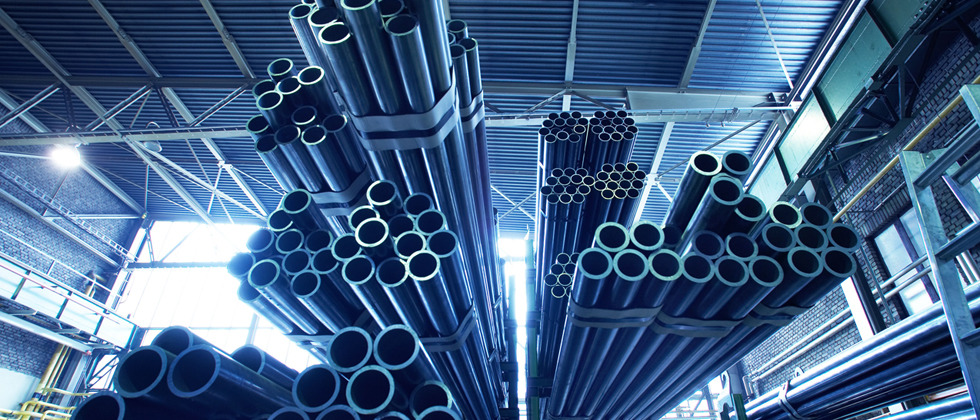
Spain’s Tubacex appoints new ceo
Spanish stainless seamless tube manufacturer Tubacex has appointed Josu Imaz as its new chief executive, Kallanish learns from the company.
Imaz replaces Jesús Esmoris, who is stepping down after 12 years in the role to pursue new personal and business challenges.
“With the appointment of Josu Imaz, Tubacex will continue its strategy of driving profitable growth, maintaining financial strength, creating value for shareholders, consolidating sector leadership, and diversifying both geographically and in terms of products and services,” the company states.
Imaz holds a degree in industrial engineering from the University of Navarra and an executive MBA from the University of Mondragón. Before joining Tubacex, he served as general director of the rolling stock division at CAF Group, a motor vehicle manufacturing company. He also held the vice presidency at Solaris Bus & Coach, a company focused on electric bus manufacturing.
Todor Kirkov Bulgaria

Austria decreases crude steel production in February
Austria decreased crude steel production in February, according to worldsteel data.
Output amounted to 510,673 tonnes, down 11.5% down year-on-year, Kallanish notes. In January, output amounted to 599,000t, 5.9% less on-year.
In January-February, the country produced 1.1 million tonnes of steel, compared to 1.21mt in the same period last year.
Austria remained in 23rd place in the ranking of top global steel producers, the data show.
Overall EU output in February was 7.1% less on-year at 10.1mt. January-February production was at 20.4mt compared to 21.5mt in the same period last year.
Austrian steelmaker voestalpine expressed mixed feelings about US steel tariffs, as the firm operates multiple sites in the US, which it plans to expand, while actual imports from Austria into the US are limited (see Kallanish passim).
Earlier, the steelmaker successfully commissioned the profile rolling mill engineered by Friedrich KOCKS. Following the completion of all work and successful commissioning, the new equipment is now fully integrated into the hot tube rolling mill at the Kindberg site in Styria.
Voestalpine recently said it performed well in the first half of its business year through March 2025 despite the difficult economic environment in Europe. Demand remained strong from the railway infrastructure and aerospace sectors, and for high-bay warehousing systems made from advanced steel profiles.
A decline in volumes was partly offset by a better product mix with higher profits, while lower sales prices were partly compensated by reduced raw materials values.
Svetoslav Abrossimov Bulgaria

HRC prices unchanged in Europe; short-term expectations mixed
Fastmarkets calculated its daily steel hot-rolled coil index domestic, exw Northern Europe at €645 ($695.47) per tonne on Friday, stable day on day.
The Northern European index was up by €4.62 per tonne week on week and by €18.17 per tonne month on month.
For June delivery, offers from first-tier suppliers in Germany and Benelux area were heard at €650-660 per tonne ex-works. One mills was aiming for €680 per tonne ex-works or delivered, depending on the region.
One supplier source in the region told Fastmarkets, that most major HRC suppliers have very little coil availability for second-quarter delivery, while for the third quarter, they were considering a new round of increases.
“Maybe we will see [HRC] prices with ‘seven’ in the front shortly,” a mill source told Fastmarkets.
Buyers were rather skeptical about new price rises, since they believed that demand was insufficient.
“There is no room for further [price] rises, end-user demand is not rising,” a buyer in Germany said.
At the same time, due to tougher safeguards, and certain supply issues at domestic mills, European buyers did not have that many options.
“If you need [HRC] — you have little choice. It’s either EU mills with around six weeks lead times or imports — which is too risky. So eventually if buyers need to buy coil, they have to pay higher prices,” a second buyer source said.
“Salzgitter has no HRC availability for [the second quarter] due to force majeure, ArcelorMittal stopped [its blast furnace] in Dunkirk. Supply issues are starting to be felt in the market these days,” a third buyer said.
Other buyers said that supply constrains were not big for the EU market, considering continued moderate end-user demand. Moreover, sources worried that in the longer run, demand from the key end-user sector — automotive — will deteriorate further amid 25% tariffs on imported cars, introduced by US President Donald Trump on Wednesday March 26.
US is the second-largest market for the EU vehicle exports after the UK. In terms of value, the US accounts for about one-fifth of the EU export market, according to European Automobile Manufacturers Association (ACEA). In 2024, 757,654 new vehicles were exported from the EU to the US, worth €38.9 billion.
Meanwhile, In Southern Europe, Fastmarkets’ daily steel hot-rolled coil index, domestic, exw Italy was calculated at €625 per tonne on Friday, stable day on day.
The index was up by €2.50 per tonne week on week and by €12.50 per tonne month on month.
The Italian market was quiet, digesting news about a steel safeguards review and the anti-dumping probe.
Offers for June-delivery HRC from two major Italian suppliers were reported at €630-650 per tonne delivered (€620-640 per tonne ex-works). However, some buyer sources said that one mill could still offer late-May delivery.
Transactions were done during the week at €630-640 per tonne delivered (€620-630 per tonne ex-works), sources said.
Buying has picked up recently, but traded volumes were still limited, Fastmarkets heard.
As for imports, there have been fewer offers recently because of the safeguards review and an anti-dumping probe.
Notably, sources reported offers for May-shipment HRC offers from Indonesia at €540-550 per tonne CFR.
From India, HRC offers were reported at €570-580 per tonne CFR.
From Turkey, offers were heard at €590-600 per tonne CFR, including the anti-dumping duty. Sales at lower end of the range were reported earlier this week.


Longs prices in Romania stable despite slow trade
Despite the last week’s announcement of lower tariff-rate quota volumes, which had some impact on wire rod segment pricing, this week no price movements have been seen in spot market prices of rebar and wire rod in Romania.
The sole rebar manufacturer has also kept prices stable week on week. The market’s present outlook, according to market participants, is not supportive of an upward trend since the demand sector is not robust enough to sustain increases. Meanwhile, in the import segment, no new deals have been reported since the majority of buyers anticipate a new quota period.
As a result, local Romanian rebar spot prices have remained stable at €590-605/mt ex-warehouse from last week. Similarly, rebar pricing from the sole domestic mill is stable at roughly €580-590/mt ex-works.
A similar stability has been observed in the wire rod segment, with retail prices quoted stable week on week at €595-600/mt ex-warehouse.
Furthermore, as previously stated, no fresh deals have been recorded in the import market since purchasers are not in a hurry to restock due to the upcoming new quota period, and demand in the domestic market remains low.
According to reports, Bulgaria’s rebar offers have remained stable at €620-630/mt CPT, while Greece’s rebar and wire rod offers are stable week on week at €620-625/mt CFR and €610-615/mt CFR, respectively.
Similarly, Egypt’s rebar and wire rod offers have not changed since last week, at €550-555/mt CPT and €560-565/mt CPT, respectively.
In addition, Turkey’s rebar offers are stable at around €555-570/mt CFR Romania, based on a €1 = $1.08 exchange rate and a freight cost of €25-30/mt.


ArcelorMittal denies accusations of industrial pollution at its Fos-sur-Mer site
The Marseille public prosecutor’s office indicted ArcelorMittal for endangering the lives of others, forgery, and environmental damage earlier this week, according to media reports.
The steelmaker has therefore been placed under judicial supervision, subject to a €250,000 ($268,525) deposit and €1.75 million bank guarantee, the prosecutor’s office said in a statement, quoted by French media outlets.
ArcelorMittal said in its statement that the company was cooperating fully with the authorities in charge of dealing with complaints filed by residents and environmental associations in relation to the Fos-sur-Mer site.
“ArcelorMittal has always been transparent in its contact with the authorities and has made every effort to ensure that the emissions from the Fos-sur-Mer site comply with the prescribed annual limit values. There was no falsification of data,” the steel manufacturer added.
According to its statement, ArcelorMittal has invested more than €735 million since 2014 to modernize its facilities and reduce emission levels. Thanks to these actions, the company has reduced its air emissions from the Fos-sur-Mer site by 70% compared to 2002.
ArcelorMittal said that it would not comment further on the indictment because the procedure was still ongoing, adding that the presumption of innocence and respect for the secrecy of the investigation should be considered.
The Fos-sur-Mer site has been facing problems with environmental organizations and residents since 2018, when a complaint against the plan was filed, according to media outlets.
ArcelorMittal Fos-sur-Mer has two blast furnaces (BFs) with a total capacity for about 5 million tonnes per year of pig iron, market sources said. The site produces hot-rolled and cold-rolled coil.
ArcelorMittal modernizes its French assets
Earlier in March, ArcelorMittal announced that it planned further modernization of its two production plants in France – Dunkirk and Fos-sur-Mer. Due to the overhaul, one of the BFs at the Dunkirk site will be idled for 90 days in the second quarter of 2025.
Specifically for the Fos-sur-Mer site, the company is planning investment amounting to €18.3 million, which is intended to extend the life of BF1. But the production unit will restart operations no earlier than the first half of 2026, Fastmarkets understands. While BF2 will remain operational.
BF1 at Fos-sur-Mer has been idled since the third quarter of 2023.
Market overview
The stoppage of one BF at the Dunkirk site was expected to put additional pressure on the HRC prices in Europe, industry sources told Fastmarkets.
Supply of domestic material in the region has already been limited by Salzgitter, who announced force majeure on HRC deliveries due to a fire at a hot strip mill late in February.
These circumstances, combined with the limited HRC imports due to the new safeguard measures of the European Commission, have supported a recovery in HRC prices in Northern Europe, industry sources told Fastmarkets.
“Production in Europe is at a quite low level now. There are a lot of problems with domestic mills. Customers often complain about delays with deliveries,” a distributor source based in Germany told Fastmarkets.
The distributor source added that mills were quite firm on their offers, advising customers to go to another mill if they did not like the offered price. “But there are not many other options where to go,” the source said.
Despite some small fluctuations, HRC prices in Northern Europe have been recovering gradually since the beginning of the year, reaching €645.00 per tonne on Wednesday, Fastmarkets’ daily steel hot-rolled coil index domestic, exw Northern Europe, shows.
But the index averaged €608.04 per tonne in February remaining far below €738.28 per tonne – the average level reached in February 2024.
Fastmarkets’ sources expected that the recovery of the HRC prices would continue, although some were skeptical if the €700-per-tonne level would be reached.
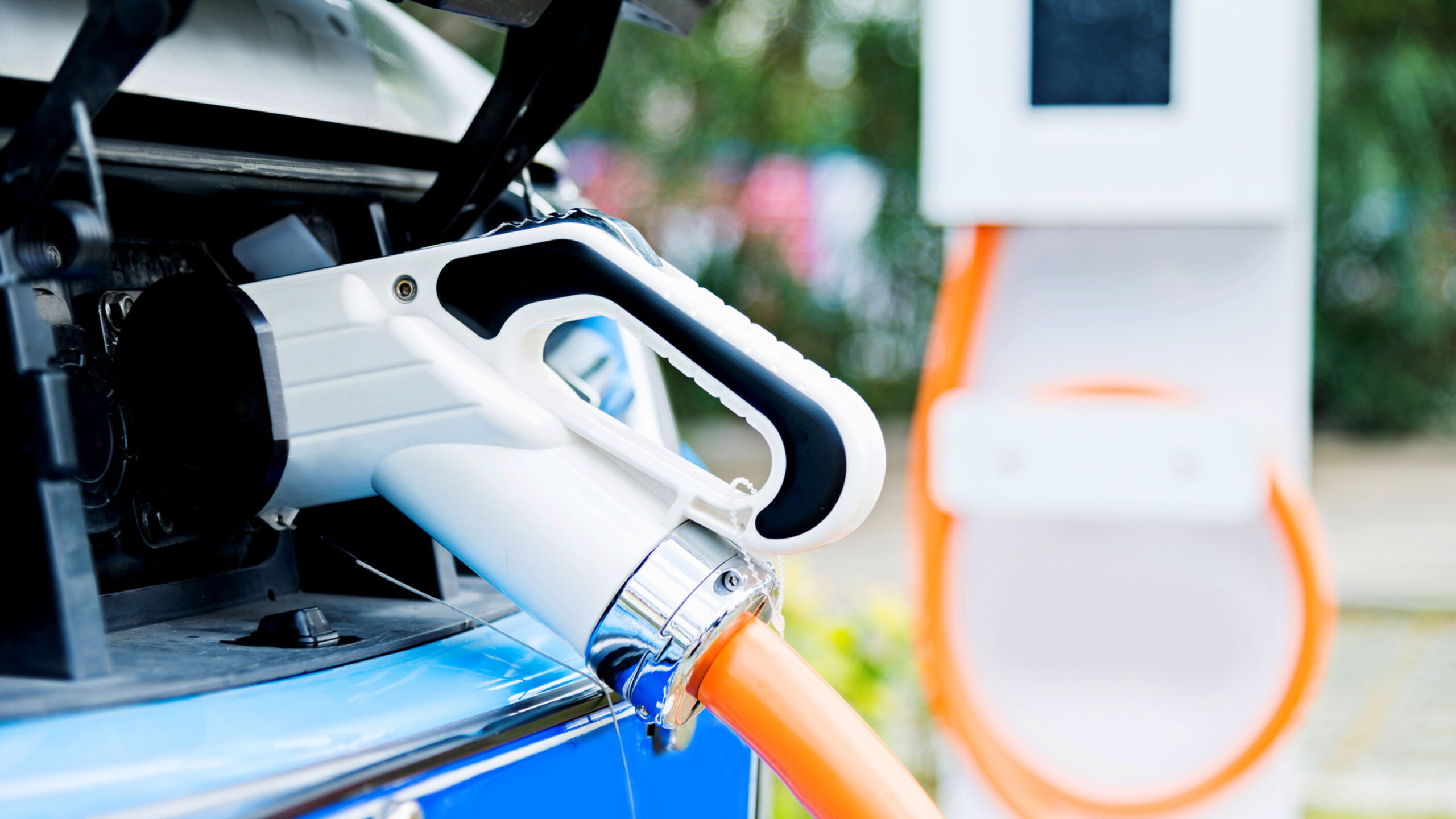
Automakers should capitalize on upcoming green steel technologies to decarbonize industry, CALSTART says
The webinar, hosted by the non-profit organization, which has a focus on the development of efficient transport solutions, featured panelists from green iron and steelmakers Boston Metal, Electra and Stegra.
The automotive sector is a large consumer of steel produced via primary steelmaking, which is a highly emissions-intensive process, Gordon said on Thursday. The US market has a 30:70 split of primary steel and secondary steel, which involves using recycled steel and has far lower emissions due to the use of electricity.
The US produces about 20 million tons per year of primary steel, he said.
To match that capacity, CALSTART estimates that it would take 8-12 green steel facilities, developing a need to ramp-up green steel production by aggregating demand, Gordon said.
“Demand has such a massive effect on the investments that are made,” Gordon said. “When we make steel today, we release between 1.5 and 3 tons of [carbon dioxide] per ton of steel. To make green steel, we need to take the carbon dioxide [out].”
The decarbonization of steel concerns the decarbonizing of iron, Holger Koehler, head of strategy with clean iron company Electra, said.
“It’s not the electric-arc furnace [steelmaking process] that is novel,” he said. “It is really the direct use of iron with 100% hydrogen testing. It’s all about the iron-making, and that requires a partnership along the value chain that is absolutely critical.”
Electra intended to operate a commercial-scale green steel facility in Sweden by 2030. This will produce high-purity iron plate from low-grade iron ore using renewable energy and electrochemical processes. The company has a pilot plant already operating in Boulder, in the US state of Colorado.
Michael Lovgren, head of commercial metallics of Stegra, and Adam Rauwerdink, senior vice president of business development at Boston Metal, both highlighted the importance of collaboration and a robust supply chain in the development of the green steel market.
Stegra, previously H2 Green Steel, is building a large-scale green steel plant in Boden, Sweden, aiming for near-zero-emissions steel production using green hydrogen and renewable electricity, with operations scheduled to begin in 2027.
Meanwhile, Boston Metal will deploy its first demonstration plant relating to the scalability of molten oxide electrolysis (MOE) steel to achieve commercial production in 2026. MOE does not require coke production, iron ore sintering and pelletizing, blast furnace reduction or basic oxygen furnace refinement.
When it comes to accelerating the decarbonization of the steel industry, Lovgren noted the importance of collaborating with original equipment manufacturers to strengthen the supply chain, to create the demand for low carbon emissions steel.
“Where we definitely see the most value from automotive and some of these other early adopting markets is just stability of demand,” Rauwerdink said, “showing that the demand for green steel and low carbon emission steel is real, that it can survive the headlines of the day. That will allow the steel industry to make the capital allocations needed to really drive this change.”
Global decarbonization trajectory
Globally, the panelists highlighted China and India as markets to target when it comes to decarbonization, due to the mix of electric-arc furnace (EAF) and blast furnace (BF) steel production in those countries.
The global steel industry produces nearly 1.9 billion tonnes per year of steel, according to the World Economic Forum, and is a major contributor to greenhouse gas emissions.
“If your goal is to decarbonize 1.9 billion tpy of steel, something like 1.1 [billion tpy] of that is in India and China. So that’s certainly our priorities,” Rauwerdink said during the webinar. “The majority of the world’s blast furnaces are in China. So that’s going to be a critical market.
“India is… forecast to grow in terms of overall steel supply,” he added. “They’ll be putting assets into the ground that will have decades of life. That’s an important part of decarbonizing the future of steel.”
The decarbonization trajectory of the Chinese and Indian steel markets were likely to be prolonged, Holgren said, due to the relatively newer cadre of blast furnaces in these countries.
“Those fleets are relatively young,” Holgren said. “The Chinese and especially the Indian fleet are actually really young blast furnaces. So that will be a longer-term [objective].”
As recently as September 2024, Tata Steel commissioned India’s largest blast furnace.
Focusing on Asia, Lovgren highlighted that Japan and South Korea were bright spots for green steel demand.
“But again,” he said, “the fleet is younger, so the kind of demand from that perspective looks a bit different and it’s less mature.”