


EU to delay first set of countermeasures against US tariffs until mid-April
The measures, announced on March 12, cover a wide range of agricultural and industrial goods including potentially some wood products, pulp, paper and board.
The first set involves allowing the suspension of existing countermeasures against the US from 2018 and 2020 to lapse. They include a 25% tariff on US corn imports into the EU.
This was initially set to happen on April 1 after the current suspension ends but will now likely be postponed to mid-April to coincide with a second package of measures on which the Commission is currently consulting, Šefčovič said.
“In the light of the recent announcement that the US is planning to introduce additional tariffs on April 2, we are now considering to align the timing of the two sets of EU countermeasures, so we can consult with member states on both lists simultaneously,” Šefčovič told a joint hearing of the Committee on International Trade on Thursday.
“It also gives us extra time for negotiations to try to find a mutually agreeable resolution. As a result, all the EU’s countermeasures that were announced on March 12 would in that case take effect in mid-April,” he said.
…
Steel imports to EU, US fall in 2025; all eyes on April 2
The move to delay tariffs was announced after the US imposed a 25% tariff on steel and aluminium imports earlier this month.
In the first two months of 2025, imports and exports of steel products between the US and EU logged declines.
In January, the US exported 5,237 tonnes of steel to the EU, down by 7.20% from 5,682 tonnes of steel exported in December, data from the US International Trade Administration (ITA) showed.
In February, the EU applied to export 238,854 tonnes of steel to the US, down by 41.8% from the 410,742 tonnes of steel imported in January, according to the ITA data.
Market participants globally are also now closely tracking April 2 — what US President Donald Trump has called “Liberation Day” — when a slew of Trump’s reciprocal tariffs on goods coming to the US take effect.
The US President has also said new, higher tariffs on goods such as lumber, autos and copper will be announced then.
It remains unclear whether the tariffs will stack Trump’s Section 232 tariffs and specifically what goods will be subject to the broader tariffs, market participants previously told Fastmarkets.
Trump’s tariff policies are expected to slow economic growth in the US and globally, the Organization for Economic Co-operation and Development (OECD) reported on Monday March 17.
The risk of broader increases in trade barriers could weaken global growth more than previously expected, with inflation now remaining above target for longer in many economies, the report said.

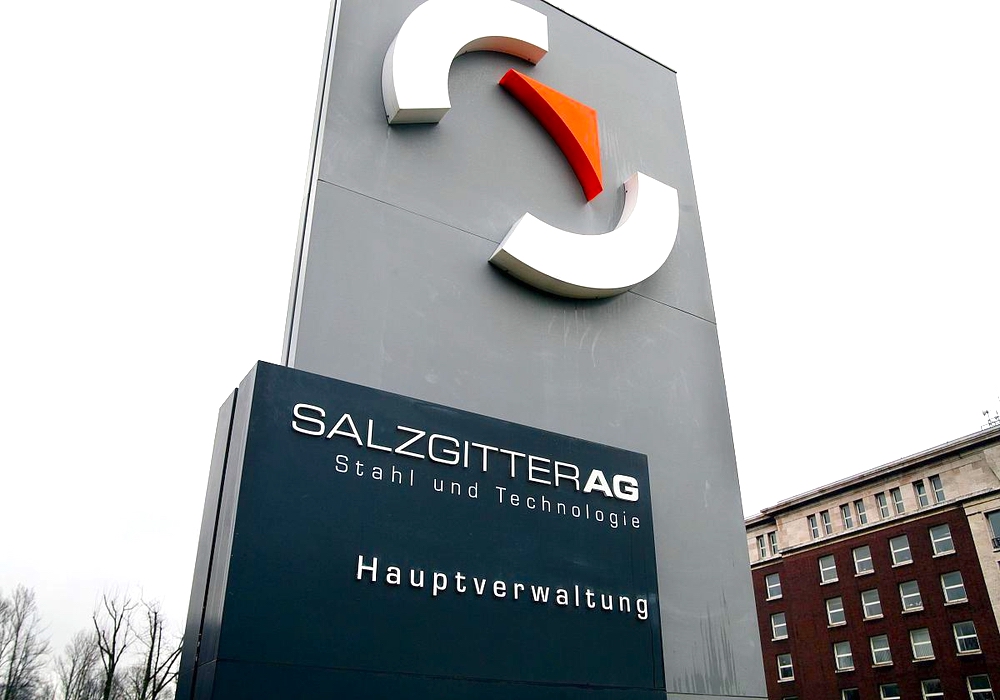
Salzgitter expands portfolio for defence sector
Salzgitter AG will further expand its portfolio for defence purposes this year, Kallanish heard from chief executive Gunnar Groebler during the firm’s annual results conference on Friday. The firm is also seeking tighter EU restrictions against slab imports from Russia.
“We see good potential for our portfolio in renewable energies, especially wind power, but also in defence,” Groebler said. The German company is already a supplier to the German armed forces, and has now established the brand of “Secure” steels, and a “Defence” task force to coordinate further activities in this direction.
“Geopolitical tensions have set new measures of defence capability, and are creating new demand for security steels and special grades,” the company writes in its presentation.
“We have a wide scope of steels for security purposes, and we are in talks with a number of suppliers of such components,” Groebler noted during the conference. The exploration of market potential for “Secure” steels mainly concerns the group’s Processing unit, which deals with tubes and heavy plate, but also its plate distribution subsidiary Universal.
The company is thus appealing to the European Union for firmer action on slab imports from Russia, which it says rose last year. “It cannot be that we support Russia’s war economy,” Groebler stated. These imports are also rolled into plate in the EU, competing with Salzgitter’s portfolio, mainly of plate products.
On plate prices, the company has observed a relative stabilisation since last autumn, after a longer decline. For sections, prices actually held up quite well throughout 2024, and into this year.


Longs consumption seen growing, flats stalled: EUROMETAL conference
The outlook for long steel consumption in 2025 and 2026 is positive, driven by growth in the construction sector and relatively low import penetration, except for wire rod, rebar and structural sections, Kallanish hears from a speaker at the the EUROMETAL Steel Net Forum Iberia in Vilamoura, Algarve.
Fernando Espada, chief executive of Layde Steel, part of Tata Steel Nederland’s distribution business, predicts that demand for flat steel will remain stagnant.
“Long steel consumption should recover alongside the increase in public infrastructure projects. Demand is expected to return to pre-Covid levels, particularly in Spain and Portugal, where the recovery has been significantly delayed,” says Espada.
According to Espada, whilst import penetration is generally higher across Europe, Spain and Portugal stand out as exceptions due to their strong long steel production.
“It’s like trying to sell Parma ham in a region where we already have Iberian ham,” remarks the executive, who is also vice president of EUROMETAL.
The situation for flat steel is quite different and even calling demand stagnant might be overly optimistic, according to Espada.
“The market is declining at an alarming rate. The level of import penetration in the coil segment is outrageous and is severely impacting flat steel. However, it’s not that total import volumes are skyrocketing, the real issue is that demand is disappearing. As a result, the same import volume represents an increasingly larger share of consumption,” he observes.
The executive argues that the industry should not focus solely on monitoring import volumes but should also implement measures to stimulate demand for domestically produced material, as steel suppliers are shifting market dynamics.
“With import restrictions on coils, suppliers are responding by importing the entire finished product instead, just as we see with steel structures used in the wind energy sector. These come pre-formed and welded, mainly from Asian countries,” he explains.
The automotive sector continues its recovery trend, although the penetration rate of electric vehicles is slowing. There is a noticeable increase in car imports from Asia, alongside a growing influx of component supplies.
“I’ve heard that some of the major automakers, in all their new models, have been setting targets of up to 50% imported parts. Why? Because steel is simply not competitive in Europe. And I believe that’s the real issue we need to address with the European Commission,” the executive comments.
He remains optimistic that the EC is beginning to recognise the need to protect not just consumers, but also manufacturers, similar to the delayed implementation of emissions penalties for internal combustion vehicle makers. “This is expected to stimulate the market and boost coil consumption, which in turn will drive higher demand, price recovery, and improved margins,” Espada notes.

The European Union’s trade protectionism is creating legal uncertainty, warns Espada.
“Receiving a notification from the European Commission in late May stating that a new tariff will be imposed by July 1, which suppliers were not expecting, has severe negative effects on their operations. Any changes to import regulations must be implemented carefully and gradually. We have requested that the EC grant a one-quarter adjustment period because the market needs time to adapt,” he explains.
Espada also urges caution regarding the introduction of the Carbon Border Adjustment Mechanism (CBAM), which, although promising in theory, could turn into a regulatory disaster in practice. “The European Commission is beginning to realise this risk,” he adds.
Participants in the Steel Net Forum Iberia agree that governments should support domestic steel suppliers in public infrastructure projects by offering a premium to those who can produce steel with lower CO₂ emissions.
“This would increase the value of local production over imports from countries that can compete with us on price alone. If you incentivise a market where lower CO₂ emissions are rewarded, supply will naturally increase to meet demand,” Espada concludes.


Spanish galvanised steel sector calls for EU ‘reindustrialisation’
The Spanish galvanised steel sector is calling on the EU to implement measures to guarantee reindustrialisation, ensuring energy transition progress as well as manufacturing independence amid a complex geopolitical landscape.
“The EU must reindustrialise, and in this process, galvanised steel is key, not only for continuing the energy transition but also for strengthening other sectors such as construction, transport, and automotive,” Spanish Technical Galvanisation Association (ATEG) president Manuel López Caamaño said during the organisation’s 60th annual conference.
“Our sector offers a profitable, durable, and sustainable solution with a lower carbon footprint than other industries. Galvanised steel can drive Europe’s growth by ensuring its independence from external markets in an increasingly uncertain international context,” he observed.
Spanish galvanised steel production totalled 548,000 tonnes in 2024, up 1% on 2023, Kallanish understands. Of this total, 39% was directed towards the energy sector, a decline of approximately 4% year-on-year, primarily due to geopolitical instability and weaker revenue prospects from renewable energy projects in Spain. The construction sector, including building works, infrastructure, pipelines, and bridges, accounted for up to 25% of galvanised steel demand.
Spain remains the fourth-largest country in the eurozone in terms of production capacity. The galvanizing sector currently operates 39 plants, generating a turnover of around €200 million ($217.4m) and supporting more than 3,000 direct jobs.
“There is still a long way to go. While in the US, 18% of steel is galvanised, in Spain, it does not even reach 5%, which highlights the vast potential of the sector,” López Caamaño concluded.
EU Action Plan evokes mixed German industry reaction
German steel industry representatives are generally appreciative of the European Commission’s Steel and Metals Action Plan but point to shortcomings regarding CBAM, scrap export restrictions, and energy price reduction measures.
The Commission has reacted fast to the concerns brought forward by the steel industry, German steel association WV Stahl managing director Kerstin Maria Rippel said at the Zukunft Stahl conference organised by Handelsblatt in Essen this week. “It took only 14 days from a discussion with [Commission] President Ursula von der Leyen to the release of the Action Plan. This shows that Brussels has understood how dramatic the state of things is,” Rippel noted.
Rippel pointed to the importance of a solution for exports under CBAM, the expansion of the measure to include downstream products, and measures against circumvention. The Commission has promised solutions to these points by year-end.
Her position was echoed by policymakers. Christian Ehler, Member of the European Parliament, also addressed the extension of CBAM to cover processed products, and to prevent circumvention. “CBAM is still a long way from the instrument we would like to have,” Kallanish heard him say at the conference. “Currently, it is not effective against the challenges of reality.”
Meanwhile, recycling federation BVSE expressed mixed feelings on the Action Plan. It is particularly concerned about export restrictions for scrap. Maintaining open access to foreign markets will not distort trade flows, BVSE maintains. It noted that sales abroad do not reflect merchants’ ex-yard price, which is notably lower for foreign sales than for domestic customers.
Finally, trade union IG Metall finds that the plan remains too vague in many aspects. The union noted that high energy costs are the paramount problem. The plan also falls short of expectations regarding lead markets for green steel and promoting a hydrogen economy, the union pointed out.

Hoberg & Driesch acquires Salzgitter pipe business components
Hoberg & Driesch Röhrengruppe, a German distributor of steel tubes with sites in ten European countries, has acquired part of the tube activities of Salzgitter Mannesmann Stahlhandel in Germany.
The transaction includes distribution of seamless thick-walled tubes and precision steel tubes, Kallanish learns.
The acquisition will strengthen Hoberg & Driesch’s market position and product portfolio, the Düsseldorf-based company states. “This is the logical next step with a view to market consolidation and change … The takeover will enable Salzgitter Mannesmann Handel customers to make a seamless transition to us,” says Hoberg & Driesch Röhrengruppe chief executive Hanns-Jörg Westendorf.
While Hoberg & Driesch continues to expand its market position, Salzgitter Mannesmann Stahlhandel will be able to focus more strongly on other core business areas. The integration of the activities will take place gradually over the coming weeks, Hoberg & Driesch says.

Iberian distributors see challenging 2025, old concerns persist
Spanish and Portuguese steel distribution representatives anticipate difficult market conditions in 2025 amid a complex global scenario.
Assessing the outlook within a climate of high international trade uncertainty and geopolitical instability is challenging, delegates tell Kallanish on the sidelines of the EUROMETAL Steel Net Forum Iberia in Vilamoura, Algarve.
“In general, the current level of activity is positive, although some sectors are facing difficulties, leading to expectations of a slightly weaker demand in the first half of 2025, accompanied by some concerns,” one participant comments. Looking ahead to the second half of the year, he expects an improvement in activity levels as some of the uncertainties affecting the market ease.
According to a Portuguese steel distributor, after three years of stability, the sector has maintained a good level of activity in 2024, despite a slight decline in turnover.
“Now, the situation has changed, with most market players trying to recover their margins at a time when steel prices are rising,” he observes.
A representative from the construction sector notes that steel demand has evolved unevenly across industries. Construction companies have been more exposed to rising costs, showing signs of weakness in 2024.
“We see prices increasing again, while demand is losing momentum. US tariffs are affecting the European and Iberian markets, although exports from the region to North America remain insignificant,” he points out.
Spanish and Portuguese steel distributors confirm that most major suppliers have increased their investments in 2024, focusing on modern equipment, recognising this as a key factor for competitiveness.
“The future lies in generating added value by meeting customers’ needs for more specialised products, so having advanced technology is essential,” one processing company owner comments.
The sector is unanimous in calling for government support programmes to facilitate access to state-of-the-art technologies and help strengthen suppliers’ competitiveness.
“The sharp rise in costs in recent years continues to put pressure on our already tight profit margins, which hinders investment plans,” a Portuguese steel seller says. “For companies to remain competitive and deliver value to society, ensuring their economic sustainability is crucial.”
Another major challenge for the sector remains the difficulty in attracting young talent. There is a shortage of technically trained professionals, according to some of the market participants.

EU melt-and-pour consultation could start soon
The EU could start its consultation on the idea of imposing a melt-and-pour clause in the coming months, Xiaoyi Tang, a lawyer at Dentons Europe, told the EUROMETAL Steel Net Forum in Iberia today.
Sources at the event expected melt and pour would likely not come into play during the current safeguard, but from July next year, when the mechanism lapses.
It is likely to only target China, given the country’s overcapacity and large exports of hot-rolled coil (HRC) that end up in the EU as cold-rolled and hot-dip galvanised, sources said. While it will be hard to enforce, some said it would be game changing for the amount of cold-rolled and galvanised entering the bloc, putting a big strain on re-rollers and traders’ alike. Smaller traders are already starting to exit the market given the increase in bureaucracy, some participants told Argus on the sidelines of the conference.
Alexander Julius, president of EUROMETAL, told the event he was seeking measures from the European commission on downstream semi-finished and finished goods, as customers of its members are also suffering from rising third-country imports. Julius has attended high-profile meetings with the commission and said they appear promising. Protecting the whole value chain, and not just mills, was important, given Europe’s struggle to compete at present, he said.

Some attendees at the conference bemoaned the tighter measures on certain products as part of the safeguard review, particularly hot-dip galvanised, pre-painted and some long products, such as beams. The imposition of a cap on beams, reducing volumes from key supplier Turkey, would be a large issue, sources said.
Likewise, some were petitioning for a shipping window in relation to the imposition of caps on other countries’ rebar. One trader said there is at least 80,000t waiting to clear from Egypt and Algeria, and the freshly imposed 20pc “other countries” cap from 1 April will mean they can sell around 27,000t each. Many questioned the removal of Indonesia from the safeguard on wire rod, and said it has booked around 100,000t since as a result.
There was some talk at the conference that the legal safeguard text, expected to be published in the Official Journal next week, may contain a provision on developing country status being reviewed more regularly, when imports from exempt suppliers increase. This would mean Indonesia could come back into scope on wire rod, and into scope on hot-rolled coil.
By Colin Richardson

Source: argusmedia.com

Northern European mills keep prices high for steel rebar, wire rod amid tight supply
As a result, Fastmarkets’ weekly price assessment for steel reinforcing bar (rebar), domestic, delivered Northern Europe, was €630-660 ($663-694) per tonne on Wednesday, up week on week by €10 per tonne from €620-650 per tonne.
Estimates were reported in the region of €630-660 per tonne, with workable offers heard at €650-660 per tonne. Offers higher than €660 per tonne were not considered workable by the wider market.
Meanwhile, deals were reported at €640 per tonne.
Production stoppages across Northern Europe have resulted in greatly reduced supply, allowing mills to keep prices high despite the persistently low demand, Fastmarkets heard.
According to data collected by the European Commission, more than 50% of primary production capacity in Europe has been idled since 2021.
Most mills in Germany have stopped rebar production altogether since the beginning of the year, Fastmarkets heard.
And EU steel output has been declining since 2017, from 160 million tonnes then to 126 million tonnes in 2023.
Input costs have remained high, with scrap prices in Turkey increasing amid below-optimal scrap flows from the US and improved domestic consumption by local mills, Fastmarkets heard on March 19.
As a result, Turkish scrap prices have increased. Fastmarkets’ calculation of its daily index for steel scrap, HMS 1&2 (80:20 mix), North Europe origin, cfr Turkey, was $375.67 per tonne on Wednesday, up week on week from $366.54 per tonne.
The weekly price assessment for steel wire rod (mesh quality), domestic, delivered Northern Europe, was €610-630 per tonne on March 19, stable week on week.
Trades at €630-635 per tonne for wire rod in Northern Europe were reported after the pricing deadline.
Wire rod imports into Northern Europe from Tunisia were reported at €620 per tonne on March 19.
European Commission Metals Action Plan
A European Steel and Metals Action Plan, published by the European Commission on March 19, outlined the major challenges facing the region’s steel industry as well as a strategy which could support that industry in its attempts to remain competitive.
The intention of the plan was to outline sector-specific steps to support the struggling European steel industry, with the main challenges seen to be “high energy costs, exposure to an [unequal] playing field in international competition, decarbonization investment needs, and regulatory burden.”
According to the action plan, the EU’s share of global steel production has come down by 7-8% over the past decade, while countries in Asia and the Middle East having massively expanded their capacities.
Subsidies distorting trade, better access to raw materials and lower energy costs in Asia and the Middle East were among the difficulties faced by Europe.
“As a result, just for steel, in 2024, global overcapacity was estimated to be more than four-and-a-half times the EU’s yearly consumption,” according to a draft version of the action plan seen by Fastmarkets.
Strategies that could support the steel sector, according to the plan, included extending and intensifying trade policies; amending the Carbon Border Adjustment Mechanism (CBAM) to address the problem of carbon leakage for CBAM goods exported from the EU to third countries; and increased access to clean, renewable energy.

EU trade: Turkey leads iron and steel exports in 2024
According to data published by Eurostat, the Statistical Office of the European Union, in 2024 the European Union demonstrated a strong performance in the trade of iron, steel, and related articles, achieving a total export value of €77.8 billion while importing €73.1 billion worth of these products. This resulted in a trade surplus of €4.7 billion, underscoring the EU’s significant role in the global iron and steel market.
Compared to 2019, exports of iron and steel and related articles increased by 15.2 percent (€10.3 billion), while imports rose by 23.7 percent (€14.0 billion). However, this monetary increase occurred alongside a decline in physical volumes, with export volumes decreasing by 17.3 percent and import volumes by 1.6 percent. This trend suggests that the rise in trade value was driven primarily by higher prices rather than by an increase in volume. Trade data indicate that iron and steel exports alone (excluding related articles) rose by 9.9 percent compared to 2019, reaching €32.3 billion in 2024, while imports surged by 19.7 percent to €39.5 billion. In terms of volumes, exports and imports saw respective declines of 14.6 percent and 4.1 percent over the same period. Similarly, articles of iron and steel saw substantial growth. The EU exported €45.5 billion worth of these products, marking a 19.3 percent increase from €38.2 billion in 2019. Imports of these articles climbed 28.7 percent to €33.6 billion over the same period. However, export volumes dropped by 26.0 percent, while import volumes increased by 10.1 percent.
Turkey emerged as the EU’s top export destination for iron and steel in terms of value, with shipments amounting to €6.2 billion. It was also the third-largest import source (€3.5 billion). The United States was the second-largest export market (€5.4 billion), followed by the United Kingdom (€4.0 billion), Switzerland (€2.1 billion), and Mexico (€1.7 billion).
For imports, India led the rankings with €3.9 billion, followed by South Korea (€3.6 billion) and China (€3.5 billion), joint third with Turkey. The United Kingdom (€3.2 billion) was also among the top five import sources. Between 2019 and 2024, exports to Mexico increased by 54.1 percent, and those to the United States rose by 51.1 percent. Meanwhile, imports from India surged by 89.2 percent, and those from South Korea grew by 43.0 percent, over the same period.
The United States was the primary export market for articles of iron and steel, importing €8.0 billion worth of these products from the EU, a 45.1 percent increase from 2019. Other significant export destinations included the United Kingdom (€6.3 billion), Switzerland (€3.5 billion), Norway (€2.9 billion), and China (€2.8 billion).
On the import side, China was the leading supplier, accounting for €12.5 billion, or 37.3 percent of the EU’s total imports of these articles. Other major import sources included Turkey (€4.6 billion), the United Kingdom (€2.9 billion), the United States (€2.0 billion), and India (€1.7 billion). Imports from Turkey, India, and China saw remarkable increases of 82.4 percent, 40.5 percent, and 37.0 percent, respectively, compared to 2019.
