


Automobile production controlled to the second
Many systems and components in the automotive industry today are delivered just-in-time or even just-in-sequence directly to the assembly line during ongoing assembly in the OEM plant. In view of extremely tight time frames and highly complex systems, this is a highly challenging task for global system suppliers such as thyssenkrupp Automotive Systems. How the specialist for assembly and logistics services reduces complexity for automobile manufacturers (OEMs).
More and more model variants and a growing number of individual equipment options are increasing the complexity of automobile production immensely. It is specialists like thyssenkrupp Automotive Systems that make the continuing trend towards even more individuality possible in the first place. Whether complete rear axle systems for Porsche or the electric drive for the current Smart Fortwo: thyssenkrupp Automotive Systems handles the complete supplier management, on-time delivery and assembly for its customers with around 1,600 employees worldwide. In this way, the assembly and logistics experts significantly reduce the workload for their customers within the supply chain and in production.
thyssenkrupp Automotive Systems CEO Steffen Schmidt explains what customized production actually means: “The axle systems that we assemble on behalf of our customers are always different. Two identical axle systems are as rare as six correct numbers in the lottery. With an extra number.”
Flexible automotive production through just-in-sequence and just-in-time manufacturing
The high degree of individualization of car models requires extremely flexible production. After all, all variants, sometimes of several model series, run on one assembly line. This is why cars are now produced more than ever according to the just-in-sequence (JIS) principle. This is an advanced version of just-in-time delivery (JIT): the right components should not only be available in the right quantity and quality at the right time and in the right place. Just-in-sequence delivery makes it possible to deliver the various supplier parts in the correct assembly sequence in which they are needed by the OEM and can be processed immediately in the existing production flow. In this way, stock quantities can also be kept as low as possible so that as little stock and storage space as possible is required.
Both JIT and even more so JIS deliveries therefore not only require particularly efficient processes, but often also close proximity to car manufacturers. This is why thyssenkrupp Automotive Systems plans and implements plants specially tailored to its customers either directly on the factory premises or in the immediate vicinity. “Our expertise lies not only in the fact that we plan and build our plants independently,” explains CEO Steffen Schmidt. “We also have the same standards as our customers: Our plants always meet the OEM standard”.
Interdisciplinary expertise
As a rule, thyssenkrupp Automotive Systems is involved in pre-series development at an early stage, which, according to Steffen Schmidt, is another of the company’s core competencies. The project teams have experts from all specialist areas, such as quality, logistics, production and procurement.
The Test Center at thyssenkrupp Automotive Systems plays a key role in this. Even before cars or commercial vehicles are launched on the market, they undergo intensive test processes to check the operational stability of the installed parts and identify weak points in advance. This often takes place in the state-of-the-art laboratory in Essen: On 2,500 square meters, the Test Center runs high-end fatigue strength analyses for its demanding automotive customers using individually designed test benches. The 25 specialists for fatigue strength testing reliably identify weak points in the tested components and systems with the utmost precision. And they do this 24 hours a day, seven days a week. The ultimate endurance test: components that do not survive the test program must be optimized.
Just-in-sequence delivery directly to the assembly line is standard for thyssenkrupp Automotive Systems
Steffen Schmidt: “From integration into the development process to early consideration of assembly capability, from the location concept to the installation of supplier and supply chain management to precisely timed just-in-sequence assembly and delivery: our customers can choose from different concepts or a combination.”
Delivery directly to the manufacturer’s assembly line to the second is no longer the exception; it has long since become a standard for thyssenkrupp Automotive Systems. A standard that requires a great deal of expertise and represents an enormous challenge. “As soon as the body comes out of the paint shop, we receive an electronic call-off that specifies exactly how the front and rear axle systems are to be configured for the vehicle. From this moment on, depending on the customer, we have 240 minutes to manufacture our modules and systems and deliver them directly to the customer’s production line at the right time,” explains Steffen Schmidt. Conversely, this means: If the required volumes do not reach this target window, the assembly lines come to a standstill. The super disaster. For the car manufacturer and the suppliers.
Complex control of 150 to 200 suppliers per site
In order to master these challenges for each vehicle to be produced, the plants have to manage a considerable number of variants. “We supply complete, predominantly complex systems that consist of a large number of components,” says Timo Köhl, responsible for logistics and quality at thyssenkrupp Automotive Systems. “We are talking about parts lists that include up to 200 individual parts per module and for which we are responsible”. The challenge here is to manage the large number of different suppliers. “Depending on the location and complexity, we manage 150 to 200 suppliers and more than 1,000 part numbers,” reports logistics expert Köhl. A number that can only be managed with a high degree of automation. “Our supplier management is fully automated via our SAP system, to which all suppliers are connected.” Every exchange of information about requirements, delivery capability, delivery status, etc. takes place automatically via this system.
Timo Köhl explains: “Our customers inform us about their requirements as part of a daily data exchange. We then use this as a basis for resource planning. It takes into account the available stocks that we have at the locations and calculates the requirements that we then have to transfer to the suppliers. This is also fully automated. Our dispatchers provide our suppliers with the corresponding requirements via the parameters. As soon as the components are ready for collection from the suppliers, our transport processes take effect. This means that logistics service providers commissioned by us carry out the transportation according to our requirements, usually by land and sea freight. The dispatchers not only monitor the status of deliveries very closely, they also continuously optimize freight spaces, capacity utilization, routes and costs. When the components arrive at one of the seven thyssenkrupp Automotive Systems locations, they are checked for certain criteria and booked. “They are then allocated to the warehouse in accordance with our internal processes before being brought to the assembly line in the so-called “line feeding” process.”
International logistics: a great art
“The trick,” says Steffen Schmidt, ”is to procure parts from all over the world for the production sites and, after weeks at sea in some cases, to assemble them in an extremely tight time window and bring them directly to the line at the right time.”
How important the human factor remains, despite all the digitalization and automation, becomes clear when deviations in internal processes or other exceptional situations occur. “For example, as soon as we receive information that our suppliers are unable to meet their schedules, we set our special processes in motion,” reveals Timo Köhl. “Our scheduling teams then check why the quantity cannot be delivered and what options we have for responding to ensure that we still have the right quantity of the material on site at the right time. With local suppliers who deliver to us several times a day, we have an extremely tight schedule. We’re not talking about days or weeks, the exception control has to work within hours. This is the only way we can master the complexity.”
The effects of the global political upheavals of recent years on the finely planned global supply chains represent a very special challenge; first the corona crisis, the supply bottlenecks in the semiconductor sector and later the war in Ukraine. “Since the first coronavirus lockdown, global logistics has been a super challenge,” admits Steffen Schmidt. “When our logistics machinery grinds to a halt, we have to check How much do we still have in the pipeline, how much is still on the way? How far are we likely to get based on customer requirements and where do we need to ensure that there is relief? In some cases, a real talent for improvisation is required to get hold of the necessary parts, plus a network that has been tried and tested over many years. The human factor takes center stage in such exceptional situations. Because at the end of the day, we sell our customers trust; trust in our delivery reliability. That is the standard we set ourselves and by which we measure ourselves every day,” emphasizes Steffen Schmidt.
Photos: thyssenkrupp-automotive
by Dagmar Dieterle-Witte

Kloeckner intends to sell Brazilian operations to Gerdau
Klöckner & Co is moving forward with the divestment of its Brazilian operations, confirming negotiations with Gerdau for the sale of Kloeckner Metals Brazil (KMB).
“Our intention is to divest KMB and focus on our core markets in the US, Mexico and the DACH region (Germany, Austria and Switzerland),” the company tells Kallanish. “We are currently in firm negotiations with Gerdau. However, the intended sale is still subject to approval by Brazil’s antitrust regulator.”
The financial details of the transaction have not been disclosed.
For Gerdau, the deal represents a strategic move to strengthen its position in Brazil’s domestic market, aligning with its broader expansion strategy. The acquisition will help diversify and enhance its flat steel supply, particularly from its Ouro Branco plant in Minas Gerais.
Kloeckner Metals Brazil operates in Araucária, Paraná, and has been in the Brazilian market since 2011. The company primarily supplies hot-rolled coils, sheets, heavy plates and structural profiles.
Todor Kirkov Bulgaria


EU Proposes Provisional Duties on HRC Imports from Japan, Egypt, and Vietnam – India Exempted
The anti-dumping investigation was started after the European steel association Eurofer lodged a complaint last June on behalf of European producers, alleging that HRC imports from four countries — India, Japan, Egypt and Vietnam — are being dumped and have been causing material injury to the European steel industry, Fastmarkets reported.
The pre-disclosure document, revealing proposed provisional duties for each origin, was made available on March 14. Provisional duties are set to be imposed as of April 7.
The AD probe is expected to be conducted by early October, with definitive measures to follow.
In the meantime, the highest duties were proposed for Japanese suppliers: 32% for JFE Steel Corporation and Daido Steel Co., Ltd, and 33% for Nippon Steel Corporation and all other companies — apart from Tokyo Steel, which got a relatively low duty of 6.9%.
For Egypt, the provisional duty rate for Ezz Steel and all other companies was set at 15.6%.
For Vietnam, provisional duties were set at 12.1% for Formosa Ha Tinh Steel Corporation and all other companies apart from Hoa Phat Dung Quat Steel Joint Company — no duty was proposed on its imports.
And, surprisingly, no provisional duties were suggested for Indian companies.
These four countries altogether supplied 3.9 million tonnes of HRC to the EU in 2024, accounting for 41.2% of total HRC imports to the bloc, Global Trade Tracker stats showed.
Market sources had split views on the potential market effect.
Notably, several sources suggested that safeguard caps, in combination with the duties, will limit imports to the EU, making overseas bookings increasingly risky for EU buyers.
Adjustments to steel safeguard measures were made available on Tuesday March 11.
For HRC, the cap per country over the tariff rate quota (TRQ) volume initially available in each quarter has been reduced from 15%, originally proposed in July, to 13%.
On top of that, quarterly quota allocations have also been reduced. For example, for India, which has an individual quarterly quota, the allocation for April-June 2025 was cut by 24.6%. And for “other countries” — under which Egypt, Vietnam and Japan fall — the allocation was cut by 8.4%.
“It’s like gambling these days; when you book HRC from overseas mills, you don’t know how much it’s going to cost you in the end,” one buyer said.
Other sources said that the effect will be limited for some origins because, for example, Vietnamese material “will be manageable even with a duty, just like Turkish HRC is now,” a trader in Italy said.
Fastmarkets’ weekly price assessment for steel hot-rolled coil, import, cfr main port Northern Europe was €560-580 per tonne on March 14, stable week on week.
Fastmarkets calculated its daily steel hot-rolled coil index, domestic, exw Northern Europe at €636.19 per tonne on March 14, up by €0.10 per tonne from €636.09 per tonne on March 13.
The Northern European index was up by €5.25 per tonne week on week and by €32.86 per tonne month on month.


Lindab to source steel from Salzgitter’s Salcos route
Lindab Steel, a subsidiary of ventilation technology group Lindab AB, and Salzgitter Flachstahl GmbH have signed a memorandum of understanding (MoU) for the delivery of CO2-reduced steel from the producers Salcos route.
The ‘green’ steel produced in this way is used primarily for ventilation products such as air ducting systems and profiled construction products such as roof and facade cladding, Salzgitter says.
“Our ambition is to reach net-zero greenhouse gas emissions across the whole value chain by 2050 and we see Salzgitter as a contributing partner on our journey,” says Thommy Psajd, sourcing director at Lindab Steel.
Lindab last year signed a similar deal with Tata Steel Nederland.
Christian Koehl Germany
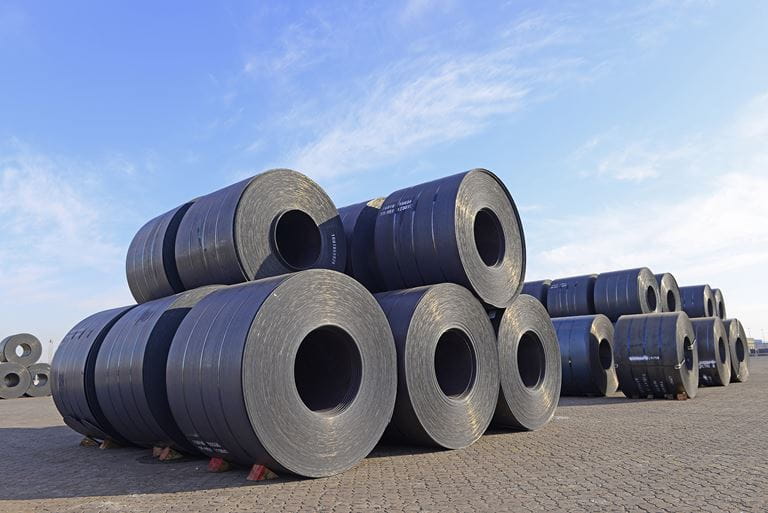
EU proposes provisional HRC AD on three countries
The European Commission has proposed provisional anti-dumping duties on hot-rolled coil (HRC) imports on certain countries, according to letter of pre-disclosure of preliminary findings dated 14 March, seen by Kallanish.
The letter states that the summary of duties is for informational purposes only and does not prejudge the Commission’s final decision.
Interested parties are given three working days to submit comments on the pre-disclosure findings.
India proposed not to impose any duties, while Egypt could face a duty of 15.6% including producer Ezz Steel Company.
Japan’s Nippon Steel Corporation and all other companies could be subject to a 33% duty, and Daido Steel and JFE Steel Corporation are both set at 32%, while Tokyo Steel faces a lower duty of 6.9%.
Vietnam’s Formosa Ha Tinh Steel Corporation and all other companies are facing to a 12.1% duty. However, Hoa Phat Dung Quat Steel Joint Company may be exempt from the duties.
“These are proposed duties. When finally published, we will understand if Hoa Phat gets zero and if they are retroactive,” a market participant commented.
The provisional duties apply once agreed to flat-rolled products of iron, non-alloy steel, or other alloy steel, whether or not in coils, including cut-to-length and narrow strip products, not further worked than hot-rolled, not clad, plated, or coated, originating in Egypt, Japan, and Vietnam.
These products are currently classified under CN codes 7208 10 00, 7208 25 00, 7208 26 00, 7208 27 00, 7208 36 00, 7208 37 00, 7208 38 00, 7208 39 00, 7208 40 00, 7208 52 10, 7208 52 99, 7208 53 10, 7208 53 90, 7208 54 00, 7211 13 00, 7211 14 00, 7211 19 00, ex 7225 19 10 (TARIC code 7225 19 10 90), 7225 30 90, ex 7225 40 60 (TARIC code 7225 40 60 90), 7225 40 90, ex 7226 19 10 (TARIC codes 7226 19 10 91, 7226 19 10 95), 7226 91 91, and 7226 91 99.
| Country | Company | Provisional anti- dumping duty (%) |
| Egypt | Ezz Steel Company | 15.6 |
| Egypt | All other companies | 15.6 |
| India | All companies | n/a |
| Japan | Nippon Steel Corporation | 33.0 |
| Japan | Tokyo Steel | 6.9 |
| Japan | Daido Steel | 32.0 |
| Japan | JFE Steel Corporation | 32.0 |
| Japan | All other companies | 33.0 |
| Vietnam | Formosa Ha Tinh Steel Corporation | 12.1 |
| Vietnam | All other companies* | 12.1 |
* It is proposed not to impose provisional anti-dumping duties on imports from Hoa Phat Dung Quat Steel Joint Company.
Elina Virchenko Turkey , Anna Low Singapore

ArcelorMittal closes Italian coating facility
ArcelorMittal will permanently close its facility located near the city of Avellino, Italy. The subsidiary is scheduled to finalise operations on 31 July, a company representative confirms to Kallanish.
The small facility, employing a workforce of 70, specialises in processing flat galvanised steel into pre-painted products, serving the construction and appliance sectors. It faces “a number of challenges, some of which are specific to its geography and market, and some of which are part of the crisis impacting the entire European steel industry,” the representative explains
A company statement explains. “We have done everything in our power to try and maintain the operations in Avellino … Unfortunately, the scale of the challenges facing the site and, consequently, the financial losses incurred … in recent years, have led to the conclusion that we must close the site. We will engage with unions to ensure that all employees affected are supported during this time”.
ArcelorMittal’s other facility, located in Canossa, which caters to the packaging sector, remains operational. The steelmaker’s long and flat products distribution branch in Bologna closed permanently on 31 December 2024. The steelmaker’s other distribution hub in Flero, Brescia, continues to operate.
ArcelorMittal’s French service centre division – CSE – also confirmed last year the permanent closure of the Reims and Denain sites in northern France. This was due to a “structural decline in our customers’ needs”, the firm said then, particularly in the automotive and industrial sectors, as well as low-cost imports from outside Europe.
Natalia Capra France

UK HRC market remains lacklustre
The UK hot rolled coil market remains lacklustre, with little change to sentiment or prices despite US steel tariffs coming into effect, Kallanish learns from sources.
Participants note that market conditions have remained largely unchanged throughout March so far, with stability in HRC prices reflecting that.
Kallanish assessed UK S275 grade HRC at £525-570/tonne ($679-737/t) ddp Midlands on 13 March, unchanged week-on-week.
Recent quotes for material imported from Asia are towards the lower end of the range, while HRC from Europe has been towards the top end.
Demand continues to be limp on the UK market, with a lack of supportive factors to create any substantial upward momentum.
“There are lots of enquiries and no one booking anything,” one market participant tells Kallanish, noting that some European mills had filled order books until late May, and were no longer issuing fresh quotes. “They are sitting and having a think and revision of their next offer.”
This echo’s a similar trend on the EU market, where many mills held quotes whilst they were awaiting the outcome of the safeguarding review. In recent days, the EU has notified the WTO of adjustments to its safeguard measures on certain steel imports.
The participant adds that lower-priced imports from Asia were not particularly attractive to some, given the material available closer to home.
Meanwhile, the greatest source of demand continued to be for HRC which needed further processing, including colour coating and galvanizing. One source notes enquiries seeking large volumes of galvanized material, whilst stocks of these grades were minimal.
“There’s not a lot changed at all. Pretty steady, almost stagnant,” says another participant. “We are struggling to get hold of galvanized material; it’s a concern, and very slow coming through. There are things on the horizon where availability might start pushing price up, but it’s too early to see.”
They note that while Donald Trump’s tariffs could push prices up, the only real driver was demand, adding that many buyers were reluctant to purchase “anything”.
Participants previously told Kallanish when the US tariffs were first announced that there was little support for prices, and tariffs were of minimal concern, because volumes from the UK to the US only accounted for 7% of exports.
The tariffs went into effect on 12 March, with the UK not granted an exemption.
However, the main consequence of the tariffs remains the potential flood of diverted material into the market. Some participants and industry associations are urging the UK government to respond faster with safeguarding measures or retaliation like that of neighbouring Europe.
Carrie Bone UK

US remains ArcelorMittal’s top market; Italy, UK grow
The US remained ArcelorMittal’s top sales market in 2024, while Poland moved up one place to fourth and Italy and the UK were among the few markets to see sales growth.
US sales slipped 5% on-year to $8.44 billion, while number two market Brazil saw sales fall 8% to $7.56 billion and third-largest destination Germany recorded a 12% decline to $5.76 billion, Kallanish notes from ArcelorMittal’s 2024 annual report.
Sales in Poland inched down 0.5% to $4.44 billion but still overtook France whose sales dropped 9% to $4.19 billion.
Of the rare growth areas, Italy sales rose 8% to $2.8 billion and UK sales by 9% to $1.46 billion.
In North America, ArcelorMittal Dofasco’s crude steel output was unchanged on-year in 2024 at 3.1 million tonnes, but ArcelorMittal Mexico production plummeted 34% to 2.5mt. In Brazil, Tubarão output was up 5% to 6.9mt and ArcelorMittal Pecém output surged 20% to 3mt, although this is partly because this figure is counted only from the point Pecém was acquired in March 2023.
In Europe, ArcelorMittal Bremen crude steel production rose 7% in 2024 to 3.1mt after the unit carried out blast furnace maintenance in 2023, which was also the case at ArcelorMittal Belgium whose output surged 21% to 5.2mt.
ArcelorMittal France saw output soar 23% to 4.8mt as its Dunkirk site was hit with a BF fire in 2023. ArcelorMittal Méditerrané output dropped 21% to 1.9mt as BF1 at Fos-sur-Mer remained idled throughout 2024. ArcelorMittal España output rose 13% to 3.6mt after BFA at Gijón was hit by a fire in 2023.
ArcelorMittal Poland meanwhile recorded a respectable 22% rebound in 2024 crude steel production to 3.8mt, following a very weak 2023. The rebound came despite the Krakow unit coke oven battery being permanently closed in July 2024, and coke oven battery 6 at the Zdzieszowice plant being closed in December 2024.
Adam Smith Poland
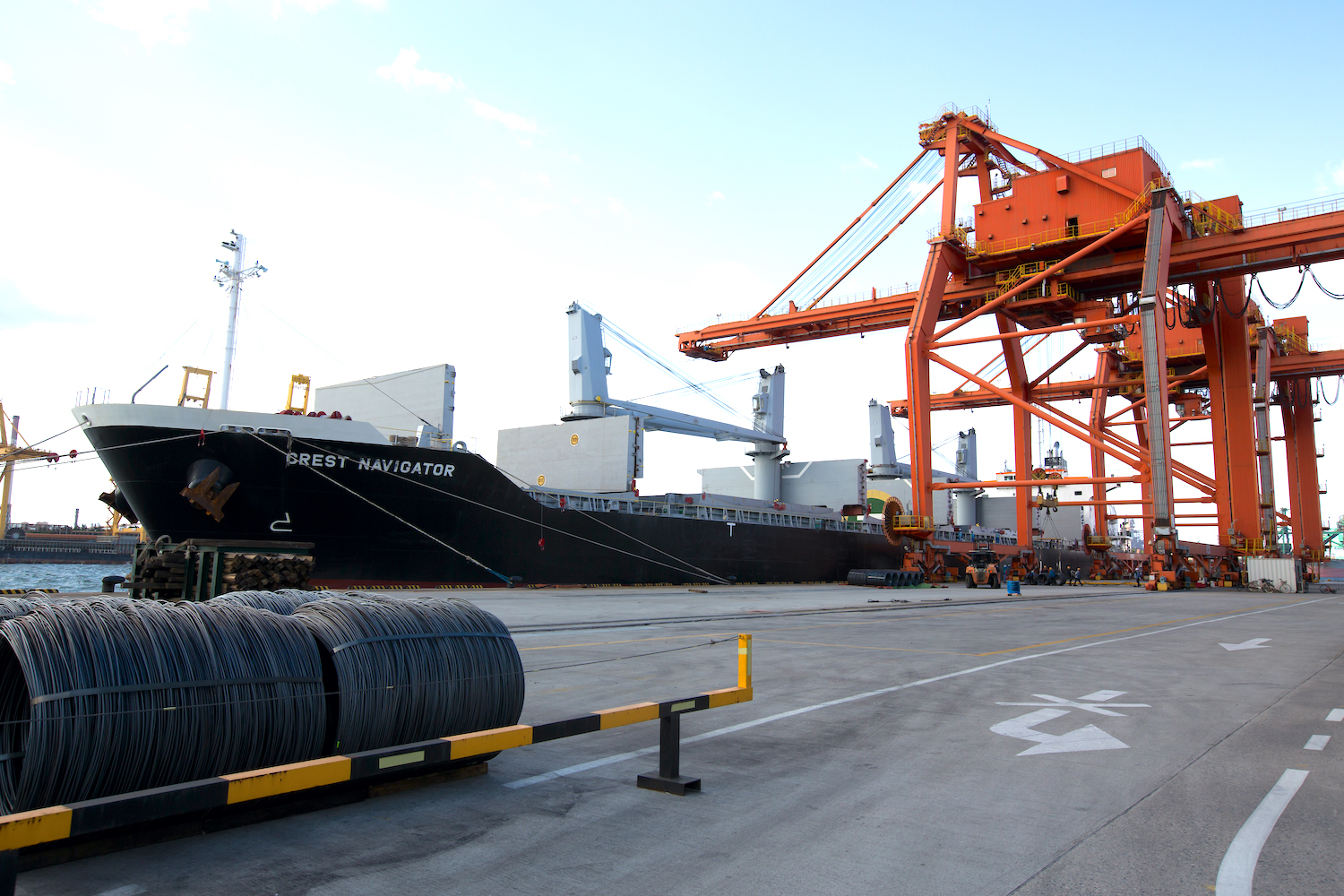
EU Commission proposes provisional AD duties on HRC imports from Egypt, Japan, Vietnam
The European Commission said in a March 14 statement that it proposed to apply provisional antidumping duties ranging from 6.9% to 33% on its imports of flat hot-rolled coil steel products from Egypt, Japan and Vietnam.
In view of comparable dumping margins revealed by the AD investigation into the respective imports, the Commission proposes 12.1% and 15.6% duties for HRC originating, respectively, in Vietnam and Egypt.
The duties suggested for Japanese coils are significantly steeper except for Tokyo Steel, which faces 6.9%, but Daido Steel and JFE Steel Corp. are challenged with 32% and all the rest, including Nippon Steel, with 33% AD charges to be levied on their HRC sales to the EU.
HRC imports from India are part of the same investigation too, but no dumping margin has been identified so far, following the EU statement.
The proposed duties will not apply to stainless and grain-oriented silicon electrical steel, and tool and high-speed steel strip, as well as sheets in thicknesses exceeding 10mn and widths of 600mm or more.

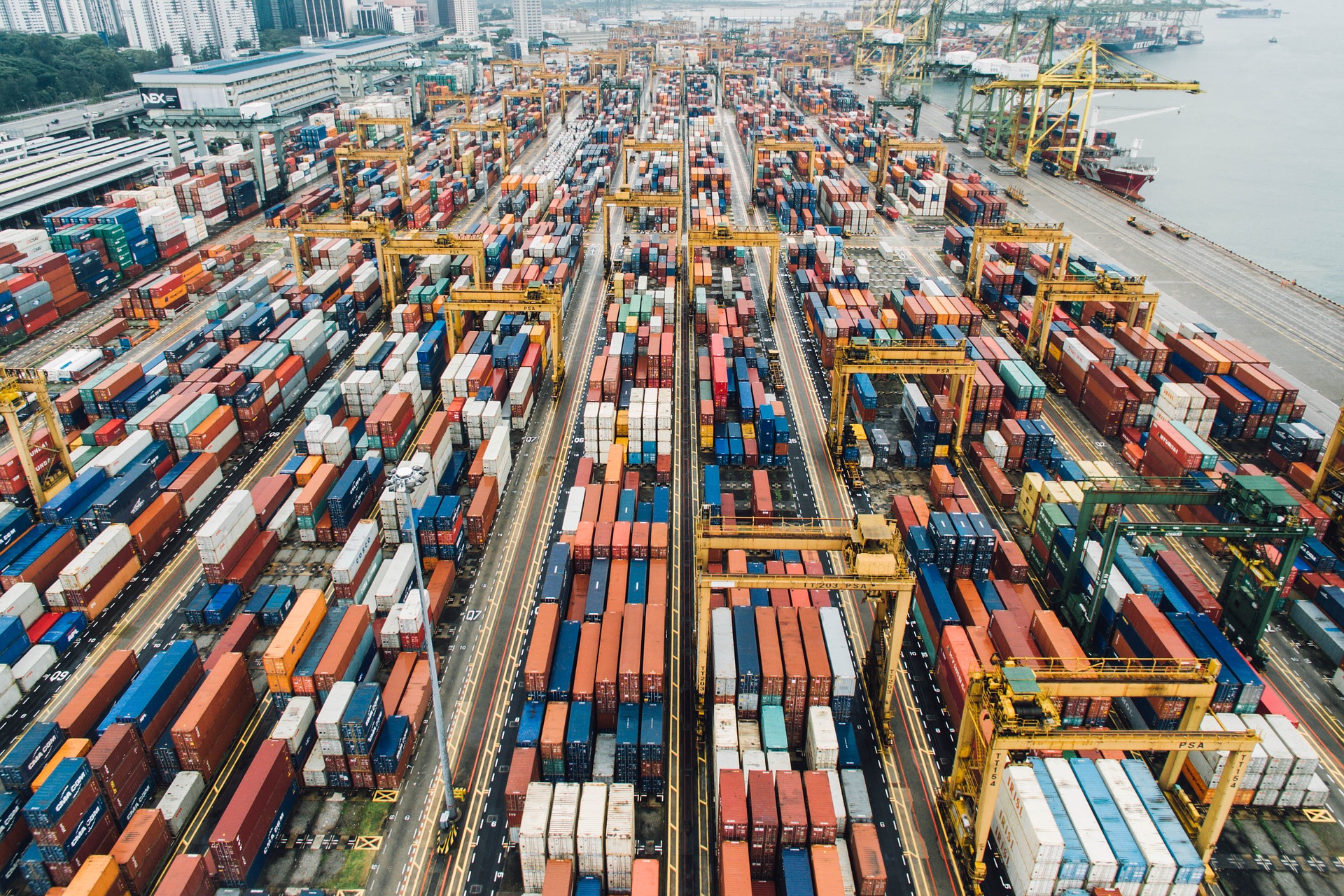
EU finds no dumping on India HRC
A pre-disclosure to the EU’s anti-dumping investigation found no dumping on hot-rolled coil (HRC) imports from India, while imposing provisional duties on Egypt, Japan and Vietnam in a range of 6.9-33pc from 7 April.
Japan’s Nippon Steel faces one of the highest import duties, at 33pc, while benchmark mill Tokyo Steel has the lowest, at 6.9pc. Fellow Japanese steelmakers Daido Steel and JFE Steel will be taxed at 32pc. All other Japanese producers will have a provisional duty of 33pc.
Material from Vietnam will be subject to a 12.1pc duty, while Egyptian exporters face a 15.6pc tax. No provisional duties are proposed for imports from Vietnam’s Hoa Phat, according to a leaked document from the European Commission.
Egypt, Japan and Vietnam sold 2.2mn t of HRC into the EU last year, accounting for around 25pc of total imports. Egypt sold 694,000t, Japan 860,000t and Vietnam 727,000t.
Indian imports will be unconstrained, as they are subject to a 0pc duty. It shipped 1.2mn t into its own quota last year. India was the most affected HRC supplier by the safeguard review, with imports from the country falling by 23pc to 225,000 t/quarter.
The provisional rates mean Vietnamese HRC will remain easily workable into the EU, and the duties will have little impact on the volume of supply from the country — apart from the limitations already imposed by the safeguard review, which limits imports from other countries to around 111,000 t/quarter. Egypt would be “cooked”, a trader said, with its import volumes likely to decline substantially, if the provisional duties become definitive. Prices in the EU are less likely to increase if these duty rates are imposed, and because the safeguard review results earlier in the week were less stringent than expected, a buyer said.
The low duties on Vietnamese material — below most market expectations — will be welcomed by large re-rollers that account for a high share of the country’s exports to the EU.
Definitive measures are expected by 7 October.
| EU HRC provisional anti-dumping duties | % | |
| Mill | Provisional duty | |
| Japan | ||
| Nippon Steel | 33.0 | |
| Tokyo Steel | 6.9 | |
| Daido Steel | 32.0 | |
| JFE Steel | 32.0 | |
| All others | 33.0 | |
| Egypt | ||
| Ezz Steel | 15.6 | |
| All others | 15.6 | |
| Vietnam | ||
| Formosa Ha Tinh | 12.1 | |
| All others* | 12.1 | |
| India | ||
| All mills | 0† | |
| * No duties on Hoa Phat Dung Quat | ||
| †no dumping found | ||
| – EC | ||
By Lora Stoyanova and Colin Richardson

Source: argusmedia.com