

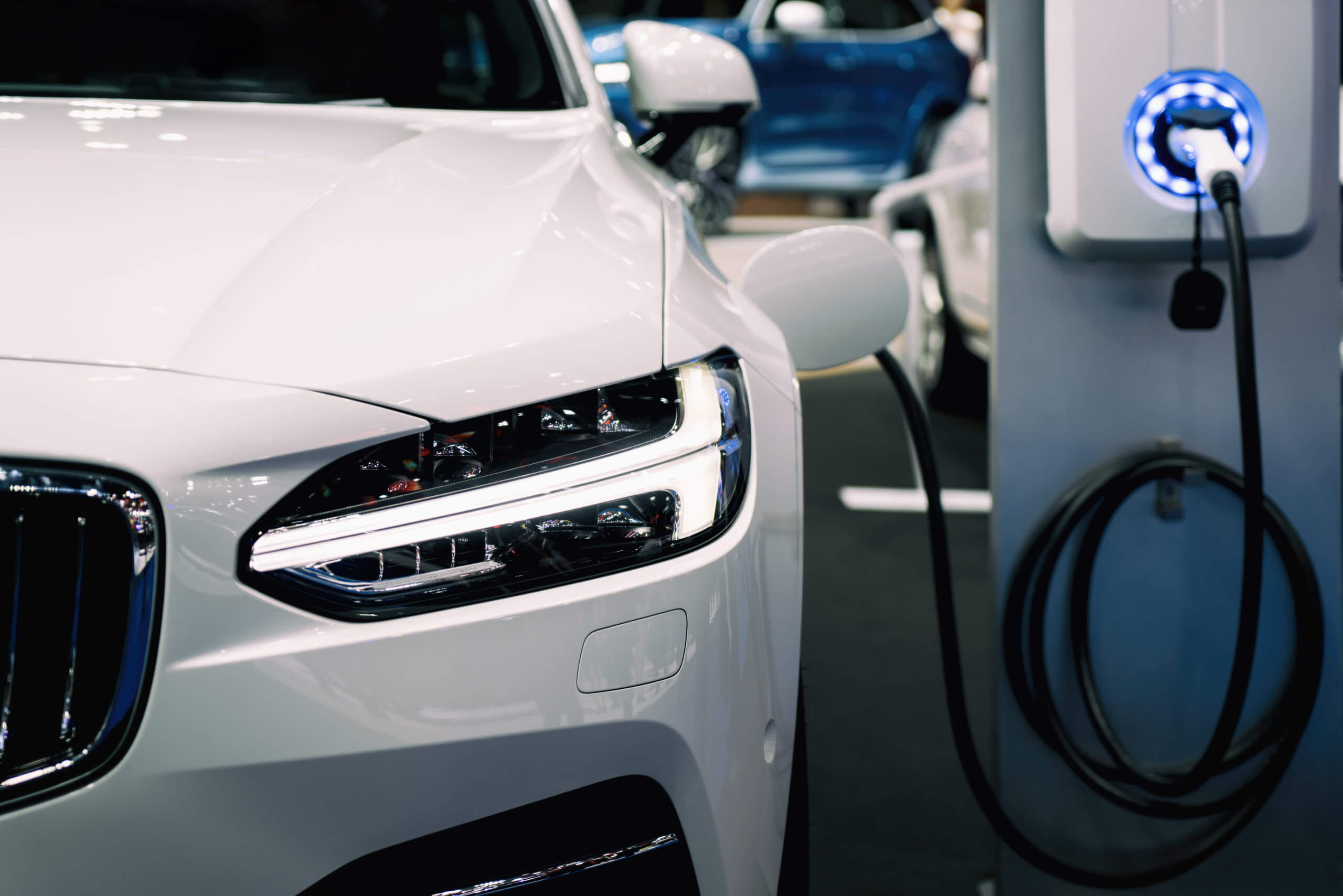
German car production defies crisis fears
Passenger car production in Germany in the first nine months of 2024 amounted to 3.1 million units, only 1% below the first three quarters of 2023, says automotive federation VDA.
This does not suggest German carmaking is experiencing any kind of crisis, given also that full-year 2023 output surged 18% on 2022. However, VDA emphasises performance still remains poor versus pre-Covid levels, Kallanish notes.
In September alone, production even came to 393,600 units, rising 9% over the same month last year. However, the previous year’s level was weak by historical comparison, VDA notes, and adds there is “significant pressure” on the German carmaking industry. Compared to the nine-month output of the pre-Covid year of 2019, production after nine months of the current year was down 13%.
New car registrations in Germany remain in the red – in the first nine months, a total of 2.12m new cars were registered, down 1% year-on-year. As a result of the recent decline in car registrations, the gap to pre-crisis levels is still widening. Current volume is almost 23% below sales in the same period in 2019. In September, new registrations fell on-year for the third consecutive month, with 208,800 new cars registered in Germany, 7% fewer than in September 2023.
Exports have developed somewhat more dynamically. Since January, 2.4m new cars have been exported, 3% more than in the same period last year. These exports are still however almost 10% below 2019. In September, 305,400 brand new cars were exported from production facilities in Germany, up 11%.
Christian Koehl Germany

Market eyes coil increase despite low consumption: EuroBlech
Sources from mills, re-rollers, and service centres anticipate price increases for coil in November, as indicated by their opinions at the EuroBlech event in Hanover last week.
A mill source said he concluded transactions at the event and anticipates that prices will rise by approximately €30-40/tonne ($32.41-43.21/t) in November.
While the EU is contemplating the implementation of more stringent safeguard tariffs to support European steelmakers amid alleged Asian-origin dumping, a major steelmaker started to ask for a delivered rate of €600-620/t base for hot rolled coil at the tradeshow.
Additionally, potential production reductions are anticipated in the opening months of the new year, but no official announcements have been made.
Several buyers report the coil consumption recovery has not yet materialised in Europe. Kallanish is told by re-rollers and service centres in Italy they are increasing prices of tubes and sheets.
However, the market remains competitive and companies are willing to compromise on prices in order to avoid losing orders, given the prolonged low sales volumes.
Meanwhile, service centres’ customers are attempting to secure material for the first quarter of 2025 and some for the first half of the year at the current low prices for sheet. They anticipate prices of coil and its derivatives will increase.
Hot rolled sheet in Italy and other EU countries such as Germany and France is at approximately €620-630/t ex-works and €660/t for pickled sheet.
Some service centres are reporting losing orders as a result of their attempts to increase their prices by €10-20/t.
The market has been hit particularly hard by the consumption decline, with a large number of companies fighting for volumes both in southern and northern Europe.
Those who should be strict on price increases are frequently willing to offer discounts in order to avoid losing orders.
The HRC price recovery is stuttering due to weak downstream activity and collapsing production volumes in Europe’s automotive sector. However, several sources at EuroBlech stated that increases are “in sight.”
So far, the average price of HRC contracts in Europe remains steady at €550/t base delivered on average, or ex-works depending on client and point of delivery, with southern Europe experiencing marginally lower prices.
Import offers are diminishing, and some import contracts are also being heard at €530-540/t cfr southern Europe.
Meanwhile, the EU has enforced the registration of imports involved in ongoing anti-dumping investigations for cases that have not yet reached the provisional duties stage.
Specifically, imports of hot-rolled steel from Egypt, India, Japan, and Vietnam, as well as tinplate, seamless pipe and tube, and steel track shoes from China are now subject to import registration, among 12 ongoing anti-dumping investigations.
Natalia Capra France

EU begins registration of imports under investigation
The EU has brought into force the registration procedure for imports involved in ongoing anti-dumping investigations for cases that have not yet reached the provisional duties stage.
The European Commission initially announced last month it was planning on registering all imports of products under anti-dumping or anti-subsidy investigations, including cases awaiting provisional determinations.
Specifically, imports of hot-rolled flat steel from Egypt, India, Japan, and Vietnam, as well as tinplate, seamless pipe and tube, and steel track shoes from China are now subject to import registration, among 12 ongoing anti-dumping investigations, Kallanish notes.
The registration of imports is designed to prevent sharp increases in imports of products under investigation ahead of the imposition of measures and provide accurate data on import sources and quantities. Retroactive collection is not automatic.
“This registration establishes a legal basis for the possible retroactive application of anti-dumping duties in these cases, should the required conditions be met,” explains Yuriy Rudyuk, a partner at law firm Van Bael & Bellis.
The registration procedure becomes effective from 26 October, the day after the notice was published in the EU Official Journal. It will expire nine months thereafter.
In the case of the HRC probe, concerning imports from Egypt and Japan during the period from January to December 2023, the allegations in Eurofer’s complaint requesting the investigation estimate dumping margins from 30% to 40% and from 10% to 20%, respectively. They estimate an average injury elimination level of 26% and 29.3%, respectively. The amount of possible future liability would normally be set at the lower of those two levels.
For imports from India and Vietnam, the allegations estimate dumping margins around 10% and from 5% to 15%, respectively, and an average injury elimination level of 27.3% and 34.7%, respectively. The amount of possible future liability would normally be set at the lower of those two levels. The probe could find evidence of raw material distortions. In this case, the liability would be set at the level of the dumping margin, if it is concluded that a duty lower than the margin of dumping would not be sufficient to remove the injury suffered by EU industry, the Commission says.
Elina Virchenko UAE

EU HRC prices rise due to higher mill offers
Domestic European hot-rolled coil prices rose slightly Oct. 25, as many European mills increased their offer levels following the Euroblech Hannover steel fair, said a Germany-based mill source.
A major European mill is rumored to cut production in the beginning of the first quarter of next year, by temporarily taking one of its blast furnace sites offline, according to sources. The anticipated production cut, along with high import prices, is expected to support higher European flat steel spot market prices, said a Germany-based service center source.
Many European mills reported full order books until the end of the year, according to a Germany-based mill source. The source explained that spot market activity remained low due to weak demand from the automotive industry.
Platts assessed Northwest European HRC at Eur575/mt ex-works Ruhr Oct. 25, up Eur10 on the day.
Offers were reported at Eur580-640/mt ex-works Ruhr. Rejected bids were reported at Eur570-580/mt ex-works Ruhr. Tradable values were reported at Eur560-570/mt ex-works Ruhr.
Platts assessed domestic HRC in Southern Europe at Eur550/mt ex-works Italy, stable on the day.
The import market remained weak as the spread between import and European mill offers further narrowed. A Germany-based service center source reported that some import prices were higher than European offer levels.
Platts assessed imported HRC in Northwest Europe at Eur515/mt CIF Antwerp, stable on the day.
Platts assessed imported HRC in Southern Europe at Eur535/mt CIF Italy, stable on the day.


Spanish auto industry remains weak despite post-summer recovery
Spain’s car industry saw activity rise sharply after a poor performance in the summer, Kallanish notes. However, the sector remains stagnant compared to last year.
According to the country’s automotive association, Asociación Nacional de Fabricantes de Automóviles y Camiones (Anfac), output in September was 205,418 units, compared to just 75,434 vehicles in August. This volume, however, was 2.4% less than the same month in 2023. Of the total, 75.1% were gasoline and diesel-powered automobiles.
Nine-month production amounted to 1.79 million units, a decrease of 1.6% compared to January-September last year.
“Vehicle production merely reflects current market demand,” says Anfac general director José López-Tafall. “Our factories are following the trend of a stagnant market, both in Europe and Spain, conditioned by the delicate situation of the main markets and export destinations such as Germany and France.”
Spanish vehicle exports rose in September. Shipments were at 185,327 units, compared to 77,038 units in the previous month but 3.6% lower than a year ago.
European markets had a 92.7% share in Spanish deliveries in September, 0.3 percentage points less on-month but 3.4pp higher on-year. Nine-month exports slipped 2.8% over the same period in 2023 to 1.59 million vehicles, Anfac data show.
Todor Kirkov Bulgaria

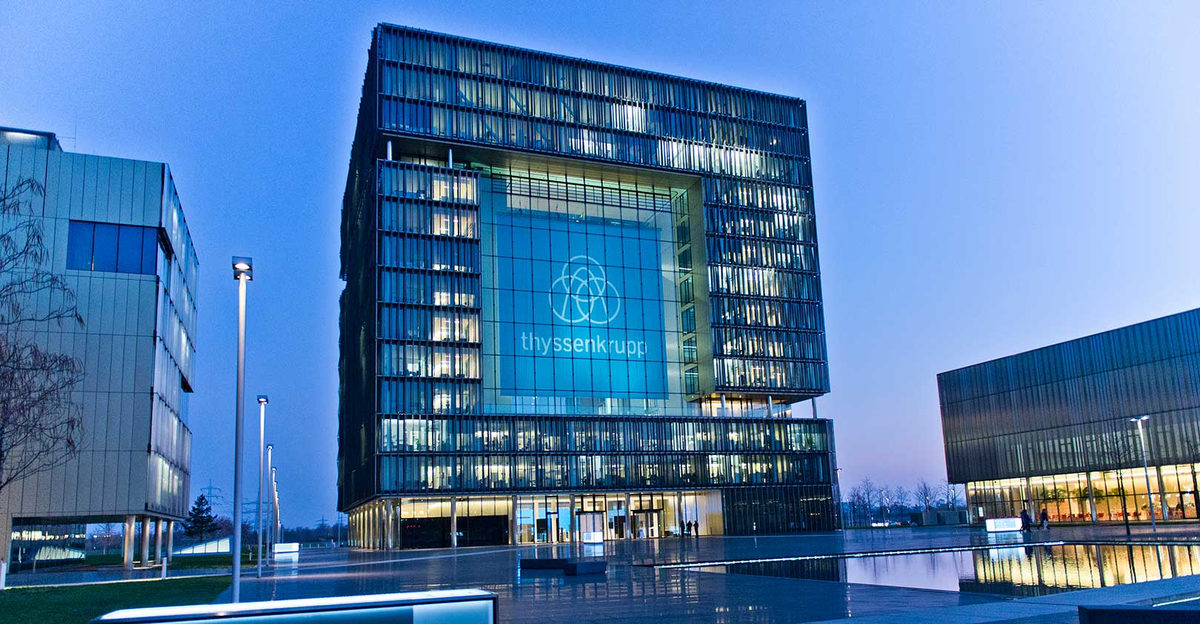
Thyssenkrupp launches AI solution for sheets, blanks
Thyssenkrupp Materials Services has developed an AI platform that digitises the nesting process – the intelligent placement of blanks on sheet metal – and the pricing process, Kallanish learns.
The platform is called smart.processing and is integrated into the new online shop of Max Cochius, an associated company of thyssenkrupp Schulte, and a leading metal distribution provider in Germany. Max Cochius customers can now purchase material in any desired free-form 24 hours a day, 7 days a week, from anywhere. By placing the blanks in the best way, smart.processing minimises material consumption and therefore costs, tk Materials claims.
According to the company, telephone inquiries as well as manual price calculations for blanks and quotes are still common in materials distribution. The smart.processing AI platform ensures that customers can now get prices for their blanks in seconds and complete the purchase online. The complexity of the shape is no obstacle to the automated price calculation: Any shape is possible, from tubes and sheets to fully personalised free-forms.
Christian Koehl Germany
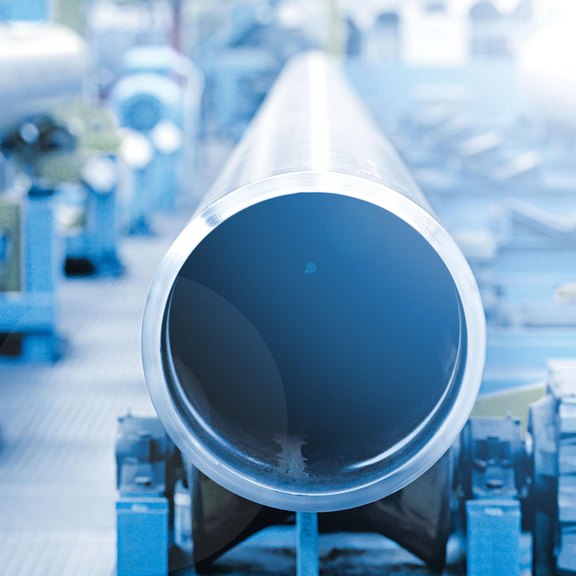
Another Polish steel firm eyes stock exchange delisting
Polish pipemaker Ferrum has applied to the Polish Financial Supervision Authority for approval to delist from the Warsaw Stock Exchange, Kallanish notes.
The firm, listed since 1997, did not provide a reason for the move.
In the first half of 2024 it saw own-produced pipe sales fall 12% on-year to 41,900 tonnes. However, overall product sales, including traded products, rose 5,000t to 54,800t. Revenue at sell fabricator subsidiary ZKS Ferrum surged 81% to PLN 59.5 million ($14.8m).
Consolidated H1 revenue rose 15% to PLN 356.6m but net loss deepened almost five-fold to PLN 1.9m.
Bydgoszcz-based steel distributor Drozapol-Profil also applied for approval to delist earlier this month. Major Polish distributor Konsorcjum Stali delisted in 2020.
Adam Smith Poland
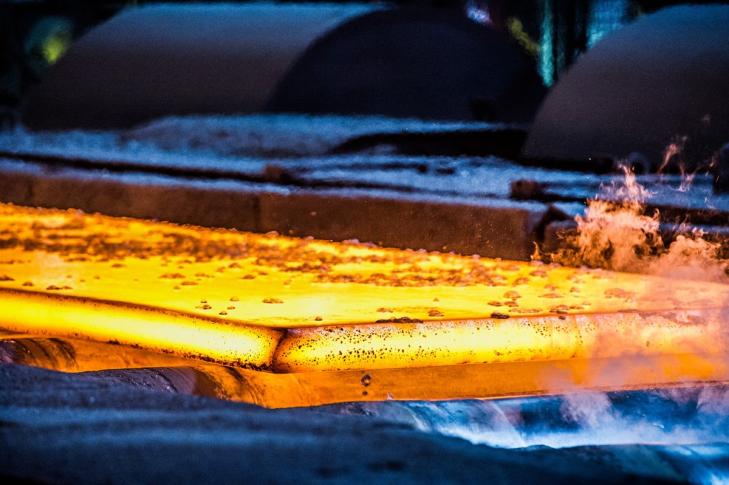
NLMK Verona builds EAF, Clabecq upgrades plate technology
NLMK’s Italian facility in Verona is to build a new electric arc furnace for slab production, scheduled to be commissioned in 2027, a company representative confirms to Kallanish.
The new EAF production process is expected to ensure minimal environmental impact while facilitating the production of green steel slab. The steelmaker is simultaneously executing a project to electrify its existing gas-powered equipment. Verona already produces green slab thanks to the existing EAF that supplies half of the mills’ plate production.
The site’s revenue is anticipated to rise by 50% as a result of the investment, from €400 million ($432.11) to roughly €600m. In 2023, NLMK Verona achieved a turnover of €413m. It has an annual capacity of 450,000 tonnes and employs 310 people. It sells 75% of its production domestically while also exporting to markets in Asia, North America, and other EU countries. The Verona facility is part of the NLMK Europe plate division together with NLMK Clabecq in Belgium and Denmark’s NLMK DanSteel.
This month, NLMK Clabecq is launching an enhanced process technology called “InThinity”, designed to produce thin plate with tight thickness tolerances. Clabecq is now able to produce high-precision plate across thicknesses of up to 15mm.
This is the result of a revamp of the finishing mill completed in 2023. The investment included the upgrade of the Hydraulic Gauge Control (HGC), advanced flatness management, the replacement of the primary and the secondary descaler, now operating at 250 and 130 bars, and the creation of four independent rolling stands that allow for precise adjustments during production. These guarantee a uniform thickness throughout the plate while simultaneously enhancing flatness.
“This technology ensures that high precision is embedded in every plate as a standard offering, strengthening our position as a supplier of premium steel products and helping manufacturers achieve better performance in their operations,” chief commercial officer of NLMK Europe Plate, Peter Selbach, says in a note sent to Kallanish.
InThinity guarantees thickness tolerances that exceed industry standards. “For thicknesses between 3mm and 5mm, tolerances are reduced from 1mm according to EN 10029 to 0.6mm with InThinity, and further to a guaranteed 0.4mm with InThinity+,” the note concludes.
With an annual capacity of 750,000t, NLMK Clabecq produces steel plate ranging from 3 to 120mm thicknesses for the construction, shipbuilding, energy, transport, yellow goods, and mining sectors.
Natalia Capra France
Slow trading weighs on Southern European steel longs market
Fastmarkets price assessment for steel reinforcing bar (rebar) domestic, exw Italy was €560-580 ($604-626) per tonne on Wednesday, down by €10 per tonne from €570-590 per tonne week on week.
Market participants attributed the downward price movement to weak activity in the Italian rebar market.
“Demand is not so good, bad weather is slowing building sites, so customers have to destock before buying new materials,” a buyer source said.
“Mills are trying to increase the rebar price, but low demand makes it difficult to invert the price trend,” he added.
“There is very little news. The market is very calm, but we think the price floor has been reached,” a second buyer source said.
Meanwhile, export offers from Italy were reported at $550-580 per tonne FOB Switzerland and France, sources said.
Meanwhile, Fastmarkets’ price assessment for steel reinforcing bar (rebar), domestic, delivered, Spain was €605-610 per tonne on Wednesday, stable week on week.
Market participants reported unchanged market conditions in the Spanish rebar market.
“Prices are stable, and consumption is still weak,” a producer source in the region said.
“The market is unchanged, and prices are stable. There is no buying of imported stock because the quota is full for the fourth quarter. Rumors are there is a lot of rebar imports arriving to European ports so there will be plenty of material before new quota opens on January 1,” a producer source said.
Southern European wire rod
Fastmarkets’ price assessment for steel wire rod (mesh quality), domestic, delivered Southern Europe was €600-630 per tonne on Wednesday, widening up by €10 on the high end of the range week on week.
Published by: India-Inés Levy


European steel HRC prices broadly flat; sentiment mixed
European producers have been pushing for higher HRC prices since the beginning of October, citing rising production costs and squeezed margins, but so far their bullish moves have only brought some stabilization.
“The market fundamentals remain weak,” a buyer source in Northern Europe said. “[HRC] prices are still under pressure and, because of that, most buyers are in wait-and-see mode. The price of €590 [$636 per tonne] that ArcelorMittal announced a couple of weeks ago isn’t realistic now.”
Fastmarkets calculated its daily steel hot-rolled coil index, domestic, exw Northern Europe at €549.38 per tonne on Thursday, down by only €0.62 per tonne from €550.00 per tonne the previous day.
The index was down by €5.91 per tonne week on week and by €3.33 per tonne month on month.
In Northern Europe, offers of coil for November-December delivery were reported at €550-570 per tonne ex-works, with €540 per tonne ex-works said to be achievable for larger volumes.
For January-delivery coil, some suppliers voiced price ideas at €580-600 per tonne ex-works, but this was not considered workable in the spot market at the moment.
“European mills are not actively offering [HRC] for deliveries next year [2025] yet. The market is not strong enough to accept an increase,” a second buyer said. “Until the automotive industry improves, we will not see any positive change [in the price of HRC]. All car sales figures for September in the main countries [of Europe] are negative, so I don’t think anything will happen.”
Slow real demand from key end-user sectors, especially the automotive industry, was the major obstacle for a sustainable price rebound, market sources said.
“Automotive [original equipment manufacturers] have put pressure on [steel] mills to get extra discounts for [long-term contracts] for next year,” a third market source said. “Some [steel service centers] have given in and reduced contract prices for this year already.”
Several market sources suggested that European mills might start to reduce steel output in November-December, in an attempt to balance demand and supply and in the hope to achieve higher prices in spot sales in the first quarter of 2025.
“European mills have produced enough [crude steel] to get free carbon credits for the next year. So reducing output in an oversupplied market would be a logical step,” a trading source in Germany said.
Meanwhile, in Southern Europe, Fastmarkets calculated its daily steel hot-rolled coil index, domestic, exw Italy at €546.25 per tonne on Thursday, down by €2.13 per tonne from €548.38 per tonne the previous day.
The Italian index was down by €5.63 per tonne week on week and by €6.25 per tonne month on month.
Suppliers in Italy were offering December/January-delivery HRC at €570-580 per tonne delivered, which would net back to €560-570 per tonne ex-works, with possible discounts of no more than €10 per tonne, Fastmarkets understands.
Buyers’ ideas of tradeable values were lower, however, at €540-560 per tonne delivered (€530-550 per tonne ex-works).
Market sources suggested that November lead times were still available from some suppliers.
“[HRC] sales are slow. Lack of imports helps, but with no real demand there is no chance to increase prices,” a buyer in Italy said.
Meanwhile, the market for imported HRC was also quiet, with offer prices far above the level that European buyers would prefer to pay, market sources said.
Notably, November-shipment HRC from Turkey was offered at €580-590 per tonne CFR to Italy, including anti-dumping duty.
From Asia, offers were reported at €550-570 per tonne CFR to Italy.
“Import [HRC] offers are not workable [because they are] too close to domestic prices [in Italy],” a trading source in the country said. “Besides, most buyers are afraid of provisional anti-dumping duties against certain origins to be made by the EU in December.” These were expected to affect materials from India, Vietnam, Japan and Egypt.
Green Steel
Demand for green steel across Europe remained limited, due to significantly high premiums for such materials, and a lack of the regulation in the industry that would stimulate buyers to “go green,” market sources said.
European flat steel suppliers continued to offer steel with Scope 1, Scope 2 and upstream Scope 3 emissions below 0.8 tonnes of carbon dioxide (CO2) per tonne of steel at a premium of €200-350 per tonne.
Market sources said that such prices could be achieved in long-term contracts.
Achievable prices for similar material in the spot market were reported by buyer sources at a premium of €50-100 per tonne during the assessment week.
Market sources reported a bid for 20 tonnes of HR flat steel, carbon neutral for Scope 1 and 2 emissions, at €70 per tonne. A supplier source said that its price idea for such an order would be no lower than €100 per tonne.
As a result, Fastmarkets’ weekly assessment of the green steel, domestic, flat-rolled, differential to HRC index, exw Northern Europe was €100-200 per tonne on Thursday, unchanged week on week.
Published by: Julia Bolotova