


Eurofer gives up on expectations for demand recovery in 2024
According to Eurofer’s latest report, demand is expected to shrink by 1.8% to 127 million tonnes in 2024. This is a downward revision from the previous forecast from end-July of a slight recovery by 1.4%.
At the beginning of the year, Eurofer predicted a recovery of apparent steel consumption in the EU by 5.6%, rising to 137 million tonnes in 2024. Since then, this has been the third time Eurofer has downgraded its forecasts.
“In 2024, due to poor developments in the industrial outlook and decreasing demand from steel-using sectors, particularly construction and automotive, apparent steel consumption is projected to experience another recession, albeit moderate,” Eurofer said, adding that a modest recovery is foreseen in 2025.
According to the association, apparent steel consumption in the EU in 2025 will increase by 3.8% to 132 million tonnes, still below the pre-pandemic volume of 145 million tonnes in 2019.
After a short-lived rebound of apparent steel demand in January-February 2024 related to restocking, activity in the European flat steel market has been deteriorating, with prices under pressure.
For example, in February, Fastmarkets’ steel hot-rolled coil index domestic, exw Northern Europe averaged €738.28 ($797.86) per tonne ex-works.
Since then, the average monthly HRC price has been decreasing gradually, and for September, it reached €567.22 per tonne. Similar levels were last recorded in November 2020, when the index averaged €530.72.
At the beginning of October, European mills tried to push prices up by increasing their offers.
But demand remained weak, and deals continued to be concluded at lower levels.
“Mills’ attempts for price increases were unsuccessful, but at least the HRC prices stopped dropping further,” a buyer source told Fastmarkets.
Industry sources commented that any hopes for a price rebound would be postponed to the first half of 2025. A potential positive impact on the domestic HRC price could be uncompetitive import offers combined with some output cuts in the local market, Fastmarkets understands.
End-user outlook
Automotive
Eurofer said that automotive output in the EU27 had previously increased by 8.3% overall in 2023, despite the overall subdued investment outlook.
“However, output levels have remained low in historical terms, far below the levels seen in 2018 and 2019,” Eurofer added.
The sector was expected to decline by 6.5% in 2024 (revised downward from a 3% decline in a previous outlook) and to increase by just 1.9% in 2025 (revised downward from a 2.3% growth).
According to Eurofer, the reasons for the negative trend were related to the protracted weakness of the manufacturing sector, overall EV standards uncertainty and lackluster consumer confidence.
“Demand is projected to remain weak until the macroeconomic picture and consumer disposable income substantially improve, given the rather unpredictable economic outlook and uncertain economic growth perspectives”, Eurofer said.
But according to the association, demand has shown some resilience against all the uncertainties around the implementation of EVs and preparing the ground for the ban of petrol cars by 2035.
Negotiations between steel mills and original equipment manufacturers (OEMs) in the automotive industry for HRC contracts for the first half of 2025 were still underway, and OEMs would likely seek substantially lower prices for the next year contracts, sources reported.
Notably, several sources told Fastmarkets that for the first half of 2025 contracts, OEMs were asking for discounts up to €200 per tonne, which were “unacceptable” from suppliers’ point of view.
For the second half of 2024, long-term contracts with automotive OEMs were closed at €730-750 per tonne — and even at €700 per tonne in some cases — in contrast with €800 per tonne in the first half of the year.
Construction
The largest steel-using sector — representing 35% of total steel consumption — construction consumption fell by 0.8% in 2023.
For 2024, Eurofer expected that construction activity would continue to decrease, falling by 1.3% rather than the previous prediction of a 1.4% decline.
The sector is expected to grow by 1.3% in 2025 (revised downward from 1.8%).
According to Eurofer, construction output has been under pressure since the third quarter of 2022.
“This is due to several factors, including rising construction material prices, labor shortages in some EU countries and increasing economic uncertainty. Most notably, higher interest rates in 2022 and 2023, driven by monetary policy tightening, have also played a key role,” Eurofer said.
All these factors impacted the sector negatively, especially the private non-residential sub-sector.
Fastmarkets’ price assessment for steel reinforcing bar (rebar), domestic, delivered Northern Europe averaged €635.63 per tonne at the midpoint in September, up slightly by €8.13 per tonne from a monthly average of €627.50 per tonne at the midpoint in August. But the assessment was sharply down from a monthly average of €589.38 per tonne at the midpoint in September 2023.

European HRC prices remain steady in quiet market
Fastmarkets calculated its daily steel HRC index, domestic, exw Northern Europe at €550.29 ($594.04) on Monday, up by just €0.29 per tonne from €550.00 per tonne on Friday October 25.
The index was down by €2.84 per tonne week on week, but up by €5.08 per tonne month on month.
Mills in Northern Europe were heard offering November/December-delivery HRC at €550-570 per tonne ex-works.
Higher prices were on offer for the first quarter of 2025, at €580-600 per tonne ex-works, sources said.
But buyer estimates for the workable level for November/December-delivery came in at €540-550 per tonne ex-works.
And some deals were reported at €550 per tonne ex-works.
Producer hopes for a stronger price rebound seem to have been postponed, however, at least until the first, or even second, quarter of next year, Fastmarkets understands.
The main factors expected to support prices were the uncompetitive import offers and potential production cuts across Europe, but there has been no official information about any moves in this direction, sources told Fastmarkets.
There were some rumors one integrated mill in Europe planned to increase its HRC offer prices in November, but that could not be confirmed.
“The main problem of the steel sector in Europe is the very low demand or the lack of demand,” a buyer source told Fastmarkets.
And a second buyer said the market remains quiet.
“I doubt that many buyers would like to book HRC even at €550 per tonne ex-works. Some volumes were already traded when prices were lower – at €520-530 per tonne ex-works,” the second buyer source said.
The source told Fastmarkets that, while attempts by producers to push up prices in October were not so successful, they did at least stop prices falling any further and Europe’s automotive sector was still struggling, with some companies not booking the expected volumes of HRC.
“This is the reason why some mills are still offering November-delivery coil,” the second buyer source added.
In Southern Europe, Fastmarkets calculated its corresponding daily steel HRC index, domestic, exw Italy at €547.00 per tonne on Monday, up by €0.75 per tonne from €546.25 per tonne on Friday.
The Italian index was down by €4.25 per tonne week on week, but up by €5.33 per tonne month on month.
Trading in Italy was quiet, sources said, with suppliers pushing to achieve their offer prices without granting significant discounts.
Local mills were offering December/January-delivery HRC at €570-580 per tonne delivered (€560-570 per tonne ex-works), Fastmarkets understands.
And sources said that November-delivery material was also still available.
Buyer estimates for the tradable market level came in at €540-550 per tonne ex-works.
Import offers of HRC, meanwhile, remained uncompetitive and there were no fresh deals, sources told Fastmarkets.
November-shipment HRC from Turkey was on offer at €580-590 per tonne CFR Italy, including the anti-dumping duty, while Asian material was on offer at €550-570 per tonne CFR, Fastmarkets understands.
Published by: Darina Kahramanova


Heine + Beisswenger opens new site near Bremen
German steel distribution group Heine + Beisswenger has opened a new base in Lemwerder near Bremen, northern Germany, Kallanish learns from the company.
It thereby aims to win new customers in the northern German industries of shipbuilding, hydraulics, fittings, and energy. This includes makers of wind power plants, pumps, or agricultural machinery.
For fittings, the location is offering high-wear steels such as P250GH+N, A105+N and TSTE355, the company notes. For typical products for the energy industry, like drills, pipes and valve housings, it offers P250GH+N, SA105 and corrosion resistant steels 1.4462, 1.4571 und 1.4404. For agricultural machinery, it is banking on S235 und S355 grades. For cranes and hydraulics, its portfolio covers creep resistant steel with extraordinary longevity, H+B says.
The group is headquartered in Fellbach, southwestern Germany, and operates seven more sites, most of them in the south, but also in North Rhine-Westphalia, near Berlin, and now near Bremen. It mostly handles long products and is mainly active in special bar qualities, with an annual throughput of 250,000 tonnes.
It recently carried out some consolidation on its home turf in the southwest by closing a site in Pforzheim. Customers in the region will now be served from Fellbach and Trossingen, where it recently started operating a new €7 million ($7.7m) logistics centre (see Kallanish 17 July).
Christian Koehl Germany


Turkey’s coated, rod EU TRQ usage becomes critical
Turkey-origin organic coated sheet, wire rod and two tube and pipe categories have rapidly increased EU tariff-rate quota (TRQ) utilisation, Kallanish notes from the EU customs portal.
The organic coated sheet category is nearing full quota utilisation, with 1,280 tonnes remaining out of a 15,889t quota for Turkey-origin imports. This leaves 6% of the total quota still available.
For wire rod, 6,052t remain available out of the 119,011t quota, leaving 5% of Turkey’s TRQ still open.
Hollow sections have completely exhausted their quota, while large welded tube and other welded pipe have just 2% and 1% of their TRQs open, respectively.
The largest category, hot-rolled sheet and strip, have seen moderate usage, with 58% of the 475,174t quota still open, leaving a balance of 279,147t.
| Product | Quota 01.10- 31.12.2024 | Imported | Balance | Awaiting allocation | Remaining | Available TRQ % |
| HR sheets, strips | 475,174 | 196,026 | 279,147 | 3,628 | 275,519 | 58 |
| Organic coated sheets | 15,889 | 14,609 | 1,280 | 281 | 999 | 6 |
| Stainless CR sheets, strips | 21,057 | 8,234 | 12,823 | 241 | 12,582 | 60 |
| Merchant bars, light sections | 107,140 | 18,403 | 88,738 | 520 | 88,218 | 82 |
| Rebar | 95,436 | 48,790 | 46,646 | 0 | 46,646 | 49 |
| Wire rod | 119,011 | 112,959 | 6,052 | 0 | 6,052 | 5 |
| Railway material | 1,574 | 436 | 1,137 | 0 | 1,137 | 72 |
| Gas pipes | 49,976 | 32,232 | 17,744 | 955 | 16,788 | 34 |
| Hollow sections | 99,462 | 99,462 | 0 | 0 | 0 | 0 |
| Large welded tubes | 15,096 | 14,732 | 364 | 3 | 361 | 2 |
| Other welded pipes | 38,497 | 38,134 | 364 | 3 | 361 | 1 |
| Wire | 51,946 | 15,288 | 36,658 | 626 | 36,032 | 69 |
Source: EU TARIC, as of 25 October. Calculated by Kallanish
Elina Virchenko UAE
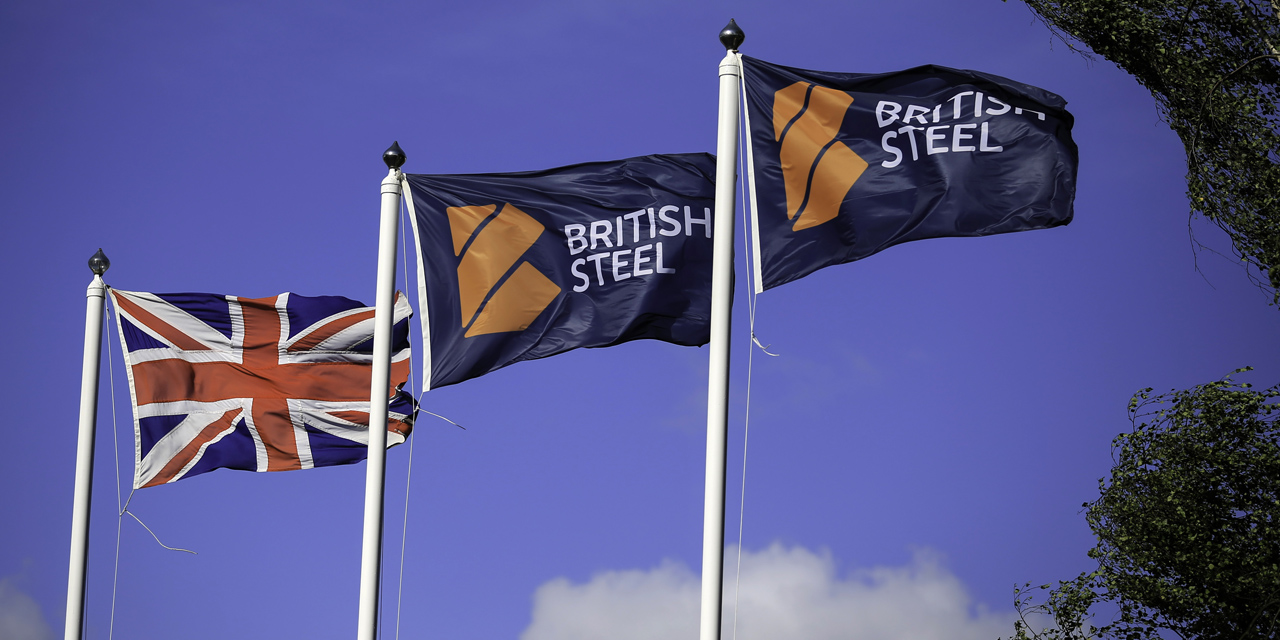
British Steel starts carbon capture trial
British Steel is trialling new carbon capture technology at its plant in Scunthorpe in a bid to further reduce emissions, Kallanish learns.
The company notes that while electrification of the steelmaking process will reduce emissions of carbon dioxide by more than 75%, it is exploring routes for additional reductions. This includes the development of technologies for capturing CO2 generated by other parts of its manufacturing operations.
As part of this, a mobile carbon capture pilot plant has been installed at its Central Power Station in Scunthorpe. The plant has been developed by the University of Sheffield and will be used to extract carbon from the power station’s boiler flue.
Andy Trowsdale, British Steel’s head of research and development, says: “This project is all about testing the capabilities of the technology. If it works for us, and others, it could be scaled-up and play an important role in carbon capture, utilisation and storage.”
“The trial, which has been approved by the Environment Agency, will demonstrate the technology’s potential,” he adds.
The project by University of Sheffield aims to enable the use of waste gases from manufacturing industries to generate an alternative source of carbon for consumer products.
The technology being used in the carbon capture system does not use environmentally hazardous chemicals and is much cheaper and smaller than other carbon capture technologies. The CO2 captured at British Steel will be bottled in gas cylinders, transported to the University of Sheffield and converted into synthetic transport fuels.
Carrie Bone UK

Volkswagen mulls at least three German plant closures
German automaker Volkswagen (VW) is planning to close at least three plants in Germany as part of cost-cutting measures, according to Volkswagen works council chief Daniela Cavallo.
Volkswagen said last month it was considering closing factories in Germany amid fierce competition and falling electric vehicle (EV) sales – a move severely criticised by labour unions. As such, the company has been negotiating with unions for weeks for a new labour agreement.
On Monday, Cavallo told employees at a meeting at Volkswagen’s Wolfsburg headquarters that the automaker plans to cut “tens of thousands” of jobs and slash pay by 10%. She added that all VW plants in Germany will be affected, with the management planning cuts at other sites.
“The board is also planning to downsize all remaining plants in Germany,” Cavallo said, according to a statement seen by Kallanish. “In concrete terms, this means taking out even more products, volumes, shifts and entire assembly lines far beyond to what we have already done.”
She emphasised: “All German VW plants are affected by this. None of them are safe!”
The works council head, however, did not specify which plants would be shut. The company currently has ten plants in Germany, employing a total of 120,000 workers.
In a statement on Monday, Volkswagen reiterated the “urgent need for comprehensive restructuring measures” to make the company “sustainably competitive”.
“We have to get to the root of the problems: we are not productive enough at our German sites and our factory costs are currently 25% to 50% above target,” explains Volkswagen Passenger Cars chief executive Thomas Schäfer. As a result, some of the company’s German plants are twice as expensive as its competitors, particularly due to high labour costs.
“In addition, we at Volkswagen are still handling many tasks internally that our competitors have already outsourced to reduce costs,” Schäfer adds. “This means that we cannot continue as before. We have to promptly find a joint and viable solution for the future of our company.”
Cavallo also called on the German government to come up with a “master plan” to support the German industry. “They [politicians] need to wake up,” she added. “It is not enough just to say that they stand by the VW workforce. We need action! We need a comprehensive plan from politicians on how to finally get BEV [battery electric vehicle] mobility flying.”
While German economy minister and vice-chancellor Robert Habeck said last month the government was mulling ways to support the struggling carmaker, he noted that “a large part of the tasks have to be dealt with by Volkswagen itself”.
European carmakers have been struggling amid high production costs, severe competition, and stagnating EV demand in major EV markets. Last month, Volkswagen lowered its 2024 outlook, citing a “challenging market environment and developments that have fallen short of original expectations.” If the plant closures go ahead, it would mark a first in Volkswagen’s 87-year history.
Volkswagen’s first round of negotiations with unions on 25 September ended after three hours. A second round of negotiations is set to take place on Wednesday. The period to refrain from industrial action will end on 30 November.
Reethu Ravi UK

EU HRC prices largely stable despite higher mill offers
Domestic European hot-rolled coil prices remained largely stable Oct. 28, as weak demand from end-users put downward pressure on prices.
Many market participants were left with “mixed feelings” in the aftermath of the EuroBlech steel fair in Hannover last week, a Germany based mill source said. Despite higher offer levels from European mills, market restocking requirements remained low, contributing to weak demand.
The source explained that “the Steel industry needs to increase prices as it is currently in a dangerous zone.”
An Italy based service center source supported this view, highlighting bearish sentiment in the domestic Italian market. According to sources, market activity seems to be slowing down slightly.
Platts assessed Northwest European HRC at Eur560/mt ex-works Ruhr Oct. 28, down Eur15 on the day.
Deals were reported at Eur560/mt ex-works Ruhr, and delivered Germany. Offers were reported at Eur580-640/mt ex-works Ruhr.
Platts assessed domestic HRC in Southern Europe at Eur550/mt ex-works Italy, stable on the day.
The spread between import and domestic European prices continued to narrow. A Germany based service center source said that some import prices are more expensive than domestic European mill prices.
Platts assessed imported HRC in Northwest Europe at Eur515/mt CIF Antwerp, stable on the day.
Platts assessed imported HRC in Southern Europe at Eur535/mt CIF Italy, stable on the day.
Platts is part of S&P Global Commodity Insights.


HRC prices flat in Europe; mills hoping for rebound in 2025
End-user demand for coil has been limited across Europe this week, hampering mill attempts to push for price rises, they added.
“Nobody is buying [coil] for stock,” a buyer source told Fastmarkets. “On the contrary, there is competition downstream between steel service centers to get rid of the material, so [HRC] prices reman under pressure,” a buyer source said.
Mills in Northern Europe were heard offering HRC at €580-600 per tonne ex-works for the first quarter 2025, but for November-December lead times, prices were still around €550-570 per tonne ex-works, sources said.
Buyers estimated the tradable level at €540-550 per tonne ex-works.
Fastmarkets calculated its daily steel hot-rolled coil index, domestic, exw Northern Europe at €550.00 per tonne on Friday, up by only €0.62 per tonne from €549.38 per tonne the previous day.
The index was down by €3.13 per tonne week on week but up by €0.12 per tonne month on month.
On October 25, the European Commission started registering HRC imports from Vietnam, Japan, India and Egypt, thus paving the way for the potential retroactive application of anti-dumping duties.
And, along with existing safeguard measures, this latest move will significantly limit interest in importing HRC to Europe, sources said.
The reduction in the volume of imports to the EU should start to become apparent in the first quarter of 2025, they added, which could support a rebound in domestic HRC prices.
And if European suppliers proceed with production cuts in November-December, HRC supplies could be further limited, making a price rebound in January-February more likely, sources said.
“European mills have produced enough [crude steel] to claim their carbon credits for the next year, so it is very likely that they will curb their output at the end of the fourth quarter in 2024,” a trader source told Fastmarkets.
No official announcements about cuts have been mad so far, however.
In Southern Europe, Fastmarkets calculated its corresponding daily steel HRC index, domestic, exw Italy at €546.25 per tonne on Friday, unchanged day on day.
The Italian index was down by €5.00 per tonne week on week, but up by €1.87 per tonne month on month.
Trading in Italy was also quiet, sources said, with suppliers so far unable to secure higher offer prices in transactions.
Local mills were offering December/January-delivery HRC at €570-580 per tonne delivered (€560-570 per tonne ex-works), Fastmarkets understands.
But buyers estimated the tradable level in Southern Europe at just €540-560 per tonne delivered (€530-550 per tonne ex-works).
“We did not negotiate December delivery HRC [purchases] yet, but we hope to get a 10-20 per tonne discount on the offer price,” a buyer in Italy said.
Market participants said that November lead times were still available from some suppliers.
Import prices, meanwhile, remain uncompetitive and no fresh business was completed in the week to Friday, sources told Fastmarkets.
In Italy, November-shipment HRC from Turkey was on offer at €580-590 per tonne CFR to Italy, including anti-dumping duty, while Asian material was on offer at €550-570 per tonne CFR.

EU starts registration of HRC imports from Egypt, India, Japan, Vietnam
This means that “if the necessary conditions are fulfilled,” anti-dumping duties could then be “levied retroactively on the registered imports in accordance with the applicable legal provisions.”
The Commission launched an anti-dumping probe against HRC imports from the four countries in August.
For the period from January to December 2023, HRC imports from the four countries were subject to different dumping duties, with Egyptian material at 30-40%, HRC from Japan at 10-20%, Indian HRC facing duties of 10% and Vietnamese material at 5-15%, according to the notice in the journal.
In 2023, the EU imported 9.22 million tonnes of HRC, according to Global Trade Tracker statistics. And, of the HRC total, Egypt supplied 753,115 tonnes, India 1.17 million tonnes, Japan 1.09 million tonnes and Vietnam contributed 1.16 million tonnes. The combined 4.19 million tonnes amounted to 45% of total HRC imports the EU in 2023.
Market impact
Market participants told Fastmarkets the latest anti-dumping move by the EU was no unexpected and said it will further limit interest in buying overseas HRC.
“There is basically only one ‘safe’ origin to import from now – Turkey,” a buyer in Italy told Fastmarkets. “But the offer prices [from the Turkish mills] right now are totally uncompetitive.”
A second buyer said the “AD probe and changes to safeguard measures will significantly limit demand” for all overseas coil.
“The effect of the [lack of imports to the EU] will start to show in the first quarter of next year [and the lack of imports] is likely to support a domestic HRC price rebound in Europe,” the second buyer added.
In the week to October 25, November-shipment HRC from Turkey was on offer to Italy at €580-590 ($627-637) per tonne CFR, including an anti-dumping duty of 4.70-7.30%, which has been in place since July 2021.
From Asia, offers were reported at €550-570 per tonne CFR to Italy.
In contrast, Italy-origin HRC, with five- or six-week lead times, was offered at a similar levels – around €570-580 per tonne delivered – which would net back to €560-570 per tonne ex-works, with possible discounts of no more than €10 per tonne, Fastmarkets understands.
Buyer ideas of the tradable level were lower, however, at closer to €540-560 per tonne delivered (€530-550 per tonne ex-works).
Fastmarkets calculated its daily steel hot-rolled coil index, domestic, exw Italy at €546.25 per tonne on October 24, down by €2.13 per tonne from €548.38 per tonne a day earlier and down by €5.63 per tonne week on week and by €6.25 per tonne month on month.
Fastmarkets calculated its corresponding daily steel hot-rolled coil index, domestic, exw Northern Europe at €549.38 per tonne on Thursday, down by only €0.62 per tonne from €550.00 per tonne a day earlier.

Finland: Metso launches DRI smelting pilot facility to do customer-specific testing
Metso inaugurated a direct reduced iron smelting furnace pilot facility in Pori, Finland, with its hot commissioning to follow imminently, the Finnish industrial machinery company said in an Oct. 25 statement.
The new facility will allow customer-specific testing to demonstrate the applicability and effectiveness of Metso’s Outotec DRI Smelting Furnace technology. This technology was designed to substitute traditional blast furnaces in iron and steel production, significantly reducing emissions when combined with a direct reduction plant, such as Metso’s own 100% hydrogen-based Circored or other DR processes.
“The investment into the pilot furnace supports the rapidly increasing demand for testing when planning a transition to emissions-free smelting,” Metso’s Vice President Jyrki Makkonen said. “With the pilot facility, we can reliably test various types of customer materials for industrial scale-up.”
Metso announced it was investing Eur8 million ($8.7 million) in a prototype direct reduced iron smelting furnace in January.